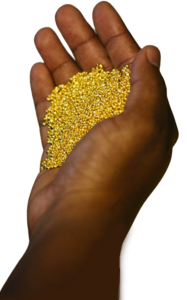
Understanding Gold Assay Certificate: Complete Buyer’s Guide
A gold assay certificate is the single most important document in any physical gold transaction — and in 2026, its importance has never been greater. Tungsten-core counterfeit gold bars have become so sophisticated that hallmarks and serial numbers alone catch only 12% of high-grade fakes circulating in global secondary markets, according to customs seizure data from Hong Kong, New York, and Australia analysed in 2024–2026.
The cost of missing a single counterfeit kilogram bar in 2026, with spot gold hovering near USD 130–140 per gram, is approximately USD 130,000–140,000 — a loss that no insurance policy will cover if proper assay verification was not completed before purchase.
Whether you are buying your first 50-gram gold bar from a certified African refinery, importing a kilogram of 24K gold from Uganda or Ghana to London, or evaluating a large commercial gold purchase for a trading desk, understanding what a gold assay certificate is, what information it must contain, how to verify its authenticity, and what happens when you don’t have one — is the knowledge that separates protected gold buyers from exposed ones.
This complete 2026 guide covers the full meaning of assay and assay certificates, every verification method from fire assay to the modern 5-test stack, what good assay results look like across all karat standards, how to spot a fake certificate, why African-sourced certified gold comes with full assay documentation, the costs of assaying gold in different markets, and answers to the most common buyer questions.
What Is an Assay? The Full Meaning and History
The word assay derives from the Old French “essayer” — “to try” or “to test” — and its use in metallurgy predates modern chemistry by millennia. Gold assay offices were established in England by royal decree as early as the 13th century, when the Goldsmiths’ Company of London was given authority to test and mark gold articles to protect buyers from fraud. The underlying purpose has not changed in 700 years: assaying is the scientific determination of a metal’s exact composition and purity.
In modern precious metals markets, when we say a piece of gold has been assayed, it means a qualified laboratory or accredited refinery has chemically or physically tested it and quantified how much actual gold — versus silver, copper, nickel, zinc, or other metals — is present in the sample.
An assay answers the question that every gold buyer needs answered: “Is this actually 24K (99.99% pure) gold, or is it something less?”
The assay process, as described by the LBMA’s own technical documentation, is the bedrock upon which the precious metals industry builds its ability to trade with trust and confidence — forming the cornerstone for most mining and refining company operations. Without independent assay, the entire chain of trust from mine to buyer collapses.
What Is a Gold Assay Certificate? Every Element Explained
A gold assay certificate — also called an assay report, certificate of purity, refinery certificate, or certificate of authenticity — is the official document issued by an independent or refinery-affiliated laboratory that provides definitive proof of a gold bar’s composition, weight, and identity. It is the gold bar’s permanent identity card, and it must accompany the physical bar through every stage of its commercial life.
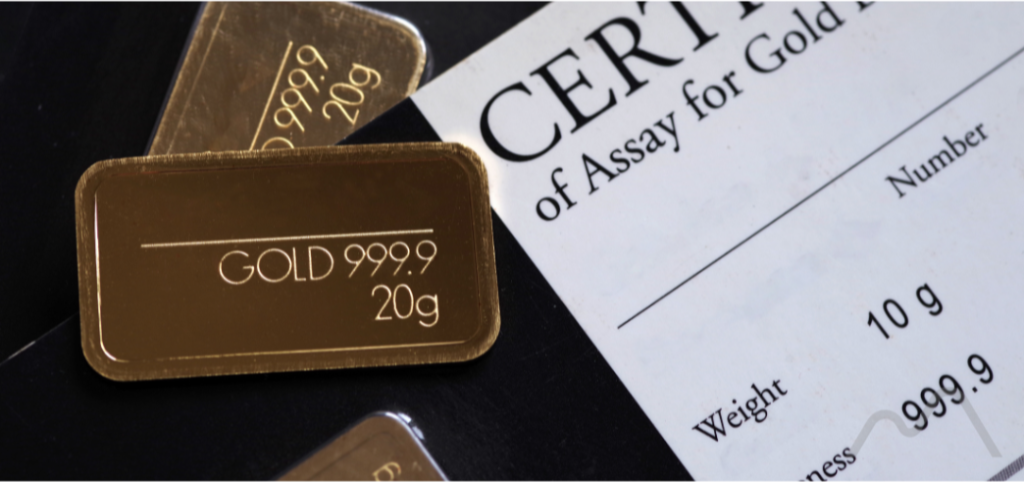
A legitimate gold assay certificate contains every one of the following elements:
Exact purity expressed as fineness: Investment-grade gold uses the fineness notation — 999.9 for 24K (99.99% gold), 999.5 for LBMA Good Delivery minimum, 999.0 for commercial bullion, 916 for 22K jewellery-grade material, 750 for 18K. The fineness number is the precise analytical result of the assay, expressed in parts per thousand.
Precise weight in grams and troy ounces: Both measurements are stated because different markets use different conventions. The troy ounce (31.1035 grams) is the international precious metals standard; grams are used for metric weight statements on the bar itself.
Unique serial number matching the bar: The serial number laser-etched or stamped into the bar’s surface must exactly match the number printed on the certificate. This one-to-one match is the most important single verification step for any buyer.
Date of assay: Establishes when the testing was performed and by whom.
Name, logo, and accreditation credentials of the issuing laboratory: Reputable certificates identify the issuing laboratory by name, include its LBMA or national regulatory accreditation details, and provide contact information for independent certificate verification.
Assay method used: Fire assay, XRF, ICP-MS, or a combination — the method determines the confidence level of the purity statement.
Assayer’s signature and official seal: Physical signatures and raised or embossed seals remain standard on premium certificates. Modern certificates from major refineries add QR codes linking to digital certificate databases, holograms on security paper, and micro-text embedded in the design.
Bar dimensions and weight: Provides a physical cross-reference that makes weight-shaving or dimensional fraud immediately detectable if the stated dimensions differ from the physical bar.
Every certified gold bar sold through Buy Gold Bars Africa comes with an assay certificate containing all of these elements, issued by SGS, PMMC (Precious Minerals Marketing Company, Ghana), or the UNBS (Uganda National Bureau of Standards) — internationally recognised accredited laboratories whose certificates are accepted by banks, vaults, and bullion dealers worldwide.
How to Know If Your Gold Is Genuinely Assay Certified
Genuine assay certification has several unmistakable physical and documentary characteristics. If any of these are absent, treat the gold as unverified regardless of what the seller claims.
Check 1: Sealed Tamper-Evident Packaging With No Breach
Investment gold bars from 1 gram to 1 kilogram are typically sold in hard plastic “assay cards” — sealed packages with the certificate printed or attached on the back and the bar visible through a transparent window. The seal must be completely intact. Any evidence of opening, resealing, blistering, or pressure marks around the seal edge suggests tampering.
For bars above 100 grams sold loose (not in individual assay cards), the certificate should accompany the bar with identifying information verifiable against the bar itself.
Check 2: Serial Number Match — The Critical Test
Hold the certificate next to the bar and verify that every digit of the serial number engraved or stamped on the bar matches exactly the serial number printed on the certificate.
Even a single digit transposition is a red flag. For digitally issued certificates with QR codes, scan the QR code and verify that the digital record matches both the physical certificate and the bar.
Check 3: Recognisable Issuing Laboratory or Refinery
The assay certificate must be issued by a laboratory or refinery that you can independently verify. Major LBMA-accredited refineries include PAMP Suisse, Valcambi, Argor-Heraeus, Perth Mint, Royal Canadian Mint, Heraeus, and Metalor. In Africa, Rand Refinery in South Africa and PMMC in Ghana are the most internationally recognised accredited institutions.
Uganda’s Simba Assay Laboratory and UNBS are the primary accredited testing laboratories whose certificates are accepted for export documentation.
If the certificate is issued by a laboratory name you cannot independently verify through their own website or through the LBMA’s published lists — be extremely cautious.
Check 4: Contact and Verify the Issuing Laboratory Directly
Every legitimate assay laboratory or accredited refinery can be contacted by email or telephone to verify that a specific certificate number was issued on the stated date for the stated bar serial number.
This step takes five minutes and provides definitive confirmation that the certificate is not forged. The FAQs about buying gold from Africa explain how to verify African assay certificates from SGS, PMMC, and UNBS laboratories.
Check 5: Hologram, Security Paper, and Anti-Fraud Features
Premium assay certificates from major refineries are printed on security paper with embedded features including microtext visible only under magnification, holograms that shift colour or pattern at different angles, UV-reactive inks that fluoresce under blacklight, and serial numbers in multiple fonts and positions. These features make certificate forgery extremely difficult — but they must all be present and functional for the certificate to be considered genuine.
Why Gold Assay Certificates Matter More Than Ever in 2026
The escalating sophistication of gold counterfeiting operations makes the gold assay certificate not merely important but existentially necessary for any gold buyer above trivial purchase values.
Tungsten-core bars are the defining fraud of 2026. Tungsten has a density of 19.25 grams per cubic centimetre — almost identical to gold’s 19.30 g/cm³. A 1-kilogram bar with a tungsten core and a genuine gold shell thick enough to fool a precision scale, a visual inspection, and a standard surface XRF scan is now being manufactured by sophisticated criminal operations.
In 2024–2026, customs seizure datasets from Hong Kong Customs, the NYC Diamond District, and the Australian Mint have documented tungsten-core bars in formats matching standard 1-gram, 10-gram, 100-gram, and 1-kilogram cast bars — complete with realistic surface markings mimicking legitimate refinery products.
Standard XRF penetrates only 2–50 microns into a gold bar surface. A 1mm gold-plated tungsten core reads 99.99% gold on a handheld XRF unit. This is not an equipment defect — it is a known physical limitation that counterfeit manufacturers exploit by ensuring the gold plating is thick enough to fool surface XRF but shallow enough to maximise the tungsten core. Hallmarks and serial numbers alone catch only 12% of high-grade tungsten-core counterfeits circulating in secondary markets.
The insurance consequence is real. AIG, Lloyd’s, and Beazley have all tightened bullion theft and counterfeit clauses in their 2024–2025 underwriting cycles. Three of the largest US-based bullion insurers now require documented verification procedures as a condition of coverage renewal.
Purchasing gold without proper fire assay certification means any subsequent insurance claim for counterfeit loss may be denied.
African gold’s fraud risk is real and specific. Uganda, Ghana, DRC, and Tanzania are the most active African gold markets — and they are also geographies where sophisticated fraud operations specifically target international buyers. Advance-fee schemes, fake certificate operations, tungsten-core bars with convincing African refinery hallmarks, and fraudulent SGS or PMMC certificate copies are all documented fraud patterns in these markets. The only reliable protection is fire assay from an independently verified laboratory — not just a certificate the seller provides.
Buy Gold Bars Africa addresses this directly: every gold bar sold comes with independent assay certification arranged by a laboratory the buyer can independently verify before payment.
The seller never controls the assay process — it is arranged through independently verified channels to ensure the result is genuinely independent.
Gold Assay Testing Methods: Complete 2026 Guide Ranked by Accuracy
There are six primary gold assay methods used across the professional precious metals industry. Understanding each method’s capabilities and limitations is essential for buyers evaluating what type of assay documentation they should require.
1. Fire Assay (Cupellation) — The Definitive Standard for Certification
Fire assay, also called cupellation, is the oldest and most accurate gold testing method — and remains the global standard for formal certification documentation even in 2026. Fire assay is the standard for formal documentation of gold purity; it provides the certification-grade purity number that institutional buyers, LBMA members, and vaults require for settlement.
How it works: A small sample (typically 0.25–0.5 grams) is drilled or cut from the gold bar, weighed precisely, and wrapped in lead foil. The wrapped sample is placed in a small crucible (cupel) made of porous bone ash or magnesium oxide and heated in a furnace to approximately 900–1,000°C. At this temperature, the lead oxidises along with base metal impurities and is absorbed into the porous cupel material.
The remaining bead of gold-silver alloy is parted in nitric acid, which dissolves the silver but leaves the gold. The resulting pure gold bead is weighed, and the ratio of the gold bead weight to the original sample weight gives the gold fineness to within ±0.01%.
Accuracy: ±0.01% — the highest accuracy of any gold testing method. A fire assay distinguishing 999.9 from 999.0 fineness is entirely reliable.
Limitations: Fire assay is destructive — it consumes the sample tested. For bars where even a small drill hole is unacceptable (sealed assay cards, presentation bars), fire assay must be performed on a separately taken sample, not on the bar itself.
This is why fire assay with a core drill sample is specified for investment gold bar verification above 100 grams — the core sample is taken, tested, and the results applied to the bar.
Cost in Africa (Uganda/Ghana) in 2026: USD 80–150 per sample at accredited laboratories including Simba Assay Laboratory (Uganda) and PMMC-accredited facilities (Ghana). In Dubai or Switzerland: USD 150–300.
Cost globally: USD 70–180 per sample depending on location and laboratory.
2. X-Ray Fluorescence (XRF) — Fast, Non-Destructive, But With Critical Limits
XRF is the most commonly used non-destructive gold testing method in the professional bullion industry, offering fast results (5–30 seconds on modern benchtop instruments), multi-element analysis, and no damage to the tested bar. XRF is a non-destructive technique that uses X-rays to excite atoms within a sample, allowing the machine to measure the elemental composition accurately from the emitted secondary X-ray spectrum.
How it works: An X-ray beam irradiates the gold surface. Different elements emit characteristic secondary X-ray energies when excited. The instrument measures these energies and intensities, calculating the composition of each element present in the surface layer.
Critical limitation: Standard XRF penetrates only 2–50 microns into a gold bar surface. A 1mm gold-plated tungsten core reads 99.99% gold on a handheld unit — which is not an instrument error but a fundamental physical constraint that counterfeit manufacturers exploit. For this reason, XRF is appropriate for preliminary verification and 100% scanning, but fire assay remains the standard for formal documentation when institutional buyers require certification-grade certainty.
When to use XRF: As a first-pass screening tool for all gold purchases, as a rapid verification for sealed bars from known refineries where the full 5-test stack is not available, and as a confirmation step alongside fire assay for large purchases.
Cost: Handheld XRF test at a dealer or jeweller: USD 10–35. Professional benchtop XRF with calibrated multi-element analysis: USD 25–100 per test at a specialist facility.
Accuracy: ±0.1–0.3% for surface composition — adequate for karat determination, inadequate for detecting tungsten cores or subsurface fraud.
3. Inductively Coupled Plasma Mass Spectrometry (ICP-MS) — Laboratory Precision for Trace Element Analysis
ICP-MS is the most analytically precise method available for gold purity determination, detecting trace elements at parts per billion concentration. The gold sample is dissolved in acid and analysed with a plasma torch — a process that provides not just gold purity but a complete elemental fingerprint of the bar’s composition.
How it works: The gold sample is fully dissolved in acid (typically a mixture of hydrochloric and nitric acid, known as aqua regia). The resulting solution is aspirated into a plasma torch that ionises all elements present. A mass spectrometer separates the ions by mass-to-charge ratio and quantifies each element individually.
Advantages: ICP-MS can detect and quantify every element in the periodic table at concentrations far below what XRF can reach. For gold bar authentication, it provides a complete compositional fingerprint that can be compared against the known elemental signature of specific refineries — making it the ultimate tool for confirming not just that gold is pure, but that it genuinely originated from the claimed refinery.
Limitations: Requires complete dissolution of the sample (destructive), takes 7–14 days for a full report, and costs significantly more than XRF.
Cost: USD 150–350 for a full ICP-MS report including trace element analysis. Used for high-value commercial lots and regulatory compliance documentation.
4. The 5-Test Verification Stack — The 2026 Standard for Serious Buyers
For serious buyers purchasing bars above 100 grams, the professional bullion industry’s emerging best practice in 2026 is the 5-test stack: a combination of verification methods that — used together — achieves a counterfeit detection rate above 99.7% without drilling a single hole.
The five tests are: XRF surface scan (confirms surface gold purity and eliminates lower-sophistication fakes), ultrasound thickness testing (maps internal structure and detects inserted tungsten cores by measuring acoustic wave travel time and reflection patterns), precision density measurement (weighs the bar in air and in water to calculate density, detecting any non-gold core material), Sigma PMV electrical conductivity measurement (gold’s electrical conductivity is distinct from tungsten and base metals, providing an independent core composition indicator), and dimensional caliper measurement (confirms bar dimensions match the refinery’s stated specifications to within tenths of a millimetre).
Together, these methods catch what no single method can, covering the physical limitations of each individual technique with the complementary capabilities of the others.
For buyers purchasing African certified gold above USD 50,000 per transaction, implementing the 5-test stack on receipt — before payment is released from escrow — provides the maximum available protection.
5. Specific Gravity / Density Testing — Useful but Insufficient Alone
Density testing uses Archimedes’ principle to measure the ratio of a bar’s weight in air to its weight when submerged in water, giving a density figure that is compared against gold’s known density of 19.32 g/cm³.
Tungsten’s density of 19.25 g/cm³ is similar enough to gold that density testing alone cannot reliably distinguish a small tungsten core, but it immediately identifies bars containing significant volumes of base metals like copper (8.96 g/cm³) or silver (10.49 g/cm³).
Density testing is a useful supplementary check — particularly for artisanal gold nuggets and dore bars from Africa where the composition varies naturally — but it should never be the sole verification method for investment-grade bars above 50 grams.
6. Acid Testing — Only for Jewellery and Rough Preliminary Screening
Traditional acid testing — applying nitric acid of varying concentrations to gold scratched onto a touchstone — can broadly distinguish 10K from 14K from 18K from 22K from 24K gold.
It is the method used by jewellers for quick karat determination on jewellery items of unknown origin, requiring no equipment investment and providing rapid results.
Acid testing is entirely inadequate for investment gold bar verification. It tests only a surface scratch, cannot detect tungsten cores or mixed-composition bars, has accuracy of ±2–5 karats, and provides no documentation. Do not accept acid test results as adequate assay verification for any gold purchase of investment significance.
Fire Assay vs XRF for African Gold — What International Buyers Need to Know
For international buyers purchasing gold bars from Uganda, Ghana, South Africa, or Tanzania, the question of which assay method to require is answered clearly by the investment purpose:
For investment-grade certified 24K bars from accredited African refineries: Fire assay certification accompanying the bar — issued by SGS, PMMC, or UNBS at point of production — is the standard documentation that accompanies every legitimate bar. The fire assay was performed when the bar was produced, its results are stated as the fineness number on the bar face and certificate, and the serial number on bar and certificate provides the individual verification link.
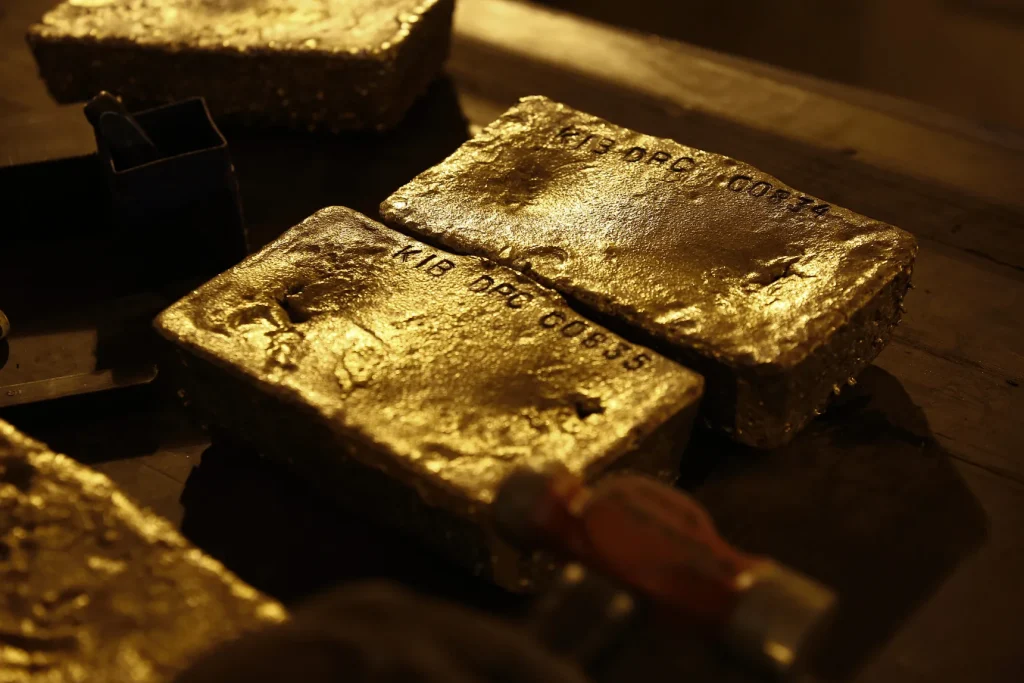
For raw gold (dust, nuggets, dore) from African artisanal operations: Fire assay at point of purchase is essential — before payment is made. Raw gold from artisanal sources has not been fire assayed at a refinery; its purity is estimated from the deposit’s geological characteristics or a surface XRF reading. Independent fire assay from an accredited Ugandan or Ghanaian laboratory is the mandatory verification step for any artisanal gold purchase above a few hundred dollars.
Gold dust from Africa and raw gold from Africa represent the pre-assay stage of the gold value chain. Buy Gold Bars Africa arranges independent fire assay from accredited laboratories as a standard step before any payment is released for raw gold purchases — protecting buyers from both accidental purity errors and intentional fraud.
Gold Assay Certificate Purity Meanings: What the Numbers Mean
Gold purity is expressed as fineness — parts per thousand of pure gold — in professional assay documentation. The fineness system precisely defines what each common karat standard actually means.
| Karat | Fineness | Purity % | Common Application | Investment Grade? |
|---|---|---|---|---|
| 24K | 999.9 | 99.99% | Investment bullion bars, central bank reserves | Yes — highest tier |
| 24K | 999.5 | 99.95% | LBMA Good Delivery bars minimum | Yes — LBMA minimum |
| 24K | 999.0 | 99.9% | Common commercial bullion bars | Yes — widely accepted |
| 22K | 916 | 91.67% | Jewellery (India, Middle East, West Africa) | No — below LBMA minimum |
| 21K | 875 | 87.5% | Some regional jewellery markets | No |
| 18K | 750 | 75.0% | European fine jewellery | No |
| 14K | 585 | 58.5% | US/European fashion jewellery | No |
| 10K | 417 | 41.7% | Minimum karat for “gold” in US | No |
For investment purposes, only gold at 995 fineness (99.5%) or above qualifies as investment-grade gold under LBMA standards and under most national regulatory frameworks including the UK’s HMRC investment gold VAT exemption definition. This means the 999.9 fineness bars produced by Uganda’s licensed refineries and Ghana’s PMMC-certified facilities qualify as investment gold; 22K (916 fineness) artisanal gold and lower-karat jewellery do not.
What assay results are “good” for African sourced gold?
For gold bars from Africa sold as investment-grade product, the assay certificate must show a minimum of 999.0 fineness — and certified 24K bars from accredited African refineries consistently achieve 999.9. For gold dust from Africa and raw gold nuggets from artisanal sources, natural purity ranging from 850 to 980 fineness is typical and appropriate — these materials are priced at a pre-refinery discount that accounts for the refining required to reach investment-grade standards.
Assay Certificate Requirements Specific to African Gold Export
For international buyers purchasing gold from Uganda, Ghana, or South Africa and importing it to the US, UK, EU, or other destination markets, the assay certificate is not just a buyer protection document — it is a mandatory regulatory compliance document required by customs authorities.
Uganda export requirements: Every gold export from Uganda requires an assay certificate issued by an accredited Ugandan laboratory — Simba Assay Laboratory or UNBS — confirming purity, weight, and form as part of the DGSM (Directorate of Geological Survey and Mines) export permit application package. Without a verified assay certificate, the Uganda Revenue Authority will not process customs clearance for the shipment.
Ghana export requirements: PMMC certification is the standard for Ghanaian gold exports — the PMMC both assays the gold and issues the export permit, creating a government-backed documentation chain. The list of gold refineries in Ghana identifies the specific PMMC-accredited Ghanaian facilities whose assay certificates carry the highest international recognition.
UK import requirements for investment gold: HMRC’s investment gold VAT exemption requires that imported gold bars meet the 99.5%+ purity threshold defined in the EU-originated investment gold framework.
The assay certificate confirming 999.9 fineness is the primary document supporting investment gold classification at UK customs, determining whether the import is VAT-free (investment gold) or subject to 20% VAT (non-investment gold materials). The buy gold in the UK page covers HMRC’s specific documentary requirements in detail.
US import requirements: FinCEN Form 105 declaration is required for any gold shipment with a declared value above USD 10,000, and the assay certificate supports the accurate value declaration required for this form. Under-declaration of gold value based on inadequate assay documentation exposes importers to customs fraud liability.
The gold export tax in Uganda explains how Uganda’s USD 200/kg export tax on unrefined gold interacts with assay documentation — unrefined gold without a 999.9 purity assay certificate is subject to this tax, creating a direct financial incentive to complete refining and obtain investment-grade certification before export.
Should You Buy Gold “In Assay”? Understanding Sealed vs Unsealed Bar Purchases
“Buying gold in assay” refers to purchasing a gold bar that remains in its original sealed tamper-evident packaging from the issuing refinery — the bar, its certificate, and the sealed case forming a single unit whose integrity is verifiable by the unbroken seal.
Advantages of Buying Gold In Assay
Sealed assay packaging means the bar has never been removed from its original case since leaving the refinery, providing the strongest possible chain of custody documentation.
Dealers accept sealed bars at more favourable resale prices because verification is instant — no XRF testing needed, no re-weighing debate, no dispute about handling damage. For gold bars stored as long-term investment in vaults, sealed assay packaging eliminates the periodic re-verification costs that unsealed bars require.
A bar’s original sealed assay is the easiest way to preserve its full commercial value. It is the bar’s identity card. The moment you remove the bar from its sealed assay holder, you break the chain of custody and force the next buyer to independently verify the bar’s purity before paying full market value.
When Buying Outside Sealed Assay Is Acceptable
Raw gold from African artisanal operations — gold nuggets, gold dust, dore bars — is by nature pre-certification material that arrives without sealed assay packaging, since it has not yet been through a certified refinery.
For this category of gold, the appropriate protection is independent fire assay arranged before payment, not sealed packaging. The gold dust and where to buy raw gold from Africa pages explain how Buy Gold Bars Africa manages the independent assay step for pre-refinery material.
How to Spot a Fake Gold Assay Certificate
Certificate forgery is a sophisticated and prevalent fraud in the African gold market. These are the specific verification steps that distinguish genuine certificates from counterfeits.
Step 1 — Contact the laboratory directly. Use the laboratory’s contact details found independently through their website (not through contact details on the certificate), and request verification of the specific certificate number, bar serial number, assay date, and fineness result.
A genuine laboratory responds to this request by confirming or denying all four data points. A fraudulent certificate’s issuer has no record of the transaction.
Step 2 — Scan the QR code if present. Modern certificates from SGS, PMMC, and Rand Refinery include QR codes that link to a digital record in the issuing laboratory’s database. Scan the code using your phone’s camera; if the link goes nowhere, redirects unexpectedly, or does not display the expected bar-specific information, the certificate is likely forged.
Step 3 — Examine the physical security features. Genuine certificates from accredited laboratories are printed on security paper with: watermarks visible when held to light, holograms that produce clear colour shift under movement, microtext readable only under magnification, and UV-reactive inks that fluoresce visibly under a blacklight. A certificate printed on plain paper with a scanned hologram image or flat lamination has not been produced on genuine security paper.
Step 4 — Check the assayer’s credentials independently. Every legitimate assay laboratory can be verified through the relevant national laboratory accreditation body — UKAS in the UK, A2LA in the US, SANAS in South Africa, and Ghana Standards Authority for PMMC-accredited facilities.
An assayer whose laboratory cannot be verified through an independent accreditation registry is not operating a legitimate certified assay service.
Step 5 — Compare the fineness claim against the selling price. If a seller is offering 999.9 certified gold at prices 20–40% below the current LBMA spot price, the discount itself is a fraud signal regardless of what the certificate shows. No legitimate supply chain can produce certified 24K gold at prices materially below LBMA spot — the economics of mining, refining, and certification make that structurally impossible. An extraordinary price offer is an extraordinary reason to require extraordinary verification.
Gold Assay Cost Comparison: Africa, Dubai, UK, and Switzerland in 2026
Assay costs vary by method, location, and laboratory reputation. The table below provides current 2026 reference costs for the methods most relevant to buyers of African gold.
| Method | Africa (Uganda/Ghana) | Dubai | UK | Switzerland | Turnaround |
|---|---|---|---|---|---|
| Handheld XRF (surface) | USD 10–25 | USD 15–35 | USD 20–40 | USD 25–50 | Immediate |
| Benchtop XRF (professional) | USD 25–50 | USD 35–75 | USD 40–80 | USD 50–100 | Same day |
| Fire Assay (LBMA-grade) | USD 80–150 | USD 150–250 | USD 100–200 | USD 150–300 | 3–10 days |
| ICP-MS full trace element | USD 150–250 | USD 200–350 | USD 200–400 | USD 250–450 | 7–14 days |
| 5-Test Stack (professional) | USD 200–350 | USD 300–500 | USD 300–600 | USD 400–700 | 2–5 days |
| Refinery re-assay (1kg bar) | USD 100–200 | USD 150–300 | USD 150–300 | USD 200–350 | 5–15 days |
For buyers purchasing through Buy Gold Bars Africa, fire assay certification is arranged by the dealer as a standard component of the transaction process — the assay cost is absorbed within the documented transaction fee rather than charged separately to the buyer. The assay certificate you receive with your gold bar is from an independently verified laboratory that your dealer did not control during the testing process.
FAQs: Gold Assay Certificates in 2026
What is a gold assay certificate? A gold assay certificate is the official document issued by an accredited laboratory confirming a gold bar’s exact purity (fineness), precise weight, unique serial number, assay date, assay method, and the identity of the issuing laboratory. It is the bar’s identity card and the primary documentary protection against gold fraud.
How do I know if my gold is assay certified? Genuine assay certification requires: sealed tamper-evident packaging with an unbroken seal; a serial number on the bar that exactly matches the serial number on the certificate; an identifiable issuing laboratory whose credentials you can independently verify; and physical security features (hologram, microtext, QR code) on the certificate itself. If any element is missing, the gold should be treated as unverified.
What does assay mean when buying gold? When a seller says their gold is “assayed,” they are claiming it has been independently tested by an accredited laboratory and the results are documented. In practical terms, it means the gold’s purity, weight, and identity have been professionally verified, providing protection against fake or under-karat gold. For African gold specifically, legitimate assay means SGS, PMMC, or UNBS fire assay documentation — not a seller-produced certificate.
Should I buy gold “in assay”? Yes, for certified investment bars. Gold sold in sealed assay packaging has maximum liquidity, easiest resale verification, and the strongest chain of custody documentation. Only buy unsealed gold if you plan to melt it immediately, or if you are purchasing artisanal raw material at pre-refinery stage with independent fire assay arranged before payment.
What is the best assay method for gold bars from Africa? Fire assay with a core sample from an LBMA-accredited or nationally accredited African laboratory remains the standard for investment-grade certification. For bars from certified African refineries that already carry fire assay certification from production, XRF verification on receipt is adequate supplementary confirmation. For raw artisanal gold, fire assay before payment is non-negotiable.
How much does a gold assay cost in Uganda or Ghana? Fire assay at an accredited Ugandan laboratory (Simba Assay Lab or UNBS) costs approximately USD 80–150 per sample with a 3–10 day turnaround. In Ghana, PMMC certification costs approximately USD 100–200 per bar depending on the weight and certification level required.
Can I take gold out of assay packaging? Technically yes, but you should never do so unless you are melting the gold for manufacturing, sending it to a refinery for re-assay, or performing your own independent verification test. Removing a bar from its sealed assay card breaks the chain of custody, typically reduces resale value by 1–5%, and forces the next buyer to commission their own independent assay at their own expense.
What are good gold assay results for investment bars? For investment purposes, a fineness of 999.9 (99.99%) is the optimal result for certified 24K bars, 999.5 meets LBMA Good Delivery minimum standards, and 999.0 is commercially acceptable for most retail bullion purposes.
Any fineness below 995 (99.5%) disqualifies the gold from LBMA investment-grade status and from the investment gold VAT exemption in UK, EU, and other jurisdictions that use similar definitions.
The African Assay Framework: How Buy Gold Bars Africa Protects Buyers
Every transaction through Buy Gold Bars Africa involves a documented assay process that gives buyers the verification they need before any payment is finalised.
For certified 24K investment bars from Uganda, Ghana, and South Africa, the assay certificate from the producing refinery accompanies every bar — issued by PMMC, SGS, UNBS, or Rand Refinery and verifiable directly with the issuing laboratory by any buyer before payment. For raw gold purchases (nuggets, dust, dore), Buy Gold Bars Africa arranges fire assay at an independently verified laboratory before the buyer is asked to confirm payment — the assay result is the payment trigger, not a seller’s verbal assurance.
Understanding how gold is mined and processed in Africa — including how fire assay fits into the refinery process — gives buyers the full context of what an African assay certificate represents and how to evaluate its credibility. Gold in Africa for sale and the gold ingots for sale page show the specific products available with investment-grade assay certification from certified African refineries.
Conclusion: Never Compromise on Assay
In 2026, buying physical gold without a legitimate, independently verified assay certificate is not a calculated risk — it is an uncontrolled one. With tungsten-core bars indistinguishable from genuine gold by visual inspection, surface XRF, and precision scale, and with certificate forgery sophisticated enough to deceive non-specialist buyers, the only reliable protection is fire assay from an accredited laboratory whose credentials you have independently verified.
Whether you are spending USD 700 on a 5-gram bar or USD 140,000 on a kilogram of certified 24K gold from Uganda, the assay certificate is your proof of what you own — and ultimately, your proof in any dispute, insurance claim, or resale negotiation that the gold is everything the seller claimed.
Buy Gold Bars Africa provides fire assay documentation from independently verified accredited African laboratories with every gold purchase — a non-negotiable standard that protects buyers across every market and every jurisdiction. Contact the team to discuss your specific purchase, confirm available assay documentation standards, and receive the information you need to verify every certificate before any payment is made.
Related Pages Worth Exploring
- Buy gold bars from Africa — Certified 24K gold bars with independent fire assay certificates from SGS, PMMC, or UNBS issued for every bar by serial number
- Gold ingots for sale — Investment-grade gold ingots from 50g upward with assay certification confirming 999.9 fineness and matching serial numbers
- Gold in Africa for sale — Current certified gold bar availability from Uganda, Ghana, and South Africa with full assay documentation at live spot-tied pricing
- Gold dust from Africa — Raw artisanal gold dust sourced with independent fire assay arranged before buyer payment is confirmed
- Where can I buy raw gold from Africa? — Licensed raw gold sourcing with pre-payment assay verification for buyers purchasing pre-refinery material
- How gold is mined and processed in Africa — How fire assay fits into the African gold refinery production chain — from artisanal dore to certified 999.9 investment bar
- Uganda gold mines — Uganda’s gold producing districts and the licensed assay laboratories (Simba Assay Lab, UNBS) whose fire assay certificates accompany every export
- Uganda gold discovery in northern region — How geological exploration in Karamoja feeds Uganda’s gold pipeline toward certified assay-documented production
- Gold mining in South Africa — Rand Refinery’s LBMA-accredited assay and certification process — the global benchmark for African gold bar documentation
- Gold mining in Guinea — West Africa’s growing certified gold sector and Guinea’s evolving assay certification infrastructure
- List of gold refineries in Ghana — PMMC-accredited Ghanaian refineries whose fire assay certificates carry full international recognition for investment gold purposes
- Gold export tax in Uganda — How Uganda’s export documentation requirements interact with assay certification for international shipments
- Dubai gold export rules — Assay certificate requirements for African gold transiting through Dubai’s DMCC gold trading hub
- Buy gold in the UK — HMRC investment gold VAT exemption and how assay certificate fineness (995+) determines tax treatment at UK customs
- FAQs about buying gold from Africa — Common questions about assay verification, certificate authentication, and documentation for African gold purchases
- FAQs about buying gold in Ghana — PMMC assay process, certificate verification, and export documentation standards for Ghanaian gold
- FAQs about buying gold in South Africa — Rand Refinery assay standards, South African export documentation, and how to verify South African assay certificates
- Gold stock — Current certified gold bar inventory from Africa’s accredited refineries with assay documentation available for all listed products
- About Buy Gold Bars Africa — How Buy Gold Bars Africa’s assay verification process protects international buyers across all transaction sizes