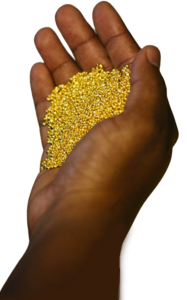
Uganda Gold Mines: Map of Gold Mining Areas in Uganda
Uganda Gold Mines: Discover the top guide to Uganda gold mines, including major mining regions, gold production, investment opportunities, and how to buy gold safely from Uganda’s thriving mining industry.
Gold mining in Uganda has transformed from a fragmented artisanal sector into East Africa’s most economically consequential minerals story — and the pace of that transformation in 2025 and 2026 has exceeded almost every forecast made as recently as three years ago.
Uganda’s gold sector has moved to the centre of the country’s export economy, with earnings hitting a record USD 5.8 billion in the year to November 2025, according to Bank of Uganda data.
Gold has overtaken coffee as Uganda’s leading foreign exchange earner and now accounts for 76.6% of total merchandise export revenues — a structural shift in the country’s economic identity driven by the combination of vast proven gold reserves, Uganda’s emergence as East Africa’s primary gold refining and re-export hub, and the inauguration of Uganda’s first large-scale industrial gold mine in Busia.
For international gold investors, buyers of certified 24K gold bars, refiners seeking African feedstock material, and companies evaluating the Ugandan gold market as a sourcing geography, this guide provides the most complete and up-to-date resource available.
It covers the full geography of gold mining in Uganda district by district, the major gold reserves and the landmark discovery that reshaped Uganda’s global mining profile, the companies driving production and refining, the regulatory framework governing gold trading and export, environmental and social considerations, investment pathways, and the 2026 outlook for one of Africa’s fastest-rising gold sectors.
Why Uganda’s Gold Mining Sector Matters in 2026
Several converging forces have made gold mining in Uganda one of the most watched sectors in African mining circles heading into 2026.
Record gold export earnings. Uganda’s gold exports soared to USD 5.8 billion in the year ending November 2025, a 44% increase from USD 3.3 billion the previous year, according to the Bank of Uganda. In October 2025 alone, gold export earnings reached USD 964.6 million — a monthly figure that would have represented almost two full years of Uganda’s gold export earnings just five years earlier.
Uganda now operates nine gold refineries. Uganda now operates nine gold refineries producing gold at 99.9% purity, which meets international market standards.
This refinery infrastructure positions Uganda not merely as a gold-producing country but as a value-adding, LBMA-quality gold manufacturing nation with the capacity to receive raw gold from across the Great Lakes region and export certified bullion bars to UAE, Indian, and European markets.
The Wagagai Mine is operational. Uganda’s first large-scale industrial gold mine, the Wagagai project in Busia District, reached operational status in 2025 after absorbing over USD 150 million in investment.
The Wagagai refinery is expected to produce 1.2 tonnes of gold annually, generating about USD 100 million in foreign exchange. This single project has fundamentally changed the trajectory of formal gold production in Uganda.
The $12 trillion reserve discovery. Uganda’s 2022 confirmation of approximately 31 million tonnes of gold ore — particularly in Karamoja’s Precambrian geological belt — positions the country among the world’s most gold-rich nations by reserve potential.
While extraction at scale will take decades, the confirmed reserve base has attracted serious exploration investment from Chinese, Indian, Canadian, and American mining companies in volumes Uganda has never previously seen.
For international buyers wanting to access Uganda’s certified gold supply — whether investment-grade 24K bars from licensed refineries, raw gold material from Mubende and Busia artisanal cooperatives, or gold dust from the Karamoja alluvial zones — Buy Gold Bars Africa provides licensed, DGSM-verified sourcing with full documentation and international armoured logistics.
Uganda Gold Mines by Region: The Complete District-by-District Guide
Gold mining in Uganda is geographically distributed across six primary producing regions, each with distinct geological characteristics, mining methods, production volumes, and investment profiles. Understanding the specific character of each region is essential for buyers, investors, and researchers who want to engage with Uganda’s gold sector intelligently.
1. Karamoja — Uganda’s Richest and Least Developed Gold Region
Karamoja in northeastern Uganda is the region that changed Uganda’s global gold mining profile when surveys confirmed approximately 31 million tonnes of gold ore concentrated primarily in the Moroto, Amudat, and Nakapiripiti districts.
The region occupies approximately 27,528 square kilometres across seven districts — Abim, Amudat, Kaabong, Kotido, Moroto, Nakapiripirit, and Napak — and its geological structure sits within the same ancient Precambrian formation that hosts some of the world’s most significant gold-bearing rock sequences.
Gold in Karamoja occurs primarily as alluvial placer deposits in seasonal riverbeds, as eluvial concentrations in slope wash zones, and — most significantly for industrial potential — as lode gold in quartz veins and shear zones within the metavolcanic and metasedimentary rock sequences.
The Rupa gold mine near Moroto town is the most active artisanal gold site in the region, hosting hundreds of artisanal miners who extract gold manually through panning and shallow pit digging along the Rupa River system.
Karamoja’s production is currently estimated at approximately 1 tonne per year through artisanal channels, with 95% of extraction occurring informally. The region’s remoteness — approximately 400 kilometres northeast of Kampala on roads that are challenging during the rainy season — has historically slowed formalisation and large-scale investment, but improving infrastructure and the DGSM’s active licensing programme are progressively changing this.
Jan Mangal, an Indian-owned company, made headlines for its gold exploration in the Karamoja region, showing strong presence with community engagement and technical investments. Magnus International, a US-backed exploration company, also holds active licences in Karamoja.
Bankable feasibility studies from both operators are expected in 2026–2027 and could trigger investment decisions for large-scale hard-rock mining that would transform Karamoja’s formal gold production entirely.
The Uganda gold discovery in northern region provides detailed analysis of the Karamoja reserve confirmation — the geological surveys, the reserve estimate methodology, and what the discovery means for Uganda’s long-term gold production trajectory.
Key facts — Karamoja:
- Annual artisanal production: ~1 tonne
- Major sites: Rupa Mine (Moroto), Moroto, Amudat, Nakapiripiti goldfields
- Primary deposit type: Alluvial placer and lode gold in Precambrian greenstone belt
- Investment status: Active exploration by Jan Mangal, Magnus International
- Primary challenge: Remoteness, infrastructure, child labour in informal operations
2. Busia District — Uganda’s Industrial Gold Mining Frontier
Busia in eastern Uganda, on the border with Kenya, is the geographical heart of Uganda’s transition from artisanal to industrial gold mining. The district sits atop the Busia-Kakamega greenstone belt — a geological formation extending across the Uganda-Kenya border that hosts some of East Africa’s highest-grade gold mineralisation in quartz veins and sheared metavolcanic rocks with grades ranging from 1 to 20 grams per tonne.
The Wagagai Gold Mine, located near Alupe in Busia, is the defining project of Uganda’s 2025–2026 mining transformation.
The Wagagai Gold Mining Project in Busia district has already absorbed USD 150 million of investment, with plans to spend a further USD 50 million by 2027 to extend ore extraction to 600 metres, and another USD 50 million by 2035 to reach depths of 1,000 metres.
Wagagai processes approximately 5,000 tonnes of ore per day through open-pit extraction, employs 1,500 direct workers from surrounding communities, and contributes approximately USD 10 million annually in taxes and royalties.
The company has built an on-site refinery producing dore bars that are further refined at its Busia facility to 99.9% purity — making Wagagai one of the few operations in Uganda’s gold sector that manages the complete value chain from ore extraction through refined gold export.
Beyond Wagagai, Busia’s artisanal sector remains active, with an estimated 50,000 small-scale miners working the Sio River alluvial system and its tributaries alongside the formal industrial operation.
Busia Gold Refinery Ltd, also operating in the district, processes over 100 kilograms of gold monthly and provides assaying, refining, and export documentation services to artisanal miners and small-scale operators.
The Uganda gold mines page provides a comprehensive overview of Busia’s production zones, the Wagagai operation, and the licensed trading and aggregation infrastructure that connects artisanal output to Uganda’s export channels.
Key facts — Busia:
- Annual production: ~2.3 tonnes (artisanal + Wagagai)
- Major operations: Wagagai Mine (large-scale), Busia Gold Refinery Ltd, 50,000+ artisanal miners
- Primary deposit type: Gold in quartz veins, Busia-Kakamega greenstone belt
- Investment: USD 150M+ (Wagagai), additional USD 100M planned to 2035
- Export advantage: Direct road access to Kenya ports at Mombasa
3. Mubende District — The Heart of Uganda’s Artisanal Gold Economy
Mubende District, approximately 150 kilometres west of Kampala, is Uganda’s most established and commercially active artisanal gold zone — and the district where the tensions between formalisation, community interests, and commercial investment have played out most visibly over the past decade.
The district’s gold mineralisation is concentrated in the Bukuya and Kisita sub-counties, where gold occurs in quartz veins and hard rock formations within the Precambrian basement complex. Mubende yields about 1.6 tonnes of gold per year, with both artisanal and industrial operations.
Grades in the primary Kisita, Kameleng, and Kassanda-area deposits typically range from 3 to 15 grams per tonne in the quartz vein structures, with some higher-grade shoots reaching 20+ grams per tonne.
The 2017 government eviction of an estimated 50,000 artisanal miners from Mubende’s most productive goldfields — undertaken to clear land for licensed commercial operations — was Uganda’s most contentious mining policy action of the past two decades. The evictions created significant community displacement and poverty while simultaneously accelerating the formalisation of Mubende’s commercial mining landscape.
Today, Mubende hosts a diverse mix of semi-mechanised cooperative operations, licensed small-scale companies, and foreign exploration ventures. Simba Gold Corp, a Canadian-backed exploration company, holds permits in the Kitumbi and Bukuya areas.
AUC Mining Uganda Limited, a Ugandan-owned company, has contributed to employment creation in Mubende and Kassanda. The district exemplifies the challenge of balancing the economic imperatives of industrial gold development with the livelihoods of hundreds of thousands of people whose families have worked these gold fields for generations.
For buyers wanting to source raw gold material directly from Mubende’s artisanal sector — gold nuggets, gold dust, or dore bars from licensed cooperative aggregators — the gold dust and where to buy raw gold in Uganda pages cover the licensed market access options and the documentation required for international export.
Key facts — Mubende:
- Annual production: ~1.6 tonnes
- Key sites: Kisita, Bukuya, Kameleng, Kitumbi
- Primary deposit type: Gold in quartz veins, Precambrian basement complex
- Active companies: Simba Gold Corp (exploration), AUC Mining Uganda, Kassanda Mines Uganda Ltd
- Primary challenge: Community tensions, 2017 eviction legacy, mercury use
4. Buhweju District — Western Uganda’s Alluvial Gold Zone
Buhweju District in western Uganda, approximately 250 kilometres southwest of Kampala, has a gold mining history extending back to the colonial period when British geological surveys documented alluvial gold in the district’s river systems flowing from the Rift Valley escarpment.
The gold here occurs primarily as alluvial placer material in riverbeds and shallow eluvial concentrations on hillside slopes — a deposit type that is highly accessible to artisanal extraction methods but limited in terms of large-scale industrial development potential without deeper exploration of the primary lode sources.
Production in Buhweju is estimated at 0.5–1 tonne per year, almost entirely from artisanal panning and sluicing operations. The district’s gold is typically of high natural purity — sometimes reaching 90–95% natural gold content in the coarser alluvial fraction — but the mercury amalgamation methods used by the majority of Buhweju’s artisanal miners create significant environmental and human health risks in the river systems where extraction takes place.
Buhweju is one of the primary focus areas for Uganda’s planetGOLD mercury reduction programme, which is introducing gravity concentration equipment, retort technology, and mercury-free processing alternatives to artisanal operators across the district.
The programme targets a cumulative reduction of 15 tonnes of mercury use across Uganda’s artisanal sector over five years, with Buhweju and Mubende as the primary intervention zones.
Key facts — Buhweju:
- Annual production: ~0.5–1 tonne
- Primary deposit type: Alluvial placer in riverbeds, eluvial slope concentrations
- Dominant mining method: Manual panning and mercury amalgamation
- Primary challenge: Mercury pollution, informal operations, flood risk
- Environmental programme: planetGOLD mercury reduction initiative active
5. Kassanda District — Cooperative Mining and Community Gold Production
Kassanda District in central Uganda, adjacent to Mubende, hosts one of Uganda’s most successful examples of formalised artisanal gold production — the Kayonza Mine managed by the Kitumbi-Kayonza Miners Association.
The association operates over 50 individual mining pits through a cooperative structure that includes a SACCO (Savings and Credit Cooperative Organisation) providing financial services to member miners, creating one of the most organisationally sophisticated artisanal gold operations in East Africa.
Kassanda’s Kayonza Mine produces 1.5–2.5 kg of gold monthly, reflecting the importance of community-managed mining. The gold occurs in hard rock quartz vein structures within the Precambrian basement, extracted through semi-mechanised underground and open-pit methods that represent a step up from the purely manual methods still dominant in Buhweju and Karamoja.
Kassanda Mines Uganda Ltd, the licensed commercial entity operating within the Kassanda cluster, supplies gold to domestic refineries and regional exporters, providing a documented supply chain from cooperative mine to certified export that serves as a model for formalisation efforts elsewhere in Uganda’s artisanal sector.
Key facts — Kassanda:
- Monthly production: 1.5–2.5 kg (Kayonza cooperative)
- Key operation: Kitumbi-Kayonza Miners Association (50+ pits)
- Mining method: Semi-mechanised hard rock extraction
- Formal structure: SACCO for member miners, DGSM-licensed operation
6. West Nile and Other Producing Regions
Beyond the five primary districts, gold mining in Uganda extends to West Nile in the northwest — where Arua-based operators including the Eurogold Refinery have contributed to the region’s gold processing capacity — and to smaller operations in Namayingo, Kisoro, and parts of Busoga. These secondary producing regions collectively contribute approximately 0.5–1 tonne per year to Uganda’s total artisanal output and are progressively attracting licensing activity as the DGSM’s formalisation programme extends its geographic reach.
Major Uganda Gold Reserves: The $12 Trillion Discovery and What It Means
The gold reserve discovery that transformed Uganda’s global mining profile came in 2022 when government surveys confirmed the presence of approximately 31 million metric tonnes of gold ore in Uganda — with the majority concentrated in Karamoja’s northeastern districts.
Government officials stated that the ore body potentially contains around 320,158 metric tonnes of refined gold, valued at over USD 12 trillion at contemporary gold prices — a figure that, if realised through extraction, would place Uganda among the world’s top gold-producing nations for decades.
Independent analysts have applied appropriate caution to the upper-end reserve estimates. The 320,000-tonne refined gold figure represents a theoretical calculation of total gold content across a large ore body at assumed average grades — not an economically recoverable reserve estimate at current mining technology and cost levels.
A more conservative reading of the discovery suggests recoverable gold in the range of a few thousand tonnes from the most economically viable portions of the identified ore body.
Even the conservative reading is extraordinary. Uganda is not trying to become Australia or Ghana overnight — it is trying to transition from a sector dominated by artisanal panning to one with a credible base of industrial production.
The 31-million-tonne ore body discovery, primarily in Karamoja but extending to Mubende and Busia, provides the geological foundation for that transition. Combined with Wagagai’s operational mine in Busia and the growing network of licensed refineries, Uganda has the building blocks for sustained multi-decade gold production growth.
The Uganda gold discovery in northern region covers the reserve confirmation in detail — the survey methodology, the district-level breakdown of identified deposits, and the realistic extraction timeline that international investors should model when evaluating Uganda’s gold mining potential.
Major Gold Mining Companies Operating in Uganda
Gold mining in Uganda in 2026 involves a diverse ecosystem of companies ranging from small Ugandan cooperatives to billion-dollar international joint ventures. Understanding the major players helps buyers identify legitimate sourcing partners and investors evaluate the competitive landscape.
Wagagai Mining (U) Limited — Uganda’s Industrial Gold Pioneer
Wagagai Mining Uganda Limited is the flagship operator of Uganda’s first large-scale industrial gold mine. The company is a Chinese-Ugandan joint venture that has invested over USD 150 million in the Busia Alupe site, with a total investment plan exceeding USD 250 million through 2035.
The operation processes approximately 5,000 tonnes of ore per day through open-pit extraction, employing 1,500 direct staff and contributing substantially to Busia District’s tax base.
Wagagai has discovered 30 million tonnes of gold ore in Busia’s greenstone belt. The company’s vertically integrated model — from ore extraction through on-site processing and refining — makes it Uganda’s most comprehensively self-contained gold operation, and its 99.9% purity refined gold output meets LBMA international standards for investment-grade bullion.
African Gold Refinery (AGR) — Uganda’s Largest Refinery
The African Gold Refinery in Entebbe is Uganda’s largest established gold refinery, processing 1–2 tonnes of artisanal and small-scale gold annually.
AGR serves as the primary off-taker for licensed aggregators across Mubende, Busia, and Kassanda, refining dore bars and gold dust to investment-grade purity for export through Uganda’s formal documentation channels.
Simba Gold Refinery Limited — New Market Entrant Expanding Refinery Capacity
Simba Gold Refinery Limited, led by Michael Robinson, has been refining and exporting Ugandan gold since late 2024, adding to the country’s growing refining capacity. Simba’s entry reflects the broader expansion of Uganda’s refinery network — from essentially one significant facility five years ago to nine licensed refineries in 2025.
Uganda National Mining Company (UNMC) — State Participation
Established in 2024, UNMC holds the government’s 15% free-carry equity stake in all large-scale mining licences under the 2022 Mining and Minerals Act. The company is building its institutional capacity to manage state equity positions across multiple mining ventures and is expected to become an increasingly significant actor in Uganda’s gold sector governance as more large-scale licences are granted.
Eurogold Refinery (Arua) — West Nile Value Addition
The Eurogold Refinery, based in Arua in West Nile and led by Arua businessman Benard Feni, represents the localisation of gold refining capacity beyond Kampala and Entebbe.
The mix of domestic refiners, regional mining firms, and internationally linked traders is reshaping how Uganda extracts, processes, and sells its gold. Eurogold’s establishment in West Nile is part of this distributed refinery development that is progressively closing the gap between mine production and export-ready certified product across Uganda’s geography.
Kassanda Mines Uganda Ltd, Vangold Mining Ltd, and Local Cooperatives
Uganda’s artisanal sector is served by a network of Ugandan-owned operators — Kassanda Mines Uganda Ltd in the Kassanda cooperative cluster, Vangold Mining Ltd in Mubende and West Nile, and the Kitumbi-Kayonza Miners Association in Kassanda — that aggregate artisanal output, arrange assay certification, and supply domestic refineries.
These local operators are the critical link between Uganda’s hundreds of thousands of individual artisanal miners and the formal export channels that generate the country’s USD 5.8 billion in annual gold revenues.
Uganda Gold Mining Regulatory Framework: The 2022 Act and 2025 Updates
The legislative foundation of gold mining in Uganda is the Mining and Minerals Act 2022, which came into force on October 13, 2022 and replaced the Mining Act 2003 with comprehensive reforms designed to attract investment, improve traceability, increase state revenues, and formalise the artisanal sector.
Key Provisions of the 2022 Mining and Minerals Act
Tiered licensing system: Four categories of mining licence — artisanal (1 year, small individual plots, Ugandan citizens only), small-scale (up to 5 hectares), medium-scale (21-year term, up to 251 hectares), and large-scale (state 15% free-carry through UNMC). Each tier has specific eligibility requirements, environmental obligations, and royalty rates.
Mandatory Environmental Impact Assessment: Required for all medium and large-scale operations, with prohibitions on mining in environmentally sensitive zones including national parks, wetlands, and water catchment areas. A rehabilitation fund requires operators to set aside financial reserves for post-mining site remediation.
State equity participation: The 15% free-carry for Uganda’s UNMC in all large-scale licences represents a structural change in how Uganda captures economic benefit from its mineral wealth — moving beyond tax and royalty revenue toward equity participation in mining profits.
EITI compliance obligations: Uganda’s Extractive Industries Transparency Initiative membership since 2020 requires major mineral operators to publicly report production, revenue, and tax payment data — creating the accountability that international responsible sourcing standards and institutional investors require.
2025 Regulatory Updates
Digital miner ID cards: In 2025, the DGSM and Uganda Revenue Authority rolled out biometric digital identification cards for registered artisanal miners. This digitalisation of miner registration creates individual traceable identities for artisanal sector participants, progressively reducing the ability of undocumented miners to access licensed trading channels and improving the traceability of Ugandan gold at the mine level.
Export tax structure: A USD 200 per kilogram export tax on unrefined gold — introduced in 2024 — creates a financial incentive for operators to refine domestically before export.
This policy has directly driven the expansion of Uganda’s refinery network from effectively one significant facility to nine, and is progressively shifting Uganda’s export mix toward higher-value certified refined products rather than raw dore.
The complete export cost structure for gold leaving Uganda — including royalties, withholding tax, inspection fees, permit costs, and the USD 200/kg unrefined gold levy — is covered in detail on the gold export tax in Uganda page, which provides the total cost model international buyers need to accurately calculate landed cost.
Environmental and Social Impact of Gold Mining in Uganda
Gold mining in Uganda creates significant economic value and equally significant environmental and social challenges — understanding both sides is essential for responsible buyers and investors who want to engage with Uganda’s gold sector without contributing to harm.
Mercury Contamination Across the Artisanal Sector
Approximately 90% of Uganda’s artisanal gold miners use mercury amalgamation as their primary gold recovery method. Mercury is inexpensive, effective at recovering fine-grained alluvial gold, and deeply embedded in artisanal mining culture across Buhweju, Mubende, Karamoja, and Busia.
It is also one of the most persistent environmental pollutants known, bioaccumulating in river systems, fish, and the human communities — particularly women and children — living downstream of mining operations.
Mercury-free gold mining initiatives are gaining momentum through the planetGOLD Uganda programme, which is introducing gravity concentration equipment, centrifugal concentrators, and retort technology to replace mercury amalgamation with safer alternatives.
The programme targets a reduction of 15 tonnes of mercury use across Uganda’s artisanal sector over five years, with measurable progress in Buhweju and Mubende pilot sites.
Women Miners in Uganda’s Gold Sector
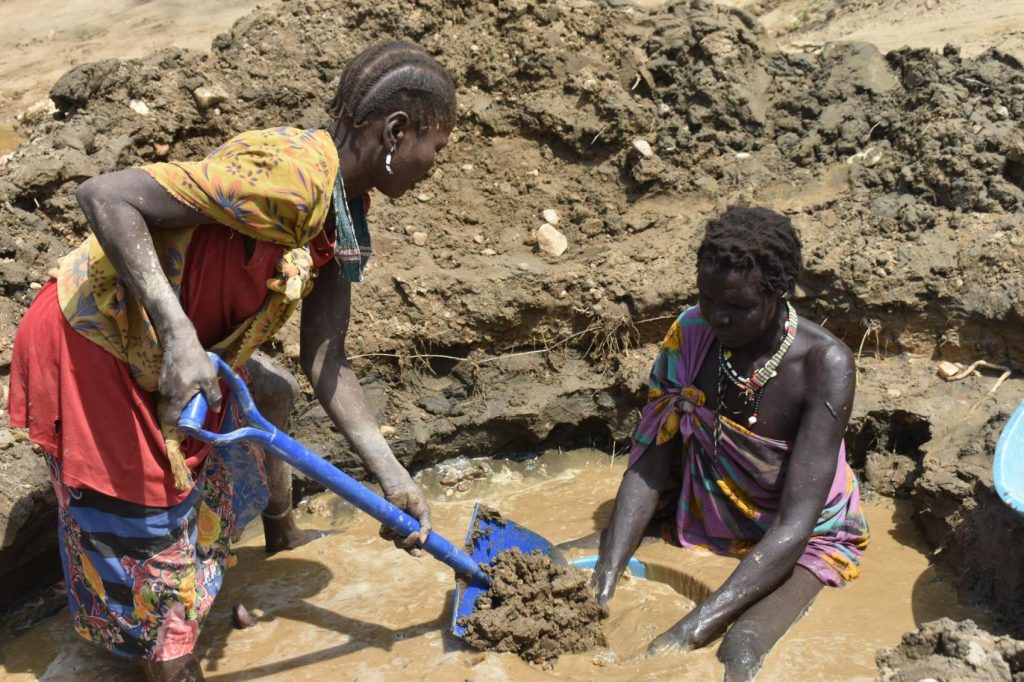
Women play a central but frequently invisible role in artisanal gold mining across Uganda. In Karamoja particularly, women miners provide significant labour in the panning and sorting stages of artisanal operations while facing discrimination in pay, access to licensing, and participation in cooperative decision-making.
Gender inclusion programmes run by NGOs and the Ugandan Ministry of Energy are working to formalise women’s participation in the mining sector, providing training, access to credit through SACCOs, and advocacy for equal treatment in licensing processes.
Deforestation and Land Degradation
Open-pit extraction in Busia, underground operations in Mubende, and alluvial panning in Buhweju and Karamoja all create environmental footprints including deforestation, topsoil removal, river siltation, and loss of agricultural land.
The 2022 Mining Act’s mandatory rehabilitation fund requirements are a structural improvement, but enforcement capacity at the district level remains limited and many sites — particularly those operated by informal artisanal miners outside the licensing framework — operate without any environmental mitigation.
Community Employment and Economic Inclusion
Gold mining provides livelihoods for an estimated 500,000 artisanal miners and their dependents across Uganda’s producing districts. In regions like Mubende, Busia, and Karamoja where formal employment opportunities are limited, artisanal gold mining is frequently the primary income source for entire communities.
Ensuring that mining employment is formalised, fairly compensated, and physically safe is as important to Uganda’s gold sector sustainability as any geological or regulatory consideration.
How to Buy Gold from Uganda’s Mines: A Guide for International Buyers
The growing scale of gold mining in Uganda, the expansion of licensed refinery capacity to nine facilities, and the progressive formalisation of artisanal supply chains have made Uganda one of the most accessible African gold sourcing markets for international buyers — provided the right licensed partner is engaged.
Certified 24K Gold Bars from Uganda’s Refineries
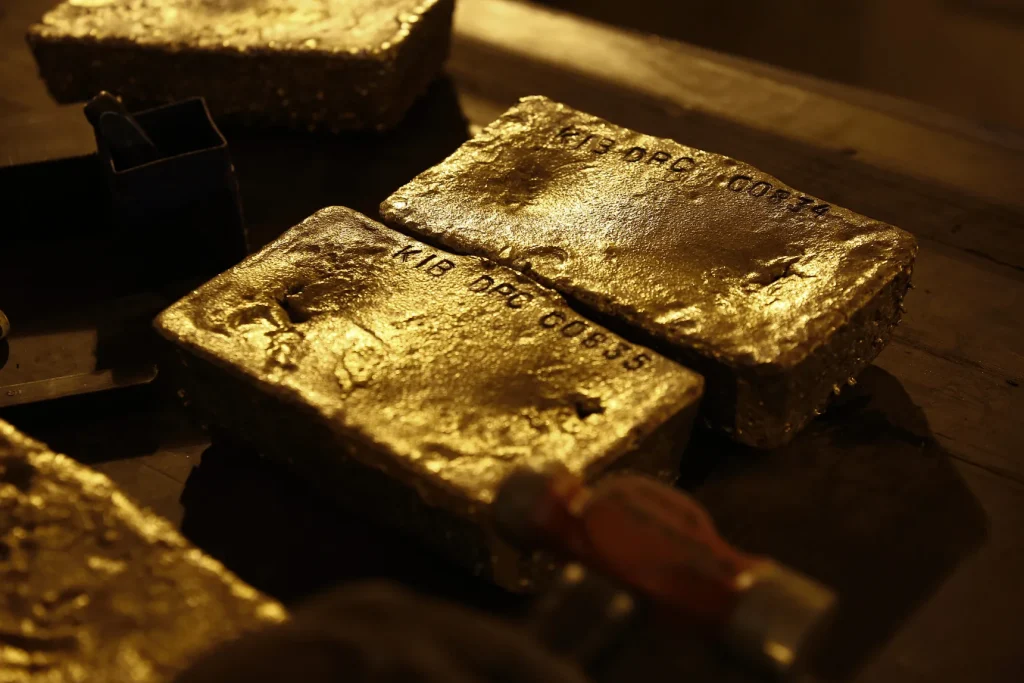
Certified 24K gold bars at 999.9 purity from Uganda’s nine licensed refineries — including AGR at Entebbe, Wagagai’s Busia refinery, and Simba Gold Refinery — represent the cleanest and most documentable Ugandan gold product for international investment buyers.
These bars carry independent assay certificates from accredited Ugandan laboratories, DGSM export permits, ICGLR conflict-free certification, and Uganda Revenue Authority tax clearance — the complete documentation package required for smooth customs clearance in the US, UK, EU, UAE, and Asian markets.
Gold ingots for sale from Uganda’s certified refineries are available through Buy Gold Bars Africa in standardised investment weights from 50 grams to 1 kilogram. Gold in Africa for sale covers the full range of certified products from Uganda alongside comparable options from Ghana and South Africa.
Raw Gold from Uganda’s Artisanal Sector
International buyers with access to independent refining facilities can source raw gold material — nuggets, gold dust, and dore bars — from Uganda’s licensed cooperative aggregators in Mubende, Busia, and Kassanda at pre-refinery prices that sit 5–15% below certified bar prices, reflecting the refining cost the buyer absorbs.
Gold dust from Africa covers artisanal gold dust sourcing from Uganda’s producing districts with the specific documentation requirements — assay certificate from UNBS or Simba Assay Laboratory, ICGLR conflict-free certification, DGSM export permit — that legitimate artisanal gold export requires.
Where to buy raw gold in Uganda provides guidance on the licensed market access options for buyers interested in pre-refinery material from Ugandan artisanal cooperatives.
How Gold Is Processed from Mine to Export
Understanding the complete journey from mine to certified bar — how gold is extracted from Uganda’s geological formations, how it is refined to investment grade, and how it navigates Uganda’s regulatory export framework — is essential context for any serious buyer.
How gold is mined and processed in Africa explains the full value chain from raw ore through smelting, refining, and certified export, placing Uganda’s gold within the broader African gold processing landscape.
Comparing Uganda to Other African Gold Sources
For buyers evaluating Uganda’s gold against comparable sources in Ghana, South Africa, and Tanzania, the relevant comparisons are on price per gram (Uganda’s artisanal gold typically represents the most competitive entry point), documentation quality (Ghana’s PMMC system is currently more standardised, but Uganda’s is rapidly improving), and supply reliability (Busia and Mubende offer more consistent supply than some other African sources, but Karamoja remains weather-dependent).
The list of gold refineries in Ghana and gold mining in South Africa pages provide the comparative context for buyers evaluating multi-country African gold sourcing strategies.
For buyers in the United Kingdom, the buy gold in the UK page covers HMRC VAT treatment, import declaration requirements, and the investment gold classification criteria that determine whether Ugandan gold qualifies for VAT exemption at UK customs.
For buyers shipping Ugandan gold to the United States, what it costs to ship gold to the USA from Africa covers armoured courier options, insurance rates, and the FinCEN 105 declaration requirement for shipments above USD 10,000.
For buyers routing Ugandan gold through Dubai, the Dubai gold export rules page covers the UAE’s DMCC framework for gold transit and re-export.
How to Invest in Gold Mining in Uganda: A Practical Guide
Gold mining in Uganda offers multiple entry points for international and domestic investors — from purchasing mining licences to partnering with existing cooperatives to investing in refinery capacity.
1. Understand Uganda’s Investment Landscape and Legal Requirements
Investing in gold mining in Uganda begins with understanding the 2022 Mining and Minerals Act licensing framework. Foreign companies must register with the Uganda Registration Services Bureau (URSB), obtain a mining or exploration licence from the DGSM, acquire a NEMA environmental permit for operations above artisanal scale, and comply with Uganda Revenue Authority tax and royalty obligations.
The DGSM’s four-tier licensing structure — artisanal (Ugandan citizens only), small-scale (up to 5 ha), medium-scale (up to 251 ha, 21-year term), and large-scale (15% UNMC free-carry) — determines which licence category matches your investment scale and operational model.
2. Choose Your Investment Model
Exploration licence: The lowest-risk entry point — prospecting and exploration licences allow geological work and sampling without commitment to production. Most of the Karamoja exploration activity by Jan Mangal, Magnus International, and others operates at this level.
Joint venture with existing operators: Partnering with established Ugandan operations like Kassanda Mines, Vangold Mining, or licensed Mubende cooperatives provides operational access without the start-up cost and regulatory navigation of an independent licence application.
Refinery investment: Uganda’s nine-refinery ecosystem is growing and the government’s export tax structure actively incentivises domestic refining over raw gold export. Investing in refining capacity is the highest-value-add investment available in Uganda’s gold sector and attracts the most favourable regulatory treatment.
Physical gold purchasing: For investors who want exposure to Uganda’s gold market without operational mining investment, purchasing certified gold bars through Buy Gold Bars Africa provides direct price exposure to Uganda’s gold market with none of the operational, regulatory, or environmental liability of mining investment.
3. Manage Risk Through Licensed Partnerships
The greatest risk in Uganda’s gold investment landscape is engaging with unlicensed or fraudulent operators. Uganda’s informal gold sector is large, and fraudulent “mine sellers” and unregistered “brokers” actively target international investors with offers of gold at below-market prices. All legitimate Ugandan gold trading flows through DGSM-licensed mineral dealers — verifiable through the DGSM’s public licence registry. The FAQs about buying gold from Africa cover scam recognition and due diligence in detail for first-time Uganda gold buyers and investors.
Current Gold Prices in Uganda: 2026 Reference
At current global gold spot prices of approximately USD 134–140 per gram for 24K (999.9 purity) in June 2026, Uganda’s gold price landscape is as follows:
| Product | Purity | Price per Gram (USD) | Price per kg (USD) |
|---|---|---|---|
| 24K certified bars (licensed refinery) | 99.9% | USD 134–140 | USD 134,000–140,000 |
| 22K gold bars (916 purity) | 91.67% | USD 123–128 | USD 123,000–128,000 |
| Raw gold nuggets (Busia/Mubende artisanal) | 90–98% | USD 112–127 | USD 112,000–127,000 |
| Gold dust (Karamoja/Buhweju alluvial) | 85–92% | USD 100–118 | USD 100,000–118,000 |
| Dore bars (Kassanda cooperative) | 90–95% | USD 114–122 | USD 114,000–122,000 |
Contact Buy Gold Bars Africa for live pricing tied to current LBMA spot at time of inquiry.
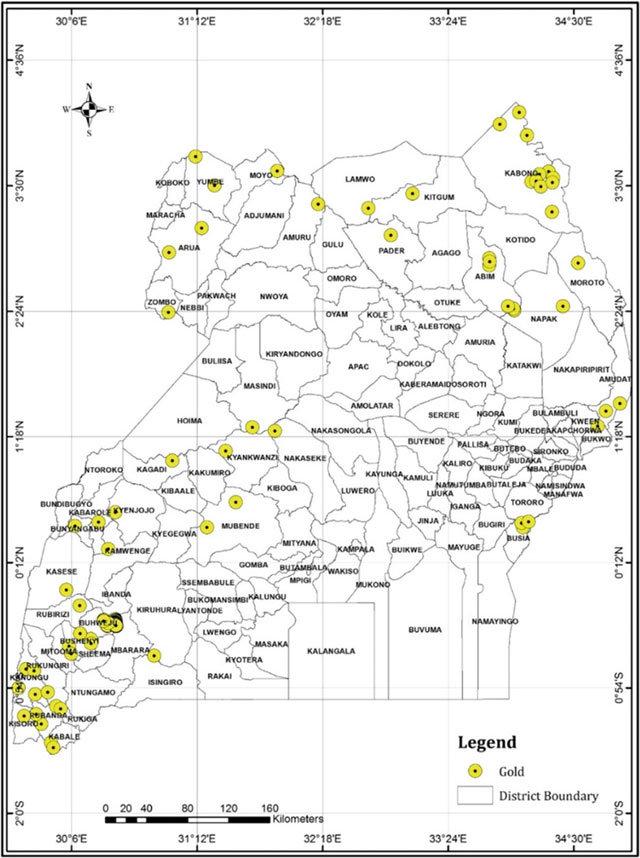
Uganda Gold Map
Frequently Asked Questions About Gold Mining in Uganda
Where are gold mines located in Uganda? Uganda’s gold mines are concentrated in six primary regions: Karamoja (northeastern Uganda, 31 million tonnes of ore reserves), Busia (eastern Uganda, Wagagai industrial mine + 50,000 artisanal miners), Mubende (central Uganda, 1.6 tonnes/year), Buhweju (western Uganda, alluvial deposits), Kassanda (central Uganda, cooperative Kayonza Mine), and West Nile. Smaller operations also exist in Namayingo and Kisoro.
Is gold mining legal in Uganda? Yes. Gold mining is legal in Uganda and regulated by the DGSM (Directorate of Geological Survey and Mines) under the Ministry of Energy and Mineral Development.
All mining operations require valid DGSM licences appropriate to their scale. Artisanal licences are restricted to Ugandan citizens; small-scale and large-scale licences are available to foreign companies.
Can foreigners invest in Uganda’s gold mining industry? Yes. Foreign companies can acquire small-scale, medium-scale, and large-scale mining licences in Uganda after registering with the URSB, obtaining a DGSM licence, and acquiring a NEMA environmental permit. Large-scale licences require a 15% free-carry equity position for UNMC (Uganda’s state mining company). Foreign investors can also purchase certified gold bars through licensed dealers without any separate mining investment.
How much gold does Uganda export annually? Gold exports generated USD 5.8 billion in the year ending November 2025, a 75.8% increase from USD 3.3 billion the previous year. Gold now accounts for 76.6% of Uganda’s total merchandise export revenue. In October 2025 alone, gold export earnings reached USD 964.6 million.
What is the purity of gold mined in Uganda? Formally refined gold from Uganda’s nine licensed refineries is produced at 99.9% (24K) purity meeting international LBMA standards.
Artisanal gold from Mubende and Busia typically runs 90–98% natural purity (22K–24K range). Alluvial gold dust from Buhweju and Karamoja typically ranges from 85–92% purity.
Are there gold refineries in Uganda? Yes. Uganda now operates nine licensed gold refineries, including the African Gold Refinery (Entebbe), the Wagagai refinery (Busia), Simba Gold Refinery, and Eurogold Refinery (Arua). These facilities produce gold at 99.9% purity meeting international market standards.
What is the current gold price in Uganda? The current 24K gold price in Uganda is approximately USD 134–140 per gram for certified bars from licensed refineries, in line with LBMA spot pricing plus a 1–3% dealer premium. Raw artisanal gold from Ugandan mines is priced at a discount reflecting the refining cost — typically 5–15% below certified bar prices.
Conclusion: Gold Mining in Uganda — A Transforming Sector With Global Significance
Gold mining in Uganda in 2026 represents one of Africa’s most compelling intersection points between geological wealth, economic opportunity, and the challenges of sustainable development.
The record USD 5.8 billion in gold export earnings, nine operating refineries producing LBMA-quality gold, the Wagagai mine’s operational success, and the confirmation of 31 million tonnes of gold ore reserves in Karamoja collectively represent the foundation of a gold sector that could define Uganda’s economy for the next generation.
For international buyers, the opportunity is genuine — certified 24K gold bars from Uganda’s licensed refineries at source-country prices below Western retail, raw artisanal gold at the deepest discount to spot available in East Africa, and an increasingly formalised supply chain that makes responsible sourcing progressively more achievable.
Buy Gold Bars Africa provides the licensed, DGSM-verified access point to Uganda’s gold market — independent assay certification, ICGLR conflict-free documentation, complete DGSM export permit clearance, and international armoured logistics — for buyers who want Uganda’s price advantage without navigating its regulatory complexity independently.
Contact Us today to discuss current gold bar availability, live pricing, and the documentation package that accompanies every certified Ugandan gold purchase.