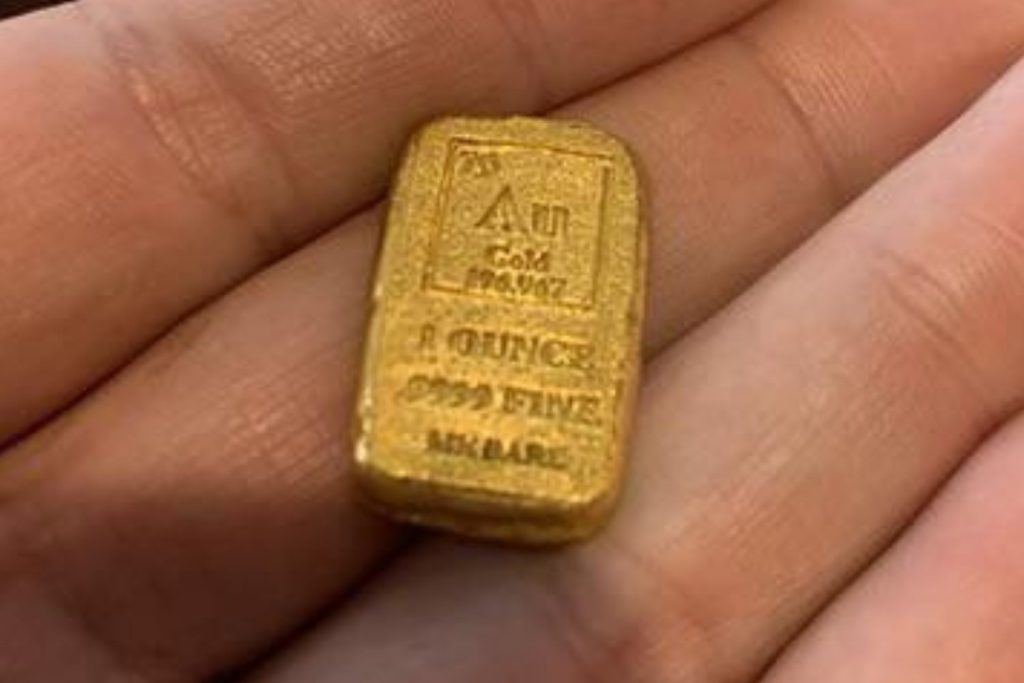
Taxes on Physical Gold: Buying, Selling, Importing & Exports
Taxes on physical gold depend on the country, the type of gold, and the transaction: buying, selling, importing, exporting, or simply holding gold bars and coins can each trigger different charges, including VAT or sales tax, customs duty, capital gains tax, income tax, and export levies, and there is no single global “gold tax.”
The same 1 kg bar can be VAT-free in one country, taxed as a collectible in another, and subject to a levy only when it crosses a border. What matters is whether the gold counts as investment bullion, jewellery, or a collectible, who is buying and selling, and what is being done with it, not just that it is gold.
This guide explains every tax that can apply to physical gold, how buying, selling, importing and exporting are treated differently, how to work out a gain, what records to keep, and how to reduce your tax bill legitimately.
What Are Taxes on Physical Gold?
Taxes on physical gold are the government charges that can arise when gold is bought, held, sold, moved across a border, or traded as a business. They apply to gold in physical form, such as bars, coins, nuggets, doré, and jewellery, as opposed to gold held through funds or shares, which follow different rules.
The most important point is that tax treatment is not universal. Two buyers purchasing identical bars in different countries, or a buyer and a dealer in the same country, can face entirely different tax outcomes. Any article that gives you one rate for “gold tax” is oversimplifying, which is why this guide explains the types of tax and the factors that decide them rather than quoting a rate that would be wrong somewhere.

What Taxes Can Apply to Physical Gold?
| Tax or Charge | What It Is | When It Can Apply |
|---|---|---|
| VAT, GST or sales tax | A consumption tax on the purchase price | When buying gold, depending on the type of gold and local rules |
| Capital gains tax | Tax on profit from selling an asset | When selling gold for more than its cost, where gains are taxed |
| Income tax | Tax on business or trading income | When gold is bought and sold as a business or regular trade |
| Import duties | A charge on goods entering a country | When gold crosses a border, depending on its classification |
| Customs taxes and fees | Processing and clearance charges | At import, alongside any duty |
| Export taxes or levies | A charge on gold leaving a country | At export, in countries that levy them |
| Royalties | A payment to the state on minerals extracted | Where gold is mined and sold, usually paid by miners or exporters |
| Withholding tax | Tax deducted at source on certain payments | In some jurisdictions on specific gold transactions |
| Excise taxes | Special taxes on particular goods | Rarely, and only in some jurisdictions |
| Stamp duties | Taxes on documents or transfers | Rarely, depending on the jurisdiction |
| Dealer and reporting requirements | Obligations on businesses to record or report transactions | When dealers handle large or cash transactions |
Important: not every tax applies to every gold transaction. A private buyer holding a bar may never pay income tax on it, while an exporter pays levies and royalties a private buyer never sees. The question is always which of these applies to your transaction.
Tax on Buying Physical Gold
Buying gold can trigger a consumption tax, but the amount depends on what you buy:
- Gold bars: often the most favourably treated form, with some jurisdictions exempting qualifying investment bars from VAT or sales tax.
- Gold coins: treatment depends on whether the coin counts as investment bullion or a collectible.
- Gold jewellery: usually taxed in full, because it is treated as a consumer good, often with the making charge included.
- Gold nuggets: treatment varies, depending on whether they are classified as raw material, investment gold, or collectibles.
- Doré: semi-refined gold is often handled as a raw material, with business-to-business rules rather than consumer rules.
- Refined bullion: the form most likely to qualify for investment-gold treatment.
This distinction matters because investment-grade bullion can be treated very differently from jewellery or collectible coins. See our guide to gold jewellery prices in Dubai for a clear example of how bars and jewellery are taxed differently side by side.
Taxes on Gold Bars
Gold bars are where tax rules most often reward the buyer, so it pays to understand them.
- VAT, sales tax or GST on gold bars: many jurisdictions exempt or zero-rate bars that meet a minimum purity and tradable-form standard, often treating them as investment gold. Others tax them like any other good.
- Investment-grade gold: where a special regime exists, it usually requires a minimum purity, commonly in the high 99s, and a form accepted on bullion markets.
- Minimum purity thresholds: a bar below the threshold, or not in a qualifying form, may lose the favourable treatment even if it is real gold.
- Dealer invoices: a proper invoice states weight, purity, price and the tax treatment applied, which is your proof of what you paid and why.
- Tax records: keep the invoice, assay certificate and serial number, because they support your cost basis when you sell.
Search terms such as “gold bar tax,” “tax on buying gold bars” and “gold bullion taxes” all point to the same answer: it depends on the jurisdiction and on whether the bar qualifies as investment gold. See our pages on gold bars, 1 oz gold bars and 1 kg gold bars to see how documentation supports tax treatment.
Taxes on Gold Coins
Coins fall into categories that tax systems often treat differently:
| Coin Type | Typical Tax Approach |
|---|---|
| Investment bullion coins | Can receive investment-gold treatment where they meet purity and market-trading criteria |
| Collectible or commemorative coins | Often taxed as ordinary goods or collectibles, not as investment gold |
| Rare coins | Valued on rarity, usually outside investment-gold rules |
| Numismatic products | Priced for collector appeal, so usually taxed like collectibles |
A few jurisdictions go further and treat a country’s own legal-tender coins specially. In the UK, for example, certain British legal-tender gold coins are exempt from capital gains tax for UK residents. See our guides to buying gold coins online and buying gold bars and coins online in the UK. The takeaway for the “tax on gold coins” question is that it depends on the type of coin and the country, not on the fact that it is a coin.
Tax on Selling Physical Gold
Selling gold can create a capital gain if you sell for more than you paid, or taxable business income if you trade gold regularly or as a business. Whether and how that is taxed depends on the seller, the country, and how long the gold was held.
Example:
- Purchase price: $50,000
- Selling price: $65,000
- Gain: $15,000
The taxable amount is not necessarily the full $15,000. Rules in many places let you adjust for acquisition costs, selling expenses and the holding period, and some apply different treatment to different taxpayers. The $15,000 is a starting figure, not a tax bill. Many jurisdictions also have annual allowances or exemptions that can reduce or remove tax on smaller gains.
Capital Gains Tax on Physical Gold
What is a capital gain? The profit you make when you sell an asset for more than its cost, adjusted for allowable costs.
When does selling gold create a taxable gain? When you dispose of gold, by selling it or in some systems by exchanging it, for more than your cost basis, in a jurisdiction that taxes gains on that type of gold.
Key concepts:
- Short-term vs. long-term treatment: some countries tax gains differently depending on how long you held the asset, and some tax physical gold under a special category, such as collectibles, with different rates from other assets.
- Cost basis: generally what you paid for the gold, including purchase costs that your jurisdiction allows.
- Selling expenses: costs of selling, such as dealer commissions, which may reduce the gain.
- Losses: where allowed, a loss on gold can sometimes offset other gains.
- Record keeping: you can only claim a basis and costs you can prove.
Searches such as “capital gains tax on physical gold,” “gold capital gains tax” and “tax on selling gold bullion” all depend on the same factors: your country, the type of gold, how long you held it, and your circumstances. Some jurisdictions exempt certain gold from capital gains entirely, as with certain legal-tender coins in the UK, while others apply a collectibles-type treatment, as in the United States.
Tax on Gold Imports
Importing physical gold can involve several separate steps and charges:
- Customs declaration of the gold’s value, weight and classification
- Import duty, where the tariff classification carries one
- VAT or GST, where it applies to that type of gold
- Customs processing or clearance fees
- Documentation requirements, including a commercial invoice
- Origin documentation, such as a certificate of origin
- Assay documentation confirming purity and weight
- KYC and AML requirements for the parties involved
Import duty and VAT are different taxes and should never be treated as interchangeable. Duty is a charge on goods crossing a border, set by tariff classification. VAT is a consumption tax, which in many systems is calculated on the goods’ value plus any duty.
A shipment can attract one, both, or neither, depending on the form of gold. For example, in Dubai, refined bullion generally enters without customs duty and, where it qualifies as investment gold, without VAT, while jewellery is treated differently. See our detailed guide to gold import duties in Dubai for a worked, jurisdiction-specific example, and our overview of buying gold in the UK for the UK side.
Tax on Gold Exports
Exporting gold is often where producing countries collect revenue, and it usually involves several layers:
- Export taxes or duties, in countries that levy them
- Royalties, where gold is mined and sold, usually paid by the miner or exporter
- Customs requirements at the point of export
- Export permits, specific to each shipment
- Mineral or export licences held by the exporter
- Assay certificates confirming purity and weight
- Commercial invoices stating declared value
- Country-of-origin documentation
Searches for “gold export taxes,” “gold export tax Africa,” and “tax on exporting gold” all lead to country-specific answers, because each producing country sets its own structure.
See our worked example in the guide to gold export tax in Uganda, and our guides to legal requirements to buy gold bars from Africa and gold logistics companies in Uganda for how the paperwork fits together.
Physical Gold Taxes by Country
This table shows the factors that decide tax in each country, not rates, since rates and exemptions change and depend on the form and use of the gold.
| Country | Buying Tax | Selling Tax | Import Tax | Export Tax |
|---|---|---|---|---|
| United States | Sales tax varies by state and product | Capital gains rules apply; physical gold is generally treated as a collectible | Depends on classification and declared value | Depends |
| United Kingdom | Qualifying investment gold receives special VAT treatment | Capital gains tax applies to most gold; certain UK legal-tender coins are exempt | Depends on classification; VAT treatment follows the gold’s category | Depends |
| UAE | Investment-grade gold is generally zero-rated; jewellery is taxed | Individuals generally face no personal income tax; businesses may face corporate tax | Bullion and jewellery are treated differently | Generally zero-rated for VAT |
| Uganda | Depends on the transaction | Depends | Depends | Export licensing, royalties and levies may apply |
| Kenya | Depends | Depends | Depends | Royalties and export controls may apply |
| Tanzania | Depends | Depends | Depends | Royalties and regulated-market requirements may apply |
| Ghana | Depends | Depends | Depends | Artisanal gold flows through the Ghana Gold Board’s system |
This is a starting framework, not a rate sheet. Tax rates, thresholds and exemptions change, and the legal treatment depends on the form and use of the gold. Confirm current rules with the relevant tax authority before any transaction. For country detail, see our guides to gold in Dubai, where to buy gold in Ghana, and buying gold in Tanzania.
Investment Gold vs. Jewellery: Tax Differences
Tax systems commonly separate gold into categories:
| Category | Typical Treatment |
|---|---|
| Investment-grade bullion | Often exempt, zero-rated, or specially treated for VAT |
| Jewellery | Usually taxed as a consumer good, often including the making charge |
| Decorative gold | Usually taxed as an ordinary good |
| Collectibles and numismatic coins | Often treated as collectibles, with different rules |
| Industrial gold | Treated as raw material, often under business-to-business rules |
This prevents a common mistake: assuming that buying a gold necklace is taxed the same way as buying a 1 kg investment bar. Even if both are high-purity gold, the necklace is a worked, consumer item, and the bar is a bullion product. See our gold making charges guide for Dubai for how that plays out in practice.
Are Gold Bars Tax-Free?
Gold bars are not automatically tax-free. Whether physical gold is exempt from VAT, sales tax, capital gains tax or other taxes depends on the jurisdiction, the purity and type of gold, and the nature of the transaction.
Some jurisdictions give special treatment to qualifying investment gold, typically bars and coins above a minimum purity that trade on bullion markets, often exempting them from VAT or sales tax.
That exemption usually applies only to the consumption tax on the purchase. It does not automatically remove capital gains tax when you sell, or import and export obligations when the gold crosses a border.
Are Gold Coins Tax-Free?
Gold coins are not automatically tax-free. Tax treatment depends on the country and on whether the coins qualify as investment bullion, collectibles, or another category. A coin that is exempt from sales tax in one country can be taxed as a collectible in another, and a coin that is exempt from capital gains in its home country may not be exempt elsewhere.
Do You Pay Tax When You Buy Gold?
Buying gold does not automatically mean paying income tax or capital gains tax. Those arise when you sell, if at all. But the purchase itself may involve:
- VAT or GST, depending on the jurisdiction and type of gold
- Sales tax, in places that apply it to precious metals
- Dealer fees, which are costs rather than taxes
- Import taxes, if the gold is bought from abroad and brought into your country
Whether any of these apply depends on where you are, what you buy, and where it comes from.
Do You Pay Tax When You Sell Gold?
The usual sequence is purchase → ownership → sale → taxable gain. Simply owning physical gold does not normally create a tax liability in the same way that selling it at a profit can. In most systems the tax event is the sale, not the holding.
Exceptions exist: in some places wealth, property, or reporting rules can apply to high-value holdings, and some jurisdictions tax certain exchanges of gold as well as sales. If you sell at a loss or break-even, there may be no tax due, and a loss may in some systems be useful.
Gold Tax Calculation Example
This example is illustrative only. The actual tax depends on your country’s rules.
| Item | Amount |
|---|---|
| Purchase price | $40,000 |
| Selling price | $50,000 |
| Eligible selling costs | $1,000 |
| Potential gain before adjustments | $9,000 |
The calculation: $50,000 − $40,000 − $1,000 = $9,000.
That $9,000 is the starting figure. The taxable amount depends on factors such as the holding period, any annual allowance or exemption, how your country classifies physical gold, whether you are an individual or a business, and the rate that applies. In some systems, part or all of the gain may be exempt; in others, the full amount, taxed at a rate that depends on your total income or on the gold’s category.
Gold Tax Reporting and Record Keeping
For anything beyond a small purchase, keep:
- Purchase invoice and sales invoice
- Assay certificate and refinery certificate
- Serial number, weight and purity of each item
- Date of purchase and date of sale
- Purchase price and selling price
- Shipping costs and insurance costs
- Customs documents, where gold was imported or exported
Good records support your cost basis, prove the tax treatment applied at purchase, and protect you if an authority asks questions. For high-value transactions, proper documentation is not optional. See our gold authentication guide for what a genuine assay certificate should contain.
Gold Taxes and International Buyers
When you buy gold internationally, a quoted gold price is not the final landed cost. The journey is:
Seller’s country → export requirements → shipping → destination customs → import taxes → ownership → eventual sale
Each stage can add a tax, a fee, or a document requirement:
| Stage | What Can Apply |
|---|---|
| Seller’s country | Export permit, royalties, export levies, licensing |
| Shipping | Insurance, freight, specialist carrier costs |
| Destination customs | Declaration, classification, possible duty |
| Import taxes | VAT or GST, depending on the gold’s category |
| Ownership | Possible reporting duties for high-value holdings |
| Eventual sale | Capital gains or income tax, depending on rules |
Work out the full landed cost before you agree a price, and compare quotes on that basis. See our guides to why cheap African gold offers can be dangerous and how to buy gold bars from Africa safely.
Gold Taxes vs. Gold Transaction Fees
Many extra costs on a gold purchase are not taxes, and the two should not be confused:
| Taxes (paid to the state) | Other Costs (paid to providers) |
|---|---|
| VAT, GST, sales tax | Assay fees |
| Capital gains tax | Refining fees |
| Customs duty | Shipping and insurance |
| Royalties and export levies | Storage |
| Income tax | Dealer premium |
| Customs clearance fees |
Calling every additional cost a “gold tax” makes it harder to compare quotes and to know what is actually negotiable: premiums and service fees can often be shopped around, while taxes are set by law.
How to Legally Minimize Taxes on Physical Gold
The goal is to understand the rules and use them properly, not to conceal anything. Legitimate steps include:
- Buying qualifying investment gold where exemptions apply, which can remove consumption tax on the purchase.
- Understanding local tax rules before purchasing, so you know the treatment of the specific form of gold you are buying.
- Keeping accurate cost records, so you only pay tax on a genuine gain.
- Using permitted investment structures, where your country offers them.
- Understanding import and export exemptions, so you classify and document shipments correctly.
- Getting professional tax advice for large transactions, since the cost of advice is often small compared with the tax at stake.
Tax evasion, such as under-declaring value, hiding purchases, or misclassifying gold to avoid duty, is illegal and carries penalties that far exceed any tax saved. Honest structuring and good records are the safe way to keep the bill as low as the law allows.
Taxes on Physical Gold FAQs
What taxes apply to physical gold? Depending on the country and transaction: VAT, GST or sales tax on purchase, capital gains or income tax on sale, import duty and customs taxes on entry, and export taxes, levies or royalties on exit.
Are gold bars taxable? Sometimes. Treatment depends on the country, the bar’s purity and form, and whether it qualifies as investment gold. Many places exempt or zero-rate qualifying investment bars from VAT, but gains on sale or import and export charges can still apply.
Are gold bars tax-free? Not automatically. Some jurisdictions give qualifying investment gold special treatment, usually for the purchase tax only.
Do you pay tax when buying gold? Possibly VAT, GST, sales tax or import tax, depending on where you are and what you buy. Buying does not normally trigger income or capital gains tax.
Do you pay tax when selling gold? You may owe capital gains tax or income tax if you sell at a profit, depending on your jurisdiction and circumstances. Selling at a loss or without gain may create no tax.
Is physical gold subject to capital gains tax? In many countries, yes, though some exempt certain gold, such as particular legal-tender coins, and some treat physical gold as a collectible with its own rules.
Do gold coins have tax? It depends on whether they are investment bullion, collectibles, or another category in your country. Some coins are exempt from certain taxes while others are not.
Is investment gold VAT-free? In many jurisdictions qualifying investment gold, meaning bullion above a minimum purity in a tradable form, is exempt or zero-rated for VAT. Jewellery is generally not.
Is gold subject to import duty? It depends on the tariff classification. Some forms of gold, such as bullion, are often duty-free in major trading hubs, while jewellery frequently carries duty. Import VAT is a separate matter.
Do you pay tax when exporting gold? In some producing countries, yes: export taxes, royalties or levies may apply, along with permits and licensing requirements.
How is gold taxed in different countries? Differently in each, depending on the gold’s form and the transaction. Use the country table above as a framework, then confirm current rules with the relevant authority.
How do I calculate tax on gold profits? Start with selling price minus purchase price minus allowable costs, then apply your jurisdiction’s rules on allowances, holding periods and rates to that gain.
Do I have to report physical gold on my taxes? It depends on the country. Sales, and in some places certain holdings or large transactions, may need to be reported. Keep records and check local rules.
Are gold jewellery and gold bars taxed differently? Usually, yes. Jewellery is generally taxed as a consumer good, while qualifying investment bars often receive favourable VAT or sales-tax treatment.
Buy Gold With Full Documentation
Clear paperwork makes tax treatment straightforward. Buy Gold Bars Africa supplies certified gold bars, gold ingots, gold nuggets and gold dust, each with an independent assay certificate, certificate of origin and export documentation.
Compare prices against live rates in our guide to UK gold prices per gram and our comparison of African gold prices vs. Dubai gold prices, then contact us, message us on WhatsApp at +256 707 585144, or read about our company.