South Africa Gold Export License: The Complete 2026 Guide
Exporting gold from South Africa is not a matter of simply finding a buyer — it’s a tightly regulated process built around a South Africa gold export license, and getting that license right is the single biggest hurdle facing any trader, refiner, or Africa gold exporter looking to move gold out of the country legally.
South Africa remains one of the continent’s most credentialed gold-producing nations, anchored by Rand Refinery’s LBMA Good Delivery accreditation. But that reputation for trustworthy gold comes with strict oversight, and understanding exactly which gold export permit you need, who issues it, and what it takes to qualify is essential before you ship a single gram.
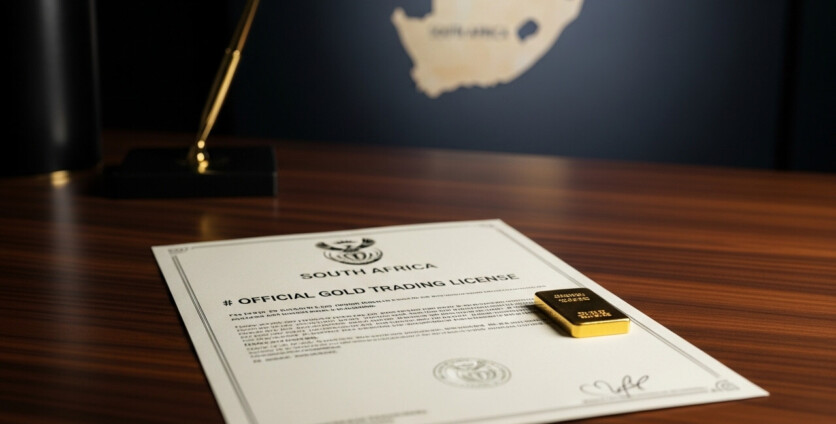
Why South Africa Regulates Gold Exports So Closely
Gold exports from South Africa sit at the intersection of mining law, financial regulation, and anti-money-laundering compliance. The country’s gold trade is overseen by several bodies working together:
- The South African Diamond and Precious Metals Regulator (SADPMR) — the primary licensing authority for anyone dealing in or exporting gold.
- The South African Revenue Service (SARS) — handles customs clearance, tax compliance, and the actual export permit issued at the point of shipment.
- The South African Reserve Bank (SARB) — regulates foreign exchange and ensures export proceeds are properly repatriated to South Africa.
- The Department of Mineral Resources and Energy (DMRE) — enforces the Mineral and Petroleum Resources Development Act (MPRDA), which governs how the gold was mined and sourced in the first place.
This layered oversight exists to keep South African gold traceable from mine to market, prevent smuggling, and confirm that every shipment leaving the country is backed by a properly licensed, properly documented South Africa gold export license.
The Legal Framework Behind the South Africa Gold Export License
The core law governing every gold export license in South Africa is the Precious Metals Act (Act 37 of 2005). This act regulates the acquisition, possession, processing, refining, and export of precious metals, including gold, and requires anyone trading or dealing in gold — exporters included — to hold a valid SADPMR licence before doing so.
A second, equally important piece of the puzzle is the Currency and Exchange Manual for Authorized Dealers (CEMAD), Section B.20(c), administered by the South African Reserve Bank.
This regulation requires that the full proceeds of any gold export be repatriated to South Africa, either in foreign currency, in Rand from a non-resident Rand account, or in Rand from a vostro account held by an Authorized Dealer.
Every shipment must also be accompanied by a prescribed SARS customs declaration, giving the SARB a clear record of the transaction.
Step 1: Obtain a Precious Metals Beneficiation License from the SADPMR
Before you can even think about an export permit, you need a Precious Metals Beneficiation License from the SADPMR, authorizing you to trade, process, or otherwise deal in gold inside South Africa.
This is the foundational gold export license South Africa requires of every applicant, and without it, no further export approval is possible.
To apply, you’ll generally need:
- A legally registered South African business — a private company (Pty Ltd), partnership, or sole proprietorship.
- Certificate of Incorporation or Registration.
- A Memorandum of Association.
- A current tax clearance certificate from SARS.
- Proof of registration with the relevant Chamber of Commerce, where applicable.
- Documented business profile and details demonstrating the financial and technical capacity to handle precious metals responsibly.
Only businesses or individuals who are properly authorized to trade in gold within South Africa are eligible to apply — this isn’t a license available to casual sellers or unregistered intermediaries.
Step 2: Apply for a Gold Export Permit from SADPMR and SARS
Once your Precious Metals Beneficiation License is secured, the next step is applying for the export permit itself. All applications for permission to export gold — whether raw gold, gold jewelry, gold bars, or Krugerrand coins — must be referred to the SADPMR for approval.
Once SADPMR approval is granted, a further permit must be obtained from SARS. This SARS permit entitles the holder to approach Rand Refinery Limited for a gold allocation, and it’s this SARS-issued permit that ultimately clears a shipment for departure.
In practice, this means a legitimate South Africa gold export license application involves two linked layers of approval — SADPMR licensing first, then a SARS export permit — before any gold physically leaves the country.
Step 3: Meet Foreign Exchange and Documentation Requirements
With both the SADPMR licence and SARS permit in place, exporters must still satisfy South Africa’s foreign exchange rules under CEMAD Section B.20(c). This means:
- Receiving full sale proceeds in foreign currency, or Rand from an approved non-resident account.
- Supporting every shipment with the required SARS customs declaration.
- Providing complete documentation on international transactions, including buyer information and payment method, for SARB review.
Every shipment also needs to be backed by an assay certificate confirming purity, a certificate of origin, and a commercial invoice — the same documentation any responsible Africa gold exporter should be providing as standard, not as an afterthought.
Step 4: Customs Clearance and Physical Export
Once SARS issues the Customs Export Release Order — confirming every document has been verified and all applicable taxes and fees paid — the gold can finally depart South Africa through an approved logistics channel.
OR Tambo International Airport in Johannesburg is the country’s primary departure point for precious metals cargo, served by licensed precious-metals carriers built specifically for high-value shipments rather than standard parcel logistics.
Cape Town International Airport and the Port of Durban serve as alternative departure points, with sea freight typically reserved for very large gold volumes rather than investment-grade bars and coins, which almost always move by air.
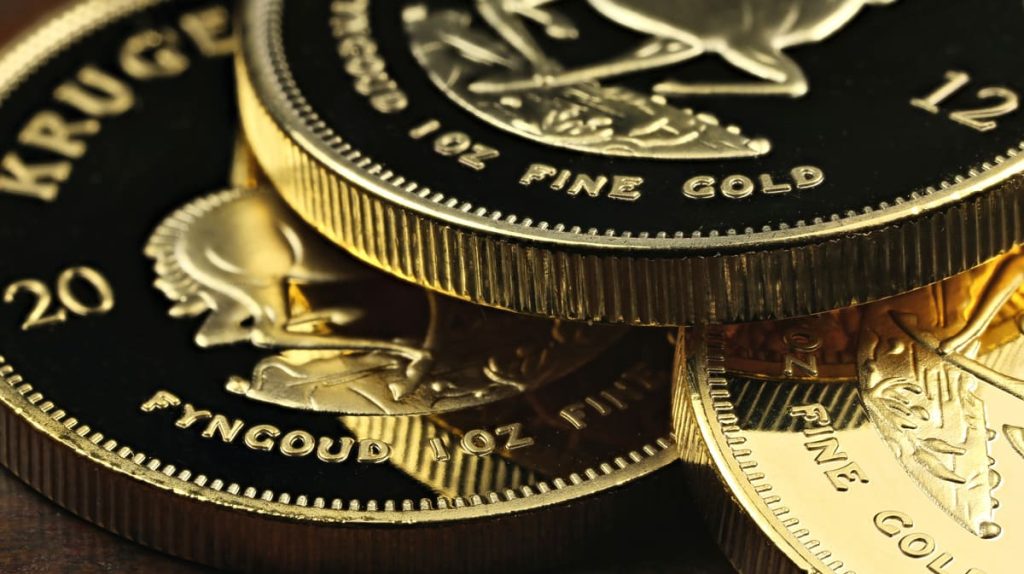
Krugerrand and Personal Gold Export Limits
For non-residents purchasing South African Krugerrand coins specifically, a separate personal export limit applies — currently capped at 15 coins per non-resident traveler.
Larger commercial volumes fall outside this personal allowance entirely and require the full SADPMR licensing and SARS export permit process described above, regardless of the gold’s form.
What Happens If You Export Gold Without a License?
Exporting gold from South Africa without a valid SADPMR licence and SARS permit is a serious offence under the Precious Metals Act, and the consequences aren’t limited to a fine.
Non-compliance can result in confiscation of the gold itself, financial penalties, and an outright export ban for the individual or business involved.
Given how closely SADPMR, SARS, and SARB coordinate on gold movement, unlicensed exports are also far more likely to be flagged at the customs stage before they ever reach a departure point.
This is exactly why working with an established, properly licensed Africa gold exporter — one who already holds the necessary SADPMR and export documentation for every shipment — removes this entire layer of legal risk for buyers purchasing South African gold from abroad.
Buying South African Gold as an International Buyer
If you’re a buyer rather than an exporter, the licensing burden above sits with your supplier, not you — but it’s still worth confirming that any South African gold you purchase comes from a licensed, SADPMR-compliant source.
A properly documented shipment should arrive with an assay certificate, certificate of origin, and export paperwork already completed, meaning the entire gold export license South Africa process has already been handled on your behalf by a licensed Africa gold exporter before the gold ever reaches a carrier.
For a broader look at South Africa’s gold market — including trusted refineries, mints, and dealers — see our full guide to where to buy gold in South Africa, or our overview of the legal requirements to buy gold bars from Africa if you’re sourcing from multiple countries.