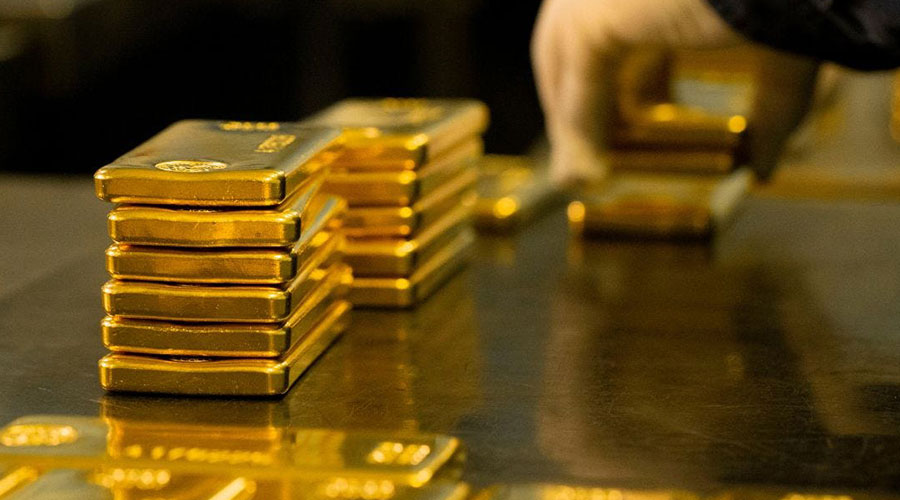
Gold Purity Chart 2026: Complete Guide to Karat Levels, Live Prices & Hallmarks
The definitive 2026 gold purity chart — understand every karat level from 24K to 9K, live prices per gram in USD, hallmark stamps explained, how to test gold purity, and which karat is best for investment or jewellery. Updated May 2026.
What Is Gold Purity?
Gold purity refers to the percentage of pure gold contained in any given item — whether a gold bar, coin, ring, necklace, or bracelet. The higher the purity, the more actual gold the item contains, and the higher its intrinsic market value.
Gold purity is expressed in two internationally recognized systems:
Karats (K): A 24-part scale where 24 karats = 100% pure gold. Each karat represents 1/24th pure gold. So 18K gold = 18/24 = 75% pure gold.
Fineness (parts per thousand): Expressed as a 3-digit number. 999 = 99.9% pure (24K), 916 = 91.6% pure (22K), 750 = 75% pure (18K). This number is also what is stamped as a hallmark on the item.
Understanding gold purity percentages is the foundation of every smart gold buying, selling, or investment decision — because purity directly determines value, durability, and resale potential.

Complete Gold Purity Chart 2026 — With Live Prices Per Gram (USD)
As of May 7–8, 2026, with gold trading at approximately $4,713.70–$4,739 per troy ounce (LBMA spot):
Master Gold Purity Chart — All Karats (May 2026)
| Karat | Purity % | Fineness Stamp | Price/Gram (USD) | Price/oz (USD) | Price/kg (USD) | Best Used For |
|---|---|---|---|---|---|---|
| 24K | 99.9% | 999 / 9999 | $150.89 – $151.55 | $4,694 – $4,714 | $150,890 – $151,550 | Investment bars, bullion coins |
| 23K | 95.8% | 958 | $144.55 – $145.18 | $4,496 – $4,517 | $144,550 – $145,180 | Rare; some Asian markets |
| 22K | 91.6% | 916 | $138.22 – $138.82 | $4,299 – $4,318 | $138,220 – $138,820 | Bridal jewellery, Krugerrand |
| 21K | 87.5% | 875 | $132.03 – $132.61 | $4,107 – $4,125 | $132,030 – $132,610 | Middle East jewellery |
| 20K | 83.3% | 833 | $125.69 – $126.24 | $3,909 – $3,926 | $125,690 – $126,240 | Uncommon; specialist markets |
| 18K | 75.0% | 750 | $113.17 – $113.66 | $3,521 – $3,536 | $113,170 – $113,660 | Fine jewellery, rings, watches |
| 14K | 58.5% | 585 | $88.27 – $88.66 | $2,747 – $2,759 | $88,270 – $88,660 | Everyday jewellery (USA/Europe) |
| 10K | 41.7% | 417 | $63.04 | $1,961 | $63,040 | Budget jewellery, entry investment |
| 9K | 37.5% | 375 | $56.83 – $57.08 | $1,768 – $1,775 | $56,830 – $57,080 | Affordable jewellery (UK/Australia) |
⚠️ Prices update every minute. These are LBMA spot-derived reference rates for May 7–8, 2026. Always verify current prices before any significant transaction.
Gold Price Per Gram — All Karats at a Glance
The formula to calculate any karat’s price per gram is:
Price/gram = (Gold spot price ÷ 31.1035) × (Karat ÷ 24)
At $4,713.70/oz (May 8, 2026): $4,713.70 ÷ 31.1035 = $151.55/gram for 24K
| Karat | Calculation | Price/Gram (USD) |
|---|---|---|
| 24K | $151.55 × (24/24) | $151.55 |
| 22K | $151.55 × (22/24) | $138.92 |
| 18K | $151.55 × (18/24) | $113.66 |
| 14K | $151.55 × (14/24) | $88.41 |
| 10K | $151.55 × (10/24) | $63.15 |
| 9K | $151.55 × (9/24) | $56.83 |
Why Gold Prices Are So High in 2026
The gold prices in the chart above are dramatically higher than those in articles written just 12 months ago. Understanding why matters for every gold buyer and investor:
Global record: Gold reached an all-time high of $5,602 per troy ounce on January 28, 2026 — the highest price ever recorded, translating to approximately $180.12 per gram for 24K gold at that peak. Since then, prices have moderated to ~$150–$152/gram but remain approximately 41% higher year-on-year.
Key drivers: Central bank accumulation (record buying through 2024–2025), Middle East geopolitical tensions, safe-haven investment flows, and sustained inflation concerns across major economies.
What this means for you: If you own gold of any karat level, your holdings are worth approximately 41% more than a year ago. If you are buying, you are entering the market at historically elevated prices — relevant for setting realistic return expectations.
Understanding Each Karat Level: Full 2026 Guide
24K Gold (99.9% Pure) — The Investment Standard
What “24K” means: 24 parts gold out of 24 — mathematically the purest gold commercially available. Also expressed as 999 or 9999 fine (999.9‰).
Current price per gram: ~$150.89–$151.55 USD (May 7–8, 2026)
Characteristics:
- Richest, most vivid yellow colour — the “true” gold colour
- Softest commercially traded gold alloy (Mohs hardness ~2.5)
- Highest intrinsic value; directly tracks LBMA spot price
- Universally recognized for investment and trading globally
Best for: Investment bars, bullion coins, gold savings accounts, ETF backing, ceremonial and cultural items (gold leaf, religious ornaments, Chinese chuk kam jewellery)
Not suitable for: Everyday rings, bracelets, or necklaces — too soft for items worn against skin daily
Hallmarks to look for: 999, 9999, or 24K stamped on the piece
22K Gold (91.6% Pure) — The Jewellery and Coin Standard
What “22K” means: 22 parts gold + 2 parts alloy (typically copper, silver, or zinc). Also called 916 gold — 916 parts per 1,000 pure gold.
Current price per gram: ~$138.22–$138.92 USD (May 2026) — approximately 8.4% less than 24K
Characteristics:
- Rich yellow colour; only slightly less vivid than 24K
- Significantly more durable than 24K; holds shape under everyday wear
- High enough purity to retain excellent resale value
- Used in the world’s most famous gold bullion coins
Best for: Bridal jewellery and bangles in India, the Gulf, and Africa; the South African Krugerrand (1 oz, 22K); the American Gold Eagle (22K); high-quality jewellery in Asian and Middle Eastern markets
Is 916 gold 22K or 24K? 916 is definitively 22K gold — it indicates 91.6% purity (916 parts per 1,000 gold). It is not 24K. The “916” hallmark is the global standard identifier for 22-karat gold.
Hallmarks to look for: 916 or 22K
18K Gold (75.0% Pure) — The Fine Jewellery Sweet Spot
What “18K” means: 18 parts gold + 6 parts alloy. 750 fine — 750 parts per 1,000 gold.
Current price per gram: ~$113.17–$113.66 USD (May 2026) — 25% less than 24K
Characteristics:
- Warm, rich gold colour; slightly less vivid than 22K but still distinctly golden
- Excellent durability for fine jewellery; holds gemstone settings securely
- Most popular purity for fine jewellery in Europe, USA, and Japan
- Available in yellow, white, and rose gold colour variations
White 18K gold: Same 75% gold content, but the 25% alloy includes palladium or platinum to create the white colour. Typically rhodium-plated for brightness.
Rose 18K gold: The 25% alloy is predominantly copper, creating the characteristic pink-gold colour that has surged in popularity.
Best for: Engagement rings, fine jewellery set with diamonds or precious stones, watches, bracelets for regular wear
Hallmarks to look for: 750 or 18K
14K Gold (58.5% Pure) — The American Standard
What “14K” means: 14 parts gold + 10 parts alloy. 585 fine — 585 parts per 1,000 gold.
Current price per gram: ~$88.27–$88.66 USD (May 2026) — 41.5% less than 24K
Characteristics:
- Lighter yellow tone than higher karat gold; less vibrant
- Very durable — the most scratch-resistant of the commonly traded karats
- The dominant gold standard for jewellery in the United States
- Significantly more affordable than 18K or 22K while retaining genuine gold content
Best for: Fashion jewellery, rings and bracelets worn daily, sports jewellery, budget-conscious buyers who want real gold
Regional dominance: 14K is by far the most common gold purity in American jewellery stores. In Europe, 18K tends to dominate. In Asia and the Middle East, 22K is preferred.
Hallmarks to look for: 585 or 14K
10K Gold (41.7% Pure) — The Budget Entry Point
What “10K” means: 10 parts gold + 14 parts alloy. 417 fine.
Current price per gram: ~$63.04 USD (May 8, 2026) — 58.4% less than 24K
Characteristics:
- Pale to medium yellow colour
- Most durable and scratch-resistant gold alloy — the alloy content provides maximum hardness
- Minimum legal standard for “gold” in the United States
- Most affordable genuine gold option for everyday jewellery
Best for: Budget jewellery, children’s first gold pieces, fashion accessories, entry-level investment for first-time buyers
Important note: 10K is genuine gold — not gold-plated. It contains 41.7% pure gold. The hallmark 417 confirms this. Many buyers confuse 10K gold with gold-plated items, which are not the same.
Hallmarks to look for: 417 or 10K
9K Gold (37.5% Pure) — The UK and Australian Standard
What “9K” means: 9 parts gold + 15 parts alloy. 375 fine.
Current price per gram: ~$56.83–$57.08 USD (May 2026)
Characteristics:
- Lightest gold colour of all karat grades
- Maximum durability; highly resistant to scratching
- Minimum legal gold standard in the UK, Ireland, and Australia
- Considerably cheaper than higher purity options
Best for: Affordable jewellery in the UK and Australia; budget-conscious buyers who want genuine gold at the lowest price point
Hallmarks to look for: 375 or 9K
Is 999 Gold Better Than 916 Gold? (2026 Investment Perspective)
This is one of the most frequently searched gold purity questions — and the answer depends entirely on your purpose:
| Feature | 999 Gold (24K) | 916 Gold (22K) |
|---|---|---|
| Purity | 99.9% | 91.6% |
| Price/gram | ~$151.55 | ~$138.92 |
| Durability | Soft — scratches easily | Better — alloy adds hardness |
| Investment value | Highest; directly tracks spot | High; slightly discounted |
| Global liquidity | Maximum; universal acceptance | High; widely accepted |
| For jewellery | Not ideal — too soft | Excellent; holds shape |
| Best for | Investors, bars, coins, savings | Jewellery, coins (Krugerrand) |
Summary: Choose 999 (24K) if your primary goal is investment, wealth preservation, or maximum global liquidity. Choose 916 (22K) if you want gold jewellery that is durable for daily wear while retaining high gold content and resale value.
Gold Hallmarks Explained — How to Read Purity Stamps in 2026
A hallmark is an officially recognized mark stamped onto a gold item certifying its purity. Hallmarking is mandatory in many countries and is the most reliable quick authentication method.
International Hallmark Reference Guide
| Hallmark | Karat | Purity | Common Region |
|---|---|---|---|
| 999 or 9999 | 24K | 99.9% | Universal (investment gold) |
| 958 | 23K | 95.8% | Rare; Scandinavia |
| 916 | 22K | 91.6% | India, Middle East, Africa, coins |
| 875 | 21K | 87.5% | Middle East |
| 833 | 20K | 83.3% | Uncommon |
| 750 | 18K | 75.0% | Europe, USA (fine jewellery) |
| 585 | 14K | 58.5% | USA, Central Europe |
| 417 | 10K | 41.7% | USA (minimum legal standard) |
| 375 | 9K | 37.5% | UK, Ireland, Australia |
Where to Find Hallmarks
- Rings: Inside the band (inner surface of the ring shank)
- Necklaces: On the clasp mechanism
- Bracelets: On the clasp or near the safety catch
- Earrings: On the post or backing
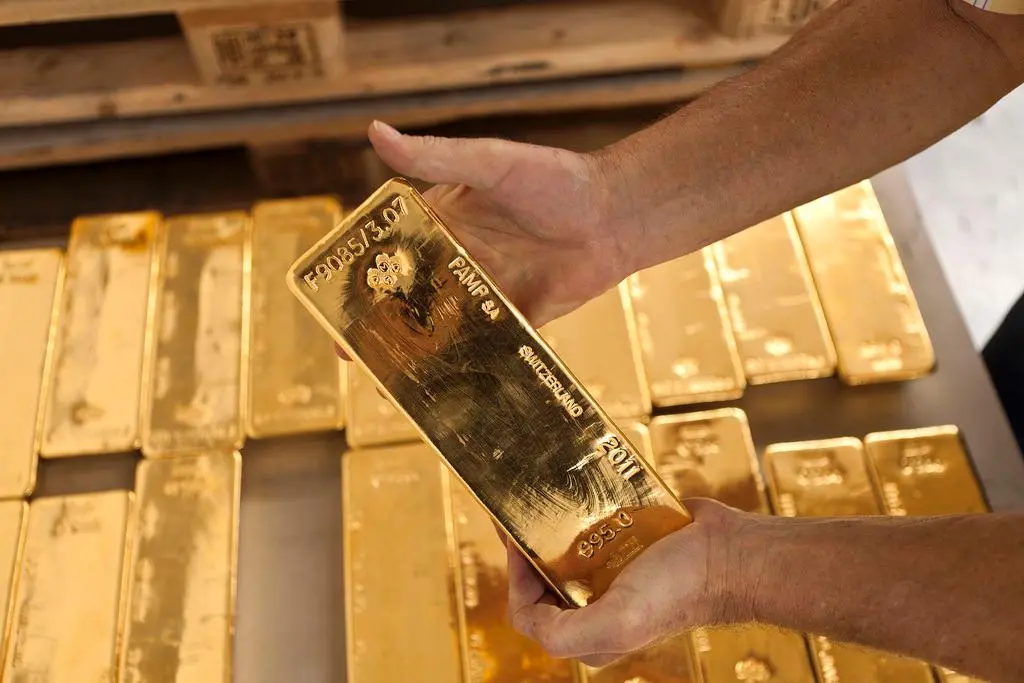
- Bars: Directly stamped on the bar face
If no hallmark is visible: This does not automatically indicate fake gold — hallmarks can wear off over time or may be in an unusual location. Request independent XRF testing for any significant purchase without visible hallmarking.
How to Test Gold Purity (2026 Methods Ranked by Accuracy)
1. Hallmark Inspection — First Step (Free)
Check for the fineness stamp (999, 916, 750, 585, 417, 375) on the item. Use a magnifying loupe for small or worn stamps. This is the fastest check but not definitive — counterfeit items can be stamped.
Accuracy: Medium — reliable for legitimate pieces from reputable sources; not sufficient alone for large purchases.
2. XRF (X-Ray Fluorescence) Testing — Industry Standard
A handheld XRF analyzer emits X-rays that react with the gold’s elemental composition, producing an accurate purity reading within 30–60 seconds without damaging the item. Used by all professional gold dealers and refineries.
Accuracy: Very High — accurate to ±0.1% purity. The preferred method for all commercial gold transactions.
Cost: Approximately $15–$50 per test at professional assay services; many reputable dealers provide this free before any purchase.
3. Fire Assay — The Most Accurate Method
A small sample is dissolved and chemically analyzed to determine exact gold content. The gold standard for export documentation and refinery intake.
Accuracy: Highest — definitive; used for all LBMA-standard bar certification and export documentation.
Cost: Approximately $50–$150 per sample. Required for significant commercial transactions (50g+).
4. Acid Testing — Quick Field Test
A chemical solution (nitric acid at various concentrations) is applied to a scratched surface. The reaction reveals the karat level. An accessible field method for dealers.
Accuracy: Medium — useful for quick screening; less precise than XRF. Slightly damages the test surface.
5. Electronic Gold Tester — Consumer Grade
Electrical conductivity-based testers available for $30–$100 from jewellery suppliers. Less accurate than XRF, particularly for alloyed pieces with unusual compositions.
Accuracy: Low-Medium — suitable for initial screening only; should not be relied upon for significant purchases.
6. Density Test — Physics-Based Verification
Pure gold’s density is 19.32 g/cm³. Lower-purity alloys and gold-plated items have lower densities. By accurately weighing the item and measuring its water displacement volume, density can be calculated and compared to expected values for the declared karat.
Accuracy: Medium — useful for bars and simple pieces; less reliable for complex jewellery with hollow sections or embedded materials.
How to Calculate Gold Value by Purity (The Universal Formula)
Understanding how to calculate gold value from any karat level is essential knowledge for every gold buyer and seller:
The Gold Value Formula
Gold Value = Weight (grams) × (Karat ÷ 24) × Current 24K spot price per gram
May 2026 Examples (24K spot = $151.55/gram)
Example 1: 22K gold necklace weighing 20 grams
- Value = 20 × (22/24) × $151.55
- Value = 20 × 0.9167 × $151.55
- Value = $2,779.03
Example 2: 18K gold ring weighing 8 grams
- Value = 8 × (18/24) × $151.55
- Value = 8 × 0.75 × $151.55
- Value = $909.30
Example 3: 14K gold bracelet weighing 15 grams
- Value = 15 × (14/24) × $151.55
- Value = 15 × 0.5833 × $151.55
- Value = $1,327.28
Example 4: 24K gold bar weighing 100 grams
- Value = 100 × (24/24) × $151.55
- Value = 100 × 1.0 × $151.55
- Value = $15,155
This formula works for any karat level and any weight. Simply substitute the current 24K spot price from the LBMA for the most accurate current valuation.
Gold Purity and Market Value: Which Karat Retains Value Best?
The relationship between gold purity and long-term value retention is nuanced:
24K gold retains value with the highest mathematical efficiency — every gram is pure gold, tracked directly against the LBMA spot. A 24K bar’s value = weight × spot price, with minimal deviation. This makes 24K the preferred purity for investment, central bank reserves, ETF backing, and institutional gold.
22K gold retains approximately 91.6% of the 24K value per gram. High-quality 22K jewellery in established markets (India, Gulf, Ghana) can also carry making charge premiums when sold as jewellery — though buyers typically receive only the melt value at resale.
18K gold retains 75% of 24K value per gram. As the most common European and American fine jewellery standard, 18K pieces have strong secondary market demand, particularly when crafted by recognized jewellery brands.
14K and below: Retains lower proportional gold value. The secondary market for 14K+ applies melt value calculation — the jewellery craftsmanship premium paid at purchase is generally not recovered at resale.
Investment conclusion: For maximum value retention, 24K LBMA-certified bars from recognized refineries (Rand Refinery, PAMP Suisse, Valcambi, Perth Mint) offer the most efficient gold investment vehicle. For cultural/jewellery purposes where wearing value is also important, 22K strikes the best balance.
Gold Purity Around the World: Regional Preferences
| Region | Most Common Karat | Why |
|---|---|---|
| India / South Asia | 22K (916) | Traditional; bridal market; BIS hallmarking system |
| Gulf / Middle East | 22K (916) and 21K | Cultural preference for high-purity jewellery |
| China / East Asia | 24K (999 / chuk kam) | Cultural value of pure gold; investment orientation |
| Europe | 18K (750) | Balance of purity and durability for fine jewellery |
| United States | 14K (585) | Durability; more affordable; 10K is minimum legal standard |
| United Kingdom / Australia | 9K (375) and 18K | 9K is minimum legal standard; 18K for fine pieces |
| West Africa (Ghana, Nigeria) | 22K (916) and 18K | High gold cultural value; wedding tradition |
| East Africa (Kenya, Uganda, Tanzania) | 22K and 18K | Growing formal market; Asian design influence |
Buying African Gold at Different Purity Levels — What to Expect in 2026
Africa produces approximately 25% of the world’s annual gold supply, and buyers sourcing from licensed African exporters in Uganda, Ghana, and Tanzania can access investment-grade gold at prices competitive with or below international retail:
| Purity | African Mine-Direct Price (May 2026) | International Retail | Saving |
|---|---|---|---|
| 24K (bars, certified) | ~$149–$158/gram | ~$152–$162/gram | 3–8% |
| 22K (jewellery grade) | ~$137–$145/gram | ~$140–$150/gram | 2–5% |
| Raw/Dore (85–95%) | ~$129–$145/gram | N/A (refinery input) | Below refined |
Contact Buy Gold Bars Africa Limited for current mine-direct pricing across all purity levels with full LBMA-standard documentation.
Gold Purity FAQs (2026)
Q: What is the current price of 24K gold per gram? A: As of May 7–8, 2026, 24K gold is approximately $150.89–$151.55 USD per gram globally. This reflects gold’s extraordinary bull market, with the all-time record of $5,602/oz set on January 28, 2026.
Q: Is 916 gold 22K or 24K? A: 916 gold is definitively 22 karat (22K) gold. The number 916 represents 916 parts per 1,000 pure gold = 91.6% purity. Pure 24K gold is marked as 999 or 9999, not 916.
Q: Which is better for investment — 24K or 22K gold? A: For pure investment purposes, 24K (999) gold bars are superior — they carry the highest purity, maximum global liquidity, and directly track the LBMA spot price with minimal dealer premium. 22K is appropriate where you also want wearability (jewellery).
Q: How do I know if my gold is 22K or 24K? A: Check the hallmark stamp — 24K gold is marked 999 or 9999; 22K gold is marked 916. For certainty, request XRF testing from a certified dealer. Visually, 24K has a slightly richer, more vivid yellow colour than 22K, though the difference is subtle to the naked eye.
Q: What does “48K gold” mean? A: There is no such thing as 48K gold. Pure gold is defined as 24 karats — the maximum. “48K gold” is a marketing fiction, a misunderstanding, or outright fraud. Anyone offering “48K gold” is not selling genuine gold.
Q: How much is 18K gold worth per gram in 2026? A: As of May 2026, 18K gold is worth approximately $113.17–$113.66 USD per gram — calculated as 75% of the 24K spot price.
Q: What hallmark indicates the highest purity gold? A: The 999 or 9999 hallmark indicates the highest purity — 99.9% (or 99.99%) pure 24-karat gold. This is the standard for LBMA Good Delivery investment bars, major bullion coins (Canadian Maple Leaf, Austrian Philharmonic), and other investment-grade products.
Q: How do I calculate the value of my gold jewellery? A: Use the formula: Value = Weight (grams) × (Karat ÷ 24) × Current 24K spot price/gram. At May 2026 spot prices of ~$151.55/gram for 24K: an 18K piece weighing 10 grams = 10 × 0.75 × $151.55 = $1,136.63.
Conclusion: Using the Gold Purity Chart to Make Smarter Decisions in 2026
Understanding the gold purity chart is the foundation of every informed gold buying, selling, and investment decision. The karat system is simple, mathematical, and consistent — once you understand that 24K means 99.9% pure gold and that every lower karat represents a proportional reduction in gold content (and therefore value), you can calculate fair prices, identify hallmarks, verify authenticity, and negotiate confidently.
At current May 2026 prices of ~$151.55/gram for 24K gold — the highest sustained price level in history — the stakes of every gram of gold have never been higher. Knowing your gold’s exact purity has never been more financially important.
At Buy Gold Bars Africa Limited, we offer certified gold across all purity levels — from investment-grade 24K bullion bars to 22K jewellery-grade gold — with full documentation, XRF verification, and competitive mine-direct pricing from Uganda, Ghana, Tanzania, and South Africa.
For certified gold across all purity levels with worldwide delivery: 📱 WhatsApp: +256 707 585144
Prices updated: May 7–8, 2026. Gold spot $4,713.70–$4,739/troy oz; 24K/gram = $150.89–$151.55 USD. Formula: Price/gram = (Spot ÷ 31.1035) × (Karat ÷ 24).
You also like to;