
Dubai Gold Export Rules 2026: An Ultimate Guide
Dubai Gold Export Rules: Dubai handles approximately 25–30% of global gold trade flows at some point in the supply chain — importing between 600 and 800 tonnes annually and re-exporting comparable volumes to India, Switzerland, Turkey, China, and beyond.
In 2024, the UAE’s foreign trade in precious metals reached nearly AED 625 billion (approximately USD 170 billion), an increase that positions Dubai as not just the world’s most important regional gold hub but one of the most consequential participants in the entire global precious metals ecosystem.
Known as the “City of Gold,” Dubai’s dominance in global gold trade rests on a deliberately constructed architecture of infrastructure, regulation, fiscal incentives, and institutional credibility that no other city has fully replicated.
The Dubai Multi Commodities Centre (DMCC) — home to over 2,500 precious metals member companies covering every part of the industry, from mining to assaying, refining, financing, trading, logistics, and jewellery design — has made Dubai the world’s pre-eminent physical gold trading hub.
The Dubai Gold and Commodities Exchange (DGCX), LBMA-accredited refineries including Emirates Gold (processing 100+ tonnes per year), Al Etihad Gold, and the Dubai Good Delivery (DGD) standard collectively give Dubai the quality credentials to trade gold with institutions that insist on London-equivalent standards.
For African gold traders, investors, and international buyers routing gold from Uganda, Ghana, Tanzania, Kenya, South Africa, or the DRC through or to Dubai, understanding the Dubai gold export rules in 2026 is the difference between a profitable, compliant supply chain and an expensive, legally perilous one.
This comprehensive guide covers every dimension of the Dubai gold export framework — the legal authorities, licensing costs, the step-by-step export procedure, the complete documentation requirements, the tax and fee structure, AML/CFT compliance, the Africa-Dubai supply chain in detail, the penalties for non-compliance, and the outlook for Dubai’s gold market through 2027.
Why Dubai Became the World’s Leading Gold Trading Hub
Dubai’s emergence as a global gold hub was not accidental — it was a deliberate 60-year strategic investment in the physical and regulatory infrastructure that makes a commodity hub work.
When India liberalised its gold import regime in the 1990s and the UAE began constructing formal free-zone infrastructure in the early 2000s, Dubai pivoted from informal conduit to institutionalised hub.
The DMCC’s founding in 2002 provided the regulatory scaffolding for a trade that had previously operated largely in the shadows. The subsequent launch of the Dubai Gold and Commodities Exchange (DGCX) in 2005 — the first derivatives exchange in the Middle East and North Africa region — gave traders hedging tools and price discovery that made Dubai a genuine financial participant in gold markets, not just a physical transit point.
The fiscal architecture is equally important. DMCC free zone operations benefit from zero customs duties on goods in transit, streamlined import-export procedures, and 100% foreign ownership — advantages that make the total cost of operating a gold trading business in Dubai lower than in London, Zurich, or Hong Kong.
The UAE’s tax regime (zero personal income tax; corporate tax introduced at 9% in 2023 for profits above AED 375,000, with free zone income from qualifying activities still benefiting from zero corporate tax under the Qualifying Free Zone Person framework) is the most investor-friendly major gold trading jurisdiction in the world.

The Legal Authorities Governing Dubai Gold Export Rules in 2026
Dubai’s gold export regulations are administered through a multi-agency framework. Understanding which authority controls which aspect of the gold export process is essential for compliance planning.
Dubai Multi Commodities Centre (DMCC) — The Institutional Backbone
The DMCC is a federal free zone authority — home to more than 26,000 companies across all sectors, with 2,500 focused on precious metals — that provides the regulatory framework, vault facilities, assay services, and compliance infrastructure for companies operating within its free zone.
The DMCC hosts the Dubai Good Delivery (DGD) standard (the regional equivalent of LBMA Good Delivery), the DMCC Tradeflow platform (a fully digital registry for possession and ownership of commodities stored in UAE-based facilities), and the subterranean DMCC vault in Almas Tower, Jumeirah Lakes Towers.
One critical clarification from DMCC’s own documentation: DMCC is not involved in the regulation of the gold industry in Dubai or the UAE, including the import, refinement, and (re-)export of gold. All regulation is carried out at a federal level by the Ministry of Economy.
The DMCC provides the business infrastructure and free zone licensing framework; federal regulatory authority rests with the Ministry of Economy.
UAE Ministry of Economy — Federal Regulatory Authority
The UAE Ministry of Economy is the federal authority responsible for regulating Designated Non-Financial Businesses and Professions (DNFBPs) — a category that includes gold dealers — under the UAE’s AML/CFT legislative framework.
Cabinet Decision No. 10 of 2019 established the reporting and due diligence obligations for precious metals traders, and the Ministry’s Due Diligence Regulations for Responsible Sourcing of Gold establish the OECD-aligned supply chain requirements that Dubai gold traders must follow.
Dubai Customs Service — Enforcing Export Procedures
Dubai Customs enforces all customs regulations on gold entering and leaving Dubai through the Mirsal 2 digital customs system. All export declarations must be filed electronically through Mirsal 2 before any gold shipment departs.
Approved exit points for gold exports include Dubai International Airport (DXB), Al Maktoum International Airport (DWC), and Jebel Ali Port (JAFZA) for sea freight bulk shipments.
Dubai Customs inspects, weighs, and seals gold in tamper-proof containers before clearance, with standard clearance taking 24–48 hours for complete documentation.
UAE Financial Intelligence Unit (FIU) — AML Reporting
The UAE FIU administers the goAML platform — the mandatory reporting system for all Suspicious Transaction Reports (STRs), Currency Transaction Reports (CTRs), and AML compliance filings by registered gold traders.
Any suspicious transactions, regardless of value, must be reported to the UAE Financial Intelligence Unit through the goAML platform.
Gold traders above UAE AML reporting thresholds must register with the FIU and maintain a goAML account before beginning commercial gold operations in Dubai.
Security Industry Regulatory Authority (SIRA)
SIRA sets guidelines for secure transport and storage of gold within the UAE, and companies providing armoured logistics services in Dubai must hold SIRA approval. High-value gold export shipments may require Dubai Police coordination for additional security clearance.
Gold Trading Licence in Dubai: Costs, Types, and Application Process in 2026
Before any gold can be exported from Dubai, the exporting entity must hold a valid gold trading licence. In 2026, the cost of a gold trading licence in Dubai ranges from AED 20,000 to AED 30,000 for the base licence fee.
However, the total investment — including visa fees, government approvals, office space or flexi-desk arrangement, and name reservation — typically pushes the total setup cost to AED 40,000–80,000 for a DMCC free zone entity.
The gold trading licence in Dubai is a government licence that legally entitles individuals or businesses to buy, sell, and trade gold in a UAE-regulated environment. It serves as a safeguard to comply with the strict rules and regulations governing gold trading in Dubai — without it, no gold export, import, or commercial trading is legally permissible.
DMCC Free Zone Gold Trading Licence
The DMCC free zone gold trading licence is the most widely chosen option for international gold traders using Dubai as a re-export hub. DMCC membership requires enhanced due diligence including comprehensive background checks, beneficial ownership disclosure, bank references, and AML/CFT compliance commitments. Annual membership fees are approximately AED 15,000, on top of the base licence cost.
DMCC free zone companies benefit from 100% foreign ownership, no requirement for a local UAE sponsor, full profit repatriation rights, and the institutional credibility of DMCC membership — which signals to counterparties worldwide that the company has passed a rigorous onboarding process.
DMCC free zone applications are typically faster to process than mainland DED licences, making them the preferred route for international gold traders with established compliance programmes.
Mainland Dubai Gold Trading Licence (DED/DET)
Companies that want to sell gold directly in the UAE domestic market — to retail customers, jewellers, or UAE-based investors — require a mainland gold trading licence from the Dubai Department of Economy and Tourism (DET, formerly DED).
Mainland companies must comply with UAE Commercial Companies Law and may require SIRA security approvals for vault or storage facilities. Mainland licence costs are variable based on office size and activity scope, generally in the AED 20,000–30,000 range for the base licence.
JAFZA and Other Free Zone Licences
Jebel Ali Free Zone (JAFZA) at Jebel Ali Port is the preferred free zone for companies focused on sea freight gold exports and large-volume bulk shipments. JAFZA companies benefit from zero customs duties on goods in transit, similar to DMCC, but with better access to sea freight logistics.
Gold and Diamond Park in Al Quoz is another free zone option, primarily serving jewellery manufacturers and retail gold businesses rather than bullion exporters.
Dubai Gold Export Rules: Step-by-Step Procedure in 2026
The full Dubai gold export procedure follows a sequential process. Completing steps out of order or omitting any step results in customs holds, permit refusal, or shipment confiscation.
Step 1: Obtain Your Dubai Gold Trading Licence
Complete your company registration in the DMCC free zone, JAFZA, or mainland DED as appropriate for your business model. Ensure your licence specifically authorises precious metals trading and export. Complete DMCC’s responsible sourcing onboarding if operating within the free zone. Appoint a Compliance Officer responsible for AML/CFT policy and goAML reporting.
Step 2: Register with the UAE FIU via goAML
Register your gold trading company with the UAE Financial Intelligence Unit through the goAML platform. All gold traders subject to UAE AML regulations must be goAML-registered before commercial operations begin. The UAE has significantly strengthened enforcement in this area as part of its FATF obligations, and non-compliant businesses face heavy fines.
Step 3: Source Gold from Documented, Compliant African or Other Origins
Source your gold exclusively from licensed, documented suppliers. For gold coming from African producers — Uganda, Ghana, Tanzania, Kenya, South Africa, or the DRC — ensure you receive the complete source-country documentation package: the African exporter’s Mineral Dealer’s Licence, the source-country Export Permit, the assay certificate from an accredited laboratory (SGS, PMMC for Ghana, UNBS for Uganda, Rand Refinery for South Africa), the Certificate of Origin from the relevant minerals authority, proof of royalty and tax payments, and ICGLR conflict-free certification for Great Lakes region gold.
Gold Bars For Sale Africa provides certified gold from licensed African sources with the complete documentation package that Dubai’s import and AML/KYC requirements demand.
Gold bars for sale from African certified refineries come with independently verified assay certificates, government export permits, and OECD-compliant origin documentation — the foundation of a Dubai-compliant supply chain.
Step 4: Complete DMCC Due Diligence and OECD Responsible Sourcing
Apply the OECD 5-Step Due Diligence Framework to your supply chain. Map the supply chain from mine source to Dubai. Assess and respond to identified risks. If sourcing from the DRC or other conflict-affected regions, conduct the enhanced due diligence required by DMCC’s responsible sourcing guidelines, which include ICGLR certification and potentially UN/Interpol clearance documentation. Maintain auditable records of the entire process.
The DMCC Traceability Programme requires member companies trading in gold to document the origin of material and conduct due diligence consistent with the OECD Due Diligence Guidance. This is not a voluntary programme — it is a condition of DMCC membership and continued licence validity.
Understanding how gold is mined and processed in Africa gives Dubai-based traders the foundational knowledge to conduct meaningful supply chain due diligence — understanding what mine-level documentation should look like and where documentation gaps signal potential compliance issues.
Step 5: Submit Gold for Assay at DMCC-Approved Facilities
Gold arriving in Dubai from Africa must be assayed at a DMCC-approved facility unless the source-country assay certificate from an internationally equivalent accredited laboratory is accepted without re-assay.
Emirates Gold and Al Etihad Gold are the primary DMCC-approved assayers. For gold arriving with SGS or PMMC (Ghana) fire assay certification, Dubai customs typically accepts these without requiring local re-assay, recognising these laboratories’ international accreditation standing.
Assay fees at Dubai facilities range from AED 100–500 per bar, depending on bar weight and the specific facility used. These fees are in addition to source-country assay costs already paid.
Step 6: File Export Customs Declaration via Mirsal 2
The digital export customs declaration through Dubai Customs’ Mirsal 2 system is the operational mechanism for all gold export clearance.
All required documents must be uploaded to the Mirsal 2 system before the export shipment can be cleared. The declaration must accurately state the gold’s weight, purity, declared value, destination, and method of shipment.
Inconsistencies between the Mirsal 2 declaration and the accompanying physical documentation — commercial invoice, assay certificate, Certificate of Origin — are the most common cause of customs holds on gold shipments from Dubai. Engaging an experienced customs clearing agent familiar with Dubai’s precious metals export procedures significantly reduces this risk.
Step 7: Pay Applicable Dubai Fees and Confirm Tax Status
Exports from Dubai are zero-rated for VAT — no VAT is charged on gold bar and bullion exports, and input VAT incurred on eligible purchases can be reclaimed by registered VAT businesses.
Export customs duties are generally zero or nil on certified gold bullion. Applicable fees include: DMCC assay and handling fees (AED 500–2,000 per shipment); Dubai Customs declaration processing fee (AED 100–300); and Dubai Police high-value shipment security coordination fee where applicable.
All African source-country taxes and royalties — Uganda’s USD 200/kg unrefined gold levy, Ghana’s PMMC fees, Tanzania’s 6% royalty, Kenya’s 5% mining royalty — must have been paid and receipted in the source country before the gold arrives in Dubai. Dubai Customs requires proof of source country tax payment as part of the import clearance package.
Step 8: Obtain Security Clearance and Arrange Specialist Logistics
High-value gold export shipments from Dubai typically require coordination with Dubai Police for a security clearance certificate. Brinks Global Services, Malca-Amit, and G4S are the primary SIRA-approved armoured logistics operators for gold exports from Dubai, providing GPS-tracked custody from vault to airport, specialist air cargo handling at DXB or DWC, and full transit insurance through Lloyd’s of London underwriters.
Hand-carrying significant quantities of gold out of Dubai without customs clearance is illegal and constitutes smuggling under UAE law. All commercial gold exports must use licensed logistics providers.
Step 9: Customs Inspection, Sealing, and Export Release
At the export exit point (DXB, DWC, or Jebel Ali Port), Dubai Customs conducts a physical inspection of the gold shipment, verifies declared weight and purity against the assay certificate, checks that all Mirsal 2 documentation is consistent with the physical shipment, and seals the consignment in tamper-evident security packaging.
After successful inspection, the cargo is released for loading. This process typically takes 5–10 days, depending on volume.
Complete Documentation Checklist for Dubai Gold Export in 2026
| Document | Issued By | Purpose |
|---|---|---|
| Dubai Gold Trading Licence | DMCC / DED / JAFZA | Confirms entity is licensed to trade gold in UAE |
| Export Customs Declaration (Mirsal 2) | Dubai Customs | Primary legal export record |
| Assay Certificate | DMCC-approved lab (or equivalent) | Confirms purity and weight of specific gold |
| Certificate of Origin | Source country minerals authority | Confirms legal mine origin |
| Commercial Invoice | Exporter | Declares gold value, quantity, buyer/seller |
| Source Country Export Permit | Source country ministry | Confirms legal export from origin country |
| Proof of Source Country Taxes Paid | Source country revenue authority | Tax receipts for royalties and duties |
| AML/KYC Documentation | Exporter’s compliance records | Supply chain due diligence evidence |
| goAML Compliance Filing | UAE FIU via goAML platform | AML reporting requirement |
| OECD Due Diligence Records | Exporter | Responsible sourcing documentation |
| ICGLR Certification (DRC/Uganda/Tanzania) | ICGLR mechanism | Conflict-free certification |
| Airway Bill or Bill of Lading | Logistics carrier | Transport documentation |
| Shipping Insurance Certificate | Insurance underwriter | Full-value transit coverage |
| Packing List | Exporter / logistics provider | Physical contents description |
| Dubai Police Security Clearance | Dubai Police | High-value shipment approval |
The Dubai Good Delivery (DGD) Standard: Dubai’s Quality Benchmark
The Dubai Good Delivery (DGD) standard, administered by the DMCC, is the regional equivalent of the London Bullion Market Association (LBMA) Good Delivery standard — the quality benchmark for gold bars accepted in wholesale institutional trading.
DGD-accredited bars are accepted across Middle Eastern and Asian trading networks, and refineries holding both DGD and LBMA accreditation produce bars tradeable in the deepest institutional gold markets worldwide.
For African gold producers and traders routing gold through Dubai, the DGD standard is the target specification that converts African mine output into universally tradeable investment-grade bullion.
Emirates Gold and Al Etihad Gold — Dubai’s primary LBMA-accredited refineries — process African doré bars into DGD/LBMA-standard gold bars, completing the transformation from African mine output to Dubai-certified investment bullion.
The 24K gold bars for sale from Gold Bars For Sale Africa’s certified African supply chain already meet the 999.9 purity standard that DGD and LBMA specify — making them eligible for entry into Dubai’s institutional trading ecosystem without requiring local re-refining.
This direct LBMA-grade quality from African certified refineries is the most efficient route for gold entering Dubai’s wholesale market.
The Africa-Dubai Gold Route: Country-by-Country Requirements
The majority of African gold entering Dubai arrives from Uganda, Ghana, Tanzania, Kenya, South Africa, and the DRC. Each source country has specific documentation requirements that must be satisfied before gold arrives at Dubai Customs.
Uganda to Dubai
Uganda has become one of Dubai’s most significant African gold suppliers, with the country’s nine licensed refineries producing certified 24K bars at 999.9 purity following the launch of the Wagagai industrial mine in Busia. For Uganda-to-Dubai gold exports, the source documentation required in Dubai includes:
- DGSM (Uganda Directorate of Geological Survey and Mines) export licence
- Uganda Revenue Authority (URA) tax clearance confirming payment of applicable export royalties
- Certificate of Analysis confirming 99.9% purity
- Proof of royalty payment at USD 200/kg rate for unrefined gold
- ICGLR conflict-free certification (Uganda is a Great Lakes region signatory)
- Origin documentation showing gold was mined in Uganda’s licensed districts
Gold Bars For Sale Africa manages the complete Uganda-to-Dubai export documentation chain for international buyers — DGSM-licensed sourcing with URA tax clearance, independent assay, and ICGLR certification pre-organised before shipment departs Uganda.
Ghana to Dubai
Ghana’s PMMC certification system provides the strongest and most internationally recognised documentation for African gold entering Dubai. PMMC assay certificates and export permits issued directly by Ghana’s Precious Minerals Marketing Company are typically accepted by Dubai Customs without requiring local re-assay.
Ghana gold for Dubai must include: PMMC export permit, PMMC assay certificate, Certificate of Origin from the Ghana Minerals Commission, and GRA (Ghana Revenue Authority) tax compliance documentation.
Gold nuggets and gold dust from Africa sourced from Ghana’s artisanal and small-scale mining sector require particular OECD due diligence documentation when entering Dubai, as DMCC’s responsible sourcing framework applies heightened scrutiny to ASM-origin material.
South Africa to Dubai
South Africa’s Rand Refinery produces LBMA and DGD-standard gold bars carrying immediate institutional acceptance in Dubai’s wholesale market. Rand Refinery certification eliminates the need for Dubai re-assay and is accepted at the highest tier of DMCC’s responsible sourcing framework.
South African gold exports carry SARS (South African Revenue Service) export documentation and comply with the South African Reserve Bank’s foreign exchange regulations.
Gold bullion from Africa from South African sources via Gold Bars For Sale Africa provides the strongest documentation profile of any African source for Dubai market entry.
DRC Gold to Dubai — The Most Complex Route
The DRC presents the highest documentation burden for Dubai import due to the eastern DRC’s well-documented conflict mineral history. DMCC’s responsible sourcing guidelines require ICGLR certification, OECD 5-step due diligence documentation, and in some cases UN expert panel consultation for DRC-origin gold.
The 2023 DRC-UAE bilateral gold agreement that allows exclusive DRC gold exports to the UAE at preferential rates increases the documentation scrutiny applied to DRC gold, rather than relaxing it, as UAE authorities seek to ensure the agreement’s exclusivity conditions are met.
AML/KYC Compliance for Dubai Gold Traders: The 2026 Framework
The UAE’s AML/CFT compliance framework for gold traders has been comprehensively strengthened since the country’s FATF grey-listing in 2022 and subsequent successful removal from the grey list in 2024. The reforms implemented to achieve FATF compliance are now embedded requirements for all Dubai gold traders.
goAML — Non-Negotiable Registration
Every gold trading company above UAE transaction reporting thresholds must be registered with the UAE FIU via the goAML platform. This is not a new requirement that some traders have not yet encountered — it has been enforced consistently since the post-FATF compliance drive of 2022–2024, and Dubai Customs cross-checks goAML registration status as part of export permit processing.
Compliance Officer Requirement
DMCC-registered gold trading companies are required to appoint a dedicated Compliance Officer responsible for overseeing AML/CFT policies, customer due diligence, and goAML reporting.
The Compliance Officer must be individually identified in the DMCC membership records and must have demonstrated AML/CFT competency through training or professional certification.
Customer Due Diligence (CDD) for Gold Transactions
All gold purchase and sale transactions above AED 55,000 trigger enhanced CDD requirements under UAE AML law. CDD requires: verification of buyer/seller legal identity, beneficial ownership documentation, source of funds verification, intended use of the gold, and risk assessment of the counterparty and transaction.
For African gold suppliers specifically, CDD includes verification of the supplier’s minerals authority licence, the gold’s mine-level origin documentation, and the supplier’s own AML compliance status.
Five-Year Record Retention
All transaction records, CDD documentation, and risk assessments must be maintained for a minimum of five years from the date of the transaction. This includes the complete documentation package for every gold purchase from African suppliers, every export shipment, and every goAML filing made in connection with the company’s gold trading operations.
Tax and Fee Structure: Dubai Gold Export in 2026 — Complete Reference
| Cost Element | Rate / Amount | Notes |
|---|---|---|
| UAE VAT on gold bullion exports | Zero-rated (0%) | Input VAT on eligible purchases can be reclaimed |
| UAE export customs duty on gold | Zero / negligible | Generally zero on certified bullion |
| UAE import VAT on gold bullion (arriving in Dubai) | Zero-rated (investment gold 99.5%+) | Raw gold / dore may attract 5% on import |
| DMCC membership annual fee | AED 15,000 | Required for DMCC free zone operators |
| Assay fee (at Dubai facility) | AED 100–500 per bar | Applicable if source country assay not accepted |
| DMCC vault storage / handling | AED 200–1,000 per shipment | Variable by weight and service level |
| Mirsal 2 declaration processing | AED 100–300 | Per shipment |
| Dubai Police security clearance | Variable | For high-value shipments |
| Gold trading licence base fee | AED 20,000–30,000 | Annual; varies by zone and scope |
| Armoured logistics (Africa to Dubai) | USD 400–900 per kg | Brinks, Malca-Amit, G4S |
| Transit insurance | 1–1.5% of declared value | Lloyd’s of London underwriters |
| Source country royalties | Uganda: USD 200/kg; Ghana: ~5%; Tanzania: 6%; Kenya: 5%; DRC: 3.5% | Paid at source before Dubai arrival |
Dubai Gold Market in 2026: Scale, Infrastructure, and Digital Innovation
Dubai’s gold market infrastructure in 2026 is the most comprehensive in the world outside the LBMA’s London market. The scale is remarkable: approximately 600 to 800 tonnes of imports per year and similar volumes of exports. Dubai handles roughly 25 to 30 percent of global gold trade flows at some point in the supply chain.
Physical Infrastructure
The DMCC’s subterranean vault in Almas Tower, Jumeirah Lakes Towers — one of the world’s most secure precious metals storage facilities — houses gold in custody for the region’s institutional traders and investors. Brinks, Malca-Amit, and other major vault operators run facilities in Dubai, with private storage estimated at several hundred tonnes of gold across the city’s vault network.
The concentration of LBMA-accredited refineries, assay facilities, and armoured logistics providers within Dubai makes the city the world’s most fully integrated physical gold trading environment outside London.
The Dubai Gold Souk
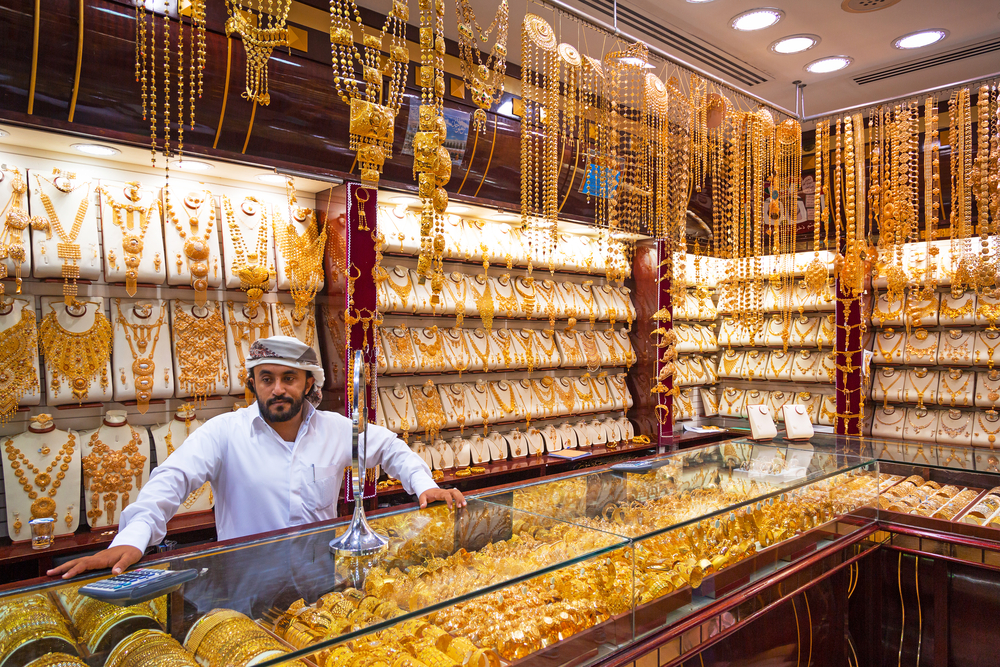
The Dubai Gold Souk in Deira, with over 400 retailers offering gold jewellery, small bars, and customised pieces, remains the most visited gold retail market in the world and a significant component of Dubai’s gold trade volumes. The Souk operates on competitive pricing, purity assurance through KEBS-equivalent UAE hallmarking, and the tax-free shopping environment that attracts millions of international visitors annually.
The gold coins from Africa and investment bars available from Gold Bars For Sale Africa can be compared in price and specification against what Dubai Souk dealers offer — giving international buyers a clear benchmark for the sourcing advantage that African direct pricing delivers.
Blockchain and Digital Gold — Dubai’s Emerging Frontier
Dubai has adopted blockchain technology in recent years to improve the efficiency and transparency of gold transactions. The goal of initiatives like TradeFlow and Emirates Blockchain Strategy is to digitize gold traceability from the mine to the market.
Additionally, investors can purchase, sell, and store digital gold tokens backed by actual bullion kept in UAE vaults through fintech-based platforms like OneGold and DGX.
The DMCC Tradeflow platform — which registered over 164,000 Islamic finance transactions valued at AED 1.91 trillion in 2023 — is the most mature digital commodity registry in the region, providing digital possession and ownership certification for physical gold stored in UAE-based facilities.
Challenges in Dubai’s Gold Export Market
Despite Dubai’s unparalleled advantages as a gold trading hub, specific challenges affect traders operating in the market in 2026.
Conflict mineral traceability for African gold. Despite significant improvements since the FATF grey-listing pressure of 2022, some legacy concerns remain, particularly around informal African doré imports whose supply chain documentation does not fully trace to individual mine sources. DMCC’s responsible sourcing requirements are progressively tightening, and traders whose documentation does not meet the current standard face compliance action.
Working with certified African suppliers like Gold Bars For Sale Africa who provide OECD-aligned documentation eliminates this risk.
Rising compliance costs. The post-FATF compliance upgrade has materially increased the operational cost of running a Dubai gold trading business. Compliance officer salaries, legal advisory costs, goAML system maintenance, and enhanced CDD processes all add overhead that smaller traders find challenging to absorb while remaining competitive.
Growing competition from Singapore and Switzerland. Singapore has emerged as a growing competitor to Dubai for Asian-destination gold trade, with its LBMA-accredited refineries, 0% GST on investment gold, and established precious metals infrastructure.
Swiss refineries remain the gold standard for institutional quality. Dubai’s competitive advantage lies primarily in its geographic position between Africa and India-Gulf markets, its refining capacity, and its investor-friendly regulatory environment.
Penalties for Non-Compliance with Dubai Gold Export Rules
The consequences of non-compliance with Dubai’s gold export framework are severe and consistently enforced:
Fines up to AED 1 million or imprisonment for violations under UAE precious metals trade law and AML legislation. Specific penalties include: Failure to comply with these stringent regulations can result in severe penalties, including hefty fines and license revocation.
Exporting without proper documentation: Shipment confiscation, investigation, and potential criminal charges under UAE Customs Law.
AML/KYC non-compliance: Fines, goAML enforcement action, and licence revocation. The UAE’s strengthened post-FATF enforcement means AML penalties are now consistently applied rather than conditionally overlooked.
Failure to declare gold above AED 60,000 as a traveller: Confiscation and potential criminal prosecution for smuggling.
Trading with sanctioned entities or conflict gold: Asset freezing, criminal charges, and permanent debarment from UAE precious metals markets.
Best Practices for African Gold Traders Using Dubai as an Export Hub
For African gold traders — whether sourcing from Uganda, Ghana, South Africa, Tanzania, Kenya, or the DRC — the following best practices represent the standard operating procedure for a compliant, profitable Dubai gold export operation.
Always start documentation at the mine. The foundation of Dubai compliance is source-country documentation that reaches the mine level. DMCC’s responsible sourcing framework requires chain-of-custody records from mine to export, not just from aggregator to exporter. Establish relationships with licensed African suppliers who can provide mine-level documentation before selecting Dubai as your trading hub.
Pre-clear documentation before gold arrives in Dubai. Submit the complete document set — assay certificate, Certificate of Origin, source-country export permit, royalty payment receipts — to your Dubai customs clearing agent for review before the gold departs Africa. Early identification of documentation gaps costs days; discovering them after the gold arrives at DXB costs weeks and potentially the entire shipment.
Use established armoured logistics. Brinks, Malca-Amit, and G4S provide the documented custody chain from African facility to Dubai Customs that both DMCC responsible sourcing requirements and Dubai Customs expect. Non-specialist logistics arrangements for significant gold values create documentation gaps that trigger customs scrutiny.
Maintain your goAML compliance proactively. File goAML reports accurately and promptly. The UAE’s enforcement environment post-FATF grey list removal is significantly more active than it was before 2022. Proactive filing with complete records is far less costly than reactive compliance after an enforcement inquiry.
Source from certified, documented African suppliers. The single most effective compliance investment for a Dubai gold trader is selecting African supply partners who provide OECD-compliant documentation — not partners who offer lower prices but inadequate paperwork. The short-term cost saving from less-documented gold is dwarfed by the compliance and penalty costs of one shipment seized or one licence suspended.
Gold Bars For Sale Africa provides the certified African gold supply chain — gold bars, gold bullion, gold nuggets, gold dust, and silver bullion — with the OECD-compliant documentation that Dubai’s 2026 regulatory environment demands. The services page details the full range of documentation support, logistics coordination, and compliance facilitation available for Dubai-bound African gold.
FAQs: Dubai Gold Export Rules 2026
Is VAT charged on gold exports from Dubai? Gold exports from Dubai are zero-rated for VAT — zero VAT is charged on certified investment gold exports (99.5%+ purity), and VAT registered exporters can reclaim input VAT on eligible purchases. This is distinct from VAT exemption: zero-rating requires VAT registration and compliance with UAE VAT law, but the export itself is tax-free for gold bullion.
How much does a Dubai gold trading licence cost in 2026? The base gold trading licence in Dubai costs AED 20,000–30,000 annually. Total setup costs including visa fees, government approvals, office space, and DMCC membership typically range from AED 40,000–80,000 for a DMCC free zone entity, with mainland DED licences varying based on activity scope and office size.
What is the goAML platform and do I need it? goAML is the UAE Financial Intelligence Unit’s mandatory AML reporting platform. All gold trading companies above UAE reporting thresholds must register with goAML before beginning commercial operations and must file Suspicious Transaction Reports, Currency Transaction Reports, and other compliance filings through the platform. Non-registration carries heavy fines.
Can I import gold from Africa to Dubai without source-country documentation? No. Dubai Customs requires proof of source-country export permits, royalty payments, assay certification, and Certificate of Origin for all imported gold. DMCC’s responsible sourcing requirements additionally demand OECD due diligence documentation. Gold arriving without adequate source documentation will be held for investigation.
What is the Dubai Good Delivery (DGD) standard? The DGD standard is DMCC’s regional quality benchmark for gold bars, equivalent to the LBMA Good Delivery standard used in London’s wholesale market.
DGD-accredited bars must meet defined purity (99.5%+), weight, and assay criteria, and are produced by DMCC-approved refineries including Emirates Gold and Al Etihad Gold.
African gold refined to 999.9 purity at a certified African refinery before export to Dubai meets DGD purity criteria without requiring local re-refining.
How long does the Dubai gold export process take? With complete documentation submitted to Mirsal 2 and no customs queries, standard Dubai gold export clearance takes 5–10 business days from document submission to cargo release.
Conclusion: Dubai Gold Export Rules — Compliance Is the Foundation of Profitability
Dubai’s gold export rules in 2026 are more rigorous than at any previous point in the emirate’s gold trading history — reflecting both the UAE’s successful FATF grey list exit and the genuinely heightened institutional expectations that responsible sourcing frameworks now impose on the global gold supply chain.
For African gold traders and international buyers using Dubai as a re-export hub, these rules create real compliance obligations that require genuine investment in supply chain documentation, AML systems, and licensing.
But they also create a competitive advantage for traders who meet the standard: gold that clears Dubai Customs with complete OECD-compliant documentation is credibly conflict-free, fully traceable, and accepted by the institutional buyers — Indian refineries, Swiss banks, Asian trading houses — who represent Dubai’s most valuable counterparties.
The most efficient compliance investment is choosing African gold suppliers who bring complete documentation from the start. Gold Bars For Sale Africa provides certified gold sourced from licensed African refineries in Uganda, Ghana, and South Africa — with independent assay certification, ICGLR conflict-free documentation, government export permits, and the OECD-aligned supply chain records that Dubai’s regulatory framework requires. Contact the team to discuss your Dubai-bound African gold sourcing requirements and receive current pricing and documentation details.
Related Pages Worth Exploring
- Gold bars for sale from Africa — Certified 24K and 22K bars from African licensed refineries with full Dubai import-compliant documentation packages
- 24K gold bars for sale — LBMA and DGD-standard 999.9 purity bars from African sources — no Dubai re-refining required
- Gold bullion from Africa — Investment-grade certified bullion with OECD-compliant origin documentation for Dubai wholesale market entry
- Gold nuggets from Africa — Natural gold nuggets from East and West African artisanal sector with ICGLR conflict-free certification for Dubai DMCC compliance
- Buy gold dust from Africa — Fine alluvial gold dust with source documentation supporting Dubai DMCC responsible sourcing requirements
- Gold coins from Africa — Certified African investment coins for Dubai market — Krugerrands and African gold rounds with full documentation
- Silver bullion from Africa — Precious metals diversification alongside certified African gold for Dubai-bound traders
- How gold is mined and processed in Africa — Supply chain context for Dubai traders conducting OECD due diligence on African gold sources
- Safe haven gold investment — Why certified African gold entering Dubai’s institutional ecosystem serves as a genuine safe haven investment
- Gold vs crypto investment — Physical gold through Dubai’s institutional framework vs cryptocurrency for wealth preservation
- Tanzania gold market — Tanzania as an African gold source for Dubai-bound exports — export procedures and documentation framework
- Services — Full range of supply chain documentation, logistics coordination, and compliance support for Dubai-bound African gold
- About Gold Bars For Sale Africa — OECD-aligned sourcing standards, African mine partnerships, and the team managing Africa-to-Dubai gold supply chains
- Blog — Latest intelligence on Dubai gold market developments, regulatory changes, and African sourcing updates
- Contact for a live pricing quote — Get current African gold pricing, documentation details, and logistics guidance for your Dubai-bound gold purchase