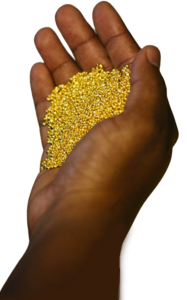
List of Gold Refineries in Ghana and their Locations
List of gold refineries in Ghana: Explore the list of gold refineries in Ghana, including major refineries, gold processing facilities, and important information for gold buyers and investors.
When the world thinks of African gold, Ghana is one of the first names that comes to mind — and for good reason. Known for centuries by its colonial name “Gold Coast,” Ghana has built its entire modern economy on the foundation of its extraordinary gold wealth.
Today, Ghana is Africa’s leading gold producer and one of the top gold-producing countries in the world, with output reaching approximately 4.8 million ounces in 2024 — an 8.5% increase from the previous year — and gold exports valued at a record $11.64 billion.
Gold accounts for over 90% of Ghana’s mineral exports and more than half of total national export earnings. The mining sector contributes approximately 5.7% to GDP and generated a record GH₵11.55 billion (US$980 million) in taxes in 2023 alone.
For anyone interested in buying gold in Ghana, investing in the Ghanaian gold sector, or understanding where African gold bars come from, Ghana’s refining industry is the essential starting point.
What makes Ghana’s gold story particularly compelling in 2025 is not just the volume of gold being mined — it is the dramatic transformation happening in how that gold is processed.
For decades, Ghana exported much of its gold as semi-processed doré bars, allowing foreign refineries to capture the value-added margin from turning raw metal into investment-grade bullion.
That era is ending. Ghana’s gold refining industry is now one of the fastest-growing segments of the African precious metals market, driven by government policy, private investment, and growing international demand for responsibly sourced, LBMA-compliant gold bars from Africa.
Gold Refineries in Ghana and Their Locations:
- Gold Coast Refinery Ltd. — Accra
Located along Gate 44 near Kotoka International Airport, Cantonment, Accra. Gold Coast Refinery is one of Ghana’s major gold refining facilities, with a stated refining capacity of up to 480 kg per day. - Royal Ghana Gold Refinery Ltd. — Accra
Located at the Precious Minerals Marketing Company (PMMC) premises in Accra. It is a joint venture involving PMMC and Royal Gold Limited and was commissioned in 2024. - Sahara Royal Gold Refinery Ltd. — Accra
A gold refinery identified in Ghana’s bullion-refinery records, with its location listed as Accra. - Goldridge Refinery Ltd. — Accra
Goldridge Refinery is listed among Ghana’s identified bullion refineries, with its refinery location in Accra. - M&C Gold and Precious Metals Refinery — Accra
This refinery is listed in Ghana’s current bullion-refinery records and is located in Accra. - Mentrx Refinery Ltd. — Accra
Mentrx Refinery is identified as a Ghanaian gold refinery located in Accra. -
Sewia Mining and Refinery Ltd — Ghana’s Blockchain-Enabled Traceability Pioneer
-
Asanska Gold Refinery — Supporting Ghana’s SMEs and Local Gold Jewellery Sector
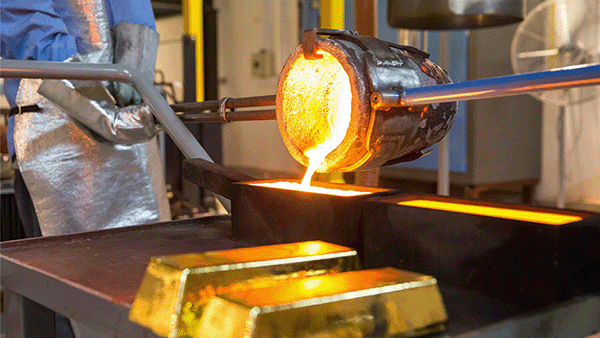
How Ghana’s Gold Refining Sector Transformed in the 2020s
The transformation of Ghana’s gold refining industry has been driven by several converging forces. Government initiatives to localise gold processing, curb rampant gold smuggling, and bolster the Bank of Ghana’s foreign reserves have reshaped the regulatory landscape for gold refineries in Ghana from the ground up.
The Bank of Ghana’s gold holdings tell the story clearly: by September 2025, reserves stood at 32.99 tonnes — up dramatically from just 8.77 tonnes in 2022.
That fourfold increase reflects both strategic gold purchases from licensed aggregators and the growing capacity of domestic refineries to produce LBMA-standard bullion bars in Ghana rather than shipping doré abroad.
The establishment of the Ghana Gold Board — known as GoldBod — in 2024 as the sole authority for buying, selling, assaying, and exporting gold marks the most significant structural shift in Ghana’s gold sector in a generation.
GoldBod, seeded with $279 million in government capital, holds a monopoly on artisanal and small-scale mining (ASM) gold trading, buying from licensed aggregators and channelling production through certified gold refineries in Ghana for export.
Today, GoldBod is mandating that its weekly purchases of three or more tonnes be refined locally before export — a policy that could capture 50% of ASM gold production within the domestic refining sector and add $1 to $2 billion in additional annual revenue to Ghana’s economy.
Local gold refining in Ghana adds $500 to $1,000 per kilogram in value over exporting raw doré — a figure that illustrates precisely why the shift to domestic processing is so economically transformative.
By 2030, Ghana’s localised gold refining industry could generate $2 to $3 billion in additional annual value for the Ghanaian economy.
Key Gold Refineries in Ghana Explained
Ghana’s gold refinery landscape is concentrated primarily in Accra and Tema, with all licensed facilities operating under the Minerals Commission, the Precious Minerals Marketing Company (PMMC), and the new GoldBod framework.
Together, the major operational gold refineries in Ghana process over 1,500 kilograms of gold daily, targeting 20 to 30% of Ghana’s 130-plus tonnes of annual ASM output.
Below is a detailed look at each of the key gold refineries in Ghana, their locations, ownership structures, capacities, and the services they offer to miners, investors, and gold buyers.
1. Gold Coast Refinery Ltd — Ghana’s Largest and Most Established Gold Refinery
Location: Accra (adjacent to Kotoka International Airport) Ownership: Subsidiary of the Euroget Group (Ghanaian-registered) Refining Capacity: 480 kg per day LBMA Compliant: Yes Year Established: 2016
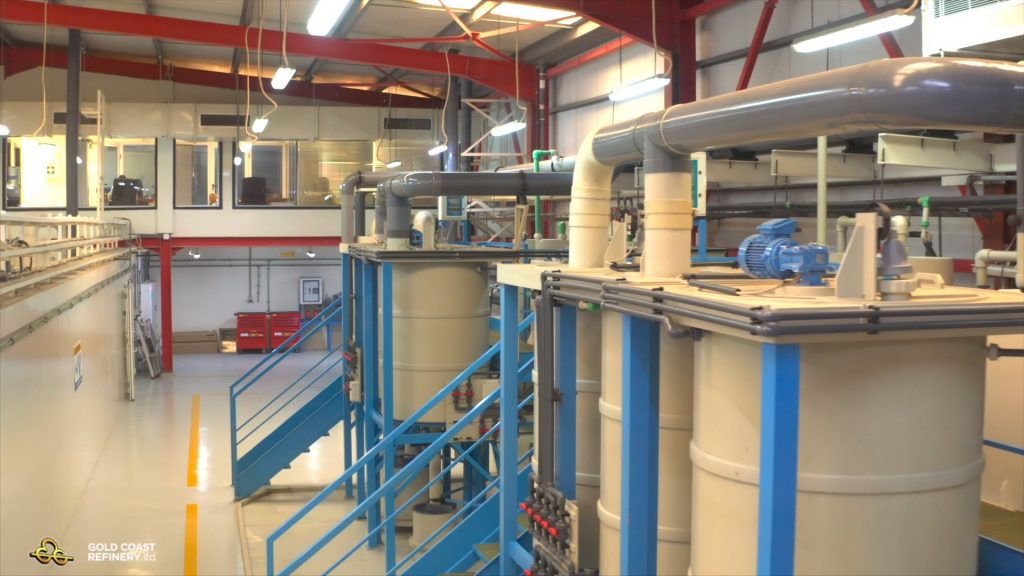
Gold Coast Refinery Ltd is the flagship of Ghana’s domestic gold refining industry and the largest gold refinery in Ghana by processing capacity. Located strategically near Kotoka International Airport in Accra, the refinery benefits from immediate access to international air freight infrastructure — a critical advantage for a business built on moving high-value LBMA-compliant gold bullion bars to global markets quickly and securely.
Established in 2016 as a subsidiary of the Euroget Group, Gold Coast Refinery processes doré bars from major large-scale mines including AngloGold Ashanti’s Obuasi operation and from ASM aggregators across Ghana’s goldfields. At 480 kilograms per day, it is the highest-capacity gold refinery in Ghana and one of the most productive gold refining facilities in West Africa.
The refinery’s technical capabilities are among the most advanced in the region. Gold Coast employs both X-ray fluorescence (XRF) spectrometry and classical fire assay methods to verify gold purity to 99.99% — the international standard for investment-grade gold bars.
Its secure vaulting capacity exceeds 100 tonnes, making it one of the few facilities in West Africa capable of storing significant quantities of physical gold bullion on behalf of mining companies, institutional clients, and government entities.
Gold Coast Refinery’s contribution to Ghana’s gold export economy extends beyond processing. Through its training programmes in partnership with Euroget, the refinery is actively building Ghana’s domestic workforce in metallurgy, assaying, and gold refinery operations — creating skilled employment in a sector that demands highly technical expertise.
For investors researching where to buy certified gold bars from Ghana, Gold Coast Refinery is the benchmark operation against which all others are measured.
2. Royal Ghana Gold Refinery — The Public-Private Partnership Reshaping ASM Gold Processing
Location: Accra Ownership: Rosy Royal Minerals, India (80%) / Bank of Ghana (20%) Refining Capacity: 400 kg per day LBMA Compliant: Yes Year Established: 2024 (operational from August 2024)
The Royal Ghana Gold Refinery is the most significant new gold refinery to open in Ghana in recent years, and its August 2024 launch was a landmark moment for the country’s domestic gold processing ambitions.
Structured as a public-private partnership between India’s Rosy Royal Minerals, which holds an 80% stake, and the Bank of Ghana, which holds the remaining 20%, the Royal Ghana Gold Refinery brings international refining expertise into direct partnership with Ghana’s central banking system — a model that ensures both technical excellence and institutional accountability.
With a refining capacity of 400 kilograms per day, Royal Ghana processes ASM doré into LBMA-grade gold bullion bars embossed with Ghanaian national insignia — making it the first gold refinery in Ghana to produce distinctively Ghanaian-branded investment-grade bullion.
This is not merely a point of national pride; Ghanaian-insignia gold bars represent a new class of traceable, origin-certified African gold that is increasingly sought after by refiners, central banks, and gold investors in the UAE, Europe, and Asia who want full supply chain transparency.
The refinery employs 80 to 120 people directly and generates approximately 500 indirect jobs across the logistics, security, and assaying ecosystem it supports. Its focus on responsible sourcing from ASM miners — Ghana’s artisanal sector accounts for 30 to 40% of total national gold output — positions Royal Ghana as a critical bridge between informal small-scale gold production and the formal international gold market.
For investors seeking ethically sourced gold bars from West Africa, the Royal Ghana Gold Refinery’s supply chain credentials are among the strongest available.
3. Sahara Royal Gold Refinery — Tema’s Port-Proximate Processing Specialist
Location: Tema Ownership: Privately owned (Ghanaian) Refining Capacity: 200–300 kg per day LBMA Compliant: In process Year Established: 2019
Sahara Royal Gold Refinery operates in Tema — Ghana’s principal seaport city and industrial hub — giving it a strategic logistical advantage that differentiates it from the Accra-based refineries.
Tema’s port infrastructure makes Sahara Royal particularly well-positioned to handle large-volume gold exports via sea freight, an increasingly important channel as Ghana’s refined gold output grows beyond the capacity of air freight alone.
Established in 2019, Sahara Royal is a Ghanaian-owned gold refining company processing between 200 and 300 kilograms of gold per day. The refinery’s services include melting, fire assaying, refining to 99.99% purity, full export documentation, and secure armoured transport — a comprehensive suite of services for both large-scale mining operations and licensed ASM aggregators bringing doré from Ghana’s goldfields.
Sahara Royal is actively pursuing full LBMA certification, a process that requires rigorous third-party auditing of refining practices, traceability systems, environmental management, and anti-money laundering controls.
Once achieved, LBMA accreditation will open Sahara Royal’s output to the widest possible international market, including institutional gold buyers and central bank procurement programmes.
Ghana’s $2 to $3 billion value-added refining potential depends on refineries like Sahara Royal completing this certification journey successfully.
4. Sewia Mining and Refinery Ltd — Ghana’s Blockchain-Enabled Traceability Pioneer
Location: Accra (Ga West) Ownership: Privately owned (Ghanaian, multi-country operations) Refining Capacity: 150–250 kg per day LBMA Compliant: Yes (via GoldBod framework) GoldBod SFA Licence: GGB/SFA/SF0108/753/25 Year Established: 2016
Sewia Mining and Refinery Ltd represents one of the most innovative approaches to gold refining in Ghana. Operating from Accra’s Ga West district since 2016, Sewia holds a GoldBod Specialised Financial Aggregator (SFA) licence — licence number GGB/SFA/SF0108/753/25 — which authorises it to aggregate, smelt, assay, and deliver LBMA-compliant gold bullion under GoldBod’s regulatory framework.
What sets Sewia apart from other gold refineries in Ghana is its integration of blockchain-based traceability technology into its gold processing operations.
By recording each stage of the gold’s journey — from ASM source through aggregation, smelting, assaying, and final bullion delivery — on an immutable blockchain ledger, Sewia offers its clients and international buyers a level of supply chain transparency that is becoming an increasingly non-negotiable requirement for responsible gold sourcing.
This positions Sewia well ahead of the international gold market’s evolving due diligence standards, including OECD responsible gold supply chain guidance and LBMA responsible sourcing requirements.
Sewia’s model of offering no upfront fees to the artisanal miners who bring their doré for processing is another differentiating feature that supports the formalisation of Ghana’s ASM gold sector — channelling production that might otherwise leak into smuggling networks into the legitimate, taxed, export-compliant gold trade. Sewia’s role in GoldBod’s three-tonne weekly gold purchase programme is a significant driver of Ghana’s growing central bank gold reserves.
5. Asanska Gold Refinery — Supporting Ghana’s SMEs and Local Gold Jewellery Sector
Location: Accra Ownership: Licensed trading and refining company Refining Capacity: 100–200 kg per day LBMA Compliant: Yes Year Established: 2020
Asanska Gold Refinery, established in Accra in 2020, occupies a distinctive position in Ghana’s gold refining ecosystem by focusing explicitly on serving the needs of small and medium-sized enterprises, local gold jewellers, and commercial ASM clients who may be underserved by the larger, more institutionally-oriented refineries.
Licenced by the PMMC, Asanska provides smelting, fire assaying, export services, and secure storage, producing LBMA-compliant gold bullion bars for both domestic and international clients.
At a processing capacity of 100 to 200 kilograms per day, Asanska is the smallest of Ghana’s major licensed gold refineries — but its scale is precisely matched to the market it serves.
Local Ghanaian jewellers, small-scale miners, and emerging gold trading businesses that cannot meet the minimum volumes demanded by larger refineries find in Asanska a professional, certified, and accessible partner for turning raw gold into refined, saleable bullion.
Asanska’s growth trajectory directly mirrors GoldBod’s localisation agenda — and as that agenda deepens, Asanska’s role in Ghana’s domestic gold value chain is set to expand significantly.
From Doré to Investment-Grade Bullion — How Gold Refining Works in Ghana
Understanding the journey from raw mine output to the certified gold bars that investors purchase is essential context for anyone evaluating gold investment in Ghana. Ghana’s licensed gold refineries follow a processing sequence that mirrors global best practice:
Raw doré bars — semi-refined gold-silver alloys produced at mine sites — arrive at the refinery via secure, insured armoured transport. The doré is weighed, sampled, and assayed upon receipt using XRF spectrometry and fire assay to establish its precise gold and silver content.
The doré then undergoes crushing, milling, and chemical treatment — using cyanide leaching or aqua regia dissolution depending on the ore characteristics — to dissolve and separate the gold from other metals.
Electrolysis and precipitation are then used to produce high-purity gold, which is melted, alloyed to precise specifications, and cast into bars. Each bar is individually assayed, hallmarked with its weight and fineness, and packaged with an assay certificate before entering the vaulting system or being prepared for export.
GoldBod’s mandate that all its gold purchases be locally refined before export — combined with the introduction of ISO-certified fire assay laboratories at Kotoka International Airport — will raise the technical standard and traceability of every ounce of Ghanaian gold entering the international market. This is the infrastructure of a world-class gold producing and refining nation in the making.
Regulatory Framework Governing Gold Refineries in Ghana
Ghana’s gold refining sector operates within a multi-layered regulatory environment anchored by the Minerals and Mining Act (2006, Act 703) and its associated Regulations (L.I. 2173), and now significantly shaped by the GoldBod framework established in 2024.
All gold refineries in Ghana must hold both a Mineral Dealer licence and a Refinery permit, subject to monthly operational and anti-money laundering reporting requirements. Exporters must supply a mandated percentage of refined gold locally in accordance with ministerial quotas — a policy designed to build domestic gold stocks and support the Bank of Ghana’s reserve accumulation programme.
The Ghana Gold Board’s $1 billion memorandum of understanding with Goldstream Global, signed in September 2025, funds the development of a state-owned gold refinery and 300 responsible mining operations, all built to LBMA standards.
This MOU signals the long-term direction of Ghanaian gold policy — toward a fully integrated, vertically localised gold industry that mines, refines, and exports investment-grade bullion from Ghana, rather than shipping raw material for others to process.
Environmental regulations require mandatory OECD due diligence audits, environmental bonds, and specific controls on mercury use in ASM operations — critical for maintaining Ghana’s standing with LBMA’s responsible sourcing programme and the international buyers who depend on it.
The Economic Impact of Ghana’s Gold Refining Industry
The economic case for investing in Ghana’s gold refining sector — and for buying gold refined in Ghana — is compelling across every dimension.
Ghana’s gold refineries are amplifying the country’s gold economy by retaining 20 to 30% more value per ounce through domestic processing. GoldBod’s ASM gold trading operations generated $6 billion in export revenue in just the first eight months of 2025 — already surpassing the whole of 2024’s total.
The Bank of Ghana’s strategic gold purchasing programme, which has acquired $5 billion of ASM gold since 2021, has doubled Ghana’s foreign reserves and provided a significant buffer against the currency volatility that afflicts so many African economies.
Gold prices in 2025 reached $2,500 per ounce, and projections for 2026 suggest a range of $2,000 to $2,300 per ounce as demand from Chinese investors, central banks, and Western retail buyers continues to outpace new mine supply.
In this environment, owning physical gold bars refined in Ghana and certified to LBMA standards is not merely a hedge — it is one of the most rational financial decisions an investor in Africa or anywhere in the world can make.
Challenges Facing Gold Refineries in Ghana — What Investors Need to Understand
No honest guide to Ghana’s gold refining industry can overlook the significant challenges the sector faces.
Illegal galamsey mining — Ghana’s politically charged term for unlicensed artisanal mining — employs an estimated one to two million people and produces approximately 30% of Ghana’s gold output entirely outside the formal regulatory system.
Mercury contamination from galamsey operations has been measured at up to 38 times safe limits in some Ghanaian rivers. Deforestation affects more than 10,000 hectares per year in mining regions.
These environmental impacts directly threaten Ghana’s ability to maintain LBMA responsible sourcing certification — a certification on which the international marketability of Ghana’s refined gold bars depends.
Gold smuggling siphons an estimated $2 to $3 billion out of Ghana’s formal economy annually. Gold moves through porous borders into neighbouring countries and from there to UAE and European markets without paying Ghanaian taxes or complying with Ghanaian export regulations.
GoldBod’s monopoly on ASM gold purchasing and its investment in traceability systems are designed to close these leakage channels — but the scale of the challenge demands sustained enforcement commitment.
Infrastructure constraints — particularly unreliable power supply affecting the electrolysis processes central to gold refining — add cost and operational uncertainty for smaller refineries.
High processing costs of $1,200 to $1,500 per kilogram challenge the economics of smaller-scale refining operations competing against larger, better-capitalised facilities.
These challenges are real, but they are solvable — and Ghana’s regulatory trajectory in 2025 is clearly pointed in the right direction. For investors buying physical gold bars refined in Ghana, working with LBMA-certified refineries and authorised dealers eliminates exposure to the risks associated with the informal sector.
The Future of Gold Refining in Ghana — Toward a $10 Billion Sector by 2030
The future of Ghana’s gold refining industry is one of the most exciting investment narratives in Africa today. GoldBod’s October 2025 refining mandate could redirect 50% of ASM gold production into domestic refining facilities, generating $1 to $2 billion in additional annual revenue.
The Goldstream state-owned refinery, planned for 500-plus kilograms per day of capacity by 2027, will integrate green refining technologies including bioleaching — reducing carbon emissions by up to 30% and positioning Ghana’s gold as among the most sustainably produced in the world.
The formalisation of 300 responsible ASM mines under the $1 billion Goldstream MOU will channel an estimated 50,000 informal miners into licensed, compliant, and safer operations — simultaneously reducing environmental damage and increasing the volume of traceable gold available to Ghana’s licensed refineries.
Sewia’s blockchain traceability model, already operational, provides a template for how digital technology can make Ghana’s entire gold supply chain verifiable from mine to bar.
With gold prices forecast to remain elevated and international demand for responsibly sourced African gold bars growing steadily, Ghana’s gold refining industry is on course to become a $10 billion-plus sector by 2030 — transforming the country from a raw material exporter into a fully integrated gold refining powerhouse that sets the standard for the entire African continent.
Own a Piece of Africa’s Gold Refining Revolution — Buy Certified Gold Bars with Buy Gold Bars Africa Ltd
Ghana’s gold refineries are producing some of the finest, most traceable, most responsibly sourced investment-grade gold bars in the world.
If you have read this far, you already understand why physical gold from Ghana — refined to 99.99% purity, LBMA-certified, and backed by one of Africa’s most sophisticated regulatory frameworks — represents an exceptional store of value for any investor.
The question is no longer whether to buy gold bars from Africa. The question is who you trust to handle that purchase with the expertise, transparency, and integrity it demands.
The answer is Buy Gold Bars Africa Ltd, a certified Africa gold exporter.
We are Africa’s dedicated specialist in certified, investment-grade gold bars — sourced from licensed refineries including Ghana’s leading LBMA-accredited facilities, Uganda’s growing refinery sector, South Africa’s Rand Refinery, and other approved producers across the continent. We bring Africa’s finest gold directly to investors who understand that physical gold is the world’s most enduring asset.
Here is what you get when you buy gold bars in Africa through Buy Gold Bars Africa Ltd:
Full LBMA-certified gold bars — every bar we sell carries assay certification confirming 99.99% purity, with documented chain of custody from a licensed African refinery to your hands. No unverified product. No informal sourcing. No compromise on quality.
Live, spot-price-linked transparent pricing — you see the current gold price, our declared premium, and your total cost. No hidden charges. No inflated markups. Just honest, professional gold dealing.
A range of bar sizes for every investor — from 1 gram entry-level gold bars for first-time buyers to 1 oz, 10 oz, and 1 kg gold bars for serious investors, through to larger institutional quantities for high-net-worth clients and corporate treasuries.
Secure, insured delivery and storage — across Ghana, Uganda, Nigeria, Kenya, South Africa, and the wider African market, with vaulting options for clients who prefer not to store gold at home.
Complete regulatory compliance — we operate within the GoldBod framework in Ghana, the Uganda Mining Act 2022, and applicable precious metals regulations across every African market we serve. Every transaction is documented, every bar is traceable, and every client is protected.
Expert guidance from Africa’s gold specialists — our team understands the Ghanaian goldfields, the Karamoja deposits, the South African bullion markets, and the global forces driving gold prices. That knowledge translates into better advice, better timing, and better outcomes for your gold investment.
Ghana’s refineries are turning Africa’s gold into the world’s finest investment bars. Uganda’s $12 trillion gold discovery is opening a new chapter in African gold production.
South Africa’s Rand Refinery continues to set the global standard for bullion quality. Africa is not just producing gold — Africa is refining, certifying, and exporting investment-grade gold bars that belong in every serious investor’s portfolio.
The gold is here. The refineries are running. The regulatory frameworks are in place. The only thing missing is your decision to act.
Do not leave your savings exposed to inflation, currency depreciation, or the volatility of paper assets. Buy certified gold bars from Africa’s finest refineries today — through Buy Gold Bars Africa Ltd, the partner you can trust to make your gold investment safe, transparent, and profitable for the long term.
Contact your Africa gold exporter, Buy Gold Bars Africa Ltd now to request a live price quote, discuss your investment objectives, or arrange a consultation with one of our gold bar specialists. Africa’s gold revolution is happening right now — and with Buy Gold Bars Africa Ltd, you can be part of it.
All gold bar prices are subject to live spot price movements. All purchases are subject to applicable laws, taxes, and regulations in each jurisdiction. Buy Gold Bars Africa Ltd sources exclusively from licensed, regulatory-compliant African gold refineries and operates in accordance with GoldBod, LBMA, and national precious metals regulatory frameworks.