Geita Gold Mine: Tanzania’s Golden Giant – Ultimate Guide
Geita Gold Mine, in Tanzania’s Geita Region near Lake Victoria, is Tanzania’s largest gold producer and one of AngloGold Ashanti’s flagship operations, producing roughly 500,000–600,000 ounces of gold a year.
Wholly owned by AngloGold Ashanti since 2004, it runs on a life-of-mine plan extending to 2039, and anchors a Tanzanian gold sector that generated a record $5.27 billion in export earnings in the year to April 2026 — now the country’s single largest source of foreign exchange.
Nestled in the sun-baked landscapes of north-western Tanzania, the Geita Gold Mine stands as a colossus in Africa’s mining sector. Located in the Geita District of the Geita Region, about 120 km southwest of Mwanza City and just 4 km west of Geita town, it occupies a prime spot in the Lake Victoria Goldfields.
This vast operation extracts gold from ancient Archean greenstone belts rich in quartz veins and disseminated ores. As Tanzania’s largest gold producer, Geita contributes significantly to the nation’s economy and remains a pivotal contributor to AngloGold Ashanti’s African production base.
Beyond the glittering yields, it embodies the dual-edged sword of resource extraction: immense wealth generation set against environmental strain, social tension, and human rights challenges that any serious account of the mine has to reckon with.
If you’re sourcing gold from Tanzania directly, see our guide on buying gold in Tanzania for licensed dealers and current pricing.
Historical Evolution of Geita Gold Mine
The story of Geita begins in the late 19th century, amid colonial scrambles for African resources. In 1898, a German prospector found gold mineralization near Mgusu, southwest of Lake Victoria, sparking early interest. World War I stalled formal development.
Post-war, in 1934, Tanganyika Concessions Limited (TCL), a British firm, formed subsidiaries like Geita Gold Mining Company Limited to exploit the finds. Commercial operations began in 1936, with underground mining yielding almost 1 million ounces of gold by 1966 — East Africa’s largest mine at the time.
Production peaked before World War II, then declined due to financial pressure and labor shortages. By the early 1950s, the mine employed 2,000 workers, including 20 European specialists and 300 African miners, processing ore via ball mills and cyanide leaching. Ore from remote Ridge Eight was transported 13 km by aerial ropeway. By 1965, economic pressure forced closure, leaving the site dormant for decades.
Revival came in the 1990s as Tanzania liberalized its mining laws to attract foreign investment. AngloGold and Ashanti Goldfields formed a joint venture in December 2000, restarting operations as an open pit.
The mine’s inauguration by President Benjamin Mkapa symbolized economic promise, though it also raised early environmental concerns given the site’s proximity to Lake Victoria, roughly 20 km away.
The 2004 merger of AngloGold and Ashanti made Geita fully owned by the Johannesburg-based group. The mine has continued evolving since — underground development began at Star and Comet in 2016, the Nyankanga underground operation started in 2017, the Nyankanga open pit was completed in September 2020, and the Nyamulilima open pit began operations in April 2021. Today, the mine blends this legacy with real modernization, including a shift from diesel dependency toward grid power.
Ownership and Operations
AngloGold Ashanti, a multinational with roots in South Africa, holds effective full ownership through its subsidiary, Geita Gold Mining Limited (GGML), which holds an 85% interest in the mine’s Special Mining Licence alongside a 15% stake held by Samax Resources — itself also an AngloGold Ashanti subsidiary. The mine operates under a Mine Development Agreement established with the Tanzanian government in 1999.
This structure aligns with Tanzania’s 2017 Mining Act amendments, which mandate local content and corporate social responsibility (CSR) plans — Geita was among the first operations to comply fully.
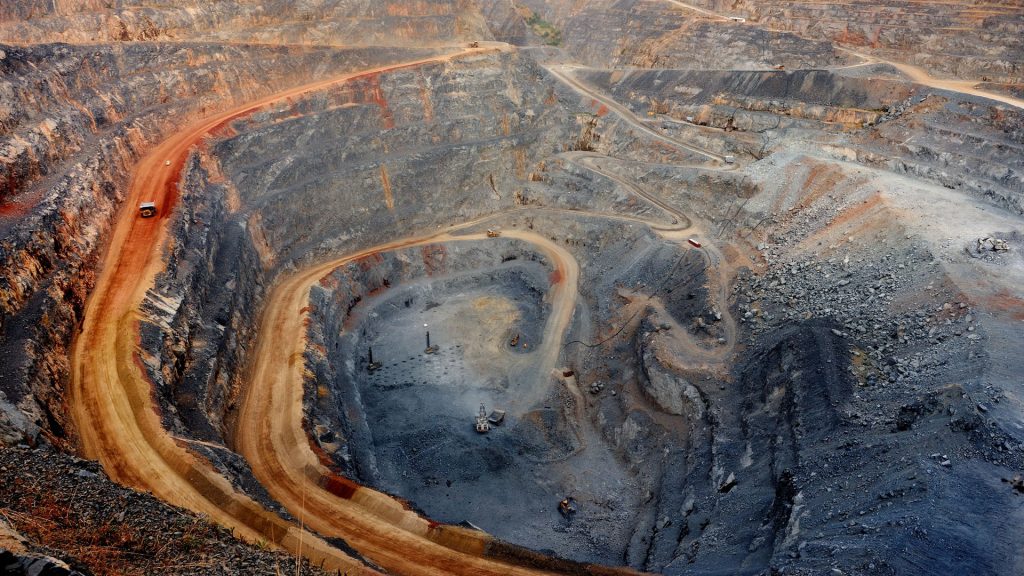
Operations span open-pit and underground methods across multiple deposits. Open-pit mining has targeted Nyamulilima, using truck-and-shovel fleets to haul ore from benches up to 300 meters deep. Underground work at Nyankanga employs longitudinal and transverse open stoping, with over 1,555 meters of development completed in 2021 alone to access new zones.
Gold ore, grading roughly 1.5–4 g/t, feeds a processing plant crushing and milling approximately 5.5 million tonnes per annum, where cyanide dissolves the gold before activated carbon adsorption and electrowinning recovery.
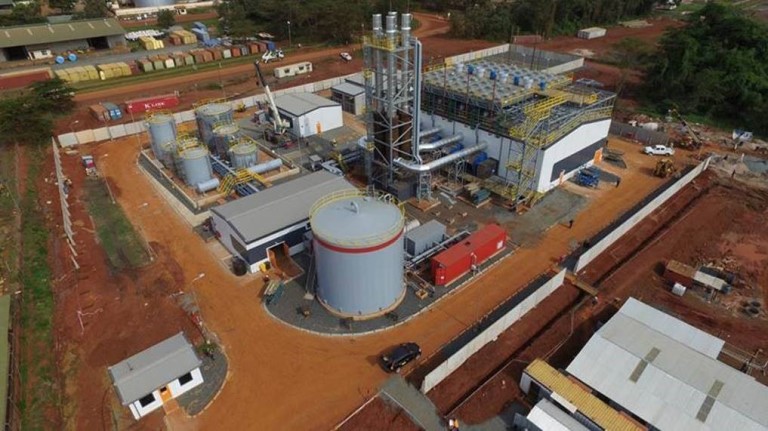
Infrastructure includes a 40 MW power plant (commissioned 2018), a full workshop for heavy equipment, a medical clinic, an airstrip (ICAO: HTRU), and a mine village.
A 2025 grid-tie project using a STATCOM voltage-stabilization system replaced the majority of diesel generator use, integrating the mine with Tanzania’s roughly 45.5% renewable national grid (hydro, thermal, biomass) — a 6.1 km transmission line credited with cutting over 50,000 tonnes of CO₂ emissions annually.
The workforce totals nearly 7,000, with 98% Tanzanian nationals, including 60% of executive roles. GGML prioritizes local procurement and skills programs, including internships, and has earned government recognition as a leading local employer.
Production and Economic Impact
Geita’s output has fluctuated over its history but trended upward in recent years. From 1936–1966, the original mine produced almost 1 million ounces. Since the 2000 revival: 661,000 oz in 2003 (grade 3.60 g/t); dipping to 308,000 oz in 2006 on lower grades; rebounding to 494,000 oz in 2011; then 564,000 oz in 2018 and 604,000 oz in 2019.
Current output runs at approximately 500,000–600,000 ounces per year, making Geita the dominant contributor to Tanzania’s national gold output.
The mine’s current technical documentation places its life-of-mine plan out to 2039, with proven and probable reserves of roughly 4 million ounces and total resources exceeding 7 million ounces.
Economically, Geita is a genuine powerhouse for Tanzania. The country ranks among Africa’s top four gold producers, and its gold sector generated a record $5.27 billion in export earnings in the year ending April 2026 — making gold Tanzania’s single largest foreign exchange earner, accounting for nearly half of all goods export revenue nationally.
GGML’s taxes and royalties feed directly into national government revenue, while local community spending has exceeded TZS 52 billion (roughly $20 million) since 2017.
The mine drives significant ancillary economic activity — transport, suppliers, and services — in a region of around 1.7 million people that otherwise blends subsistence farming with artisanal mining.
That said, benefits still skew heavily national rather than local: local authorities see comparatively little in direct tax revenue, a persistent point of debate around Tanzania’s mineral revenue-sharing framework.
Environmental Considerations
Mining’s footprint looms large in Geita’s savanna-woodland ecosystem. Early operations raised real alarms — proximity to Lake Victoria sparked concerns about arsenic and heavy metal runoff contaminating sediments and fisheries, and a 2005 study documented land degradation, water pollution, and biodiversity loss affecting both livestock and wildlife.
Progress since has been genuine, if incomplete. The mine follows the International Cyanide Management Code, with structured tailings management through a dedicated facility.
Water stewardship includes recycling and active monitoring, and biodiversity programs aim to protect surrounding habitats. The 2025 grid-tie project is a concrete decarbonization step, meaningfully reducing fossil fuel reliance.
Challenges persist, particularly from unregulated artisanal mining in surrounding rush areas such as Rwamagasa and Matabe.
These operations involve mercury use — banned under Tanzania’s national mercury phase-out plan — along with deforestation pressure, and continue to draw large numbers of prospectors into the wider region. Civil society organizations, including Population and Development Initiatives (PDI), run training programs on safer artisanal mining practices using tools like the Mine Site Assessment Tool to encourage compliance.
Social and Community Dimensions
Geita’s social record mixes real investment with real friction. On the positive side, over 1,300 community projects were delivered between 2018 and 2023, including the Nyankumbu Girls Secondary School (1,100 pupils, modern facilities), health centers, youth income schemes, and upgrades to Geita Referral Hospital.
Tanzania’s 2017 CSR law mandates this kind of investment, and GGML’s program emphasizes education, sports, and women’s empowerment through initiatives like the Magogo Project.
On human rights specifically, a Human Rights Ambassador program running since 2014 has helped curb violations according to security reporting, and community policing partnerships have prioritized local hiring to build trust.
Tensions remain real, however. Illegal mining intrusions between 2014 and 2023 led to documented incidents, including a 2014 fatality when an artisanal miner fell while fleeing arrest, and a separate incident resulting in a leg fracture during a clash.
A long-running, 26-year land dispute was finally resolved in August 2025, mandating compensation for displaced residents. Broader academic critiques note that mining influxes strain local resources while economic benefits often bypass the communities closest to the mine itself — a pattern echoed across Tanzania’s wider mining sector.
Controversies and Human Rights
Geita’s controversies have been fewer and less severe than at some peer operations, such as North Mara, but they’re not absent. A 2010 explosives theft by an organized group exposed real security gaps, though 12 of the 14 stolen boxes were later recovered.
Voluntary Principles on Security and Human Rights (VPSHR) audits have occasionally flagged use of force against intruders, though documented incidents have declined over time.
Environmental lawsuits tied to earlier pollution claims from the 2000s have largely been addressed through subsequent mitigation efforts.
Broader human rights monitoring of the global mining sector continues to flag rising risk from the current mineral boom, pointing to frameworks like the Initiative for Responsible Mining Assurance (IRMA) as a benchmark — Geita has moved toward greater transparency but still faces scrutiny where its operations border unregulated artisanal activity.
Tanzania’s 2017 mining reforms, enacted under President Magufuli, raised royalties and increased mandated local ownership shares, prompting pushback from international investors at the time.
Geita navigated that transition, though artisanal mining clashes around the site persist, driven in part by periodic gold rushes that draw unregulated prospectors into the surrounding area.
Outlook
Geita’s near-term trajectory centers on continued underground development to sustain output as open-pit resources deplete over time, supported by a life-of-mine plan extending to 2039. With gold trading at historically elevated levels through 2026, the economics of continued investment remain strong, though gold price volatility remains a real variable for long-range planning.
Sustainability commitments continue to shape the mine’s agenda: further grid electrification, ongoing alignment with Tanzania’s mercury phase-out targets, and continued scaling of CSR programs.
The central challenge ahead is balancing artisanal mining integration, climate resilience (drought pressure affects regional water access), and more equitable distribution of the mine’s economic benefits between national and local levels.
With solid reserves and continued infrastructure investment, Geita is well positioned to keep anchoring Tanzania’s gold sector for years to come — the open question, as it has been for two decades, is whether that continued extraction translates into genuinely inclusive prosperity for the communities closest to it, or continues to reinforce the gap between national and local benefit.
Looking to buy certified gold sourced from Tanzania or elsewhere in Africa? See our guide on buying gold in Tanzania, browse our gold bars, or contact our team for current pricing and documentation.