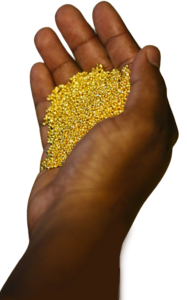
Buy Gold Bars Locally in Africa: Dealers, & Prices
Buy Gold Bars Locally: The most accessible places to buy certified gold bars locally in East Africa are Kampala, Uganda (Buy Gold Bars Africa Ltd’s head office, walk-in or online), Dar es Salaam, Tanzania (Tanzania Minerals Commission-licensed dealers), and Nairobi, Kenya (authorized precious metals dealers in the CBD) — plus secure online ordering with insured worldwide delivery for buyers in the UK, USA, Europe, Dubai, and Asia.
Today, with gold spot trading around $4,360 per troy ounce, a certified 99.5%-pure 1 kg bar costs roughly $140,900–$142,300 depending on the dealer’s premium, with smaller sizes scaling proportionally from there.
Before buying anywhere — local or online — the two things that matter most are an independently verifiable dealer license and an assay certificate you didn’t have to take the seller’s word for.
Local Gold Dealers in Uganda
Uganda is the most practical starting point for East African gold buyers, both because of its accessible dealer network and its favorable regulatory treatment of investment-grade gold. Gold dealers operating legally in Uganda must be licensed by the Uganda Ministry of Energy and Mineral Development and registered with the Uganda Revenue Authority (URA) — a legitimate dealer will provide their license number for independent verification without hesitation.
Buy Gold Bars Africa Ltd’s Kampala office is our flagship location, carrying certified 99.5%+ gold bars from 1 gram to 1 kilogram, with same-day collection for walk-in buyers and full export documentation handled in-house for international clients.
Uganda currently applies a zero royalty rate on gold (a policy in place since 2017, though industry and civil-society voices have publicly debated whether it should be revisited now that domestic refining capacity has matured — worth knowing if you’re planning a long-term sourcing relationship rather than a one-off purchase) plus VAT and customs exemptions on investment-grade gold, alongside a flat $200/kg export fee on refined 99%+ gold.
That combination makes Uganda one of the more tax-efficient places in the region to buy and export physical gold, though buyers should always confirm current rates before a large transaction, since this incentive structure is under active policy discussion.
Beyond our own office, legitimate Kampala-area dealers can be verified through the Uganda gold export procedure requirements and should always be checked against URA and Ministry records independently — never take a displayed certificate at face value without confirming it with the issuing authority.

Why Buying Physical Gold Bars Locally Makes Sense in 2026
Physical gold bars carry no counterparty risk — unlike an ETF, mining stock, or paper gold position, their value doesn’t depend on a bank, broker, or government staying solvent.
Central banks added significant gold reserves through the first half of 2026, reinforcing gold’s role as a store of value during periods of currency volatility — a dynamic that matters directly for investors across Uganda, Tanzania, and Kenya, where local currencies have historically been more volatile than major reserve currencies.
A certified gold bar bought locally can generally be liquidated in most countries within 24–48 hours at a price tied to the transparent, globally-traded spot market.
Where to Buy Gold Bars Locally
Kampala, Uganda — Head Office. Our flagship location carries the full range of bar weights from 1 gram to 1 kilogram in certified 99.5%+ gold, with same-day collection and full export documentation (URA compliance, assay certificates, certificates of origin, insured shipping) handled for international buyers.
Dar es Salaam, Tanzania. Serving Tanzania and the wider Indian Ocean trade corridor, our Dar es Salaam office holds certified 24K and 22K gold with Tanzania Minerals Commission (TMC) export authorization — the base for exporting Tanzanian gold to Dubai, Mumbai, Singapore, or London.
Nairobi, Kenya. Covers Kenya, Ethiopia, and South Sudan buyers, coordinating cross-border logistics and compliance for East African investors.
Gold linked to the DRC. We want to be direct about this rather than repeat outdated guidance: as of September 2026, eastern DRC — North and South Kivu, including Goma and Bukavu — remains an active conflict zone, carries a U.S. State Department Level 4 “Do Not Travel” advisory, and in mid-2026 the U.S.
Treasury sanctioned a Kigali-based gold refinery and named individuals specifically for laundering gold moved out of M23-controlled areas of this exact region. Any gold represented as sourced through a Goma–Kigali export route should be treated with serious caution regardless of the documentation offered, since that is the specific route named in the 2026 sanctions action.
If DRC-origin gold is part of your sourcing plans, it should move through fully independently verified, non-conflict-zone channels — not mine-gate purchases in North or South Kivu — and we’d rather tell you that plainly than describe a process that no longer reflects a defensible risk position.
Online, worldwide. For buyers in the UK, USA, Europe, Asia, and the Gulf, our online platform offers the same certified products and documentation as our physical offices, with real-time pricing linked to the live spot price and insured international delivery.
Current Gold Bar Prices
Based on a spot price of approximately $4,360 per troy ounce ($140.19/gram) as of September 22, 2026, here’s what certified 99.5%-pure gold bars cost, including a typical 1–2% dealer premium over the raw metal value:
| Weight | Price (USD) | Price (EUR) | Price (GBP) |
|---|---|---|---|
| 1 kg | $140,900 – $142,300 | ≈ €123,750 | ≈ £105,700 |
| 500 g | $70,440 – $71,140 | ≈ €61,870 | ≈ £52,860 |
| 250 g | $35,220 – $35,570 | ≈ €30,940 | ≈ £26,430 |
| 100 g | $14,090 – $14,230 | ≈ €12,380 | ≈ £10,570 |
| 50 g | $7,040 – $7,110 | ≈ €6,180 | ≈ £5,280 |
| 10 g | $1,410 – $1,420 | ≈ €1,240 | ≈ £1,060 |
| 1 g | $141 – $142 | ≈ €124 | ≈ £106 |
Exchange rates as of September 22, 2026 (1 USD ≈ €0.874 / £0.747). Gold spot moves daily and premiums vary by order size and dealer — contact us for a locked, real-time quote before purchasing. Bulk orders of 500g+ and 1kg+ may qualify for reduced premiums; ask about wholesale terms for monthly supply contracts of 10kg or more.
Where Our Gold Comes From
Our Ugandan supply is sourced from licensed mines and certified small-scale mining cooperatives, concentrated in Uganda’s Karamoja, Busia, and West Nile regions, feeding our Kampala processing and certification facility.
We do not purchase from unverified sources or operators who can’t demonstrate compliance with Uganda’s Mining Act.
Given the current situation in eastern DRC described above, any DRC-linked stock we offer is sourced and documented under significantly heightened diligence standards, independent of routine ICGLR paperwork alone — ask us directly about current sourcing status and verification for any DRC-origin product before purchasing.
Buying Locally vs. Online
| Factor | Buying Locally | Buying Online |
|---|---|---|
| Inspect before buying | Yes — handle gold in person | Not before delivery |
| Instant possession | Yes | No — insured shipping required |
| Price negotiation | Sometimes, for bulk orders | Fixed or quote-based |
| Convenience | Requires an in-person visit | 24/7, from anywhere |
| International buyers | Requires travel | Order from your own country |
| Documentation | In-person verification | Digital + courier-delivered originals |
If you’re in or near Kampala, Dar es Salaam, or Nairobi, an in-person visit for physical inspection is the most reassuring route. For buyers elsewhere, our online platform offers the same certification and documentation with insured delivery to your door.
What to Check Before Buying Gold Bars Locally
- Verify the dealer’s license independently — Uganda’s Ministry of Energy and Mineral Development plus URA registration; Tanzania’s Minerals Commission license; DRC’s SAEMAPE registration. Never rely on a document shown to you without confirming it with the issuing authority.
- Confirm purity with an independent assay — from an accredited lab, ideally one the seller didn’t select, especially for large purchases.
- Check weight against the certificate on a calibrated scale, in your presence.
- Verify the price against the live spot rate — calculable from the current LBMA spot price plus the dealer’s stated premium; a price far above or dramatically below that calculation is a red flag either way.
- Inspect hallmarks and stamps — refinery/mint mark, purity marking (999, 9999, or 995), serial number, and weight, applied at production and difficult to forge convincingly on a bar of the correct density.
- Demand a full documentation package — signed receipt, certificate of authenticity, and assay report, for any purchase regardless of size.
⚠️ Safety & Transaction Guidelines
Africa’s gold market has attracted fraudulent operators alongside legitimate dealers — these are the patterns to watch for and the practices that protect you:
- Prices that seem too good to be true are a red flag, not a bargain. The real spot-referenced price is publicly available — verify it before negotiating, since significant underpricing is one of the clearest signs of fake or adulterated gold.
- No physical office or verifiable license means walk away. Legitimate dealers have a registered company name, a physical address, and a license number you can confirm independently. Communication limited to WhatsApp with no traceable business address is a strong warning sign.
- Never pay upfront “clearance” or “export” fees to a seller directly. Legitimate export taxes and documentation costs are priced into your quote or paid to the relevant government authority through official channels, with receipts — never informally to the seller or a third party.
- A seller who resists independent assay is hiding something. Any legitimate dealer welcomes third-party purity testing before you finalize payment.
- Be cautious of social-media-only sellers advertising gold at implausibly attractive prices on Facebook, Instagram, or WhatsApp groups — always demand a verifiable physical address and license before engaging further.
- Use secure, traceable payment only — bank wire (SWIFT), licensed escrow, or a confirmed Letter of Credit for larger orders. Avoid informal cash transactions above modest amounts.
- For any DRC-linked gold specifically, apply the elevated scrutiny described above — current conditions in the sourcing region mean standard documentation alone isn’t sufficient assurance right now.
If you’re approached by someone claiming to represent Buy Gold Bars Africa Ltd without being able to provide our verified contact details, report it to our Kampala office directly.
How to Store Gold Bars Safely
- Bank safe deposit box — accessible, modest annual fee, remains your personal property.
- Professional precious metals vault — recommended for holdings of 5kg or more; international providers like Brinks and Malca-Amit operate vault access reachable from Nairobi, with facilities in Dubai, London, Singapore, and Zurich.
- Home safe — appropriate only for smaller quantities (under 100 grams), fire-resistant and floor-bolted, with insurance confirmed to specifically cover precious metals.
- Store documentation separately from the physical gold — losing your assay certificate or receipt significantly complicates resale.
How to Buy Gold Bars from Us — 4 Steps
- Contact us for a current quote — call, WhatsApp, or email for real-time pricing on your chosen weight and quantity.
- Confirm your order — for orders above $10,000, we issue a formal Sales & Purchase Agreement specifying weight, purity, price, and delivery terms.
- Pay securely — bank wire, licensed escrow, or Letter of Credit for large orders; no informal cash payments above the legal threshold, and payments only to our registered business accounts, never personal accounts.
- Collect or receive delivery — in-person collection with full documentation, or insured international delivery typically within 3–7 business days.
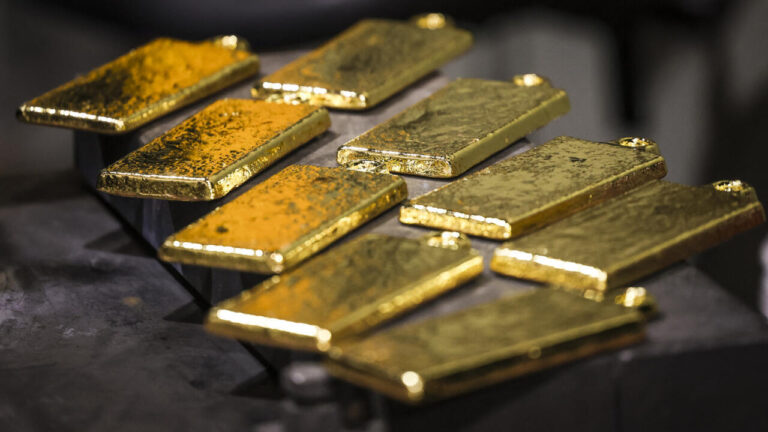
FAQs – Buy Gold Bars Locally
Where can I buy gold bars locally in Uganda? Buy Gold Bars Africa Ltd’s Kampala office is a licensed, walk-in option carrying certified 99.5%+ gold bars from 1 gram to 1 kilogram. Confirm current stock and pricing before visiting.
How much does a 1 kg gold bar cost in 2026? At current spot prices (~$4,360/oz as of September 22, 2026), a certified 99.5%-pure 1 kg bar costs approximately $140,900–$142,300, depending on the dealer’s premium. This changes daily with the spot market — always request a live quote.
What purity are the gold bars sold locally? Reputable dealers, including Buy Gold Bars Africa Ltd, sell a minimum of 99.5% purity (995 fineness), with 99.9% available on request. Every bar should come with a lab assay certificate confirming both figures.
Is it safe to buy gold linked to the DRC right now? Not without significant additional diligence. Eastern DRC (North and South Kivu) is an active conflict zone under a U.S. Level 4 “Do Not Travel” advisory, and 2026 U.S. sanctions specifically targeted gold-laundering networks moving material from this region through Kigali. Standard documentation alone isn’t sufficient verification under current conditions.
Are there taxes on buying gold bars in Uganda? Uganda applies zero royalty on gold and VAT/customs exemptions on investment-grade purchases, alongside a flat $200/kg export fee on refined 99%+ gold. This incentive structure has been publicly debated in 2026 policy discussions — confirm current rates before a large transaction.
Can I buy gold bars online and have them delivered internationally? Yes — certified gold bars can be shipped internationally via insured carriers like Brinks and Malca-Amit, with full export documentation, typically arriving within 3–7 business days.
Buy Certified Gold Bars — Contact Us
Whether you’re visiting our Kampala, Dar es Salaam, or Nairobi office, or ordering online for delivery anywhere in the world, Buy Gold Bars Africa Ltd supplies certified 24K gold bars, 1 oz bars, and gold ingots with full assay documentation. Contact us for a live, spot-referenced quote.

