24K Gold Nuggets for Sale in Africa & How to Buy Them
Gold Nuggets for Sale: You can buy genuine 24K gold nuggets directly from Africa starting from $100 per gram — sourced from active mining regions in Uganda, Ghana, Tanzania, the DRC, and South Africa, with full assay certification, export documentation, and secure international delivery handled end-to-end by licensed exporters.
African gold nuggets offer some of the most competitive prices on natural, high-purity gold available anywhere in the world, trading at 1–3% above the global LBMA spot price compared to premiums of 5–10% charged by Western dealers for equivalent refined product.
Whether you are an investor diversifying a portfolio with physical gold, a jewellery manufacturer sourcing high-purity raw material, or a collector seeking rare natural gold nuggets with genuine provenance, this guide covers everything you need — current prices, authenticity verification, sourcing regions, legal export requirements, scam avoidance, and why Buy Gold Bars Africa Ltd is the trusted partner for your gold nugget purchase.
What Are 24K Gold Nuggets? Purity, Formation, and Why They Are Valuable
Natural gold nuggets are pieces of elemental gold that form over millions of years through geological processes — hydrothermal fluid movement, pressure, and chemical precipitation that deposits gold in quartz veins, alluvial riverbeds, and placer deposits.
Unlike gold bars or coins, which are manufactured by melting and casting refined gold into standardised shapes, natural gold nuggets retain the organic, irregular form that nature created. No two nuggets are identical, which is a significant part of their appeal to both collectors and investors.
When dealers describe gold nuggets as “24K,” they are referring to gold that is 99% or more pure in its natural state — an exceptional characteristic found primarily in specific African alluvial deposits where the natural refining process of water erosion and chemical weathering has concentrated gold content to very high purity levels.
More commonly, natural African gold nuggets test at 22K to 23K (91–96% purity), which still represents exceptional natural quality and commands strong prices in international markets.
The distinction matters for buyers: a natural gold nugget described as “24K equivalent” has been assayed at 99%+ purity from natural formation, while a “refined 24K nugget” has been processed to achieve that purity level. Both are genuine high-value gold products — but understanding which you are buying, and confirming it through independent assay, is fundamental to paying the right price.
Why Natural Gold Nuggets Have Investment Value Beyond Their Gold Content
Natural gold nuggets command a premium over their pure gold content value for several reasons that experienced investors understand well. Their rarity is the primary driver — while gold bars can be manufactured in unlimited quantities from refined gold, natural nuggets of significant size are geologically finite.
A 100-gram natural gold nugget from Uganda’s Karamoja region or Ghana’s Ashanti belt cannot be replicated. Its natural formation is its provenance.
Collector demand for large, visually striking natural gold nuggets consistently pushes prices above pure melt value. High-end jewellery designers in Europe, the Middle East, and Asia pay premiums for natural nuggets with distinctive shapes and surface textures that manufactured gold cannot match.
Museums and private collectors maintain active demand for significant natural specimens. This collector premium — layered on top of the intrinsic gold content value — means that natural gold nuggets frequently outperform refined gold bars as investments when held over medium to long time horizons.
Current 24K Gold Nugget Prices in Africa: Complete Price Table
African gold nugget prices are referenced to the daily LBMA gold spot price, adjusted for purity and the natural premium or discount that applies to nuggets versus refined bars. Here is the current price guide for 24K gold nuggets across African markets:
Gold Nugget Price Per Gram in Africa
| Weight | 24K Refined Nuggets (USD) | Natural 22K–23K Nuggets (USD) | Gold Dust / Flakes (USD) |
|---|---|---|---|
| 1 gram | $100–$110 | $88–$96 | $62–$80 |
| 5 grams | $500–$550 | $440–$480 | $310–$400 |
| 10 grams | $1,000–$1,100 | $880–$960 | $620–$800 |
| 20 grams | $2,000–$2,200 | $1,760–$1,920 | $1,240–$1,600 |
| 50 grams | $5,000–$5,500 | $4,400–$4,800 | $3,100–$4,000 |
| 100 grams | $10,000–$11,000 | $8,800–$9,600 | $6,200–$8,000 |
| 250 grams | $25,000–$27,500 | $22,000–$24,000 | $15,500–$20,000 |
| 500 grams | $50,000–$55,000 | $44,000–$48,000 | $31,000–$40,000 |
| 1 kilogram | $100,000–$108,000 | $88,000–$96,000 | $62,000–$80,000 |
Gold Nugget Price Per Troy Ounce in Africa
| Product Type | Price Per Troy Ounce (USD) |
|---|---|
| 24K refined gold nuggets | $3,110–$3,359 |
| Natural 22K–23K nuggets | $2,738–$2,986 |
| Gold dust / alluvial flakes | $1,929–$2,489 |
All prices are negotiable for bulk orders above 10 kg. Contact your Africa gold exporter, Buy Gold Bars Africa Ltd, for a real-time quotation tied to the current LBMA spot rate before confirming any purchase.
How African Gold Nugget Prices Compare Globally
| Market | Premium Over LBMA Spot | 24K Gold Per Gram (USD) |
|---|---|---|
| Direct from African miners | 1–3% above spot | $103–$110 |
| African licensed exporters | 0–5% above spot | $103–$113 |
| Dubai Gold Souk | 4–6% above spot | $109–$115 |
| USA bullion dealers | 5–8% above spot | $110–$117 |
| UK / Europe dealers | 5–10% above spot | $110–$119 |
| India retail market | 12–15% above spot | $118–$125 |
Types of Gold Nuggets Available from Africa
Understanding the different categories of natural gold nuggets available from African mining regions helps buyers select the right product for their specific investment, manufacturing, or collecting purpose.
Placer Gold Nuggets — Africa’s Most Abundant Natural Gold
Placer gold nuggets form when primary gold-bearing rock erodes over geological time, releasing gold particles that are transported and concentrated by water movement in rivers, streams, and floodplains.
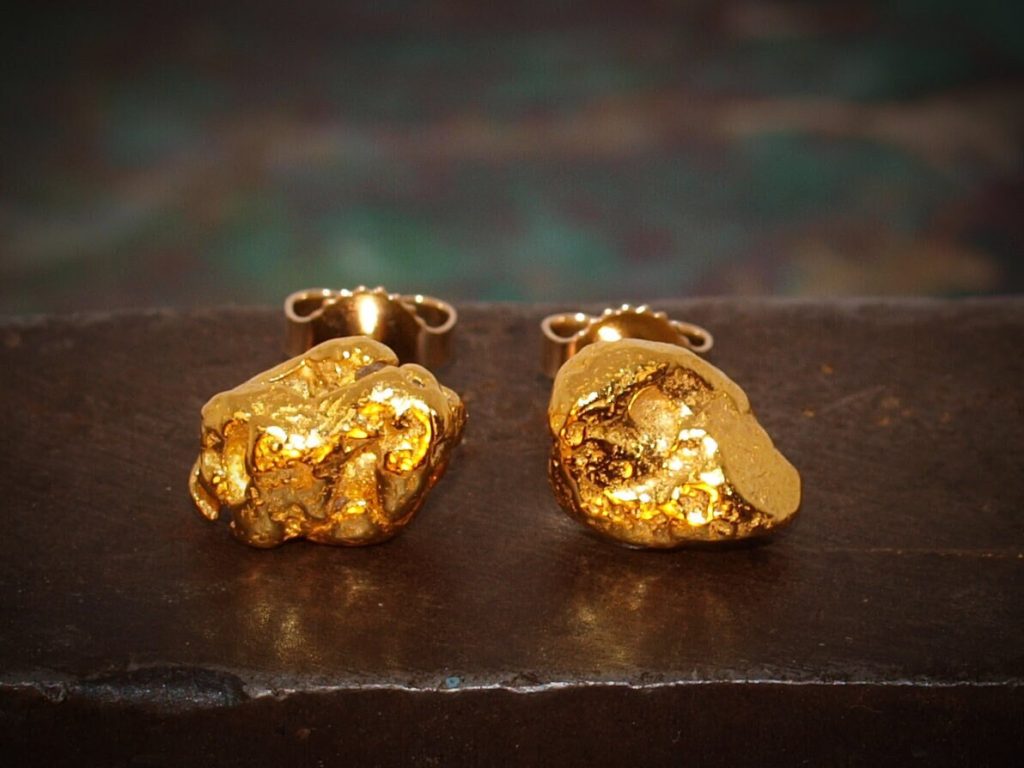
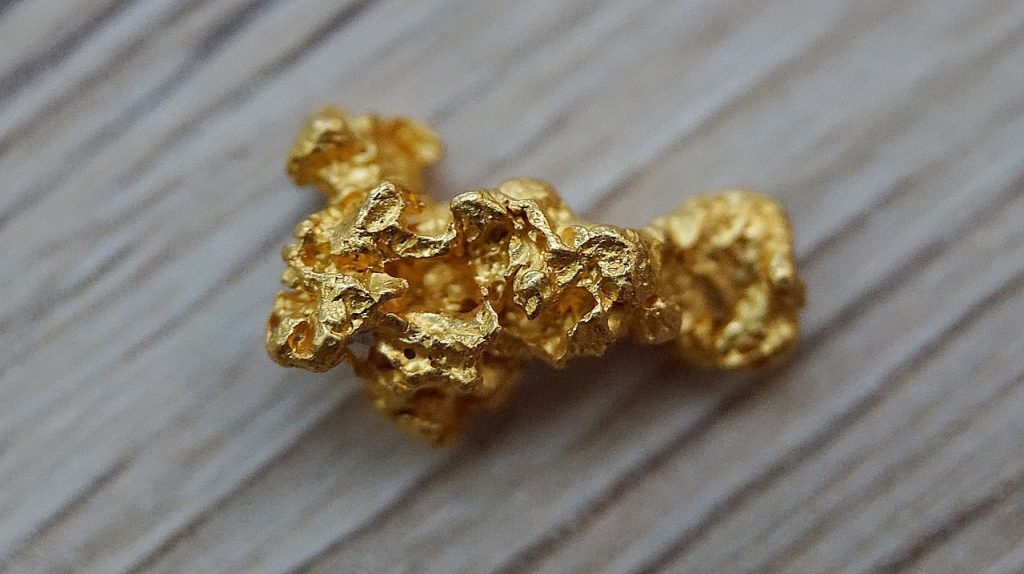
The natural tumbling and sorting process that creates placer gold gives nuggets their characteristic irregular, rounded shapes and textured surfaces — often with inclusions of quartz, mica, or ironstone that add to their natural character.
Placer gold nuggets from Uganda’s Busia district, Ghana’s Ashanti rivers, and DRC’s Ituri alluvial deposits are the most widely available natural gold nuggets in Africa, with purity ranging from 85–95% depending on the specific deposit.
They are the preferred product for buyers seeking natural African gold nuggets for jewellery manufacturing, collector acquisition, or refinery input at competitive prices.
Hard Rock Gold Nuggets — Higher Purity, Distinctive Appearance
Hard rock gold nuggets — also called lode gold or primary gold — form within quartz veins and host rock formations where hydrothermal fluids deposit gold directly.
Because these nuggets form in chemically isolated environments with fewer impurities than alluvial settings, hard rock nuggets tend to exhibit higher purity (90–97%) and a distinctively bright, clean surface appearance.
Hard rock gold nuggets from Uganda’s Karamoja formation, Ghana’s Obuasi underground mines, and Tanzania’s Geita hard rock deposits are particularly sought after by collectors who value the nugget’s visual quality alongside its gold content.
Their rounder form, fewer inclusions, and brighter natural shine make them the premium natural nugget product in the African gold market.
Refined 24K Gold Nuggets — Investment-Grade Processed Gold
Refined 24K gold nuggets are natural nuggets that have undergone processing to remove impurities and bring gold content to 99.9% purity, while retaining a nugget-like form rather than being cast into standard bars.
These are less common in their natural state but represent the highest-value natural gold product available — combining investment-grade purity with the natural form that collectors and jewellers prize.
Refined 24K gold nuggets are available through licensed African exporters who work with in-country or UAE-based refineries, and are the recommended product for buyers who need both investment-grade purity documentation and the aesthetic character of natural gold.
Gold Dust and Fine Gold Flakes — Artisanal African Gold
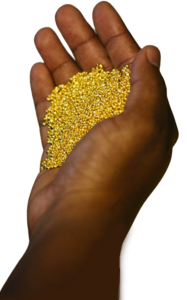
Gold dust and fine gold flakes are the smallest-particle form of natural African gold, produced by artisanal miners using traditional panning and sluicing methods in alluvial mining areas.
Gold dust from Uganda’s Namayingo district, Ghana’s Upper East region, and DRC’s Maniema Province is available at the most competitive per-gram prices — typically $62–$80 per gram for 82–90% purity material — making it the preferred input for buyers purchasing African gold for refinery processing.
Gold dust requires careful assay testing across the full consignment before purchase, as purity varies significantly and adulteration with fine base metal particles is the most common form of gold dust fraud in African markets.
Where Africa’s Best Gold Nuggets Come From: Key Mining Regions
Uganda — East Africa’s Premier Gold Nugget Source
Uganda has established itself as East Africa’s most accessible and price-competitive source for natural gold nuggets, driven by domestic production from multiple mining regions and its role as the primary trading hub for DRC and South Sudan gold flowing into international markets.
Karamoja Region: Uganda’s most significant confirmed gold deposit, with the 2022 announcement of 31 million additional tonnes of gold reserves centred in this northeastern region. Karamoja gold nuggets test at 92–96% purity in natural alluvial form, with the region’s geological characteristics producing nuggets of exceptional natural density and visual quality.
Busia and Namayingo Districts: Eastern Uganda’s most active artisanal gold belt, producing significant volumes of placer gold nuggets and dust that feed Kampala’s licensed dealer network. Busia nuggets typically test at 85–92% and are the most volume-available natural gold product in Uganda’s export market.
Mubende District: Central Uganda’s emerging small-scale mining zone, producing 88–94% purity nuggets from both alluvial and small-scale hardrock operations through licensed cooperatives with improving documentation traceability.
Ghana — Africa’s Most Credibly Documented Gold Nuggets
Ghana is Africa’s largest gold producer and operates the continent’s most transparent and institutionally rigorous gold export system, anchored by the Precious Minerals Marketing Company (PMMC) whose assay certificates are accepted without question by institutional buyers worldwide.
Ashanti Region: Home to the world-famous Ashanti gold belt, producing high-purity nuggets from both large-scale industrial operations and artisanal mining communities. Ashanti gold nuggets are renowned for their consistent quality and the depth of their provenance documentation.
Western Region: Ghana’s Western Region hosts major industrial mines alongside active small-scale mining producing placer nuggets from rivers draining the region’s gold-bearing geology.
Upper East Region: Produces artisanal gold dust and smaller nuggets with PMMC certification, well-suited for buyers seeking competitively priced Ghanaian gold with full regulatory compliance.
DRC (Congo) — Ituri Province’s World-Class Alluvial Nuggets
The Democratic Republic of Congo’s Ituri Province produces some of Africa’s highest-purity natural gold nuggets — regularly testing at 94–98% — from alluvial deposits in the Okapi Wildlife Reserve corridor and surrounding areas. Ituri gold is the benchmark for natural alluvial gold quality in East and Central Africa.
DRC gold nuggets require additional compliance documentation — CEEC (Centre d’Expertise, d’Évaluation et de Certification) assay certificates and ICGLR conflict-free traceability tags — that reputable licensed Africa gold exporters like Buy Gold Bars Africa Ltd supply as standard.
For buyers whose destination markets require conflict-mineral due diligence, this documentation is not an obstacle — it is a quality signal.
Tanzania — Stable Supply from Geita and Shinyanga
Tanzania’s gold-producing regions of Geita, Shinyanga, and Mwanza produce reliable volumes of both placer and hard rock gold nuggets through a combination of industrial mining and licensed artisanal operations. Tanzania Minerals Audit Agency (TMAA) certification provides strong institutional credibility for Tanzanian gold in international markets.
South Africa — Rare Natural Nuggets from the World’s Deepest Mines
South Africa’s Witwatersrand Basin is historically the world’s most prolific gold-producing geological formation, though most South African gold is processed into refined bars through the Rand Refinery rather than being available as natural nuggets.
Natural South African gold nuggets are rarer and more collectable than those from other African countries, commanding collector premiums that reflect their scarcity and historical significance.
Mali — West Africa’s Volume Gold Nugget Producer
Mali is one of West Africa’s largest gold producers by output, with artisanal and small-scale mining in the Kayes, Koulikoro, and Sikasso regions producing significant volumes of placer gold nuggets. For buyers seeking large-volume West African gold nugget supply at competitive prices, Mali offers genuine commercial scale alongside improving formal export infrastructure.
How to Verify the Authenticity of 24K Gold Nuggets Before Buying
Protecting yourself from fake gold nuggets is the most critical due diligence step in any African gold purchase. Here are the verification methods that genuinely work — and the ones that fraudsters can defeat:
XRF (X-Ray Fluorescence) Analysis — The Most Reliable Field Test
XRF testing is the gold standard for non-destructive purity verification of gold nuggets. An XRF device fires X-rays at the nugget’s surface and analyses the fluorescent X-rays returned to determine the exact elemental composition — including gold percentage, silver content, and any base metal impurities.
A properly conducted XRF test on multiple points across the nugget’s surface provides accurate purity data in minutes without damaging the nugget.
Africa gold exporters like us at Buy Gold Bars Africa Ltd facilitates independent XRF testing at accredited laboratories in Kampala, Nairobi, Accra, and Dubai. Buyers are encouraged to attend testing personally or to send their own representative to observe the process.
Fire Assay (Cupellation) — The Definitive Purity Test
Fire assay is the most accurate method for determining the precise gold content of a nugget and is the method used by PMMC (Ghana), DGSM (Uganda), and CEEC (DRC) for official certification. The process dissolves a small sample in acid and separates gold from all other metals through chemical and thermal processing, producing an exact purity measurement to four decimal places.
Every official assay certificate from an African government testing authority is based on fire assay results. When you receive a PMMC or DGSM assay certificate, the purity figure stated reflects fire assay testing — the most authoritative gold purity measurement available.
Acid Test — Basic Field Verification
The acid test uses nitric acid to distinguish gold from base metals. Real gold of 18K purity and above shows no reaction when nitric acid is applied. Base metals — copper, brass, iron — react visibly with nitric acid, producing colour changes or bubbling. Gold-plated metals react when the acid penetrates through the plating to the base metal beneath.
The acid test is useful as a quick field screening tool but should never substitute for XRF or fire assay for any significant purchase. Sophisticated gold-plated tungsten fakes can pass an acid test if the plating is thick enough to prevent acid penetration during the brief test duration.
Density Test — Physical Gold Verification
Pure gold has a density of 19.3 grams per cubic centimetre — one of the highest densities of any naturally occurring metal. Weighing a nugget and measuring its water displacement volume allows calculation of its density. A reading close to 19.3 g/cm³ confirms the nugget is predominantly gold. Significant deviation from this figure indicates adulteration with lower-density metals.
The density test is particularly effective at detecting tungsten substitution (tungsten density: 19.25 g/cm³, nearly identical to gold) combined with acid testing and XRF, as tungsten’s near-identical density makes it the most sophisticated fake gold material in circulation.
Magnet Test — The Simplest Screening Tool
Pure gold is non-magnetic and shows no attraction to a magnet. If a nugget is attracted to a strong rare-earth magnet, it contains ferromagnetic material — iron, nickel, or certain grades of steel — and is not pure gold. The magnet test is the fastest and cheapest screening tool but catches only the most basic fakes. Sophisticated counterfeit nuggets use non-magnetic base metals and pass the magnet test while failing XRF analysis.
Visual Inspection for Authenticity Markers
Genuine natural gold nuggets have a warm, rich yellow colour that is consistent throughout the nugget’s surface. The colour does not vary between different lighting angles or fade near edges and crevices. Authentic nuggets have irregular surface textures shaped by geological and water erosion processes — no two genuine nuggets have identical surface topography.
Warning signs in visual inspection include inconsistent colour (brighter or more orange-toned areas indicating copper content or gold wash), unusual smoothness or regularity suggesting machine manufacturing, surface cracks or chips revealing different-coloured material underneath, and weight that feels light relative to the nugget’s apparent size.
What to Look for When Buying Gold Nuggets from Africa
Beyond authenticity verification, experienced gold nugget buyers evaluate several additional factors when assessing the value and suitability of African gold nuggets for their specific purpose:
Natural Form Preservation
For collector and jewellery applications, the degree to which a nugget retains its natural, unaltered form is a significant value driver. Nuggets that have been minimally handled, not cleaned with harsh chemicals, and not subjected to surface treatments that alter their natural appearance command collector premiums over identical-weight nuggets that have been processed in ways that diminish their natural character.
Ask suppliers whether the nuggets have been acid-washed, tumbled, or otherwise treated after extraction. The answer affects both the natural authenticity of the nugget and its collector market value.
Inclusions and Their Effect on Value
Natural gold nuggets frequently contain inclusions — embedded fragments of quartz, ironstone, mica, or other host rock minerals that were present during the nugget’s geological formation. For collector purposes, distinctive inclusions can add character and uniqueness that increases a nugget’s appeal. For refinery input buyers, inclusions represent non-gold material that reduces the effective gold content per gram of nugget weight.
Always request assay testing that accounts for inclusion content, and ensure that the price you pay reflects the gold content rather than the total weight including inclusions.
Size and Weight Distribution
Gold nuggets are available across a vast size range — from sub-gram gold flakes to multi-kilogram specimens of exceptional rarity. The price per gram of gold content is not uniform across sizes. Large specimens (above 50 grams) command significant premiums over their gold content value because of their rarity, visual impact, and collector demand. Very small nuggets (below 5 grams) trade at minimal premium over gold content because they lack the visual presence that drives collector value.
For buyers optimising for investment return on gold content, medium-size nuggets in the 10–100 gram range offer the best balance of competitive per-gram pricing and strong resale liquidity.
Legal and Export Requirements for Buying Gold Nuggets from Africa
Purchasing gold nuggets from Africa without understanding the legal export framework creates serious risk — including gold seizure, criminal liability, and complete financial loss. Here are the key legal requirements by country:
Ghana Gold Nugget Export Requirements
All gold nuggets exported from Ghana must be assayed and certified by the Precious Minerals Marketing Company (PMMC). Exporters must hold a valid Gold Export Licence from the Minerals Commission of Ghana. Each consignment requires an individual export permit, Certificate of Origin, and PMMC assay certificate confirming purity and weight. Ghana’s Anti-Money Laundering Act requires full KYC documentation for all significant gold transactions.
Uganda Gold Nugget Export Requirements
Uganda’s gold nugget exports are regulated by the Directorate of Geological Survey and Mines (DGSM) under the Ministry of Energy and Mineral Development. Exporters must hold a valid mineral dealer’s licence from DGSM. Individual export permits are required for each consignment, along with DGSM assay certification and a Certificate of Origin. Uganda’s Mining Act classifies unauthorised gold export as mineral smuggling.
DRC Gold Nugget Export Requirements
DRC gold nuggets require CEEC assay certification, ICGLR conflict-free traceability tags, and export authorisation through a licensed comptoir (registered mineral trading house). Gold from eastern DRC provinces — North Kivu, South Kivu, Ituri — additionally requires documentation demonstrating that the gold does not finance armed groups, in compliance with OECD Due Diligence Guidance for Responsible Supply Chains of Minerals from Conflict-Affected and High-Risk Areas.
Tanzania Gold Nugget Export Requirements
Tanzania requires TMAA (Tanzania Minerals Audit Agency) assay certification and Ministry of Minerals export authorisation for all gold nugget exports. Tanzania’s regulatory framework is considered one of East Africa’s most transparent, with TMAA certification carrying strong credibility in international buying markets.
Conflict-Free Compliance for All African Gold Nugget Purchases
International buyers importing African gold nuggets into the EU, USA, or UAE must demonstrate compliance with conflict-mineral regulations — the EU Conflict Minerals Regulation (effective 2021), US Dodd-Frank Act Section 1502, and DMCC responsible sourcing requirements. Buy Gold Bars Africa Ltd provides ICGLR conflict-free documentation as standard on all relevant consignments, ensuring our clients’ imports clear destination compliance checks without complication.
How to Spot Fake Gold Nuggets and Avoid Common Scams
The African gold nugget market attracts sophisticated fraudsters who specifically target international buyers. Understanding the most common scam methods protects your investment:
Gold-Plated Tungsten Nuggets
The most sophisticated fake gold nugget is a tungsten core coated with genuine 24K gold. Tungsten’s density (19.25 g/cm³) is almost identical to pure gold (19.3 g/cm³), making density testing alone ineffective. These fakes pass visual inspection, magnet tests, and density tests — only XRF or fire assay reveals the tungsten core. Always insist on XRF testing from multiple points across the nugget’s surface, including interior points where possible.
Gold-Washed Brass and Copper Nuggets
Lower-budget fakes use brass or copper nuggets coated with a thin gold wash that gives the correct visual appearance and passes casual colour inspection. These are cheaper to produce than tungsten fakes and are more common in low-value scam attempts. They fail magnet tests (brass and copper are non-magnetic, but they also fail acid tests and density checks immediately). Any unusual lightness in a nugget’s feel relative to its apparent size indicates this type of fake.
Adulterated Gold Dust Fraud
For gold dust purchases, the most common fraud involves mixing genuine gold dust with fine brass powder, copper particles, or iron filings that are visually indistinguishable from gold dust. The mixture tests at acceptable purity in a surface XRF test on the seller-selected sample — but the bulk consignment contains significantly less gold than represented. Always insist on random sampling across the entire consignment by your representative before any payment.
Advance Fee Gold Nugget Scams
Sellers who ask for advance payments — export clearance fees, customs release costs, laboratory fees — before providing the gold are almost always running advance fee fraud. Legitimate gold nugget transactions involve payment after assay, not before. Multiple sequential fee requests before gold delivery is the clearest scam signal available.
Fake Assay Certificates and Forged PMMC/DGSM Documentation
Professional-looking forgeries of PMMC, DGSM, and CEEC certificates are widely available in fraudulent gold market networks. Always verify certificate numbers directly with the issuing authority — PMMC Accra, DGSM Kampala, or CEEC Kinshasa — before making any payment based on the certificate’s stated purity.
Investment Benefits of Buying 24K Gold Nuggets from Africa
Inflation Hedge and Wealth Preservation
Gold nuggets — like all physical gold — provide one of history’s most reliable hedges against inflation and currency devaluation. When fiat currencies lose purchasing power through inflation, gold typically maintains or increases its real value. For investors who hold a proportion of their wealth in physical gold, natural 24K nuggets purchased at African source prices provide both the inflation protection of gold and the additional collector and rarity premium that natural specimens carry over manufactured bars.
Portfolio Diversification with Physical Gold
Financial advisors consistently recommend allocating 5–15% of an investment portfolio to physical gold as a diversification tool that reduces overall portfolio volatility. Physical gold nuggets purchased directly from African licensed exporters provide this diversification at the most competitive available entry price — reducing the effective portfolio gold cost basis compared to buying the same gold content through Western or Middle Eastern retail channels.
Collector and Numismatic Premium Potential
Significant natural gold nuggets — specimens above 50 grams with distinctive shapes or remarkable natural purity — appreciate in value beyond simple gold content appreciation as collector demand grows and the supply of large natural specimens diminishes. Museums, private collectors, and high-end jewellery designers maintain consistent demand for exceptional natural gold nuggets that drives prices well above melt value for outstanding pieces.
Portability and Physical Security
Physical gold nuggets are among the most portable stores of value in existence — high value density, no counterparty risk, no digital vulnerability, and universally recognised value that transcends political and economic borders. For investors seeking an asset that genuinely holds value across scenarios including banking system stress, currency crisis, or geopolitical disruption, physical gold nuggets in personal custody provide protection unavailable from paper gold instruments.
How to Store and Care for Your 24K Gold Nuggets
Proper Storage Solutions for Physical Gold Nuggets
Store gold nuggets individually in soft-lined compartments — velvet pouches, acid-free tissue paper, or padded jewellery box inserts — to prevent surface contact between nuggets that could cause scratching. Never store gold nuggets loose in a container where they can rub against each other or against other metals.
For significant collections, a bank vault safe deposit box with climate control provides optimal security and environmental stability. For home storage, a high-security gun safe or dedicated precious metals safe with fire and water resistance is the minimum acceptable standard. For institutional-scale gold nugget holdings, insured professional vault storage through companies like Brinks or Malca-Amit provides the highest level of security and insurance coverage.
Cleaning and Maintenance
Natural gold nuggets require minimal maintenance. The natural surface character that makes them valuable — the irregular texture, natural inclusions, and geological patina — should be preserved, not polished away. Clean nuggets gently with a soft, dry cloth if needed to remove dust. Avoid chemical cleaners, ultrasonic cleaners, and abrasive materials that alter the nugget’s natural surface.
Never expose gold nuggets to chlorine (swimming pools, bleach), mercury, or strong acids outside of assay testing contexts. Store away from high humidity environments that can affect associated mineral inclusions.
Faqs About 24K Gold Nuggets from Africa
What is the current price of gold nuggets in Africa?
Natural 22K–23K gold nuggets from Africa currently cost $88–$96 per gram. Refined 24K gold nuggets are priced at $100–$110 per gram. Prices vary by country, purity, size, and quantity. Contact Buy Gold Bars Africa Ltd for a real-time LBMA-referenced quotation.
Why is gold cheaper in Africa than in Western markets?
African gold is priced closer to mine-gate cost, eliminating the distribution layers, retail markups, and branding premiums that inflate prices in Western and Middle Eastern markets. Licensed African exporters sell at 1–5% above LBMA spot versus 5–10% above spot for Western dealers.
Can I buy gold nuggets from Africa online safely?
Yes — with rigorous due diligence. Verify every supplier’s government-issued export licence independently. Insist on independent assay before payment. Use letter of credit or escrow for payment protection. A legit Africa gold exporter provides all verification documentation proactively and facilitates independent testing.
What documentation should come with African gold nuggets?
Every legitimate gold nugget purchase should include a government-issued assay certificate (PMMC, DGSM, CEEC, or TMAA), individual export permit, Certificate of Origin, commercial invoice, and for eastern DRC gold, ICGLR conflict-free traceability certification.
How do I know if gold nuggets from Africa are conflict-free?
Gold nuggets from Uganda, Ghana, Tanzania, South Africa, and Mali carry low conflict-mineral risk. DRC gold from eastern provinces requires ICGLR certification confirming conflict-free sourcing. Buy Gold Bars Africa Ltd provides ICGLR documentation on all relevant consignments as standard.
What is the minimum order for gold nuggets from Africa?
Buy Gold Bars Africa Ltd accepts orders starting from 1 gram for collectors and small investors. Commercial buyers typically start at 100 grams, with bulk pricing available from 1 kg upward.
How long does delivery take for gold nuggets from Africa?
With complete documentation in place, international delivery from Africa via specialist logistics providers typically takes 5–10 business days to UAE, European, and Asian destinations.
Why Buy Your 24K Gold Nuggets from Buy Gold Bars Africa Ltd
You now have the complete picture of Africa’s gold nugget market — the prices, the sourcing regions, the verification methods, the legal framework, and the risks. The one remaining decision is who you trust to deliver on the opportunity this market genuinely offers.
Buy Gold Bars Africa Ltd is Africa’s most trusted licensed gold nugget exporter — and here is exactly what that means for your investment.
Direct Mine Access Across Five African Countries
Our supply network connects directly to licensed mining cooperatives, artisanal mining communities, and small-scale operations across Uganda, Ghana, Tanzania, DRC, and Mali. We source natural gold nuggets from Karamoja’s alluvial fields, Ghana’s Ashanti region, Ituri Province’s world-class deposits, and Tanzania’s Geita mining belt — giving our clients access to the full spectrum of African gold nugget quality and pricing at genuine mine-proximity prices.
We do not buy gold from secondary market dealers and mark it up. We work directly with the miners — which is what makes our pricing consistently 3–8% below what clients pay through Dubai or Western intermediaries.
Full Government Certification on Every Order
Every gold nugget consignment sold by your Africa gold exporter, Buy Gold Bars Africa Ltd, comes with original, independently verifiable government assay certification — PMMC certificates for Ghana gold, DGSM certificates for Uganda gold, CEEC certification for DRC gold, and TMAA documentation for Tanzanian product. We supply ICGLR conflict-free traceability tags as standard on all eastern DRC consignments.
We provide certificate reference numbers before payment and actively encourage every buyer to verify them directly with the issuing authority. Our certification is genuine because our gold is genuine.
Independent Testing — Always Before Payment
Buy Gold Bars Africa Ltd facilitates independent XRF and fire assay testing at accredited laboratories in Kampala, Accra, Nairobi, and Dubai. Buyers attend testing personally or send their own representatives. We welcome third-party testing arranged independently by the buyer at a laboratory of their choosing. Our gold passes every test because it is exactly what we say it is — and we have built our entire business on that consistency.
Transparent, LBMA-Referenced Pricing
Every quotation from Buy Gold Bars Africa Ltd is expressed as a clear percentage above or below the current LBMA spot price, itemised to show the gold price, applicable export royalties, certification fees, and logistics costs separately. No hidden fees, no arbitrary fixed prices disconnected from the live market, no manipulation of the price reference. What you see in our quotation is what you pay — completely.
Trial Order Programme for First-Time Buyers
We know that trust is built through experience, not promises. That is why we offer structured trial orders starting from 1 gram — allowing first-time buyers to verify our gold quality, documentation standards, and delivery reliability before committing to commercial volumes. Our trial buyers routinely become our highest-volume repeat clients, because the experience delivers exactly what we described.
Secure, Insured International Delivery Worldwide
Buy Gold Bars Africa Ltd ships all commercial gold nugget consignments through specialist armoured logistics partners — Brinks, G4S, and Malca-Amit — with full-value insurance, real-time GPS tracking, and complete customs documentation for smooth clearance in UAE, UK, EU, USA, India, China, and all major destination markets. Your gold arrives safely because we treat every consignment as if it were our own investment.
Over 250 International Clients and Growing
Our client base spans private investors in Europe and North America, jewellery manufacturers in the UAE and Turkey, refinery buyers in Switzerland and South Africa, and institutional commodity traders across Asia. They return to us — repeatedly — because Buy Gold Bars Africa Ltd delivers what most African gold suppliers only promise.
Africa’s natural 24K gold nuggets represent one of the world’s most compelling physical investment opportunities — genuine mine-proximity pricing, exceptional natural purity, growing institutional demand, and the rare combination of intrinsic gold value and collector premium that no manufactured gold product can replicate.
The question is not whether African gold nuggets are worth buying. The question is whether you have the right partner to make the purchase safe, legal, and genuinely profitable.
That partner is Buy Gold Bars Africa Ltd, your certified Africa gold exporter.
Contact us today with your required quantity, preferred nugget type, and destination country. We will provide a real-time LBMA-referenced price quotation, our complete licence documentation for independent verification, and a transaction plan that protects your investment from first contact to final delivery.
Real gold. Real certification. Real delivery. Buy Gold Bars Africa Ltd — your trusted gateway to Africa’s finest natural gold nuggets.
