What Is a Gold Nugget? Definition, Formation, Value, Price
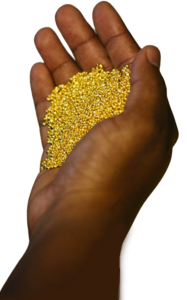
A gold nugget refers to a naturally occurring piece of native gold. The nuggets are recovered by placer mining, although they can also be got in residual deposits where the gold-bearing veins/lodes are weathered.
They also exist in the tailings piles of previous mining operations, more so those left by gold mining dredges.
How Are Gold Nuggets Formed?
Natural Geological Processes
Gold nuggets form deep underground over millions of years through natural geological processes. Gold is created when hot fluids rich in gold seep into cracks and fractures of rocks under high pressure and temperature.
Over time, as these fluids cool, the gold crystallizes and forms veins. When rocks containing these veins are exposed to weathering and erosion, pieces of gold break off and collect as nuggets.
Unlike refined gold, nuggets retain their natural shapes, textures, and impurities, making them unique and highly valued by collectors and prospectors alike. Their formation is a fascinating intersection of geology and time.
Differences Between Placer and Lode Nuggets
Gold nuggets are classified into two main types based on where they’re found: lode and placer. Lode nuggets are still embedded in their original rock matrix, often quartz, and are mined directly from veins or seams underground.
Placer nuggets, on the other hand, are free pieces of gold that have broken away from lode sources and been transported by natural forces. These end up in riverbeds, stream gravel, or sediment deposits.
Placer nuggets are more commonly discovered during panning and dredging because they’ve been naturally freed and concentrated in alluvial deposits over centuries of erosion and water flow.

How Erosion and Rivers Expose Them
Once formed in lode deposits, gold nuggets become exposed through natural erosion. Wind, rain, temperature changes, and chemical weathering slowly break down surrounding rocks, freeing the gold.
Rivers and streams then carry these liberated gold pieces downstream, where their weight causes them to settle in bends, crevices, or gravel beds. Over time, flowing water polishes and shapes the nuggets while concentrating them in rich placer deposits.
This process explains why many gold nuggets are found in riverbeds and why panning and sluicing have historically been effective ways to recover gold in placer mining areas.
Are Gold Nuggets Pure Gold?
Most nuggets are 85-95% pure gold, and the remaining percentage is composed of different minerals. In laterite, nuggets appear reddish/black. The nuggets in quartz are cloaked in white.
If nuggets aren’t jewelry grade, they can be melted down and sold as pure gold. Unlike other gold production countries, Australian gold nuggets are usually 23k/higher, and Alaskan nuggets can be slightly lower.
The purity can be analyzed using the nugget color; the richer and deeper the orange-yellow, the higher the gold content.
Types of Gold Nuggets
Placer vs. Reef (Lode) Nuggets
Gold nuggets are often classified as placer or reef (lode). Placer nuggets are found in riverbeds or alluvial deposits, where water and erosion have transported and concentrated gold over time.
These nuggets are free from host rock, smoothed by water, and usually the type most collectors and prospectors discover.
Reef or lode nuggets, however, are embedded in their original rock matrix, typically quartz. They’re mined directly from veins underground and often display irregular shapes with rough textures.
Lode nuggets are rarer in the open market because they’re usually extracted as part of larger ore-processing operations.
Crystalline Gold Nuggets
Crystalline gold nuggets are rare and highly prized by collectors for their unique, intricate formations. Unlike typical nuggets that are smoothed and dense, crystalline nuggets retain sharp edges and delicate, lattice-like patterns that reflect their original crystallization deep within the earth.
These specimens usually form in pockets or cavities within quartz veins where gold had space to grow freely without much disturbance.
Because of their stunning, almost sculptural appearance and scarcity, crystalline nuggets often command significant premiums over ordinary nuggets of the same weight and purity, making them desirable for both collectors and museums.
Gold Quartz” Specimens
Gold quartz specimens are striking nuggets where gold is still embedded in white or gray quartz rock. These pieces showcase the natural beauty of gold veins as they occur in their host rock, offering a glimpse into how gold forms geologically.
Such specimens are typically mined from lode deposits and are valued not only for their gold content but also as display pieces.
Their combination of gleaming gold against milky quartz makes them particularly attractive to collectors, jewelers, and even investors who appreciate the rarity and natural artistry of these remarkable geological creations.

How Much Are Gold Nuggets Worth?
Gold nuggets are worth more than just their gold content, as size, purity, rarity, and unique shapes add value. Larger or rare nuggets often sell at a premium above spot price, sometimes double.
Collectors prize them for their beauty and uniqueness, making them highly desirable and often more expensive than refined gold.
Where Are Gold Nuggets Found?
Top Regions Worldwide: Australia, Alaska, Africa
Gold nuggets are most commonly found in regions with rich placer deposits. Australia is famous for producing some of the largest and purest nuggets, particularly in Western Australia and Victoria.
Alaska has been a prime nugget-hunting ground since the Gold Rush, with rivers and creeks still yielding gold today. Africa, particularly countries like South Africa, Ghana, and Sudan, produces nuggets through both artisanal mining and modern operations.
These regions combine favorable geology with centuries of mining history, making them reliable sources for nugget prospecting and collection.
Famous Nugget-Finding Spots
Some spots have become legendary for producing extraordinary nuggets. Australia’s Welcome Stranger nugget — the largest ever found — was discovered in Victoria in 1869. Alaska’s Alaska Centennial Nugget, weighing over 156 ounces, is another famous find.
Other notable sites include Nevada’s Rye Patch and California’s Sierra Nevada in the USA, which yielded numerous nuggets during the Gold Rush.
In Africa, artisanal miners in Sudan and the Congo regularly unearth impressive pieces. These locations attract both serious prospectors and hobbyists hoping to strike gold where others have before.
Modern Gold Prospecting Locations
Today, gold prospectors still find nuggets in both traditional and emerging locations. In Australia, Kalgoorlie, Ballarat, and Bendigo remain popular among metal detector enthusiasts.
In the USA, recreational miners explore rivers in Alaska, Arizona, and California, while Africa offers opportunities in less-explored artisanal mining areas in Mali, Burkina Faso, and Tanzania.
Modern technology, like metal detectors and portable sluices, has made it easier to uncover nuggets in both old tailings and untouched areas.
Many of these locations also cater to tourists, offering guided gold panning and prospecting experiences alongside professional mining operations.
Factors Influencing Value: Weight, Purity, Rarity, and Shape
The value of a gold nugget depends on several key factors. Larger nuggets generally fetch higher prices per gram because they’re rarer and more desirable. Purity also matters—natural nuggets are often between 18K–23K, and purer nuggets are worth more.
Unusual shapes, intricate textures, or a crystalline structure can add collector appeal, while flat or common-looking nuggets may only be valued for gold content.
Rarity, origin (e.g., Australia, Alaska), and aesthetic qualities can significantly increase the price, often making a nugget worth more than its melt value alone.
Premiums Over Spot Price Due to Uniqueness
Unlike refined gold bars or coins, gold nuggets often sell for a premium above the current spot price of gold. This is because each nugget is unique—no two are alike—making them highly sought after by collectors and jewelers.
Premiums can range from 10% to over 100% depending on size, purity, and visual appeal. Large, beautifully shaped, or rare nuggets (like crystalline or gold-quartz specimens) often command the highest premiums.
For investors purely interested in gold weight, these premiums may seem high, but for collectors, the uniqueness and natural beauty justify the additional cost.
How to Appraise a Gold Nugget
Appraising a gold nugget requires evaluating its weight, purity, and market appeal. First, weigh the nugget and test its gold content (often between 75–95% pure).
Then consider its rarity, shape, texture, and origin, as these factors influence its collector value. It’s advisable to consult an experienced gold buyer, jeweler, or appraiser who specializes in nuggets, as they can assess both its melt value and potential premium.
Online marketplaces, auctions, and specialty dealers also provide pricing benchmarks. Always document the nugget’s details, including weight, purity test results, and photographs, to support its valuation when selling or insuring.
Is a gold nugget worth more than gold?
Gold nuggets are more valuable compared to gold. Nuggets are rarer than gold bars- bars can be found in the numerous industry dealers. This is why gold nugget and gold bar of similar size can’t hold the same value thus making nuggets slightly expensive.
Gold nugget price
Here’s a simple and clear table of approximate gold nugget prices in Africa, based on typical market conditions. Please note: prices vary daily with the gold spot price, purity, size of nugget, and collector premium. Nuggets often sell above spot price because of their rarity and natural form.
| Weight | Purity | Price per Gram (USD) | Price per Ounce (USD) |
|---|---|---|---|
| Small Nuggets (<5g) | ~22K (90–92% pure) | $70–85 | $2,200–2,600 |
| Medium Nuggets (5–20g) | ~22K | $75–95 | $2,300–2,900 |
| Large Nuggets (>20g) | ~22K | $80–120+ | $2,500–3,700+ |
| Crystalline Nuggets | ~22K | $100–200+ | $3,100–6,200+ |
-
African nuggets are often found in Ghana, Sudan, Mali, Burkina Faso, and Congo.
-
Larger, well-formed, or rare nuggets command much higher prices per gram.
-
Prices include a collector’s premium above spot gold.
How much is 1kg of gold nugget worth?
32.15 oz gold nugget can go for USD 62871.02 (spot price) and buying price USD 64317. Talk to an expert in Gold Business: +256 707 585144.
Are gold nuggets expensive?
Nuggets are very rare and considering their rarity, they are more expensive than artificial nuggets made from melted electronic parts. It should also be noted that nuggets cost more than their gold contents considering the fact that they aren’t pure gold.
Gold Nuggets vs. Gold Bars and Coins
Gold nuggets, bars, and coins differ in purpose, value, and liquidity. Nuggets are naturally occurring, unique, and often fetch premiums due to their rarity and aesthetic appeal — ideal for collectors.
Bars and coins, being refined and standardized, are easier to value and trade, making them better for pure investment. Nuggets can be harder to sell quickly at full value because they appeal more to niche buyers, whereas bars and coins are highly liquid and recognized worldwide.
Collectors pay more for nuggets because no two are alike, and their natural beauty adds to their desirability beyond gold content alone.
How to Identify a Real Gold Nugget
To authenticate a gold nugget, use these common tests:
✅ Visual inspection — real nuggets have a rich yellow color and irregular, dense appearance.
✅ Weight test — gold is heavy for its size; it should feel solid.
✅ Magnet test — gold is non-magnetic; if it sticks, it’s fake.
✅ Scratch or density test — gold is soft but dense.
To distinguish from fool’s gold (pyrite), note that pyrite is lighter, brittle, and sparkles differently. Beginners should buy from reputable dealers, learn to test safely, and consult experts before investing.
Buy a Gold Nugget Online Today!
Frequently asked questions about gold nuggets:
1. What are gold nuggets?
Gold nuggets are naturally occurring pieces of native gold that are typically found in streams, rivers, and mining sites. They vary in size and purity and are often used for investment, jewelry, or collection purposes.
2. How pure are gold nuggets?
The purity of gold nuggets can vary widely, typically ranging from 80% to 98% pure gold. Most gold nuggets require refining to achieve higher purity levels suitable for commercial use.
3. Where can I find gold nuggets?
Gold nuggets are commonly found in gold-rich regions such as:
- Rivers and streams (placer deposits)
- Old mining sites
- Gold-rich countries such as Uganda, Ghana, South Africa, and the USA (Alaska, California)
4. How much is a gold nugget worth?
The value of a gold nugget depends on several factors, including:
- Weight: Measured in grams or ounces
- Purity: Higher purity increases value
- Rarity: Unusual shapes or large nuggets command higher pricesOn average, the price of gold nuggets is based on the current market price of gold, often ranging from $50 to $70 per gram.
5. How can I tell if a gold nugget is real?
To verify if a gold nugget is genuine, consider the following tests:
- Magnet Test: Real gold is not magnetic
- Density Test: Gold is dense and heavy for its size
- Acid Test: Genuine gold does not react to nitric acid
- Professional Assay: Certified testing for exact purity levels
6. What is the difference between gold nuggets and gold dust?
Gold nuggets are larger, solid pieces of gold found naturally, whereas gold dust consists of fine gold particles that require processing to extract.
7. Can I sell gold nuggets without refining?
Yes, but the price may be lower compared to refined gold. Many buyers prefer refined gold for easier valuation and certification.
8. What are the best ways to store gold nuggets?
To maintain their value and prevent damage, store gold nuggets in:
- Secure safes or bank deposit boxes
- Airtight containers to avoid exposure to moisture
- Anti-tarnish bags to protect from oxidation
9. What factors should I consider when buying gold nuggets?
When purchasing gold nuggets, consider:
- Purity and weight
- Seller reputation and certification
- Market price comparisons
- Legal requirements for buying and selling
10. Where can I sell gold nuggets?
You can sell gold nuggets to:
- Gold dealers and refineries
- Jewelry makers and collectors
- Banks and financial institutions that accept gold
- Online gold trading platforms
You also like to;

