Doré vs Refined Gold: Why African Countries Now Require Local Refining
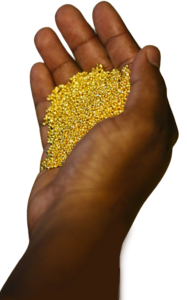
Gold doré is the semi-pure bar poured at a mine, a mix of gold, silver and other metals that is often roughly 60–95% gold. Refined gold has been purified at a refinery to 99.5–99.99% purity, and it’s the gold that is traded as investment bars.
Why the difference matters now: more African governments are banning or restricting the export of unrefined gold (doré, dust and nuggets) and requiring it to be refined locally first.
Examples:
- Uganda:gold exports must be refined to at least 99.9%.
- Ghana:since 1 September 2026, artisanal doré bought by self-financing aggregators must be refined at a GoldBod-approved refinery in Ghana before export.
- Guinea:announced a ban on raw gold exports in June 2026.
- Other countries:Burkina Faso, Mali and Côte d’Ivoire are building national refineries.
For buyers, this means legal export gold from Africa is increasingly refined bars, not doré.
What Is Gold Doré?
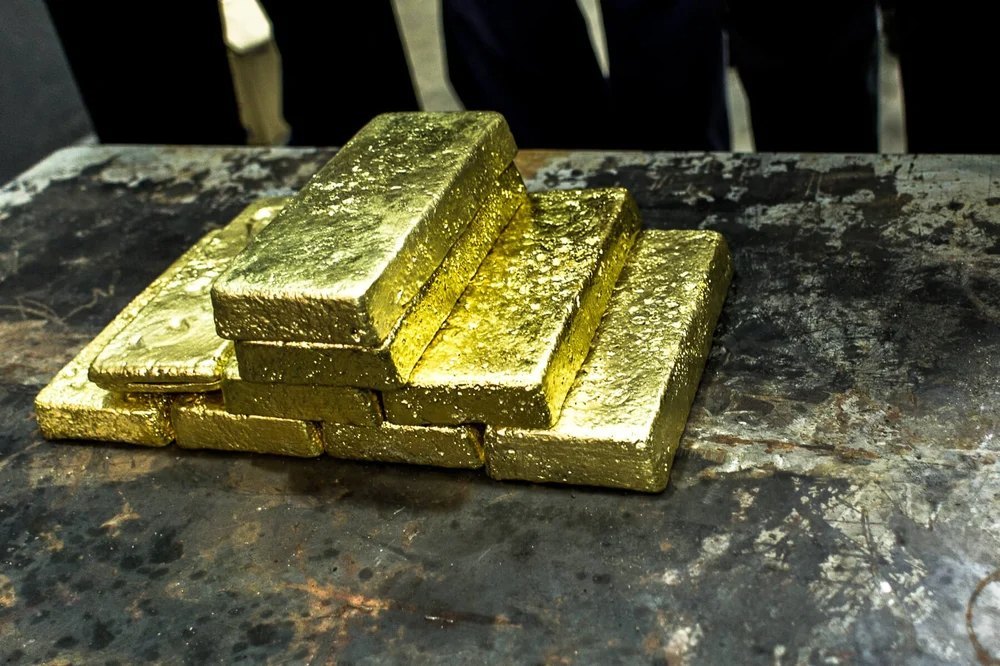
Doré (from the French for “golden”) is the first bar produced at a mine or processing plant after the ore is crushed, the gold extracted, and the metal smelted.
What’s in a doré bar:
- gold, usually the main metal
- silver, often a significant share
- copper, iron, lead, zinc and other impurities
Purity varies widely. It depends on the ore and the process. Large mines often produce doré with a high gold content, while artisanal doré can be much lower and less consistent.
Doré is not a finished product. It has to be assayed to find its exact gold and silver content, and then refined before it can be sold as investment gold.
What Is Refined Gold?
Refined gold has had its silver and other metals removed at a refinery. It’s produced as:
- barsfrom 1 g to 1 kg, and 400 oz (about 12.5 kg) Good Delivery bars
- grainor granules for jewellers and manufacturers
Common refined purities:
- 995(99.5%): the minimum for LBMA Good Delivery 400 oz bars
- 999(99.9%): common for investment bars
- 9(99.99%, “four nines”): the highest common commercial purity
Each refined bar is usually stamped with the refiner’s mark, its purity, its weight and a serial number, and it comes with an assay certificate.
Doré vs Refined Gold: Key Differences
| Gold doré | Refined gold | |
| Purity | Variable, often roughly 60–95% gold, plus silver and impurities | 99.5–99.99% gold |
| Where it’s made | Mine or processing site | Refinery |
| Markings | Usually just a mine number or lot number | Refiner’s stamp, purity, weight, serial number |
| Valuation | Assay needed to find the gold and silver content; refining charges deducted | Priced close to the spot price, plus a premium |
| Buyers | Refineries, licensed aggregators, state gold boards | Investors, banks, jewellers, dealers, central banks |
| Ease of sale | Limited, because only refiners can use it directly | Easy to sell worldwide |
| Fraud risk | High: purity is hard to judge without lab tests | Lower if the bar comes from a known, audited refiner |
| Export from many African countries | Increasingly restricted or banned | Allowed with an export permit |
| HS code | Usually 7108.12 | Usually 7108.12 |
How Gold Doré Is Priced
Doré isn’t priced like a refined bar. Refiners pay for the fine gold content, minus their costs:
- Assay:the lab measures the exact gold and silver percentages, usually by fire assay, sometimes alongside XRF.
- Fine gold content= weight × gold %. Example: a 10 kg doré bar at 88% gold contains 8.8 kg of fine gold.
- Payable gold:the refiner pays for most, but not all, of the fine gold. The percentage depends on the contract.
- Charges are deducted:the refining charge, assay fees, transport, insurance and penalties for harmful impurities.
- Silver credit:the silver content may be paid for separately.
This is why “doré at spot price” offers are suspicious. Doré is always worth less per kilogram than refined gold, and its real value is only known after an independent assay.
How Gold Is Refined
| Method | How it works | Typical purity |
| Miller process | Chlorine gas is bubbled through molten gold to remove silver and base metals | About 99.5% |
| Wohlwill process | Electrolytic refining that purifies gold further | 99.99% |
| Aqua regia / chemical refining | Gold is dissolved and chemically precipitated; common in smaller refineries | 99.9–99.99% |
| Fire assay | Not a refining method, but the standard lab test for gold content | Used to measure purity |
Why African Countries Now Require Local Refining
- To stop smuggling and under-declaration.Doré’s variable purity makes it easy to under-declare its value. Refined, stamped bars are easier to trace and value.
- To capture more value at home.Refining creates jobs, skills and industrial capacity, instead of shipping raw material abroad.
- To raise tax revenue.Royalties and levies are easier to calculate on refined gold of known purity.
- To improve traceability.Local refineries can record where the gold came from, which supports OECD due diligence and anti-money-laundering checks.
- To build national gold reserves.Some central banks buy refined gold locally to build their reserves.
Local Refining Rules by Country
These rules change quickly, so always confirm the current rule with the authority before you buy.
| Country | Rule or policy | Key details |
| Uganda | Gold exports must be refined to at least 99.9% | An export permit is needed for each shipment, and a US$200/kg levy applies to refined gold exports. Unrefined gold is effectively blocked from export |
| Ghana | Local refining before export for artisanal doré bought by self-financing aggregators | From 1 September 2026, at a GoldBod-approved refinery in Ghana |
| Guinea | Ban on raw gold exports announced in June 2026 | All gold to be refined in-country, via the planned Nimba Gold Refinery near Conakry. Enforcement timetable still to be set |
| Tanzania | Requirement for a share of gold output (about 20%) to be set aside for domestic purchase or refining | Run through the Bank of Tanzania programme and local refineries. Check the current regulation |
| Burkina Faso | Opened its first national refinery, Raffinor BF, in Ouagadougou in September 2026 | State-controlled. Part of a wider push to process gold locally |
| Mali | Building its first national refinery in Bamako, with a Russian partner (Yadran Group) | Expected to increase local refining requirements over time |
| Côte d’Ivoire | Plans a national refinery, reported for 2027 | Watch for future export rules |
| Zimbabwe | Gold is sold through Fidelity Gold Refinery, the state channel | Small-scale gold must go through official channels |
What Local Refining Means for Gold Buyers
- Buy refined bars, not doré, from countries with refining rules.Exporting doré from Uganda, or artisanal doré from Ghana, is now restricted or illegal.
- Be suspicious of doré or gold dust offered for exportfrom these countries. Without a legal route, the gold may be smuggled or seized.
- Check the refinery.Ask which refinery produced the bars and whether it is licensed, and check for audits or accreditation.
- Understand LBMA status.In Africa, only South Africa’s Rand Refinery is currently on the LBMA Good Delivery list. Locally refined bars from other countries are legal, but some international banks and refiners may re-refine or re-assay them.
- Insist on an independent assayof every bar before final payment.
- Keep the paperwork:the refining record, assay certificate, certificate of origin and export permit.
FAQs: Doré vs Refined Gold
What is gold doré? A semi-pure gold bar produced at a mine, containing gold, silver and other metals, which has to be refined before it can be sold as investment gold.
What purity is a doré bar? It varies. It’s often roughly 60–95% gold, plus silver and impurities, so the exact content is only known after an assay.
Is doré cheaper than refined gold? Per kilogram, yes, because it contains less gold and refiners deduct their costs. Per gram of fine gold, it should be close to, but below, the refined price.
Can I export gold doré from Uganda? No. Uganda requires gold exports to be refined to at least 99.9%.
Can I export gold doré from Ghana? Since 1 September 2026, artisanal doré bought by self-financing aggregators must be refined at a GoldBod-approved refinery in Ghana before export.
Why are African countries banning raw gold exports? To reduce smuggling, increase tax revenue, improve traceability and keep more of the value of gold in Africa.
Are locally refined African gold bars accepted internationally? Yes, legally, but banks and refiners that need LBMA Good Delivery bars may re-assay or re-refine them. In Africa, only Rand Refinery is currently on the LBMA Good Delivery list.
Buy Refined, Export-Ready Gold Bars
Buy Gold Bars Africa Ltd supplies refined gold bars exported legally from Uganda, with:
- refining to 99.9% or higher, as Ugandan law requires
- an independent assay report and the refining record
- a certificate of origin and an export permit for each shipment
- the option to inspect the gold before you pay
Call or WhatsApp +256 707 585144, or contact us.