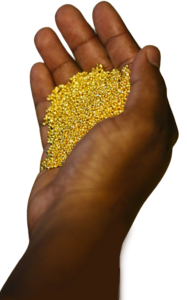
Real Gold Beads for Sale in Africa: Types, Prices & Complete Buying Guide
Gold Beads: Buy real gold beads from Africa — 24K, 22K, 18K and artisanal. See current per-gram prices, how to verify authenticity, and how Buy Gold Bars Africa Ltd. sources, certifies and ships.
Gold has held its pull on people for thousands of years — as wealth, as adornment, as a way to carry value across a border or a generation. Gold beads sit at the crossroads of all three: unlike a gold bar or a coin, which exist mainly as an investment, beads are wearable, tradable, and often deeply tied to culture.
If you’re looking to buy real gold beads, this guide walks through the types available, how they’re priced today, how to check they’re genuine, and how the buying process works with Buy Gold Bars Africa Ltd.
What Are Gold Beads?
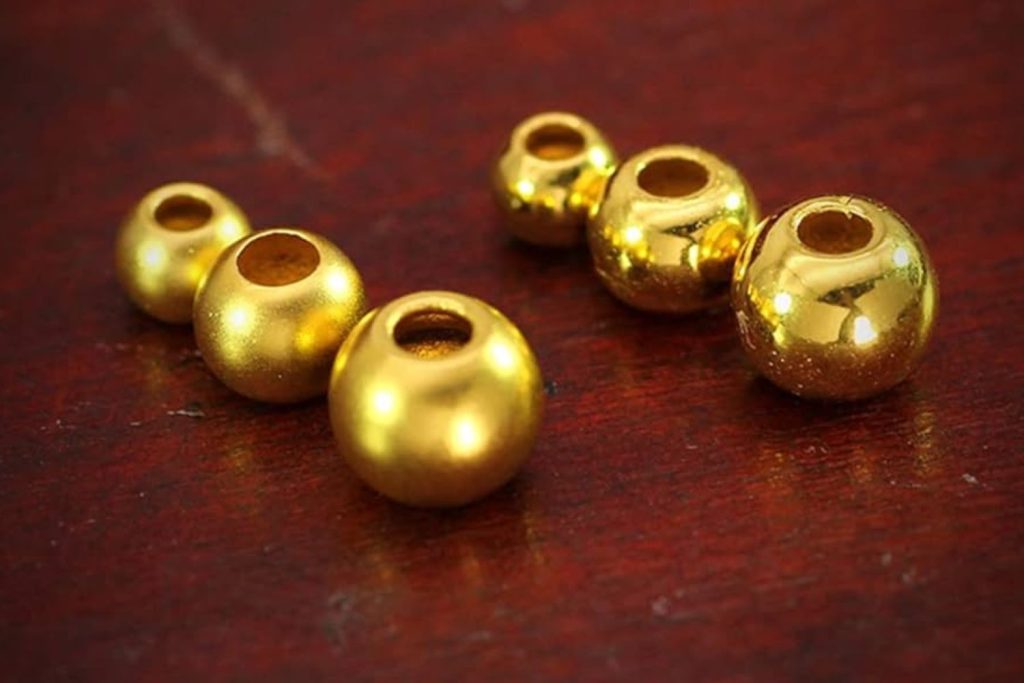
Gold beads are small, shaped pieces of gold — round, faceted, tubular or custom-cast — used mainly in jewelry making. They’re produced either in pure gold (24K, 99.99%) or in gold alloys (22K, 18K, 14K), where copper or silver is blended in to add strength and bring the price down.
Beads typically range from 2mm to 20mm, and can be machine-made or hand-forged. Artisanal beads, in particular, often carry cultural motifs from gold-producing regions such as Ghana, Mali and Uganda, where gold jewelry has carried social and spiritual meaning for centuries.
What separates beads from bars or coins is that they do double duty: you can wear them, and you can still liquidate them for close to their metal value when you need to.
Why Gold Beads, Specifically?
Cultural weight. In Ghana, Ashanti gold beads are worn at ceremonies and often carry Adinkra symbols — a tradition that turns a piece of jewelry into a piece of history. That cultural layer is part of what collectors are paying for with artisanal pieces.
A tangible store of value. Gold beads carry the same core investment logic as any gold product: they’re a physical asset that historically holds up against inflation and currency weakness, just in a smaller, more wearable format than a bar.
Built for jewelry design. Jewelers like beads because they mix easily with gemstones, pearls or other metals, and because gold’s malleability makes it forgiving to work with while still being durable enough for daily wear.
Easy to move. Small and light, gold beads travel and trade more easily than bulkier gold products — useful if liquidity matters to you as much as ownership.
Types of Gold Beads — and What They Cost
The price of a gold bead comes down mostly to one thing: how much actual gold is in it. Here’s how the common karats compare, with current per-gram values based on today’s gold spot price (see the pricing table below for the full breakdown).
| Karat | Purity | Character | Best For |
|---|---|---|---|
| 24K | 99.99% | Softest, brightest yellow, maximum intrinsic value | Collectors, ceremonial pieces, statement jewelry |
| 22K | 91.7% | Alloyed with copper/silver for extra durability | Everyday fine jewelry, traditional/tribal beadwork |
| 18K | 75% | Noticeably stronger, available in yellow/white/rose | Modern, mass-market designs |
| 14K | 58.3% | Most durable, most affordable of the solid-gold tiers | Budget-conscious, style-first buyers |
| Artisanal | Usually 22K or 18K | Hand-forged, often with tribal or filigree detail | Collectors and buyers wanting a unique, storied piece |
| Gold-filled / plated | Thin gold layer over base metal | Looks like gold, isn’t solid gold | Budget fashion jewelry only — minimal resale value |
A quick note on the last row: gold-filled and plated beads are not an investment product. The coating wears with time, and their resale value is close to nothing once the base metal shows through. If resale or investment matters to you at all, stick to solid-karat beads.
Current Gold Bead Prices
As of mid-September 2026, pure 24K gold is trading at roughly $139.82 per gram, based on a live spot price of about $4,349 per troy ounce. We’ve rounded to $138/gram below to keep the math clean, and applied it across the common karats:
| Karat | Purity | Metal Value (USD/gram) | Approx. ZAR/gram* |
|---|---|---|---|
| 24K | 99.99% | ~$138 | ~R2,340 |
| 22K | 91.7% | ~$126 | ~R2,140 |
| 18K | 75% | ~$104 | ~R1,760 |
| 14K | 58.3% | ~$81 | ~R1,375 |
ZAR figures are indicative only, converted at an approximate USD/ZAR rate — the Rand has been volatile in 2026, so always confirm the live rate at the time of your order.
Sample bead pricing (metal value plus a modest dealer premium — see below):
| Bead | Approx. Price |
|---|---|
| 1-gram 24K bead | ~$140 – $148 |
| 5-gram 22K bead | ~$635 – $665 |
| 10-gram artisanal bead (22K, hand-forged) | ~$1,400 – $1,550 |
Gold’s spot price moves throughout the trading day, so treat these as a starting point rather than a fixed quote — every order is priced against the live spot rate at the time you buy, and we’ll confirm the exact figure on your invoice.
What Actually Moves the Price
- Spot price — the baseline, and the single biggest driver of what you pay.
- Purity/karat — higher karat means more gold per gram, so a higher price.
- Weight — beads are usually sold by weight, from 0.5g up to 10g or more per piece.
- Craftsmanship — hand-forged, culturally significant beads (like Ashanti designs) typically carry a 10–20% premium over machine-made pieces of the same weight.
- Dealer premium — Buy Gold Bars Africa Ltd. adds a modest 2–5% over spot to cover certification, packaging and insured shipping — well under the 5–10% common with Western dealers.
- Seasonal demand — prices firm up around festive periods (Christmas, Diwali) and during economic uncertainty, when gold buying tends to pick up broadly.
Sourcing Gold Beads from Africa
Africa remains one of the world’s major gold-producing regions, with South Africa, Ghana, Uganda, Mali and the DRC among the largest producers. Buy Gold Bars Africa Ltd. sources directly from trusted miners and refineries on the continent, which keeps a few advantages in your corner:
- Fewer middlemen — direct sourcing from mines and refineries cuts out layers of markup.
- Ethical, artisanal roots — many beads are still hand-forged using traditional techniques, and we work with mines that align with recognized responsible-sourcing frameworks.
- Lower premiums — African-sourced beads typically carry a 2–5% premium over spot, versus 5–10% in many Western markets, thanks to lower logistics and production overhead.
- Cultural depth — beads sourced from West and East African artisans often carry design heritage (Adinkra symbols, tribal patterns) that adds meaning beyond the metal itself.
If you’re weighing beads against other formats, our gold bars and rounds and 22K gold bars pages cover the investment-first end of the spectrum, while real gold nuggets and gold dust are worth a look if you want gold closer to its raw, unrefined state.
Verifying Authenticity
Before you commit to a purchase — from us or anyone else — know how to check what you’re buying:
- Ask for an assay certificate. A reputable supplier documents purity and weight. We include one with every bead order.
- Check for markings. Genuine beads are often stamped with a hallmark or refinery mark. Unmarked “gold” from an unverified seller is a red flag.
- Try the magnet test. Gold isn’t magnetic — if a bead is drawn to a magnet, it isn’t solid gold.
- Check weight and density. Gold is dense (19.32 g/cm³). A jeweler’s scale next to the bead’s stated size will catch most fakes quickly.
- Leave acid testing to a professional. A nitric acid test on a scratch mark can confirm karat, but this should be done by someone trained to do it safely.
- Buy from a traceable source. Work with dealers who can show where the gold came from and who’ll stand behind a third-party verification if you ask for one.
Red flags to walk away from: prices dramatically under spot, no documentation offered, or a seller who refuses independent verification. Informal or artisanal markets can offer real bargains, but they also carry the highest fraud risk of any channel.
How Buying Works with Buy Gold Bars Africa Ltd.
- Contact us — by phone, WhatsApp or email with the bead type, karat and quantity you’re after.
- Get a proforma invoice — a full breakdown of gold cost, premium, shipping and insurance, priced against the live spot rate.
- Pay securely — via bank transfer or cash within legal limits; funds are held until delivery is confirmed.
- We handle documentation — export licensing and customs clearance, so you’re not navigating that alone.
- Insured delivery — beads are sealed, protectively packaged, and shipped via insured carriers with tracking. Delivery typically takes 7–14 days.
- Optional vault storage — if you’d rather not take physical delivery, we offer secure storage in Johannesburg or Cape Town for an annual fee.
For orders beyond a few pieces, our bulk gold deals page covers volume pricing across Central and East Africa.
Risks Worth Knowing About
- Price volatility. Gold moves daily — sometimes sharply, as it has through 2026. Watch the spot price and consider buying in tranches rather than all at once.
- Counterfeit risk. This is the single biggest risk in the gold bead market. Stick to dealers who provide assay documentation.
- Export/import rules. African export regulations are strict, and import duties vary by destination country — we handle the export side, but confirm your own country’s import rules before you order.
- Storage. A home safe is fine for small pieces; larger holdings are usually safer in a professional vault.
- Liquidity on artisanal pieces. Standard bars and coins sell to almost anyone; a rare hand-forged bead may need a buyer who specifically values the craftsmanship, which can mean a longer sale process.
Why Buy from Buy Gold Bars Africa Ltd.
- Direct sourcing from African mines and refineries — not a reseller marking up someone else’s stock.
- Documented purity — assay certification and tamper-proof packaging on every order.
- Transparent pricing — spot price plus a stated premium, no hidden fees.
- Insured logistics — tracked, insured shipping, with vault storage available if you want it.
- Licensed operation — we operate under South African government licensing, with offices in Johannesburg and Cape Town.
Practical Tips Before You Buy
- Start small. If gold beads are new to you, a 1–5 gram first order is a low-risk way to test the process.
- Track the spot price. Sites like Kitco or the World Gold Council publish live pricing — worth checking before you lock in an order.
- Ask for photos or video of the actual piece, especially for artisanal or one-of-a-kind beads.
- Check your own country’s import duty rules — South African gold is VAT-exempt domestically, but that doesn’t cover what happens when it lands elsewhere.
- Think in a portfolio, not a single purchase. Beads pair naturally with bars or coins if you’re building a broader gold position.

FAQs – Gold Beads
How can you tell if a bead is really gold? A jeweler can apply a drop of nitric acid to a scratch mark — if the metal is the karat claimed (or higher), there’s no reaction. A reaction signals lower karat gold; a green reaction usually means gold plating or base metal. This test should only be done by a professional.
What do gold beads symbolize? Across cultures from ancient Egypt to West Africa, gold beads have long marked status, spiritual significance, or membership in a family or royal lineage — a tradition that’s still visible in ceremonial beadwork today.
How long do gold-filled beads last? Gold-filled beads bond a genuinely thick layer of 12–14K gold onto a base metal, and with normal daily wear can hold their look for around 30 years — though the coating will eventually thin, unlike solid-karat gold.
Can you tell real gold just by looking at it? Not conclusively. A rich, warm yellow luster and a visible hallmark are good signs, but visual inspection alone can’t rule out plating. Weight, a magnet test, and — ideally — an assay certificate are what actually confirm it.
Why has the price of gold beads gone up so much recently? Gold’s spot price has risen sharply through 2026 on the back of inflation concerns, central bank buying, and broader economic uncertainty — the same forces driving gold prices globally, not something specific to beads. Since bead pricing is built directly on spot price plus a small premium, it moves in step with the wider gold market.
Ready to Buy Real Gold Beads?
Gold beads give you something most gold products don’t: a piece you can wear, gift, or hold onto, without giving up the underlying value of the metal itself. Whether you’re a jeweler sourcing for a collection or building a personal gold position one piece at a time, working with a direct, documented source matters more than ever with prices where they are.
Buy Gold Bars Africa Ltd. sources beads directly from trusted African mines and artisans, certifies every purchase, and handles the export and delivery logistics so you don’t have to. Get in touch for a live quote based on today’s spot price — reach us at +256 707 585144, or use the form below to start the conversation.

