What Minerals Are Found in Uganda:Major Minerals & Locations
What Minerals Are Found in Uganda: Uganda holds commercially significant deposits of gold, copper, cobalt, tin, tungsten, iron ore, rare earth elements, phosphates, and limestone, concentrated in three mineral-rich geological belts that the Uganda Investment Authority values at roughly $620.5 billion in raw, untapped potential.
The single largest component of that figure is rare earth elements at Sukulu Hills in Tororo, valued around $370 billion, followed by cobalt at Kilembe in Kasese (about $181 billion) and copper at the same site (about $39 billion).
Despite sitting on this scale of mineral wealth, Uganda’s mining sector remains overwhelmingly untapped: most of these deposits have never been commercially exploited, which is exactly why the country has become an increasingly active destination for mineral investment and exploration.
This guide covers Uganda’s mining industry in full: what minerals are found where, how much they’re estimated to be worth, the current state of extraction, and how to buy certified minerals from a verified exporter if you’re looking to invest rather than explore.
Major Minerals and Locations in Uganda
| Mineral | Key Locations |
|---|---|
| Gold | Karamoja, Busia, Buhweju, Central and Western Uganda |
| Copper | Kilembe (Kasese), Rwenzori region |
| Cobalt | Kilembe, Kitaka |
| Tin | Isingiro, Mbarara, Ntungamo |
| Tungsten | Nyamuliro, Bjordal, Mpororo, Mubende |
| Iron Ore | Muko (Kabale), Kisoro, Sukulu Hills (Tororo) |
| Phosphates | Sukulu Hills (Tororo), Eastern Uganda |
| Limestone | Karamoja, Tororo |
| Coltan (Tantalum & Niobium) | Eastern Uganda |
| Rare Earth Elements | Sukulu Hills (Tororo), Eastern Uganda |
| Vermiculite | Eastern Uganda |
| Graphite | Various regions |
| Nickel & Platinum | Under exploration |
| Gypsum | Various regions |
| Marble | Karamoja |
| Salt | Lake Katwe, Western Uganda |
| Zinc & Lead | Identified deposits |
| Beryllium | Central Uganda |
Here’s what each of the major minerals actually involves, beyond the table.
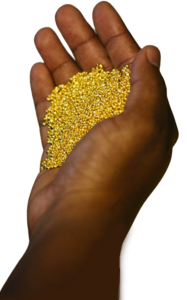
Gold is mined across three main zones: Karamoja in the northeast (a rapidly formalizing artisanal frontier), Busia in the east (Uganda’s most active mining district, bordering Kenya), and Buhweju in the west, alongside Central Uganda’s smaller but commercially relevant deposits. See the dedicated gold section below for more.
Copper and cobalt occur together at Kilembe in Kasese District, Uganda’s single most historically significant mining site, and at the smaller Kitaka zone nearby. The two minerals share the same ore body, which is part of why Kilembe’s revival has attracted interest from both traditional copper buyers and battery-mineral investors.
Tin is concentrated in southwestern Uganda, specifically Isingiro, Mbarara, and Ntungamo Districts, occurring in pegmatite veins and alluvial deposits. Uganda enforces a statutory minimum export purity of 99.85% for tin.
Tungsten (wolfram) deposits run through the same southwestern belt, with named reserves at Nyamuliro (one of the country’s largest), Bjordal, Mpororo, and sites in Mubende and Mityana Districts. Tungsten’s hardness makes it essential for cutting tools and electronic components, giving it a stable industrial demand base.
Iron ore occurs as hematite and magnetite at Muko (Kabale District) in the southwest, and alongside phosphate and rare earths within the Sukulu Hills carbonatite complex in Tororo. Several independent geological surveys put Uganda’s combined iron ore resources at over 100 million tonnes across these sites, though estimates vary by survey and year, so treat any single tonnage figure as indicative rather than final.
Phosphates are concentrated almost entirely at Sukulu Hills, where they occur alongside iron ore and rare earth elements in the same carbonatite complex, a geological coincidence that makes Sukulu one of the most strategically important single sites in the country.
Rare earth elements, Uganda’s single highest-value mineral category by the Investment Authority’s own estimate, are concentrated at Sukulu Hills in Tororo, within the same carbonatite complex as the site’s iron and phosphate deposits.
These elements, including lanthanides and associated coltan (tantalum and niobium), are critical inputs for electronics, wind turbines, and electric vehicle motors, which is drawing growing international interest as buyers look for rare earth sources outside the handful of countries that currently dominate global supply.
Coltan, vermiculite, graphite, gypsum, marble, salt, zinc, lead, and beryllium round out Uganda’s mineral inventory, mostly concentrated in Eastern Uganda (coltan, vermiculite) and Karamoja (marble, limestone), with salt extraction centered at Lake Katwe in the west.
Gold Mining in Uganda
Gold mining is one of Uganda’s most dynamic and fastest-growing sectors, with deposits found across multiple geological formations:
- Karamoja (Northeastern Uganda): a rapidly formalizing artisanal mining frontier, also home to marble and limestone, previously underexplored due to security challenges and now attracting serious commercial interest.
- Busia District (Eastern Uganda): bordering Kenya, Busia is one of Uganda’s most active gold mining districts, where shallow artisanal pit mining coexists with deeper commercial exploration.
- Buhweju and Western Uganda: part of the Western Uganda mineral belt, hosting alluvial and hard-rock gold deposits alongside cobalt and rare earth minerals.
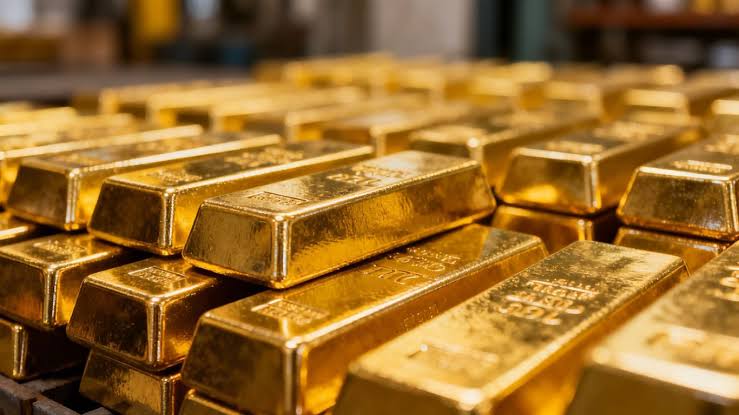
Uganda’s gold export sector has been significantly formalized: the Ministry of Energy and Mineral Development (MEMD) enforces strict standards for purity, sourcing, and export documentation. Pure gold is graded at 24 karats (99.9% purity), and certified exports must meet this or declared lower purity standards. See our guide to gold bars for sale in Kampala and the legal requirements to buy gold bars from Africa for how certified export documentation works in practice.
Copper and Cobalt Mining: Kilembe
The Kilembe Mines in Kasese District, at the foothills of the Rwenzori Mountains, represent Uganda’s most historically significant mining operation. Kilembe holds estimated copper reserves of up to around 4 million tonnes, making it one of the largest known copper deposits in East Africa.
Once among Africa’s top copper producers, Kilembe is now the subject of ongoing revival efforts, driven by rising global copper demand from electric vehicles, renewable energy infrastructure, and electronics manufacturing.
Cobalt occurs closely alongside copper at Kilembe and the nearby Kitaka zone. As a critical component of lithium-ion batteries, Uganda’s cobalt resources are drawing attention from companies seeking alternatives to supply chains concentrated in a small number of other countries, particularly as EV demand continues to grow globally.

Tin and Tungsten: Uganda’s Industrial Minerals
Tin mining is concentrated in Isingiro, Mbarara, and Ntungamo Districts in the southwest, with a statutory minimum export purity of 99.85%, used widely in electronics, soldering, and packaging.
Tungsten (wolfram) reserves include Nyamuliro, one of Uganda’s largest, alongside Bjordal, Mpororo, Rwamanyinya, Bahati, Kirwa, and Mutolere, plus sites in Mubende and Mityana Districts. Tungsten is vital to cutting tools, high-durability materials, and electronic components.
Iron Ore in Uganda
Hematite and magnetite deposits, both high-grade iron ore types suitable for steel production, have been confirmed at Muko (Kabale District), Kisoro District, and within the Sukulu Hills complex in Tororo.
The government has prioritized domestic iron ore processing and steel production capacity, aiming for value-added exports rather than raw ore shipments alone, though the scale of currently operational processing capacity remains limited relative to the size of the known reserves.
Oil and Gas: The Albertine Graben
Uganda’s mineral story extends into hydrocarbons. Exploration centers on the Albertine Graben, a rift valley basin bordering the Democratic Republic of Congo in western Uganda, where commercial oil reserves were confirmed in the mid-2000s. Multinational energy companies including TotalEnergies and CNOOC have partnered with the Ugandan government to advance production.
Uganda holds an estimated 6.5 billion barrels of oil in place in the Albertine Graben, though the commercially recoverable portion of that figure is considerably smaller, roughly a fifth of the total in place, a distinction worth understanding since the two numbers are often conflated in casual reporting.
The East African Crude Oil Pipeline (EACOP), routing oil through Tanzania to the Indian Ocean, is central to bringing this reserve to market.
Rare Earth Minerals in Uganda
Uganda’s rare earth deposits, concentrated at Sukulu Hills in Tororo, represent a largely untapped strategic resource. These elements are critical inputs for smartphones and consumer electronics, wind turbines and solar infrastructure, aerospace applications, and electric vehicle motors. Uganda’s deposits include lanthanides alongside associated niobium and tantalum (coltan).
As markets in the West and Asia intensify their search for rare earth supply chains diversified beyond their current concentration, Uganda’s deposits represent a strategically timed opportunity, though one that remains almost entirely undeveloped at commercial scale.
Uganda’s Key Mineral Regions: A Geographic Breakdown
Karamoja (Northeastern Uganda): a newly opening mineral frontier with gold, limestone, marble, and vermiculite, with accelerating formalization of artisanal operations.
Busia District (Eastern Uganda): Uganda’s primary gold mining hotspot, with active small-scale and commercial operations.
Western Uganda Mineral Belt: stretching from Hoima to Buhweju and Kanungu, this is Uganda’s most geologically studied and commercially advanced belt, hosting gold, cobalt, copper, and rare earth elements, and attracting the highest levels of foreign direct investment in the sector.
Rwenzori Region (Kasese): home to the Kilembe copper and cobalt mines, Uganda’s historic mining heartland, where operational revival is a national priority.
Eastern Uganda: rich in phosphates, limestone, coltan, copper, gold, and rare earth elements (via Sukulu Hills), rapidly gaining exploration licenses as an emerging development hub.
Investing in Uganda’s Mining Sector
Uganda presents a case for mineral investment built on several factors:
- Vast, underexplored reserves across multiple mineral categories
- Streamlined licensing through the MEMD’s digital Mining Cadastre system
- Government-backed formalization of artisanal and small-scale mining
- Strategic location within East Africa’s growing economic corridor
- Alignment with global demand for battery minerals (cobalt) and green energy components (rare earths, copper)
Obtaining a Uganda mining license involves applying through the Mining Cadastre portal, selecting the appropriate licence type (Exploration Licence or Mining Lease), completing environmental impact assessment requirements, and in some cases partnering with government-approved local entities. Foreign investors are welcomed under the legal frameworks set out in the Mining and Minerals Act.
Uganda’s top mineral exports by value currently include gold, cobalt, tin, and tungsten, with gold remaining the dominant single export and cobalt drawing increasing attention tied to global battery demand. As more exploration licences convert into active operations, the sector’s overall export base is widely expected to broaden.
Geological Survey and Mining Regulations
The Directorate of Geological Survey and Mines (DGSM), under the Ministry of Energy and Mineral Development, maps Uganda’s geological formations and guides exploration toward commercially viable deposits. High-resolution survey data is now publicly available, reducing exploration risk for investors.
The Mining and Minerals Act establishes transparent licensing and renewal processes, mandatory environmental protection and reclamation standards, community engagement and benefit-sharing requirements, and investor protection and dispute resolution mechanisms.
Artisanal and small-scale mining (ASM) accounts for a significant share of Uganda’s mineral output, particularly in gold, tin, and tungsten. The government is working to integrate ASM operators into the formal economy through training, access to formal markets, cooperative development support, and legal registration pathways, contributing to both national revenue and rural livelihoods.
Buying Certified Minerals From Uganda
For buyers interested in sourcing rather than exploring, working with a licensed, government-recognized exporter is essential for compliance with Uganda’s export regulations and international trade standards.
Buy Gold Bars Africa is licensed Uganda gold dealer and supplies certified gold bars, gold nuggets, and gold dust, with full documentation on every shipment. See our safe buying guide and where to buy gold in Africa for the fuller picture of sourcing minerals safely from the region.

What Minerals Are Found in Uganda – FAQs
What is the most valuable mineral in Uganda? By the Uganda Investment Authority’s own valuation, rare earth elements at Sukulu Hills represent the single largest potential value (around $370 billion), though gold remains the most actively exported and traded mineral today.
Where is gold found in Uganda? Major deposits are found in Karamoja (northeast), Busia (east), Buhweju, and parts of Central and Western Uganda.
Is mining a good investment in Uganda? Uganda’s underdeveloped mineral sector, streamlined licensing system, and rising global demand for battery and industrial minerals make it one of Africa’s most promising mining investment destinations, though as with any frontier market, investors should weigh regulatory, infrastructure, and execution risk carefully.
What is the purity standard for tin exports from Uganda? The statutory minimum purity for tin exports is 99.85%.
How do I get a mining license in Uganda? Apply through the Ministry of Energy and Mineral Development’s digital Mining Cadastre portal, covering exploration and mining lease applications, environmental compliance, and local partnership requirements where applicable.
Does Uganda have oil? Yes, an estimated 6.5 billion barrels in place in the Albertine Graben, though the commercially recoverable portion is considerably smaller. Production and export infrastructure, including the EACOP pipeline, are under active development.
Where are Uganda’s rare earth elements located? Primarily at Sukulu Hills in Tororo District, Eastern Uganda, within the same carbonatite complex that also hosts the area’s iron ore and phosphate deposits.
Buy Certified Minerals From a Licensed Ugandan Exporter
For inquiries about sourcing or exporting minerals from Uganda, including certified gold, contact Buy Gold Bars Africa Ltd, message us on WhatsApp at +256 707 585144, or read about our company.
Related Pages
- Where to Buy Gold in Africa
- Gold Bars for Sale in Kampala
- Legal Requirements to Buy Gold Bars From Africa
- How to Buy Gold Bars From Africa Safely
- Gold Dust
- More gold guides