FAQs About Buying Gold in Sierra Leone: The Complete Guide for 2026
Get answers to the most common FAQs about buying gold in Sierra Leone. Learn about gold prices, export requirements, licensing, documentation, trusted suppliers, payment methods, and key considerations for safely purchasing and importing gold from Sierra Leone in 2026.
Sierra Leone is one of West Africa’s most underrated gold-producing nations — a country whose mineral wealth is well-established in the investment world through its diamond history but whose gold sector is increasingly attracting serious international buyers seeking a high-quality, properly regulated alternative to more widely discussed African sources.
The country holds significant alluvial and hard-rock gold reserves distributed across its eastern and northern regions, and its regulatory framework — built around the National Minerals Agency (NMA) and the Government Gold and Diamond Office (GGDO) — provides a structured, documented pathway for international gold purchases that serious buyers can navigate with confidence.
This FAQ guide answers the most commonly asked questions about buying gold in Sierra Leone in 2026: the regulatory framework, who can buy, current prices, documentation requirements, purity standards, fraud risks, and the step-by-step process that every compliant international gold purchase from Sierra Leone must follow.
Your 10 FAQs About Buying Gold in Sierra Leone Explained;
-
Who Regulates Gold Buying and Exporting in Sierra Leone?
Sierra Leone’s gold sector is governed by two principal regulatory bodies whose roles are distinct but complementary in the gold export chain.
The National Minerals Agency (NMA) is the primary licensing and regulatory authority for all mining and mineral trading activity in Sierra Leone. Established under the Mines and Minerals Act 2009 and operating under the Ministry of Mines and Mineral Resources, the NMA issues all mineral dealer licences, gold exporter licences, and mining concession rights. Every individual or company that purchases, deals in, or exports gold from Sierra Leone must hold a valid NMA-issued licence.
The NMA also enforces compliance with the Mines and Mineral Development Act 2022, which introduced requirements for community consent for mining operations and strengthened environmental safeguards across the sector.
The Government Gold and Diamond Office (GGDO) — established in 1985 and operating under the National Revenue Authority — is the certification, valuation, and tax collection body for all gold and diamond exports. No gold shipment may legally leave Sierra Leone without GGDO certification.
The GGDO conducts independent valuation of every gold consignment presented for export, assays the gold’s purity in the presence of the exporter, a Senior Mines Monitoring Officer, and a National Revenue Authority Customs Officer, seals the parcel, and issues the export certificate that authorises the shipment’s departure. The GGDO also collects all export duties and royalties on behalf of the government.
Together, the NMA and GGDO form the dual-gatekeeper structure that every legitimate gold export from Sierra Leone must pass through.
A gold supplier who cannot demonstrate active NMA licensing and a clear pathway to GGDO certification is not operating within the legal framework of Sierra Leone’s mineral sector — regardless of what documentation they present.
-
Can Foreigners Buy Gold in Sierra Leone?
Yes — foreigners can legally buy and export gold from Sierra Leone, but the transaction must be structured through a licensed Ghanaian-resident, or rather a Sierra Leone-resident, NMA-licensed dealer or exporter.
Unlike Ghana’s GoldBod framework, Sierra Leone does not prohibit foreigners from engaging in gold transactions — but the export of gold must be conducted through a licenced exporter who holds a valid NMA gold exporter licence. The licence is approved by the Director of Mines and is granted to specific registered entities operating within Sierra Leone’s legal framework.
Foreign buyers typically enter the Sierra Leone gold market through one of two approaches. The first is establishing a direct commercial relationship with an NMA-licensed Ghanaian — or rather Sierra Leonean — gold dealer or exporter who presents the gold to the GGDO on the buyer’s behalf, manages the export certification process, and ships the gold to the buyer’s specified international destination.
The second approach is for a foreign company to incorporate a locally registered entity in Sierra Leone and apply for NMA dealer or exporter licensing in that entity’s name — a structure that provides greater operational control but involves the incorporation costs and regulatory engagement of operating a Sierra Leone-registered company.
Exporters in Sierra Leone are permitted to open foreign currency accounts in accredited commercial banks in Sierra Leone to finance their operations and to dispose of funds freely, but are required to show evidence of importation of all foreign currency inflows before exporting any precious minerals.
This means that for international buyers wiring payment to a Sierra Leonean exporter, the payment must be traceable through the Sierra Leone banking system before the export licence can be activated.
-
What Is the Current Gold Price in Sierra Leone in 2026?
Gold prices in Sierra Leone track the international LBMA spot price, converted into Sierra Leonean Leones (SLL or NLe) at the prevailing exchange rate. As of March 2026, the gold spot price in Sierra Leone was recorded at approximately 99,131,849 SLL per troy ounce for 24K gold, based on an exchange rate of approximately 19,751 SLL per USD.
In USD terms, this reflects the global LBMA spot of approximately $4,457 per troy ounce as of June 2026, converted at the current exchange rate.
In USD per gram terms, Sierra Leone gold is priced as follows in 2026. Pure 24K gold (99.9% fineness) tracks the LBMA spot at approximately $143.30 per gram.
Artisanal gold dust from Sierra Leone — which typically assays at 85 to 95 percent purity depending on source region and processing — is priced at a discount to refined 24K gold spot reflecting the refining cost to bring the material to investment-grade specification.
This discount typically ranges from 5 to 18 percent below spot, meaning Sierra Leone artisanal gold dust trades at approximately $115 to $136 per gram depending on assayed purity at the point of GGDO valuation.
Sierra Leone gold jewellery — available from Freetown’s artisan markets and established jewellers — is priced differently from investment-grade gold, incorporating fabrication costs and retail margins above the raw gold content value. For investment-grade 24K gold bars and certified doré, pricing is negotiated directly with the licensed exporter and confirmed against the GGDO’s official valuation at the point of export certification.
-
What Types of Gold Are Available for Purchase in Sierra Leone?
Sierra Leone produces gold in several forms that reflect the country’s dual-sector mining structure — large-scale industrial operations and a significant artisanal and small-scale mining (ASM) sector that remains a vital source of income for rural communities across the eastern and northern provinces.
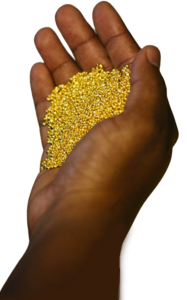
Alluvial gold dust and nuggets from Sierra Leone’s ASM sector are the most widely available form of gold for purchase through the NMA-licensed dealer network. Sourced from placer deposits across the Tonkolili, Kono, and Kailahun Districts, artisanal gold dust typically assays at 85 to 95 percent purity.
It is available in quantities from a few grams to multiple kilograms through registered dealers who aggregate from networks of individual artisanal miners. All artisanal gold must pass through NMA-licensed dealer hands before reaching the GGDO for export certification.
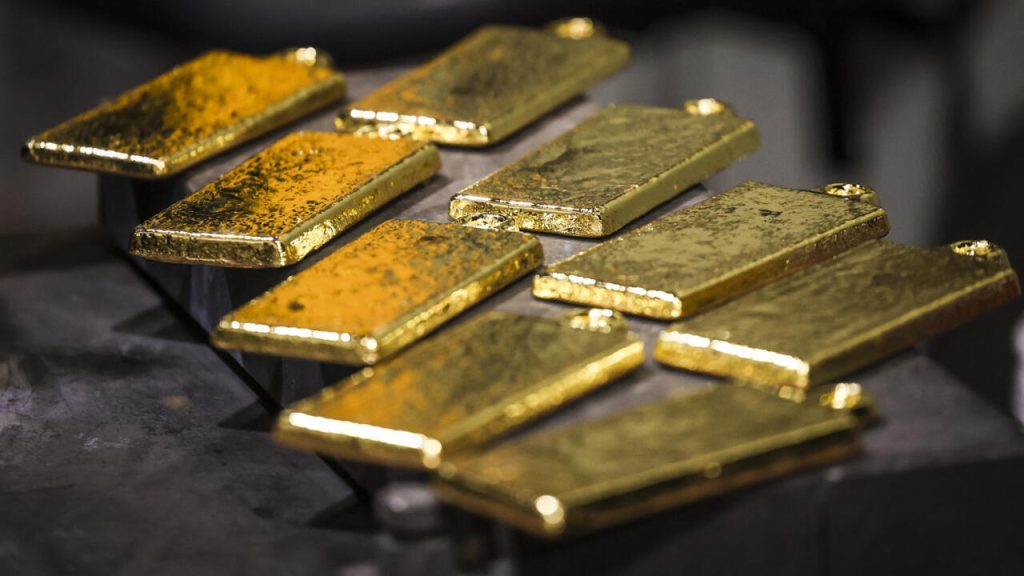
Gold doré bars are produced at Sierra Leone’s larger-scale mining operations as a semi-refined smelted product — an alloy of gold and silver typically assaying at 60 to 95 percent gold content depending on the ore processing method.
Doré from Sierra Leone’s established mining operations — including those in the Tonkolili and Sula Mountains regions — is exported under the mining companies’ own licences and represents a more institutionally traceable supply chain than ASM-sourced material.
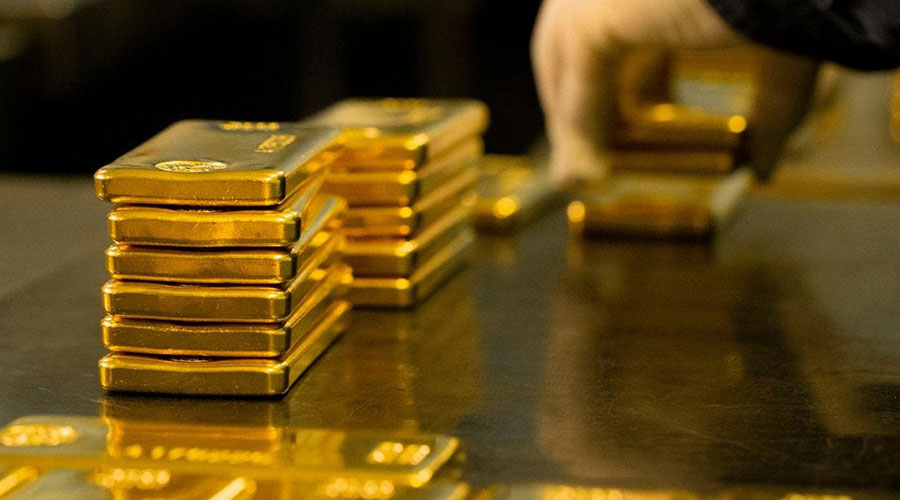
Refined 24K investment gold bars certified to 99.99 percent fineness are available from Sierra Leone through licensed exporters who have relationships with international refineries that process Sierra Leone doré to investment-grade specification.
These bars carry serial numbers, hallmarks, and assay certificates that are accepted by commodity exchanges, central banks, and institutional buyers internationally.
Buy Gold Bars Africa Ltd and similar licensed operators supply 24K certified gold from Sierra Leone with full NMA and GGDO documentation for international buyers.
Gold jewellery produced by Freetown’s traditional gold craftsmen and jewellers is available for retail purchase. Purity levels vary and independent assay verification is recommended for any jewellery purchase intended as an investment rather than personal wear. West African gold jewellery traditions favour 18K to 22K gold compositions for durability alongside high gold content.
-
What Is the Step-by-Step Process for Buying and Exporting Gold from Sierra Leone?
The compliant process for buying and exporting gold from Sierra Leone follows a documented sequence that every legitimate licensed exporter will follow without exception.
Understanding this process helps buyers identify credible counterparties and distinguish compliant transactions from the fraud attempts that have historically plagued informal channels in this sector.
Step 1 — Licensing Verification. The exporter presents their valid NMA gold exporter licence and dealer registration to the buyer before any commercial discussion of price or quantity proceeds. Verify this licence directly with the NMA rather than relying solely on the document presented.
Step 2 — Commercial Agreement. Buyer and seller agree the quantity, form (dust, doré, or refined bar), price basis (LBMA spot percentage or fixed per-gram rate), payment terms, and delivery logistics. The agreement should be formalised in a written sales contract with enforceable terms under Sierra Leonean law.
Step 3 — Gold Presentation to GGDO. Gold is presented to the Precious Minerals Trading Directorate, located at the Bank of Sierra Leone building on Siaka Stevens Street in Freetown. This must be done by the licensed exporter, not the buyer directly.
Step 4 — Assaying and Valuation. Gold is tendered for assaying and valuation in the presence of the licensed exporter, a Senior Mines Monitoring Officer, and a National Revenue Authority Customs Officer. The GGDO’s valuation establishes the official export value on which duties and royalties are calculated.
Step 5 — Sealing and Documentation. After valuation, the goods are put into packets as directed by the exporter and placed in a box which is then wrapped and sealed. A gold export certificate with serial number is issued showing details of the valuation, the assayed purity, and the exporter’s NMA licence reference.
Step 6 — Payment of Duties. Diamond and gold exporters must pay the stipulated duties and charges. All export taxes, royalties, and GGDO administrative fees are paid at this stage before the sealed parcel is cleared for departure.
Step 7 — Customs Clearance and Export. The sealed, certified parcel is cleared through the National Revenue Authority customs process at the designated departure point — typically Lungi International Airport for air shipments. After all clearance steps, the exporter is free to leave Sierra Leone with the parcel without further harassment or the parcel being opened again at departure.
-
What Documentation Is Required for a Gold Purchase from Sierra Leone?
Every compliant gold transaction from Sierra Leone requires a specific documentation package that covers both the domestic export process and the international import requirements at the buyer’s destination.
The Sierra Leone export documentation package includes the NMA gold exporter licence (current and valid), the GGDO export certificate with serial number and assay details, a commercial invoice issued by the licensed exporter, a packing list, a certificate of origin, the National Revenue Authority customs export declaration, and proof of duty and royalty payment.
Exporters are required to keep a record of purchases and exports of precious minerals acquired and to issue a numbered invoice/receipt for each purchase transaction — meaning that every purchase in the supply chain should be traceable through documented receipts.
For buyers importing Sierra Leone gold into the United States, the documentation additionally requires CBP Form 6059B (traveller declaration) or formal entry documentation for commercial shipments, FinCEN 105 filing for monetary instrument imports above $10,000, OFAC counterparty screening confirmation, and an AML compliance record for the full transaction chain.
For EU buyers, the EU Conflict Minerals Regulation due diligence requirements apply, though Sierra Leone is not classified as a conflict-affected area under the current EU taxonomy.
-
What Are the Taxes and Royalties on Gold Exported from Sierra Leone?
Gold exported from Sierra Leone is subject to export duties, royalties, and GGDO administrative fees that are collected at the point of GGDO certification before departure. The precise rate structure is governed by the Extractive Industries Revenue Act 2018 and the annual Finance Acts that may adjust specific rates — buyers should confirm the current applicable rates with the GGDO or a Sierra Leone mining law adviser at the time of transaction.
The general fiscal framework applicable to gold exports from Sierra Leone in 2026 includes a royalty payable as a percentage of the GGDO-assessed export value, export administration fees charged by the GGDO for valuation and certification services, and customs documentation fees levied by the National Revenue Authority.
Corporate income tax applies to the trading profits of Sierra Leonean gold exporting entities. The government offers a range of investment incentives in the mining sector, including duty exemptions on mining equipment and supportive legal frameworks to attract responsible long-term investors — incentives aimed at large-scale mining operations rather than artisanal gold trading.
-
How Do I Verify That a Sierra Leone Gold Supplier Is Legitimate?
Sierra Leone’s mineral sector has historically been vulnerable to fraud, smuggling, and informal intermediaries. This is a documented reality acknowledged by legal advisers, compliance consultants, and international buyers with experience in the West African gold market.
Protecting yourself when buying gold from Sierra Leone comes down to three non-negotiable pillars: verifying NMA licensing, insisting on GGDO-certified shipments, and using an escrow or bank-guaranteed payment mechanism for large transactions.
A reputable gold exporter in Freetown, Sierra Leone will welcome these requirements — in fact, a legitimate operator will insist on the same standards themselves.
If a Sierra Leone gold supplier cannot produce a valid NMA export licence, a GGDO certification number for the specific consignment, and proof of bank-registered foreign currency accounts — walk away from the transaction entirely, regardless of how attractive the offered price appears.
Direct licence verification with the NMA is the most critical protection step. Contact the NMA’s licensing office directly — through the official National Minerals Agency website at nma.gov.sl — and confirm that the licence number presented by the supplier is current, valid, and registered to the entity you are dealing with. Any discrepancy between the licence documentation and the NMA’s official records is an immediate red flag.
Independent third-party assay from internationally recognised laboratories — SGS, Bureau Veritas, or Intertek — provides additional protection for large purchases.
XRF testing at the GGDO premises before sealing gives you a rapid preliminary purity confirmation. Payment must be made by SWIFT wire transfer to a bank account held in the name of the licensed exporting entity — never to a personal account, a cryptocurrency wallet, a money transfer service, or any informal payment channel.
Use escrow through a licensed financial institution for first transactions or any purchase above $50,000. Escrow holds your payment until post-receipt assay at your destination confirms the gold matches its documentation exactly.
-
What Fraud Risks Should I Be Aware of When Buying Gold in Sierra Leone?
The Sierra Leone gold market attracts a significant volume of fraud attempts targeting international buyers — particularly buyers operating remotely and online who have not visited the country or established physical relationships with verified suppliers. The most common fraud patterns are well-documented and predictable.
Advance fee fraud (also called the “419 scam” in its most recognisable West African form) involves a supposed gold supplier requesting upfront payment for export fees, GGDO certification costs, customs clearance, or “release fees” before any gold is presented or any documentation is provided.
Legitimate gold transactions never require advance payment for government fees to be sent to an individual — all government fees in Sierra Leone are paid directly to the NMA or GGDO, not to an intermediary.
Fake documentation fraud involves presenting falsified NMA licences, forged GGDO certificates, or fabricated assay reports to create the appearance of a compliant transaction. The protection is verification — always confirm licence details directly with the NMA and request GGDO certificate serial numbers that can be cross-checked with the office.
Sample-and-switch fraud involves providing a genuine, high-quality gold sample for pre-purchase assay, then substituting lower-quality or non-gold material in the actual shipment. Protection requires independent assay of the actual sealed shipment — not just the sample — before payment is released from escrow.
Phantom gold fraud involves selling gold that does not exist — taking payment in advance for a gold consignment that is never produced, with a succession of fabricated delays, requests for additional fees, and eventually complete non-delivery. This fraud is the most common and the most financially devastating. No payment of any kind should be released before physical gold has been presented at the GGDO and an official valuation receipt has been issued.
-
How Do I Start the Process of Buying Gold from Sierra Leone Safely?
The safest entry point for an international buyer new to the Sierra Leone gold market is through a licensed, verified operator who maintains established relationships with both the NMA licensing framework and the GGDO certification process — and who can provide a complete documentation package from NMA licence verification through to GGDO export certification, international shipping insurance, and delivery at the buyer’s specified destination.
Begin by researching NMA-licensed gold exporters in Sierra Leone through the NMA’s official registration records. Cross-reference any supplier’s claimed NMA licence with the agency directly through their Freetown offices or through the nma.gov.sl official website.
Request a complete pre-transaction documentation pack from any potential supplier: their NMA exporter licence, their bank account details in Sierra Leone (confirming that they hold a registered foreign currency account in a Sierra Leone-accredited bank), references from previous international transactions, and a clear written outline of the proposed transaction steps and GGDO certification timeline.
For first transactions, engage a Sierra Leone mining law adviser — a qualified legal professional with direct NMA and GGDO relationships who can verify all documentation, attend the GGDO valuation in person on your behalf, and provide legal oversight of the transaction from commercial agreement through to export clearance.
Legal advisory services from firms with Sierra Leone mining law expertise are available through Freetown-based law chambers and through international law practices with West Africa specialisations.
Structure payment through escrow with a licensed international financial institution. Release the first payment tranche only on receipt of the GGDO official valuation receipt and the sealed export parcel’s shipping confirmation. Release the final payment only on receipt and independent assay verification at your destination warehouse or refinery.
This payment structure aligns buyer and seller incentives around documentation accuracy and product quality — and it is the structure that every legitimate Sierra Leonean gold exporter will accept, because it protects both parties equally.
Sierra Leone’s gold market in 2026 — accessed through the correct regulatory channels, with proper NMA and GGDO documentation, through verified licensed exporters, and with escrow-structured payments — offers international buyers access to genuine, high-quality West African gold at competitive prices.
The risks are real, documented, and entirely manageable through the due diligence framework this guide describes. The gold is real. The regulation is real. The protection is in using it correctly.