24K Gold — The Complete Guide: Purity, Price, Uses & Investment 2026
24K gold is the purest form of gold that exists — 99.99% pure gold with no added metals or alloys. It is the global benchmark for gold investment, the standard used by central banks and serious investors worldwide, and the highest karat gold you can buy. As of May 18, 2026, the 24K gold price is $145.45 per gram and $4,523.57 per troy ounce.
Whether you are buying 24K gold bars for investment, sourcing 24K gold bullion for international trade, or simply trying to understand what 24K gold means and how it differs from 22K, 18K, and 14K gold — this complete guide covers everything.
What Is 24K Gold? — Purity Explained
24K gold means 24 out of 24 parts are pure gold — making it 99.99% pure. The “K” stands for karat, the unit used to measure gold purity. No other karat rating is higher than 24K.
The purity stamp you will see on certified 24K gold products is 999 or 999.9 (also written as .9999 fine gold), meaning 999.9 parts per 1,000 are pure gold. This is the same purity standard used by the London Bullion Market Association (LBMA), the world’s leading gold trading authority, and by major refineries including the Rand Refinery, PAMP Suisse, and the Perth Mint.
24K Gold vs. 22K, 18K, and 14K Gold — Purity Comparison
| Karat | Purity | Gold Content | Common Use |
|---|---|---|---|
| 24K | 99.99% | 999.9/1000 | Investment bars, bullion coins, central bank reserves |
| 22K | 91.6% | 916/1000 | Bullion coins (Krugerrand, Sovereign), some jewelry |
| 18K | 75.0% | 750/1000 | Fine jewelry, watches |
| 14K | 58.3% | 583/1000 | Everyday jewelry, engagement rings |
| 10K | 41.7% | 417/1000 | Budget jewelry |
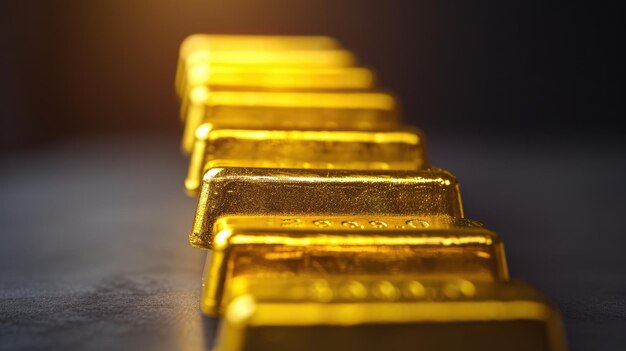
The key takeaway: 24K gold contains no other metals. 22K, 18K, and 14K gold are alloys — they are mixed with silver, copper, zinc, or palladium to add durability or change color. Pure 24K gold is unmixed, which gives it its characteristic deep, rich yellow color and its status as the global investment standard.
24K Gold Price Today — Live Rates
The 24K gold price today is $145.45 per gram and $4,523.57 per troy ounce. Prices update continuously every trading day. Below are today’s 24K gold prices across the most common trading weights:
| Weight | 24K Gold Price (USD) |
|---|---|
| 1 Gram | $145.45 |
| 5 Grams | $727.25 |
| 10 Grams | $1,454.50 |
| 1 Troy Ounce (31.1g) | $4,523.57 |
| 100 Grams | $14,545.00 |
| 1 Kilogram (1,000g) | $145,450.00 |
Note: These are spot prices — the raw market value of pure 24K gold. When buying from a dealer, a premium of 1–5% is added to cover refining, certification, packaging, and dealer margin. Always confirm live rates before transacting.
What Drives the 24K Gold Price?
The price of 24K gold moves in real time based on global supply and demand. The main drivers in 2026 include:
Central bank buying — Record-level gold accumulation by central banks worldwide, particularly from emerging market economies, has been a structural driver of the current bull market.
Inflation and interest rates — Ongoing geopolitical risks, trade policy uncertainty, and sustained inflationary pressures continue to enhance gold’s attractiveness as a safe-haven asset.
US dollar strength — Gold is priced globally in USD. A weaker dollar makes gold cheaper for international buyers, increasing demand and pushing prices up.
Geopolitical risk — Global instability drives safe-haven demand into physical gold. Persistent safe-haven demand tied to the prolonged Middle East conflict and global inflation concerns has kept gold prices elevated through 2026.
Mining supply constraints — Global gold production grows at only 1–2% per year, while demand consistently outpaces supply, providing long-term upward price pressure.
Physical Properties of 24K Gold
Understanding what makes 24K gold unique helps explain why it commands a premium and why it behaves differently from lower-karat gold alloys.
Color — 24K gold has a deep, saturated, bright yellow color that is noticeably richer than 18K or 14K gold. The unmixed purity of the metal is what produces this distinctive appearance. Lower karats appear paler or more rose-tinted because of alloyed copper and silver.
Softness — Pure 24K gold rates 2.5 on the Mohs hardness scale, making it the softest of all gold karats. Pure 24K gold is softer, which is why it is favored for bullion and investment-grade gold rather than jewelry meant to be worn every day. This softness makes it easy to stamp, assay, and certify but susceptible to dents and scratches under daily wear.
Density — Gold is one of the densest metals on Earth, with a density of 19.3 g/cm³. A 1 kg bar of 24K gold is remarkably compact — roughly the size of a smartphone. This density is also one of the key methods used to verify authenticity.
Conductivity — 24K gold is an excellent conductor of electricity, making it critical in electronics, aerospace, and medical technology applications.
Corrosion resistance — Pure gold does not oxidize, rust, corrode, or tarnish under any normal conditions. Pure gold doesn’t crack, doesn’t tarnish, and doesn’t trigger metal allergies. It ages gracefully, developing a subtle patina that many collectors prefer.
Biocompatibility — 24K gold is hypoallergenic and non-toxic, making it safe for medical implants, dental work, and sensitive skin applications.
Forms of 24K Gold Available to Buy
24K Gold Bars (Bullion)
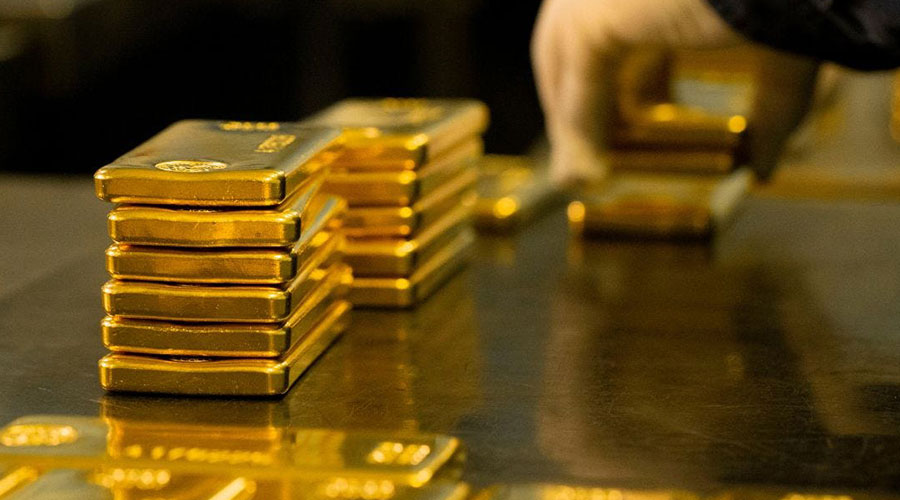
The most popular investment format. 24K gold bars are produced by LBMA-accredited refineries and stamped with weight, purity (.9999), a serial number, and the refinery’s hallmark. Available in weights from 1 gram to 1 kilogram and beyond.
Common 24K gold bar sizes:
- 1 gram — Entry-level, higher premium percentage, easy to gift or sell in portions
- 5 gram — Popular with new investors
- 10 gram — Balance of affordability and value retention
- 1 troy ounce (31.1g) — Most liquid internationally traded size
- 100 gram — Popular with serious investors and traders
- 1 kilogram — Institutional grade, lowest dealer premium per gram, preferred for large portfolios
24K Gold Coins (Bullion Coins)
Certain government-minted coins are struck in 24K (.9999 fine) gold. The most widely recognized include:
- Canadian Gold Maple Leaf — .9999 fine, issued by the Royal Canadian Mint, one of the world’s most trusted 24K bullion coins
- American Gold Buffalo — .9999 fine, issued by the US Mint
- Australian Gold Kangaroo/Nugget — .9999 fine, issued by the Perth Mint
- Chinese Gold Panda — .999 fine, issued by the People’s Bank of China
- Austrian Gold Philharmonic — .9999 fine, issued by the Austrian Mint
Note: The iconic South African Krugerrand is 22K (91.6%), not 24K. It contains exactly 1 troy ounce of pure gold alloyed with copper for durability.
24K Gold Jewelry
24K gold jewelry exists but is far less common than 18K or 22K pieces in Western markets. In East and Southeast Asia — particularly China, Vietnam, and Thailand — 24K gold jewelry is the preferred standard and trades at close to spot price with minimal craftsmanship markup. Since 24K gold is 99.9% pure, its value is directly linked to the live spot price, making it the most reactive carat to global gold pricing.
24K Gold Nuggets and Raw Gold
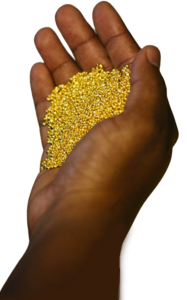
Natural gold nuggets sourced from artisanal and alluvial mining, primarily from Africa and Australia, can reach purity levels of 90–97%. True 24K purity (99.99%) is only achieved through refining. Raw gold nuggets must be assay tested before purchase.
24K Gold Dust
Fine gold powder or flake used in industrial applications, electronics manufacturing, and as input material for refineries. Not typically traded by retail investors.
24K Gold vs. 22K Gold — Which Should You Buy?
This is the most common question from gold buyers. The answer depends entirely on your purpose.
Buy 24K gold if you are: an investor, a wealth preserver, a trader buying gold for resale or export, a central bank, or anyone whose primary goal is maximum gold value per dollar spent. 24K gold trades closest to spot price, has the highest resale value, and is the globally accepted standard for bullion trading.
Buy 22K gold if you are: buying gold jewelry, purchasing Krugerrands for liquidity and global recognizability, or operating in markets where 22K is the local standard. 22K gold is harder and more durable, which makes it better for items subject to daily wear.
The price difference: With 24K gold at $145.45/gram and 22K at $133.33/gram today, the premium for pure 24K is approximately 9% per gram — directly proportional to the 8.4% higher gold content.
Why 24K Gold Is the Investment Standard
No Counterparty Risk
Physical 24K gold in your possession is one of the only financial assets with zero counterparty risk. It does not depend on a bank, government, or institution to hold its value. It cannot be defaulted on, inflated away, or deleted.
Global Liquidity
A certified 24K gold bar with a recognized hallmark (LBMA-accredited, PAMP, Perth Mint, Rand Refinery) is accepted and traded in every country in the world. It is the most universally liquid physical asset on Earth.
Inflation Hedge
Gold has maintained purchasing power over centuries. Gold’s low volatility and reliable inflation-hedging properties make it the superior choice for wealth preservation and portfolio stabilisation in 2026.
Portfolio Diversification
Gold has a low or negative correlation with equities and bonds, meaning it tends to hold or gain value when stock markets fall. Most institutional investors and wealth managers recommend allocating 5–15% of a portfolio to gold.
Central Bank Preference
Central banks worldwide hold their monetary reserves in 24K gold bullion — not 22K or 18K. This institutional demand provides a permanent price floor.
How to Verify 24K Gold Purity
Before purchasing any 24K gold product, always verify its authenticity using one or more of the following methods:
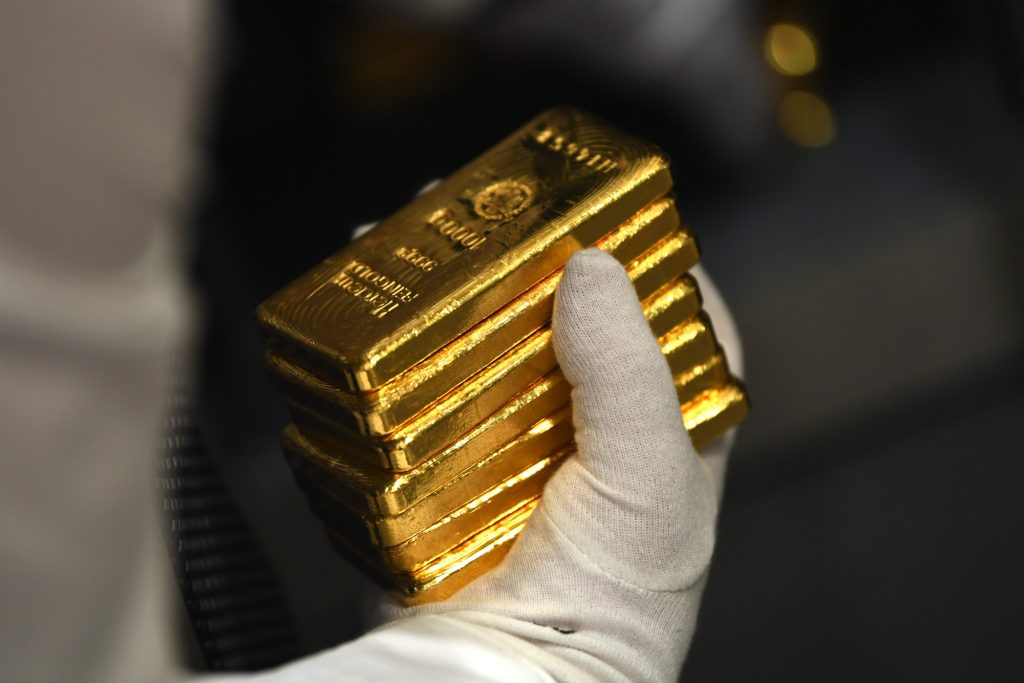
Hallmark and stamp — Genuine 24K gold bars and coins are stamped with “999”, “999.9”, or “9999” indicating purity. Bars also carry a serial number, weight, and the refinery’s mark. Never buy without a visible, verifiable hallmark.
Assay certificate — An assay certificate from a certified laboratory (such as the LBMA, Simba Assay Laboratory, or UNBS) documents the exact purity, weight, and serial number of the gold. Reputable dealers including Buy Gold Bars Africa Limited provide assay certificates with every sale.
XRF (X-ray Fluorescence) testing — The most practical non-destructive test for buyers. An XRF machine scans the gold and returns an instant purity reading accurate to four decimal places. Request on-the-spot XRF testing from any serious dealer before purchasing.
Fire assay — The gold industry’s most accurate test. A small sample is melted and chemically analyzed to determine exact gold content. Used for large-volume transactions and by refineries.
Density test — Gold’s density (19.3 g/cm³) is unique. A simple water displacement test can confirm whether a piece of “gold” has the correct density. Tungsten is the only common metal with a similar density, so density alone is not sufficient — combine it with other methods.
Acid test — Nitric acid does not react with pure 24K gold. If a piece dissolves or discolors when acid is applied, it is not genuine 24K gold.
24K Gold Hallmarks and What They Mean
| Hallmark | Meaning |
|---|---|
| 999 or 999.9 | 24K gold — 99.9% or 99.99% pure |
| 9999 | 24K gold — 99.99% pure (.9999 fine) |
| 24K or 24KT | 24 karat — indicates purity level |
| Au 999 | Gold (Au is the chemical symbol) at 99.9% purity |
| LBMA | London Bullion Market Association accredited refinery |
Always check that the hallmark matches the documentation. Bars from LBMA Good Delivery refineries — including Rand Refinery (South Africa), PAMP Suisse (Switzerland), Perth Mint (Australia), and Valcambi (Switzerland) — are the globally accepted standard.
24K Gold Industrial and Medical Uses
24K gold is not only for investment. Its unique physical and chemical properties make it indispensable across a wide range of industries.
Electronics — Gold is used in circuit boards, connectors, and semiconductors because it is the most reliable conductor that will not corrode. Smartphones, computers, satellites, and medical devices all contain gold.
Aerospace — Gold-coated visors on astronaut helmets reflect infrared radiation and protect astronauts from intense solar radiation. Gold is used in satellite components because of its reliability in extreme conditions.
Medicine — 24K gold nanoparticles are used in cancer treatment research, diagnostic imaging, and targeted drug delivery systems. Gold is also used in dental crowns, bridges, and joint replacement implants because of its biocompatibility and corrosion resistance.
Glassmaking — Gold chloride added to glass produces ruby red tinted glass (gold ruby glass), used in art glass and scientific optics.
Food (Gold Leaf) — 24K gold leaf is edible and used in high-end culinary decoration. It carries the E175 food additive designation and is non-toxic and inert in the digestive system.
Buying 24K Gold — What to Look For
Whether buying 24K gold bars online or from a physical dealer, these are the non-negotiable standards to apply:
Licensed dealer — Only buy from a dealer with verifiable government registration, a physical address, and a track record of completed transactions. In Africa, this means URSB registration and DGSM licensing. Internationally, look for LBMA membership or affiliation.
Assay certificate — Every piece of 24K gold you buy should come with a third-party assay certificate confirming purity and weight.
Recognized refinery — The gold bar should carry the hallmark of an LBMA-accredited refinery. Bars from unknown or unverifiable sources should be independently tested before purchase.
Transparent pricing — The price should be clearly linked to the current global spot price plus a stated premium. Any dealer quoting prices far below spot should be considered a scam risk.
Secure payment — For large purchases, use bank wire transfer (SWIFT), escrow services, or Letters of Credit. Never send cash or untraceable payments.
Buy Gold Bars Africa Limited — For buyers sourcing certified 24K gold bars and bullion from Africa (Uganda or South Africa), Buy Gold Bars Africa Limited is a licensed, DGSM-registered dealer offering assay-certified 24K gold bars with full export documentation and international delivery via Brinks and Malca-Amit.
Storing 24K Gold Safely
Because 24K gold is softer than alloyed gold, proper storage is important to preserve both condition and value.
Home safe — A fireproof, bolted-down home safe is suitable for smaller quantities. Ensure the safe is rated for both fire and burglary.
Bank safety deposit box — Secure but not insured by the bank. Arrange separate contents insurance.
Private vault — Specialist precious metals vault facilities offer insured, audited storage with 24/7 security. Many LBMA-accredited facilities offer allocated storage (your specific bars stored in your name) versus pooled storage.
Avoid excessive handling — Always handle 24K gold bars with cotton gloves. Skin oils can mark the surface, and the softness of pure gold means it can scratch or dent from contact with harder surfaces. Store bars in their original sealed assay packaging where possible.
24K Gold as a Long-Term Investment — 2026 Outlook
Gold has been the best-performing major asset over the past year, with prices surging significantly driven by geopolitical uncertainty, record investment demand, and substantial buying from emerging market central banks.
Physical bars offer the lowest ongoing costs and zero counterparty risk, making them ideal for long-term wealth preservation. For most investors, the recommended strategy is dollar-cost averaging — buying fixed amounts of 24K gold at regular intervals regardless of the spot price, reducing the impact of short-term price volatility.
Gold forecasts for 2026 and beyond remain broadly positive, supported by structural demand from central banks, persistent inflation across major economies, and continued geopolitical risk premiums. The all-time record high of $5,602.22 per troy ounce was set on January 28, 2026.
FAQs About 24K Gold
What does 24K gold mean? 24K gold means the gold is 99.99% pure — 24 out of 24 parts are pure gold with no alloyed metals. It is also described as .9999 fine gold or 999.9 gold.
Is 24K gold the purest gold? Yes. 24K is the highest karat rating possible. No higher purity classification exists for gold traded in the market.
Why is 24K gold not used for most jewelry? 24K gold is soft (2.5 on the Mohs hardness scale) and scratches easily under daily wear. Most jewelry is made with 18K or 14K gold, which are harder alloys. 24K gold jewelry is popular in East Asian markets where investment value matters more than durability.
What is the difference between 24K and 999 gold? They are the same thing. “24K” and “999” or “999.9” are different ways of expressing 99.99% gold purity. 24K uses the karat system; 999.9 uses the fineness (parts per thousand) system.
How can I tell if gold is 24K? Look for a stamp reading 999, 999.9, 9999, or 24K on the gold piece. Request an assay certificate from the seller. For certainty, use XRF testing or a fire assay from a certified laboratory.
Is 24K gold a good investment in 2026? Yes, for long-term wealth preservation. Physical 24K gold bars have zero counterparty risk, are universally liquid, and have historically maintained purchasing power through inflationary and geopolitical crises. Gold hit a record high of $5,602.22/oz in January 2026.
What is the price of 24K gold per gram today? As of May 18, 2026, the 24K gold price is approximately $145.45 per gram. Prices update in real time — always confirm with your dealer before transacting.
Where can I buy certified 24K gold bars in Africa? Buy Gold Bars Africa Limited supplies certified 24K gold bars from Uganda and South Africa, with assay certificates, export documentation, and international delivery. Contact Us Today to Buy 24K Gold in Africa!
All prices based on live market data as of May 18, 2026. 24K gold spot price: $145.45/gram | $4,523.57/troy ounce. Prices are subject to continuous change. Always confirm current rates with a licensed dealer before transacting.