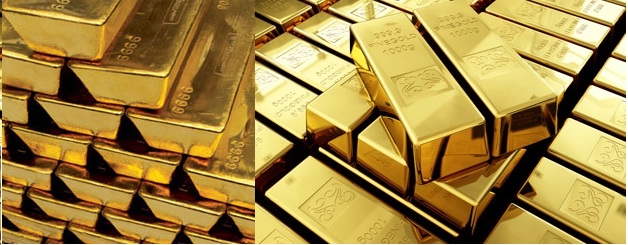
Congo Gold Export Licence: Application Process & Fees
Congo Gold Export License: To legally export gold from the Democratic Republic of the Congo (DRC), a business must hold the appropriate mining-sector authorisation and comply with the country’s gold purchasing, traceability, certification, export and customs requirements.
The applicable requirements depend on whether the gold comes from artisanal and small-scale mining or industrial production, as well as the legal status of the exporter.
The DRC has a substantial gold industry, with production from both industrial mining operations and artisanal mining communities. However, purchasing gold from a local miner does not automatically give a buyer the legal right to export it. Gold exporters must operate through the authorised regulatory framework, demonstrate the lawful origin of their gold and obtain the necessary approvals and certificates before a shipment can leave the country.
The main legal framework is established by the DRC Mining Code (Law No. 007/2002), as amended by Law No. 18/001 of 9 March 2018, together with the Mining Regulations and subsequent ministerial and interministerial orders.
The 2026 regulatory changes to mineral marketing and exports make it particularly important to verify the latest requirements before applying or arranging a gold shipment.
For international investors, gold dealers, mining companies and wholesale bullion buyers, understanding how to obtain a Congo gold export licence is essential. This guide explains the eligibility requirements, relevant licences and approvals, application process, supporting documents, export taxes, certification procedures and costs involved in legally exporting gold from the DRC.
What Is a Congo Gold Export Licence?
A Congo gold export licence is commonly used to describe the official authorisations and registrations that allow an eligible mining-sector operator to purchase, process, trade or export gold from the Democratic Republic of the Congo.
In practice, exporting gold requires more than one document. Depending on the source and nature of the gold, the exporter may need:
- A valid mining exploitation right or an approved mineral-processing authorisation.
- Approval as a purchasing counter (comptoir) for artisanal gold, where applicable.
- Business registration and tax identification.
- An import-export identification number.
- Applicable precious-metals export authorisations.
- CEEC certification and supporting traceability documents.
- Customs and foreign-exchange documentation.
The DRC’s Ministry of Mines oversees the mining regulatory framework, while several government agencies participate in the inspection, certification, valuation and clearance of gold shipments.
Who Can Legally Export Gold from the DRC?
The legal route depends on the category of gold and the exporter’s authorisation.
Approved purchasing counters
Purchasing counters, commonly known as comptoirs, are important participants in the artisanal gold supply chain. They purchase gold from eligible artisanal producers and operate under the applicable approval and traceability requirements.
A trader cannot simply purchase artisanal gold from an individual miner and export it independently without meeting the applicable legal requirements.
Mining companies
Companies holding valid mining exploitation rights can export qualifying gold produced under their authorised mining operations, subject to the applicable export procedures and approvals.
Approved processing entities
Entities authorised to process or transform mineral substances may also qualify to export products within the scope of their approvals and applicable regulations.
Foreign investors and international buyers
Foreign investors should not assume that registering a company in the DRC automatically gives them permission to purchase and export gold. Foreign participation in mineral trading is subject to applicable investment, company-registration, mining and commercial rules.
Before investing, establish whether the proposed activity requires a local operating company, a precious-metals approval, an authorised local partner or another specific arrangement.
Main Authorities Responsible for Gold Export Licensing
Several institutions are involved in the DRC gold export process.
Ministry of Mines: Responsible for mining-sector policy, mining rights, regulatory oversight and relevant mineral-sector authorisations.
Provincial Mines Division: Handles important operational and administrative procedures connected with mineral production and exports within its jurisdiction.
CEEC (Centre d’Expertise, d’Evaluation et de Certification): Responsible for mineral expertise, evaluation, quality assessment and certification, including verification of the origin and legal provenance of mineral substances.
DGDA (Direction Générale des Douanes et Accises): The customs authority responsible for export declarations, applicable duties and customs clearance.
OCC (Office Congolais de Contrôle): Participates in applicable inspection and export verification procedures.
BCC (Banque Centrale du Congo): Oversees foreign-exchange regulations and applicable export proceeds requirements.
Other agencies, including the General Directorate of Administrative, State and Participation Revenue (DGRAD), may also be involved in collecting applicable fees and charges.
Requirements for Obtaining a Congo Gold Export Licence
Before beginning an application, establish the correct legal category for your proposed gold business.
Typical requirements and supporting records may include:
- Certificate of business registration and RCCM registration.
- National identification number.
- Tax identification number (NIF).
- Import-export identification number.
- Valid mining exploitation title, where applicable.
- Valid approval as a mineral-processing or transformation entity, where applicable.
- Valid approval as a purchasing counter for artisanal gold, where applicable.
- Tax-clearance or tax-compliance documentation.
- Evidence of the company’s banking arrangements.
- Details of the directors, shareholders and authorised representatives.
- Information about the source and expected volume of gold.
- Relevant proof of lawful acquisition and mineral traceability.
The exact documents depend on the applicant’s business category and the current administrative requirements. An artisanal gold purchasing counter, for example, should not be treated as having the same application requirements as an industrial mining company.
How to Apply for a Congo Gold Export Licence
The following is a practical sequence for preparing a compliant gold export operation.
Step 1: Register your business in the DRC
Establish a legally registered business and obtain the relevant commercial registration and tax identification documents.
Where foreign participation is involved, confirm the applicable rules governing foreign investment and the right to conduct mineral trading activities.
Step 2: Identify the correct mining-sector authorisation
Determine whether your business needs approval as a purchasing counter, a mineral-processing entity or another authorised mining-sector operator.
If you operate an industrial mine, establish that your mining exploitation title covers the relevant gold-producing activities.
Step 3: Obtain the import-export identification number
The exporter must complete the applicable registration requirements for international trade.
This identification is part of the administrative framework for exporting commercial goods from the DRC.
Step 4: Apply for the relevant precious-metals approval
Submit the application and supporting documents to the competent mining authorities for the applicable authorisation.
For businesses dealing in artisanal gold, this includes satisfying the requirements for operating as an approved purchasing counter.
Step 5: Establish your traceability and sourcing procedures
Maintain records identifying the source of the gold, the suppliers, purchase transactions, quantities and movement of the mineral through the supply chain.
This is particularly important for artisanal gold, where authorities need to establish that the material originated from lawful mining activities and entered the authorised commercial chain.
Step 6: Arrange assay, evaluation and certification
Before export, the gold must undergo the applicable inspection, weighing, sampling, quality assessment and certification procedures.
CEEC plays a central role in establishing the quantity, quality, value and origin of mineral batches intended for export.
Step 7: Obtain shipment-specific export documentation
Prepare the relevant export authorisations, certificates, commercial documents and customs declarations for the shipment.
A company-level approval should not be confused with the documents required for each individual consignment.
Step 8: Complete customs clearance and international shipping
Submit the export declaration and supporting documents to the DGDA and complete the required customs procedures.
The gold can then be dispatched through an approved logistics arrangement once the applicable government procedures have been completed.
Documents Required to Export Gold from the DRC
The following documents are commonly relevant to a formal gold export transaction. The final list should be confirmed with the responsible authorities for the specific gold category and shipment.
| Document | Purpose |
|---|---|
| RCCM registration | Confirms commercial registration |
| National identification number | Identifies the registered business |
| NIF | Tax identification |
| Import-export number | Supports international trade registration |
| Mining title or approved comptoir authorisation | Establishes the legal basis for the activity |
| Purchase records | Demonstrates lawful acquisition |
| Assay or quality certificate | Establishes gold quality and composition |
| CEEC certificate of origin | Supports mineral origin and traceability |
| ICGLR certificate, where applicable | Supports regional mineral certification |
| Export authorisation | Provides the applicable permission for the shipment |
| Commercial invoice | Records the transaction value |
| Export declaration | Supports customs processing |
| Packing list | Identifies the shipment contents |
| Transport document | Records the movement of the shipment |
| Foreign-exchange documentation | Supports the payment and export proceeds process |
The CEEC identifies certificates of origin and ICGLR/DRC certificates among the documentation it provides for mineral traceability. <a href=”https://ceecertification.cd/index_en.html“>CEEC official website</a>.
How Much Does a Congo Gold Export Licence Cost?
There is no single reliable fee that should be quoted as the total cost of obtaining a Congo gold export licence. The total expense depends on the applicant’s category, the authorisations required, the quantity and value of gold being exported, and the applicable government charges.
An exporter should budget for the following categories:
- Business registration and administrative expenses.
- Mining-sector licensing or approval charges.
- Import-export registration fees.
- CEEC evaluation, assay and certification charges.
- Applicable export taxes and duties.
- Customs processing and inspection expenses.
- Foreign-exchange and banking charges.
- Secure transportation and insurance.
Gold export taxes
The World Trade Organization’s 2026 review of the DRC reports different mineral export tax rates according to the type of mineral and production method. It identifies a 1.5% export tax for artisanal gold and a 3% rate for industrially produced gold. These rates should be verified against the current applicable legislation and the classification of the shipment before calculating the final export cost.
Do not confuse the export tax with the cost of obtaining a licence. They are separate expenses.
Are Congo gold export licence fees fixed in USD?
Not necessarily. Some administrative charges may be expressed in US dollars, while other taxes and fees may be calculated using the applicable official valuation and payment rules.
Older online gold export guides contain fee schedules that may no longer reflect the current regulatory framework. Avoid relying on historic figures as a guaranteed 2026 quotation. Obtain a current written assessment from the relevant government offices before paying an intermediary or committing to a transaction.
What Is the Role of CEEC in Gold Export Licensing?
The CEEC is one of the most important institutions in the DRC’s mineral export chain.
Its responsibilities include:
- Assessing the quality and characteristics of mineral products.
- Determining the quantity and value of export batches.
- Verifying the origin and legal provenance of minerals.
- Supporting mineral traceability.
- Issuing applicable certificates of origin and regional certification documents.
For gold exporters, CEEC certification is important because it helps demonstrate that the mineral being exported has passed through the relevant inspection and certification process.
Buyers should independently verify the authenticity and validity of certificates rather than relying solely on scanned documents supplied by a seller.
How Long Does It Take to Obtain a Congo Gold Export Licence?
There is no universal processing period that applies to every applicant and every category of gold export authorisation.
The time required depends on:
- Whether the company is already registered.
- Whether the applicant holds the necessary mining-sector approval.
- Whether the application documents are complete.
- The relevant provincial and national administrative procedures.
- The verification and certification requirements.
- Whether additional information or inspections are requested.
A new business applying for mining-sector approval may need considerably more preparation than an existing authorised exporter arranging documentation for another shipment.
It is advisable to obtain confirmation of the applicable processing timeline before making commercial commitments.
Common Mistakes to Avoid When Applying for a Gold Export Licence
Gold exporters can encounter serious problems when they misunderstand the DRC’s licensing and compliance framework.
Buying gold from unauthorised suppliers: A commercial invoice alone does not establish that the gold was legally mined or acquired.
Using another company’s licence: A licence or authorisation issued to one business should not be treated as freely transferable to another operator.
Ignoring traceability requirements: Exporters must be able to demonstrate the lawful source and movement of the gold.
Assuming a licence covers every shipment: Shipment-specific certificates, declarations and approvals may still be necessary.
Underestimating taxes and charges: Export costs include more than the initial business or licensing expenses.
Relying on outdated fee schedules: Historical costs should not be presented as current official fees without verification.
Ignoring foreign-exchange rules: Export proceeds must be handled in accordance with applicable DRC banking and foreign-exchange regulations.
Important Compliance Considerations for International Gold Buyers
International buyers purchasing gold from the DRC should carry out due diligence before transferring funds.
Ask the supplier to provide evidence of:
- Valid business registration.
- The appropriate mining-sector authorisation.
- Legal ownership and source of the gold.
- Applicable assay and valuation records.
- Relevant CEEC and traceability certificates.
- Shipment-specific export documentation.
- A legitimate banking and payment arrangement.
Buyers should also check the destination country’s gold import requirements, customs obligations and documentation standards.
The DRC’s gold trade has particular traceability and responsible-sourcing risks, especially in some artisanal mining areas. A credible supplier should be able to explain the origin of the gold and provide verifiable supporting records.
Official Institutions to Contact
For current licensing requirements, fees and export procedures, consult the relevant government institutions rather than relying solely on commercial intermediaries.
- Ministry of Mines: https://mines.gouv.cd/
- CEEC: https://ceecertification.cd/
- DRC Commercial Information Portal: https://portal.commerce.gouv.cd/Requirements
- DGDA Customs: https://www.douane.gouv.cd/
Frequently Asked Questions About the Congo Gold Export Licence
Can foreigners obtain a gold export licence in the DRC?
Foreign participation is subject to the DRC’s company, investment, mining and commercial regulations. Foreign investors should establish the applicable eligibility conditions and approved business structure before applying. Registering a company alone does not automatically confer the right to export gold.
Is a gold export permit required for every shipment?
Company-level authorisation and shipment-level export documentation are different. Depending on the gold and the exporter, individual shipments may require additional approvals, certificates, customs declarations and inspections.
Can an individual buy gold from artisanal miners and export it?
Not simply by purchasing the gold. Artisanal gold must enter the legally authorised purchasing and traceability chain. The exporter must satisfy the applicable approval and export requirements.
What is a comptoir in the DRC gold trade?
A comptoir is an approved purchasing counter that participates in the acquisition and commercialisation of artisanal mineral production under the DRC’s mining regulations.
What is the CEEC certificate of origin?
It is a certification document used to support the identification and traceability of mineral products, including their origin and legal provenance.
How much is the gold export tax in the DRC?
The WTO’s 2026 review reports a 1.5% export tax for artisanal gold and 3% for industrially produced gold. Exporters should verify the applicable rate and calculation basis with the competent authorities before shipping.
Can gold be exported directly from Kinshasa?
Gold may be exported through the applicable authorised export channels, subject to certification, customs clearance and transport arrangements. The location of the exporter does not remove the requirement to establish the gold’s lawful origin.
Can a foreign gold buyer export gold without a local partner?
A foreign buyer must establish the legal basis for the proposed transaction and whether it can export independently or must transact through an appropriately authorised DRC operator. Never assume that a purchase contract alone grants export rights.
Conclusion: Obtaining a Congo Gold Export Licence
Obtaining authorisation to export gold from the Democratic Republic of the Congo requires proper business registration, the correct mining-sector approval, lawful gold sourcing, mineral traceability, CEEC certification and compliance with customs and foreign-exchange procedures.
The most important first step is identifying the correct authorisation for the type of gold and business activity involved. Once that is established, the exporter can prepare the necessary documents, obtain the applicable approvals and arrange a properly documented international shipment.
For businesses entering the DRC gold market, compliance should be treated as an essential part of the transaction rather than an administrative formality. Always verify the latest requirements and fees with the relevant authorities before purchasing gold or arranging an export.