Gold Reserves in Burkina Faso: National Gold Holdings
Burkina Faso has begun building a national gold reserve, with at least 123.797 kilograms of gold in publicly documented contributions from 2024 to 2025. The reserve was introduced under the country’s Mining Code adopted in July 2024, as part of a government initiative to retain physical gold as a strategic national asset.
The documented gold consists of 93.197 kilograms recovered from mining residues and 30.6 kilograms of gold seized in connection with illegal trading and deposited with the Treasury.
However, these contributions should not be mistaken for the country’s complete current gold reserve: a consolidated, updated national balance has not been publicly established in the sources available.
Understanding gold reserves in Burkina Faso therefore requires distinguishing between the physical gold held by the government and gold deposits that remain underground.
Gold Reserves in Burkina Faso
Does Burkina Faso Have a National Gold Reserve?
Yes. Burkina Faso began establishing a national gold reserve through its revised Mining Code, adopted on 18 July 2024 under Law No. 016-2024/ALT.
The initiative marked an important change in the country’s approach to managing its gold wealth. Rather than relying exclusively on the sale of gold and the collection of mining revenues, the government introduced a framework for accumulating and retaining physical gold for national purposes.
The reserve is intended to serve as a strategic financial asset. It is associated with the government’s objectives of strengthening economic sovereignty, diversifying national assets and retaining a portion of the country’s gold wealth.
The government also adopted a regulatory initiative in December 2024 to establish the procedures for putting the national gold reserve into operation.
How Much Gold Is in Burkina Faso’s National Gold Reserve?
The publicly documented contributions identified in government publications amount to approximately 123.797 kilograms of gold.
The figure comes from two reported contributions:
| Gold contribution | Quantity | Date or period |
|---|---|---|
| Gold recovered from mining residues by Golden Hand SA | 93.197 kg | December 2024 |
| Gold seized in connection with illegal trading and deposited with the Treasury | 30.6 kg | 2024–2025 |
| Total documented contributions | 123.797 kg | 2024–2025 |
These figures provide a documented minimum based on the reported contributions, not a confirmed statement of the country’s complete current gold holdings.
The government has identified additional ways of accumulating gold for the reserve. Consequently, the total may have changed as further contributions, purchases and transfers are made.
It is important not to describe 123.797 kilograms as Burkina Faso’s definitive national gold reserve balance. A regularly updated public statement confirming the full amount held has not been identified.
The First 93.197 Kilograms of Gold
One of the first major contributions to Burkina Faso’s national gold reserve came from the recovery of gold contained in mining residues.
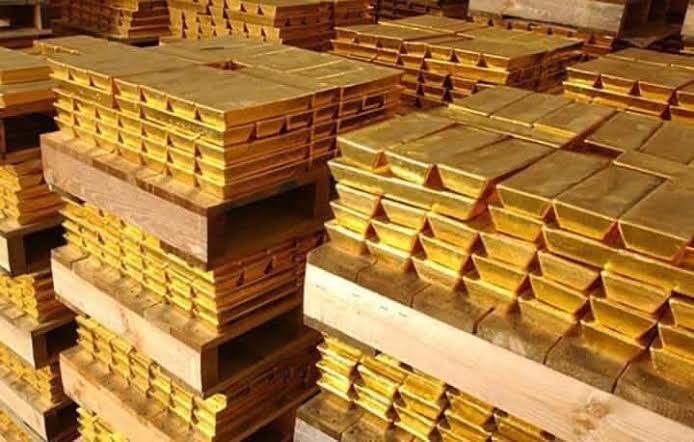
On 10 December 2024, Golden Hand SA handed over 44 gold bars weighing a combined 93.197 kilograms to the government.
The gold was recovered through the processing of mining residues associated with the Essakane operation. The residues had been relinquished to the state following an agreement between the government and the mining company.
According to the Ministry of Energy, Mines and Quarries, the first delivery represented only an initial portion of the material being processed. The government stated that additional residues remained to be treated.
The recovered gold was designated for the national gold reserve, making the delivery an important initial contribution to the country’s physical gold holdings.
The Additional 30.6 Kilograms of Seized Gold
Another documented contribution came from gold seized in connection with illegal gold trading.
Between 2024 and 2025, authorities seized 30.6 kilograms of gold and deposited it with the Public Treasury for the national gold reserve.
This was part of the government’s approach to retaining gold recovered through enforcement activities rather than treating every gold-related fraud case solely through financial settlements.
When combined with the 93.197 kilograms delivered in December 2024, the reported contributions amount to 123.797 kilograms.
These figures demonstrate the initial accumulation of the reserve, although they do not establish the complete quantity currently held by the state.
How Does Burkina Faso Accumulate Gold for Its National Reserve?
The government has identified several mechanisms through which physical gold can be added to the national reserve.
1. Government purchases of gold
The state can purchase gold and transfer it into the national reserve. This provides a direct mechanism for accumulating physical bullion rather than holding all mineral revenues in monetary form.
2. State participation in mining production
Gold received through the state’s share of mining production can contribute to the reserve. This allows the government to retain a portion of gold produced under mining arrangements.
3. Physical dividends
The government can receive dividends in the form of physical gold rather than receiving all returns as cash payments.
4. Gold recovered through enforcement activities
Gold seized in connection with illegal trading and other offences may be deposited into the national reserve, as demonstrated by the documented 30.6-kilogram contribution.
5. Gold recovered from mining residues
Gold extracted from processing residues can also be transferred to the state. The 93.197 kilograms delivered by Golden Hand SA in December 2024 provides a documented example of this mechanism.
Together, these arrangements are intended to create several channels through which Burkina Faso can increase its physical gold holdings.
Why Is Burkina Faso Establishing a National Gold Reserve?
The national gold reserve is intended to give the government greater control over part of the country’s mineral wealth.
Its importance extends beyond the quantity of gold accumulated. The initiative is also connected to national financial policy and the management of strategic assets.
The main objectives include:
- Economic sovereignty: Retaining physical gold gives the state direct ownership of a strategic asset.
- Financial diversification: Gold provides an alternative to holding national wealth exclusively in cash and other financial assets.
- Long-term value preservation: Physical gold is internationally recognised and can serve as a strategic store of value.
- Greater public participation in mineral wealth: The reserve provides a mechanism for retaining some gold generated through the country’s mineral sector.
- Financial flexibility: Government-held gold may provide additional options for managing national assets and responding to economic pressures.
The government has presented the reserve as an instrument of economic and financial sovereignty.
What Is the Difference Between Burkina Faso’s Gold Reserves and Underground Gold Deposits?
The expression gold reserves in Burkina Faso can refer to two different things: gold physically held by the government and gold deposits that remain underground.
These categories should not be confused.
| Category | Meaning |
|---|---|
| National gold reserve | Physical gold accumulated and held by the government |
| Underground mineral reserves | Gold deposits assessed as economically recoverable under defined conditions |
| Mineral resources | Identified gold deposits that may have potential for eventual economic extraction |
| Gold production | Gold extracted during a particular period |
The national gold reserve consists of physical gold that has already been recovered or acquired and transferred into government holdings.
Underground mineral reserves, on the other hand, are geological assets that have not yet been extracted. They are assessed separately through technical and economic evaluations.
This distinction explains why the 123.797 kilograms of publicly documented national reserve contributions cannot be used to represent all the gold available in Burkina Faso.
It also explains why figures published by mining companies about their individual mineral reserves should not automatically be added together and described as the government’s physical gold holdings.
Is Burkina Faso’s National Gold Reserve Increasing?
The government’s published initiatives indicate that the reserve is intended to grow through several accumulation mechanisms.
The first reported delivery of 93.197 kilograms in December 2024 was followed by the reported deposit of 30.6 kilograms of seized gold during 2024–2025.
The government has also identified gold purchases, state production shares, physical dividends and recovered gold as potential sources of additional contributions.
However, the existence of these mechanisms does not establish how much additional gold has actually been transferred into the reserve. A reliable assessment of growth requires dated government disclosures confirming new deposits and the total quantity held.
For this reason, readers should distinguish between announced plans to increase the reserve and confirmed gold contributions.
What Is the Future of Gold Reserves in Burkina Faso?
The future size of Burkina Faso’s national gold reserve will depend on how effectively the government implements its accumulation framework.
The main factors include the quantity of gold acquired through government purchases, the physical gold received through state participation, the value of recovered gold and the publication of transparent reserve information.
Regular reporting would make it easier to establish the total quantity held, identify new contributions and assess how quickly the reserve is growing.
For investors and researchers following the country’s gold sector, the most useful information will be official announcements that distinguish between planned contributions, actual deposits and the verified balance of physical gold held by the state.
FAQs About Gold Reserves in Burkina Faso
How much gold does Burkina Faso have in its national gold reserve?
Publicly documented contributions from 2024 to 2025 total approximately 123.797 kilograms. This consists of 93.197 kilograms recovered from mining residues and 30.6 kilograms of seized gold deposited with the Treasury. The figure is not a confirmed complete current reserve balance.
When did Burkina Faso establish its national gold reserve?
The national gold reserve was introduced under the Mining Code adopted on 18 July 2024, Law No. 016-2024/ALT. The government subsequently advanced the regulatory framework for its operation in December 2024.
Who contributed the first gold to Burkina Faso’s national reserve?
Golden Hand SA delivered 44 gold bars weighing 93.197 kilograms to the government on 10 December 2024. The gold came from the processing of mining residues associated with the Essakane operation.
How much seized gold has been added to Burkina Faso’s national gold reserve?
Government information published in 2025 reported that 30.6 kilograms of gold seized between 2024 and 2025 had been deposited with the Public Treasury for the national reserve.
How does Burkina Faso plan to increase its gold reserves?
The government has identified gold purchases, state participation in mining production, physical dividends, gold recovered from mining residues and seized gold as mechanisms for accumulating additional physical holdings.
Does Burkina Faso have underground gold reserves?
Yes. The country has gold deposits that are assessed through mineral exploration and technical studies. However, underground mineral reserves are different from the physical gold held in the government’s national reserve.
Is Burkina Faso’s national gold reserve the same as its annual gold production?
No. Annual production measures the gold extracted during a particular year. The national gold reserve represents physical gold accumulated and retained by the government. Not all gold produced in the country is automatically transferred into the national reserve.
Why is Burkina Faso keeping physical gold?
The government regards physical gold as a strategic national asset that can support economic sovereignty, diversify national holdings and provide greater flexibility in financial management.
Conclusion: Understanding Burkina Faso’s National Gold Reserve
Burkina Faso began establishing its national gold reserve under the Mining Code of July 2024, with publicly documented contributions reaching approximately 123.797 kilograms during 2024–2025.
The initial 93.197 kilograms recovered from mining residues and the additional 30.6 kilograms of seized gold demonstrate how the government has started accumulating physical gold for national purposes.
However, these contributions should not be presented as the complete current reserve balance. The country’s national gold holdings can only be established accurately through updated government reporting that confirms subsequent deposits, purchases and the total quantity held.
The most important distinction is between the physical gold retained by the state and the gold deposits that remain underground. Both are important measures of the country’s gold wealth, but they represent different forms of reserves.