FAQs About Buying Gold in Ghana: Prices, Dealers & Safe Buying
Find answers to the most common FAQs about buying gold in Ghana. Learn about gold prices, export procedures, legal requirements, trusted suppliers, payment methods, documentation, and important tips for safely purchasing gold from Ghana in 2026.
Ghana is Africa’s largest gold producer and the world’s sixth largest, responsible for over 140 metric tonnes of gold output in 2024 and gold export revenues that reached an all-time high of approximately $21 billion in 2025.
For international investors, refineries, jewellers, and individual buyers seeking to purchase gold from Ghana, 2026 is a pivotal year — the Ghana Gold Board Act (Act 1140) of 2025 has fundamentally restructured how gold can be bought, sold, and exported from the country, introducing a new regulatory body, new licensing requirements, and a new compliance framework that every buyer must understand before approaching any Ghanaian gold market participant.
This FAQ guide answers the most important questions about buying gold in Ghana in 2026 — from the basics of the new regulatory system to prices, purity standards, documentation, and the rights and obligations of foreign buyers under the current legal framework.
Common FAQs About Buying Gold in Ghana;
-
Who Regulates Gold Buying and Selling in Ghana in 2026?
The Ghana Gold Board — universally known as GoldBod — is the sole regulatory and commercial authority for gold buying, selling, assaying, and exporting in Ghana as of 2026. GoldBod was established under the Ghana Gold Board Act (Act 1140), which was adopted on 2 April 2025, and came into full operational effect on 1 May 2025.
GoldBod replaced the Precious Minerals Marketing Corporation (PMMC) and all previous licensing arrangements as the exclusive body overseeing Ghana’s artisanal and small-scale mining (ASM) gold sector. In 2025 alone, GoldBod mobilised over $10 billion in gold exports from the ASM segment — revenues that previously leaked through informal and semi-regulated channels.
The Board centrally controls the entire ASM gold value chain: buying from licensed aggregators and miners, assaying to confirm purity and weight, pricing at the Bank of Ghana Reference Rate, and issuing export authorisation for every shipment leaving Ghana.
As of February 2026, GoldBod suspended new applications for Tier 1 and Tier 2 buying licences as part of a broader strategy to modernise the licensing framework, enhance transparency, and strengthen regulatory compliance.
Applications for the Aggregator Licence remained open during this review period. All applications submitted before the suspension announcement continue to be processed under the existing framework.
-
Can Foreigners Buy Gold in Ghana in 2026?
Yes — but with significant restrictions that represent a fundamental change from the pre-2025 system. Under the Ghana Gold Board Act 2025, licences to purchase and deal in gold — including activities such as grading, fabricating, and trading — may be granted exclusively to Ghanaian citizens and wholly Ghanaian-owned companies. This means that foreign nationals and foreign-owned companies cannot hold a domestic gold purchasing licence in Ghana.
Foreign buyers who wish to access Ghanaian gold have three legal pathways under the GoldBod framework. First, they can apply to GoldBod directly to purchase gold as an off-taker — buying directly from GoldBod’s certified pool at the Bank of Ghana Reference Rate price.
Second, they can form a joint venture or commercial partnership with a Ghanaian-licensed aggregator who holds a valid GoldBod licence, routing purchases through that Ghanaian entity.
Third, foreign companies that previously held PMMC or ministerial licences may apply to GoldBod for reauthorisation to continue purchasing and exporting gold under the transitional provisions of the Act.
Any foreign national or entity found dealing in Ghanaian gold outside the GoldBod framework after 30 April 2025 is committing a criminal offence under Ghanaian law.
The penalty exposure includes criminal prosecution, fines, asset confiscation, and deportation for foreign nationals. The enforcement of this provision is active and serious.

-
What Is the Current Gold Price in Ghana in 2026?
All gold purchases within Ghana must now be made in Ghanaian cedis (GHS), with prices based on the Bank of Ghana Reference Rate — accessible at www.bog.gov.gh.
The USD equivalent of Ghana’s gold price tracks the live LBMA spot price with a modest premium reflecting GoldBod’s regulatory overhead and the cedi conversion rate.
As of June 2026, the LBMA gold spot price is approximately $4,457 per troy ounce ($143.30 per gram for 24K gold). At the current USD-to-GHS exchange rate, this translates to approximately GHS 67,000 per troy ounce for investment-grade 24K gold purchased through GoldBod’s official channels.
Artisanal gold dust from Ghana — which typically assays at 90 to 95 percent purity — is priced at a discount to 24K spot reflecting the refining cost required to bring it to investment-grade specification.
The surge in gold prices in late 2024 and throughout 2025 boosted Ghana’s export receipts significantly and strengthened the country’s external financial position.
International reserves reached approximately six months of import cover by early 2026 — a direct result of GoldBod’s centralised control over gold export revenues that previously leaked through informal channels.
-
What Types of Gold Are Available for Purchase in Ghana?
Ghana produces gold in several forms that are accessible to buyers at different stages of the production and refining chain.
Gold doré bars are the semi-refined bars produced at large-scale mine sites — a mixture of gold and silver, typically 60 to 90 percent gold content, produced through the smelting of gold-bearing ore.
Doré from Ghana’s industrial mines — including the Obuasi, Ahafo, and Akyem operations — is exported directly by the producing companies under their existing large-scale mining licences, which remain valid under the GoldBod transitional provisions.
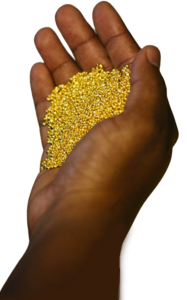
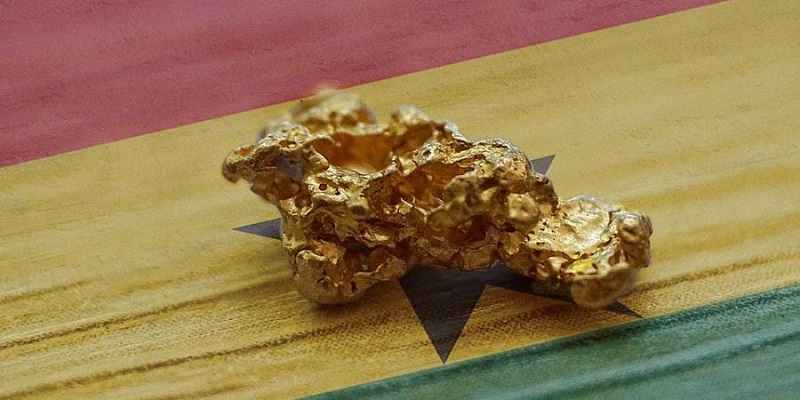
Artisanal gold dust and nuggets from Ghana’s ASM sector are the primary products channelled through GoldBod. Artisanal gold dust assays typically at 90 to 95 percent purity and is available through GoldBod’s buying centres distributed across the major ASM production regions including Obuasi, Bibiani, Bogoso, and Tarkwa. This material is available to foreign off-takers who have applied to purchase directly from GoldBod.
Refined investment gold bars from Ghanaian refineries certified to international standards — including LBMA-recognised facilities — are available for institutional buyers who require investment-grade documentation (999.9 fineness, serial numbers, assay certificates).
Ghana’s Precious Minerals Marketing Corporation historically refined and certified gold for international buyers; under the GoldBod framework, certified refinery output continues to be accessible through the Board’s commercial channels.
Gold jewellery is available from Ghanaian jewellers and craft manufacturers in Accra, Kumasi, and other urban centres. Gold jewellery is distinct from investment gold in terms of regulatory treatment — retail jewellery sales to individuals are less tightly controlled by GoldBod than commercial gold trading — but buyers should note that the purity of Ghanaian gold jewellery varies significantly and independent assay verification is recommended for any significant purchase.
-
What Documentation Is Required to Buy Gold in Ghana?
The documentation required to buy gold in Ghana in 2026 depends on the buyer’s status and the quantity and form of gold being purchased.
For foreign buyers purchasing directly from GoldBod as registered off-takers, the documentation package includes a formal application to GoldBod identifying the buyer entity, proof of business registration and beneficial ownership, AML and KYC compliance documentation from the buyer’s home jurisdiction, a certified copy of the commercial agreement or purchase order, and confirmation of the Bank of Ghana Reference Rate pricing basis for the specific transaction.
For export of gold purchased through GoldBod, the exporting entity must provide a GoldBod export licence or confirmation of off-taker status, a GoldBod assay certificate confirming the gold’s weight and purity, a certificate of origin, a commercial invoice, a customs export declaration, and proof of royalty payment.
The royalty rate on gold exported from Ghana is 5 percent ad valorem on the gold’s value, potentially rising to higher rates under ongoing reform proposals. Export levies of 1 to 3 percent apply for administrative costs. Ghana abolished withholding tax on unprocessed gold in 2025.
Ghana gold exports take an average of 7 to 14 days to complete from the point of GoldBod purchase confirmation to physical export clearance — a timeline shaped in part by the 14 to 21 day approval period for gold acquisitions that the GoldBod Act introduced, which has been a source of supply chain friction for buyers accustomed to faster pre-2025 processes.
-
Is It Safe to Buy Gold in Ghana? How Do I Verify Quality?
Buying gold in Ghana through the formal GoldBod-regulated channel is as safe as buying gold through any licensed precious metals authority anywhere in the world. The risk is not in the country or the product — it is in the counterparty.
The Ghanaian gold market has historically attracted significant fraud activity in informal and semi-regulated channels, where buyers are presented with false documentation, adulterated gold, or simply non-existent gold in advance-payment scams targeting international buyers.
The gold itself — when purchased through GoldBod’s official buying centres or through a GoldBod-licensed Ghanaian aggregator — is genuine, assayed, and certified to the stated purity.
GoldBod’s assay certification is the authoritative document confirming gold quality and is the document that international refineries, customs authorities, and institutional buyers accept.
Do not accept any gold purchase from a Ghanaian counterparty that cannot produce a current, valid GoldBod assay certificate for the specific consignment.
Independent third-party assay from internationally recognised laboratories — SGS, Bureau Veritas, or Intertek — is additionally recommended for any gold purchase above $50,000 in value. XRF (X-ray fluorescence) testing at the point of purchase provides a rapid preliminary purity assessment accurate to within 0.1 percent.
Fire assay testing — the gold standard for precise fineness determination — should be conducted at a GNAS or ILAC-accredited laboratory. Both methods are available in Accra through licensed assay houses.
Payment should always be made by SWIFT wire transfer to a verified GoldBod-registered corporate account. Any request for cash payment, cryptocurrency, Western Union transfer, or informal payment channel is a red flag for fraud. Document every step of the transaction for AML compliance and for your own legal protection.
-
What Are the AML and KYC Requirements for Buying Gold in Ghana?
Anti-money laundering and Know Your Customer compliance requirements apply to all gold transactions in Ghana in 2026, from both the seller’s and the buyer’s side.
GoldBod’s framework explicitly aligns Ghana’s gold trade with global AML and compliance standards — a stated objective of the Ghana Gold Board Act 2025.
For international buyers, this means maintaining complete documentation of the transaction chain from the point of GoldBod purchase through to delivery at the destination country.
The U.S. Africa Gold Advisory — an interagency intelligence assessment — specifically identifies Ghanaian ASM gold as a potential conduit for illicit financial flows and recommends enhanced due diligence for all African ASM gold supply chains.
EU buyers subject to the EU Conflict Minerals Regulation must confirm that Ghanaian gold meets responsible sourcing documentation requirements, though Ghana itself is not classified as a conflict-affected area.
Buyers who are U.S. persons importing Ghanaian gold commercially must comply with FinCEN reporting requirements, file FinCEN 105 forms for monetary instrument imports above $10,000, and maintain AML programme documentation as required under the Patriot Act for entities engaged in precious metals dealing. OFAC screening of all Ghanaian counterparties against the Specially Designated Nationals list is required before any payment is released.
-
How Much Gold Does Ghana Produce and Why Does It Matter for Buyers?
Ghana produced over 140 metric tonnes of gold in 2024, making it Africa’s largest gold producer and the world’s sixth largest. Its gold production comes from two distinct sectors: large-scale industrial mining operations run by multinationals including AngloGold Ashanti, Gold Fields, Newmont Ahafo, and Kinross Chirano; and the artisanal and small-scale mining sector, which accounts for approximately one-third of total production, employs around 1 million people directly and supports 4.5 million indirectly, and generates approximately $5 billion annually.
For international buyers, Ghana’s production scale matters because it creates a reliable, continuous supply of gold across multiple quality grades and product formats.
The large-scale mining sector produces consistent, LBMA-grade doré that enters international markets through established refinery relationships. The ASM sector produces the artisanal dust and doré that GoldBod now controls, and whose supply — at competitive premiums to spot — is the primary commercial opportunity for buyers who register as GoldBod off-takers.
Ghana’s gold also benefits from strong geological diversity. The Birimian greenstone belt that underlies most of Ghana’s gold-producing regions is one of the world’s most prolific gold-bearing geological systems, with deposits ranging from shallow alluvial gold accessible to artisanal miners to the deep underground hard-rock ore bodies that sustain industrial mining operations with multi-decade mine lives.
-
What Are the Taxes and Royalties on Gold Purchased in Ghana?
Gold purchased and exported from Ghana is subject to the following fiscal obligations in 2026. A 5 percent royalty is payable ad valorem on the gold’s value at the point of export — potentially rising to higher rates under ongoing government reform proposals that were under active discussion as of early 2026.
Export levies of 1 to 3 percent apply for administrative processing costs. Ghana abolished withholding tax on unprocessed gold in 2025, removing a previous disincentive to formal export. Corporate income tax applies to the profits of Ghanaian gold trading entities at the standard rate.
For buyers importing Ghana gold into the United States, no specific import licence is required, but gold bars classified under HTS 7108.12 as non-monetary gold may attract duties of up to 4.1 percent.
Monetary gold (HTS 7108.20) is duty-free. FinCEN 105 reporting applies for monetary instrument imports above $10,000. For buyers importing into the EU, Ghana gold is generally free of EU import duties on raw gold under the GSP arrangements, though full documentation of origin and GoldBod certification is required for customs clearance.
-
How Do I Start the Process of Buying Gold from Ghana as a Foreign Buyer?
The process for a foreign buyer to legally purchase gold from Ghana in 2026 begins with a formal approach to GoldBod — the Ghana Gold Board — either directly or through a licensed Ghanaian intermediary company that holds a valid GoldBod aggregator licence.
The recommended steps are as follows. First, prepare your corporate documentation — certificate of incorporation, beneficial ownership declaration, AML compliance programme summary, and bank reference letters — in the format required for GoldBod registration as a foreign off-taker.
Second, submit your off-taker application to GoldBod’s Licensing and Regulations Office in Accra, either physically or through the online application platform at GoldBod’s official portal.
Third, upon registration confirmation, agree the commercial terms with GoldBod including the Bank of Ghana Reference Rate pricing basis, the quantity, the gold form (dust, doré, or refined bar), and the delivery logistics.
Fourth, arrange independent assay verification and insured logistics through a licensed precious metals carrier. Fifth, execute payment via SWIFT to the GoldBod-designated account and receive your assay certificate, certificate of origin, and export documentation.
Buyers who prefer to work through a Ghanaian licensed intermediary rather than applying directly to GoldBod should conduct thorough due diligence on any Ghanaian company claiming GoldBod-licensed aggregator status — verify their current licence directly with GoldBod before signing any commercial agreement or making any payment. The GoldBod licensing database is accessible through the Board’s official communications channels.
Ghana’s gold market in 2026 is more regulated, more transparent, and more traceable than at any point in its history. For buyers who engage with it correctly — through GoldBod’s framework, with proper documentation, and through verified Ghanaian licensed entities — it remains one of the most productive and most reliable African gold sourcing environments available.