FAQs About Buying Gold in South Africa: The Complete 2026 Guide
South Africa occupies a singular position in the global gold market. For most of the twentieth century it was the world’s largest gold producer — a title it has since ceded to China and Australia as its deep underground ore bodies have aged — but it remains one of the world’s most institutionally sophisticated gold markets, home to the Rand Refinery which is one of the largest and most LBMA-credentialed gold refineries on earth, and the source of the Krugerrand gold coin which is the world’s most widely traded gold bullion coin by volume.
In 2026, with the gold price trading at approximately $4,457 per troy ounce, South Africa’s gold export infrastructure represents one of the most reliable, most documented, and most internationally recognised precious metals supply chains available to any buyer anywhere in the world.
Understanding how to buy gold from South Africa — the regulatory bodies involved, the licences required, the documentation that must accompany every export, the exchange control rules that govern payment, and the rights and obligations of international buyers under South African law — is essential for anyone approaching this market. This FAQ guide answers every significant question about buying gold in South Africa in 2026.
Answers t0 FAQs About Buying Gold in South Africa;
-
Who Regulates Gold Buying and Selling in South Africa in 2026?
South Africa gold sector operates under a multi-agency regulatory framework that is one of the most comprehensive and most rigorously enforced precious metals oversight systems in the world. Five principal bodies exercise authority over different dimensions of gold buying, selling, refining, and exporting.
The South African Reserve Bank (SARB) is the central monetary authority with jurisdiction over foreign exchange controls governing all gold transactions. Section B.20(c) of the Currency and Exchanges Manual for Authorised Dealers (CEMAD) sets out the specific requirements for gold export proceeds: the full value of gold exports must be repatriated to South Africa in foreign currency or South African Rand from a non-resident Rand account or a vostro account held in the books of an Authorised Dealer.
The SARB’s Financial Surveillance Department monitors compliance with these repatriation requirements and issues foreign exchange approvals for gold export transactions.
The South African Diamond and Precious Metals Regulator (SADPMR) issues the licences that authorise all dealings in gold — buying, selling, processing, refining, and exporting.
Under the Precious Metals Act 2005, no individual or entity may acquire, possess, process, or export gold without a SADPMR-issued licence or specific SADPMR approval.
The SADPMR is the primary licensing gatekeeper for all South African gold transactions and is the body to which manufacturing jewellers, dentists, industrial users, dealers, and exporters must apply for authorisation.
The South African Revenue Service (SARS) governs customs and excise procedures for all goods leaving South Africa, including gold.
Every South Africa gold export requires submission of the Single Administrative Document (SAD 500) to SARS, and SARS issues the Customs Export Release Order that physically authorises a gold shipment to depart South Africa. SARS also administers any applicable export taxes and royalties on gold.
The Department of Mineral Resources and Energy (DMRE) enforces the Mineral and Petroleum Resources Development Act (MPRDA) governing all mining operations in South Africa, including gold mining. The DMRE regulates who can mine, how mining must be conducted, and what environmental and social obligations apply to all mineral extraction activities.
The Rand Refinery while not a regulatory body, functions as the institutional cornerstone of South Africa’s gold export supply chain. LBMA Good Delivery accredited and operating since 1920, Rand Refinery refines the doré produced by South Africa’s major gold mines to investment-grade 999.9 fineness, stamps and serialises bars, and issues the assay certificates that the international gold market accepts as the definitive certification of South African gold quality.
Manufacturing jewellers and trade buyers who obtain SADPMR approval are entitled to approach Rand Refinery Limited for an allocation of gold.
-
Can Foreigners Buy Gold in South Africa?
Yes — foreigners can legally buy gold in South Africa, but the transaction is subject to a regulatory framework that distinguishes between different categories of buyer, different purposes of purchase, and different gold product formats.
The regulatory requirements are more demanding than many buyers expect, and navigating them correctly requires either direct engagement with South Africa’s SADPMR-licensing system or purchasing through a South African entity that already holds the necessary licences.
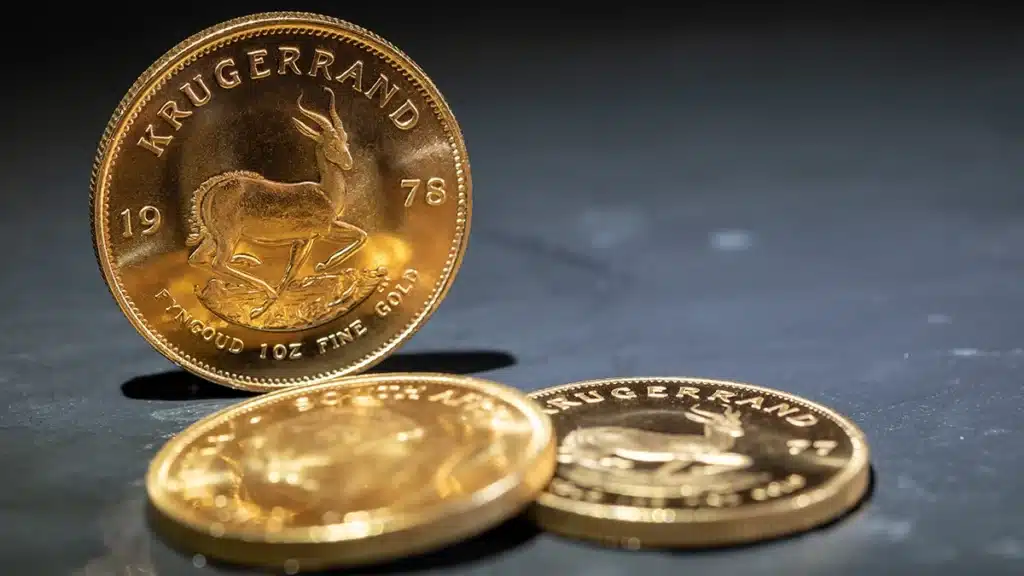
For individual investors and travellers, the most accessible format for purchasing South African gold is the Krugerrand. Non-residents may export up to 15 Krugerrand coins or the equivalent in fractional Krugerrands without triggering the most complex layers of the SARB exchange control regime.
The Krugerrand is legal tender in South Africa, contains exactly one troy ounce of gold (22 karat, 91.67% pure), and is the world’s most liquid gold bullion coin — accepted by dealers, banks, and refineries on every continent.
For commercial gold purchases — bars, doré, refined bullion in commercial quantities — the acquisition of gold for legitimate trade purposes is subject to SADPMR approval.
Once approval is granted, a permit must be obtained from SARS. This permit will entitle the permit holder to approach Rand Refinery Limited for an allocation of gold. Exchange control regulations also apply to the acquisition of gold for trade purposes.
Foreign businesses that acquire gold must ensure that they comply with SARB’s foreign exchange requirements and maintain detailed records of all gold transactions, including the date, value, and source.
Foreign companies wishing to engage in regular commercial gold buying from South Africa typically structure their purchasing through a South African-registered entity holding the relevant SADPMR precious metals dealing licence, with all payments routed through an SARB-authorised dealer bank that handles the foreign exchange compliance dimension of the transaction.
-
What Is the Current Gold Price in South Africa in 2026?
South Africa’s domestic gold pricing tracks the international LBMA spot price, converted into South African Rand at the prevailing USD/ZAR exchange rate — a rate that introduces significant volatility into ZAR-denominated gold prices due to the Rand’s historical sensitivity to global risk appetite, commodity price movements, and domestic South African economic conditions.
As of June 2026, the LBMA gold spot price is approximately $4,457 per troy ounce ($143.30 per gram for 24K gold). At a USD/ZAR exchange rate of approximately 18.5 to 19 Rand per dollar, this translates to approximately 83,000 to 85,000 ZAR per troy ounce for investment-grade 24K gold.
The base spot rate for 24K gold as quoted by South African bullion dealers is approximately 1,290 ZAR per gram, equivalent to approximately USD $68 to $70 per gram at the current exchange rate.
Standard dealer premiums above spot range from 3 to 8 percent depending on product format, quantity, and the specific dealer relationship.
For comparison, buying larger units provides better per-gram pricing: bars of 50 grams and above typically carry lower per-gram premiums than smaller formats. Many dealers offer discounts for orders above ZAR 200,000. Monitoring exchange rates matters significantly for international buyers — a stronger rand versus the USD reduces the effective ZAR cost of gold for rand-funded buyers, while a weaker rand increases the ZAR cost of gold priced against USD spot.
South Africa’s gold market prices differ from the global LBMA spot in several specific ways. The Krugerrand premium over spot gold content reflects the coin’s numismatic recognition and global liquidity and typically trades at 3 to 6 percent above its contained gold melt value. Investment bars from Rand Refinery trade at 1 to 3 percent above spot for standard sizes, with premiums narrowing as bar weight increases.
-
What Types of Gold Products Are Available to Buy in South Africa?
South Africa offers one of the widest ranges of gold product formats of any producing country in the world, reflecting both the sophistication of its refinery infrastructure and the deep history of its gold market.
Krugerrand gold coins are South Africa’s most internationally recognised gold product and the world’s most widely traded gold bullion coin. Introduced in 1967, the Krugerrand contains exactly one troy ounce of gold in a 22-karat alloy (91.67% gold, 8.33% copper) that gives the coin its distinctive deep gold colour and greater durability than pure 24K coins.
Fractional Krugerrands are available in half-ounce, quarter-ounce, and tenth-ounce denominations. The Krugerrand is legal tender in South Africa and is accepted by bullion dealers worldwide. For non-resident buyers, up to 15 Krugerrands may be exported without triggering complex SARB approval requirements.
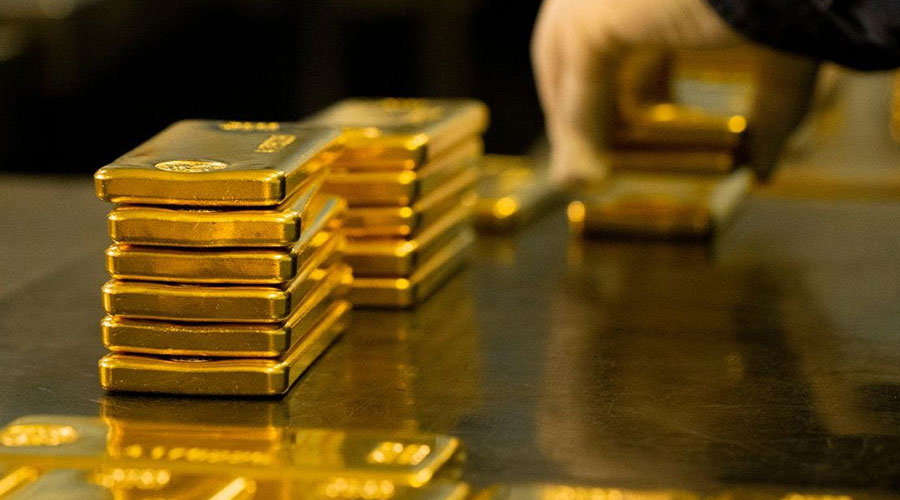
Rand Refinery gold bars are available in standard international weights from 1 gram to 400 troy ounces (the LBMA Good Delivery standard). Rand Refinery is one of the world’s largest and most LBMA-credentialed gold refineries, producing bars to 999.9 fineness (24K) with serial numbers, hallmarks, and assay certificates that are accepted by commodity exchanges, central banks, and institutional investors without question.
A standard Rand Refinery 1-kilogram gold bar at 2026 prices is worth approximately $143,296 USD or approximately 2.65 million ZAR.
Gold doré from South Africa’s mining operations is available to licensed buyers who purchase through refineries or directly from mining companies. Doré is the semi-refined gold-silver alloy produced at mine sites — typically 60 to 95 percent gold content — that requires further refinery processing to reach investment-grade specification.
This format is primarily accessed by refineries and institutional buyers with the SADPMR licences required for precious metals dealing.
Gold jewellery from South Africa’s established jewellery manufacturing sector is widely available at retail level without the complex regulatory requirements that govern investment gold and bullion.
South African gold jewellery is typically 9K, 14K, or 18K, reflecting the practical durability requirements of jewellery that will be worn daily.
For buyers purchasing jewellery as a cultural or aesthetic product, retail jewellery stores in Johannesburg, Cape Town, and Durban offer wide selections. For buyers interested in jewellery as an investment, independent assay verification of the declared karat is recommended.
-
What Licences Are Required to Buy and Export Gold from South Africa?
The licensing framework governing gold purchases and exports in South Africa is detailed and multi-layered. Different activities require different licences, and the consequences of dealing in gold without the correct SADPMR authorisation are serious — operating without a licence is a criminal offence under the Precious Metals Act 2005.
Under the Precious Metals Act 2005, SADPMR approval and a SARS permit are required for any commercial acquisition of gold, including by manufacturing jewellers and industrial users.
The SADPMR issues several categories of licence relevant to gold transactions: a Precious Metals Beneficiation Licence for entities that process or refine gold; a Dealer’s Licence for entities that buy and sell investment-grade gold; and specific export permits for each consignment being exported, issued by the SADPMR against the exporting entity’s current licence.
For investment gold purchases — Krugerrands and Rand Refinery bars purchased from authorised South African bullion dealers — individual retail buyers do not personally need to hold SADPMR licences, as the dealer handles the licensed side of the transaction.
The regulatory complexity falls on the dealer, not the retail buyer. Individual buyers are, however, subject to the SARB’s foreign exchange rules on exporting gold and the SARS customs requirements on declaring and clearing gold at departure.
For bulk or commercial gold purchases — quantities above the retail threshold, doré purchases, or regular international commercial transactions — the full SADPMR and SARS licensing requirements apply.
The complete South Africa gold export documentation package includes the SADPMR export permit for the specific consignment, the Precious Metals Beneficiation Licence of the exporting company, the assay certificate from Rand Refinery or another SADPMR-accredited institution confirming purity and weight, the Certificate of Origin, the Commercial Invoice with declared USD value consistent with the assay certificate’s weight and LBMA-derived pricing, the SAD 500 customs declaration form stamped by SARS, the SARB foreign exchange approval from an authorised South African bank, the Customs Export Release Order issued by SARS, and the packing list.
-
How Do South Africa’s Exchange Control Rules Affect Gold Buyers?
South Africa’s exchange control regime — administered by the SARB’s Financial Surveillance Department under the Currency and Exchanges Manual for Authorised Dealers (CEMAD) — is one of the most significant regulatory dimensions of buying gold from South Africa for international buyers. These controls exist to prevent capital flight, maintain South Africa’s foreign exchange reserves, and ensure that the economic benefit of gold exports returns to the South African economy.
The key exchange control requirement for gold exports from South Africa is that the full export proceeds must be received in South Africa in foreign currency or Rand from a Non-resident Rand account in the name of the non-resident, or Rand from a vostro account held in the books of an Authorised Dealer.
This means that when an international buyer purchases gold from South Africa, the payment must flow through the South African banking system in a way that the SARB can trace — ensuring that the value of the gold exported from South Africa is matched by an equivalent foreign currency inflow that strengthens rather than depletes South Africa’s reserves.
Payment of an instalment of the purchase price of gold sold to an Authorised Dealer is permissible and not regarded as an advance against gold — meaning that staggered or instalment payments are legally acceptable under the CEMAD framework, provided each payment is processed through an SARB-authorised dealer bank with appropriate documentation.
Businesses that acquire gold must ensure that they have sufficient foreign exchange reserves to pay for the gold and must keep detailed records of all gold transactions, including the date, value, and source.
For international buyers, the practical implication of the exchange control regime is that all payments for South African gold must be structured as SWIFT wire transfers to verified South African corporate bank accounts held in the name of the licensed gold exporting entity, routed through banks that are SARB-authorised dealers.
Cash payments, cryptocurrency, and informal payment channels are incompatible with the CEMAD requirements and would expose both buyer and seller to SARB enforcement action.
-
What Are the Export Rules for Taking Gold Out of South Africa?
Exporting gold from South Africa is a regulated activity governed by the combined requirements of the SADPMR, SARS, and SARB. The specific rules differ between personal gold (such as Krugerrands purchased as investments or gifts) and commercial gold (bulk bars, doré, or commercial quantities of coins).
For personal Krugerrand exports, non-residents may export up to 15 Krugerrand coins or the equivalent in fractional Krugerrands without requiring the full commercial export licence pathway.
This provision enables individual investors and collectors to purchase Krugerrands in South Africa and take them home as part of a legal personal holding without engaging the full commercial export machinery. The coins must be declared at customs on departure, and the traveller must be able to demonstrate that they were legally purchased from an authorised South African dealer.
For commercial gold exports — any quantity above the 15-Krugerrand personal limit, or any investment bars, doré, or refined gold in commercial quantities — the full export licensing pathway applies.
This requires the SADPMR export permit, the SAD 500 customs declaration stamped by SARS, the SARB foreign exchange approval, the assay certificate from an accredited institution, the certificate of origin, and the commercial invoice. The Customs Export Release Order from SARS is the document that physically authorises the gold to be loaded and transported from South Africa.
Gold should be transported by insured specialist precious metals carriers — Brinks, Malca-Amit, or equivalent — whose armoured logistics infrastructure is designed for the specific security, documentation, and insurance requirements of gold shipments. Standard courier services and personal baggage handling are inappropriate for any commercial gold quantity.
-
What Is the Rand Refinery and Why Does It Matter for Gold Buyers?
The Rand Refinery is one of the world’s most important gold refineries and the cornerstone of South Africa’s investment-grade gold supply chain. Established in 1920 on the East Rand near Johannesburg, the Rand Refinery has refined more gold than any other single facility in history — processing the output of South Africa’s extraordinary Witwatersrand gold fields through most of the twentieth century and continuing to serve as the primary refinery for South African gold production today.
The Rand Refinery holds LBMA Good Delivery List accreditation — the most internationally recognised certification of gold refinery quality, held by fewer than 80 refineries worldwide and required for gold bars to be accepted by the London Bullion Market Association’s settlement system.
Rand Refinery bars at 999.9 fineness, stamped with serial numbers and the Rand Refinery hallmark, are accepted by commodity exchanges, central banks, institutional investors, and bullion dealers globally without question or discount.
For international buyers of South African gold, Rand Refinery accreditation is the definitive quality assurance marker. Any assay certificate from Rand Refinery, any bar bearing the Rand Refinery stamp, and any doré consignment refined through Rand Refinery carries the institutional credibility of a century-old LBMA-accredited facility whose quality standards are beyond meaningful dispute. Buyers seeking the highest-assurance South African gold should insist on Rand Refinery-certified material.
-
How Do I Verify That a South African Gold Supplier Is Legitimate?
South Africa’s gold market is substantially more formally regulated than many other African gold markets, and the presence of the SADPMR licensing system, SARS customs oversight, and SARB exchange controls means that a properly structured commercial transaction leaves a clear, traceable regulatory footprint.
This formal structure makes verification more straightforward than in markets where informal channels dominate — but it also means that fraud attempts typically involve falsified official documentation rather than simply unverified claims.
Verify SADPMR licensing directly. Any South African company dealing commercially in gold must hold a current, valid SADPMR licence. Contact the SADPMR through the Department of Mineral Resources and Energy’s official channels to confirm that the entity you are dealing with holds a valid licence in the name and registration number they present. A legitimate South African gold dealer will actively facilitate this verification.
Confirm Rand Refinery assay certification. For investment-grade bars, insist on assay certificates issued by Rand Refinery or another SADPMR-accredited assay institution. Verify any assay certificate’s serial number and issuing institution directly rather than relying solely on the document presented.
Use SARB-authorised dealer banks for payment. All commercial gold payments from international buyers to South African sellers must flow through SARB-authorised dealer banks. Verify that the South African bank account to which payment is directed is held in the name of the licensed corporate entity — never pay to a personal account, cryptocurrency wallet, or informal payment channel. Request the bank’s authorised dealer status confirmation if required.
Engage a South African legal adviser. For first transactions or any purchase above USD $50,000, retain a qualified South African attorney with mining law or precious metals regulatory expertise. A legal adviser can verify SADPMR licences directly, review the proposed sales contract under South African law, confirm that the transaction structure is CEMAD-compliant, and provide professional oversight of the full process from commercial agreement through to export clearance.
Use escrow. For new counterparty relationships, structure payment through independent financial escrow held by a licensed South African or international escrow provider. Release payment only on confirmed receipt of SADPMR export permit, SARS SAD 500 approval, and verified assay certification. This payment structure is welcomed by legitimate South African gold exporters and rejected only by fraudulent counterparties.
-
What AML and International Compliance Obligations Apply When Buying South African Gold?
Anti-money laundering compliance obligations apply to all commercial gold transactions between South African exporters and international buyers, operating at multiple levels of the regulatory framework simultaneously.
South Africa is a member of the Financial Action Task Force (FATF) and has undergone mutual evaluation reviews that have assessed the country’s AML framework against international standards.
South African gold exporters are subject to the Financial Intelligence Centre Act (FICA), which requires them to conduct customer due diligence on all counterparties, report suspicious transactions to the Financial Intelligence Centre (FIC), and maintain records of all transactions for prescribed periods.
International buyers purchasing South African gold are effectively counterparties in FICA-governed transactions and must be prepared to provide KYC documentation — proof of identity, business registration, beneficial ownership, and source of funds — as a standard component of the commercial relationship.
For EU buyers importing South African gold, the EU Conflict Minerals Regulation due diligence requirements apply. South Africa itself is not classified as a conflict-affected area, but EU entities importing gold above threshold volumes must maintain OECD Due Diligence Guidance documentation demonstrating responsible sourcing throughout the supply chain.
For gold being exported to EU buyers, additional OECD Due Diligence documentation demonstrating responsible sourcing is required under the EU Conflict Minerals Regulation.
For US buyers importing South African gold commercially, OFAC screening of all South African counterparties against the Specially Designated Nationals list is required, FinCEN 105 reporting applies for monetary instrument imports above $10,000, and the full AML programme documentation requirements of the Bank Secrecy Act and Patriot Act apply to US entities dealing in precious metals.
South African gold is not subject to any US sanctions or import restrictions and can enter the United States without the complications that apply to gold from OFAC-sanctioned countries such as Sudan, Iran, or Cuba.
South Africa’s gold market in 2026 — accessed through SADPMR-licensed dealers, with Rand Refinery-certified product, through SARB-compliant payment channels, and with proper AML documentation — offers international buyers the most institutionally credentialed, most internationally recognised, and most legally transparent African gold sourcing experience available anywhere on the continent.
The regulatory framework is demanding precisely because the product it protects is genuine, documented, and worth protecting.