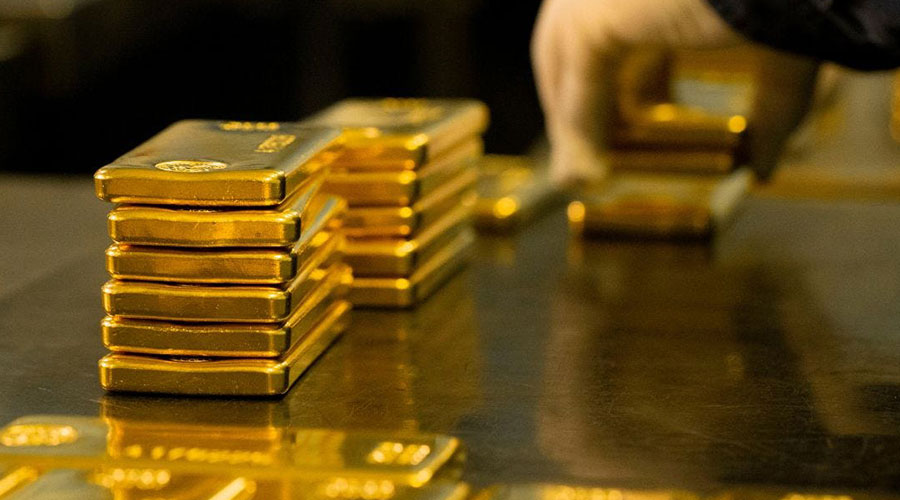
African Gold Bar Prices &Best Gold Bar Supplier to Deal With
Discover African gold bar prices, what affects gold costs, pricing by weight and purity, and how to compare gold bar prices before you buy.
African gold bar prices are primarily based on the international gold spot price, the bar’s weight and purity, refining costs, transportation, insurance, taxes, and supplier premiums.
Because gold trades continuously on global markets, prices shift throughout the trading day — which is exactly why understanding what actually drives a gold bar’s cost matters before you buy.
What Is an African Gold Bar?
An African gold bar refers to gold bullion mined, refined, or sold within an African market — the same underlying product traded globally, just sourced from one of the continent’s producing countries. A few key terms are worth defining clearly before going further:
- Gold bar — a refined, standardized piece of gold shaped for trade, investment, or storage
- Bullion — the broader category covering gold bars, coins, and rounds valued primarily for metal content
- Investment-grade gold — bars meeting a purity threshold (generally 99.5% or higher) recognized by international bullion markets
- Doré bar — semi-refined gold produced at mine sites, typically 70–95% pure, requiring further refining
- Refined gold bar — gold that’s completed the full refining process and meets investment-grade purity standards
- Fine gold (999.9) — the highest standard purity classification, representing 99.99% pure gold
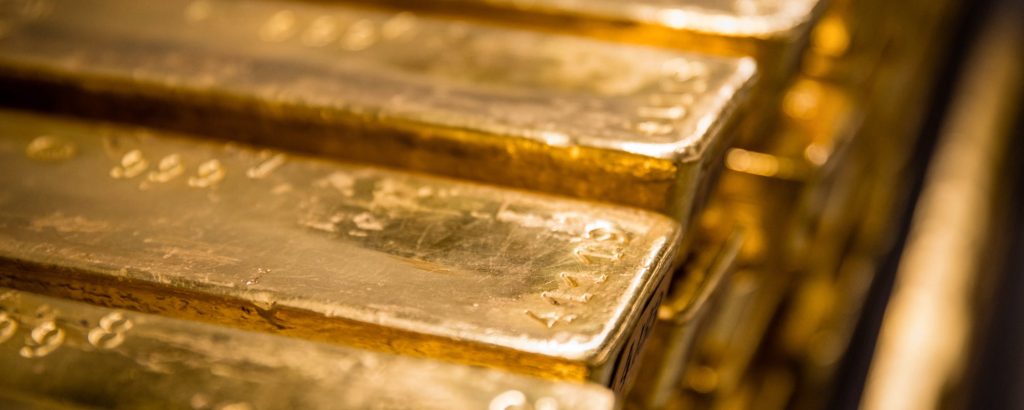
How Are African Gold Bar Prices Determined?
Several distinct factors combine to set the final price of any gold bar, whether it’s sold in Accra, Kampala, or Johannesburg.
International Spot Price
The international spot price is the starting point for every gold bar price calculation — the global benchmark rate per troy ounce, set through continuous trading on major exchanges. Because this price genuinely changes throughout the trading day, any gold bar price quote is only as current as the spot rate it’s calculated against.
Purity
Purity has a direct, proportional effect on price — the higher the fine gold content, the closer a bar trades to full spot value.
| Purity | Description | Typical Use |
|---|---|---|
| 99.99% | Investment-grade | Investors, banks |
| 99.9% | High-purity bullion | Investment |
| 99.5% | Good Delivery standard | Institutional trading |
| Below 99.5% | Usually requires further refining | Industrial or refining use |
Weight
Gold bars come in a wide range of standard weights, each attracting a different type of buyer:
| Weight | Typical Buyers |
|---|---|
| 1 g | Gift buyers |
| 5 g | Small investors |
| 10 g | Retail investors |
| 20 g | Investors |
| 50 g | Investors |
| 100 g | Investors |
| 250 g | Dealers |
| 500 g | Dealers |
| 1 kg | Commercial buyers |
| 400 oz | Institutional markets |
Refinery
Bars produced by internationally recognized, LBMA-accredited refineries often command a higher premium than bars from lesser-known sources, simply because that recognition translates into stronger global liquidity and easier resale — buyers are effectively paying a small premium for reduced verification friction down the line.
Premium
The premium is the amount charged above the raw gold spot value, covering manufacturing costs, distribution, dealer margin, packaging, and certification.
Premiums vary meaningfully by bar size, refinery reputation, and dealer — smaller bars generally carry higher percentage premiums than larger ones, since fixed production costs make up a bigger share of a smaller bar’s total value.

African Countries Selling Gold Bars
| Country | Gold Production | Common Products |
|---|---|---|
| Ghana | Very High | Refined bars, doré |
| Tanzania | High | Gold bars |
| Uganda | Growing | Gold bars |
| South Africa | High | Investment bars |
| Mali | High | Doré bars |
| DRC | High | Doré bars |
| Sudan | High | Gold bars |
| Zambia | Moderate | Gold bars |
Ghana remains Africa’s leading gold producer, with a mature mining sector supporting both refined bars and doré exports through licensed channels. Tanzania and Uganda are both significant East African markets — Uganda’s Kampala gold market in particular has grown steadily as a regional gold trading hub, while Tanzania combines strong industrial output with an active artisanal sector.
South Africa brings deep, long-established mining infrastructure and generally strong regulatory oversight, making it a reliable source for investment-grade bars.
Mali and the DRC both produce substantial volumes, largely moving as doré requiring further refining — buyers sourcing from either market should place extra weight on export documentation and assay verification given the more variable regulatory environments in parts of both countries.
Sudan and Zambia round out the list as smaller but still meaningful gold sources, each requiring the same standard of supplier verification as any other market.
For every one of these markets, export considerations follow a similar pattern: valid mining or trading licenses, export permits from the relevant national authority, and independent assay documentation confirming purity and weight before any gold leaves the country.
African Gold Bar Sizes
Gold bars generally fall into four broad categories:
- Small bars (1g–10g) — favored by gift buyers and first-time investors, though carrying the highest percentage premiums
- Medium bars (20g–100g) — a common choice for retail investors balancing value against liquidity
- Large bars (250g–1kg) — typically bought by dealers and serious individual investors, with lower premiums per gram
- Wholesale bars (400 oz Good Delivery) — reserved almost entirely for institutional markets, central banks, and major bullion dealers, carrying the lowest premium of any category
Gold Purity Explained
Gold purity is expressed in karats, each representing a different share of actual gold content:
- 24K — 99.9%+ pure, the standard for investment-grade bars
- 22K — 91.6% pure, common in higher-end jewelry and some investment pieces
- 18K — 75% pure, widely used in everyday jewelry
- 14K — 58.5% pure, common in more affordable jewelry
Purity affects value in direct proportion — a 22K bar is worth roughly 91.6% of an equivalent-weight 24K bar’s value, and so on down the scale. This is exactly why comparing prices between bars of different purity levels without adjusting for karat is one of the most common — and costly — mistakes buyers make.
Factors That Increase the Price
Several conditions push a gold bar’s price upward: a rising international spot price, higher purity (24K commanding the strongest per-gram value), sourcing from an LBMA-recognized refinery, full certification and documentation, strong buyer demand during periods of economic uncertainty, and the real added costs of transportation and insurance for secure, valuable shipments.
Factors That Lower the Price
Conversely, several factors can bring a gold bar’s price down relative to full investment-grade bars: lower purity levels, doré bars requiring further refining before reaching investment grade, and buying in larger wholesale quantities, which typically reduces the premium charged per ounce. Higher refining costs for less pure starting material can also affect the final price a refiner or dealer is willing to offer.
It’s worth being direct here: legitimate discounts in the gold market are generally modest — a few percentage points, not dramatic markdowns. Any price significantly below the current spot rate for the stated purity should be treated as a serious red flag rather than a bargain.
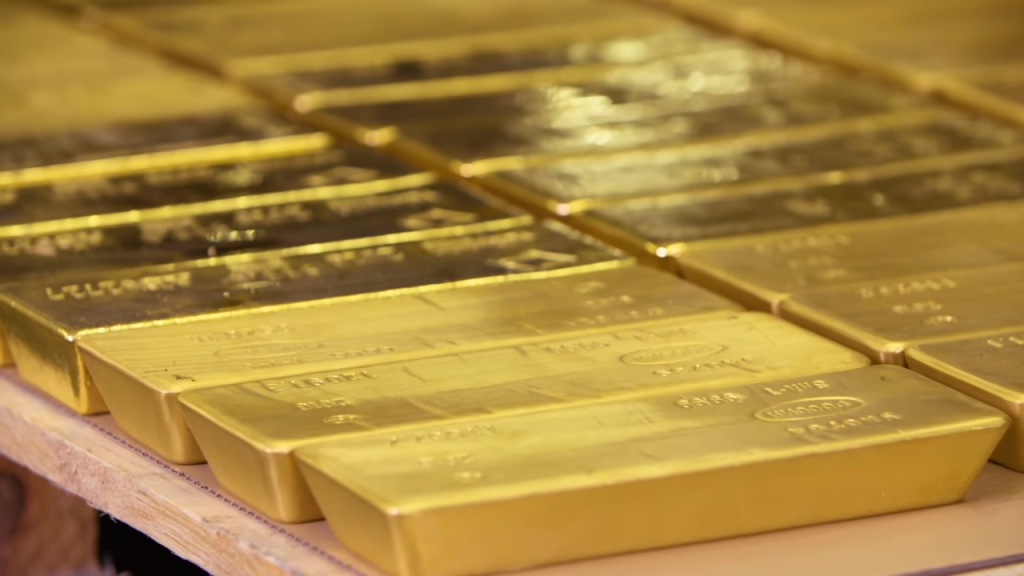
How to Calculate the Price of a Gold Bar
The basic pricing formula behind any gold bar quote looks like this:
Price = Gold spot value + Refining premium + Dealer premium + Shipping + Insurance + Applicable taxes and fees
Breaking that down: start with the bar’s weight multiplied by the current spot price for its purity level. Add a refining premium if the gold required additional processing to reach investment grade. Add the dealer’s margin, which covers their own costs and profit.
Then layer on shipping and insurance for secure delivery, and finally any taxes or fees applicable in your jurisdiction. Every legitimate quote should be traceable back through each of these components — if a dealer can’t explain how their price breaks down, that’s worth treating as a warning sign.
How to Compare Gold Prices Between Sellers
When comparing quotes from different sellers, work through this checklist:
- Compare purity — never compare raw prices without confirming both bars are the same karat
- Compare weight — ensure you’re comparing equivalent quantities, not just similar-sounding prices
- Confirm certification — check that both sellers provide equivalent assay documentation
- Review the refinery — recognized refineries generally justify a modest premium through stronger resale liquidity
- Compare premiums — isolate the premium from the base spot value to see the real cost difference
- Consider shipping costs — a lower headline price can be offset by higher delivery or insurance charges
- Understand payment terms — confirm deposit requirements, payment security, and cancellation policies before committing
Are African Gold Bars Cheaper?
This deserves an honest, direct answer: not inherently, no. Gold is priced from the same international benchmark markets everywhere in the world — the raw metal itself doesn’t cost less in Accra than it does in London or Zurich. Where genuine price differences show up is in premiums, logistics, refining costs, and local taxes, not in the underlying gold value itself.
That said, buying closer to the source can reduce certain intermediary costs — fewer hands the gold passes through before reaching you can mean a lower cumulative premium. But this isn’t universal or guaranteed, and it’s worth being skeptical of any claim that African gold bars are always dramatically cheaper than equivalent bars sourced elsewhere. A properly priced African gold bar reflects the same spot value as anywhere else, with a fair, transparent premium layered on top.
How to Verify the Value of a Gold Bar
Confirming a gold bar’s real value requires checking several things independently, not just trusting a seller’s quoted figure:
- Assay report — independent lab confirmation of purity and weight
- Serial number — matched against the accompanying certificate
- Weight — verified on a calibrated scale, matching the bar’s stamped figure
- Purity — confirmed through XRF testing or full assay, not visual inspection alone
- Independent testing — conducted by a party with no financial stake in the sale
- Reputable refinery — recognized by international bullion markets
- Secure chain of custody — documentation tracing the bar from mine or refinery through to your purchase
Common Pricing Mistakes
A few mistakes account for most cases of buyers overpaying or getting a bad deal:
- Comparing bars with different purity without adjusting for the actual gold content difference
- Ignoring premiums and focusing only on the headline price
- Not checking the refinery behind a bar, missing a key liquidity and trust signal
- Overlooking shipping costs, which can meaningfully change the real total price
- Assuming the lowest quote is automatically the best value, when it may reflect lower purity, missing documentation, or an unlicensed seller
Buying Checklist
Before finalizing any gold bar purchase:
- ☐ Verify the supplier’s licensing and registration
- ☐ Review the independent assay report
- ☐ Confirm the exact purity
- ☐ Check the weight against the stamped figure
- ☐ Review the full pricing formula behind the quote
- ☐ Confirm export documentation, where applicable
- ☐ Arrange insured shipping
- ☐ Understand your destination country’s import requirements
Our full guide on how to buy gold bars from Africa safely walks through each of these steps in greater depth.
FAQs – Africa Gold Bar Prices
How much does a 1 kg gold bar cost? The price depends on the current international spot rate, purity, and dealer premium at the time of purchase — always confirm the live rate rather than relying on a historical figure.
Why do gold bar prices change every day? Because the international spot price moves continuously during trading hours, driven by supply and demand, currency movements, and broader economic conditions.
Are African gold bars priced differently from European bars? Not fundamentally — both track the same global spot price. Differences come down to premiums, logistics, and taxes rather than the underlying gold value itself.
What affects the premium on a gold bar? Bar size, refinery reputation, certification, dealer margin, and shipping/insurance costs all factor into the premium charged above spot value.
Is 24K gold always the most expensive? Per gram, yes — 24K carries the highest gold content and therefore the highest per-gram value, though total price still depends on weight and premium.
How is the value of a gold bar calculated? Weight multiplied by the spot price for its purity level, plus refining costs (if applicable), dealer premium, shipping, insurance, and any applicable taxes.
Are certified gold bars worth more? Certification itself doesn’t add gold content, but it significantly improves liquidity and buyer confidence, which can translate into a modest resale premium.
Does bar size affect the price per gram? Yes — smaller bars generally carry a higher premium per gram than larger bars, since fixed production and certification costs make up a bigger share of a smaller bar’s total value.
What is the difference between a doré bar and a refined gold bar? A doré bar is semi-refined, typically 70–95% pure, and requires further processing, while a refined gold bar has completed the full refining process and meets investment-grade purity (generally 99.5%+).
How can I verify that a quoted price is fair? Break the quote down against the current spot price, confirmed purity, and weight, and compare the resulting premium against typical market rates for that bar size and refinery.
Summary
Gold prices are ultimately based on global market benchmarks — no African market prices gold independently of the international spot rate. Purity and weight remain the two biggest factors determining a specific bar’s value, while premiums vary by refinery reputation, certification, logistics, and individual dealer margin.
The buyers who consistently get the best value are the ones who evaluate the total cost of a purchase — spot value, premium, shipping, insurance, and taxes together — rather than fixating on the lowest headline price alone.
Buy Gold Bars at a Transparent, Verifiable Price
Understanding exactly what drives African gold bar prices puts you in a genuinely stronger negotiating position, whether you’re buying a single 10-gram bar or sourcing gold at wholesale volume.
Every quote should be traceable back to the live spot price, a confirmed purity level, and a clearly explained premium — not an opaque number you’re simply asked to trust.
Buy Gold Bars Africa Ltd prices every transaction transparently against the live international spot rate, backed by full assay certification on 24K gold bars, 22K gold bars, gold ingots, gold nuggets, and gold dust. Contact us today for a transparent, spot-linked quote you can verify at every step.
Related Pages
- 24K Gold Bars
- 22K Gold Bars
- 1 oz Gold Bar
- Gold Ingots for Sale
- Gold Dust & Doré
- Gold Nuggets & Bullion
- Buy Physical Gold Online
- Gold for Sale in Kampala, Uganda
- Where to Buy Gold in South Africa
- Buy Gold in Tanzania
- Buy Gold in Dubai
- South Africa Gold Export Licence
- Shipping Gold to the USA from Africa
- How to Buy Gold Bars from Africa Safely
- Legal Requirements for Buying Gold Bars from Africa
- FAQs
- About Us