
Gold Bar Scams in Uganda and How to Avoid Them
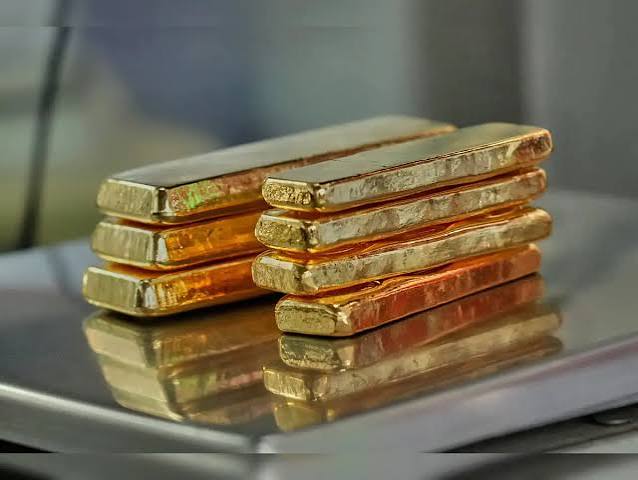
Gold bar scams in Uganda are real, widespread, and have cost international buyers millions of dollars. The most common fraud involves criminals posing as licensed gold dealers or miners who offer genuine-looking gold bars, nuggets, or dust at prices far below market rate — then disappear after receiving payment, deliver fake gold-plated metal, or manipulate buyers through elaborate confidence schemes that can unfold over weeks or months before the victim realises they have been defrauded.
If you are considering buying gold in Uganda, this guide covers every known scam method operating in the country, the psychological tactics fraudsters use, how to verify legitimate dealers, and the exact steps that protect your money when navigating Uganda’s gold market.
Why Uganda Is a High-Risk Environment for Gold Fraud
Uganda sits at the centre of one of Africa’s most active gold trading corridors. Gold flows into the country from its own domestic mining regions — particularly in the Karamoja and Busia areas — and informally from the Democratic Republic of Congo and South Sudan, two countries with significant artisanal gold output but underdeveloped formal export infrastructure.
This combination of genuine gold supply, informal cross-border trade, a large number of unverified dealers, and limited buyer awareness creates the perfect environment for fraud. Kampala’s gold market — centred around Kikuubo and the city centre — attracts both legitimate licensed dealers and sophisticated criminal networks who have refined their deception methods over decades of practice targeting foreign investors, diaspora buyers, and international trading companies.
The Uganda Police Force’s Criminal Investigations Directorate (CID) and Interpol’s East Africa regional office have both documented gold fraud as one of the most financially damaging crimes targeting foreign nationals in Uganda.
Losses reported in individual cases range from tens of thousands to several million US dollars — and those are only the cases that get reported. The majority of gold scam victims never contact authorities, either out of embarrassment, fear of legal complications from their own due diligence failures, or the false belief that recovery is impossible.
Understanding how gold bar scams in Uganda work is the most effective protection available.
The Most Common Operating Gold Bar Scams in Uganda Right Now
The Fake Gold Bar Substitution Scam
This is the single most reported gold fraud method in Uganda and across East Africa. The scam works through a precise sequence designed to build trust before the switch happens.
A buyer — typically a foreign investor, diaspora member, or international trading company representative — makes contact with a seller through email, WhatsApp, a broker, or a referral. The seller presents themselves as a licensed gold exporter with access to gold bars or nuggets from Ugandan or Congolese mines at prices 10–20% below the international spot price.
Initial communication is professional. The seller provides what appear to be credible documents — a gold export licence, assay certificates, company registration papers, and sometimes photographs of gold bars with apparent hallmarks. A sample shipment or in-person meeting is arranged, during which the buyer is shown or even allowed to test what appears to be genuine high-purity gold.
At some point in the transaction — often during packaging, during transport to the shipping point, or when the sealed container is opened at the destination — the genuine gold (if it was ever present) has been replaced with gold-plated tungsten bars, brass ingots coated in gold wash, or lead bars with a thin gold surface.
The substitution is often so precise in weight and appearance that buyers do not detect it until independent laboratory testing is conducted at the destination.
By the time the buyer discovers the fraud, the seller has disappeared, the contact numbers are disconnected, the office address is vacant, and the documents provided were all forgeries.
Protection: Never allow your gold out of your sight once it has been independently tested and verified. Insist on conducting the final weighing and sealing yourself, in the presence of your own representative or a neutral third party, using tamper-evident containers with your own serialised seals.

The Advance Fee Gold Scam (419-Style)
The advance fee gold scam — closely related to the notorious “419” fraud pattern that originated in Nigeria — is one of the most financially devastating gold scams operating in Uganda because it extracts multiple large payments from victims before the final disappearance.
The scam begins with an unsolicited approach — through email, LinkedIn, WhatsApp, or a mutual contact — from someone claiming to represent a gold miner, a mining cooperative, a government official, or a deceased person’s estate with access to large quantities of gold that must be sold urgently and discreetly.
The gold is offered at a dramatic discount to market price — sometimes 30–50% below spot — with an explanation that creates false urgency: the miner needs emergency funds, the gold was seized and needs customs release fees, the seller is avoiding government taxation, or the gold represents an inheritance that must be moved quickly before legal complications arise.
Once the victim expresses interest, a sequence of fee requests begins. Each fee is presented as the final obstacle before the gold can be released: export clearance fees, customs bond payments, anti-money laundering clearance costs, shipping insurance deposits, legal documentation fees, or bribes to government officials. Each time a fee is paid, a new obstacle emerges requiring another payment.
Victims who have already paid several fees are psychologically primed to pay more — the sunk cost fallacy makes it feel more rational to pay one more fee than to accept that all previous payments were stolen. This cycle continues until the victim runs out of money or finally accepts that they have been defrauded.
Protection: No legitimate gold transaction in Uganda requires sequential advance fee payments to overcome a series of obstacles. Legitimate export permits, customs clearance, and assay fees are standard costs with fixed rates, paid once at the appropriate stage of the process — not through multiple emergency payments to the seller’s personal account.
The Fake Laboratory and Assay Certificate Scam
This sophisticated fraud targets buyers who are aware enough to demand assay testing but not experienced enough to know how to verify test results independently.
The scammer arranges what appears to be professional laboratory testing of the gold, either at a fake “assay office” set up specifically for the deception, or by bribing an employee at a legitimate-looking but unaccredited facility.
The buyer is taken to the “laboratory,” watches what appears to be a professional testing process, and receives an official-looking assay certificate confirming the gold is genuine 22K or 24K purity.
The certificate is a forgery. The gold shown during “testing” may be real — but the gold delivered for purchase is not. Alternatively, the entire laboratory setup is theatrical, with actors playing technicians and equipment that performs no actual analysis.
Protection: Only accept assay certificates from Uganda’s Department of Geological Survey and Mines (DGSM) or internationally accredited laboratories — SGS, Bureau Veritas, or Intertek.
Verify certificate numbers directly with the issuing institution before any payment. Better still, arrange for your own independent XRF or fire assay testing at a facility you select and travel to independently, without the seller’s involvement in choosing the lab.
The Gold Dust and Nugget Weight Fraud
This scam specifically targets buyers purchasing raw gold dust or gold nuggets rather than bars, exploiting the difficulty of accurately weighing and assessing purity in uncontrolled field conditions.
The seller presents gold dust or nuggets for sale. When the buyer or their representative weighs and tests a sample, it is genuine high-purity gold. The bulk purchase, however, is adulterated — mixed with fine brass dust, copper powder, or iron filings that are visually indistinguishable from gold dust to the naked eye and that add weight without adding gold content. In some cases, nuggets are hollow or have dense base metal cores coated with a thick gold layer that passes casual inspection.
The buyer pays for the declared weight at the agreed purity, believing they are receiving 22K gold dust. Independent testing at the destination reveals they received a mixture testing at 14K or less — meaning they paid 22K prices for significantly lower gold content.
Protection: Never purchase gold dust or nuggets without XRF testing on multiple samples drawn randomly from across the entire consignment — not just from samples the seller selects. Insist that sampling for testing is conducted by your representative, not the seller’s.
The Corrupt Officials and “Government Clearance” Scam
This scam exploits buyers’ unfamiliarity with Uganda’s actual gold export regulatory process by inventing bureaucratic requirements that do not exist.
A scammer posing as — or working with — a person claiming to be a government official, customs officer, or Bank of Uganda representative approaches a buyer either directly or through an intermediary. They claim that the buyer’s gold shipment has been flagged, held, or requires special clearance that can only be obtained through an unofficial payment to the relevant authority.
Alternatively, the scam begins at the point of purchase: a “fixer” is introduced who claims to have special relationships with government officials that can expedite export licensing, reduce royalties, or bypass standard documentation requirements — for a fee. Once the fee is paid, the fixer disappears and the buyer discovers that no government relationship existed.
Protection: Uganda’s gold export process is managed by the Directorate of Geological Survey and Mines (DGSM) under the Ministry of Energy and Mineral Development. All legitimate fees and royalties have published official rates. Any payment requested outside these official channels, to a personal account, or through an intermediary claiming special government access is fraudulent. Verify all regulatory requirements directly with the DGSM before engaging any intermediary.
The Online Gold Scam — Fake Ugandan Gold Dealers Websites
The digital evolution of Uganda gold fraud has produced hundreds of professionally designed websites, complete with fake company registration numbers, fabricated testimonials, stolen photographs of real gold bars, and convincing contact details — that exist solely to defraud international buyers who cannot conduct in-person due diligence.
These websites rank in Google for terms like “buy gold in Uganda,” “Uganda gold suppliers,” and “gold dealers Kampala,” making them discoverable by exactly the buyers they target. They typically feature stock photos of gold bars and mining operations, claimed certifications from real regulatory bodies (with fabricated licence numbers), WhatsApp contact details that feel accessible and informal, and extremely attractive prices designed to overcome buyer scepticism through greed.
Once a buyer makes contact and expresses interest, the scam proceeds through one of the established fraud patterns above — advance fees, fake assay certificates, or substitute gold delivery.
Protection: Never make a payment to a Ugandan gold dealer you have not independently verified through Uganda’s Directorate of Geological Survey and Mines.
Psychological Tactics Uganda Gold Scammers Use on Buyers
Understanding the psychological manipulation behind Uganda gold scams is as important as understanding the mechanics — because sophisticated fraudsters rely on exploiting human psychology, not just buyer ignorance.
Creating Urgency and Artificial Scarcity
“This gold must move within 48 hours.” “Another buyer is ready to take this if you don’t confirm today.” “The miner needs urgent funds for a family emergency.”
Urgency prevents due diligence. Every legitimate gold transaction in Uganda can wait for proper verification — export permits take days to process, DGSM assay takes time, and no credible seller loses a legitimate sale because the buyer insisted on proper documentation. Any seller who creates time pressure to close a deal before your verification is complete is using urgency as a manipulation tool.
Building False Trust Through Referrals and Social Proof
Many gold scams in Uganda begin through referrals — a trusted friend, business partner, or colleague introduces the buyer to the seller, lending the transaction undeserved credibility.
The referrer may be a willing participant in the fraud, an unwitting victim themselves who genuinely believes the seller is legitimate, or a fabricated identity created to provide the appearance of a trustworthy recommendation.
Fake testimonials on websites, WhatsApp screenshot “reviews” from previous buyers, and claimed relationships with known international companies or government bodies all serve the same function: creating the perception of social proof that reduces the buyer’s critical evaluation.
The Gradual Commitment Escalation
Sophisticated gold scammers in Uganda do not ask for large payments immediately. They begin with small requests — a modest “good faith deposit,” a small fee for documentation preparation — that establish the buyer’s payment behaviour and commitment to the transaction. Once a buyer has made several small payments without incident, they are psychologically committed and much more willing to make the larger payment that represents the actual fraud target.
Exploiting Greed with Below-Market Pricing
The most effective lure in every gold scam is a price that seems too good to be true — because it is. Buyers who are attracted by prices 20–40% below the LBMA spot rate are already in a compromised decision-making state, because the rational part of their mind knows that no sustainable business can offer that discount and remain profitable, yet the emotional pull of an exceptional deal overrides that reasoning.
Legitimate licensed gold dealers in Uganda sell at 2–5% below the international spot price at most, reflecting their lower operating costs and direct mine access. Any offer significantly below that range deserves not excitement but deep suspicion.
How to Verify a Legitimate Gold Dealer in Uganda
Protecting yourself from gold bar scams in Uganda starts with rigorous verification before any money changes hands. Here is the exact process:
Step 1: Verify the Export Licence with DGSM
Uganda’s Directorate of Geological Survey and Mines (DGSM), under the Ministry of Energy and Mineral Development, is the primary licensing authority for gold dealers and exporters. Every legitimate gold exporter in Uganda holds a valid mineral dealer’s licence and export authorisation issued by DGSM.
Contact the DGSM directly — in person at their Entebbe Road offices in Kampala or through official government contact channels — and provide the dealer’s claimed licence number. DGSM can confirm whether the licence is current, what it authorises, and whether the company name matches their records. Do not rely on the dealer to provide this confirmation.
Step 2: Verify Company Registration with URSB
The Uganda Registration Services Bureau (URSB) maintains the official register of all legally incorporated companies in Uganda. Verify the gold dealer’s company registration number through the URSB online portal or at their Kampala offices. A legitimate gold trading company will have verifiable registration with a matching company name, directors, and registration date.
Step 3: Conduct Independent Assay Testing
Before any payment beyond an initial good-faith deposit, insist on independent XRF or fire assay testing at a laboratory you select — not one recommended by the seller.
In Uganda, independent testing can be arranged through the DGSM laboratory or through international accredited testing providers operating in Kampala. For added security, arrange for testing to be conducted in a neutral East African location such as Nairobi.
Step 4: Conduct Physical Due Diligence
Visit the dealer’s registered business address in person. A legitimate gold trading company maintains a physical office, holds client meetings there, and has verifiable staff. An address that turns out to be a residential building, a shared co-working space with no company presence, or simply does not exist is an immediate disqualifier.
Step 5: Verify Banking Relationships
Ask for payment to be made to the company’s business bank account — not to a personal account, a mobile money account, or a third-party agent. Request the bank’s name and branch. A company with a legitimate banking relationship in Uganda is significantly more accountable than one requesting informal payment channels.
Step 6: Use a Letter of Credit or Escrow
For any gold transaction above $10,000, structure payment through a letter of credit issued by a recognised bank or a licensed escrow service. This ensures that your funds are only released when the gold has been delivered, tested, and confirmed — not before. Any seller who refuses LC or escrow arrangements for significant transactions is removing the primary financial protection available to buyers.
Red Flags That Identify a Uganda Gold Scam Before It Costs You Money
Knowing the specific warning signs of gold fraud in Uganda allows you to exit a fraudulent situation before financial loss occurs:
Price more than 5% below LBMA spot: Legitimate Ugandan dealers cannot sustain pricing significantly below international spot after royalties, export taxes, and operating costs. Deep discounts are bait, not bargains.
No verifiable DGSM export licence: A dealer without a current, independently verifiable DGSM licence is operating illegally. No exceptions.
Requests for payment to personal accounts or mobile money: Legitimate gold export businesses receive payment in USD or UGX to corporate bank accounts. Personal mobile money payments are outside the formal AML-compliant transaction framework.
Pressure to complete the transaction before documentation is ready: Documentation should precede payment. Any seller who asks you to pay while paperwork is “in process” is setting up a non-delivery.
Unsolicited approach through email or social media: The majority of serious gold fraud cases in Uganda begin with an unsolicited contact. Legitimate gold dealers build their client base through referrals and established relationships — not cold outreach to strangers on LinkedIn or via bulk email.
Inability to provide physical office address: Legitimate gold trading companies have verifiable offices. A seller who only communicates digitally and cannot provide a physical address you can independently verify and visit is almost certainly not operating a legitimate business.
Multiple sequential fee requests: One export permit fee, one DGSM assay fee, one customs clearance charge — these are legitimate and have fixed published rates. Three, four, or five sequential fee requests, each framed as the final obstacle before gold release, are the signature pattern of advance fee fraud.
Assay certificates from unrecognised or unverifiable laboratories: Only accept assay results from DGSM-accredited laboratories or internationally recognised testing houses. Certificates from organisations you cannot independently identify and contact are worthless.
What to Do If You Have Been Scammed Buying Gold in Uganda
If you have already been defrauded in a Uganda gold scam, acting quickly maximises the limited chance of financial recovery and helps protect other potential victims.
Report to Uganda Police CID Immediately
The Criminal Investigations Directorate (CID) of the Uganda Police Force has a Financial Crimes Unit that specifically handles gold fraud cases. File a formal complaint in person at CID headquarters in Kampala, providing all communication records, documents, payment receipts, and contact details for the individuals involved. The earlier a report is filed, the greater the chance that financial trails can be traced before funds are dispersed.
Contact Your Bank to Attempt Payment Reversal
If payment was made by bank wire transfer within the last 24–72 hours, contact your sending bank immediately and request a payment recall. Wire transfer reversals are possible but time-sensitive — the longer you wait, the more likely the funds have been withdrawn or transferred onward. Provide your bank with all transaction details and the fraud report reference number from Uganda Police.
Report to Interpol East Africa
Interpol maintains a regional bureau in Nairobi with East Africa jurisdiction that coordinates cross-border gold fraud investigations. For fraud cases involving significant sums or cross-border criminal networks — which most organised Uganda gold scams involve — an Interpol report increases the investigative resources applied to the case.
Report to Your Country’s Embassy in Uganda
Most Western, Asian, and Gulf country embassies in Kampala maintain consular services that can assist citizens who have been defrauded. Embassies cannot recover your money directly but can facilitate contact with local authorities, provide guidance on legal representation, and flag the case to bilateral law enforcement cooperation channels.
Consult a Uganda-Based Legal Practitioner
Engage a qualified Ugandan lawyer to advise on civil recovery options, including potential injunctions against identified fraudsters if their assets can be located. The Uganda Law Society can provide referrals to practitioners with commercial fraud experience.
How Legitimate Gold Transactions in Uganda Are Structured
Understanding what a genuine, compliant gold purchase in Uganda looks like is the clearest guide to recognising when a proposed transaction deviates from the legitimate process.
A real licensed gold dealer in Uganda holds a current mineral dealer’s licence from DGSM. They have a verified physical office address, a registered company with URSB, and a corporate bank account in Uganda. When approached by a buyer, they provide their licence number proactively and welcome independent verification.
The buying process starts with a signed Sales and Purchase Agreement covering quantity, purity, price tied to the current LBMA spot rate, payment terms, and delivery timeline. The gold is submitted to DGSM or an accredited laboratory for independent assay before any significant payment is made. Payment is structured through bank transfer or letter of credit — not advance fees or personal accounts.
Export documentation — DGSM export permit, certificate of origin, commercial invoice, assay certificate, and customs declaration — is prepared and verified before the gold moves. The physical shipment is handled by a specialist security logistics company: Brinks, G4S, or Malca-Amit. The buyer receives real-time tracking and delivery confirmation with independent purity verification at the destination.
Every step is documented, verifiable, and consistent with international standards for precious metals trade. Nothing happens in secrecy, and no step requires an unofficial payment to an intermediary.
Frequently Asked Questions: Gold Scams in Uganda
Is it safe to buy gold in Uganda?
Yes — but only through verified, DGSM-licensed dealers following the full legal compliance process. Uganda has legitimate gold suppliers and a functioning export regulatory framework. The risk comes from the large number of fraudulent operators who target buyers who skip verification steps.
How do I know if a Uganda gold dealer is legitimate?
Verify their DGSM mineral dealer’s licence directly with the Directorate of Geological Survey and Mines. Confirm company registration through URSB. Visit their physical office in person. Insist on independent laboratory assay before payment. Any dealer who passes all four checks independently is operating within the legal framework.
What is the most common gold scam in Uganda?
The fake gold substitution scam — where genuine gold is shown during testing but replaced with gold-plated base metal before delivery — is the most frequently reported. The advance fee scam is a close second by financial damage inflicted.
Can I recover money lost in a Uganda gold scam?
Recovery is possible but uncommon. Acting within the first 24–72 hours after discovering the fraud — reporting to Uganda Police CID and requesting a bank wire reversal — gives the best chance. Cases involving identifiable local individuals and traceable bank accounts have the highest recovery rate. Anonymous cash or mobile money transactions are almost never recovered.
Why is gold offered so cheaply in Uganda if it is real?
It is not. Genuine licensed Ugandan gold dealers sell at 2–5% below the international spot price at most. Any offer significantly below that is either adulterated gold, fake gold, or the opening move in an advance fee fraud. The attractive price is the scam’s primary weapon, not a reflection of genuine market conditions.
Are there legitimate gold dealers in Uganda?
Yes. Uganda has a functioning gold trading sector with licensed exporters who supply gold to buyers in Dubai, Europe, Asia, and the Americas through fully compliant processes. The existence of fraud does not mean legitimate supply is unavailable — it means due diligence in selecting your supplier is non-negotiable.
Gold bar scams in Uganda are sophisticated, well-organised, and ruthlessly effective against buyers who approach the market without adequate preparation. The protection is not avoiding Uganda’s gold market — it is understanding exactly how fraud operates, verifying every supplier independently through official government channels, structuring every payment through protected instruments, and insisting on independent testing at every stage of the transaction.
The legitimate gold opportunity in Uganda is real. So is the fraud risk. The difference between buyers who profit and buyers who lose everything comes down entirely to preparation, verification, and the discipline to walk away from any deal that bypasses the standard compliance process — regardless of how attractive the price appears.