Gold Refineries in Hong Kong: Complete Guide to Asia’s Rising Refining Hub (2026)
Gold refineries in Hong Kong are at the centre of one of the most ambitious precious metals infrastructure buildouts in modern Asian financial history.
In 2026, Hong Kong is not merely home to established LBMA-accredited gold refiners — it is actively transforming itself into a complete gold hub, combining refining expansion, a new government-owned clearing system, 2,000-tonne vault capacity targets, and tax incentives to attract new refining operations.
If you are researching gold refining in Hong Kong, evaluating Hong Kong as a destination for your gold, or simply trying to understand how this city fits into the global gold supply chain, this comprehensive guide covers everything.
Hong Kong’s Role in the Global Gold Market — Context for 2026
Before examining individual gold refineries in Hong Kong, it is essential to understand Hong Kong’s unique structural position in the global gold market — a position that makes its refineries far more significant than their relatively small number might suggest.
Hong Kong sits at the intersection of three of the world’s most important gold demand centres: mainland China (the world’s largest single gold consumer at over 1,000 tonnes annually), India (the world’s second-largest consumer), and the broader Southeast Asian gold jewellery and investment market. Gold flowing from African mines, South American producers, and Australian operations into Asian processing and consumption chains moves through Hong Kong’s port, refineries, vaults, and trading infrastructure.
The Chinese Gold and Silver Exchange Society (CGSE) — Hong Kong’s primary gold trading institution, founded in 1910 — has historically been the backbone of Hong Kong’s gold market, operating a physical gold exchange that was among the world’s most significant for much of the 20th century.
Today, the CGSE accredits 14 refineries in Hong Kong for its deliverable gold contracts — the broadest base of refining accreditation in the city.
Simultaneously, Hong Kong hosts two of only 66 globally accredited LBMA Good Delivery List refineries — the international gold standard against which all serious institutional buyers measure their supply chain.
In 2026, a third layer of ambition has been added: Hong Kong’s government announced its International Gold Trading Centre strategy, with Financial Secretary Paul Chan Mo-po committing to expand vault capacity to over 2,000 tonnes within three years, launch a state-owned gold clearing system with trial operations in 2026, and provide tax incentives and site selection assistance to attract additional gold refiners to the city.
LBMA-Accredited Gold Refineries in Hong Kong
The London Bullion Market Association (LBMA) Good Delivery List is the global gold industry’s most demanding quality benchmark. For a refinery to appear on this list, it must have been operational for at least five years, demonstrate refining capacity, pass exhaustive physical and chemical testing of its bars, and meet rigorous financial standing and responsible sourcing requirements. Only 66 gold refineries worldwide hold this status — and Hong Kong currently has two.
1. Heraeus Ltd Hong Kong — LBMA Good Delivery Gold Refiner
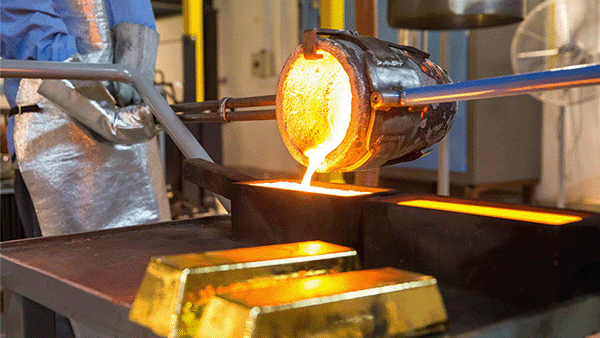
Heraeus Ltd Hong Kong is the Hong Kong operation of the global German precious metals giant Heraeus Group, operating a gold refinery in Fanling in the New Territories — incorporating the former Johnson Matthey refinery complex. Annual gold refining capacity at this plant is 200 tonnes.
Heraeus Hong Kong also operates a separate precious metals trading and marketing operation in Kowloon, combining physical refining with commercial and institutional gold trading services for Asian clients.
Heraeus’s global significance provides the Hong Kong operation with a quality credibility and client trust level that few Asian refineries can match. The Heraeus brand is recognised by every major gold dealer, central bank, and institutional buyer worldwide. Gold bars carrying the Heraeus Hong Kong stamp are accepted as Good Delivery at the LBMA — tradeable without re-assay across the global institutional gold market.
What Heraeus Hong Kong refines: A broad spectrum of gold-bearing materials including mine doré from Asian and international mining operations, industrial gold residues, electronic scrap with gold content, and precious metal recycling streams.
2. Metalor Technologies Hong Kong Ltd — LBMA Good Delivery Gold Refiner
Metalor Technologies Hong Kong Ltd is the Hong Kong operation of Swiss precious metals group Metalor, located in Kwai Chung in the New Territories. Annual gold refining capacity is also 200 tonnes.
Metalor Hong Kong achieved a landmark status upgrade in April 2026, when Metalor Precious Metals Hong Kong Ltd was added to the LBMA’s Silver Good Delivery List, complementing its existing gold Good Delivery accreditation and making it Hong Kong’s only refinery with dual LBMA Good Delivery status for both gold and silver.
Metalor Precious Metals Hong Kong Ltd., part of the global Metalor Group, is a leading precious metals refiner with a long-standing presence in Asia. The Hong Kong refinery supports the region with high-quality refining, advanced assay services, and responsibly sourced production.
It processes a broad range of precious metal-bearing materials, from industrial residues to by-products from electronics and manufacturing, producing gold and silver refined to international standards.
Metalor’s Swiss parent company brings extraordinary credibility — the Metalor brand is one of the most trusted names in global precious metals refining, with its Geneva facility among the world’s most respected gold refineries.
Combined capacity of LBMA Hong Kong gold refineries: 400 tonnes per year of LBMA-standard gold refining capacity — a significant but concentrated foundation for the city’s refining ambitions.
CGSE-Accredited Gold Refineries in Hong Kong
Beyond the two LBMA Good Delivery refiners, the Chinese Gold and Silver Exchange Society (CGSE) has accredited 14 refineries in Hong Kong for its deliverable gold contracts. These CGSE-accredited refineries are locally owned (with the exception of Heraeus) and serve the domestic Hong Kong gold jewellery and retail investment market as well as regional wholesale trade.
The 14 CGSE-accredited gold refineries in Hong Kong are:
- Kaiser Precious Metals Limited
- Po Sang Financial Investment Services Company Limited
- Marigold International Bullion Dealers Limited
- Wing Fung Jeweller International Limited
- King Fook Gold & Jewellery Company Limited
- Wong Sha Company Limited
- Lee Cheong Gold Dealers Limited
- Cheung’s Gold Traders Limited
- First Asia Merchants Bullion Limited
- Tai Fung Goldsmith & Refinery Company Limited
- WZ Gold Group Company Limited
- Acetop Precious Metals Limited
- Sun Yip Hong Gold Dealers Limited
- Upbest Bullion Company Limited
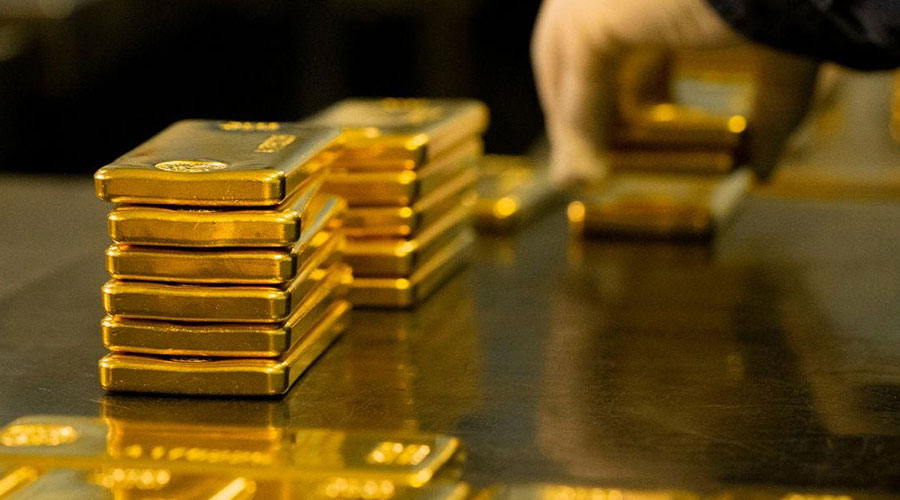
These CGSE-accredited refineries produce 1 kg kilobars and 3 kg kilobars that meet CGSE standards (999.9 fineness), and their bars are accepted for delivery in CGSE’s Hong Kong gold contracts and the RMB gold contract traded through the CGSE.
It is important to note that CGSE accreditation and LBMA Good Delivery status serve different market requirements. LBMA status is required for institutional international trading — central bank reserves, OTC bullion bank transactions, and delivery into global futures contracts. CGSE accreditation serves Hong Kong’s domestic and regional Chinese gold trade, which operates at massive scale but within a different institutional framework.
Hong Kong’s 2026 Gold Refinery Expansion Strategy
The most significant development in Hong Kong’s gold refining sector in 2026 is not what exists today but what the government is actively building for tomorrow.
The International Gold Trading Centre Initiative
Hong Kong’s Financial Services and the Treasury Bureau (FSTB) announced a comprehensive strategy to bolster Hong Kong’s role in gold refining. This includes tax incentives designed to attract refiners, as well as support for achieving LBMA certification through cross-border pacts, and government assistance with site selection for companies looking to establish refining headquarters in Hong Kong.
Early market entrants including MKS PAMP and Point Gold International signal growing industry confidence in Hong Kong as a refining destination. MKS PAMP — the Swiss precious metals group that operates PAMP Suisse, the world’s most recognised private gold refinery — establishing Hong Kong refining operations would represent a transformative addition to the city’s refining credentials.
The Tai Po Refinery — HK$1.17 Billion Investment
The first phase of a gold refinery in Hong Kong’s Tai Po district represents a $150 million (HK$1.17 billion) investment, signalling a comprehensive strategy to build out Hong Kong’s entire gold ecosystem.
This facility — when operational — will add meaningful LBMA-standard refining capacity to Hong Kong’s existing 400-tonne industrial base.
The State-Owned Gold Clearing System
A cornerstone of Hong Kong’s gold hub strategy is the launch of a fully state-owned gold clearing system, with trial operations scheduled for 2026. This system mirrors London’s LBMA infrastructure by allowing participants to settle trades through unallocated accounts — dramatically reducing counterparty risk and transaction costs for institutional participants.
Plans include a substantial expansion of gold storage capacity by 2,000 tonnes within three years, complemented by financial incentives, with the Hong Kong government pledging in its 2026-27 Budget to explore tax incentives for eligible institutions conducting local gold trading activities.
Cross-Border Integration with the Shanghai Gold Exchange
A critical pillar of Hong Kong’s refining and trading ambition is tighter integration with the Shanghai Gold Exchange (SGE) — the world’s largest physical gold exchange by volume, settling over 15,000 tonnes of gold annually.
Key initiatives include collaboration with the Shanghai Gold Exchange and Shenzhen regulators to streamline trade between Hong Kong merchants and mainland refiners, extending to ETF-linked products and the exploration of tokenised gold.
This mainland-Hong Kong gold market integration creates a unique value proposition for refineries operating in Hong Kong: direct access to both the LBMA-based international gold market and the SGE-based Chinese domestic market from a single location — something no other financial centre offers.
Why Gold Refineries in Hong Kong Matter for Global Gold Supply Chains
The African Gold Connection
For African gold sellers and exporters — from Uganda’s artisanal mines, Mali’s Sadiola-Mako corridor, Ghana’s GoldBod-regulated market, and South Africa’s Rand Refinery complex — Hong Kong’s gold refineries represent an increasingly important end-destination for gold flow.
China’s appetite for African gold — flowing through Hong Kong’s refineries and then into the mainland via the SGE-CGSE integration — is one of the most significant structural features of global gold supply chains. As Hong Kong builds out its refining capacity and clearing infrastructure in 2026, the city’s ability to absorb African doré and transform it into SGE-deliverable kilobars increases.
For buyers and sellers of African gold destined for Asian markets, understanding Hong Kong’s refinery landscape — which refineries accept which gold forms, what documentation they require, and how their pricing compares to Zurich, Dubai, or Johannesburg — is commercially critical.
Electronics and Industrial Gold Recycling
Hong Kong’s geographical position at the centre of Asia’s electronics manufacturing complex — with proximity to Shenzhen, Dongguan, and the broader Pearl River Delta manufacturing cluster — makes it a natural hub for electronics gold recycling. Both Heraeus Hong Kong and Metalor Hong Kong process electronic scrap and industrial residues containing gold, providing a critical link in the circular economy for precious metals recovered from circuit boards, semiconductor packaging, and other electronics waste.
The Kilobar Hub
Hong Kong has historically been the world’s premier market for 999.9 fine gold kilobars — the 1 kg gold bar format that dominates Asian gold investment and jewellery trade.
CGSE-accredited refineries produce kilobars specifically for the Asian market, and Hong Kong remains the global reference point for kilobar pricing, even as Singapore and Shanghai have grown their market shares.
Challenges Facing Gold Refineries in Hong Kong
LBMA Certification Gap
The most significant structural challenge for Hong Kong’s refining ambitions is the large gap between its 14 CGSE-accredited refineries and its 2 LBMA Good Delivery refineries. For institutional international gold trading — central bank reserves, OTC bullion bank transactions, and COMEX/LBMA delivery — only Heraeus and Metalor’s output qualifies without re-assay. The government’s focus on supporting pre-LBMA refineries through its certification assistance programme directly addresses this gap.
Competition from Dubai, Singapore, and Switzerland
Hong Kong competes with Dubai (DMCC), Singapore, and Switzerland (PAMP, Valcambi, Argor-Heraeus) as gold refining hubs. Each has established workflows, relationships, and market infrastructure. Switching costs for gold supply chains are non-trivial, and Hong Kong’s two previous attempts to establish gold futures markets failed to gain traction — a track record that institutional participants note with caution.
Two Failed Previous Gold Futures Attempts
Two failed previous attempts create institutional scepticism that HKEX will need to actively overcome through structural commitments rather than narrative framing. As of May 2026, no firm launch date had been confirmed for the gold clearing infrastructure, with trial operations targeted but not guaranteed within 2026.
How to Send Gold to a Hong Kong Refinery
For African and international gold sellers considering Hong Kong refineries as their destination:
Heraeus Hong Kong and Metalor Hong Kong both accept doré bars, mine output, and precious metal-bearing materials for refining against assay-based settlement. Contact these refineries directly through their respective Hong Kong offices for intake requirements, minimum quantities, TC/RC charge schedules, and documentation requirements.
CGSE-accredited refineries primarily serve the domestic Hong Kong and regional Chinese trade — they are the right destination for gold bars destined for Hong Kong’s kilobar market and SGE delivery.
Documentation required for gold imports into Hong Kong for refining typically includes: commercial invoice, certificate of origin, assay certificate or fire assay results, export documentation from the source country, and AML/KYC compliance documentation about the gold’s origin.
Hong Kong imposes no import duties on gold — one of its most significant competitive advantages as a refining destination.
FAQs About Gold Refineries in Hong Kong
How many LBMA-accredited gold refineries are in Hong Kong? As of 2026, there are two LBMA Good Delivery gold refineries in Hong Kong: Heraeus Ltd Hong Kong (Fanling, 200 tonnes/year) and Metalor Technologies Hong Kong Ltd (Kwai Chung, 200 tonnes/year). Both hold LBMA Good Delivery List status for gold; Metalor additionally achieved LBMA Silver Good Delivery status in April 2026.
How many CGSE-accredited refineries are in Hong Kong? The Chinese Gold and Silver Exchange Society (CGSE) accredits 14 refineries in Hong Kong for its deliverable gold contracts, producing 999.9 fine kilobars accepted in the Hong Kong and Chinese gold markets.
What is Hong Kong’s plan for gold refinery expansion in 2026? Hong Kong’s government announced its International Gold Trading Centre strategy with tax incentives to attract new refiners, site selection assistance for companies wishing to establish Hong Kong refinery headquarters, support for achieving LBMA certification through cross-border pacts, and a HK$1.17 billion (USD 150 million) refinery investment in Tai Po district. MKS PAMP is among early market entrants.
Does Hong Kong charge import duties on gold for refining? No — Hong Kong imposes no import duties on gold, making it one of the most cost-efficient destinations globally for gold refining inbound logistics.
What gold forms do Hong Kong refineries accept? Heraeus and Metalor Hong Kong accept mine doré, industrial gold residues, electronic scrap, and precious metal-bearing by-products. CGSE-accredited refineries primarily process gold for kilobar production serving the Asian jewellery and investment market.
How does Hong Kong gold refining integrate with mainland China? The SGE-CGSE integration framework allows CGSE-accredited kilobars (999.9 fine, 1 kg and 3 kg) to be delivered into Chinese domestic gold markets. The government’s 2026 strategy deepens this integration through the state-owned clearing system and closer collaboration with Shanghai Gold Exchange and Shenzhen regulators.
Conclusion: Hong Kong Gold Refineries in 2026 and the Bigger Picture
Gold refineries in Hong Kong in 2026 represent both a mature existing infrastructure and a rapidly expanding strategic ambition. With two LBMA-standard global refineries already operating, 14 CGSE-accredited local producers serving Asia’s kilobar market, a HK$1.17 billion new refinery under development in Tai Po, tax incentives attracting international names including MKS PAMP, and a government-backed clearing system targeting trial operations this year — Hong Kong is building toward becoming the definitive gold hub for the Asian century.
For African gold exporters, international gold traders, and anyone navigating the global gold supply chain, understanding Hong Kong’s refinery landscape — and the extraordinary strategic resources being deployed to build it out — is no longer optional. It is essential knowledge for anyone serious about where African and international gold flows in the 2020s and beyond.