
Gold vs Diamond — Which Is the Better Investment in 2026?
Gold is the better investment than diamonds for most investors. Gold wins on every structural criterion that matters for long-term wealth preservation: a 5,000-year track record as a store of value, a transparent global spot price updated continuously on exchanges, deep and immediate liquidity in 24/7 global markets, recognised inflation-hedging properties, low storage cost relative to value, and zero requirement for specialist grading expertise to verify quality.
Diamonds, while genuinely beautiful and occasionally valuable as collector assets, carry investment-grade weaknesses that make them a poor substitute for gold in a serious investment portfolio — including the absence of a transparent spot price, a highly specialised illiquid secondary market, individual quality variance that requires expert GIA certification to establish value, and long-term price pressure from the rapidly growing lab-grown diamond market.
If your question is where to invest for financial security and portfolio diversification in 2026, Buy Gold Bars Africa Ltd supplies certified gold bars from Africa at competitive mine-direct prices with full assay documentation and insured international delivery.
This article explains exactly why gold outperforms diamonds as an investment — and where diamonds are genuinely competitive — so you can make the most informed choice for your specific situation.
Gold vs Diamond — 2026 At-a-Glance Comparison
| Factor | Gold | Diamond |
| Price transparency | LBMA spot price — global, real-time, published 24/7 | No spot price; varies by individual stone quality |
| Liquidity | Extremely high — sold instantly globally | Low — specialist buyers, slow sale process |
| Historical performance | Strong — 5,000 years of value preservation | Variable — no consistent long-term benchmark |
| Inflation hedge | Proven and well-documented | Weak — price influenced by fashion and supply |
| Storage cost | Low — vaults and secure deposit boxes | Medium-high — requires insured, climate-controlled storage |
| Lab-grown competition | None — lab-grown gold does not exist commercially | Significant — lab-grown diamonds at 70–80% discount |
| Resale ease | Simple — sell at any bullion dealer or bank | Complex — requires GIA report, specialist valuation |
| Counterparty risk | None (physical ownership) | None (physical ownership) |
| Investment grade available | Yes — 24K, 22K bars and coins | No standardised investment grade equivalent |
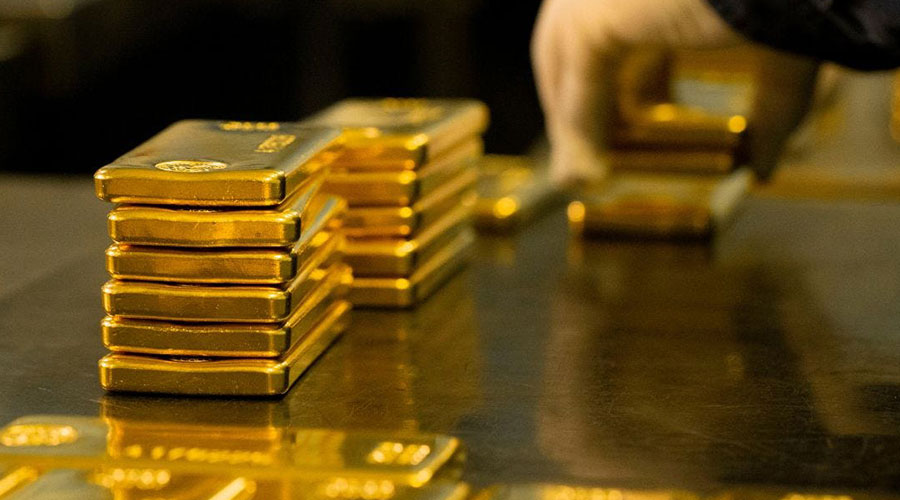
Historical Performance — Gold’s 5,000-Year Track Record vs Diamond’s Shorter Story
The most important question any investor asks about an asset is: has it reliably preserved or grown value over time? For gold, the answer is unambiguously yes — and the evidence spans millennia rather than decades.
Gold’s historical investment performance is among the best documented of any asset class. Gold was used as a medium of exchange and store of value in ancient Egypt, Mesopotamia, and China — not because of sentiment or fashion but because of its unique physical properties: it does not corrode, tarnish, or deteriorate; it is dense enough to be rare but ductile enough to work; and its supply grows slowly (global annual mining output is approximately 1% of total above-ground stock), which prevents the kind of sudden supply shocks that destroy commodity value.
In the modern investment era, gold has delivered compelling returns during the periods when investors needed it most. From 2000 to 2020, gold appreciated from approximately $270 per troy ounce to over $1,900 — a more than 600% gain while the S&P 500 delivered approximately 150% including dividends over the same period, and while the dot-com bust (2000–2002) and the global financial crisis (2008–2009) destroyed equity values.
Gold peaked at $5,602 per troy ounce on January 28, 2026 — an all-time high representing a gain of over 2,000% from its early 2000s lows. In June 2026, gold is trading at approximately $4,079–$4,224 per troy ounce, still representing extraordinary appreciation for investors who entered during any down cycle.
Diamond’s historical investment performance is fundamentally different in character. Diamonds have never had a single transparent global spot price — because a diamond’s value depends on its specific combination of the 4Cs (cut, colour, clarity, and carat weight), no two diamonds are interchangeable in the way that two 1-ounce gold bars are interchangeable.
The most widely cited diamond price index, the Rapaport Diamond Report, shows prices for polished diamonds that have faced significant decline from 2022 peaks — particularly for mid-range commodity-grade stones — as the lab-grown diamond market has expanded, eroding the demand premium for natural diamonds of equivalent visual quality.
The exceptions — extremely rare D-flawless diamonds above 10 carats, or investment-grade fancy coloured diamonds (Argyle pinks, vivid blue diamonds) — have shown genuine appreciation and have commanded record prices at Christie’s and Sotheby’s auction houses.
But these are niche, expert-level investments requiring specialist knowledge and capital in the millions, not the accessible investment vehicle that gold bar ownership represents.
The advantages of investing in African gold are particularly strong at current price levels — Africa produces over 1,010 tonnes of gold per year, and mine-direct sourcing through Buy Gold Bars Africa means accessing this production at prices significantly below Western retail premiums.
Liquidity — Gold’s Greatest Investment Advantage Over Diamonds
Liquidity — the ability to convert an asset to cash quickly and at a fair, transparent price — is where gold’s advantage over diamonds is most decisive and most practically important for investors.
Gold is one of the most liquid assets on earth. Physical gold bars and coins can be sold to any authorised bullion dealer in virtually every country, at a price within a fraction of a percent of the live LBMA spot price, within minutes of presenting the gold and its documentation.
Gold ETFs can be sold on exchanges in seconds. Gold futures can be traded 24 hours a day. Central banks, commercial banks, institutional investors, jewellery manufacturers, electronics companies, and individual investors all participate in the gold market continuously — creating the depth of demand that guarantees liquidity regardless of market conditions.
This is not merely theoretical comfort. In the financial crisis of 2008, investors who needed to liquidate assets rapidly to meet margin calls or cover losses found gold convertible to cash immediately at prices near or above pre-crisis levels, while real estate, private equity, and even some equity securities became temporarily illiquid or required distressed pricing. Gold’s liquidity is at its most valuable precisely when other assets are hardest to sell.
Diamonds have the opposite liquidity profile. Selling a diamond requires finding a buyer who wants that specific stone at that specific quality level, typically through a specialist dealer or auction house, at a price that must be established by GIA or comparable expert certification before any buyer will commit.
The process from decision-to-sell to cash-in-hand typically takes weeks to months, and the achievable sale price for any given diamond at retail is typically 20–40% below the retail purchase price — a large immediate loss that gold buyers do not face on investment-grade bars.
The secondary market for diamonds is thin, geographically concentrated (primarily New York, Antwerp, Hong Kong, and Mumbai), and dominated by specialist trade buyers who have structural pricing advantages over retail sellers. For most individual investors, the realistic liquidity premium on diamonds must be considered a permanent cost of ownership rather than a recoverable asset.
For buyers who want the combination of gold’s liquidity with African sourcing — our gold in Africa for sale and gold bars pages provide the full range of liquid, investment-grade products available from our Uganda operations.
Gold as an Inflation Hedge — Why It Outperforms Diamonds on Protection
Inflation hedging — the ability of an asset to maintain or increase purchasing power as fiat currencies depreciate — is one of the most frequently cited reasons for holding gold, and the empirical evidence strongly supports this property over multi-decade investment horizons.
The relationship between gold and inflation is not mechanical on a month-by-month basis — gold can underperform in short periods of rising inflation if interest rates are rising simultaneously, because higher rates increase the opportunity cost of holding a non-yielding asset.
However, over 10-year and longer investment horizons, gold has consistently maintained purchasing power against the long-term decline in the value of paper currencies far more reliably than equities, bonds, or real estate in many markets.
The structural reason gold preserves value against inflation is its supply constraint. Unlike paper currencies — which central banks can and do create in essentially unlimited quantities — gold’s global above-ground supply grows at approximately 1–1.5% per year through mining.’
This predictable, slow growth in supply combined with sustained global demand creates the conditions in which gold holds value as the denominator (the currency) depreciates.
In the 2020–2022 period of extraordinary monetary expansion following the COVID-19 pandemic — when the US Federal Reserve and other central banks expanded their balance sheets by trillions — gold responded with the appreciation pattern that inflation hedge theory predicts, rising from approximately $1,500 per troy ounce to above $2,000 before the subsequent interest rate cycle moderated its performance.
Diamonds offer a weaker inflation hedge than gold because their prices are not primarily driven by monetary dynamics. Diamond prices respond to: jewellery consumer demand (which falls during economic slowdowns), changes in fashion and cultural preferences for specific stone types, technological disruption from lab-grown production, and the decisions of the few large diamond mining companies and trading houses whose market positioning significantly affects rough and polished prices. These factors are not well-correlated with the inflation dynamics that drive gold.
The Lab-Grown Diamond Threat — Why Natural Diamonds Face Long-Term Price Pressure
The single most important development affecting diamond investment value in the last five years — and one that fundamentally changes the investment calculation for natural diamonds — is the rapid growth of the lab-grown diamond (LGD) market.
Laboratory-grown diamonds are chemically, physically, and optically identical to natural diamonds. They are produced using High Pressure High Temperature (HPHT) or Chemical Vapour Deposition (CVD) technology that replicates the conditions of natural diamond formation, growing crystals that a gemologist cannot distinguish from mined diamonds without specialist testing.
Manufacturing costs have fallen dramatically — a 1-carat lab-grown diamond that cost $4,000 to produce in 2015 costs under $300 to produce in 2026 — and lab-grown diamonds now sell at retail prices 70–80% below equivalent natural diamonds of the same visual quality.
The consequence for natural diamond investment is structural price pressure on commodity-grade stones — rounds of 0.5 to 3 carats in D-I colour and VS-SI clarity — because consumers choosing between a $5,000 natural diamond and a visually identical $1,000 lab-grown diamond increasingly choose the lab-grown option for jewellery purposes.
Only the rarest natural stones — exceptional colours, extreme sizes, historic provenance — retain a strong premium that lab-grown production cannot erode, because even perfect lab-grown diamonds cannot replicate the scarcity of, say, a 20-carat Argyle pink.
Gold has no lab-grown equivalent. While synthetic gold (gold created from other elements through nuclear transmutation) is theoretically possible, it is commercially and energetically impractical at any meaningful scale.
Every ounce of gold on earth was formed in stellar nucleosynthesis before the solar system existed, and the global mining industry recovers only what nature produced. This geological scarcity is non-replicable, which is why gold’s long-term scarcity premium is secure in a way that diamond’s is not.
Storage, Insurance, and Maintenance — Gold Wins on Practicality
Both gold and diamonds require secure storage and insurance, but the practical cost and complexity of diamond storage is higher than most buyers anticipate.
Gold bars and coins store compactly and securely in bank safety deposit boxes, private vaults, or home safes. The storage cost for a kilogram of gold — worth approximately $131,000–$136,000 at June 2026 prices — at a reputable vault facility runs to approximately $150–$400 per year.
Gold does not tarnish, does not require climate control, and cannot be damaged by normal storage conditions. It can be moved, inspected, and transferred without any reduction in its value.
Diamonds require insured, climate-controlled storage (extreme humidity or temperature changes can affect clarity and setting integrity), careful physical handling (diamonds are the hardest material known but can chip along cleavage planes with sharp impacts), and GIA certification or equivalent documentation that must be maintained and updated if the stone is remounted or reworked.’
The insurance premium for a diamond of significant investment value typically exceeds equivalent premiums for gold, because the single-stone risk is less diversifiable than a fungible bar.
The gold ingots for sale and gold bars we supply come in tamper-evident, sealed packaging that meets the storage standards required by most vault facilities worldwide, with all documentation needed for insurance purposes included in the purchase package.
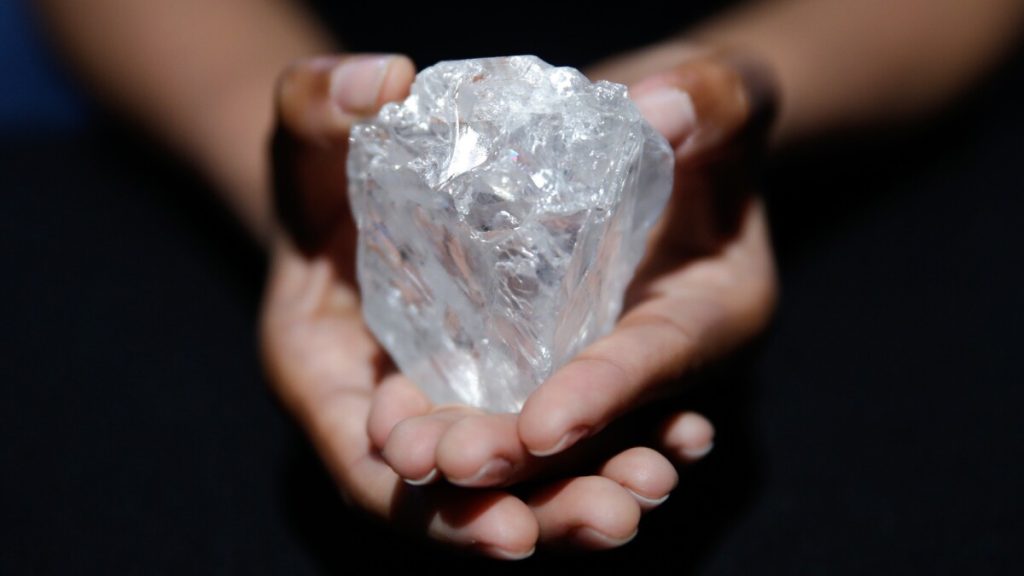
When Diamonds Might Be the Better Choice — The Narrow Investment Case
Gold is the better investment for most purposes, but honesty requires acknowledging the narrow circumstances in which diamonds do represent genuine investment value:
Exceptional investment-grade diamonds — D-flawless or internally flawless stones above 10 carats, or vivid fancy coloured diamonds (pink, blue, orange) above 3 carats — have a demonstrated track record of appreciation at Christie’s, Sotheby’s, and Phillips auction houses, and their prices are genuinely insulated from lab-grown competition by their scarcity and provenance.
A 20-carat D-flawless white diamond or a 5-carat Argyle vivid pink is a genuinely rare asset that commands a premium no manufacturing process can replicate.
Collector and heritage diamonds — stones with documented provenance, historic importance, or association with significant collections — carry numismatic and cultural value beyond their gemological qualities, similar to the premium that collector gold coins carry above their melt value.
Compact, portable wealth storage — for investors who need to store very large amounts of wealth in a physically small space that can be transported without detection in extreme circumstances, diamonds offer superior density of value per gram compared to gold. This is a niche use case but one where diamonds have genuine historical utility.
For investors who are not operating in these exceptional categories, gold’s structural advantages over diamonds are decisive. If you want exposure to precious stones as part of a diversified portfolio, consider allocating a small percentage (5–10% of the precious assets allocation) to investment-grade coloured diamonds while maintaining the majority of your hard asset exposure in gold — not the reverse.
Gold vs Diamond — Which Should You Choose?
The investment verdict is clear for most buyers: gold is the superior investment vehicle for wealth preservation, portfolio diversification, inflation protection, and liquidity. Diamonds can complement a diversified precious asset portfolio in specific circumstances — particularly for high-net-worth investors with access to exceptional investment-grade stones and the expert network to buy and sell them efficiently — but they are not a substitute for gold as the foundation of a hard asset allocation.
For buyers ready to invest in certified African gold bars — mine-direct, competitively priced, fully documented, and insured for international delivery — our team at Buy Gold Bars Africa Ltd is ready to assist. We serve investors across the UK, USA, UAE, Europe, Asia, and the broader African market with gold products sourced from licensed operations in Uganda, the DRC, Ghana, and Tanzania.
Contact us on +256 707 585144 or visit our contact page for a personalised, spot-referenced quote. We respond within 24 hours.
Related Pages You May Find Useful
- Advantages of Investing in African Gold
- Buy Gold Bars — Certified African Investment Gold
- Gold in Africa for Sale — Full Product Range
- Gold Ingots for Sale from Africa
- Gold Dust for Sale — Mine-Origin Fine Gold
- Gold Stock — Current Available Inventory
- Where Can I Buy Raw Gold?
- Uganda Gold Mines — East Africa’s Gold Hub
- Uganda Gold Discovery in Northern Region
- Gold Export Tax in Uganda — Regulatory Guide
- What Does It Cost to Ship Gold to the USA from Africa?
- Gold Mining in South Africa — Sector Overview
- Gold Mining in Guinea — West Africa Supply
- How Is Gold Mined and Processed?
- List of Gold Refineries in Ghana
- Dubai Gold Export Rules — Buyer’s Guide
- Buy Gold in the UK — From African Sources
- Buy Gold Online in Monaco
- Buy Gold Online in Kazakhstan
- FAQs About Buying Gold in Ghana
- FAQs About Buying Gold in South Africa
- FAQs About Buying Gold in Sierra Leone
- Buying Gold in Croatia — International Guide
- FAQs — Common Questions About Buying African Gold
- About Buy Gold Bars Africa Ltd
- Contact Buy Gold Bars Africa — Get a Quote