
Shipping Gold from Ghana to the USA: Costs, Regulations & Best Practices 2026
Shipping Gold from Ghana to the USA: Complete 2026 guide to shipping gold from Ghana to the USA — updated costs, PMMC/GoldBod regulations, required documents, trusted carriers, and how to avoid scams. Everything legal exporters need to know.
Introduction: Why Ghana Is a Major Gold Export Hub
Ghana, historically known as the “Gold Coast,” is one of Africa’s top gold producers and a critical source for international buyers. In 2024 alone, Ghana produced over 140 metric tonnes of gold, contributing billions of dollars to the national economy.
With mining operations concentrated in regions such as Tarkwa, Obuasi, and Prestea, the country regularly supplies gold bullion, gold bars, gold nuggets, and raw gold ore to markets across the globe — including the United States.
However, shipping gold from Ghana to the USA is far more complex than a simple freight booking. It requires navigating strict Ghanaian export laws, U.S. customs regulations, insurance requirements, and anti-money laundering (AML) compliance frameworks. Getting any step wrong can result in shipment seizure, heavy fines, or criminal prosecution.
This comprehensive, up-to-date guide covers everything legitimate exporters and international gold buyers need to know — including 2026 Ghana gold shipping costs, updated GoldBod regulations, required documentation, vetted carriers, and how to protect yourself from the scams that plague this industry.
2026 Update: The Ghana Gold Board (GoldBod) Changes Everything
A critical regulatory update that every exporter must understand: the Ghana Gold Board Act, 2025 (Act 1140) has established the Ghana Gold Board (GoldBod) as the new central authority over gold buying, selling, assaying, and exporting in Ghana.
Key changes under the GoldBod framework:
- GoldBod has assumed responsibility for functions previously held by PMMC in gold export oversight
- All gold transactions must now route through GoldBod-licensed channels
- Foreign investors are restricted from directly purchasing gold from small-scale miners
- Gold transactions must be conducted in Ghanaian cedis at prevailing exchange rates
- Exporters must repatriate at least 80% of export proceeds through licensed Ghanaian banks
- Pre-GoldBod export permits expired on April 30, 2025; new licenses are issued through GoldBod
The PMMC (Precious Minerals Marketing Company) continues to operate as Ghana’s mandated assayer, verifying purity of all gold leaving the country. Working with GoldBod-compliant, licensed exporters is now a non-negotiable requirement for any legal gold shipment from Ghana.

How Much Does It Cost to Ship Gold from Ghana to the USA? (2026 Estimates)
The total cost of shipping gold from Ghana to the USA depends on the shipment’s weight, chosen logistics provider, insurance, and applicable taxes. Below is a fully updated cost breakdown for 2026:
1. Air Freight Shipping Fees
Air freight remains the only viable method for most gold shipments due to speed and security.
| Shipment Size | Estimated Air Freight Cost (incl. insurance) |
|---|---|
| Small (1g – 100g) | $100 – $500 |
| Medium (100g – 1kg) | $600 – $1,200 |
| Large (5kg) | $8,000 – $15,000 |
| Bulk (50kg+) | $15,000 – $20,000+ |
Premium secure logistics providers such as Brinks, G4S, and Malca-Amit charge significantly more — in the range of $10,000 to $50,000+ for high-value or high-security shipments with armed escorts and full liability insurance.
2. Export Licensing and Assay Fees
- PMMC/GoldBod Assay Fee: 0.1% – 0.176% of the gold’s assessed value (e.g., approximately $440 on a $250,000 shipment)
- Gold Export License: Approximately $500 – $1,000 (valid for 3 years, denominated in Ghanaian cedis)
- Minerals Commission Application: Nominal processing fees; full license costs vary
3. Export Taxes and Royalties (2026 Rates)
Ghana’s export taxation structure has been updated under the GoldBod framework:
- Mineral Royalty: 5% of total mining revenue (for small-scale exporters)
- GRA Withholding Levy: 1.5% of the export value of unprocessed gold
- Minerals Commission Fund: 0.5% contribution
- PMMC/GoldBod Assay Service: ~0.118% of export value
- Effective total tax burden at export: approximately 6–10% of the shipment’s value
For a $250,000 gold shipment (100 oz at ~$2,500/oz), expect roughly $15,000–$25,000 in combined taxes, royalties, and fees — before shipping and insurance costs.
4. Insurance Costs
- Standard insurance for gold shipments: 1–2% of declared value
- Example: Insuring a $100,000 gold shipment costs approximately $1,000 – $2,000
- Premium carriers like Brinks use Lloyd’s of London underwriting with comprehensive coverage
5. U.S. Customs Fees
- Gold bullion and coins: Generally duty-free upon entry into the USA
- Gold jewelry (with non-gold materials): May attract import duties of up to 5%
- FinCEN 105 declaration: Required for all shipments valued over $10,000
- Customs clearance fees: $100 – $500 depending on shipment complexity and broker used
- Secure vault storage (if needed upon arrival): $50 – $500 per day
6. Miscellaneous Fees
- Tamper-proof packaging and secure crating: $50 – $500
- Licensed customs broker fees: $200 – $1,000
- Legal representation (recommended for foreign exporters): $1,000 – $5,000
Legal Requirements for Exporting Gold from Ghana (2026)
Exporting gold from Ghana without meeting the following legal requirements is a criminal offense. Penalties include shipment confiscation, fines of up to 500% of the evaded tax value, and imprisonment.
1. Mineral Trading License
All exporters — individual or corporate — must hold a valid Mineral Trading License issued by the Minerals Commission of Ghana. Foreign entities must incorporate a company locally and register with the Ghana Investment Promotion Centre (GIPC) before applying.
2. Gold Export License (via GoldBod)
As of 2026, gold export licenses are issued under the authority of GoldBod (formerly Minerals Commission only). Requirements include:
- Certificate of Incorporation from the Registrar-General
- Tax Identification Number (TIN) from GRA
- Ghana Card / valid ID and police clearance report
- Proof of financial capacity (approximately $1 million USD equivalent for foreign applicants)
- GIPC Certificate for companies with non-Ghanaian shareholders
3. PMMC/GoldBod Assay and Certification
Before any gold leaves Ghana, it must be submitted to a PMMC-designated assay center for purity testing. PMMC uses fire assay and XRF methods to determine gold content and issues a Certificate of Analysis distributed to the Bank of Ghana, GRA Customs, and the Minerals Commission.
4. Advance Notification
Licensed Gold Exporters (LGEs) must notify GoldBod/PMMC in writing at least 2 working days before the planned export date, providing full consignee details. Flight details must be provided 24 hours before departure.
5. Customs Sealing
The GRA Customs Division must officially seal all gold shipments in the presence of a PMMC/GoldBod representative before departure. No gold may leave Ghana without GRA and GoldBod/PMMC seals and full documentation.
6. Monthly Returns
All licensed exporters must submit monthly reports to the Minerals Commission detailing export volumes, values, and buyer details as a condition of their license.
Required Documentation for Shipping Gold from Ghana to the USA
Missing or inaccurate documentation is the most common cause of shipment delays and seizures. Prepare the following before every shipment:
| Document | Purpose | Issuing Authority |
|---|---|---|
| Gold Export License | Legal authority to export | GoldBod / Minerals Commission |
| Certificate of Analysis (Assay Report) | Verifies gold purity and weight | PMMC / GoldBod |
| Commercial Invoice | States value, weight, and description | Exporter |
| Packing List | Details contents and specifications | Exporter |
| Certificate of Origin | Confirms gold sourced from Ghana | Ghana Export Promotion Authority |
| GRA Customs Seal Document | Proves inspection and sealing | Ghana Revenue Authority |
| Air Waybill | Transport documentation | Freight carrier |
| FinCEN 105 Form | U.S. declaration for shipments over $10,000 | Filed with U.S. CBP |
| Tax Payment Receipt | Proof of 1.5% levy + royalties paid | GRA |
| Environmental Permit (if applicable) | Required for mining-related activities | Ghana EPA |
Working with a licensed customs broker on both the Ghana and U.S. sides is strongly recommended to ensure all documents are complete and compliant before the shipment moves.
Choosing the Right Shipping Method
Air Freight (Recommended)
Air freight is the industry standard for international gold shipments from Ghana. All major gold exports depart through Kotoka International Airport (KIA) in Accra. Benefits include:
- Speed (typically 1–5 business days to the USA)
- Reduced theft exposure
- Real-time tracking
- Compatibility with secure logistics specialists
Costs range from $600 – $1,200 per kg for standard shipments, rising steeply for high-security or bulk consignments.
Sea Freight
Sea freight is used only for very large bulk mineral shipments and is generally considered too slow and risky for gold. Transit times of 6–8 weeks and piracy exposure make sea freight impractical for high-value gold consignments.
Land Transport (Domestic Only)
Armored vehicle transport is used to move gold within Ghana — from mines to assay centers and then to KIA. This is not an international shipping option.
Trusted Carriers for Shipping Gold from Ghana to the USA
Only use carriers with verified experience in precious metals logistics and full compliance with Ghanaian and U.S. regulations:
Brinks Global Services — The gold standard for high-value shipments. Brinks offers tamper-proof packaging, armed escorts, real-time tracking, and full liability insurance underwritten by Lloyd’s of London. Best for large or sensitive consignments.
Malca-Amit — A premium precious metals courier offering secure storage, vault-to-vault transfer, and comprehensive insurance. Widely used by refineries and financial institutions.
G4S Secure Logistics — Offers armored transport and high-security air cargo for precious metals. Established presence across West Africa.
DHL Cargo — DHL handles gold shipments from Accra with insured transportation and real-time tracking. A minimum of 50kg applies for regular commercial shipments; 1–5kg for samples. Reliable for mid-range shipments.
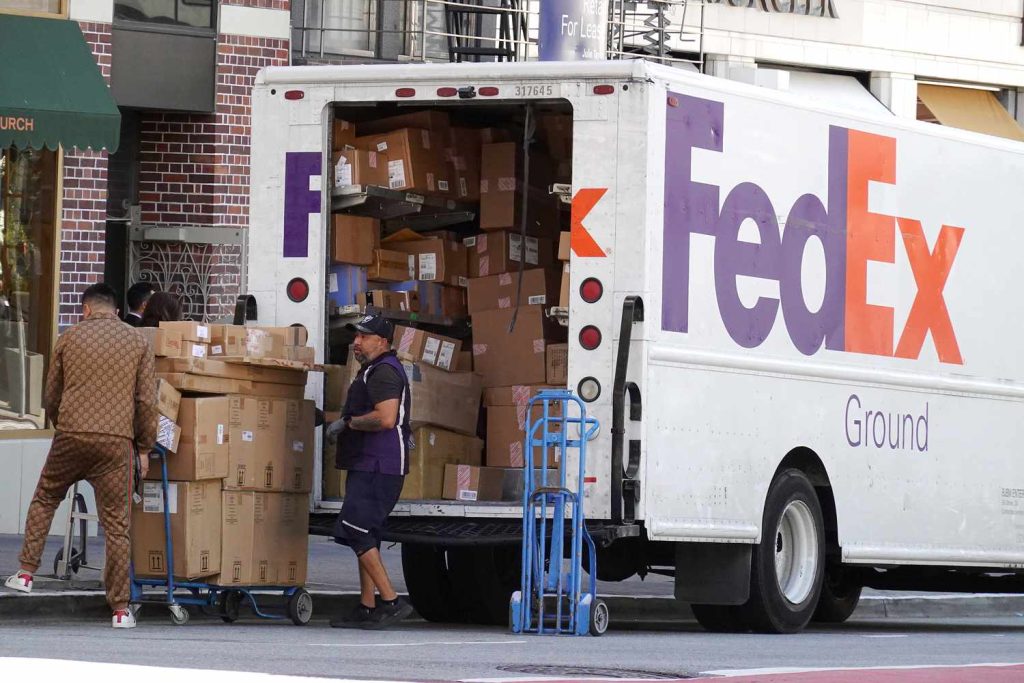
FedEx — Suitable for smaller gold samples and coin shipments. Provides expedited delivery, insurance, and signature confirmation.
Emirates SkyCargo — Used by commercial exporters for secure bulk air freight, often in conjunction with specialized logistics firms.
Always verify that your chosen carrier has specific experience with precious metals, holds the necessary permits for your shipment type, and can confirm compliance with both GoldBod export requirements and U.S. CBP import regulations.
Insurance and Security Measures
Given gold’s value and the risks associated with international transport, comprehensive insurance and physical security are mandatory — not optional.
Full-Value Insurance: Insure every shipment at its total declared value. Premiums of 1–2% of value are standard; premium carriers may charge slightly more for added coverage levels.
Tamper-Proof Packaging: Gold must be shipped in sealed metal or wooden specie boxes with tamper-evident tape and double-boxed with cushioning materials. PMMC and GRA customs officials apply official seals before departure.
Real-Time Tracking: Demand GPS-based shipment tracking and signature confirmation on delivery. Reputable carriers offer 24/7 monitoring dashboards.
Physical Inspection: Every shipment from Ghana is inspected by Customs officials, GoldBod/PMMC officers, and Anti-Money Laundering (AML) authorities, who verify weight, purity, and documentation against the assay report.
U.S. Customs Requirements for Gold Imports
Upon arrival in the United States, all gold shipments must clear U.S. Customs and Border Protection (CBP):
- Declaration Requirement: All gold must be declared to a CBP officer on arrival
- FinCEN 105 Form: Mandatory for any shipment valued over $10,000; failure to file is a federal offense
- Duty-Free Entry: Gold bullion, bars, coins, and medals generally enter duty-free under U.S. tariff schedules
- Gold Jewelry: May attract import duties up to 5% depending on composition and HTS code classification
- Prohibited Origins: Gold sourced from Cuba, Iran, or Sudan is prohibited from entry under U.S. sanctions law — ensure your documentation clearly identifies Ghanaian origin
- AML Compliance: U.S. financial institutions handling gold transactions above reporting thresholds must comply with Bank Secrecy Act (BSA) requirements
Engaging a licensed U.S. customs broker significantly reduces clearance time and ensures correct HTS classification, reducing the risk of delays or secondary inspection.
Gold Shipping Scams from Ghana: How to Protect Yourself
Ghana gold shipping is one of the most heavily targeted sectors for international fraud. The most common scheme is the “consignment box scam” — where a fraudster claims to be shipping gold on your behalf and demands repeated upfront fee payments for fake customs clearances, taxes, or documentation.
Red flags to watch for:
- Requests for upfront payments via wire transfer, Western Union, or cryptocurrency before gold arrives
- Unsolicited contact from individuals claiming to have inherited or discovered gold
- Promises of discounted gold prices far below the LBMA spot rate
- Claims that the gold is being shipped via FedEx or DHL without PMMC documentation (this is illegal)
- Requests to pay “customs agents” or “port officials” in the USA who don’t exist in official channels
How to protect yourself:
- Verify all exporter credentials directly with the PMMC (+233 030 295 3279), GoldBod, or the Minerals Commission of Ghana
- Confirm that any carrier being used holds the necessary licenses for international gold freight
- Engage a licensed attorney with experience in Ghanaian mineral trade law before transferring any funds
- Use only verified logistics firms (Brinks, Malca-Amit, G4S) for transport arrangements
- Remember: the only legal way to export gold from Ghana is through a GoldBod-licensed Licensed Gold Exporter (LGE)
Step-by-Step Process: How to Legally Export Gold from Ghana to the USA
- Register and License: Incorporate a company in Ghana, obtain a TIN, register with GIPC (if foreign), and apply for a Gold Export License through GoldBod/Minerals Commission.
- Source Legally: Purchase gold only from licensed miners, small-scale mining cooperatives, or GoldBod-registered aggregators.
- Submit for Assay: Deliver gold to a PMMC-designated assay center with all declaration documents (packing list, invoice, sourcing records).
- Pay Export Taxes: Settle the 1.5% GRA withholding levy, 5% mineral royalty (if applicable), and assay fees before clearance.
- Notify GoldBod/PMMC: Provide written export notification at least 2 working days before the planned shipment date.
- Customs Sealing: GRA Customs officials inspect and officially seal the shipment at the assay center under PMMC/GoldBod supervision.
- Book Secure Freight: Arrange air freight through an approved logistics provider; provide flight details to GoldBod/PMMC 24 hours in advance. All shipments depart via Kotoka International Airport.
- Complete KIA Documentation: Submit all required export documents at KIA, including the Customs Declaration Form and Air Waybill.
- U.S. Customs Clearance: File FinCEN 105 form, present Certificate of Origin and Assay Report to U.S. CBP. Engage a licensed customs broker for clearance.
- Submit Monthly Returns: File monthly export activity reports with the Minerals Commission to maintain your license in good standing.
FAQs – Shipping Gold from Ghana to the USA
Q: Is it legal to ship gold from Ghana to the USA? A: Yes, but only through GoldBod-licensed exporters using PMMC-certified assay processes and approved freight carriers. Any other method is classified as gold smuggling under Ghanaian law.
Q: How much does it cost to ship 1kg of gold from Ghana to the USA in 2026? A: Total costs for a 1kg shipment typically range from $2,500 to $5,000+, including air freight ($600–$1,200), insurance (~1–2% of gold value), export taxes/royalties (6–10% of value), and assay/documentation fees.
Q: How long does it take to export gold from Ghana? A: From license to shipment, the full process takes a minimum of 2–3 months for first-time exporters (due to licensing timelines). For licensed exporters with existing credentials, individual shipments take 1–2 working days for assay and customs processing, plus 1–5 days transit to the USA by air.
Q: Do I need to pay customs duty on gold in the USA? A: Gold bullion, bars, and coins generally enter duty-free. Gold jewelry may attract duties of up to 5%. All shipments over $10,000 must be declared using a FinCEN 105 form.
Q: What is GoldBod and how does it affect gold exports from Ghana? A: GoldBod (Ghana Gold Board) is the new central regulatory authority established under the Ghana Gold Board Act, 2026 (Act 1140). It has assumed oversight of gold buying, selling, assaying, and export regulation, replacing some functions previously held by PMMC. All gold export licenses and transactions must now comply with GoldBod’s framework.
Q: What is the PMMC’s role in 2026? A: PMMC remains Ghana’s mandated assayer, responsible for testing the purity of all gold before export and issuing Certificates of Analysis. It operates under GoldBod’s regulatory umbrella.
Q: Can a foreigner export gold from Ghana directly? A: Foreign nationals cannot directly purchase gold from small-scale miners. They must incorporate a Ghanaian company, obtain a GIPC Certificate, and partner with a licensed local entity. As of April 2026, foreign-owned entities have been barred from direct artisanal gold purchasing to curb smuggling.
Q: What is the safest carrier for shipping gold from Ghana internationally? A: Brinks Global Services and Malca-Amit are the industry leaders for secure precious metals logistics, offering full liability insurance, armored transport, and round-the-clock monitoring.
Conclusion: Shipping Gold from Ghana to the USA Safely and Legally
Shipping gold from Ghana to the USA is a complex, highly regulated process — but entirely achievable for those who follow the legal framework. The 2026 regulatory landscape, dominated by the new GoldBod authority, imposes stricter controls than ever before, making compliance, proper documentation, and licensed partnerships more critical than at any previous point.
Key takeaways:
- Total shipping costs in 2026 range from approximately $100 for small samples to $20,000+ for bulk shipments, before taxes and royalties
- Ghana now levies an effective 6–10% total export charge through GRA withholding, mineral royalties, and assay fees
- All gold exports must pass through GoldBod-licensed exporters with PMMC assay certification
- Air freight via Brinks, Malca-Amit, DHL, or G4S from Kotoka International Airport is the only legitimate international route
- In the USA, a FinCEN 105 declaration is required for all shipments over $10,000; gold bullion enters duty-free
- Never pay upfront fees to unverified individuals — the consignment box scam is rampant and devastating
Work exclusively with GoldBod-registered Licensed Gold Exporters, verify credentials with official Ghanaian authorities, and engage legal representation. Done correctly, exporting gold from Ghana is a profitable, legitimate, and secure process.
For expert assistance with legal gold export from Ghana — including licensing support, assay coordination, and vetted freight arrangements — contact our team of licensed mineral trade specialists.