Buying Gold Nuggets Directly from Kenya and Uganda Mines
Buying Gold Nuggets Directly from Kenya and Uganda: If you have ever wondered whether buying gold nuggets directly from Kenyan and Ugandan mines is possible, legal, and genuinely more affordable than purchasing through international dealers, the answer to all three questions is yes — provided you understand exactly how these markets work, what documentation protects you, and which sourcing channels give you access to authentic, mine-direct gold without the legal and financial risks that trap uninformed buyers.
This guide covers everything: where Kenya and Uganda’s gold comes from, current gold nugget prices per gram in Kenya and Uganda, how to tell real from fake, the legal framework governing each country, purity standards, documentation requirements, export logistics, and how Buy Gold Bars Africa Ltd gives you direct, verified access to East Africa’s finest gold nuggets at prices that beat European and American retail by a significant margin.
Why Kenya and Uganda Are East Africa’s Most Compelling Gold Nugget Sources in 2026
East Africa’s gold belt — stretching from southwestern Uganda through western Kenya and into northern Tanzania — sits on some of the continent’s most geologically productive greenstone belt formations.
These ancient Archaean rock structures, billions of years old, concentrate alluvial and lode gold in riverbeds, hillside deposits, and underground veins that artisanal miners have worked for generations.
Buying gold nuggets from Ugandan mines puts you at one of the world’s most cost-competitive gold sources. Uganda currently produces an estimated 50+ tonnes of gold annually, with artisanal output from Karamoja, Mubende, Busia, and Buhweju accounting for a significant share.
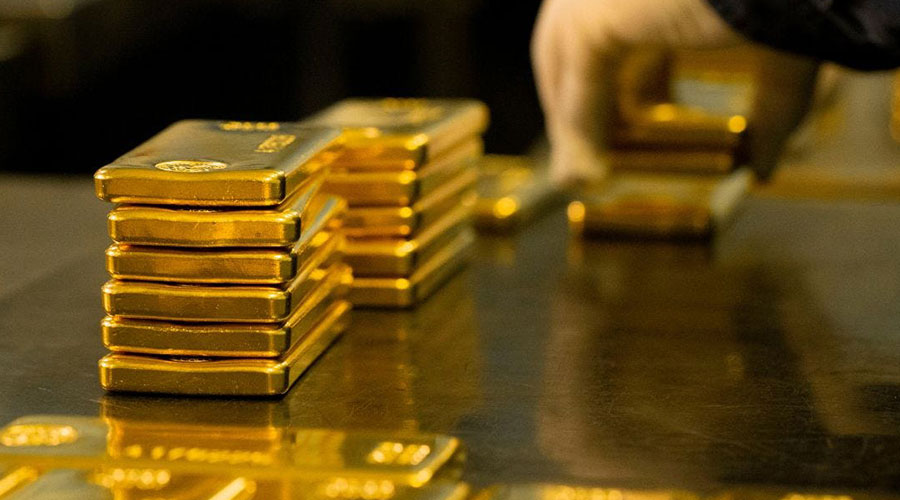
The African Gold Refinery (AGR) in Kampala processes artisanal production to LBMA-quality standards, bridging the gap between mine-direct raw nuggets and certified 99.99% investment-grade bars.
Buying gold nuggets from Kenyan mines accesses a smaller but rapidly formalizing production base anchored in the Migori Greenstone Belt of western Kenya — one of East Africa’s most mineralized geological formations, extending from Migori County through the Kehancha-Macalder gold corridor.
Kenya’s Ministry of Mining and Petroleum has accelerated licensing of artisanal cooperatives in this region, and the National Gold Refinery (NGR) provides independent purity verification for export.
24K gold per gram in Uganda is approximately UGX 570,769 (~$152 USD) and 24K gold per gram in Kenya is approximately KES 19,550 (~$151 USD) — reflecting the extraordinary global bull market that sent gold to an all-time record of $5,602.22/oz on January 28, 2026.
Where Does the Gold Come From? Kenya and Uganda’s Major Gold Mining Regions
Understanding where the gold nuggets originate is not just geological curiosity — it determines purity, traceability, compliance documentation, and ultimately what you pay. Buyers who know their source regions negotiate from strength.
Uganda’s Gold Mining Regions — A Region-by-Region Guide
Karamoja (Northeastern Uganda): The Rupa mine and surrounding Karamoja goldfields produce some of Uganda’s highest-purity natural gold nuggets, with alluvial deposits yielding nuggets of natural 85–95% purity. The remoteness of Karamoja requires organized logistics but delivers gold with excellent natural characteristics. This region is home to the most distinctive large-format gold nuggets for sale in Uganda — prized by collectors and refineries alike.
Mubende District (Central Uganda): Mubende’s alluvial and hard-rock deposits are the most actively mined zone in Uganda’s formal artisanal sector. Licensed cooperatives operate under BGMA (Buganda Graben Mineral Authority) supervision, and Mubende gold nuggets are among the most consistently documented in Uganda’s formal supply chain. Buying gold nuggets from Mubende Uganda through licensed exporters provides some of the strongest provenance documentation available for East African artisanal material.
Busia District (Eastern Uganda/Kenya Border): Busia’s position on the Uganda-Kenya border makes it one of East Africa’s most active artisanal gold trading hubs.
Miners from both countries bring material to Busia’s markets, where licensed dealers aggregate and process gold for onward sale. Gold nuggets from Busia tend to be smaller-format alluvial material with natural purities of 82–93%, ideal for buyers purchasing raw material for their own refining operations.
Buhweju District (Western Uganda): Buhweju’s gold deposits, near the Rwenzori foothills, produce quality alluvial nuggets. The area is less publicized than Karamoja or Mubende but consistently delivers good-quality material to Kampala’s licensed dealers.
Kenya’s Gold Mining Regions — The Migori Greenstone Belt and Beyond
Migori County (Western Kenya): The Migori Greenstone Belt is Kenya’s most productive gold zone, extending through Migori, Nyatike, and Macalder areas. Alluvial gold from the Migori River system and hard-rock gold from the Macalder mine area produce natural nuggets and gold dust that are among East Africa’s most commercially accessible mine-direct products.
Buying gold nuggets from Kenya’s Migori Belt accesses a supply chain increasingly formalized under the Ministry of Mining and Petroleum’s cooperative licensing framework.
The Migori Miners Cooperative — licensed by local authorities and verified by the Ministry — sources gold directly from mines in this belt with purity guarantees and documentation support.
Siaya and Homabay Counties: Secondary gold-producing areas along Kenya’s Lake Victoria shoreline produce alluvial gold from river systems draining the greenstone belt. Smaller volumes but accessible through Nairobi’s licensed dealer network.
Nairobi — Kenya’s Gold Trading Hub: While not a mining area itself, Nairobi’s Eastleigh district hosts Kenya’s most active gold trading market, connecting Migori Belt production to licensed exporters, jewellers, and international buyers.
The Nairobi-based Kenya Gold Traders Association members are among the most professionally organized gold dealers in East Africa.
Current Gold Nugget Prices in Kenya and Uganda
Gold nugget prices in Kenya and Uganda are fundamentally anchored to the international LBMA spot price, adjusted downward for the natural purity discount inherent to unrefined artisanal material. Understanding this pricing formula is essential before any negotiation.
The Nugget Pricing Formula
Nugget price = (LBMA spot price ÷ 31.1035) × (Nugget natural purity % ÷ 99.9%) × Weight in grams
At the current LBMA spot of ~$4,739/oz ($151.55/gram for 24K ):
- A 90% natural purity nugget (22.5K equivalent) is worth: $151.55 × 0.901 = ~$136.55/gram
- A 85% natural purity nugget (20.5K equivalent) is worth: $151.55 × 0.851 = ~$128.97/gram
- A 95% natural purity nugget (22.8K equivalent) is worth: $151.55 × 0.951 = ~$144.12/gram
Gold Nugget Price Table — Kenya and Uganda
| Natural Purity | Equivalent Karat | Price/gram (USD) | Price/gram Uganda (UGX) | Price/gram Kenya (KES) |
|---|---|---|---|---|
| 95% purity | ~22.8K | ~$144 | ~UGX 541,920 | ~KES 18,576 |
| 90% purity | ~21.6K | ~$136 | ~UGX 512,000 | ~KES 17,578 |
| 85% purity | ~20.4K | ~$129 | ~UGX 486,000 | ~KES 16,658 |
| 80% purity | ~19.2K | ~$121 | ~UGX 456,000 | ~KES 15,621 |
| Refined to 24K | 24K (99.9%) | ~$152 | ~UGX 570,769 | ~KES 19,550 |
Why Nugget Prices Are Below Refined Bar Prices
Raw gold nuggets from Uganda and Kenya carry a natural purity discount for a simple reason: they contain varying amounts of silver, copper, and other trace minerals alongside the gold.
A nugget described as “90% pure” contains 90 grams of gold per 100 grams of material — the remaining 10% is silver and other metals. The buyer effectively pays only for the actual gold content.
This is why cheap gold nuggets from Uganda appear to be priced below international spot — they are not cheaper per gram of actual gold; they are priced correctly for their actual gold content. The only true bargain is the lower dealer premium (1–3%) compared to Western retail markets (5–10%).
How to Tell Genuine Gold Nuggets from Fake: Testing Methods Explained
At current prices of $121–$144/gram for natural gold nuggets from Kenya and Uganda, every serious buyer needs to know how to verify authenticity before paying. The following testing methods are listed from most accessible to most definitive.
Visual Inspection and Weight Check
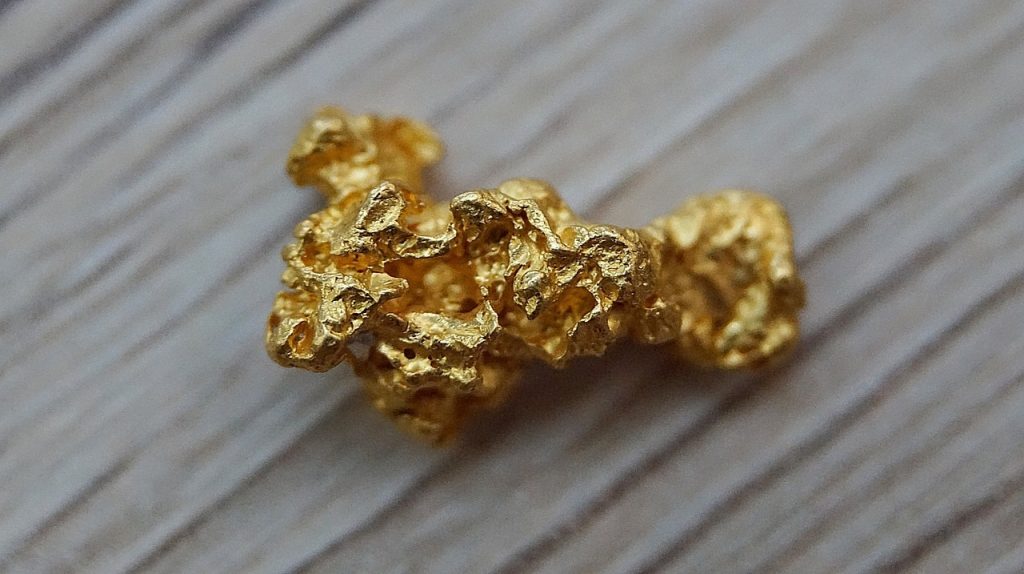
Genuine gold nuggets have a distinctive warm, rich yellow colour — not shiny like polished metal, but with a natural, uneven lustre. Real nuggets are heavier than they look: gold’s density is 19.32 grams per cubic centimetre, compared to iron pyrite (fool’s gold) at 5.0 g/cm³ and copper at 8.9 g/cm³. A nugget that feels surprisingly light for its size is immediately suspicious.
The Magnet Test — First-Line Fraud Screening
Real gold is non-magnetic. Apply a strong neodymium magnet to the nugget — genuine gold shows zero magnetic attraction. Pyrite, iron-rich fakes, and gold-plated iron will respond to the magnet.
This test takes five seconds and eliminates the most common fraudulent materials. It is not definitive on its own but is an excellent first filter.
XRF (X-Ray Fluorescence) Testing — Industry Standard
A handheld XRF analyzer provides accurate elemental composition data for any gold nugget within 60 seconds without damaging the material. Licensed gold dealers in Kampala and Nairobi routinely provide XRF testing before any transaction.
For buying gold nuggets directly from Kenyan mines or Ugandan mines, insisting on XRF testing in your presence is non-negotiable for any purchase above 10 grams.
XRF accuracy is ±0.1% purity — precise enough to price the nugget correctly and confirm there is no tungsten or copper-core substitution.
Fire Assay — The Definitive Method
Fire assay is the gold industry’s definitive purity verification method, dissolving a small sample chemically and measuring exact gold content. Required for all export documentation in both Uganda and Kenya.
If a seller’s assay certificate does not specify fire assay methodology from a named, certifiable laboratory, request a new test.
Acid Test — Field Screening Method
Nitric acid applied to a scratched surface of the nugget: genuine gold shows no reaction, while base metals dissolve or discolour. Useful as a quick field check but less precise than XRF. Should not be the sole verification method for significant purchases.
Gold Nugget Purity Standards in Kenya and Uganda
Natural gold nuggets from Uganda’s Karamoja region typically test at 85–95% natural purity (approximately 20–22.8 karat equivalent), among the highest natural purities in East Africa.
Karamoja’s geological formation — ancient greenstone belt with low silver co-deposition — produces nuggets with unusually high natural gold content.
Natural gold nuggets from Uganda’s Mubende and Busia regions typically test at 82–92% natural purity — slightly lower due to the alluvial processing that concentrates gold particles from mixed-mineral river sediments.
Natural gold nuggets from Kenya’s Migori Belt typically test at 80–93% natural purity, reflecting the mixed alluvial and lode-mining origins of the region’s production.
After refining at the African Gold Refinery in Kampala or Kenya’s National Gold Refinery, all nugget material can be processed to 99.9–99.99% (24K) purity — producing LBMA-quality bars ready for international investment markets.
Legal Framework: How to Buy Gold Nuggets Legally from Uganda
Buying gold nuggets legally from Uganda requires navigating a structured licensing and documentation framework administered by the Ministry of Energy and Mineral Development (MEMD) and the BGMA (Buganda Graben Mineral Authority).
Uganda’s Key Legal Requirements for Gold Nugget Purchases
Every licensed gold dealer selling nuggets in Uganda must hold a Mineral Dealer’s License issued by MEMD. Buyers purchasing for export must work through dealers with current Export Permits issued by MEMD, supported by a Certificate of Origin from the Uganda Export Promotion Board.
Export levies on gold nuggets from Uganda are significant: 10% export duty on unrefined gold (nuggets are classified as unrefined) compared to just 5% on refined gold bars. This is an important cost factor — refining nuggets to bars at the AGR before export can reduce the export levy and improve the overall economics for bulk buyers.
AML/KYC compliance: Uganda’s Financial Intelligence Authority requires Know Your Customer documentation for gold transactions above threshold values. International buyers must provide valid passport, proof of funds, and source-of-funds declaration.
Legal Framework: How to Buy Gold Nuggets Legally from Kenya
Buying gold nuggets legally in Kenya falls under the oversight of the Ministry of Mining and Petroleum and the Kenya Revenue Authority (KRA). Kenya’s gold sector is regulated under the Mining Act 2016, which established a comprehensive licensing framework for artisanal miners and licensed dealers.
Kenya’s Gold Nugget Purchase Requirements
Licensed gold dealers in Kenya must hold a Mineral Dealer Licence issued by the Ministry of Mining and Petroleum. The National Gold Refinery (NGR) provides independent assay certification for export-bound gold. Export documentation includes an export permit, assay certificate, Certificate of Origin, commercial invoice, and KRA tax clearance.
Kenya imposes no royalty on gold exports (unlike Uganda’s 10% unrefined levy), but 5% import duty applies to gold imports into Kenya — relevant for buyers bringing foreign gold into the country but not applicable to export transactions.
Documentation You Must Have When Buying Gold Nuggets from Kenya or Uganda
Whether buying gold nuggets from Ugandan artisanal mines or raw gold from Kenya’s Migori Belt, the following documentation is mandatory for any transaction you intend to export legally:
1. Assay Certificate — Fire assay or XRF report from a certified laboratory, specifying exact purity percentage, weight, and testing methodology. This is the foundation document for all subsequent pricing and export procedures.
2. Certificate of Origin — Province-level sourcing confirmation. For Uganda, this specifies the producing district (Karamoja, Mubende, Busia, or Buhweju). For Kenya, this specifies the Migori Belt or relevant county.
3. Mineral Dealer’s License — Current license from MEMD (Uganda) or Ministry of Mining and Petroleum (Kenya), confirming your seller’s legal authorization.
4. Export Permit — Issued by the relevant ministry before gold leaves the country.
5. Commercial Invoice — Declared USD value for customs purposes.
6. KYC/AML Documentation — Your passport, proof of funds, and source-of-funds declaration.
7. Insurance Certificate — Full declared-value coverage for international shipment.
Export Logistics: Getting Your Gold Nuggets from East Africa to You
Exporting gold nuggets from Uganda and Kenya to international destinations follows a structured process that we manage entirely on your behalf at Buy Gold Bars Africa Ltd.
From Entebbe International Airport (Uganda) and Jomo Kenyatta International Airport (Nairobi), we arrange insured air freight via Brinks Global Services and DHL — the international standards for precious metals logistics.
Delivery timelines: Dubai 3–5 business days; Europe 5–7 days; USA 5–8 days; Asia 5–8 days.
All shipments travel under full declared-value insurance. Real-time tracking is provided from departure to delivery. Every shipment is accompanied by the complete documentation package — assay certificate, Certificate of Origin, export permit, commercial invoice, and insurance certificate.
An important consideration for bulk buyers: refining your Uganda or Kenya nuggets to 24K bars at the AGR (Kampala) before export reduces Uganda’s export levy from 10% (unrefined) to 5% (refined), improves international resale liquidity, and provides LBMA-quality assay certification. For purchases above 100 grams, the economics of refining before export usually favour this approach.
Gold Nuggets vs Gold Bars: Which Should You Buy from Uganda and Kenya?
Buyers frequently ask whether buying raw gold nuggets from Uganda or buying refined gold bars from Kenya makes better financial sense. The answer depends entirely on your purpose.
Buy gold nuggets if you: are a collector seeking natural-form investment pieces, operate a jewellery business that can use unrefined material, have access to refining facilities and want to buy at a raw material discount, or are purchasing for cultural/ceremonial purposes where natural form carries aesthetic value.
Buy refined 24K gold bars if you: want maximum international resale liquidity, need LBMA-standard documentation for your portfolio or institution, are an investor seeking the clearest possible correlation to the LBMA spot price, or need export documentation that will be accepted without question at any global destination.
The price difference: A 90% natural purity Ugandan nugget costs approximately $136/gram — a 10.5% discount to the $152 24K refined bar price.
After Uganda’s 10% unrefined export levy, that discount largely disappears unless the buyer can offset it through downstream refining. For most international investment buyers, certified 24K bars from Uganda remain the better value proposition — lower effective cost after export taxes, better documentation, higher international liquidity.
Why East Africa Beats Other Global Gold Sources in 2026
International buyers comparing buying gold nuggets from Uganda and Kenya against sourcing from West Africa, South America, or buying retail in Dubai, London, or the USA should understand the structural advantages East Africa offers:
Mine-direct access eliminates intermediary costs. When you buy gold nuggets directly from Kenyan mines through Buy Gold Bars Africa Ltd, you access material that has not passed through the European or Asian distribution chains that add 5–10% in markups. Our 1–3% premium above LBMA spot is among the most competitive available anywhere.
East Africa’s artisanal sector produces genuine natural-form nuggets. The Karamoja region of Uganda and Kenya’s Migori Belt produce authentic, naturally formed gold nuggets that cannot be replicated by industrial casting. For collectors and jewellers seeking natural-form East African gold, these regions are irreplaceable sources.
Kenya and Uganda have improving regulatory frameworks. Both countries have strengthened their mining licensing systems significantly in recent years. Uganda’s BGMA and Kenya’s Mining Act 2016 provide buyers with clear legal frameworks and growing documentation standards that reduce transaction risk year by year.
Common Mistakes When Buying Gold Nuggets from Kenya and Uganda
Learning from other buyers’ expensive mistakes protects you from the most common traps in East Africa’s artisanal gold market.
Mistake 1: Buying without independent assay testing. No matter how trustworthy a seller appears, gold nuggets from any East African market must be independently XRF-tested in your presence before payment. At $136–$144/gram for quality nuggets, even a 5% purity overstatement costs $7/gram — $7,000 on a kilogram purchase.
Mistake 2: Ignoring the export levy structure. Uganda’s 10% unrefined export levy on nuggets is not a dealer problem — it is the buyer’s cost. Factor it into your total acquisition cost before comparing Uganda nugget prices to refined bar prices in other markets.
Mistake 3: Purchasing from unlicensed border traders. Busia’s informal border markets offer gold nuggets at apparently attractive prices, but without Ministry of Mines documentation, that gold cannot be legally exported and has no provenance trail. It is a false economy.
Mistake 4: Accepting price quotes without LBMA reference. Any seller who cannot tell you the current LBMA spot price and explain their premium structure relative to it is operating outside the legitimate market framework.
Mistake 5: Skipping the OFAC check for cross-border material. Gold that has transited from DRC through Uganda or Kenya — common in the Busia corridor — may carry conflict minerals exposure.
Always verify Certificate of Origin details. Buy Gold Bars Africa Ltd verifies all provenance documentation before offering material to international buyers.
Why Buy Gold Nuggets from East Africa Through Buy Gold Bars Africa Ltd?
You have read everything about buying gold nuggets directly from Kenyan and Ugandan mines. Now let us be direct about why Buy Gold Bars Africa Ltd is the right partner for that purchase — and why hundreds of international buyers from Dubai to Geneva to New York have trusted us with their East African gold sourcing.
We Have the Direct Mine Connections You Cannot Build Overnight
Building direct relationships with licensed artisanal cooperatives in Karamoja, Mubende, Busia, and Uganda’s Buhweju goldfields — and with Kenya’s Migori Greenstone Belt cooperative network — takes years of on-the-ground trust and regulatory navigation.
We have done that work. When you buy gold nuggets through us, you access supply chains that took a decade to establish, without the relationship-building cost or legal risk of approaching miners directly as an unknown international buyer.
Every Gram Is Independently Verified Before We Offer It to You
We do not list gold nuggets for sale until they have been XRF-tested at accredited facilities in Kampala or Nairobi. Buyers receive the original XRF printout alongside every purchase.
For export-bound material, we commission full fire assay at certified laboratories before completing any documentation. You never pay for gold whose purity you have not independently confirmed.
We Handle Every Document, Tax, and Logistics Step
From your first WhatsApp inquiry to the moment your insured package arrives at your door, Buy Gold Bars Africa Ltd manages the complete process: BGMA/Ministry of Mining licensing verification, assay testing, Certificate of Origin, export permit application, MEMD/KRA tax clearance, Brinks or DHL booking, insurance arrangement, and customs documentation for your destination country. You make one decision — to buy — and we handle everything else.
Our Pricing Beats European and American Retail Consistently
Our gold nugget prices from Uganda and Kenya are quoted at 1–3% above the live LBMA spot price — the most competitive available for documented East African artisanal material.
European retail dealers charge 5–10% over spot for equivalent material. American dealers charge similar premiums, often with longer delivery timelines. On a 100-gram purchase at current $136/gram for 90% natural purity nuggets, you save $1,360–$3,400 compared to buying equivalent material from a European dealer. On a kilogram, that saving is $13,600–$34,000.
We Support Ethical Artisanal Mining in Both Countries
Every purchase you make through Buy Gold Bars Africa Ltd directly supports licensed artisanal mining cooperatives in Uganda and Kenya — communities where gold mining is not just a business but a generational livelihood.
We work exclusively with cooperatives that pay miners fairly, operate under government-issued licenses, and follow responsible environmental practices. Buying through us means your gold investment also delivers real social impact in the mining communities of Karamoja, Mubende, and Migori.
Start Your Gold Nugget Investment Journey Today
The combination of record gold prices, East Africa’s extraordinary geological wealth, and the increasing formalization of Kenya and Uganda’s artisanal mining sectors creates a genuinely exceptional window for international buyers in 2026.
Current prices for natural gold nuggets from Uganda and Kenya range from $121–$144/gram depending on natural purity — with certified 24K refined bars available at $148–$152/gram for buyers who prefer maximum documentation and international liquidity.
Whether you are a first-time gold investor starting with 5 grams, a jewellery manufacturer sourcing 500 grams of natural-form material, or an institutional buyer arranging a multi-kilogram export, Buy Gold Bars Africa Ltd has the supply, the documentation, the relationships, and the track record to deliver your East African gold safely, legally, and at prices that genuinely beat the global market.
Do not buy East African gold nuggets from someone who cannot tell you the LBMA spot price, show you an XRF certificate, and provide a Ministry of Mines license number. Come to us — where every one of those boxes is checked before we quote you a single gram.
You also like to;