Gold Sellers in Cameroon: 2026 Legal Complete Guide
If you’re searching for gold sellers in Cameroon, the single most important thing to know is this: Cameroon’s gold market is one of the most heavily targeted by fraud anywhere in Central Africa, and a large share of the “verified sellers” and “licensed dealers” showing up in online searches don’t hold up under scrutiny.
Before you contact anyone claiming to sell gold in Cameroon, it’s worth understanding how the country’s gold sector actually works — and how to spot the red flags that separate a genuine transaction from an expensive scam.
Cameroon’s Unusual Position in Africa’s Gold Market
Despite hosting licensed mining companies and thousands of artisanal gold miners in its eastern region, Cameroon is not officially recognized as a gold producer or exporter by the Bank of Central African States (BEAC), which oversees the CEMAC monetary region. Within CEMAC, only the Central African Republic and Gabon are formally recognized as gold-producing and gold-exporting states — a striking gap given the real volume of gold mined informally and semi-formally inside Cameroon every year.
That gap matters for anyone researching how to buy gold in Cameroon: it means the country’s gold trade operates largely outside the kind of formalized, internationally referenced export framework you’d find in Ghana or South Africa, which creates far more room for unlicensed dealers and outright fraudulent operators to present themselves as legitimate gold sellers in Cameroon.
Who Actually Regulates Gold Mining in Cameroon
Cameroon’s gold sector is overseen by a handful of genuine government bodies, and knowing their names helps you tell real oversight from imitation:
- CAPAM (Cadre d’Appui et de Promotion de l’Artisanat Minier) — the government support program responsible for monitoring and evaluating artisanal gold production, supervising artisanal miners, and collecting the government’s share under production-sharing agreements.
- PRECASEM — a mining sector transparency and reform initiative working alongside CAPAM on oversight of the country’s mining activity.
- MINMIDT (Ministry of Mines, Industry and Technological Development) — the actual government ministry responsible for issuing mining licenses, waivers, and export authorizations for precious metals, including gold.
These are the legitimate authorities behind any real Cameroon gold export license. The problem is that scam operators frequently mimic MINMIDT’s name and branding on lookalike websites — often using a .com or .net domain dressed up to look like an official .gov page — to lend false credibility to fake licensing processes.
A genuine Cameroonian government ministry will not operate its official licensing communications through a generic commercial domain, and any site asking you to pay a “gold mandatory license,” “waiver certificate,” or “customs clearance” fee before you’ve even seen or independently assayed the gold should be treated as a serious red flag, not a normal part of buying gold in Cameroon.
Common Red Flags Among Cameroon Gold Sellers
If you’re evaluating a potential gold dealer in Cameroon, watch for these recurring warning signs:
- Upfront licensing or “waiver” fees — legitimate export documentation is typically arranged and paid for by the seller as part of a properly structured transaction, not demanded from the buyer as a prerequisite before any gold is shown or verified.
- Generic company websites with no verifiable registration — boilerplate copy about being “among the major indigenous mining companies,” stock photography, and no verifiable business registration number, physical address, or independently checkable trading history.
- Requests for cryptocurrency or wire payment before assay — a genuine seller will support independent, third-party assay verification before final payment, not insist on payment first.
- Prices significantly below the international spot rate — an unusually cheap quote is one of the most reliable signs of a scam in any African gold market, Cameroon included.
- Pressure and urgency — claims of limited-time pricing, “other buyers waiting,” or insistence on moving quickly through WhatsApp rather than documented, traceable channels.
How to Verify a Legitimate Gold Seller Anywhere in Africa
Whether you’re evaluating a gold seller in Cameroon or any other African market, the verification steps stay the same:
- Confirm licensing directly — contact the relevant government mining authority through its official, verifiable channel rather than trusting a link or phone number supplied by the seller.
- Insist on independent assay before payment — a reputable seller will support third-party purity verification, not simply provide their own certificate.
- Never pay license, customs, or “waiver” fees upfront — these costs are almost always the seller’s responsibility to arrange as part of a properly structured export, not the buyer’s to front before receiving anything.
- Compare the quoted price against live spot pricing — a legitimate deal will sit close to the international benchmark plus a reasonable, explainable premium, not dramatically below it.
- Work only with a licensed, established Africa gold exporter with a verifiable trading history, documented export process, and transparent business registration.
Our full guides to the legal requirements to buy gold bars from Africa and how to buy gold bars from Africa safely walk through this verification process in more detail, and apply directly to any African country’s gold market, Cameroon included.
Why Buying From a Verified African Gold Market Is the Safer Path
Given how difficult it currently is to separate genuine gold sellers in Cameroon from the scam networks operating around the same search terms, buyers are generally far better protected sourcing gold from African countries with well-established, formally recognized export frameworks — markets where licensing authorities, assay standards, and export documentation are consistently enforced and independently verifiable.
Countries like Ghana, South Africa, Tanzania, and Uganda all offer exactly that kind of traceable, documented supply chain. Our country-specific guides to the South Africa gold export license, South Africa’s broader gold export requirements, the Ghana gold export procedure, and gold export tax in Uganda each illustrate what a properly regulated, verifiable gold export process actually looks like — a useful benchmark against anything less transparent you might encounter researching Cameroon.
Buy From a Licensed Africa Gold Exporter — Verified Sourcing You Can Trust
We’ll be upfront: we don’t currently source gold directly from Cameroon, precisely because of the documentation and verification gaps described above.
What we do offer is certified, mine-direct gold from African countries with genuinely verifiable licensing and export frameworks — Uganda, South Africa, Tanzania, Kenya, Ghana, and other established gold-producing nations — with every shipment backed by an independent assay certificate, certificate of origin, and complete, checkable export documentation.
If you’ve been offered gold from a Cameroon-based seller and want a second opinion before you send any payment, contact our team — we’re happy to help you think through the red flags.
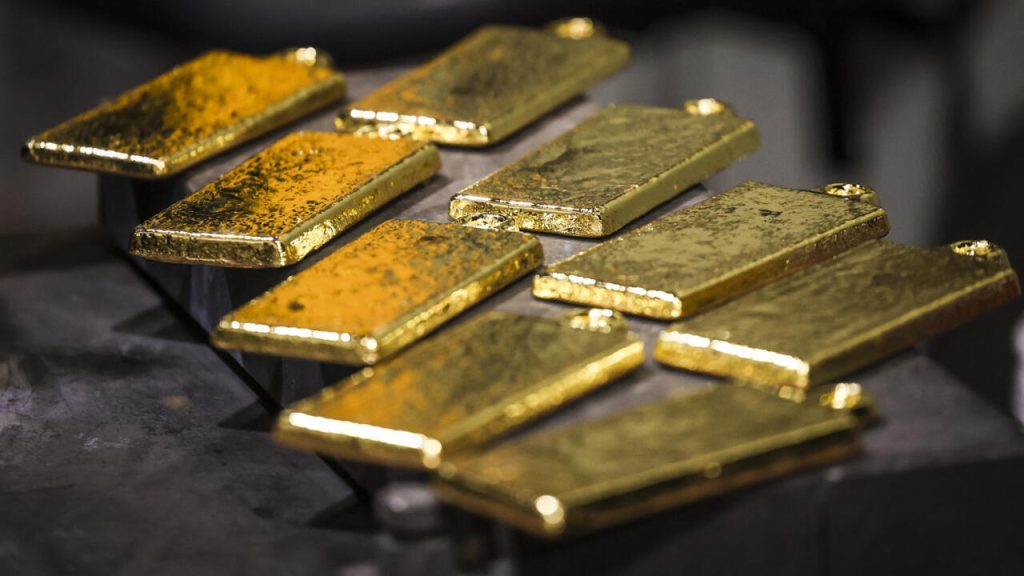
And if you’re ready to buy gold in Africa through a verified, licensed Africa gold exporter instead, browse our certified 24K gold bars, 1 oz gold bar, gold ingots, and 22K gold bars, all sourced with full documentation from countries where that documentation actually means something.
Related Pages
- 24K Gold Bars for Sale
- 1 oz Gold Bar
- Gold Ingots for Sale
- Gold Dust & Doré
- Gold Nuggets & Bullion
- 22K Gold Bars
- Buy Physical Gold Online
- Buy Gold Bars Locally
- Raw Gold for Sale in Africa
- Gold Bars for Sale in Kampala
- Where to Buy Gold in South Africa
- Buy Gold in Tanzania
- South Africa Gold Export License
- South Africa Gold Export Requirements
- Ghana Gold Export Procedure
- Gold Export Tax in Uganda
- Legal Requirements to Buy Gold Bars from Africa
- How to Buy Gold Bars from Africa Safely
- About Us
- Contact Us