Where to Buy Gold in Mali: Top Gold Dealers in Mali
Where to buy gold in Mali is one of the most important questions any serious gold investor can ask in 2026. Mali is one of Africa’s great gold nations — a country whose reserves, production history, and artisanal mining culture make it a source market that informed buyers across Europe, the Middle East, Asia, and North America are actively engaging with.
If you want to buy gold in Mali at competitive prices, with full legal documentation and safe international delivery, this guide tells you everything you need to know.
We cover Mali’s gold mining regions, the major industrial mines, the artisanal gold sector, current gold prices in Mali for 2026, the legal framework for buying and exporting gold, where to find trusted gold dealers in Mali, and how to protect yourself from scams.
Where to Buy Gold in Mali: Your Options Explained
1. Bamako Gold Markets — The Capital’s Trading Hub
Bamako, Mali’s capital and largest city, is the central hub for gold trading in the country. The city hosts dedicated gold markets where local traders sell raw gold, gold bars, gold dust, and gold jewellery. The most active gold trading zones in Bamako are located around the central market district and in established commercial streets in the Badalabougou and Hamdallaye areas.
Bamako gold market prices are typically quoted in XOF per gram, negotiated between buyer and seller, and vary with daily international spot movements.
For international buyers, navigating Bamako’s gold markets requires either local knowledge or an experienced intermediary.
Buyers also face the challenge of verifying purity independently — street market gold is not always what it is claimed to be. Always insist on assay verification before purchasing from any Bamako market trader.
2. Kayes Gold Dealers — Closest to the Source
Kayes, the capital of the region sharing its name, sits at the heart of Mali’s most productive gold belt. Buying gold in Kayes means working closer to the mines themselves, which can mean lower premiums and access to raw artisanal material from active mining cooperatives. ‘
However, Kayes is a remote city requiring travel from Bamako, and the formal dealer infrastructure is less developed than in the capital.
Buyers sourcing gold from the Kayes region work with mining cooperatives and registered artisanal mining groups who sell gold dust and nuggets directly from their operations.
The best approach for international buyers is to work through a licensed Malian gold dealer — such as Buy Gold Bars Africa Ltd — with established sourcing relationships in Kayes.
3. Licensed Gold Dealers in Mali — The Safest Option
Mali has a growing number of licensed gold dealers operating under the regulatory framework of the Ministry of Mines and the Direction Nationale des Mines (DNM). \
These dealers are registered businesses that hold valid gold trading licences, provide certified assay reports, and can issue the export documentation required for legal international shipment of Malian gold.
Working through a licensed Mali gold dealer is strongly recommended over market trading for any buyer purchasing more than a few grams. Licensed dealers provide:
- Certified purity assay from an accredited laboratory
- Certificate of origin confirming Malian provenance
- Gold export licence from the Direction Nationale des Mines
- Commercial invoice for customs purposes
- Customs declaration forms for destination country import
Buy Gold Bars Africa Ltd is a licensed, fully documented gold dealer with active operations sourcing from Mali’s Kayes, Sikasso, and Koulikoro regions.
We supply individual investors, refineries, jewellery manufacturers, and institutional buyers with verified Malian gold at competitive, spot-referenced prices. More on this below.
4. Buy Gold from Mali Online — International Delivery
For buyers outside Mali who want to access Malian gold without travelling to Bamako, the most practical and safest route is purchasing through a licensed online gold dealer with established Malian sourcing operations and international export capability. This approach gives you:
- Competitive pricing based on live international spot rates
- Independent assay certification before payment
- Full export documentation handled on your behalf
- Insured, tracked international delivery to your door
- No need to navigate Mali’s physical gold markets in person
Buy Gold Bars Africa Ltd operates precisely this model. We source gold from Mali’s most productive regions, handle all documentation and export compliance, and ship to clients in Europe, the UAE, India, China, the USA, and beyond within 2–5 business days.
![]()
Mali’s Position in Africa’s Gold Market: Why It Matters
Mali holds Africa’s third-largest gold reserves — estimated at 731 metric tons — and has been one of the continent’s top three gold producers for most of the past two decades.
Gold is not peripheral to Mali’s economy: it accounts for nearly 80% of the country’s total export earnings and supports the livelihoods of more than two million people, roughly 5% of the Malian population, directly or indirectly through the mining sector.
According to World Gold Council estimates, Mali produced approximately 100 tonnes of gold in 2024 across industrial and artisanal channels, making it Africa’s second-largest producer after Ghana and ahead of South Africa.
Official government figures record lower totals — around 51–58 tonnes — with the gap explained by widespread artisanal output that does not pass through formal reporting channels and by cross-border smuggling, particularly into neighbouring Senegal and Guinea.
In 2025, Mali’s industrial gold output fell 22.9% to 48.2 tonnes due to the prolonged suspension of Barrick Mining’s Loulo-Gounkoto complex — Mali’s largest gold mine — during a dispute over the country’s 2023 Mining Code reforms.
That dispute has since been resolved, and Mali’s gold production is forecast to rebound by 28% in 2026 as Loulo-Gounkoto resumes operations alongside contributions from B2Gold’s Fekola mine and Allied Gold’s operations.
For buyers and investors, this production rebound means a strengthening and formalising supply chain entering the market at exactly the moment gold prices are near historic highs.
Where Is Gold Mined in Mali? Key Producing Regions
Mali’s gold deposits are distributed across a well-defined geological belt — the Birimian volcanic greenstone belt — that runs through the country’s south and west.
Understanding Mali’s gold geography helps buyers identify where authentic Malian gold comes from and what to expect in terms of purity and form.
Kayes Region — Mali’s Most Prolific Gold District
The Kayes region in western Mali is the country’s most productive gold-producing zone and home to its largest and most internationally recognised industrial mines.
The Loulo-Gounkoto complex — operated by Barrick Mining in partnership with the Malian state — is located in Kayes and was Mali’s single largest gold producer until its 2025 suspension.
With operations resuming under a newly negotiated agreement in late 2025, Loulo-Gounkoto is expected to reassert its position as a cornerstone of Mali’s gold output in 2026.
The Sadiola gold mine — one of West Africa’s oldest modern gold mines — is also in Kayes, operated by Allied Gold following its acquisition from IAMGOLD. The Korali-Sud extension project at Sadiola brought significant new production online in 2025.
Kayes gold is known for its high grade and well-developed processing infrastructure, making it one of the most reliable sources of documented, certified gold in West Africa.
For buyers asking specifically where to source authentic Malian gold, Kayes is the answer most industry professionals give first.
Sikasso Region — Rich Artisanal Gold Country
The Sikasso region in southern Mali hosts extensive artisanal and small-scale gold mining activity alongside several smaller industrial operations. Artisanal gold from Sikasso is predominantly alluvial — recovered from riverbeds and placer deposits — and typically assays at 85–95% fineness (approximately 20K–23K purity).
Sikasso gold is widely traded in Bamako’s gold markets and is an important source for dealers supplying raw gold nuggets and gold dust to international buyers.
The Syama gold mine in Sikasso — operated by Resolute Mining — is one of Mali’s significant industrial producers. Syama Phase I expansions have been part of Mali’s 2026 production recovery story.
Koulikoro Region — Artisanal Gold Near the Capital
The Koulikoro region, adjacent to Bamako, contributes artisanal gold production that feeds directly into the capital’s trading markets. Gold from Koulikoro is mostly fine-grain alluvial material, with purity levels of 88–94% depending on specific deposit.
Proximity to Bamako’s gold trading infrastructure makes Koulikoro-origin gold among the most easily accessible for buyers operating through the capital.
Kidal and Northern Regions — Security Constraints
Mali’s northern regions contain gold deposits but remain inaccessible to formal commercial buyers due to persistent security challenges. The January 2026 attack on the Morila gold mine highlighted the ongoing security risks in parts of Mali’s mining landscape.
All legitimate gold buying in Mali is concentrated in the south and west — Kayes, Sikasso, Koulikoro, and Bamako — where established trading infrastructure and regulatory oversight function reliably.
Mali’s Major Gold Mines: Industrial Production Context
Understanding which companies mine gold in Mali helps buyers assess the quality and documentation standards of gold entering the Malian market.
Loulo-Gounkoto (Barrick Mining / State of Mali)
The Loulo-Gounkoto complex in Kayes region is Mali’s flagship gold operation — a world-class underground and open-pit hybrid mine with proven and probable reserves of over 9 million ounces.
Owned 80% by Barrick Mining and 20% by the Malian state, the complex produced 22.5 tonnes in 2024 before the 2025 suspension reduced output to just 5.5 tonnes.
With operations now restored under a renegotiated agreement, Barrick has guided significantly higher 2026 output as the mine returns to full operational capacity.
Loulo-Gounkoto gold meets LBMA Good Delivery standards and is one of the most documented and traceable gold streams in West Africa.
Fekola Mine (B2Gold / State of Mali)
The Fekola mine in Kayes region, operated by B2Gold (80%) in partnership with the Malian state (20%), became Mali’s largest industrial gold producer in 2025 after the Loulo-Gounkoto disruption, delivering 17.5 tonnes of gold.
Fekola is a large, low-cost open-pit operation consistently producing 400,000+ ounces annually. The Fekola Regional project — which includes the Anaconda satellite deposit — is part of B2Gold’s expansion strategy that supports Mali’s 2026 production rebound.
Sadiola and Korali-Sud (Allied Gold)
Allied Gold operates the Sadiola mine and its new Korali-Sud extension in Kayes, collectively producing 9.58 tonnes in 2025. Korali-Sud was a major new production contributor that came online in 2025, positioning Allied Gold as Mali’s second-largest producer. Sadiola has been producing gold for over 25 years and has well-established export and documentation infrastructure.
Syama Mine (Resolute Mining)
The Syama mine in Sikasso is operated by Resolute Mining and is one of Mali’s few fully automated underground mines. Syama’s Phase I expansion contributes to Mali’s 2026 recovery outlook. Resolute sells Syama gold through formal LBMA channels, adding to the pool of traceable, certified Malian gold available to international buyers.
Artisanal Gold Production in Mali
Alongside these industrial operations, artisanal gold mining in Mali employs an enormous number of people and contributes a significant share of total output.
Official artisanal gold production in Mali is recorded at approximately 6–7 tonnes annually, though informal estimates suggest actual output is far higher — the US government estimates artisanal miners produce as much as 60 tonnes per year when informal and unreported production is included.
More than two million Malians participate directly or indirectly in the artisanal gold sector, making it one of the country’s most important sources of rural income.
Artisanal gold from Mali comes primarily from the Kayes, Sikasso, and Koulikoro regions. It is sold in raw forms — gold dust, fine gold flake, and gold nuggets — through a network of village-level traders, regional buyers, and Bamako-based gold markets. Purity ranges from 85% to 96% (roughly 20K–23K), depending on the region and deposit type.
Gold Prices in Mali
Gold prices in Mali are determined by the international spot price, converted to West African CFA Francs (XOF), the currency used across Mali and seven other West African nations. The current international gold spot price is approximately $143–$145 USD per gram for 24K (999.9 fine) gold and $4,467–$4,504 per troy ounce as of May 20, 2026.
At the current USD/XOF exchange rate of approximately 1 USD = 590 XOF, Mali gold prices in local currency are as follows:
Gold Price Table — Mali, May 2026
| Purity | Per Gram (USD) | Per Gram (XOF) | Per Ounce (USD) | Per Kilogram (USD) |
|---|---|---|---|---|
| 24K (999.9 fine) | $144.50 | XOF 85,255 | $4,493 | $144,500 |
| 22K (916 fine) | $132.45 | XOF 78,146 | $4,118 | $132,450 |
| 21K (875 fine) | $126.44 | XOF 74,600 | $3,932 | $126,440 |
| 18K (750 fine) | $108.38 | XOF 63,944 | $3,370 | $108,380 |
| Raw artisanal gold dust (85–92% fine) | $122–$133 | XOF 71,980–78,470 | $3,794–$4,136 | $122,000–$133,000 |
Spot price basis: ~$144.50/g (24K), USD/XOF ~590. Local dealer premiums in Mali typically add 1–3% for documentation, assay certification, and export handling. Contact Buy Gold Bars Africa Ltd for a live, spot-referenced quote before transacting.
Mali’s gold prices are among the most competitive in West Africa, reflecting the country’s position as a direct source market. Buyers in Bamako or working through licensed online dealers with Malian operations can access gold at or near spot, without the 3–8% retail premiums that apply in European, Gulf, or Asian bullion markets.
Mali’s Gold Mining Code and Legal Framework for Buyers
Understanding Mali’s regulatory environment is essential before you buy gold in Mali, whether in person or online.
Mali’s 2023 Mining Code
Mali introduced a new Mining Code in 2023 that significantly reshaped the legal environment for gold production and trading. Key provisions affecting buyers:
- Royalty rate: 6% on gold production value, levied on mining companies and traders
- Corporate tax: 30% applied to mining company profits
- State equity participation: Mali’s state holds a minimum 20% stake in all major industrial mining operations under the 2023 Code
- Artisanal mining zones: Designated areas (Zones d’Exploitation Artisanale) where artisanal miners may operate legally with valid miner’s cards
- Export licensing: All gold exports require an export licence from the Direction Nationale des Mines (DNM), accompanied by a certified assay report and certificate of origin
The 2023 Code also triggered a sweeping government audit of mining companies that recovered 761 billion CFA francs ($1.2 billion) in arrears — a demonstration that Mali’s government is serious about capturing a greater share of gold sector revenue. For buyers, this means working with suppliers who are fully compliant with the 2023 Code is more important than ever, as non-compliant shipments risk seizure or legal action.
Anti-Money Laundering and KYC Requirements
As with all West African gold trading under ECOWAS and international standards, gold purchases in Mali above certain value thresholds require buyer KYC (Know Your Customer) documentation — proof of identity, proof of funds, and a stated commercial purpose.
Legitimate licensed dealers enforce these requirements as standard. Any Mali gold dealer who does not ask for KYC information is operating outside the formal framework — a warning sign.
WAEMU and XOF Currency Regulations
Mali is a member of the West African Economic and Monetary Union (WAEMU), which means gold transactions are conducted in West African CFA Francs (XOF), with conversion to USD, EUR, or other currencies at prevailing market rates.
Large gold transactions involving cross-border payment flows require compliance with WAEMU foreign exchange regulations and BCEAO (the regional central bank) reporting requirements. A licensed dealer handles all of this on your behalf.
Types of Gold Available to Buy in Mali
Mali’s gold market offers several distinct product categories, each suited to different buyer needs:
Gold Dust and Fine Gold Flake from Mali
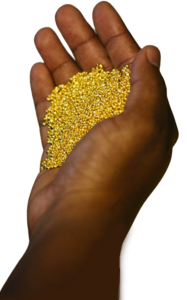
The most common form of artisanal gold in Mali. Fine-grain gold powder and flake recovered from alluvial mining operations across Kayes, Sikasso, and Koulikoro. Typically 85–94% fine (20K–22.5K). Ideal for bulk buyers, refineries, and jewellery manufacturers who will melt and further process the material. Sold by the gram or kilogram and priced proportionally below 24K spot based on actual purity.
Raw Gold Nuggets from Mali
Larger pieces of natural gold recovered from artisanal operations in Kayes and Sikasso. Mali gold nuggets typically assay at 90–96% fine (21.6K–23K). Popular with collectors, investors seeking natural gold specimens, and jewellery designers who use raw gold in distinctive pieces. Each batch is XRF-tested before sale.
22K Gold Bars from Mali
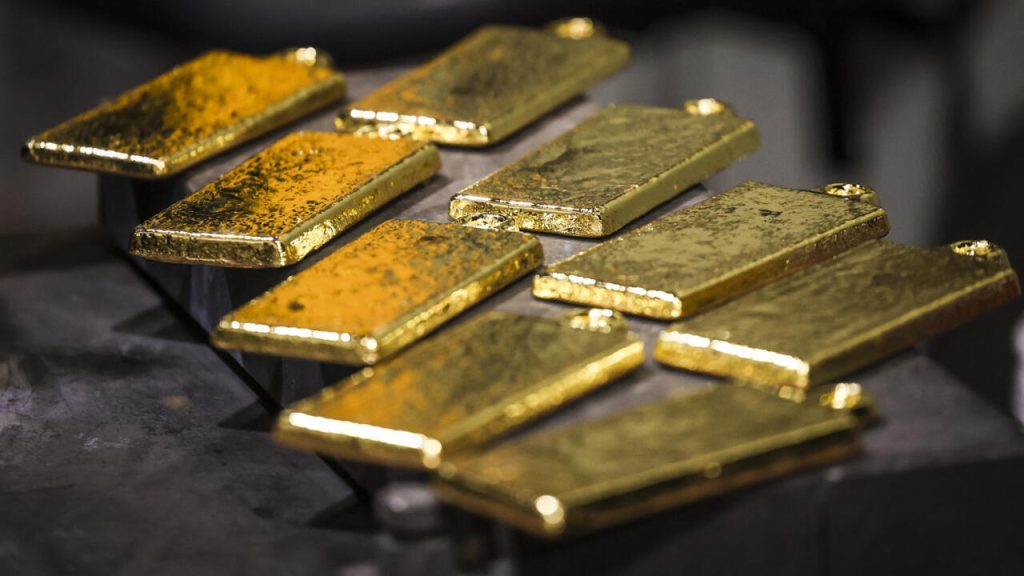
Refined gold bars produced from Malian raw material, processed to 22K (916 fine). Common in jewellery manufacturing supply chains across West Africa and the Middle East. Competitively priced at approximately 91.67% of the 24K spot price.
24K Investment Gold Bars — Mali Origin
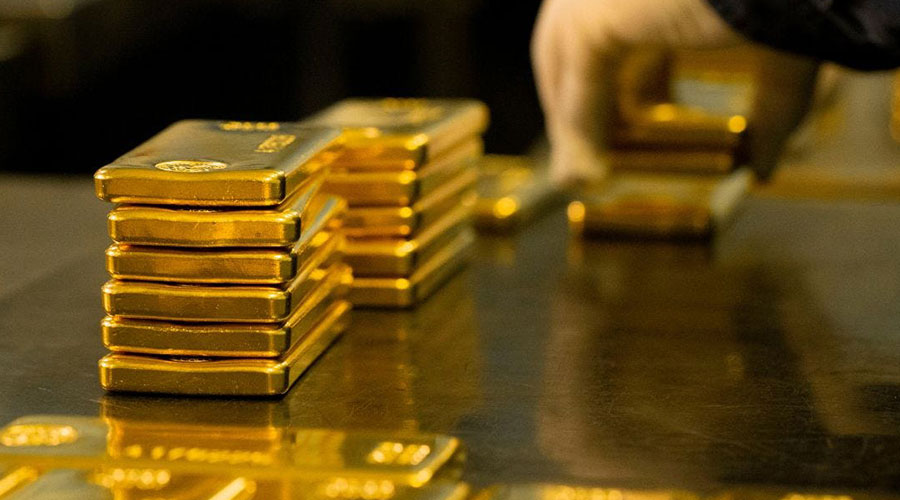
Fully refined, LBMA-equivalent 24K (999.9 fine) gold bars produced from Malian gold. Available in weights from 1 gram to 1 kilogram. Accompanied by certified assay reports and certificates of origin. The preferred product for serious investors, central bank procurement, and institutional buyers requiring the highest standard of documentation and purity.
How to Buy Gold in Mali Safely: A Step-by-Step Guide
Buying gold in Mali involves navigating a market that is productive and competitively priced, but where the risks of fraud and non-compliance are real. These steps protect you at every stage.
Step 1 — Choose a licensed dealer. Any legitimate gold dealer in Mali holds a valid trading licence from the Direction Nationale des Mines (DNM). Ask to see the licence number and verify it with the DNM before proceeding.
Step 2 — Request an independent assay report. Before committing any funds, require a certified purity report from an accredited independent laboratory. Do not accept assay certificates issued by the seller.
Step 3 — Confirm OECD or iTSCi compliance for ethically sourced gold. If your downstream use requires conflict-free certification, ask for OECD Due Diligence Guidance compliance documentation. Buy Gold Bars Africa Ltd provides this as standard for all Malian gold shipments.
Step 4 — Sign a formal sales agreement. All commercial gold purchases in Mali should be governed by a written sales agreement specifying weight, purity, price (locked to spot at the time of agreement), payment terms, and delivery conditions. Witnessed by a licensed legal officer.
Step 5 — Pay through verified channels. Use international bank wire transfer (SWIFT), SEPA, or a verified third-party escrow service. Never pay through informal mobile money or unverified channels for commercial gold purchases.
Step 6 — Ensure complete export documentation. The export package for Malian gold includes: gold export licence (DNM), certified assay report, certificate of origin, commercial invoice, packing list, airway bill, and export tax payment receipts. Your supplier provides all of these. If they cannot, find another supplier.
Step 7 — Use insured, tracked cargo for shipment. All gold shipped from Mali should travel via internationally recognised secure cargo carriers — Brinks, Malca-Amit, DHL Express — with full insurance from collection to delivery.
How to Avoid Gold Scams in Mali
Mali’s gold market attracts fraudulent operators alongside legitimate dealers. Protect yourself with these rules:
Never pay in advance without documentation. Any seller who requests payment before providing assay certificates, a trading licence, and export permit confirmation is operating outside the formal system.
Avoid prices significantly below spot. At current prices of approximately $144/gram for 24K gold, any offer below $130/gram for claimed 24K material should be treated as a serious red flag.
Verify the seller’s DNM licence independently. Contact Mali’s Direction Nationale des Mines directly to confirm any dealer’s registration status.
Beware of “gold washing” scams. A common fraud involves presenting base metal or low-grade material coated with gold. Never accept visual inspection alone as proof of purity — insist on XRF or fire assay from an independent lab.
Deal only with entities that have a verifiable physical address. Legitimate gold dealers in Mali have physical offices, business registration numbers, and verifiable bank accounts.
Gold from Mali vs. Other African Sources: Why Mali Stands Out
Buyers comparing Mali gold prices vs. other African countries consistently find Mali’s pricing competitive, particularly for raw artisanal material. Several factors contribute:
- Direct mine proximity. Mali’s gold producing zones are close to Bamako’s trading infrastructure, reducing internal transport costs
- Abundant supply. With actual production estimated at 60–100+ tonnes annually, Mali’s artisanal supply is substantial and consistent
- Low mining cost structure. Mali’s artisanal miners operate with minimal equipment costs, meaning gold is often available closer to spot than in regions with higher-cost mining
- Growing formalisation. The 2023 Mining Code and ongoing DNM enforcement are improving the quality and traceability of documented Malian gold entering formal channels
Compared to gold from South Africa (higher industrial costs, further from raw material source) or from DRC (higher geopolitical risk premium), Mali gold offers a strong combination of competitive pricing, high purity, and improving documentation infrastructure that makes it an attractive sourcing destination for international buyers in 2026.
Shipping Gold from Mali to International Destinations
Gold exported from Mali reaches international buyers via DHL Express, Brinks, and Malca-Amit — the three most commonly used secure cargo carriers for West African precious metals shipments. Delivery timescales:
| Destination | Typical Delivery Time |
|---|---|
| UAE (Dubai) | 2–4 business days |
| Europe (France, Germany, UK) | 3–5 business days |
| USA (New York, Houston) | 3–5 business days |
| India (Mumbai) | 3–5 business days |
| China (Guangzhou, Shanghai) | 4–6 business days |
| Turkey (Istanbul) | 3–4 business days |
All shipments are fully insured at 100% of declared value, packed in tamper-proof serialised containers with no external markings identifying contents.
FAQs About Buying Gold in Mali
Where is the best place to buy gold in Mali? The safest and most reliable options are: licensed gold dealers in Bamako with DNM registration, mining cooperative buyers in the Kayes region for raw artisanal material, and online dealers like Buy Gold Bars Africa Ltd with established Malian sourcing and full export capability.
What is the current gold price in Mali per gram? As of May 20, 2026, 24K gold in Mali is priced at approximately $144.50 USD per gram (XOF 85,255 per gram). Raw artisanal gold at 85–92% fineness trades at $122–$133/gram adjusted for purity. Contact us for a live quote.
Is it legal to buy and export gold from Mali? Yes. Gold trading and export are legal in Mali under the 2023 Mining Code, provided the buyer and seller hold appropriate licences, the gold is accompanied by a DNM export licence and certified assay report, and all export duties are paid. Buy Gold Bars Africa Ltd handles full legal compliance for all Malian gold transactions.
What purity is Malian gold? Raw artisanal gold from Mali’s Kayes, Sikasso, and Koulikoro regions typically assays at 85–96% fine (20K–23K). Refined bars produced from Malian material reach 22K (916 fine) or 24K (999.9 fine). All gold we sell is independently assayed before shipment.
Can I buy Mali gold bars online and have them delivered internationally? Yes. Buy Gold Bars Africa Ltd offers online purchasing of Mali gold bars with insured, tracked delivery to Europe, the UAE, the USA, India, China, and most other international destinations within 2–5 business days.
How much gold does Mali produce? Official government figures recorded 48.2 tonnes of total production in 2025 (following the Loulo-Gounkoto disruption). World Gold Council estimates suggest actual production including unreported artisanal output is closer to 60–100 tonnes annually. Mali’s production is forecast to rebound by 28% in 2026 as industrial operations recover.
Buy Gold in Mali with Buy Gold Bars Africa Ltd — Start Here
You now have a complete picture of where to buy gold in Mali: the producing regions, the industrial mines, the artisanal sector, the current prices, the legal framework, and the practical steps to buy and export safely. The only remaining question is who to buy from.
The answer is Buy Gold Bars Africa Ltd — and here is why.
We source directly from Mali’s gold regions. Our team has established relationships with licensed artisanal mining cooperatives and gold traders across Kayes, Sikasso, and Koulikoro. When you buy Mali gold through us, you are receiving material that has been sourced, weighed, and assayed at origin — not passed through three layers of intermediary markup between the mine and your door.
Every gram we sell is documented. DNM export licence, independent fire assay certificate, certificate of Malian origin, commercial invoice, customs declaration, and chain-of-custody record — the complete compliance package comes with every transaction, without exception.
Our prices beat Western retail channels every time. Gold purchased through European or Gulf bullion dealers typically carries 3–8% in retail premiums above spot. Our direct-source Mali pricing consistently delivers gold at 1–3% above spot — a meaningful saving on any serious order, and a structural advantage that compounds over time for regular buyers.
We ship worldwide, insured and tracked. Dubai, London, Frankfurt, New York, Mumbai, Shanghai — we deliver authenticated Malian gold to your door within 2–5 business days, fully insured and real-time tracked from Bamako to your address.
We are available 24/7. Gold prices move around the clock, and serious buyers need answers at any hour. Our team is available 24 hours a day, 7 days a week to provide live quotes, confirm documentation, answer compliance questions, and manage your shipment.
We have done this before — for clients exactly like you. Individual investors building physical gold positions. Jewellery manufacturers sourcing 22K raw material for West African design houses. Refineries in Dubai and Switzerland procuring documented Malian gold for processing. Institutional buyers requiring full OECD compliance documentation. We serve all of them, and we are ready to serve you.
Gold is trading near all-time highs in 2026. Mali’s production is rebounding. The Malian gold supply chain is formalising under the 2023 Mining Code.
And the opportunity to buy authenticated, documented gold directly from one of Africa’s most productive gold nations — at prices that European and Gulf dealers simply cannot match — is available to you right now.
Contact Buy Gold Bars Africa Ltd today. Tell us your quantity, your preferred gold form (raw dust, nuggets, 22K bars, or 24K investment bars), and your destination. We will send you a live price quote, our current assay certificates, and full details of the documentation package that accompanies your purchase.
Don’t pay Western retail premiums for Mali gold you could buy at the source.
Buy Gold Bars Africa Ltd — your licensed, documented, and trusted partner for buying gold in Mali.