Gold Mining in Congo: Gold mines in Congo map
Learn about gold mining in Congo, major mining regions, extraction methods, gold processing, leading producers, and the DRC’s role in the global gold industry
The Democratic Republic of the Congo (DRC) is one of Africa’s leading gold-producing countries, with gold mined by both large industrial companies and a substantial artisanal and small-scale mining sector.
The country holds genuinely significant untapped mineral resources — but before sourcing gold mining in Congo, buyers need to understand licensing, responsible sourcing standards, export regulations, and, critically, the active conflict affecting parts of the country’s gold-producing east. This guide covers the full picture, including the parts that don’t make for easy marketing copy.
Table of Contents
- Overview of Gold Mining in Congo
- Where Is Gold Found in Congo?
- Types of Gold Mining in Congo
- How Gold Is Mined in Congo
- Gold Processing in Congo
- Major Gold Mining Companies
- Gold Mining Laws and Regulations
- Gold Export Process
- Responsible Gold Sourcing
- Economic Importance of Gold Mining
- Challenges Facing the Gold Mining Industry
- How to Buy Gold from Congo Safely
- FAQ
Overview of Gold Mining in Congo
Gold mining has a long history in the DRC, dating back to colonial-era exploitation of the country’s mineral wealth, and gold remains a genuinely important part of the national economy today, alongside cobalt, copper, and coltan.
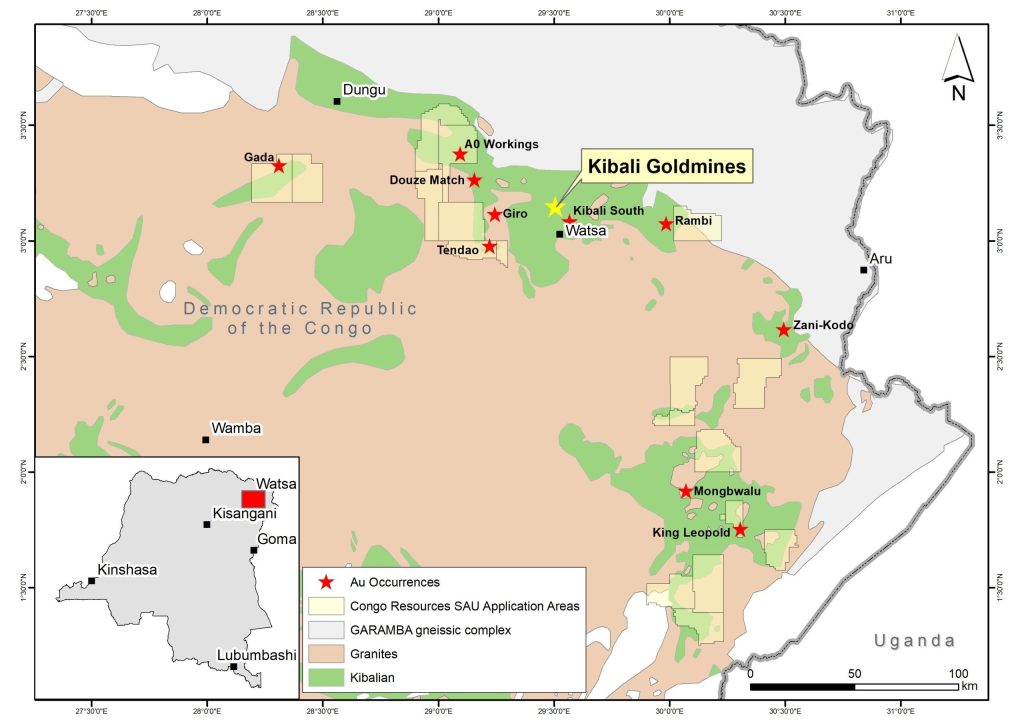
The country’s main gold-producing provinces are Ituri, South Kivu, Haut-Uélé, and Maniema, and its gold industry splits broadly into two categories: large-scale industrial mining operated by licensed companies, and artisanal and small-scale mining (ASGM) carried out by individuals and cooperatives using largely manual methods.
Quick facts:
| Fact | Information |
|---|---|
| Country | Democratic Republic of the Congo |
| Main product | Gold |
| Mining types | Industrial and artisanal |
| Major producing provinces | Ituri, South Kivu, Haut-Uélé, Maniema |
| Main export product | Gold doré and refined gold |
It’s important to note upfront that this list of “major producing provinces” includes two regions — Ituri and South Kivu — that are currently affected by serious, active armed conflict, which directly shapes how gold from those specific areas should be sourced, if at all. More on that below.
Where Is Gold Found in Congo?
Ituri Province
Ituri is one of the DRC’s most productive gold regions, hosting both large industrial mining projects and extensive artisanal activity. It’s also, as of 2026, one of the most conflict-affected provinces in eastern DRC.
More than 120 armed groups operate across the eastern DRC region encompassing Ituri, and reporting indicates armed militias in gold-rich areas of Ituri earned an estimated $140 million in mineral revenue in 2024 alone — funding that directly sustains armed conflict and has been linked to child labor within militia-controlled mining operations. Buyers should treat any gold claiming Ituri origin with heightened scrutiny rather than standard due diligence.
South Kivu
South Kivu has a long mining history and a significant small-scale mining sector, but the province is currently at the center of the M23 conflict that escalated sharply from 2022 onward. M23 rebels, widely reported to receive support from Rwanda, have directly looted gold from mining operations in South Kivu — one mining company alone reported roughly 500 kilograms of bullion, worth an estimated $70 million, looted from its concession since mid-2025.
Provincial authorities have also been implicated in covering up illegal gold deals with armed groups operating in the area. Given this, South Kivu currently represents one of the highest-risk gold sourcing regions anywhere in the world, and responsible buyers should not treat gold from this province as routine sourcing.
Haut-Uélé
Haut-Uélé, in the country’s northeast, hosts significant industrial mining operations, including large-scale projects with substantial modern exploration and development activity.
Unlike Ituri and South Kivu, Haut-Uélé sits outside the current core zone of the M23 conflict, though buyers should still confirm current conditions and proper licensing before sourcing, since the security situation across eastern DRC can shift.
Maniema
Maniema hosts a substantial artisanal mining sector, working gold-bearing geological formations across the province. As with any DRC sourcing decision, current conditions and licensing status should be verified directly rather than assumed stable, given how quickly the security picture in surrounding provinces has shifted in recent years.
gold mines in congo map
Types of Gold Mining in Congo
Industrial Mining
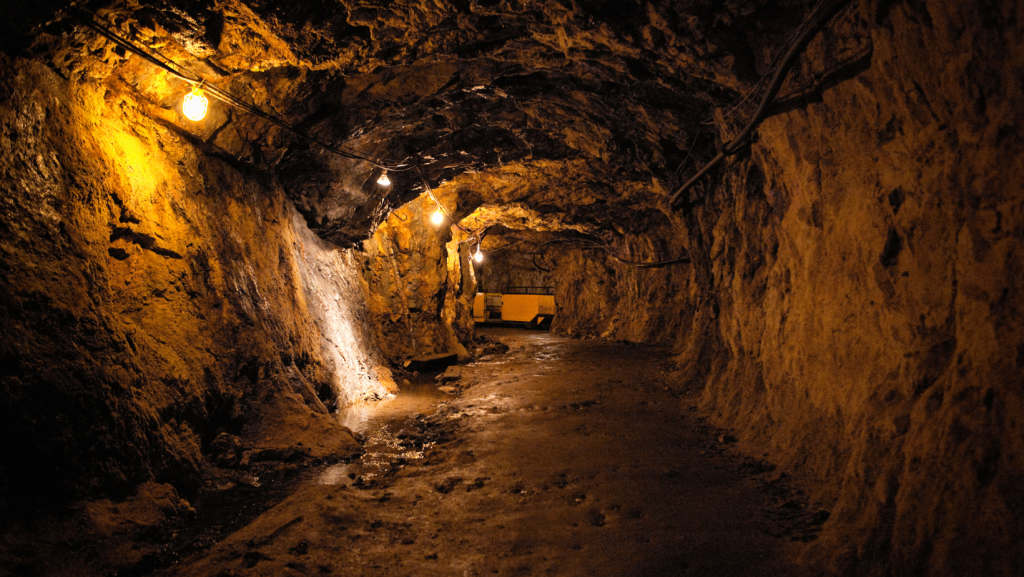
Industrial gold mining in the DRC involves large-scale operations, heavy machinery, and modern processing infrastructure, generally operated by licensed mining companies subject to environmental and regulatory obligations, including formal licensing, environmental impact assessments, and reporting requirements to Congolese mining authorities.
Artisanal and Small-Scale Mining (ASGM)
Artisanal and small-scale gold mining remains a major part of the Congolese gold sector, involving community-based mining using largely manual tools and methods.
This sector holds real local economic importance, supporting livelihoods across mining communities, and formalization efforts — bringing more artisanal mining under proper licensing, safety, and traceability standards — continue, though with mixed success given the security challenges in parts of the east.
It’s precisely this artisanal sector, operating in areas without effective state control, that has proven most vulnerable to armed-group taxation, forced labor, and outright looting in conflict-affected provinces.
How Gold Is Mined in Congo
The general process follows a familiar sequence: geological exploration to identify viable deposits, site development, ore extraction, crushing and grinding to release gold particles, gold recovery through gravity separation or chemical methods, smelting into semi-pure doré bars, professional refining to investment-grade purity, and finally export through legal channels — assuming proper documentation exists at every stage.
Gold Processing in Congo
Processing follows the same core stages used across the global gold industry: crushing and grinding to break down ore, gravity separation for visible, free-milling gold, flotation for more complex ore bodies, and smelting to produce doré.
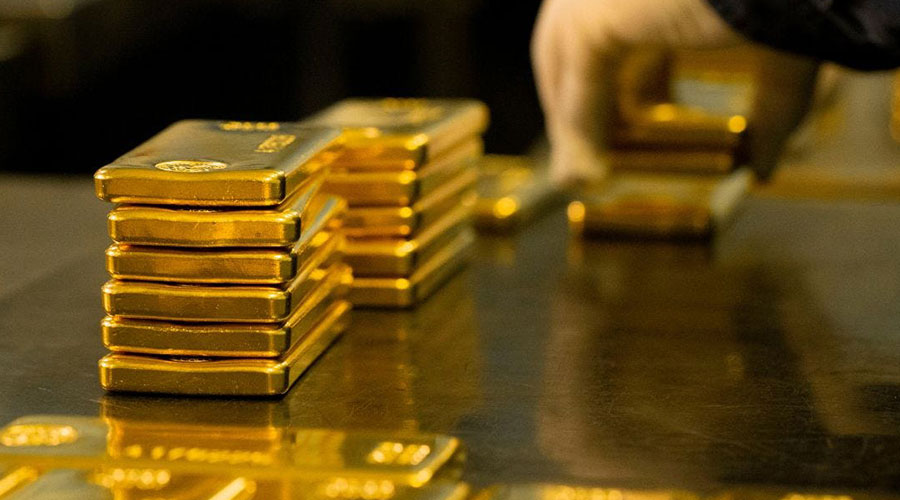
These semi-pure doré bars — typically 70–95% gold, mixed with silver, copper, and trace metals — are later sent to professional refineries for further purification into higher-purity, investment-grade gold bars.
Major Industrial Operations in Congo
| Company | Mining Area | Activity |
|---|---|---|
| Kibali Gold Mine | Haut-Uélé | Large-scale gold mining |
| Other licensed operators | Various provinces | Exploration and production |
Licensed industrial mining companies operate under formal government agreements and regulatory oversight, generally offering far more traceable, verifiable supply chains than artisanal gold sourced from conflict-affected areas.
Buyers evaluating DRC gold should weight this distinction heavily — a licensed industrial operation in a stable province carries a fundamentally different risk profile than artisanal gold moving through militia-influenced territory.
Gold Mining Laws and Regulations
DRC gold mining is governed by a formal legal framework covering mining licenses, environmental obligations, taxation, and export permits, with government oversight nominally extending across the sector.
In practice, enforcement capacity varies significantly by region — considerably stronger in areas under stable state control than in the conflict-affected east, where armed groups have in some documented cases operated with the involvement or acquiescence of local officials.
Mining regulations and enforcement conditions can change, so buyers and investors should consult current, verified information before conducting business rather than relying on general guidance alone.
Gold Export Process
Legal gold export from the DRC generally follows this sequence: production, independent assaying to confirm purity, full documentation, export permits from the relevant national authority, customs procedures, international shipping, and compliance with the destination country’s own import requirements.
Every step in this chain represents a point where legitimate, documented gold can be distinguished from gold moving through informal or illicit channels — which is exactly why documentation gaps at any stage should be treated as a serious warning sign rather than a minor paperwork issue.
Responsible Gold Sourcing
Responsible sourcing isn’t a box-ticking exercise for DRC gold — it’s the single most important factor determining whether a purchase is ethical and legal at all. Meaningful due diligence includes full supply chain traceability back to a specific, verified mine or trading point; adherence to internationally recognized frameworks such as the OECD Due Diligence Guidance for Responsible Supply Chains of Minerals from Conflict-Affected and High-Risk Areas; robust anti-money laundering (AML) and know-your-customer (KYC) compliance; and genuine environmental and social impact consideration, not just paperwork.
Given the documented, current links between gold mining revenue and armed conflict in Ituri and South Kivu specifically — including reporting on looted mine output, militia taxation of artisanal sites, and associated child labor — buyers applying real due diligence should treat gold claiming origin in these two provinces as carrying elevated, potentially unacceptable risk unless it comes with exceptional, independently verified chain-of-custody documentation tracing it to a specific, non-conflict-affected source.
For most buyers, gold from Congo’s more stable provinces, sourced through licensed industrial operators, represents a fundamentally safer and more responsible option than gold of uncertain provenance from the current conflict zone.
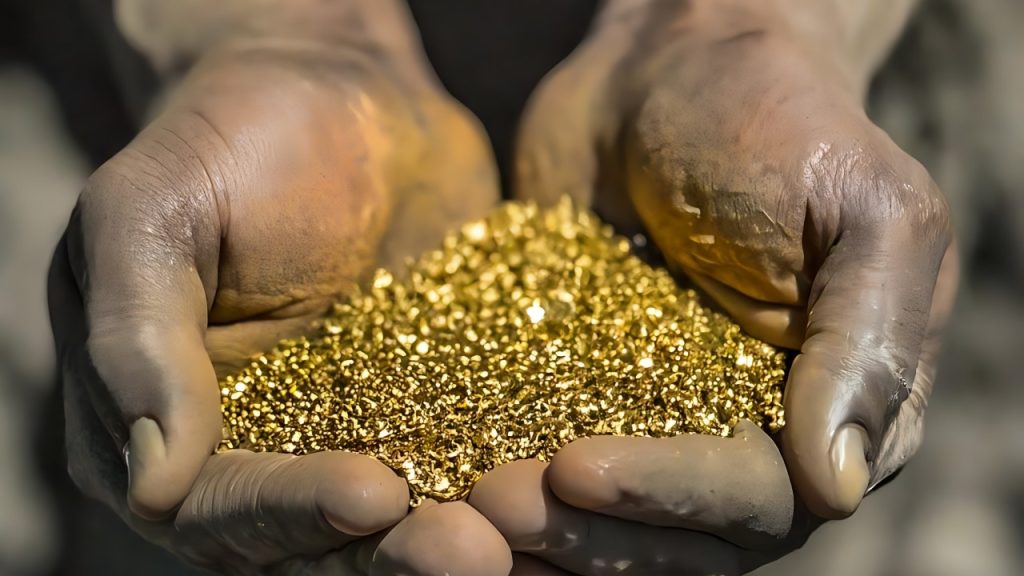
Economic Importance of Gold Mining
Where it operates through legitimate, licensed channels, gold mining supports real economic activity in the DRC — employment across both industrial and artisanal operations, government revenue through royalties and taxation, export earnings, infrastructure development tied to mining investment, and continued foreign investment interest in the sector.
This economic potential is genuine, which makes the diversion of mineral wealth into conflict financing in parts of the east an even more significant loss — both for legitimate Congolese communities and for the country’s broader development.
Challenges Facing the Gold Mining Industry
The DRC’s gold sector faces substantial, well-documented challenges: infrastructure constraints limiting development in remote mining regions, illegal and unlicensed mining operating outside regulatory oversight, real environmental impacts from certain extraction methods, severe and active security issues in parts of the east — where more than 120 armed groups operate and conflict has displaced over 7 million people nationally — alongside limited access to financing for legitimate operators and the ordinary market price fluctuations affecting the entire gold industry.
The security dimension in particular isn’t a background risk factor here; as of 2026, it’s an active, defining feature of sourcing conditions in specific provinces.
How to Buy Gold from Congo Safely
For gold sourced from stable, properly licensed regions of the DRC, standard verification applies:
- ☐ Verify supplier licenses directly with Congolese mining authorities
- ☐ Request independent assay reports from a recognized lab
- ☐ Confirm full export documentation, including permits and certificates of origin
- ☐ Conduct independent, on-site inspections for significant purchase volumes
- ☐ Use secure, traceable payment methods
- ☐ Arrange fully insured transport
- ☐ Ensure compliance with both DRC export law and your destination country’s import requirements
For gold claiming origin in Ituri or South Kivu specifically, this standard checklist is not sufficient given current conditions. Buyers should seek independent, third-party conflict-minerals certification (such as verified ITSCI-aligned traceability where available) and should be prepared to decline a purchase entirely if a supplier cannot demonstrate a clean chain of custody untouched by armed-group involvement.
Our broader guide on how to buy gold bars from Africa safely and legal requirements for buying gold bars from Africa cover the underlying verification principles that apply across every African market, DRC included.
Comparison: Industrial vs. Artisanal Mining in Congo
| Industrial Mining | Artisanal Mining |
|---|---|
| Large-scale | Small-scale |
| Heavy machinery | Manual methods |
| Higher production | Lower production |
| Licensed companies | Individual miners or cooperatives |
| Advanced processing | Simpler processing methods |
FAQs – Gold Mining in Congo
Where is most gold mined in Congo? Ituri, South Kivu, Haut-Uélé, and Maniema are the country’s main gold-producing provinces, though Ituri and South Kivu are currently affected by active armed conflict that materially affects sourcing safety and legality.
Is gold mining legal in the DRC? Yes, through properly licensed industrial operations and formalized artisanal mining. However, a substantial share of gold moving through conflict-affected eastern provinces bypasses legal channels entirely, including gold looted directly by armed groups.
What is artisanal gold mining? Small-scale, community-based mining using largely manual tools rather than industrial machinery, common across several DRC provinces and a significant source of local livelihood where it operates outside conflict areas.
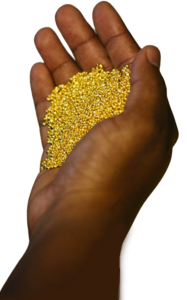
What is a doré gold bar? A semi-pure gold alloy, typically 70–95% gold mixed with silver, copper, and trace metals, produced at mine sites and requiring further professional refining before reaching investment-grade purity.
How is Congolese gold processed? Through crushing, grinding, gravity separation or flotation, smelting into doré, and finally professional refining to investment-grade purity — the same core process used across the global gold industry.
Which provinces produce the most gold? Ituri and Haut-Uélé host some of the country’s most significant gold production, alongside South Kivu and Maniema.
How is gold exported from the DRC? Through production, independent assaying, full documentation, export permits, customs clearance, and compliance with the destination country’s import requirements — when following legal channels.
What documents are needed to export gold? An export permit, assay certification, certificate of origin, and customs documentation satisfying both DRC regulations and the destination country’s import rules.
How can buyers verify a gold supplier? Confirm licensing directly with relevant authorities, request independent assay reports, review export documentation, and for higher-risk regions, seek independent, third-party conflict-minerals traceability certification.
Why is responsible sourcing important? Because gold mining revenue in parts of eastern DRC currently funds active armed conflict, associated human rights abuses, and child labor. Sourcing decisions here carry real consequences beyond the transaction itself, not just legal or financial risk.
A Note on Sourcing Gold From the DRC
The DRC’s gold sector holds genuine, legitimate economic potential, particularly through licensed industrial operations in its more stable provinces. But an honest guide to this market can’t treat all of it the same way — gold from Ituri and South Kivu currently carries a documented, material risk of funding armed conflict, and buyers should apply correspondingly rigorous, verified due diligence, or decline sourcing from these specific areas entirely, rather than relying on a standard checklist.
Buy Gold Bars Africa Ltd applies full assay certification and verified sourcing documentation to every transaction across our African supply network, and we assess DRC-origin gold against this heightened standard given current conditions in the country’s east.
If you’re evaluating a DRC gold purchase, contact us to discuss verified sourcing options, or explore our broader range of certified gold bars, gold ingots, and gold nuggets sourced from established, licensed producers elsewhere on the continent.
Related Pages
- 24K Gold Bars
- 22K Gold Bars
- 1 oz Gold Bar
- Gold Ingots for Sale
- Gold Dust & Doré
- Gold Nuggets & Bullion
- Buy Physical Gold Online
- Gold for Sale in Kampala, Uganda
- Where to Buy Gold in South Africa
- Buy Gold in Tanzania
- South Africa Gold Export Licence
- Shipping Gold to the USA from Africa
- How to Buy Gold Bars from Africa Safely
- Legal Requirements for Buying Gold Bars from Africa
- FAQs
- About Us