Kibali Gold Mine DRC Location and Access, Gold Production
Kibali gold mine: Everything you need to know about the Kibali Gold Mine in DRC — 2026 production data, current gold prices, ownership structure, mining methods, environmental impact, and how to buy Kibali gold. Africa’s largest gold mine explained.
What Is the Kibali Gold Mine?
The Kibali Gold Mine in the Democratic Republic of Congo (DRC) is Africa’s largest gold mine by output and one of the most technologically advanced mining operations in the world.
Located in the Haut-Uélé province of northeastern DRC — near the town of Kalimva, approximately 220 km east of Isiro and 150 km west of the Ugandan border — Kibali sits within the ancient Moto Greenstone Belt, one of Central Africa’s most mineral-rich geological formations.
Since pouring its first gold in September 2013 after a $1.7 billion development investment, the mine has operated continuously, producing hundreds of thousands of ounces annually and generating billions in revenue for its joint venture owners and the Congolese state alike.
As of 2026, Kibali continues to operate on a 10-year rolling plan, with active exploration along the ARK-KCD corridor targeting significant reserve extensions beyond the current ore body.
For investors, gold buyers, and anyone interested in the DRC gold industry, this complete 2026 guide covers everything: production figures, current gold prices, ownership, mining techniques, environmental impact, economic contribution, and the buying process.

Kibali Gold Mine Ownership: Who Owns Kibali?
The Kibali Gold Mine is operated by Kibali Goldmines SA, a joint venture structured as follows:
| Stakeholder | Stake | Headquarters | Role |
|---|---|---|---|
| Barrick Mining Corporation | 45% | Toronto, Canada | Operating partner & mine manager |
| AngloGold Ashanti | 45% | Johannesburg, South Africa | Silent equity partner |
| SOKIMO (Société Minière de Kilo-Moto) | 10% | Kinshasa, DRC | State-owned Congolese entity |
Barrick Mining (formerly Barrick Gold Corporation, rebranded in 2024) serves as the mine operator, responsible for day-to-day management, technical decisions, capital deployment, and reporting.
AngloGold Ashanti holds an equal equity position and participates in strategic decisions. SOKIMO’s 10% stake ensures that the Congolese state participates directly in the mine’s profits — in 2025, SOKIMO received $231.1 million from Kibali’s consolidated revenues.
The mine’s concession covers 1,836 square kilometres of the historic Kilo-Moto goldfields under ten Exploitation Permits, all held by Kibali Goldmines and currently in good standing with DRC authorities.
Kibali Gold Mine Location: Where Is It?
- Province: Haut-Uélé, northeastern Democratic Republic of Congo
- Nearest town: Kalimva (southeast); Durba (historical reference)
- Distance from Isiro (provincial capital): ~220 km east
- Distance from Ugandan border (Arua): ~150 km west
- Distance from Kampala, Uganda (main access road): ~650 km
- Distance from Kinshasa (DRC capital): ~1,800 km northeast
- Nearest international airport: Kisangani International Airport (domestic connections from Kinshasa)
How to Get to the Kibali Gold Mine
Reaching Kibali requires careful logistics. The primary access route runs by road from Kampala, Uganda — making Uganda the main entry corridor for supplies, personnel, and visitors. The main road from Kampala through Arua to Durba, while long, is the most reliable overland route.
For official business visits, Barrick typically arranges chartered flights from Entebbe (Kampala) or Nairobi directly to the Kibali airstrip. Independent access is extremely limited due to the remote location and security requirements in northeastern DRC.
Kibali Gold Mine Production: 2025 Actuals and 2026 Forecast
2025 Production Performance
Kibali’s 2025 gold output came in at approximately 673,000 ounces on a 100% consolidated basis, with Barrick’s 45% attributable share at 303,000 ounces. This represented a 2% year-on-year decline in attributable production, following a 10% drop in 2024.
Despite the production decline, revenues surged: Barrick reported attributable revenue of $1.04 billion from Kibali in 2025, up 40% from $743 million in 2024.
On a 100% consolidated basis, Kibali generated $2.31 billion in total revenue — its highest-ever annual revenue figure, driven by record-high gold prices.
The standout quarter was Q3 2025, when Kibali produced 191,000 ounces of gold — a 21% increase year-on-year from 159,000 ounces in Q3 2024.
The improvement was driven by a 133% surge in open-pit ore extraction, which offset a decline in underground mining volumes.
2026 Production Guidance
For 2026, Barrick expects attributable production between 270,000 and 310,000 ounces, equivalent to approximately 600,000 to 688,900 ounces on a 100% consolidated basis. If output reaches the upper end of the range, 2026 production would exceed 2025 levels.
Kibali Production History at a Glance
| Year | Estimated Total Output (oz) | Key Notes |
|---|---|---|
| 2019 (Record) | 814,000 | All-time production high |
| 2022 | ~755,000 | Strong year; met targets |
| 2023 | ~720,000 | Grade decline begins |
| 2024 | ~686,000 | 10% drop; target missed |
| 2025 | ~673,000 | 2% decline; revenue +40% |
| 2026 (Guided) | 600,000–688,900 | Recovery targeted |
Kibali accounted for 99.6% of the DRC’s gold exports in 2024, making it by far the dominant gold export asset in one of Central Africa’s largest economies.
Current Gold Prices at Kibali Mine
Gold produced at Kibali is priced according to the international LBMA spot price, which stands at approximately $4,130.60 USD per troy ounce — or $151.77 USD per gram for 24K (99.99% purity). This is a dramatic increase from the ~$3,292 per ounce figure published in older articles.
⚠️ Prices fluctuate every minute. The figures below are reference rates based on the LBMA spot price. Always confirm live pricing with your licensed dealer or direct contact before transacting.
Kibali Gold Price Table
| Gold Product | Purity | Price per Gram (USD) | Price per Troy Oz (USD) | Price per kg (USD) |
|---|---|---|---|---|
| Gold Bullion Bars (24K) | 99.99% | $132.80 | $4,130.60 | $132,801.87 |
| Raw / Unrefined Gold | 85–95% | $129–$144 | $4,012–$4,484 | ~$129,000–$144,000 |
| Gold Nuggets (natural) | 80–95% | $121–$144 | $3,776–$4,484 | ~$121,000–$144,000 |
| Gold Dust | 80–92% | $121–$140 | $3,776–$4,342 | ~$121,000–$140,000 |
| Dore Bars (semi-refined) | 70–90% | $106–$136 | $3,304–$4,248 | ~$106,000–$136,000 |
Kibali Gold Price by Weight (24K Bullion)
| Weight | Price (USD) |
|---|---|
| 1 gram | $151.77 |
| 5 grams | $758.85 |
| 10 grams | $1,517.70 |
| 1 troy ounce (31.1g) | $4,130.60.00 |
| 100 grams | $15,177.00 |
| 1 kilogram | $151,770.00 |
| 12.5 kg (standard bar) | ~$1,897,125 |
Note on raw and unrefined gold pricing: Gold nuggets, gold dust, and dore bars are priced at a discount to the pure spot price to reflect their lower and variable purity.
The exact discount depends on assayed purity, which must be verified by an accredited laboratory before any transaction.
Types of Gold Produced by Kibali Gold Mine
1. Gold Bullion Bars (Doré Refined to 99.99%)
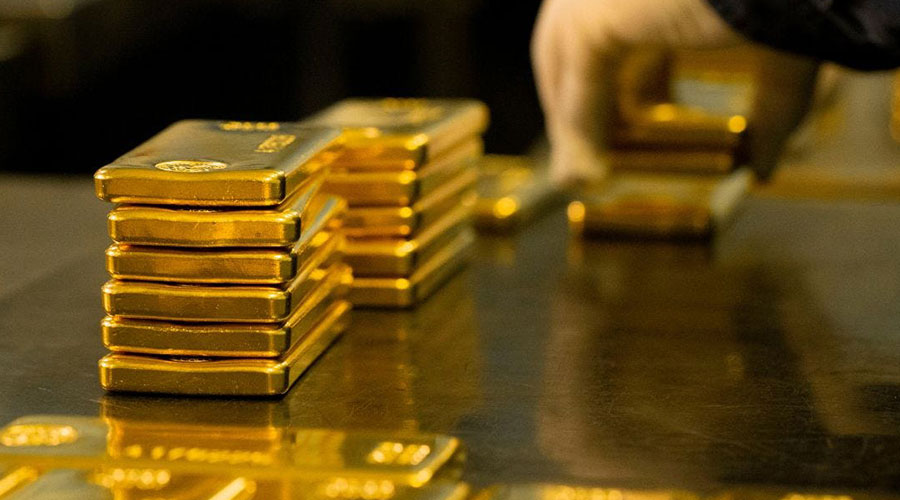
Kibali’s primary commercial output is large gold bullion bars refined to 99.99% purity (also expressed as 24K or 9999 fine). Standard sizes range from 1 kilogram to the London Good Delivery standard of 400 troy ounces (12.4 kg).
These bars are the preferred product for institutional investors, central banks, and commodities traders due to their certified purity, standardized weight, and ease of trade on international markets.
2. Dore Bars (Semi-Refined)
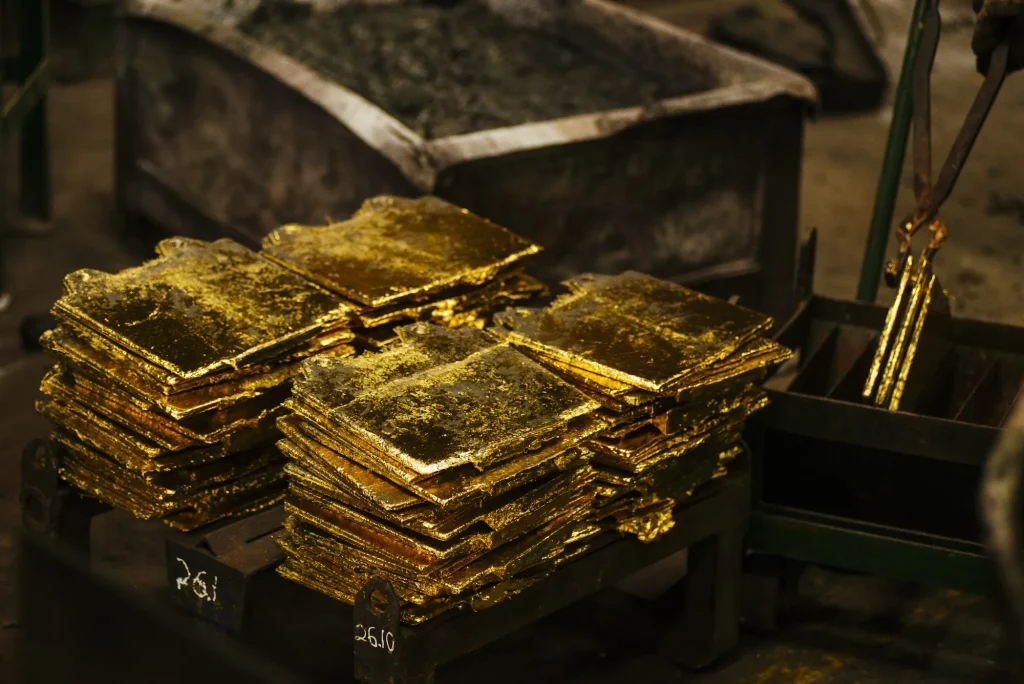
Before final refining, Kibali produces dore bars — semi-refined gold-silver alloy bars with typical purity of 70–90% gold. Dore is shipped from the mine to accredited refineries (including those in Europe and South Africa) for final processing into bullion bars, gold coins, or industrial-grade gold.
3. Natural Gold Nuggets
Artisanal and small-scale miners (ASM) in the broader Kilo-Moto goldfields produce natural gold nuggets of varying sizes and shapes.
These are prized by collectors and investors for their natural form and rarity. Purity typically ranges from 80–95% and must be verified by assay.
4. Gold Dust and Fine Gold
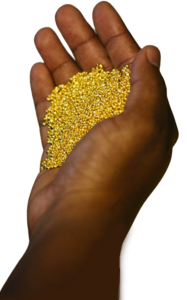
Gold dust and fine gold particles are a by-product of artisanal mining operations and some processing streams. They are used in industrial applications, fine jewellery manufacturing, and as a base for further refining. Gold dust is measured in grams and priced at a discount to bullion based on purity.
5. Gold Coins (Limited Issuance)
While Kibali itself does not mint coins for retail sale, gold sourced from the broader DRC region is used to produce commemorative and investment coins through refinery partnerships. These are popular with collectors and available through licensed gold dealers.
Kibali Mine Operations: How Gold Is Extracted
Mining Methods: Open-Pit and Underground (Hybrid Approach)
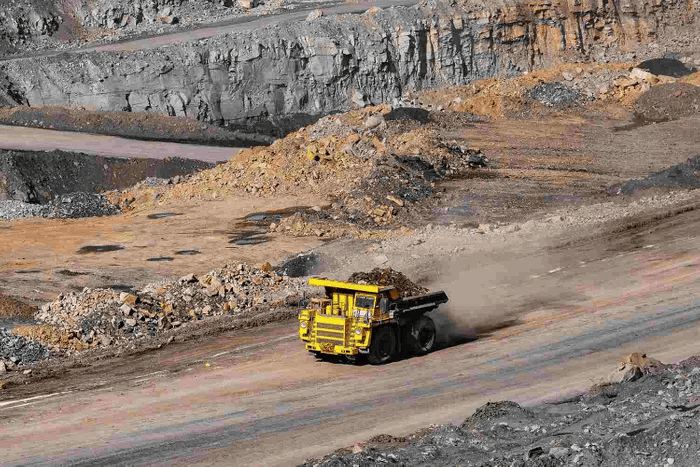
The Kibali Gold Mine uses a hybrid open-pit and underground mining system, one of the most sophisticated in Africa:
Open-Pit Mining: Kibali operates multiple surface pits including the Kalimva, Ikamva, and Ndala satellite pits, contracted to local Congolese businesses.
In Q3 2025, open-pit ore output surged by 133%, demonstrating the strategic importance of surface operations during periods of underground grade fluctuation.
Underground Mining: The underground operation accesses the high-grade KCD (Karagba-Chaffeur-Durba) ore body through twin surface declines (commissioned 2012) and a 740-metre haulage shaft (commissioned 2017).
The underground system can deliver up to 3.5 million tonnes per annum (Mtpa) of ore to the processing plant. Underground mining typically yields higher-grade ore, justifying the elevated extraction costs.
Processing Plant
The 7.5 Mtpa processing facility at Kibali includes:
- A sulphide plant for processing refractory ore (requires roasting or pressure oxidation)
- An oxide plant for processing free-milling ore (conventional carbon-in-leach process)
- Combined capacity of 7.2 million tonnes of ore per year
Together, these facilities process ore at a head grade of approximately 2.79 g/t Au (grams of gold per tonne of ore), producing final dore bars that are shipped to international refineries.
Fleet Automation and Digital Innovation (2026)
In 2026, Kibali continues to upgrade its automation and digitalization efforts, including advanced fleet tracking, autonomous loading systems for greater ore haulage efficiency, and spectral ore sorting technology that increases metallurgical recoveries while minimizing waste.
Kibali Gold Mine Renewable Energy: Africa’s Greenest Gold Mine
One of Kibali’s most distinctive achievements is its energy profile. The mine sources over 80% of its energy from renewable sources, making it one of the greenest large-scale gold operations in the world.
Hydropower Infrastructure
Kibali operates three run-of-river hydroelectric power stations on the Kibali and Nzoro rivers, with a combined capacity of 44 MW. These plants avoid the need for conventional dams, preserving river ecosystems while delivering consistent baseload power.
Solar Expansion (2025–2026)
A 16 MW solar photovoltaic farm with battery energy storage is being constructed and commissioned in phases. Once fully operational, Kibali’s renewable energy share is expected to rise from approximately 80% to 85%, with renewable energy meeting 100% of the mine’s power needs for six months of the year.
Environmental Benefits
- Fuel consumption reduction target: 53%
- Greenhouse gas emission reduction target: 47%
- A 32 MW backup thermal generator provides redundancy during low-water periods
This renewable energy leadership positions Kibali as a benchmark for sustainable mining in Sub-Saharan Africa and reduces operational costs significantly compared to diesel-dependent mines in the region.
Kibali’s Economic Impact on the DRC
The Kibali Gold Mine is the single largest private economic contributor to the northeastern DRC. Updated figures for 2026:
Total in-country investment by Kibali has now surpassed $6.3 billion, including $3.1 billion in payments to local contractors and partners. More than 700 Congolese companies are supported through procurement and capacity-building initiatives.
On a 100% consolidated basis, Kibali generated $2.31 billion in revenue in 2025, of which $231.1 million accrued to the Congolese state through SOKIMO’s equity stake.
Key Economic Contributions at a Glance
| Impact Category | Figures (as of 2026) |
|---|---|
| Total in-country investment | $6.3 billion+ |
| Payments to local suppliers | $3.1 billion+ |
| Government royalties and taxes | $1.4 billion+ (cumulative) |
| SOKIMO revenue share (2025) | $231.1 million |
| Direct employment | 5,000+ jobs |
| Congolese companies supported | 700+ |
| Community development fund invested | $4.8 million (Cahier des Charges) |
The mine remains the single biggest economic contributor to northeastern DRC, spanning the Haut-Uele and Ituri provinces.
Community Investment Programs
41 out of 44 projects funded through the 0.3% community development fund have been completed, delivering infrastructure, education, and healthcare support.
The Barrick Academy has provided training to hundreds of Kibali employees, building long-term career pathways for Congolese mining professionals.
Healthcare initiatives include malaria prevention programs, mobile clinic funding, and clean water access projects. Educational investments cover school construction, teacher training support, and vocational skills programs targeted at youth in Haut-Uélé province.
Kibali Mine Reserve Base and Life of Mine (2026 Outlook)
The ARK-KCD corridor — the geological system hosting Kibali’s main ore body — continues to yield significant exploration results:
Drilling results from the ARK-KCD corridor continue to strengthen confidence in its scale and continuity, demonstrating the potential to host significant additional ore bodies and further extend the life of mine. Barrick has replaced every ounce it has mined since Kibali poured its first gold in 2013.
Key reserve and life-of-mine facts:
- Estimated remaining gold reserves: Over 8 million ounces (proven and probable)
- Extended mine life under current plan: Operations expected through at least 2037
- Exploration upside: The ARK-KCD corridor shows expanding mineralization laterally and at depth, with potential for significant new ore body discoveries within the existing footprint
This reserve replacement record — achieved for four consecutive years — is a rare achievement in the global gold mining industry and underlies Kibali’s Tier One asset status within Barrick’s portfolio.
Kibali Environmental Stewardship: Beyond the Mine
Biodiversity and Wildlife Conservation
Kibali has funded one of the most headline-generating conservation initiatives in DRC mining history: the reintroduction of white rhinos into Garamba National Park, located within the broader Haut-Uélé ecosystem. This ongoing program reflects a commitment to biodiversity that extends well beyond the mine’s concession boundaries.
Water Management
Kibali operates a closed-loop water management system that minimizes freshwater consumption and prevents contamination of local rivers and lakes.
Real-time environmental sensors monitor water quality, air quality, and tailings storage facilities continuously, enabling rapid response to any potential incidents.
Tailings Management
The mine maintains dedicated Coarse Tailings Storage Facilities (CTSF) with progressive construction through 2040, engineered to international dam safety standards.
Tailings management is one of the highest-risk areas in gold mining globally, and Kibali’s multi-stage system represents best-in-class practice for the region.
Land Rehabilitation
Kibali implements progressive rehabilitation — restoring mined land as operations advance, rather than waiting for mine closure. Methods include backfilling, terracing, lime dosing for acid neutralization, and native species replanting to restore agricultural and ecological value.
How to Buy Gold from the Kibali Gold Mine (2026)
Purchasing Kibali-origin gold requires careful legal compliance with both DRC export regulations and the import laws of your destination country. Here is the legitimate process:
Step 1: Identify a Licensed DRC Gold Exporter
Direct purchases from Kibali Goldmines SA are not available to retail buyers. Gold must be purchased through DRC Ministry of Mines-licensed gold trading companies or authorized intermediaries. Verify any exporter’s license directly with the DRC Ministère des Mines before engaging.
Step 2: Specify Your Product Requirements
Determine what form of gold you need — bullion bars (24K), dore (semi-refined), nuggets, or gold dust — and your target quantity. Each product type has different pricing, documentation, and export requirements.
Step 3: Request a Purity Certificate and Assay Report
Any legitimate gold transaction must be accompanied by an assay certificate from an accredited laboratory confirming the gold’s purity, weight, and origin. For Kibali-origin gold, PMMC-equivalent assay documentation is required for export.
Step 4: Complete DRC Export Documentation
DRC gold exports require:
- DRC Ministère des Mines export authorization
- Certificate of Origin (proving DRC sourcing)
- Assay Certificate / Certificate of Analysis
- Commercial Invoice with declared value
- Customs Declaration
- Bank of Congo foreign exchange compliance documentation
Step 5: Arrange Secure Logistics
Gold from DRC must be transported using licensed, insured secure logistics providers. Established carriers for Central African gold shipments include Brinks Global Services, Malca-Amit, and G4S. Air freight from N’djili International Airport (Kinshasa) or Entebbe Airport (Uganda) is standard for international shipments.
Step 6: Comply with Destination Country Import Rules
USA imports: File FinCEN 105 for shipments over $10,000; gold bullion is generally duty-free. Verify that DRC gold is not sourced from conflict zones, which could trigger additional compliance requirements under the Dodd-Frank Act Section 1502 (conflict minerals regulations).
Scam warning: The Kibali Gold Mine name is frequently used by fraudsters offering large gold purchases at impossible discounts. Legitimate Kibali gold is NOT sold directly to individual buyers online. Any website or individual claiming to sell “Kibali Mine gold” at below-market prices without proper documentation is almost certainly operating a scam. Always work with verified, licensed exporters.
Kibali vs. Other Major Gold Mines in Africa (2026 Comparison)
| Mine | Country | Owner/Operator | 2025 Output (est.) | Reserve Base |
|---|---|---|---|---|
| Kibali | DRC | Barrick / AngloGold / SOKIMO | ~673,000 oz | 8M+ oz |
| Ahafo | Ghana | Newmont | ~670,000 oz | 10M+ oz |
| Loulo-Gounkoto | Mali | Barrick | ~600,000 oz | 9M+ oz |
| Tarkwa | Ghana | Gold Fields | ~500,000 oz | 7M+ oz |
| Obuasi | Ghana | AngloGold Ashanti | ~350,000 oz | 30M+ oz |
| Geita | Tanzania | AngloGold Ashanti | ~500,000 oz | 5M+ oz |
Kibali’s position as Africa’s largest or second-largest gold mine (competing closely with Newmont’s Ahafo) depends on final annual production figures. For 2026, Barrick targets 600,000–688,900 total ounces at Kibali — a production range that, at the upper end, would comfortably reclaim the continental top position.
List of Major Mining Companies in the DRC
Beyond Kibali, the DRC hosts one of the world’s richest concentrations of mineral assets:
Gold Mining:
- Barrick Mining Corporation (Kibali Gold Mine — Haut-Uélé)
- AngloGold Ashanti (Kibali joint venture partner)
- Various artisanal/small-scale miners (ASM) across Ituri, South Kivu, Maniema
Copper and Cobalt Mining:
- Glencore International (Katanga Mining — Katanga Province)
- Ivanhoe Mines (Kamoa-Kakula Copper Complex — largest copper discovery of the 21st century)
- Gécamines (state-owned copper and cobalt)
- CMOC Group (Tenke Fungurume — copper and cobalt)
- ERG Africa (Metalkol RTR — cobalt tailings reprocessing)
Coltan, Tin and Tungsten:
- Alphamin Resources (Bisie Tin Mine — North Kivu)
- Various ASM operators across eastern DRC
The DRC holds approximately 70% of the world’s known cobalt reserves, making it the most strategically important mineral jurisdiction on earth for the global EV battery supply chain.
FAQs: Kibali Gold Mine
Q: Where is the Kibali Gold Mine located? A: The Kibali Gold Mine is located in Haut-Uélé Province, northeastern Democratic Republic of Congo, near the town of Kalimva. It sits approximately 220 km east of Isiro, 150 km from the Ugandan border, and 1,800 km northeast of Kinshasa.
Q: Who owns the Kibali Gold Mine in 2026? A: Kibali is owned by a joint venture: Barrick Mining Corporation (45%), AngloGold Ashanti (45%), and the DRC state entity SOKIMO (10%). Barrick serves as the mine operator.
Q: How much gold does Kibali produce per year? A: In 2025, Kibali produced approximately 673,000 ounces (100% consolidated basis). For 2026, Barrick has guided production of 600,000 to 688,900 ounces. The mine’s all-time production record was 814,000 ounces in 2019.
Q: What is the current gold price from Kibali Mine? A: Gold from Kibali is priced at the prevailing international spot price. Today, the gold spot price is approximately $$4,130.60 per troy ounce ($151.77 per gram for 24K). Raw and unrefined gold products trade at a discount to this based on their purity.
Q: Can I buy gold directly from Kibali Gold Mine? A: No. Kibali Goldmines SA does not sell gold directly to individual or retail buyers. Kibali’s gold is sold through established commodity channels to refineries and institutional buyers. To purchase DRC-origin gold, you must work with a DRC Ministère des Mines-licensed gold exporter.
Q: How long will the Kibali Gold Mine operate? A: Under its current plan, Kibali is expected to operate through at least 2037. Ongoing exploration of the ARK-KCD corridor is targeting reserve extensions that could significantly extend the mine life beyond that date.
Q: Is Kibali a sustainable gold mine? A: Kibali is widely regarded as one of Africa’s most sustainable gold operations. Over 80–85% of its energy comes from renewable sources (hydropower and solar). It has implemented progressive land rehabilitation, closed-loop water management, biodiversity conservation programs, and extensive community development investment exceeding $4.8 million through its community fund.
Q: What is the ARK-KCD corridor? A: The ARK-KCD (Azambi-Rhino-Kibali – Karagba-Chaffeur-Durba) corridor is the main geological system hosting Kibali’s ore bodies. Ongoing drilling is revealing expanded mineralization that could host significant new ore bodies and extend Kibali’s reserve base well beyond current estimates.
Q: Is the Kibali Gold Mine linked to conflict minerals? A: Kibali is operated by internationally listed companies (Barrick and AngloGold Ashanti) under strict OECD Due Diligence Guidelines for Responsible Supply Chains from Conflict-Affected and High-Risk Areas. International buyers should conduct their own due diligence and request full chain-of-custody documentation for any DRC-origin gold purchase.
Conclusion: Kibali Gold Mine in 2026 — Africa’s Gold Powerhouse
The Kibali Gold Mine remains one of Africa’s most significant economic and industrial assets. Despite recent production headwinds, its $2.31 billion in 2025 revenue — the highest in its operating history — demonstrates that at current gold prices, even modest production declines are more than compensated by price appreciation.
For investors, the key facts are compelling: a remaining reserve base of 8 million+ ounces, an active life-of-mine through at least 2037, world-class renewable energy infrastructure, over $6.3 billion invested in the Congolese economy, and ongoing exploration that continues to expand the ore body.
For gold buyers and importers, Kibali-origin gold represents some of the finest and most carefully certified gold produced in Africa — provided it is sourced through legitimate, licensed DRC export channels and not through the fraudulent intermediaries that frequently exploit the Kibali brand online.
At the current spot price of approximately $$4,130.60 per troy ounce, DRC gold from the Kibali region offers significant value for verified institutional buyers, refineries, and licensed importers operating within the legal framework.
Prices last updated: May 8, 2026. Gold spot price based on LBMA reference rate (~$4,130.60/oz). All production and revenue figures sourced from Barrick Mining Corporation financial reports (2025) and publicly available industry data.
You also like to;