
Buy Gold in China Online: Prices, Chow Tai Fook, SGE & More
Buy Gold in China Online: Chinese buyers can purchase authentic African gold — including 24K gold bars, nuggets, and bullion from Tanzania, Uganda, Ghana, and South Africa — directly online through licensed African gold exporters like Buy Gold Bars Africa Ltd, with full assay certification, documented chain of custody, and insured international delivery to mainland China, Hong Kong, and Macau.
Today, the 24K gold price per gram in China is approximately ¥914 CNY ($135 USD) on the Shanghai Gold Exchange, with African-sourced gold available at competitive mine-direct premiums of 1–2% above the SGE benchmark — significantly below retail premiums charged by Chinese jewelers and banks.
Whether you are a Chinese investor looking to diversify with African gold bars, a Shenzhen or Shanghai importer seeking wholesale gold from Africa, a collector researching Chinese Gold Panda coins, or a first-time buyer comparing the gold price in China today versus international markets, this guide covers everything you need in 2026 — current CNY prices, where to buy gold in China, how to import gold from Africa legally, the role of the Shanghai Gold Exchange, and why African gold is attracting growing Chinese investor attention.
Current Gold Price in China Today – Buy Gold in China Online
Gold prices in China are set by two parallel reference systems: the international LBMA spot price (in USD per troy ounce) and the Shanghai Gold Benchmark Price (in CNY per gram), published twice daily by the Shanghai Gold Exchange (SGE) at 10:15 AM and 2:15 PM Beijing time. Both are closely aligned, with minor divergences driven by the USD/CNY exchange rate and China-specific supply-demand dynamics.
Today, with the global LBMA spot price at approximately $4,224 per troy ounce ($135.82 per gram) and the USD/CNY rate at approximately 6.77 CNY per USD, the current gold price in China per gram across all common karats is:
Gold Price Per Gram in China — All Karats
| Purity / Karat | Price per Gram (CNY) | Price per Gram (USD) |
|---|---|---|
| 24K — 999.9 (Pure Gold) | ~¥919 CNY | ~$135.82 |
| 22K — 916 | ~¥842 CNY | ~$124.47 |
| 21K — 875 | ~¥804 CNY | ~$118.84 |
| 18K — 750 | ~¥689 CNY | ~$101.85 |
| 14K — 585 | ~¥538 CNY | ~$79.49 |
Gold Price Per Kilogram and Per Ounce in China (24K)
| Weight | Price (CNY) | Price (USD) |
|---|---|---|
| 1 gram | ~¥919 CNY | ~$135.82 |
| 10 grams | ~¥9,190 CNY | ~$1,358 |
| 1 troy ounce (31.1g) | ~¥28,580 CNY | ~$4,224 |
| 100 grams | ~¥91,900 CNY | ~$13,582 |
| 500 grams | ~¥459,500 CNY | ~$67,910 |
| 1 kilogram | ~¥919,000 CNY | ~$135,820 |
30-Day Gold Price Trend in China (CNY per Gram, 24K)
| Date | 24K Price per Gram (CNY) | Change |
|---|---|---|
| June 12, 2026 | ¥913.93 | −2.95% (7-day) |
| June 3, 2026 | ¥972.68 | +0.03% |
| Weekly range (June) | ¥886.88–¥944.49 | — |
| 1-year performance | +~30% year-on-year | — |
| January 28, 2026 | Peak: ~¥1,050+ | 12-month high |
Gold in China has delivered approximately 30% returns in CNY terms over the past year, reflecting both the global gold price rally and mild CNY depreciation against the USD.
Chinese investors who bought gold in CNY 12 months ago have seen significant gains — a key reason behind the surge in retail gold buying at SGE-affiliated dealers, Chinese banks, and online platforms in 2026.
24K Gold Price in China Today
Gold prices in China are set by two aligned reference systems: the international LBMA spot price (USD/troy ounce) and the Shanghai Gold Benchmark Price (CNY/gram), published twice daily by the SGE.
| Purity / Karat | Price per Gram (CNY) | Price per Gram (USD) |
|---|---|---|
| 24K — 999.9 (Pure Gold) | ~¥988 | ~$138 |
| 22K — 916 | ~¥905 | ~$127 |
| 21K — 875 | ~¥865 | ~$121 |
| 18K — 750 | ~¥741 | ~$104 |
| 14K — 585 | ~¥578 | ~$81 |
| Weight | Price (CNY) | Price (USD) |
|---|---|---|
| 1 gram | ~¥988 | ~$138 |
| 10 grams | ~¥9,880 | ~$1,380 |
| 1 troy ounce (31.1g) | ~¥30,730 | ~$4,300 |
| 100 grams | ~¥98,800 | ~$13,800 |
| 1 kilogram | ~¥988,000 | ~$138,000 |
Gold reached a global all-time high of $5,597.23 per ounce on January 29, 2026, so current prices, while still historically elevated, sit meaningfully below that peak. Track live pricing on our current gold price per ounce and gold rate today pages, or directly via the SGE’s own published benchmark.
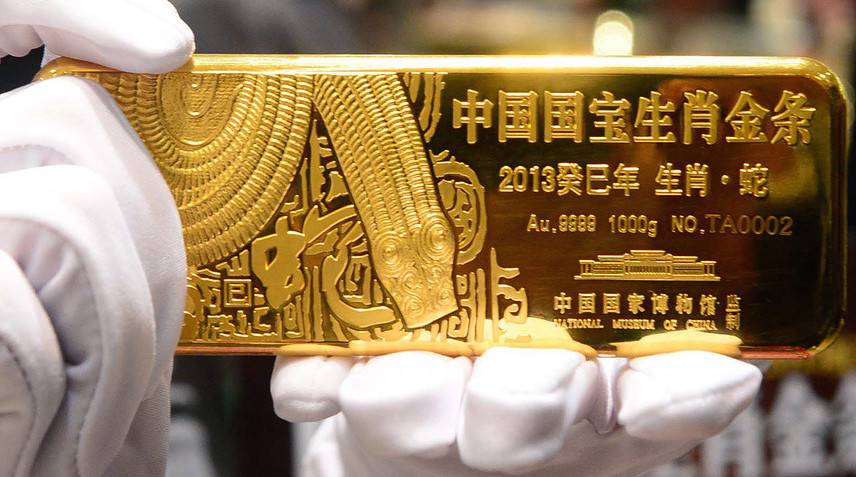
The Shanghai Gold Exchange (SGE) — China’s Gold Market Foundation
Established in 2002 and supervised by the People’s Bank of China (PBOC), the SGE is the world’s largest physical gold exchange by trading volume and the definitive CNY pricing reference. The Shanghai Gold Benchmark — the “Shanghai Gold Fix” — comes from a twice-daily auction based on 1kg lots of 99.99%-purity gold, delivered as standard ingots to certified SGE vaults.
Key facts for buyers and importers:
- The SGE operates 58 certified vaults across 36 Chinese cities, providing physical delivery and logistics nationwide.
- Standard benchmark contracts require 99.99% purity (four nines).
- The SGE International Board (SGEI), launched in 2014, lets foreign institutional buyers trade yuan-denominated gold contracts through an approved SGE International Member bank.
- The SGE benchmark increasingly functions as Asia’s primary gold pricing reference, alongside the LBMA in London.
Chinese Gold Jewelry 24K (999.9 Gold) Explained
Chinese gold jewelry is most commonly sold as 足金 (zújīn), meaning 24K/999 fine gold, or 千足金 (qiānzújīn), the higher 999.9 fine standard — both terms you’ll see stamped directly on hallmarks.
Unlike Western markets, where 18K (750) dominates jewelry, Chinese cultural preference strongly favors pure 24K gold for jewelry, prized for its color, weight, and cultural association with wealth and good fortune — even though pure gold is softer and less durable than alloyed karats.
This is also why Chinese 24K jewelry prices sit meaningfully above bar prices of the same purity: you’re paying for both the metal and the making charge (5–15%, sometimes more for intricate designs), whereas a 24K investment bar carries almost none of that premium.
See our gold purity chart and understanding gold purity guides for how 999.9 compares to other international purity standards, and our 24K vs 22K vs 18K gold comparison if you’re weighing purity against durability for jewelry specifically.
Why Chinese Investors and Importers Are Sourcing Gold from Africa
China has long been both the world’s largest gold consumer and its largest producer, but domestic mine supply in 2026 is insufficient to meet the country’s combined jewelry, investment, and industrial demand. This structural supply gap — combined with competitive mine-direct pricing from African exporters — has made Africa an increasingly important gold source for Chinese buyers.
The Africa-to-China gold trade in numbers:
Africa collectively produces approximately 800–900 tonnes of gold annually. The primary African gold-producing nations that export to China include Tanzania (4th largest African producer), Ghana (Africa’s largest producer), Mali (top five in West Africa), South Africa, and increasingly Uganda (which holds estimated reserves of 31 million tonnes of ore). Much of this gold flows eastward — to refineries in Dubai, Switzerland, and increasingly directly to Chinese SGE-certified refineries.
Why African gold is cost-competitive for Chinese buyers:
Mine-direct pricing through licensed African exporters like Buy Gold Bars Africa Ltd typically carries premiums of only 1–2% above the LBMA or SGE spot price.
By comparison, buying 24K gold through Chinese retail banks typically adds 3–5% in premiums, while jewelry retailers add 8–15% for making charges and brand premiums.
For wholesale buyers and institutional investors importing significant quantities — 1kg bars and above — sourcing directly from African licensed exporters can represent savings of ¥20,000–¥60,000 per kilogram compared to Chinese retail channels.
Ethical and traceable sourcing:
Chinese institutional buyers and SGE-member refineries increasingly require documented chain-of-custody certification for imported gold. African gold sourced through LBMA-accredited or GoldBod/DGSM-licensed exporters with OECD Due Diligence compliance provides the traceability documentation that meets this requirement — making it not just cost-competitive but compliance-ready for formal import into China.
How to Buy African Gold for Import to China — Step by Step
Step 1: Identify a Licensed African Gold Exporter
The foundation of any safe gold purchase from Africa for Chinese buyers is working with an exporter holding active export licenses in the country of origin. Verify the following before any transaction:
- Tanzania: DGSM (Directorate of Geological Survey and Mines) or TMC export license
- Ghana: GoldBod export authorization under the Ghana Gold Board Act, 2025
- Uganda: DGSM Mineral Dealer’s License and Gold Export Permit
- South Africa: DMRE (Department of Mineral Resources and Energy) registration
Buy Gold Bars Africa Ltd holds active export licenses across Tanzania, Uganda, Ghana, and South Africa, and operates offices in Kampala (Uganda) and Nairobi (Kenya). The company specializes in supplying 24K gold bars, nuggets, and bullion to international buyers including Chinese wholesale importers, with all shipments covered by independent assay certification, OECD-compliant chain-of-custody documentation, and insured international delivery.
Step 2: Select Your Product and Quantity
African gold exporters supply several product types relevant to Chinese buyers:
24K gold bars (99.9% purity) — the standard investment and import product, available in 1g, 5g, 10g, 100g, 500g, and 1kg formats. These are assayed and certified at DGSM or GoldBod-approved laboratories and stamped with bar serial numbers, weight, and purity.
Natural gold nuggets — from artisanal mining regions in Uganda (Mubende, Karamoja), Tanzania (Geita, Mwanza), and Ghana (Ashanti region). Nuggets appeal to Chinese collectors and some jewelry manufacturers. They vary in purity (typically 75–92%) and require third-party assay before purchase.
Gold dust — raw material from artisanal mining, used by refineries for processing into bars. Suitable for Chinese buyers with access to SGE-certified refining partners.
Wholesale gold bars (kilo bars) — the most cost-efficient format for Chinese importers purchasing in volume. A standard 1kg bar of 24K gold from Africa costs approximately $135,820 USD (¥919,000 CNY) at mid-June 2026 spot prices, before shipping and insurance.
Step 3: Independent Assay and Documentation
Before any shipment leaves Africa for China, the gold must be independently assayed at an accredited laboratory:
- Tanzania: TMAA (Tanzania Minerals Audit Agency) or SGS Tanzania
- Ghana: GoldBod/PMMC certified assay centre
- Uganda: African Gold Refinery (AGR) in Entebbe or UNBS
- South Africa: Rand Refinery or SANAS-accredited assay laboratory
The resulting assay certificate — confirming purity, weight, and bar serial numbers — is the document that Chinese customs and any SGE-accredited refinery will require to process the import.
Step 4: Export Documentation Package
A complete African gold export to China requires:
- Gold Export License / Permit (country-specific)
- Assay Certificate (independent, accredited laboratory)
- Certificate of Origin (country-specific export authority)
- Commercial Invoice (declaring weight, purity, and USD value)
- Packing List (bar serial numbers, gross and net weights)
- Customs Declaration (country of export)
- Proof of export royalty/tax payment
- OECD Due Diligence documentation (chain-of-custody records)
- Air Waybill (from Brinks, Malca-Amit, or G4S)
- Cargo Insurance Certificate
Step 5: China Import Customs Clearance
Gold imports into mainland China are regulated by China Customs (formerly GACC — General Administration of Customs of China) and the People’s Bank of China. Key requirements for importing gold from Africa:
Import license: Commercial gold imports into China require a PBOC import quota and an approved import license. Only PBOC-authorized banks and institutions can import investment-grade gold for the domestic market. Individual buyers importing gold from abroad face strict customs limits.
Customs duty and VAT: Investment-grade gold (bars, coins) imported through PBOC-approved channels is subject to 0% import tariff and 0% VAT under China’s classification for monetary gold.
However, gold jewelry and non-investment grade gold attracts import duties of approximately 15% plus 13% VAT. Always classify your import correctly.
PBOC quota system: China controls gold imports through a quota allocation system managed by the People’s Bank of China, distributed primarily to commercial banks. International buyers working through SGE International Board accounts or PBOC-authorized bank channels can access these quotas.
Practical route for most international buyers: The most efficient channel for Chinese buyers purchasing African gold is working through a PBOC-licensed bank or SGE International Board member that can manage the import quota and customs clearance process.
Alternatively, gold imported into the Shanghai Free Trade Zone can be held in SGE-certified vaults and traded without crossing into mainland China proper, avoiding some of the domestic import restrictions.
Where to Buy Gold in China — Domestic Options
For buyers already in China looking to purchase gold domestically rather than importing from Africa, these are the established channels:
Shanghai Gold Exchange (SGE)
The SGE is the most transparent and cost-efficient route for investment-grade gold buying in China. Institutional buyers, companies, and high-net-worth individual investors can open SGE accounts through member banks (ICBC, Bank of China, China Construction Bank, and others) and purchase standardized gold products at the SGE benchmark price plus a small brokerage fee. The SGE operates 58 certified vaults across 36 Chinese cities, enabling physical delivery nationwide.
Chinese Banks — ICBC, Bank of China, China Construction Bank
Major Chinese commercial banks sell gold bullion bars and coins directly to retail and institutional customers. Products include: paper gold accounts (which track the gold price without physical delivery), physical gold bars in 50g, 100g, and 1kg formats, and gold accumulation plans (regular savings in gold).
Bank premiums above spot are typically 2–4%. For most Chinese retail investors, buying gold through ICBC or Bank of China is the simplest and most regulated entry point.
Chow Tai Fook, Luk Fook, and Chow Sang Sang
These three Hong Kong-headquartered jewelry chains are among the largest gold retailers in China, with thousands of stores across mainland cities. They sell 24K gold jewelry, 999 gold bars, and commemorative gold coins at prices that include significant making charges (5–15% above spot for jewelry, lower for bars). They are trusted for authenticity and provide certification with every purchase, but are not cost-competitive with SGE pricing for pure investment purchases.
Caibai Jewelry Store, Beijing
Caibai (菜百股份) in Beijing is one of China’s largest specialized gold and jewelry retailers, particularly popular with Beijing residents. It sells 24K gold bars, 999 gold bullion, and ornamental gold products with certified purity documentation. Prices are pegged to the daily SGE benchmark with standard retail premiums.
Lao Feng Xiang (老凤祥)
One of China’s oldest gold jewelry brands, Lao Feng Xiang has over 4,000 stores nationwide and is particularly strong in 22K and 24K gold jewelry. For collectors and buyers who value Chinese craftsmanship alongside investment value, Lao Feng Xiang’s certified 24K pieces carry strong resale recognition within China.
Online Gold Platforms in China
JD.com (京东) and Tmall (天猫): Both platforms have licensed gold dealers selling certified gold bars, coins, and jewelry online, with delivery to mainland China addresses. Price transparency is high, and both platforms have robust consumer protection. Always filter for flagship stores from verified brands like ICBC, Chow Tai Fook, or Luk Fook when buying gold online on these platforms.
Ant Financial (蚂蚁金服) Gold Accumulation: Through Alipay’s Yu’ebao ecosystem, small investors can buy fractional gold (as little as 0.001 gram) digitally, with the option to convert to physical gold above certain thresholds. Convenient for micro-investment but not suitable for large-scale or export-focused purchases.
Gold Price at Chow Tai Fook, Luk Fook, and Chow Sang Sang
These three Hong Kong-headquartered chains are among China’s largest gold retailers, with thousands of stores across mainland cities, selling 24K jewelry, 999 gold bars, and commemorative coins with certification on every purchase.
- Gold price at Chow Tai Fook today — check Chow Tai Fook’s own published real-time gold price page for the exact current figure; expect a retail premium in the 5–15% range above the SGE benchmark for jewelry, lower for their bar products.
- Gold price at Chow Sang Sang today — Chow Sang Sang similarly publishes daily gold pricing directly on its site, with jewelry premiums in a comparable range to Chow Tai Fook.
- Luk Fook gold price today — Luk Fook prices track the same SGE benchmark with a similar retail premium structure, and it’s worth comparing across all three, since making-charge premiums can vary meaningfully by design and store.
All three are trusted for authenticity and provide certification with every purchase, but none are cost-competitive with SGE or bank pricing for pure investment buying — their premium pays for retail presence, design, and craftsmanship, which only matters if you’re buying jewelry rather than bullion.
Caibai Jewelry Store (Beijing) — one of China’s largest specialized gold retailers, particularly popular in Beijing, selling 24K bars and 999 bullion pegged to the daily SGE benchmark plus standard retail premium.
Lao Feng Xiang (老凤祥) — one of China’s oldest gold jewelry brands, with over 4,000 stores nationwide, strong in 22K and 24K jewelry with solid domestic resale recognition.
China Jewelry Online Shopping and Wholesale Options
JD.com (京东) and Tmall (天猫) — both platforms host licensed gold dealers selling certified bars, coins, and jewelry with delivery across mainland China. Filter for verified flagship stores (ICBC, Chow Tai Fook, Luk Fook) rather than unverified third-party sellers when buying gold online through these platforms.
Ant Financial (蚂蚁金服) Gold Accumulation — through Alipay’s Yu’ebao ecosystem, buyers can accumulate fractional gold digitally (from as little as 0.001 gram), with an option to convert to physical gold above certain thresholds — useful for micro-investment, not suited to bulk or export purchasing.
China’s jewelry wholesale market online runs largely through 1688.com, Alibaba’s domestic B2B wholesale platform, which lists jewelry manufacturers and wholesalers across China’s major production hubs. It’s a real sourcing channel for bulk buyers, but typically requires a verified Chinese business account and direct manufacturer vetting — it isn’t a straightforward retail channel for casual buyers, and verifying gold content and manufacturer legitimacy independently is essential before any wholesale commitment.
Chinese Gold Panda Coins — Collector and Investment Value
The Chinese Gold Panda coin series is one of the most globally recognized bullion coin programs, issued annually by the People’s Bank of China since 1982. For both Chinese domestic buyers and international collectors, the Gold Panda combines pure investment gold with collectible cultural value.
Key specifications:
- Purity: 99.9% (24K), meeting the international 999 fineness standard
- Sizes available: 1 gram, 3 grams, 8 grams, 15 grams, 30 grams, and 150 grams (since 2016, metric weights replaced the previous troy-ounce system)
- Design: Changes annually — each year’s panda motif is unique, making older issues collectible above their gold melt value
- Legal tender: All Gold Panda coins carry a face value in Chinese Yuan, though their collector and bullion value far exceeds the nominal legal tender amount
- VAT: Investment-grade Gold Panda coins are exempt from VAT in China
- Mintage: Produced at the Beijing, Shanghai, Shenzhen, and Shenyang Mints — all operating under PBOC authorization
Gold Panda coin prices:
| Coin Size | Pure Gold Content | Approx. Price (CNY) | Approx. Price (USD) |
|---|---|---|---|
| 1 gram | 1g 24K | ~¥975–1,000 CNY | ~$144–$148 |
| 3 grams | 3g 24K | ~¥2,900–2,970 CNY | ~$429–$439 |
| 8 grams | 8g 24K | ~¥7,600–7,800 CNY | ~$1,123–$1,153 |
| 15 grams | 15g 24K | ~¥14,200–14,600 CNY | ~$2,098–$2,158 |
| 30 grams | 30g 24K | ~¥27,900–28,600 CNY | ~$4,124–$4,227 |
Gold Panda prices include a collector premium above the raw spot price, reflecting their numismatic value. Prices vary by mint year, condition, and dealer.
Why the Gold Panda is popular with Chinese buyers: The annually changing panda design means each issue has both gold melt value and growing collector scarcity value as mintage ages.
Unlike generic gold bars, older Gold Panda coins have historically commanded premiums well above spot in secondary markets. For buyers who want gold that also appreciates on collectible demand, the Chinese Gold Panda is the premier domestic option.
Is It Cheaper to Buy Gold in China or from Africa?
This is one of the most common questions from Chinese buyers researching gold sourcing options. The answer depends on whether you are a retail buyer, a wholesale importer, or an institutional investor.
For retail buyers in China: Domestic prices at Chinese banks and jewelry chains are competitive and transparent, with premiums of 2–5% above SGE spot for bars and 5–15% for jewelry. For most retail investors buying 1–100 grams, the convenience and consumer protection of Chinese domestic channels outweigh the theoretical savings of international sourcing.
For wholesale importers (1kg+ quantities): Sourcing directly from licensed African exporters through PBOC-quota channels can offer meaningful savings. Mine-direct premiums from established African exporters like Buy Gold Bars Africa Ltd run 1–2% above LBMA spot, versus 3–5% for ICBC or Bank of China wholesale gold purchases. On a 10kg purchase at June 2026 prices, that represents approximately ¥20,000–¥40,000 CNY in savings.
Key cost comparison:
| Source | Premium Above Spot | Total Cost per kg (CNY) | Total Cost per kg (USD) |
|---|---|---|---|
| African licensed exporter (mine-direct) | +1–2% | ~¥928,000–937,000 | ~$137,200–$138,600 |
| SGE spot purchase (institutional) | +0.5–1% | ~¥923,600–928,200 | ~$136,500–$137,200 |
| Chinese bank (ICBC, BoC) retail | +3–5% | ~¥946,600–965,000 | ~$139,900–$142,600 |
| Jewelry retailer (24K bar) | +5–8% | ~¥965,000–993,000 | ~$142,600–$146,800 |
Note: African sourcing costs include shipping (~$200–600 per shipment for insured air freight) and import handling. For quantities below 1kg, Chinese domestic channels are usually more cost-efficient once logistics are factored in.
Gold’s Cultural Significance in China — Why Demand Remains Structurally High
Understanding China’s gold demand requires understanding its cultural foundations. Gold in Chinese culture is not merely a financial instrument — it is deeply embedded in traditions, festivals, and social rituals that create recurring annual demand patterns regardless of financial market conditions.
Chinese New Year (春节): The largest annual gold buying event in China. Gold jewelry, gold coins, and small gold bars are gifted to wish recipients prosperity, good fortune, and wealth for the year ahead.
Chow Tai Fook, Luk Fook, and other retailers report their strongest sales of the year during the weeks before and after the Lunar New Year holiday. Gold prices in China often see upward pressure in January–February as this seasonal demand peaks.
Weddings: Gold jewelry is a central element of Chinese wedding tradition, both as dowry (嫁妆) and as gifts from the groom’s family. Traditional gold sets — typically including necklace, bracelet, earrings, and ring in 24K or 22K — remain standard even in urban Chinese weddings. This creates consistent, price-inelastic demand from China’s large annual wedding market.
Mid-Autumn Festival (中秋节): Gold moon-shaped pendants, gold coins depicting the moon or Chang’e (嫦娥), and gold mooncake-shaped bars are popular gifting items during this festival, creating a secondary annual demand peak in September–October.
Investment and wealth preservation: Beyond cultural demand, Chinese investors have significant structural motivations to hold gold. Property market uncertainty since 2021, RMB exchange rate concerns, and equity market volatility have driven increased individual gold investment through bank gold accounts, ETFs, and physical bar purchases. The People’s Bank of China’s own gold reserve accumulation — which has been ongoing and publicly reported since 2023 — further reinforces gold’s legitimacy as a store of value in Chinese financial culture.
Government gold reserve buying: China’s central bank has been one of the most consistent buyers of gold globally in 2024–2026. The PBOC’s reported gold reserves have increased substantially, with gold now representing a growing share of China’s foreign exchange reserve diversification strategy. This institutional buying provides structural price support and signals government-level confidence in gold as an asset.
Taxes on Gold in China — What Buyers Need to Know
Understanding China’s gold tax treatment is essential for both domestic buyers and international importers.
Investment-grade gold (bars and bullion coins) — domestic purchases: Investment gold products — including SGE-standard gold bars and certified bullion coins like the Gold Panda — are exempt from Value Added Tax (VAT) under China’s investment gold exemption policy. No VAT is charged at point of purchase for standard bars and approved coins. Capital gains from gold investment are not separately taxed under current Chinese tax rules, though profits form part of taxable income for business entities.
Gold jewelry — domestic purchases: Gold jewelry attracts 13% VAT at point of sale, included in the retail price. Luxury jewelry items may also be subject to a 5% consumption tax (消费税). This is why 24K investment bars are meaningfully cheaper per gram than 24K gold jewelry items of equivalent weight — the jewelry price includes making charges plus the VAT and consumption tax burden.
Gold imports — commercial: Commercial gold imports through PBOC-approved bank channels under the investment gold classification attract 0% import tariff and 0% VAT. Gold jewelry imports attract import tariffs of approximately 15% plus 13% VAT — a total effective rate of approximately 30% above the declared value. Misclassification of investment gold as jewelry (or vice versa) at customs carries significant penalty risk.
Personal gold imports: Chinese travelers can bring gold items for personal use up to a customs-declared value limit without duty. Commercial-scale gold imports by individuals outside the PBOC quota system are prohibited and subject to seizure and significant fines.
How to Verify Gold Authenticity When Buying in China
Counterfeit gold — including gold-plated tungsten bars, gold-dipped base metal coins, and underkarated jewelry — is a documented problem in China’s informal and online gold markets. Use these verification steps for any gold purchase in China or from international sources:
1. Check the hallmark. Genuine Chinese gold products are stamped with a purity mark (足金 for 24K/999, 千足金 for 999.9) and a maker’s mark from an approved mint or refinery. SGE-standard bars carry the SGE certification stamp along with bar serial numbers and a 99.99% fineness mark.
2. Request a certificate of authenticity. Every legitimate gold bar or bullion coin purchase in China should come with a certificate from the issuing mint or refinery. For Gold Panda coins, the PBOC mint certificate includes the year of issue, face value, and a unique serial number.
3. Use an authorized assay or appraisal centre. For second-hand gold, natural nuggets, or any gold purchased from an unfamiliar source, take the item to a China National Gold Group or SGE-certified assay facility before accepting final value or making a large payment.
4. XRF testing. X-ray fluorescence (XRF) testing is available through certified gold dealers and pawnshops in major Chinese cities. A legitimate 24K gold bar will read 99.9%+ on XRF; significantly lower readings indicate adulteration or plating.
5. For African gold imports: Request the independent assay certificate from the country of export’s licensed laboratory (AGR, TMAA, GoldBod) and cross-check the bar serial numbers against the certificate before accepting delivery.
China’s Role in the Global Gold Market
China is not just a consumer of gold — it is a structural force that shapes global gold pricing, supply chains, and investment flows.
World’s largest gold consumer: China accounts for approximately 25–30% of annual global gold demand, consuming roughly 900–1,000 tonnes per year across jewelry (the largest segment), investment bars and coins, industrial use, and central bank reserves.
World’s largest gold producer: China is also the world’s largest gold-mining nation, producing approximately 370 tonnes annually from domestic mines — primarily in Shandong, Henan, Fujian, and Inner Mongolia provinces. Despite this output, domestic production covers less than half of China’s total demand, making China a consistent and significant net importer.
SGE as Asia’s pricing hub: The Shanghai Gold Benchmark has grown in international relevance, increasingly serving as the reference price for gold transactions across Asia alongside the LBMA. The SGE International Board’s yuan-denominated gold contracts have attracted international banks, refiners, and sovereign institutions seeking alternatives to USD-denominated gold pricing.
Chinese central bank accumulation: The People’s Bank of China has been one of the most active central bank gold buyers globally in 2024–2026, adding hundreds of tonnes to official reserves as part of China’s strategy to reduce USD exposure in its foreign exchange holdings. This institutional demand provides structural price support and has been a contributing factor in gold’s strong performance in CNY terms over the past two years.
Best Times to Buy Gold in China
Gold buying timing in China is influenced by both global market cycles and domestic seasonal demand patterns. Understanding both helps buyers maximize value.
Global market timing: Gold prices in CNY are driven primarily by the LBMA USD spot price and the USD/CNY exchange rate. Historically, gold has seen price weakness in the March–May period as global risk appetite improves, and strength in the August–October period as North American and European investment demand picks up. Monitoring the LBMA spot and SGE benchmark daily allows buyers to identify short-term dips within the broader trend.
Chinese seasonal timing: The weeks before Chinese New Year (typically January–February) see strong demand from domestic Chinese buyers, which can briefly lift SGE premiums above international spot levels. Buying in March–April — after the New Year rush subsides — can offer modestly better pricing before the Mid-Autumn Festival pre-buying period in August–September.
Currency timing: When the CNY strengthens against the USD — which tends to happen when China’s economic data is strong or the US dollar weakens — gold becomes relatively cheaper for Chinese buyers in RMB terms. Monitoring the USD/CNY rate alongside gold’s USD spot price gives Chinese buyers a two-variable framework for timing large purchases.
When not to wait: Gold’s 30% year-on-year gain in CNY terms as of today is a reminder that timing the market is difficult and often counterproductive. For investors with a multi-year horizon, consistent accumulation through SGE accounts or regular purchases from licensed dealers historically outperforms attempts to time specific entry points.
How to Track the Live Gold Price in China (黄金价格实时)
For Chinese buyers and investors who want to monitor the gold price in China on a daily or intraday basis, these are the most reliable sources:
Shanghai Gold Exchange (en.sge.com.cn): The authoritative source for the SGE benchmark price, published twice daily. The SGE website provides the official CNY/gram benchmark for investment gold.
Kitco Shanghai Gold Fix (kitco.com/shanghai-gold-fix): Real-time SGE benchmark data with USD equivalents, updated twice daily on trading days.
GoldPriceZ.com (China page): Real-time CNY/gram prices for 24K, 22K, and 18K gold, updated every 30 minutes.
ICBC and Bank of China apps: Both banks publish daily gold purchase and sale prices through their mobile banking apps — the most accessible reference for retail investors.
GoldPrice.org (CNY charts): Historical and intraday CNY gold price charts, useful for tracking trends.
Buying African Gold Online from China — Safety Checklist
For Chinese buyers purchasing African gold remotely through licensed online exporters, follow this verification checklist before transferring funds:
Verify the exporter’s license. Ask for the license number and confirm it directly with the relevant African mineral authority (DGSM, GoldBod, TMC). A legitimate exporter welcomes this check.
Request video verification. Reputable African gold exporters will conduct a video call showing the physical gold, bar serial numbers, and assay documents before any payment is requested.
Use escrow for first transactions. Bank wire transfer to a registered company account or an international escrow service protects you on first-time transactions. Never pay to a personal account or informal channel.
Verify the assay report. The assay certificate should be from a recognized third-party laboratory (SGS, Bureau Veritas, AGR, TMAA) — not an internal company document. Cross-check the bar serial numbers on the certificate against what you have been shown.
Insist on insured shipping. All legitimate African gold exports use licensed secure logistics providers (Brinks, Malca-Amit, G4S) with full cargo insurance covering the declared value. Shipping tracking numbers should be real and verifiable.
Check delivery compliance with Chinese import regulations. Confirm with your Chinese customs broker or PBOC-authorized bank that the import format (bar size, purity, country of origin) meets China’s investment gold import requirements before ordering.
FAQs: Buying Gold in China and Importing African Gold
What is the current gold price per gram in China in 2026? The 24K gold price per gram in China is approximately ¥914–¥919 CNY ($135–$136 USD), based on the SGE benchmark and the USD/CNY rate of ~6.77. Prices update twice daily on SGE trading days.
Where is the best place to buy gold in China? For investment-grade gold at the most transparent pricing, the Shanghai Gold Exchange through an SGE-member bank account is the gold standard. ICBC and Bank of China offer accessible retail channels. Chow Tai Fook, Lao Feng Xiang, and Caibai serve buyers who want certified jewelry or commemorative products.
Is gold tax-free in China? Investment-grade gold bars and approved bullion coins (including Gold Pandas) are exempt from VAT in China. Gold jewelry attracts 13% VAT plus potentially 5% consumption tax. Commercial imports of investment gold through PBOC-approved channels are also VAT-exempt.
Can Chinese buyers import gold from Africa? Yes, through PBOC-authorized import channels. Commercial gold imports require a PBOC import quota allocated through licensed commercial banks. The gold must be accompanied by a full set of export documentation from the African country of origin and meet China Customs classification requirements for monetary/investment gold to qualify for 0% tariff and VAT treatment.
What is the Chinese Gold Panda coin and is it a good investment? The Chinese Gold Panda is a 24K (99.9% pure) bullion coin issued annually by the People’s Bank of China with unique annual panda designs. It is both a gold bullion investment and a collectible, with older years often commanding premiums above spot in secondary markets. It is widely regarded as one of the world’s premier bullion coin series for combined investment and collector value.
Is gold popular in China? Extremely. China is the world’s largest gold consumer, with gold deeply embedded in cultural traditions (Chinese New Year, weddings, gifting), investment culture (as a hedge against property market and currency risk), and increasingly in central bank reserve policy. Chinese demand is a key driver of global gold prices.
How is gold priced at Chinese retail banks? Chinese banks price gold daily based on the SGE benchmark, adding a retail premium of approximately 2–4% for bars and higher for coins. ICBC, Bank of China, and China Construction Bank publish their daily gold buying and selling prices on their websites and apps.
Can foreigners buy gold in China? Yes. Foreigners can purchase gold jewelry, bars, and coins from Chinese retailers without restriction. However, exporting significant quantities of gold from China may require customs declaration and compliance with China’s foreign exchange and export control regulations. Always check current China Customs rules before attempting to export gold purchased in China.
Conclusion: African Gold and China’s Market Are a Strategic Match
China’s structural gold demand — the largest in the world, driven by cultural tradition, investment appetite, and central bank accumulation — and Africa’s position as the continent with the world’s largest untapped gold reserves represent a natural commercial alignment that is becoming increasingly formalized in 2026.
For Chinese wholesale buyers and institutional importers, sourcing 24K gold bars directly from licensed African exporters — with OECD-compliant chain-of-custody documentation, independent assay certification, and insured delivery — provides access to some of the world’s highest-purity gold at mine-direct premiums that beat domestic Chinese bank and retail channels by a meaningful margin.
For Chinese retail investors, the domestic SGE, bank, and jewelry retail ecosystem provides transparent, regulated access to gold at competitive prices — with the SGE benchmark as the bedrock reference for fair pricing.
At current prices of approximately ¥919 CNY per gram ($135.82 USD) for 24K gold, the case for gold as a core portfolio holding in China has rarely been stronger — supported by a 30% one-year return in CNY terms, persistent central bank demand, and the cultural permanence of gold’s role in Chinese society.
For international wholesale quotes, import documentation guidance, and 24K gold bars from Africa for delivery to China and Hong Kong, contact Buy Gold Bars Africa Ltd at info@buygoldbarsafrica.com or via WhatsApp at +256 707 585144.
We supply 24K gold bars certified by accredited African assay laboratories, with full OECD due diligence documentation and insured international shipping to your designated Chinese port or SGE-certified vault facility.
You also like to;