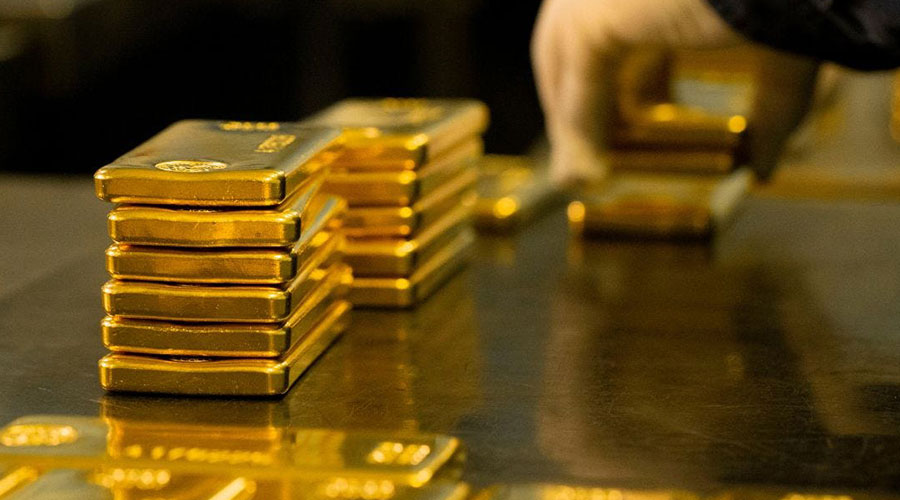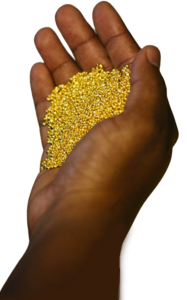
Gold Mining in West Africa: Top Producing Countries & Mines
Gold Mining in West Africa: West Africa is one of the world’s most significant gold-mining regions, led by Ghana, Mali, Burkina Faso, and Guinea, and the region’s fortunes shifted sharply in 2025: Burkina Faso hit a record output while Mali’s production fell due to a government dispute with Barrick that has only just been resolved.
The area combines large industrial mines with an enormous artisanal and small-scale mining (ASGM) sector, and together the two make West Africa a critical supplier to the global gold market, and an increasingly assertive one, as governments push to capture more value from their own resources.
This guide covers the region’s historical roots, where gold is actually mined today, current production trends, the risks investors and buyers need to understand, and how to buy West African gold safely.
Gold Mining in West Africa at a Glance
| Country | 2025 production | Trend |
|---|---|---|
| Ghana | GoldBod alone exported a record 100 t of ASM gold ($10B); national total not yet published | Reforms expanding state oversight of both ASM and industrial mining |
| Burkina Faso | Record ~94 t (up from ~60 t in 2024) | Sharp rise, driven by artisanal output (~43 t) and state mine acquisitions |
| Mali | National output ~48.2 t (22.7% below the government’s 54 t forecast) | Sharp fall in 2025 due to the Barrick dispute; resolved Feb 2026 with a 10-year permit renewal |
| Guinea | Around 50 t (per earlier industry estimates) | Untapped reserves attracting rising foreign investment |
Historical Roots
West Africa’s gold trade is not a modern story; it’s one of the oldest and most consequential in world history. Long before European contact, gold from the Bambuk and Bure goldfields (in what is now Mali, Senegal, and Guinea) moved north across the Sahara by camel caravan, exchanged for salt, textiles, and other goods in a trade network that connected West Africa to North Africa, the Mediterranean, and the Middle East.
This trade underpinned the wealth of the Ghana Empire (roughly 6th to 13th century, centered in modern-day Mali and Mauritania, not the modern nation of Ghana) and later the Mali Empire, whose ruler Mansa Musa became legendary in the 14th century for a pilgrimage to Mecca so laden with gold that his spending is said to have depressed gold prices in Cairo for years afterward.
Centuries later, when European traders, first Portuguese, then Dutch and British, arrived on the coast of what is now modern Ghana, they encountered such an active local gold trade that they named the region the “Gold Coast,” a name that stuck through the colonial era until Ghana’s independence in 1957.
That colonial-era gold trade laid much of the infrastructure and institutional foundation for Ghana’s modern position as Africa’s leading gold producer.
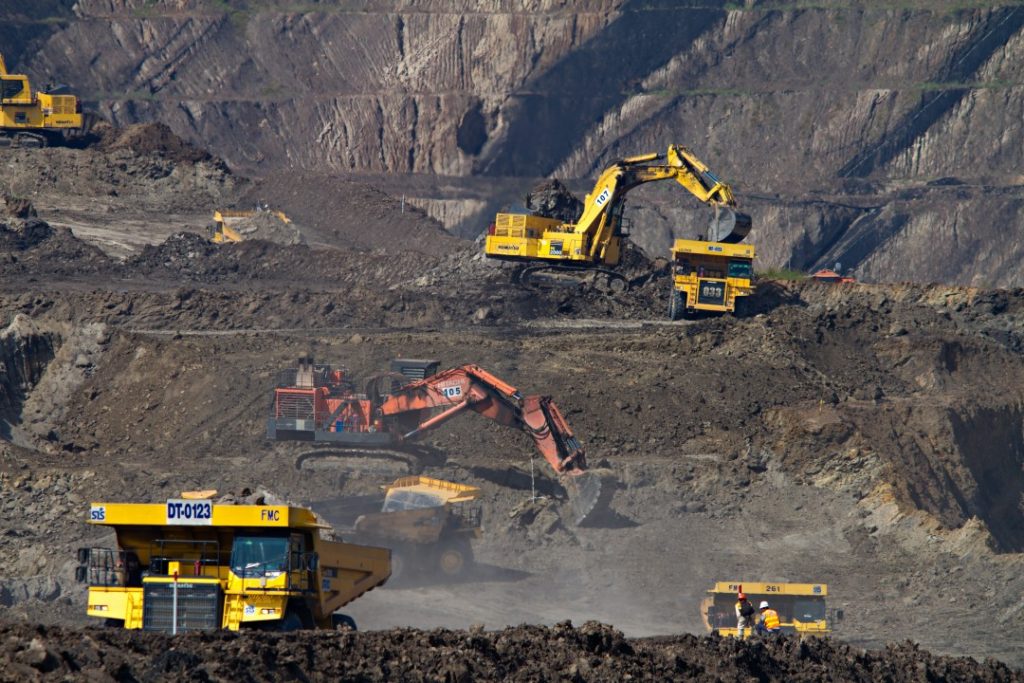
Major Gold Mines in West Africa
| Mine | Country | Operator | Notes |
|---|---|---|---|
| Tarkwa | Ghana | Gold Fields | One of Ghana’s largest producing mines |
| Obuasi | Ghana | AngloGold Ashanti | Historic mine, redeveloped for underground mining |
| Ahafo | Ghana | Newmont | Major producing complex in the Brong-Ahafo region |
| Loulo-Gounkoto | Mali | Barrick (80%), state via SOMILO (20%) | Mali’s flagship mine; permit renewed for 10 years in Feb 2026 |
| Fekola | Mali | B2Gold | Overtook Barrick as Mali’s top single producer in 2025 |
| Morila | Mali | Firefinch/Mali Lithium (formerly AngloGold/Barrick JV) | Long-running mine in the Sikasso region |
| Essakane | Burkina Faso | IAMGOLD | One of the country’s largest single mines |
| Houndé | Burkina Faso | Endeavour Mining | A major, relatively newer producing mine |
| Mana | Burkina Faso | Endeavour Mining | Established mine in the west of the country |
| Taparko | Burkina Faso | SOPAMIB (state) | Among the assets brought under state ownership in 2025 |
| Siguiri | Guinea | AngloGold Ashanti | Guinea’s largest operating gold mine |
Modern Production and Geography
Ghana remains Africa’s top gold producer overall, home to large-scale mines including Tarkwa, Obuasi, and Ahafo, operated by major companies such as Gold Fields, AngloGold Ashanti, and Newmont. Since May 2025, the Ghana Gold Board (GoldBod) has regulated and exported all artisanal and small-scale gold, posting a record 100 tonnes and roughly $10 billion in its first year alone, about half of Ghana’s total $20.9 billion in gold export earnings for 2025.
A mining audit launched in November 2025 covering 19 large mines, including Gold Fields, AngloGold Ashanti, and Zijin Mining operations, is pushing for tighter oversight of industrial-scale production too.
Mali ranks among the region’s largest producers, anchored by the Loulo-Gounkoto complex (Barrick, with the Malian state holding 20% through SOMILO) and Fekola (B2Gold).
2025 was a turbulent year: after Mali revised its Mining Code in 2023 to increase state participation and tax terms, a dispute with Barrick saw exports blocked and gold stockpiles seized, and Loulo-Gounkoto was placed under a state-appointed administrator for much of the year.
National industrial output fell to roughly 42.2 tonnes (from 54.8 t in 2024), with artisanal output holding around 6 tonnes, pushing total national production to about 48.2 tonnes, well below the government’s 54-tonne forecast.
B2Gold overtook Barrick as Mali’s largest single producer in 2025. The dispute was resolved in late 2025/early 2026: Mali renewed Barrick’s operating permit for 10 years in February 2026, with Barrick expecting 260,000 to 290,000 attributable ounces in 2026 as operations normalize.
Burkina Faso had the opposite year: a record 94 tonnes of gold produced in 2025, up sharply from around 60 tonnes in 2024, according to the country’s Prime Minister. Nearly 43 tonnes of that came from artisanal and semi-mechanized mining, close to half the national total.
The state’s mining investment arm, SOPAMIB, was granted 11 mining assets in 2025, including sites like Perkoa, Inata, Kalsaka, Tambao, and Taparko, part of a deliberate push toward greater state ownership (“mining sovereignty”) in the sector.
Guinea holds substantial, comparatively underdeveloped gold reserves, with the Siguiri Gold Mine among the largest operating assets, and continues to attract rising foreign investment as infrastructure and refining capacity slowly expand.
Buying Gold in West Africa: Miners vs. Dealers vs. Trading Companies
Buyers generally choose between three routes, each with a different risk and documentation profile:
- Artisanal miners often sell at the lowest prices, but transactions can lack proper documentation, purity verification, or legal export clearance, raising real risk for the buyer.
- Licensed dealers offer more secure transactions, with refined, legally sourced gold and proper paperwork.
- Gold trading companies and exporters facilitate international purchases with full export documentation, typically the most practical route for buyers outside the region. See our guide to where to buy gold in Africa for how this works in practice.
Risk checklist before buying:
- Verify authenticity with an independent assay certificate.
- Work only with reputable, licensed dealers.
- Confirm compliance with both local and international gold trade regulations.
- Store gold in secure, insured vaults or banks once purchased.
Gold Trade and Export Laws in West Africa
Each country regulates gold export differently:
- Ghana: export permits are handled through the Precious Minerals Marketing Company (PMMC) for traditional channels, and through GoldBod specifically for artisanal and small-scale gold as of 2025.
- Mali: licensing runs through the Ministry of Mines, with the 2023 Mining Code significantly increasing state participation requirements and tax terms for large operators.
- Burkina Faso: strict customs controls apply to gold exports, alongside a growing state ownership stake in mining assets via SOPAMIB.
Common requirements across the region include unlicensed export prohibitions, proof of tax payment, origin certification, and export levies. To export legally, a seller generally needs a gold export license, refined and certified gold, and compliance with anti-money-laundering regulations. See our guide to the legal requirements to buy gold bars from Africa for the buyer’s side of this.
Current Trends and Challenges
Governments are capturing more value from their own gold. Ghana’s GoldBod, Mali’s revised Mining Code, and Burkina Faso’s SOPAMIB acquisitions are all part of the same regional trend: West African states pushing for greater ownership, oversight, and tax revenue from gold production, sometimes at real cost to investor certainty, as the two-year Mali-Barrick standoff showed.
Artisanal and small-scale mining (ASGM) is a huge and growing share of output. In Burkina Faso, ASGM contributed nearly half of 2025’s record national output. Regionally, artisanal miners are estimated to contribute a substantial share of total gold production, though they typically operate with limited financing, equipment, and safety measures.
Political and regulatory risk is real and immediate, not theoretical. Mali’s dispute with Barrick, which included blocked exports and seizure of gold stockpiles, shows how quickly mining-code reforms can disrupt even a major international operator. Investors and buyers should treat “political instability” as a current operating condition in parts of the region, not a background risk.
Smuggling remains a significant drain on national revenue. Illicit gold trade routes run from West Africa toward Dubai, Switzerland, and China, resulting in substantial lost tax revenue and undermining formal mining industries. Governments are responding with tighter tracking systems and stricter border controls, with mixed success so far.
Environmental and social costs persist alongside the production boom. Deforestation, water contamination, and mercury use in artisanal mining remain serious concerns, alongside labor and land-rights issues in mining communities. Sustainable mining initiatives, including reforestation and mercury-free mining programs, are expanding but remain a work in progress relative to the pace of production growth.
Rising prices are drawing in new investment and new mines, even as they raise the stakes in disputes like Mali’s, since higher gold prices increase what both companies and governments stand to gain or lose from how mining revenue is shared.
Investing in West African Gold: Physical, Stocks, or ETFs
- Physical gold (bars, nuggets, raw gold) offers tangible ownership but requires secure storage and insurance. See our gold bars, gold nuggets, and gold dust pages for available forms.
- Gold mining stocks provide exposure to specific companies operating in the region, alongside company-specific and country-specific regulatory risk, as Mali’s Barrick dispute illustrates.
- Gold ETFs offer liquidity and diversification without direct exposure to any single country’s mining policy.
Larger buyers can also source directly through bulk orders from licensed exporters, which typically carry a lower premium over spot than retail purchases.
Gold Mining in West Africa FAQs
Which West African country produces the most gold? Ghana remains the region’s largest producer overall. Burkina Faso had a record year in 2025 at roughly 94 tonnes, while Mali’s output fell sharply the same year due to the Barrick dispute.
Why did Mali’s gold production fall in 2025? A dispute between Mali’s government and Barrick Mining over a revised 2023 Mining Code led to blocked exports and the seizure of gold stockpiles, and the Loulo-Gounkoto complex, Mali’s largest mine, was placed under state administration for much of the year. The dispute was resolved in early 2026 with a 10-year permit renewal.
What is GoldBod? The Ghana Gold Board, established in May 2025, regulates and exports all of Ghana’s artisanal and small-scale gold. It exported a record 100 tonnes and generated about $10 billion in its first year.
Is it safe to buy gold directly from artisanal miners in West Africa? It carries more risk than buying from a licensed dealer or trading company, mainly due to weaker documentation and purity verification. A licensed exporter with proper export paperwork is the more secure route for most buyers.
What percentage of West Africa’s gold comes from artisanal mining? It varies by country and year. In Burkina Faso’s record 2025 output, artisanal and semi-mechanized mining contributed nearly half (about 43 of 94 tonnes).
How does gold get smuggled out of West Africa? Illicit routes commonly run toward Dubai, Switzerland, and China, costing governments significant tax revenue. Countries are responding with tighter tracking and border controls.
Source Certified West African Gold
Buy Gold Bars Africa Ltd supplies certified gold bars, nuggets, and dust from licensed sources across Africa, with full documentation and insured delivery. Contact us, message us on WhatsApp at +256 707 585144, or read about our company.