How to Export Gold from Kenya Legally: Step-by-Step Guide 2026
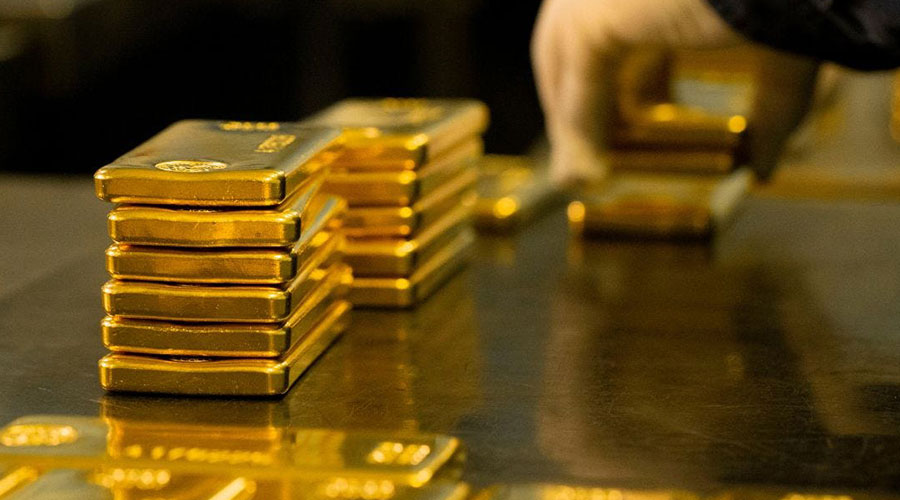
How to export gold from Kenya legally: Exporting gold from Kenya legally is one of the most financially significant transactions any individual, trader, or company can execute in East Africa’s precious metals market — and in 2026, with the gold price per gram in Kenya at KES 19,041–19,609 (~$147–$152 USD) and gold having reached a global all-time record of $5,602.22/oz on January 28, 2026, understanding every legal requirement, permit, document, tax, and procedure is not just compliance — it is financial protection.
Kenya is rapidly emerging as one of East Africa’s most important gold trading hubs, with significant gold deposits concentrated in Migori, Kakamega, Vihiga, Narok, and Turkana counties, and an estimated 1.31 million kilograms of gold reserves awaiting commercial development.
The Mining Act 2016 governs every aspect of Kenya’s gold trade — from artisanal mining to industrial extraction to licensed export — and the Kenya Revenue Authority (KRA) is actively deploying the Integrated Minerals Export Monitoring System (IMEMS) for full digital tracking of all gold export activities by 2026.
Whether you are a licensed artisanal miner from the Migori Greenstone Belt, a gold dealer in Nairobi’s Eastleigh market, an international investor seeking to export refined gold bullion from Kenya, or a company building a structured gold export business, this guide covers everything you need to know — legally, procedurally, and practically.
And when you are ready to buy and export gold from Kenya at competitive LBMA-referenced prices with complete legal compliance managed on your behalf, Buy Gold Bars Africa Limited is the partner that makes it seamless.

The Legal Framework for Gold Export in Kenya: What Governs Everything
Kenya’s gold export regulations are built on three foundational legal instruments that every exporter must understand before initiating any gold transaction.
The Mining Act, Cap 306 (2016) is the primary legislation governing all gold-related activities in Kenya. Enforced by the Ministry of Mining, Blue Economy, and Maritime Affairs (formerly the Ministry of Petroleum and Mining), the Act establishes the licensing framework for gold dealers, the permit system for exports, the royalty structure, and the criminal penalties for non-compliance.
Section 171 of the Mining Act specifically addresses mineral export requirements, and the Minerals (Trading) Regulations 2017 implement its export permit provisions in operational detail.
Understanding the Mining Act 2016 is not optional for anyone involved in Kenya’s gold trade — it is the legal foundation on which every permit, licence, and transaction rests.
The East African Community Customs Management Act (EACCMA) governs customs procedures at Kenyan borders and airports. All gold leaving Kenya through Jomo Kenyatta International Airport (JKIA) — the primary departure point for insured gold cargo — or through other border posts must clear EACCMA customs procedures, including the Customs Export Release Order (CERO) issued by KRA before any shipment can depart.
The Proceeds of Crime and Anti-Money Laundering Act (POCAMLA) applies to all gold transactions above threshold values.
The Financial Reporting Centre (FRC) monitors suspicious transaction reports from gold dealers and exporters, and the KRA increasingly collaborates with the FRC to detect money laundering in Kenya’s gold trade. AML compliance is not a bureaucratic inconvenience — it is a legal obligation with criminal consequences for failure.
Alongside these three primary instruments, exporters must comply with KRA guidelines for tax and revenue management, KEBS (Kenya Bureau of Standards) quality requirements for certified gold exports, and where DRC-origin gold transits through Kenya, the OECD Due Diligence Guidance for Responsible Mineral Supply Chains.
Who Can Legally Export Gold from Kenya?
Legal gold export from Kenya is restricted to a specific category of individuals and entities. Understanding who qualifies before investing in the licensing process prevents wasted time and money.
Only registered gold traders or licensed dealers with a valid Export Permit and KRA compliance can export gold from Kenya. The Mining Act creates three distinct categories of authorised participants in Kenya’s gold export chain.
A Mineral Dealer’s (Trading) Licence is mandatory for buying or selling gold in Kenya. Without this licence, issued by the Ministry of Mining through the Kenya Mining Cadastre Portal, no individual or company can legally trade gold — let alone export it.
This licence costs approximately KES 100,000 (~$770 USD) annually and requires business registration, proof of financial capacity, a clean KRA tax record, AML/KYC compliance infrastructure, and traceability documents showing the source of all gold handled.
A Mining Licence is required for any company or individual involved in actual gold extraction operations. Artisanal and Small-Scale Miners (ASM) who mine and then sell their production to licensed dealers do not themselves need an export licence — but the dealers who purchase their production for export do.
An Export Permit is required for every individual consignment exported from Kenya. This is separate from the Mineral Dealer’s Licence — even fully licensed dealers must obtain a fresh Export Permit for each specific shipment.
The permit is issued by the Director of Mines under the State Department for Mining after the proposed export has passed inspection and valuation by the Mines and Geology Department.
Foreign investors and companies can legally export gold from Kenya — but only by first establishing a registered Kenyan company, obtaining a Mineral Dealer’s Licence in that company’s name, and complying with all domestic licensing and tax requirements. Foreign entities cannot export gold directly without a registered local corporate presence.
How to Get a Gold Export Licence in Kenya: The Application Process
Getting a gold export licence in Kenya follows a structured application process that typically takes 1–3 weeks from submission to approval, provided all documentation is complete and accurate.
The application for a Mineral Dealer’s (Trading) Licence is submitted through the Kenya Mining Cadastre Portal (the government’s online mineral rights management platform) with the following supporting documents: a valid Certificate of Incorporation from the Registrar of Companies, a current KRA Tax Compliance Certificate, a KRA PIN certificate, proof of the company’s registered physical business address, bank statements demonstrating financial capacity, a business plan detailing mineral trading activities and source of gold supply, and — for foreign-owned companies — work permits or investor permits for all non-Kenyan directors.
The Ministry of Mining reviews applications for completeness and compliance, conducts a background check on the applicant entity and its principals, and issues the Mineral Dealer’s Licence upon satisfaction.
Licences must be renewed annually — a lapsed licence means all gold trading activities become immediately illegal, regardless of the company’s prior compliance history.
There are three types of export permits available under Kenya’s framework. A permanent export licence is issued to regular exporters who maintain continuous mineral trading operations.
A temporary export licence covers short-term or occasional export activities. A single shipment permit authorizes one specific consignment for exporters who do not trade regularly.
Most serious gold businesses operating in Kenya’s export market hold permanent licences, which provide the operational continuity that international buyers require for supply relationships.
Documents Required to Export Gold from Kenya Legally
Documents required for gold export from Kenya are the most operationally critical aspect of the entire process — missing or inconsistent paperwork is the single most common reason for shipment delays, cargo seizure, and export bans. Every consignment must travel with a complete package.
The Export Permit is the foundational document — issued by the Ministry of Mining’s Director of Mines specifically for your shipment, linking to KRA’s customs system through the Export Permit Number.
The application for the Export Permit must include details of the gold’s source, quantity, destination, and intended buyer, and is only granted to current holders of a valid Mineral Dealer’s Licence.
The Certificate of Origin confirms that the gold being exported was legally mined within Kenya. It is issued by an authorized Chamber of Commerce or the Ministry of Mining itself, and it is the document that allows both Kenyan customs and destination country customs officials to verify that the gold complies with local and international trade laws. Kenyan gold exported without a Certificate of Origin cannot be legally imported by buyers in the EU, USA, UAE, or any jurisdiction with conflict minerals traceability requirements.
The Certificate of Assay (Assay Report) is issued by an accredited gold refinery or assayer after the Mines and Geology Department inspects and tests the gold.
The Assay Report specifies the exact purity percentage, weight to four decimal places, and market value of the consignment — the three data points that form the basis for royalty calculation and customs declaration.
The Commercial Invoice declares the USD transaction value for both KRA customs purposes and destination country import declarations.
Every dollar on the commercial invoice must correspond to an actual wire transfer in the same amount — discrepancies between invoice value and actual payment trigger investigations.
The Export Declaration Form (EDF) is submitted to KRA customs as the formal declaration of intent to export. It references the Export Permit, Commercial Invoice, and Assay Certificate simultaneously, and is processed through KRA’s SIMBA customs management system.
The Tax Compliance Certificate from KRA confirms that the exporting company has no outstanding tax liabilities. Kenya’s gold export regulations require a current Tax Compliance Certificate for every shipment — a lapsed or missing certificate blocks the issuance of the Customs Export Release Order.
The Customs Export Release Order (CERO) is the final KRA-issued document that physically authorizes the gold to depart Kenya. Without the CERO, no freight carrier — including Brinks, DHL, or Malca-Amit — will accept a gold cargo for departure from JKIA.
The CERO is only issued after KRA has verified all documents, collected all applicable taxes and royalties, and confirmed compliance with EACCMA requirements.
For Kenya gold exported to buyers subject to EU Conflict Minerals Regulation, additional OECD Due Diligence documentation demonstrating responsible sourcing practices from ASM miners must accompany the shipment.
Kenya Gold Export Taxes and Royalties: What You Pay and When
Kenya’s gold export tax structure is specifically designed to regulate mineral trade, ensure government revenue collection, and promote domestic value addition before export. Understanding the full cost picture prevents budget surprises.
The gold export tax rate in Kenya is 5% of the gross value of exported gold. This applies to both refined gold bars and unrefined (raw) gold shipments at the standard rate.
However, exporters dealing in locally refined gold that meets international purity standards may qualify for a reduced rate of approximately 3–4% — an incentive specifically designed to encourage domestic refining before export rather than shipping raw dore.
Mineral royalty is calculated on the value of the gold at the point of export. The royalty rate for gold under Kenya’s Mining Act is set at 5% of the gross sales value for large-scale miners and varies for artisanal producers. This royalty is paid to the national government and is collected by KRA at the point of customs clearance.
Income tax on profits from gold trading activities is assessed under Kenya’s standard corporate tax rate of 30% for resident companies and 37.5% for non-resident companies operating through branches. Gold trading revenues are ordinary trading income — not subject to preferential commodity tax treatment.
VAT considerations for gold exporters: gold exports from Kenya are generally zero-rated for VAT purposes, meaning exporters do not charge VAT on export sales.
However, input VAT on costs incurred within Kenya can be recovered through the standard VAT refund mechanism — this is particularly significant for companies that purchase significant local services in connection with their export operations.
Export permit fees range from approximately KES 20,000–50,000 depending on shipment size and destination — an administrative cost that is minor relative to the royalty and tax obligations but must be included in export cost calculations.
KRA’s 2026 compliance upgrade is significant for all exporters. The Integrated Minerals Export Monitoring System (IMEMS) is achieving full deployment in 2026, enabling automated matching of gold export volumes with tax payments and assay results.
Exporters who historically undervalued shipments or misrepresented gold quantities face dramatically higher detection risk under the IMEMS framework than they did under manual inspection.

The Complete Kenya Gold Export Process: Step by Step
How to export gold from Kenya legally follows a defined sequence of steps that cannot be reordered without creating compliance failures. Here is the complete process:
Step 1: Obtain and Maintain Your Mineral Dealer’s (Trading) Licence. Apply through the Kenya Mining Cadastre Portal with all required business and financial documentation. Annual renewal is mandatory — confirm your licence expiry date before initiating any shipment.
Step 2: Source Your Gold from Licensed, Traceable Origins. Confirm through the Mining Cadastre Portal that the gold originates from a licensed mining operation.
The OECD Due Diligence Guidance requires exporters to verify the entire supply chain — not just the immediate supplier. For artisanal gold from Migori or Kakamega, this means tracing production through licensed ASM cooperatives with formal source documentation.
Step 3: Submit Your Gold for Inspection and Valuation. The Mines and Geology Department inspects the gold, conducts purity testing (typically XRF and/or fire assay), issues the Assay Report specifying purity and weight, and verifies the gold’s market value for royalty calculation purposes. The inspection fee varies by shipment size.
Step 4: Apply for the Export Permit. Submit your Export Permit application to the Director of Mines under the State Department for Mining, referencing your Mineral Dealer’s Licence number, the Assay Report, details of the proposed shipment, and the identity of the international buyer. The Ministry issues the Export Permit Number once the application is approved.
Step 5: Prepare the Complete Documentation Package. Assemble Export Permit, Certificate of Origin, Certificate of Assay, Commercial Invoice, Export Declaration Form (EDF), and Tax Compliance Certificate.
Verify that every document references consistent gold weight, purity, and value — any discrepancy between documents triggers KRA queries that delay the CERO.
Step 6: Submit Customs Declaration to KRA. File the Export Declaration Form through KRA’s SIMBA system, referencing all supporting documents. KRA verifies the submission, confirms tax compliance status, and collects applicable royalties and export taxes before issuing the Customs Export Release Order.
Step 7: Arrange Insured Logistics from JKIA. Book insured cargo shipment through a licensed precious metals logistics provider — Brinks Global Services, Malca-Amit, or DHL Express Precious Metals Service — for departure from Jomo Kenyatta International Airport (JKIA), Nairobi. All carriers require the CERO before accepting gold cargo. Full declared-value insurance is mandatory.
Step 8: Provide Complete Import Documentation to Your Buyer. Send the buyer the complete documentation package — Export Permit, Certificate of Origin, Assay Certificate, Commercial Invoice, and insurance certificate — for their destination country import clearance procedures.
Common Mistakes When Exporting Gold from Kenya — And How to Avoid Them
Legal mistakes when exporting gold from Kenya carry serious consequences under the Mining Act 2016 and EACCMA — including fines, imprisonment, blacklisting from future licensing, and cargo confiscation. These are the most common failure points.
Sourcing gold from unlicensed artisanal miners is the most prevalent compliance failure in Kenya’s gold market. Over 60% of Kenya’s gold comes from artisanal miners, many of whom operate outside the formal licensing system.
Purchasing and exporting gold from unlicensed sources violates the Mining Act’s traceability requirements and exposes the exporter to criminal liability under POCAMLA. Always confirm source licensing through the Mining Cadastre Portal before any purchase.
Incomplete or inconsistent documentation is the second most common failure. When the purity stated on the Assay Certificate differs from the purity referenced on the Commercial Invoice, or when the weight on the Export Declaration Form differs from the weight on the Certificate of Origin, KRA flags the discrepancy and holds the shipment pending investigation. Preparing all documents from a single verified source data set eliminates this risk.
Undervaluing gold on the Commercial Invoice to reduce royalty payments is both illegal and increasingly detectable under the IMEMS 2026 deployment. KRA cross-references declared values against LBMA spot prices and Assay Report weights — material undervaluation triggers audit, assessment, and potential criminal prosecution.
Exporting without a current Tax Compliance Certificate blocks the CERO at customs. A Tax Compliance Certificate lapses if any KRA obligation is outstanding — even a minor administrative discrepancy. Confirm certificate validity before submitting export permit applications.
Using unlicensed or non-specialized logistics providers risks cargo damage, theft, or legal liability. Only licensed precious metals carriers with specific gold cargo handling certification are acceptable for JKIA gold exports. Standard courier companies without precious metals specialist certification should never be used for gold shipments.
AML and KYC Compliance for Kenya Gold Exporters
Anti-money laundering compliance for gold exporters in Kenya is increasingly enforced and carries criminal consequences for failures that might once have been treated administratively.
Kenya’s Financial Reporting Centre (FRC) requires gold dealers and exporters to file Suspicious Transaction Reports (STRs) for any transaction that raises AML red flags — including buyers who cannot provide satisfactory source-of-funds explanations, unusually structured payment arrangements, or buyers with connections to high-risk jurisdictions.
Filing obligations exist regardless of whether the exporter believes the transaction to be genuinely suspicious — the legal test is whether the circumstances would cause a reasonable person to suspect.
KYC requirements for gold export transactions in Kenya include: verified identification of all buyer principals (passport for international buyers), corporate registration documentation for company buyers, bank reference letters confirming the buyer’s financial standing, and written source-of-funds declarations for significant transactions. These requirements apply to every transaction — not just first-time buyers.
International buyers of Kenya gold should expect to provide comprehensive KYC documentation as part of the purchase process.
Buy Gold Bars Africa Limited‘s KYC process is compliant with both Kenya’s FRC requirements and international AML standards — protecting both the exporter and the buyer from regulatory exposure.
Penalties for Illegal Gold Export from Kenya
Consequences of exporting gold illegally from Kenya are severe enough to destroy businesses and result in imprisonment. The Mining Act 2016 and EACCMA provide for:
Fines and confiscation of all gold involved in illegal export attempts. Criminal prosecution under the Mining Act for unlicensed trading or export. Additional prosecution under POCAMLA for money laundering connected to illegal gold transactions.
Permanent blacklisting from future mineral trading licences. Asset forfeiture proceedings under POCAMLA for proceeds of illegal mineral trade.
Beyond domestic consequences, exporters who knowingly export conflict-origin gold or falsify origin documentation face potential prosecution under their destination country’s laws — including EU Conflict Minerals Regulation penalties for EU importers and Dodd-Frank Section 1502 penalties for US-listed companies.
How Long Does It Take to Export Gold from Kenya?
Gold export timelines from Kenya depend on how well-prepared the exporter’s documentation is before initiating the process. For an exporter with a current Mineral Dealer’s Licence and a well-organized documentation package, the typical timeline breaks down as follows.
The Mines and Geology Department inspection and Assay Report issuance takes 3–7 business days from sample submission. Export Permit application review and issuance typically takes 5–10 business days once the Ministry receives a complete application.
KRA customs processing and CERO issuance takes 1–3 business days after all documents are verified and taxes collected. Logistics booking with Brinks or DHL from JKIA: departure within 1–2 business days of CERO issuance.
Total estimated timeline from gold inspection to departure: 10–22 business days for a well-prepared exporter. Expedited processing is possible for exporters with established relationships with the Ministry and KRA, and with all documentation submitted simultaneously rather than sequentially.
Buy Gold Bars Africa Limited manages this entire timeline on behalf of international buyers — we initiate all processes simultaneously, maintain standing relationships with the Ministry of Mining and KRA, and have achieved turnaround times at the lower end of this range for regular shipments.
Exporting Gold from Kenya to Different Destinations: Key Considerations
Kenya gold export regulations by destination country add a layer of compliance beyond Kenya’s own requirements. Understanding destination country import requirements before initiating export prevents costly reversals.
For UAE (Dubai) — Kenya’s largest gold export market — gold imports carry zero customs duty and no VAT, with the DMCC (Dubai Multi Commodities Centre) providing a recognized import framework.
UAE buyers require standard export documentation plus insurance certificates from a recognized insurer. Delivery from JKIA to Dubai: 3–5 business days.
For European Union buyers — all EU importers of Kenya gold are subject to the EU Conflict Minerals Regulation (mandatory since January 2021), requiring OECD Due Diligence documentation demonstrating responsible sourcing from Kenya’s ASM sector.
Buyers in Germany, Switzerland, Belgium, and Italy — the EU’s primary gold importing countries — must be provided with complete OECD compliance packages alongside standard export documentation.
For United Kingdom buyers — investment gold is VAT-exempt on import, with zero customs duty on bullion. HMRC requires standard customs declarations plus Certificate of Origin and Assay Certificate.
For United States buyers — zero customs duty on gold bullion imports. FinCEN reporting required for cash transactions above $10,000. US-listed companies must comply with Dodd-Frank Section 1502 for any DRC-region gold that transits Kenya.
For India — the world’s largest physical gold consuming market — standard customs documentation plus a valid Assay Certificate and Certificate of Origin are required for customs clearance.
FAQs: How to Export Gold from Kenya Legally
Q: Who can export gold from Kenya? A: Only registered gold traders or licensed dealers with a valid Mineral Dealer’s (Trading) Licence from the Ministry of Mining and a current Export Permit for each specific shipment can legally export gold from Kenya. Foreign entities must first establish a registered Kenyan company.
Q: What documents are required to export gold from Kenya? A: The complete documentation package includes Export Permit (from Director of Mines), Certificate of Origin, Certificate of Assay (from Mines and Geology Department), Commercial Invoice, Export Declaration Form (EDF), Tax Compliance Certificate (KRA), and Customs Export Release Order (CERO). Missing any single document results in shipment detention or seizure.
Q: What is Kenya’s gold export tax rate? A: The standard gold export tax rate in Kenya is 5% of gross gold value, plus a 5% mineral royalty. Exporters of locally refined gold meeting international purity standards may qualify for a 3–4% rate. Combined with permit fees and royalties, total export charges typically run 8–12% of declared gold value.
Q: How long does it take to get a gold export permit in Kenya? A: Typically 1–3 weeks from complete application submission for the Mineral Dealer’s Licence. Individual Export Permits for specific shipments take 5–10 business days once the licence is current and the Assay Report is completed. Buy Gold Bars Africa Limited manages this process to minimize turnaround time for international buyers.
Q: Can I export raw/unrefined gold from Kenya? A: Yes — raw and unrefined gold can be exported from Kenya with the same permit and documentation requirements as refined gold, but at the standard 5% export tax rate rather than the reduced 3–4% rate available for locally refined material. The economic incentive strongly favours domestic refining before export for large-volume operators.
Q: What happens if I export gold illegally from Kenya? A: Consequences include criminal prosecution under the Mining Act 2016 and EACCMA, fines and confiscation of the gold, prosecution under POCAMLA for money laundering, and permanent blacklisting from future mineral trading licences. The IMEMS 2026 deployment makes detection of illegal exports far more likely than at any previous point.
Buy Certified, Export-Ready Kenya Gold Through Buy Gold Bars Africa Limited
You now have the complete 2026 guide to how to export gold from Kenya legally — the legal framework, the licensing structure, the complete documentation package, every applicable tax and royalty, the step-by-step export process, common mistakes, AML compliance obligations, destination-country considerations, and FAQs.
Exporting gold from Kenya legally is not bureaucratically impossible — but it is demanding. It requires a current Mineral Dealer’s Licence, traceable gold sourcing through licensed artisanal cooperatives or formal mines, a complete documentation package that must be internally consistent to the decimal place, KRA tax compliance in good standing, and specialist logistics through approved precious metals carriers. Any single failure in this chain can result in shipment detention, confiscation, or criminal prosecution.
This is precisely why serious international gold buyers in the UAE, EU, UK, USA, and Asia choose to work with Buy Gold Bars Africa Limited rather than attempting to navigate Kenya’s gold export framework independently.
We hold a current Mineral Dealer’s (Trading) Licence from Kenya’s Ministry of Mining. We source exclusively from licensed artisanal cooperatives in the Migori Greenstone Belt and formal supply channels — with Certificates of Origin specifying the producing county for every consignment.
We manage Mines and Geology Department inspections and Assay Reports, Export Permit applications through the Director of Mines, KRA tax clearance and CERO processing, and insured Brinks or DHL cargo booking from JKIA. We prepare the complete OECD Due Diligence package for EU buyers and standard documentation for UAE, UK, and US buyers.
We quote at 1–3% above the live LBMA spot price — transparent, stated, and competitive with any compliant Kenya gold exporter.
At current KES 19,041–19,609/gram for 24K gold in Kenya (~$147–$152 USD), the gold is here. The Migori Belt is producing. The Eastleigh market is active.
The KRA licensing framework is navigable. The only question is whether you access it alone — spending weeks on documentation, learning from expensive mistakes — or through a licensed partner who has already made every mistake so you do not have to.
Kenya’s gold is waiting. Buy Gold Bars Africa Limited will get it to you legally, safely, and at the best available price.
Contact us today to Buy Gold in Kenya!
Prices updated May 2026. 24K Kenya: KES 19,041–19,609/gram (~$147–$152 USD); +40.17% year-on-year. LBMA spot: ~$4,720–$4,739/oz. Kenya gold export tax: 5% of gross value. Mineral royalty: 5%. Mineral Dealer’s Licence: ~KES 100,000/year. Export permit fees: KES 20,000–50,000/consignment. Sources: WKA Advocates, Mining Act 2016, KRA, BuyGoldBarsKenya.com (2026). All prices are reference rates — verify before transacting.