5 Major Uganda Gold Deposits: A Comprehensive Guide 2026
Major Uganda Gold Deposits are found in five main areas:
- Busia, in the east, home to the industrial Wagagai gold mine
- Mubende and Kassanda, in central Uganda, the country’s busiest artisanal goldfields
- Karamoja, in the northeast, with gold around Moroto, Amudat, Nakapiripirit and Kaabong
- Buhweju, in the southwest
- Namayingo, near Lake Victoria in the east
Most of Uganda’s gold is mined by artisanal and small-scale miners. The country’s first large-scale mine, the US$250 million Wagagai mine in Busia, was inaugurated in 2025.
Known as the “Pearl of Africa”, Uganda has been mining gold for more than a century, and interest in its gold sector has grown fast in recent years.
In 2022, a government survey claimed Uganda held about 31 million tonnes of gold ore that could yield gold worth around US$12 trillion. Geologists and mining experts have widely questioned that figure, and it has not been confirmed by independent studies.
What is certain is that gold is now Uganda’s biggest export, earning about US$5.8 billion in 2025, much of it from gold refined and traded in Uganda after being sourced across the region.
This guide explains where gold is found in Uganda and the geology behind its deposits. It also covers the five major gold mining regions, the Wagagai project, artisanal mining, the laws governing the sector and the opportunities for investors and buyers.
Geological Overview of Uganda Gold Deposits
Uganda’s gold deposits are primarily located in the Archean greenstone belts and associated formations, remnants of ancient geological processes dating back over 2.5 billion years.
The country’s geology is dominated by the Precambrian basement complex, which includes granitic intrusions, metamorphic rocks, and volcanic sequences ideal for gold mineralization.
Gold occurs in various forms: primary (lode) deposits in quartz veins within hard rock and secondary (alluvial or placer) deposits in riverbeds and soils, making it accessible for both industrial and artisanal miners.
Key Geological Formations and Types of Deposits
- Greenstone Belts: These are the primary hosts for gold in Uganda. The most prominent is the Busia-Kakamega belt in the southeast, extending from Busia district into Kenya. This belt features sheared zones and quartz-carbonate veins where gold is disseminated or in nuggets. Geological surveys by the Uganda Ministry of Energy and Mineral Development (MEMD) indicate grades ranging from 1-10 grams per ton (g/t) in primary deposits.
- Alluvial and Eluvial Deposits: Common in riverine areas, these are weathered remnants of primary sources. In Karamoja (northeast Uganda), placer gold is found in dry riverbeds, with particles up to several grams. These deposits are easier to mine but yield lower volumes per site.
- Associated Minerals: Gold in Uganda is often accompanied by silver, copper, and base metals. For instance, in the Aswa shear zone (northern Uganda), gold is linked to iron oxide and sulfides, suggesting epithermal or mesothermal origins.
Recent geophysical surveys using airborne magnetics and radiometrics, conducted by the African Green Minerals Observatory in collaboration with MEMD, have mapped over 30 potential gold corridors.
A landmark 2022 aerial survey revealed 31 million metric tonnes of gold ore across 13 districts, potentially yielding 320,000 tonnes of refined gold at current extraction rates.
This estimate, valued at $12 trillion based on 2025 gold prices around $2,500 per ounce, underscores Uganda’s untapped potential. However, experts caution that not all ore is economically viable; recovery rates vary from 50-90% depending on technology.
5 Major Uganda Gold Deposits
Key Uganda Gold Deposits include;
Uganda’s gold comes from five main areas. Most of it is mined by artisanal and small-scale miners, alongside a growing number of licensed companies.
| Deposit area | Region | Type of gold | Main activity |
|---|---|---|---|
| Busia | Eastern Uganda | Vein (lode) and alluvial | Wagagai industrial mine and artisanal mining |
| Mubende and Kassanda | Central Uganda | Vein and alluvial | Large artisanal goldfields |
| Karamoja | Northeastern Uganda | Alluvial and eluvial | Artisanal mining and exploration |
| Namayingo and Iganga | Eastern Uganda | Alluvial and vein | Artisanal mining |
| Northern Uganda (Aswa Shear Zone) | Kitgum, Lamwo and nearby districts | Vein and alluvial | Small-scale mining and early exploration |
1. Busia Gold Deposits (Eastern Uganda)
Busia, on the border with Kenya, is Uganda’s best-known gold district. Its deposits lie in the same greenstone belt as Kenya’s Kakamega goldfields, where gold occurs in quartz veins within ancient volcanic rocks and as alluvial gold in streams around the Sio River. Artisanal miners have worked the area for decades, especially around Tiira and Alupe, using panning, sluicing and small shafts.
Busia is also home to the Wagagai gold mine, Uganda’s first large-scale gold mine. The Chinese-owned project, reported to be worth about US$250 million, was inaugurated in 2025 and includes processing facilities to turn ore into gold doré.
Challenges include mercury use by small-scale miners and land disputes. Programmes such as planetGOLD Uganda help miners switch to safer, mercury-free methods.
2. Mubende and Kassanda Gold Deposits (Central Uganda)
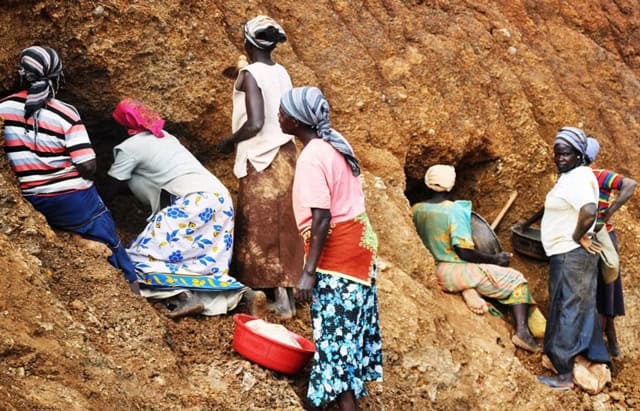
The goldfields of Mubende and Kassanda, west of Kampala, are among Uganda’s busiest artisanal mining areas. Gold is found in quartz veins and in alluvial gravels, attracting thousands of small-scale miners. In 2017, the government removed many artisanal miners from parts of the Mubende goldfields, and the area remains a focus for efforts to formalise artisanal mining.
Its closeness to Kampala makes transport and trade easier. But water pollution, unsafe pits and land conflicts are ongoing problems.
3. Karamoja Gold Deposits (Northeastern Uganda)
The semi-arid Karamoja region, including Moroto, Nakapiripirit, Amudat and Kaabong districts, has widespread alluvial and eluvial gold, found in seasonal riverbeds and weathered rock. Gold mining provides important income for local communities, many of whom are traditionally pastoralists.
Karamoja is attracting growing interest from exploration companies. But insecurity, poor roads, illegal mining and smuggling across borders have held back formal development.
4. Namayingo and Iganga Gold Deposits (Eastern Uganda)
Near the shores of Lake Victoria, Namayingo and parts of Iganga host alluvial and vein gold that supports thousands of artisanal miners. Gold trading boosts local markets.
But seasonal flooding, collapsing pits and mercury use remain risks. The government is encouraging miners to form registered cooperatives to improve safety, access equipment and sell gold legally.
5. Northern Uganda: The Aswa Shear Zone
The Aswa Shear Zone, a major geological fault running through northern Uganda, is considered a promising area for gold, especially around Kitgum, Lamwo and neighbouring districts.
Gold occurs in quartz veins along the fault and in alluvial deposits in nearby rivers. Mining here is mostly small-scale. With the region now peaceful after years of conflict, it is drawing new interest from explorers, though investment and infrastructure are still limited.
Uganda’s Gold Sector in Numbers
Gold is now Uganda’s largest export, earning about US$5.8 billion in 2025, up from about US$3.3 billion in 2024. Much of this gold is refined and traded in Uganda after being sourced from across the region, as domestic mine production is still relatively small. Read more about buying gold in Uganda and the gold export tax in Uganda.
Regional Distribution of Uganda Gold Deposits;
Uganda’s gold is unevenly distributed, with hotspots in the east, north, and central regions:
- Eastern Uganda (Busia and Iganga Districts): Home to the richest deposits, with over 70% of known reserves. The Asingo and Otuke areas boast high-grade veins (up to 20 g/t). Alluvial mining dominates here, supporting over 50,000 artisanal miners.
- Northeastern Uganda (Karamoja Region): Known for placer gold in the Moroto and Nakapiripirit districts. The region’s semi-arid terrain yields seasonal deposits, but conflicts with pastoralists have delayed exploration.
- Central and Western Uganda: Smaller occurrences in Mubende and Buhweju, often as byproducts of tin and tungsten mining. The Kilo-Moto belt extension from DRC influences border areas.
- Northern Uganda (Aswa Zone): Emerging potential in Kitgum and Lamwo, with shear-hosted deposits similar to South Sudan’s.
Geological models suggest Uganda’s gold formed during the Pan-African orogeny, where tectonic forces concentrated minerals in faults. Ongoing studies by the British Geological Survey and Ugandan geologists use GIS mapping to predict new sites, with 2025 explorations focusing on deep-seated deposits via drilling.
History of Gold Mining in Uganda
Gold’s story in Uganda predates colonial times, woven into the fabric of indigenous communities.
Pre-Colonial and Colonial Eras
Archaeological evidence from sites like Bigo (1500 AD) indicates ancient gold working by the Bachwezi kingdom, using placer methods for jewelry and trade. Oral histories from the Baganda and Basoga peoples describe gold as “ensigo” (yellow metal), traded along Nile routes to Egypt.
British colonizers formalized mining in the early 1900s, establishing the Uganda Mines Department in 1910. The Kilembe copper-gold mine (western Uganda) operated from 1956, but gold focus shifted to Busia in the 1930s. By independence in 1962, small-scale operations produced modest outputs, hampered by infrastructure lacks.
Post-Independence Developments
The 1970s-1980s Idi Amin and civil war eras stalled mining, with production dropping to near zero. Revival began in the 1990s under President Museveni’s stabilization. The 2003 Mining Act liberalized the sector, attracting foreign investment. Artisanal mining boomed, but formal output remained low until the 2010s.
A pivotal moment came in 2022 with the $200 million airborne geophysical survey, uncovering the massive deposits. This led to partnerships with China and Canada, marking Uganda’s shift from exporter of raw ore to value-added processor.
Current Mining Operations and Major Projects
Uganda’s gold sector blends ASM (80% of production) with emerging large-scale ventures. As of 2025, over 300,000 people engage in mining, with production at 2-3 tonnes annually, up from 1 tonne in 2020.
Artisanal and Small-Scale Mining (ASM)
ASM dominates, particularly in Busia and Karamoja. Miners use manual panning, sluicing, and rudimentary crushers. In Tiira (Busia), communities extract 0.5-1 g/t from alluvial sands. Challenges include mercury use for amalgamation, leading to health risks, but initiatives like planetGOLD Uganda promote mercury-free tech, training 10,000+ miners since 2020.
Large-Scale Projects
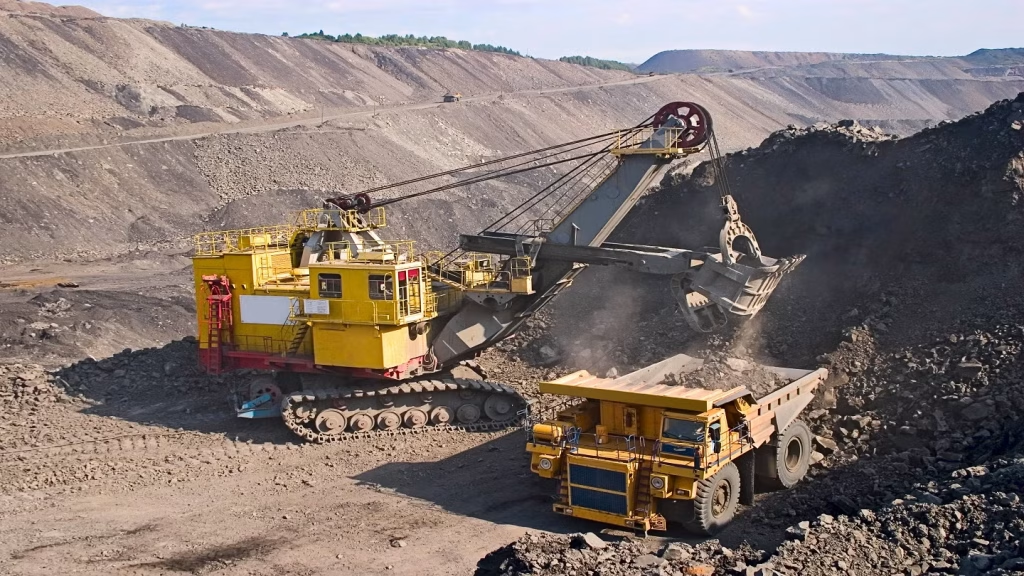
- Wagagai Gold Mine (Busia District): Uganda’s flagship project, a $50 million joint venture with China’s Wagagai Mining (U) Ltd. Commissioned on August 16, 2025, by President Museveni, it processes 1,000 tonnes of ore daily, targeting 5 tonnes of gold yearly. Located in Alupe Village, it features open-pit and underground methods, with a refinery for 99.9% pure doré bars. Initial output: 2 tonnes in 2025. The project employs 1,500 locals and includes community funds for infrastructure.
- Karamoja Gold Exploration: Anglo Gold Ashanti and local firms explore Moroto, with pilot plants yielding 1-2 g/t. A 2024 license to Tibet Huayu Mining aims for 10 tonnes annual production by 2027.
- Other Ventures: In Iganga, Aya Goldweigh’s processing plant handles ASM output. Border projects with Kenya (e.g., Kakamega) face disputes but promise cross-border trade.
Production stats: Uganda exported 1.8 tonnes in 2024, valued at $100 million, per Uganda Revenue Authority (URA). 2025 projections: 4 tonnes, driven by Wagagai.
Economic Impact and Contribution
Gold mining bolsters Uganda’s economy, contributing 1-2% to GDP ($50 billion total in 2024) and 12% to exports. Royalties (5% on gross value) generated $20 million in 2024, funding roads and schools.
Employment and Livelihoods
Direct jobs: 50,000 formal, 250,000 informal. In Busia, mining households earn 2-3 times the national average ($300/month). Women, comprising 40% of ASM, benefit from training programs like Somero Uganda’s child protection initiatives in Buteba.
Export and Trade Dynamics
Gold is Uganda’s top mineral export, shipped to Dubai, India, and Switzerland. URA’s 2025 engagements with Wagagai ensure tax compliance, projecting $200 million in revenue. Value addition via refineries reduces raw export dependency, aligning with the African Continental Free Trade Area (AfCFTA).
Broader Economic Ripple Effects
Mining spurs agro-processing and tourism. In Karamoja, gold funds boreholes, reducing poverty from 40% to 25% in mining areas (World Bank data). However, Dutch disease risks—currency appreciation hurting agriculture—necessitate diversification.Uganda Gold Deposits
Uganda Gold Discovery 2025: Progress on the $12 Trillion Trove
In 2025, Uganda’s monumental gold discovery, first announced in 2022, continues to captivate global attention. Surveys revealed 31 million tonnes of gold ore across 13 districts, potentially yielding 320,000 tonnes of refined gold valued at $12 trillion at current prices (~$2,600/oz).
While the initial claim sparked excitement and skepticism over extraction feasibility (grades ~1 g/t), developments underscore its impact.
Key 2025 milestones include the August launch of the Wagagai Gold Mine and Refinery in Busia, a $250 million Chinese-Ugandan project processing 5,000 tonnes of ore daily for 5 tonnes annual output.
Gold exports surged 42% to $385 million in March, driving 40% overall export growth to $899 million, alongside coffee. New refineries like Euro Gold in Kampala formalize artisanal mining, employing thousands.
Challenges persist: illegal mining, environmental risks in Karamoja, and debates on economic benefits amid a $64 billion GDP.
Under the 2022 Mining Act, investments from China and India aim for 20 tonnes production by 2030, positioning Uganda as Africa’s emerging gold hub—if sustainability prevails.
Annual Uganda Gold Production: Insights and Projections
Uganda’s gold production remains predominantly artisanal, with small-scale mining (ASM) accounting for over 90% of output from regions like Busia and Karamoja.
According to the U.S. Geological Survey, production reached 3,200 kg (3.2 tonnes) in 2022, up from 2,900 kg in 2021. However, official 2023 figures report a stark low of just 0.0042 tonnes (4.2 kg), likely due to underreporting, smuggling, and focus on re-exports rather than domestic extraction.
For 2024, estimates suggest around 2-3 tonnes, driven by ASM and early preparations for large-scale projects. The pivotal shift occurred in August 2025 with the inauguration of the Wagagai Gold Mine in Busia, Uganda’s first industrial operation.
This $250 million Chinese-backed facility processes 5,000 tonnes of ore daily, targeting 1.2 tonnes of refined gold annually. Combined with ASM (estimated 1-2 tonnes), total 2025 production is projected at 2.2-3.2 tonnes.
Despite vast $12 trillion reserves, challenges like illegal mining and environmental concerns persist. Under the 2022 Mining Act, Uganda aims for 20 tonnes by 2030, potentially elevating the sector to 2-3% of GDP and creating thousands of jobs.Uganda Gold Deposits
Types of Gold Mined in Uganda
Uganda’s gold deposits, primarily found in Archean greenstone belts and alluvial settings, contribute significantly to its economy, with an estimated 31 million metric tonnes of ore yielding potential $12 trillion in refined gold.
As of 2025, mining operations extract various forms of gold, shaped by geological processes and extraction methods. Below are the main types of gold mined in Uganda:
- Primary (Lode) Gold:
- Found in hard-rock quartz veins and sheared zones, often in greenstone belts (e.g., Busia, Aswa).
- High-grade (1-20 g/t), associated with sulfides and silver.
- Mined via open-pit or underground methods at sites like Wagagai Gold Mine.
- Requires advanced processing (e.g., cyanide leaching).
- Alluvial (Placer) Gold:
- Loose particles in riverbeds and floodplains, eroded from primary deposits (e.g., Karamoja, Iganga).
- Fine grains to nuggets (0.5-5 g/t), accessible to artisanal miners.
- Extracted through panning, sluicing, or dredging along rivers like Sio.
- Eluvial Gold:
- Weathered gold near primary sources, found in soils/hillsides (e.g., Moroto, Namayingo).
- Lower grades (1-3 g/t), mined by small-scale operators.
- Less water-dependent, ideal for semi-arid regions.
These types drive Uganda’s 2-3 tonne annual output, with artisanal mining dominating alluvial/eluvial extraction and large-scale projects like Wagagai focusing on lode gold.

Types of Gold Available for Sale in Uganda
Uganda’s gold market, driven by its rich deposits, offers various gold types for sale, primarily from artisanal and large-scale mining. As of September 2025, the country produces 2-3 tonnes annually, with exports valued at $200 million, mainly to Dubai and India.Uganda Gold Deposits
Gold is sold as raw ore, doré bars, or refined products, sourced from regions like Busia and Karamoja. Below are the main types available, shaped by extraction and processing methods.
- Raw Gold Ore: Unprocessed ore from lodes or placers (1-20 g/t). Sold by artisanal miners in Busia, Karamoja. Requires further refining; popular in local and regional markets.
- Alluvial Gold Dust/Nuggets: Fine particles or small gold nuggets from riverbeds (0.5-5 g/t). Sourced from Iganga, Moroto; minimally processed. Sold to dealers for jewelry or export.
- Doré Bars: Semi-refined bars (70-90% purity) from mines like Wagagai. Produced via gravity separation or leaching. Exported to refineries in UAE, Switzerland for final processing.
- Refined Gold Bars: High-purity (99.9%) bars from facilities like Wagagai’s refinery. Limited supply, aimed at international buyers. Meets LBMA standards, used in investment, jewelry.
- Gold Concentrates: Processed ore with higher gold content (10-50 g/t). Sold by medium-scale miners in Mubende. Requires smelting; traded regionally for industrial use.
These types cater to diverse buyers, with doré and refined bars dominating exports, while raw forms serve local trade.
Current Gold Price in Uganda
the spot price of gold in Uganda aligns closely with global markets, influenced by the London Bullion Market Association (LBMA) fix. The current price for 24K gold is approximately 412,000 Ugandan Shillings (UGX) per gram, or 12,820,000 UGX per troy ounce, reflecting a slight uptick from yesterday’s 411,887 UGX/gram due to ongoing geopolitical tensions and inflation pressures.
This equates to about $111 USD per gram (at an exchange rate of ~3,710 UGX/USD). Prices for different types available for sale vary by purity (karat), form, and local premiums (typically 2-5% for refining, assaying, and transport). Raw forms like ore or dust trade at discounts due to impurities and processing costs, while refined bars command spot rates.
Uganda’s market, driven by artisanal output and refineries like Wagagai and African Gold Refinery, offers competitive pricing—often 5-10% below global hubs like Dubai—making it attractive for buyers.
Always verify with licensed dealers (e.g., DGSM-registered) for real-time quotes, as fluctuations occur daily. Below is a table of indicative prices for key gold types available for sale, based on spot rates plus standard premiums (e.g., 3% for bars, discounts for raw).
|
Gold Type |
Purity |
Price per Gram (UGX) |
Price per Ounce (UGX) |
Notes |
|
Raw Gold Ore |
Variable (1-5 g/t) |
500-2,000 |
15,600-62,400 |
Unprocessed from mines like Busia; sold by weight, low yield; requires refining. |
|
Alluvial Gold Dust/Nuggets |
~90-95% |
370,000-390,000 |
11,500,000-12,100,000 |
From Karamoja placers; minimal processing; 5-10% discount for impurities. |
|
Doré Bars |
70-90% |
320,000-370,000 |
10,000,000-11,500,000 |
Semi-refined from ASM; assayed at refineries; export-focused, 10-20% below pure. |
|
Refined Gold Bars (24K) |
99.9% |
412,000-424,000 |
12,820,000-13,200,000 |
LBMA-standard from Wagagai; includes 2-3% premium; ideal for investment/export. |
|
Gold Concentrates |
10-50 g/t |
5,000-20,000 |
155,000-620,000 |
Processed ore from medium-scale; sold by ton; high volume, low per-gram value. |
Prices exclude taxes (5% export levy) and duties. For bulk purchases, consult firms like Buy Gold Bars Africa Ltd. for certified deals.
Six top gold mining companies currently operating in Uganda,
- Wagagai Mining (U) Limited – A Chinese-backed mining giant in Busia, constructing a large-scale gold mining/refining facility with $200M+ investment, targeting over 1 tonne of refined gold annually.
-
Simba Gold Corp – Canadian-based, active in Mubende, focusing on exploration and expanding Uganda’s gold mining footprint through modern practices and regulatory compliance.
-
Kassanda Mines Uganda Ltd – Ugandan-owned company engaging in artisanal to small-scale gold mining in Kassanda and Mubende, supplying regional refiners and formalizing local mining communities.
-
Busia Gold Refinery Ltd – A prominent refinery and trader in Busia, processing over 100 kg of gold monthly, offering assaying, refining, and export documentation services.
-
Mubende Gold Miners – Registered Ugandan company operating in Mubende and Karamoja, ethically sourcing gold bars, nuggets, and dust while supporting artisanal mining communities.
-
AP Gold Mining Limited – Kampala-based, with Indian investment; specializes in environmentally responsible gold recovery from alluvial and eluvial soils using mercury-free technology.
Uganda Gold Mining Licenses
Types of Gold Mining Licenses (Mineral Rights)
The MMA classifies mineral rights based on scale and activity. Licenses progress from exploration to production, with restrictions on overlapping rights. Key types include:
- Prospecting License: For initial searching and testing of minerals. Valid for 1 year (renewable up to 2 years). Covers up to 500 km² for strategic minerals or 20 km² for others.
- Exploration License (EL): For detailed surveys, drilling, and sampling after prospecting. Valid for 4 years (renewable twice for 3 years each). Area: Up to 500 km².
- Retention License: For holding a discovered deposit not yet economically viable. Valid for 2 years (renewable once). Issued after an EL expires.
- Mining Leases/Licenses:
- Large-Scale Mining License: For investments over UGX 388.2 billion (~USD 102 million). Valid up to 21 years (renewable). Area: Up to 250 km². Requires a mineral agreement with the government.
- Medium-Scale Mining License: For investments between UGX 1.16 billion (~USD 300,000) and UGX 388.2 billion. Valid up to 15 years (renewable). Area: Up to 50 km².
- Small-Scale Mining License: For investments between UGX 388.2 million (~USD 100,000) and UGX 1.16 billion. Valid up to 10 years (renewable). Area: Up to 5 km².
- Artisanal Mining License: For low-tech, community-based operations with investment under UGX 388.2 million. Valid up to 5 years (renewable). Area: Up to 1 km². Targets cooperatives or associations.
- Other Permits: Mineral Dealer’s License (for trading), Refining License, or Building Materials Extraction Permit (for non-commercial use).
For gold and other precious minerals, additional export levies apply under the 2023 Regulations. The state holds a 15% free carried interest in large- and medium-scale mines.
Eligibility Criteria
- Applicants: Ugandan citizens, companies incorporated under the Companies Act, 2012 (at least 20% Ugandan equity for large-scale), cooperatives, or associations. Foreigners can own up to 80% in small/medium mines but must register locally. No prior convictions for environmental or economic crimes.
- Financial Capacity: Proof of funding (e.g., bank statements) to cover operations. Large-scale requires a feasibility study showing viability.
- Technical Expertise: Program of operations, including equipment and personnel plans. Preference for Ugandan employment (at least 80% workforce).
- Environmental Compliance: Commitment to the National Environment Act, 2019. No operations in protected areas without approval.
- Local Content: Plans for training Ugandans and using local goods/services.
Artisanal licenses prioritize communities; applicants must form cooperatives registered with the Uganda Registration Services Bureau (URSB).
Step-by-Step Procedure to Apply for a Gold Mining License in Uganda
The process is digital via the Mining Cadastre Portal, ensuring first-come, first-served for available areas (competitive bidding for brownfields). Expect 3-6 months for approval, depending on type.
Step 1: Pre-Application Preparation (1-4 Weeks)
- Register on the Portal: Create an account at Provide email, phone, and URSB registration details.
- Conduct Preliminary Research: Use DGSM’s geodata (available on the portal) to identify available cadastre blocks. No overlapping applications allowed.
- Incorporate/Register Entity: If a company, register with URSB (www.ursb.go.ug) (www.ursb.go.ug). Cost: UGX 200,000-500,000. Obtain Tax Identification Number (TIN) from Uganda Revenue Authority (URA).
- Secure Land Access: Obtain surface rights consent from landowners (not needed for application but required later).
- Prepare Documents: See below. For large-scale, draft a Mineral Agreement.
Step 2: Submit Application (Online/Physical)
- Access Forms: Download from the portal (e.g., Form II for Prospecting License under 2019 Regulations, updated for 2023). Submit via portal or physically at DGSM offices (Plot 21-29 Johnstone Road, Entebbe; P.O. Box 9, Entebbe).
- Application Details:
- Specify license type, minerals (e.g., gold), and cadastre block/area (with coordinates).
- For individuals: Full name, ID, nationality.
- For companies: Certified incorporation certificate, Memorandum/Articles of Association, directors/shareholders list (5%+ beneficial owners), company profile, and prospecting history.
- Pay Non-Refundable Fee: Via bank or mobile money (e.g., MTN MoMo to MEMD account).
- Supporting Plans:
- Program of proposed work (e.g., drilling targets for EL).
- Environmental and Social Impact Assessment (ESIA) outline (full ESIA post-approval).
- Financial plan and proof of funds.
- Health/safety program, including mercury-free methods for gold.
Physical submission: To Commissioner, DGSM, with a cover letter.
Step 3: Review and Verification (4-12 Weeks)
- Cadastre Check: Portal verifies availability; public notice for objections (30 days).
- Technical Review: DGSM assesses technical/financial viability. Site inspection may occur.
- Ministerial Approval: For EL/mining licenses, forwarded to Minister for Energy and Minerals. Large-scale requires Cabinet/Presidential nod for agreements.
- Environmental Clearance: Submit ESIA to National Environment Management Authority (NEMA) parallelly; certificate mandatory before operations.
- Public Consultation: For affected communities, especially ASM.
Step 4: Grant of License (1-4 Weeks)
- Issuance: If approved, license granted via gazette notice. Pay annual mineral rent.
- Registration: Record at URSB and URA for taxes.
- Commence Operations: Within 6 months; submit quarterly reports to DGSM.
Step 5: Renewal and Compliance
- Apply 90 days before expiry via portal.
- Provide progress reports, financials, and proof of compliance.
- Renewal fees similar to initial, plus penalties for delays.
For artisanal: Simplified process via cooperatives; DGSM provides training.
Required Documents
A comprehensive list (varies by type; all certified/notarized):
- Application form (prescribed).
- Proof of incorporation/registration (URSB certificate).
- ID/passport copies for applicants/directors.
- Memorandum/Articles of Association.
- Shareholder beneficial ownership register (5%+).
- Company profile and technical expertise CVs.
- Program of operations (work plan, 3-year budget).
- Proof of financial capacity (bank guarantee/statement).
- Land consent/surface rights proof.
- ESIA certificate (or commitment letter).
- Tax clearance from URA.
- Police clearance for key personnel.
- For foreigners: Investment license from Uganda Investment Authority (UIA) if >USD 250,000.
Fees and Costs (in UGX, as of 2025; subject to updates)
Fees are non-refundable for applications; annual rents apply. Pay to Bank of Uganda or MEMD accounts.
|
License Type |
Application Fee |
Annual Mineral Rent (per km²) |
Other Fees |
|
Prospecting |
500,000 |
50,000 (first year) |
Gazetting: 300,000 |
|
Exploration |
2,000,000 |
75,000-100,000 (renewals) |
Renewal: 2,000,000 |
|
Retention |
1,000,000 |
100,000 |
– |
|
Small/Artisanal Mining |
1,000,000 |
200,000 |
ESIA: Varies (1-5M) |
|
Medium Mining |
5,000,000 |
500,000 |
– |
|
Large Mining |
10,000,000+ |
1,000,000+ |
Mineral Agreement: Negotiated |
|
Mineral Dealer (Precious Metals) |
5,000,000 |
N/A |
Renewal: 2,000,000 |
Royalties: 5-10% on gross value post-license. Corporate tax: 30% (incentives for large-scale). Total startup costs: UGX 10-50 million for small-scale, excluding equipment.
How to obtain a gold trading license in Uganda
1. Register Your Business
Begin by registering your company with the Uganda Registration Services Bureau (URSB). You’ll need a business name, incorporation documents, and a tax identification number (TIN) from the Uganda Revenue Authority (URA). Proper registration ensures your business is recognized legally before applying for a gold trading license.
2. Apply Through the Ministry of Energy and Mineral Development
Submit a formal application to the Directorate of Geological Survey and Mines (DGSM) under the Ministry of Energy and Mineral Development. This application should include your business details, intended operations, and proof of financial capacity to trade gold responsibly in compliance with Uganda’s mining regulations.
3. Meet Compliance and Due Diligence Requirements
Authorities will assess your business to ensure it meets all compliance requirements. You’ll need to demonstrate transparency in sourcing gold, proof of no involvement in illicit trade, and adherence to environmental and labor standards. A due diligence review safeguards against illegal mining and smuggling activities.
4. Pay Licensing Fees
Once your application is approved, you must pay the required license fees set by the government. Fees vary depending on the scale of operations—small-scale dealers pay less than large-scale traders. Timely payment is essential, as proof of receipt is required to finalize your trading license.
5. Obtain and Renew the License
After fulfilling all requirements, you’ll receive your official gold trading license. This document allows you to legally buy, sell, and export gold in Uganda. Licenses are typically valid for one year and must be renewed annually by following the same compliance and fee payment process.Uganda Gold Deposits
List of Licensed Mineral Dealers in Uganda
8 licensed mineral dealers in Uganda, including:
-
Buy Gold Bars Africa Ltd
-
Trade Panel International Ltd
-
Gold Buyers Africa.com
-
Novalex Gold Limited
-
Bukoya Trading Uganda Limited
-
Earthline Minerals Ltd.
-
Minerals Base Agency Limited
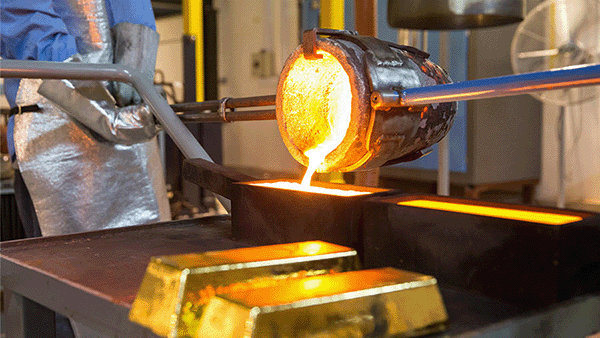
Gold Refineries in Uganda
Uganda’s gold refining sector has expanded rapidly by 2025, driven by vast deposits worth $12 trillion and government policies promoting value addition under the Mining and Minerals Act, 2022.
With at least five to six operational refineries, these facilities process doré, ore, and scrap gold into 99.9% pure bars, boosting exports to $1 billion in Q1 2025 alone.
They support artisanal miners (over 300,000 employed) and large-scale projects, while adhering to international standards like LBMA for ethical sourcing. Key refineries include:
- African Gold Refinery (AGR): Located in Entebbe, this $15 million facility, launched in 2014 and owned by Belgian investor Alain Goetz, is East Africa’s largest with a 200+ kg/day capacity. It refines doré and scrap using chemical processes, exporting to UAE and Europe; however, it’s faced sanctions scrutiny for alleged illicit sourcing from DRC.
- Wagagai Gold Refinery: Part of the $250 million Chinese-backed Wagagai Mining Project in Busia District, inaugurated August 2025. It processes 5,000 tonnes of ore daily, producing 1.2 tonnes of refined gold annually to 99.9% purity. Employs 2,000 locals and generates $10 million in taxes, focusing on sustainable tech.
- Euro Gold Refinery Uganda Limited: Uganda’s first fully locally-owned refinery, launched August 2025 in Kampala with a $20 million investment. Uses Italian eco-friendly equipment for zero-waste refining, holding a 79.8 km² mining concession in Yumbe. Aims to formalize ASM trade, creating jobs and aligning with Vision 2040.
- Busia Gold Refinery: Situated in Busia District, this facility supports traceable gold from eastern mines, refining doré and concentrates. It buys directly from miners, processes up to 100 kg/day, and facilitates exports to Asia, emphasizing regional trade amid cross-border deposits.
- ICON2 Gold Refinery: A leading Ugandan processor offering smelting, assaying, and minting services for custom bars/coins. Handles refined and unrefined gold at competitive prices, serving buyers/sellers with full-spectrum operations licensed by DGSM.
These refineries curb smuggling, enhance revenue (5-10% royalties), and promote mercury-free methods, though challenges like sanctions and environmental compliance persist. Uganda’s sector is poised for 20-tonne annual output by 2030.
About the Mining Act Uganda: Mining and Minerals Act, 2022
Uganda’s mining landscape underwent a seismic shift with the enactment of the Mining and Minerals Act, 2022 (MMA), signed into law by President Yoweri Museveni on October 13, 2022.
This comprehensive legislation repeals the outdated Mining Act of 2003, which had failed to capitalize on the country’s vast mineral wealth—including gold, tin, tungsten, tantalum, and uranium—despite historical contributions of up to 35% to exports in the 1960s.
The MMA aligns with the 2018 Mineral Policy, aiming to foster sustainable exploitation, value addition, and socio-economic growth, targeting a sector contribution of 10% to GDP by 2040.
Objectives and Scope
The Act’s primary goal is to regulate prospecting, exploration, mining, processing, refining, and trading of minerals, including geothermal resources, while promoting rational and sustainable use for national development.
It strengthens administrative structures, enhances geological data management, and ensures efficient revenue collection.
Key innovations include government participation in operations and emphasis on local content to curb smuggling and environmental degradation prevalent under the old regime.Uganda Gold Deposits
Key Provisions
The MMA introduces tiered mineral rights: prospecting licenses (1 year), exploration licenses (4 years, renewable), retention licenses (2 years), and mining licenses classified as large-scale (up to 21 years, for investments over UGX 388.2 billion), medium-scale (15 years), small-scale (10 years), and artisanal (5 years, for cooperatives).Uganda Gold Deposits
Applicants—individuals, companies (with at least 20% Ugandan equity for large-scale), partnerships, or associations—must demonstrate financial and technical capacity via the online Mining Cadastre Portal.
A landmark feature is the establishment of the Uganda National Mining Company (UNMC), a state-owned entity managing up to 15% free carried interest in large- and medium-scale mines, as seen in the 2025 Kilembe Mines redevelopment agreement.
Royalties (5-10%) are distributed: 70% to central government, 15% to districts, 10% to sub-counties, and 5% to landowners. Community Development Agreements (CDAs) mandate benefits like infrastructure and jobs for affected locals, addressing past conflicts in areas like Karamoja and Busia.
Environmental safeguards require Impact Assessments and reclamation bonds, while the 2023 Licensing Regulations ban mercury in artisanal gold mining, aligning with the Minamata Convention. Export levies on refined gold promote value addition, with ICGLR certification for conflict minerals like 3TGs (tin, tungsten, tantalum, gold).
Implementation and Impact
Operationalized by 2023 regulations, the MMA has spurred investments, formalizing over 400,000 artisanal miners (60-70% women and youth) and boosting 2025 gold exports to $1 billion.
Challenges persist, including ongoing consultations for full regulations and enforcement against smuggling. Overall, the Act positions Uganda as an attractive mining hub, balancing economic gains with sustainability and equity
Regulatory Framework and Government Policies
Uganda’s mining is governed by the 2022 Mining and Minerals Act, replacing the 2003 version for better oversight.
Key Regulations
- Licensing: Exploration licenses (3 years, renewable) cost $100/km²; mining leases up to 21 years. Foreign ownership capped at 80% in small mines. Uganda Gold Deposits
- Environmental and Social Standards: Environmental Impact Assessments (EIAs) mandatory; NEMA enforces reclamation. The 2025 National Mining Policy mandates 10% community equity in projects.
- Taxation: 5% royalty, 30% corporate tax, but incentives like 10-year holidays for large investors.
- ASM Formalization: The 2023 ASM Framework registers cooperatives, providing equipment loans.
Enforcement: Directorate of Geological Surveys monitors via GIS. Recent URA-Wagagai pacts combat smuggling, estimated at 30% of output.
Investment Climate
Uganda ranks 121st in World Bank’s Ease of Doing Business (2024). Incentives include one-stop borders and EPZs. Chinese FDI dominates (60%), followed by Canadian and Indian firms. 2025 saw $300 million inflows, per MEMD.
Buying and Exporting Gold from Uganda
Buying and exporting gold requires strict compliance with the Mining and Minerals Act, 2022, overseen by the Directorate of Geological Survey and Mines (DGSM) and Uganda Revenue Authority (URA). Key steps include:
- Obtain Licenses: Secure a Mineral Dealer’s License ($1,350) and Export Permit from DGSM, ensuring legal trade. Foreigners must partner with Ugandan entities (20% local equity for large-scale).
- Purity Certification: Gold must be assayed at facilities like African Gold Refinery (AGR) for 99.9% purity, with an assay report mandatory for customs.
- Tax Compliance: Pay a 5% export levy ($200/kg) and royalties (5-10%). Submit a Certificate of Origin, Commercial Invoice, and Customs Declaration Form via URA’s ASYCUDA system.
- Secure Logistics: Use registered air freight (e.g., Entebbe Airport) with insured couriers to avoid smuggling risks.
- Anti-Money Laundering (AML): Verify funds and maintain records to comply with ICGLR and international standards.
Challenges include smuggling (30% of output), environmental concerns, and high compliance costs for small buyers. Uganda’s 2025 exports hit $1.9 billion, with 2-3 tonnes produced annually, mainly from Busia and Karamoja.
Why Choose Buy Gold Bars Africa Ltd.?
As a licensed dealer, we source ethical, high-purity 24K gold bars and nuggets from Uganda’s top mines, offering competitive prices ($103.50/g vs. $130 globally). Our expertise simplifies licensing, assaying, and customs, ensuring seamless exports to UAE, Europe, and Asia. Uganda Gold Deposits
With a decade of trusted service, we provide assay reports, secure shipping, and full compliance, minimizing risks and maximizing profits. Partner with us for transparent, cost-effective transactions that support Uganda’s communities. Contact Buy Gold Bars Africa Ltd. today to invest in Uganda’s golden future
Challenges Facing Uganda’s Gold Sector
Despite promise, hurdles abound.
Environmental and Health Issues
Mercury pollution contaminates rivers like the Sio in Busia, affecting fish stocks and health (Minamata Convention violations). Deforestation in Karamoja erodes soil; only 20% of sites reclaim land.
Social and Security Concerns
Child labor in ASM (10% of workforce) and gender disparities persist. Conflicts in Karamoja pit miners against herders. Illegal mining by foreigners (e.g., Chinese nationals) sparks xenophobia debates, as seen in 2025 raids.
Economic and Geopolitical Risks
Smuggling to Kenya/Tanzania evades $50 million taxes yearly. Global gold price volatility (peaking at $2,600/oz in 2025) and debt from Chinese loans strain finances. Migingo Island disputes with Kenya complicate border deposits.
Technological Advancements and Sustainability
Uganda embraces innovation for sustainable mining.
Modern Techniques
Wagagai uses cyanide leaching and gravity concentration, recovering 85% gold. Drones and AI mapping (via 2024 USGS partnership) enhance exploration. planetGOLD’s mercury-free concentrators, adopted by 5,000 miners, cut pollution by 70%.Uganda Gold Deposits
Sustainability Initiatives
- Community Programs: Wagagai’s $5 million fund builds schools; Somero trains 423 leaders in child protection (2025).
- Green Mining: Carbon credits from reforestation; NEMA’s 2025 audits enforce zero-discharge.
- Gender Inclusion: Training empowers women like Monica in Tiira, equaling pay in cooperatives.
Future Prospects and Investment Opportunities
By 2030, Uganda aims for 20 tonnes annual production, per Vision 2040. Wagagai’s expansion and Karamoja’s full development could add $1 billion to exports.
Emerging Trends
- Deep-Sea and Tech Mining: Offshore potential in Lake Victoria; blockchain for traceability.
- Partnerships: MoUs with Rwanda and DRC for regional belts; EU green deals for funding.
Investment tips: Focus on ASM support (low entry, high social impact) or JV in greenfields. Risks: Political stability (Museveni era ends 2026?); mitigate via insurance.
Global Context
Uganda gold deposits rival Ghana’s (Africa’s top producer, 130 tonnes/year). With AfCFTA, it could supply 5% of global gold (3,500 tonnes total).
Conclusion: Unlocking Uganda’s Golden Future
Uganda gold deposits represent a golden opportunity for economic leapfrogging, blending ancient wealth with modern ambition. From Busia’s bustling pits to Karamoja’s rugged terrains, this sector promises jobs, revenue, and sustainability if managed wisely.
Yet, success hinges on balancing extraction with protection—for people, environment, and communities. As 2025 unfolds with Wagagai’s ramp-up and policy reforms, Uganda stands poised to shine on the world stage. Investors and stakeholders: the Pearl of Africa’s gold beckons—explore responsibly.

