Documents Required to Export Gold from Uganda: 2026 Complete Guide
To legally export gold from Uganda in 2026, you need nine core documents: a Gold Export License (issued by the DGSM), a Mineral Dealer’s License, a Certificate of Origin, an Assay Report from an approved refinery, a Customs Declaration Form (SAD), a Commercial Invoice, a Packing List, proof of URA tax and royalty payments, and AML/KYC compliance documentation. An ICGLR Regional Certification Mechanism certificate is also required for gold transiting from Great Lakes region countries.
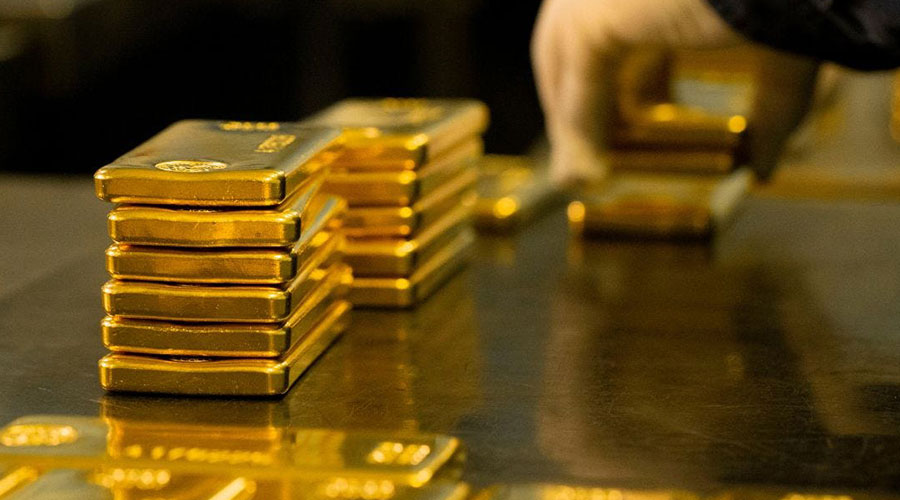
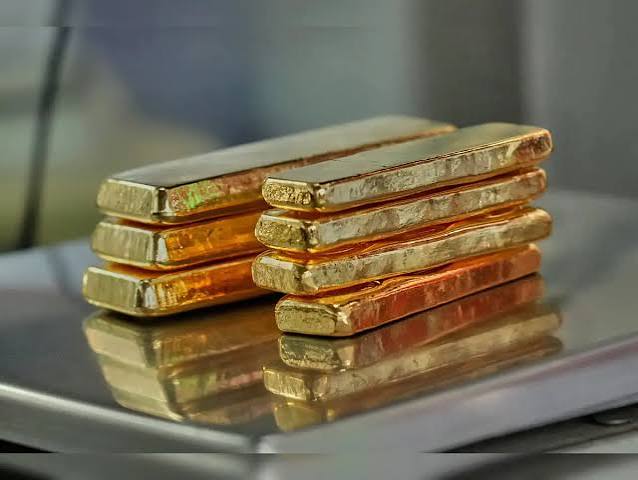
All exports must be of refined gold at 99.5% purity minimum and are cleared through Entebbe International Airport under Uganda Revenue Authority (URA) supervision.
Whether you are a first-time international gold buyer, a licensed trader sourcing Ugandan gold for resale in Dubai or Europe, or an investor navigating Uganda’s mineral export laws for the first time, getting the documentation right is the single most important step in the entire process.
A missing document at Entebbe customs does not cause a delay — it causes a seizure. This guide covers every document, why it is required, how to obtain it, and the step-by-step procedure for legally exporting gold from Uganda in 2026.
Why Uganda Is One of Africa’s Most Attractive Gold Export Markets
Before walking through the documents required to export gold from Uganda, it is worth understanding why the country has become such a significant destination for international gold buyers and export traders.
Uganda holds an estimated 31 million tonnes of gold ore, valued at approximately $12.8 trillion — a discovery that positions it as one of the world’s largest untapped gold reserves. The country’s primary gold-producing regions — Busia, Mubende, Karamoja, and Kasese — feed an export market that has grown from near-zero in 2010 to over $2.5 billion annually by 2024, making gold Uganda’s leading export earner.
At current market prices of approximately $4,224 per troy ounce ($135,656 per kilogram) as of mid-June 2026, Ugandan gold offers competitive pricing to international buyers who source directly through licensed exporters, bypassing the markups added by European and Middle Eastern intermediaries.
The Uganda Revenue Authority’s $200 per kilogram flat export levy on refined gold — in place of a percentage-of-value charge — makes Uganda’s effective export tax burden relatively predictable and cost-competitive by African standards.
The legal framework governing gold trade in Uganda was substantially updated by the Mining and Minerals Act, 2022, which banned the export of unrefined gold, required all export-grade gold to be processed to a minimum fineness of 99.5%, and mandated that all exports pass through Uganda’s licensed refining infrastructure.
For buyers, this means every shipment of Ugandan gold you receive has been assayed, certified, and cleared through a documented regulatory chain — a meaningful reduction in the fraud risk that historically plagued the sector.
The 9 Essential Documents Required to Export Gold from Uganda
1. Gold Export License (DGSM Export Permit)
The gold export license — formally called the Mineral Export Permit — is the foundational document for any legal gold shipment leaving Uganda. It is issued by the Directorate of Geological Survey and Mines (DGSM) under the Ministry of Energy and Mineral Development, and confirms that the exporter is authorized under Uganda’s mining laws to ship gold internationally.
How to obtain it: Apply to the DGSM with your Mineral Dealer’s License (see below), Certificate of Incorporation from the Uganda Registration Services Bureau (URSB), a completed application form detailing the quantity, source, and assayed purity of the gold, evidence of royalty payment for domestically sourced gold or an import permit for gold originating from outside Uganda (such as DRC transit gold), and AML/KYC compliance documentation. The DGSM conducts background checks on all applicants before issuing permits.
Cost: The export permit typically costs between $1,500 and $3,000 USD, covering documentation, verification, and clearance processing.
Why it matters: Without a valid DGSM export permit, any gold shipment is classified as smuggling under Section 140 of the Mining and Minerals Act, 2022 — a criminal offense carrying severe penalties including asset forfeiture, license revocation, and imprisonment.
2. Mineral Dealer’s License (MDL)
Before you can apply for a gold export permit, you must hold a valid Mineral Dealer’s License, also issued by the DGSM. This license authorizes the holder to buy and sell gold within Uganda — a prerequisite for any export activity. Under Section 140 of the Mining and Minerals Act, 2022, no individual or company may buy or sell minerals in Uganda without a current MDL.
How to obtain it: Register your business with the URSB, obtain a Tax Identification Number (TIN) from the URA, and apply to the DGSM with proof of technical and financial capacity, environmental compliance, and AML/KYC documentation. The MDL license fee for dealing in precious metals is UGX 6,000,000, with an annual mineral rent of UGX 1,500,000.
Foreign investor note: Gold dealing in Uganda is open to both Ugandan citizens and foreign nationals, but foreign investors must meet detailed DGSM regulatory requirements and are expected to demonstrate meaningful local operational presence.
3. Certificate of Origin
The Certificate of Origin is issued by the Uganda Export Promotion Board (UEPB) under the Ministry of Trade, Industry, and Cooperatives. It verifies that the gold was legally sourced from Uganda or, in the case of transit gold, from a declared and documented origin country with proper import permits.
This document is essential for compliance with the OECD Due Diligence Guidance for Responsible Supply Chains of Minerals from Conflict-Affected and High-Risk Areas — the international standard that gold buyers in the EU, USA, UAE, and Switzerland are required to apply to their supply chains. Without a Uganda Certificate of Origin, your gold cannot be accepted by responsible refineries or traded on major international bullion markets.
Why Uganda’s location makes this critical: Uganda borders the DRC, a country with documented artisanal gold production tied to armed groups in its eastern provinces.
The Certificate of Origin, combined with the ICGLR certification (see below), is the documentary proof that your gold is not conflict-sourced.
4. ICGLR Regional Certification Mechanism Certificate
Uganda attained full membership in the International Conference on the Great Lakes Region (ICGLR) Regional Certification Mechanism in May 2024, becoming the fifth member country after DRC, Rwanda, Burundi, and Tanzania. This is now a mandatory compliance requirement for all gold exports from Uganda in 2026.
The ICGLR certificate provides traceability documentation confirming the gold’s chain of custody from mine to export point, specifically designed to prevent conflict minerals from the Great Lakes region from entering international supply chains.
How to obtain it: The ICGLR certification is processed through the DGSM as part of the export permit procedure. Exporters must maintain detailed transaction records linking each gold consignment to its specific source mine or licensed aggregator.
Why it matters: Major gold refineries in Switzerland, the UAE, and the UK — including those accredited by the London Bullion Market Association (LBMA) — now require ICGLR certification for gold sourced from Great Lakes countries. Without it, your Ugandan gold cannot be accepted by the world’s leading refineries.
5. Assay Report (Gold Purity Certification)
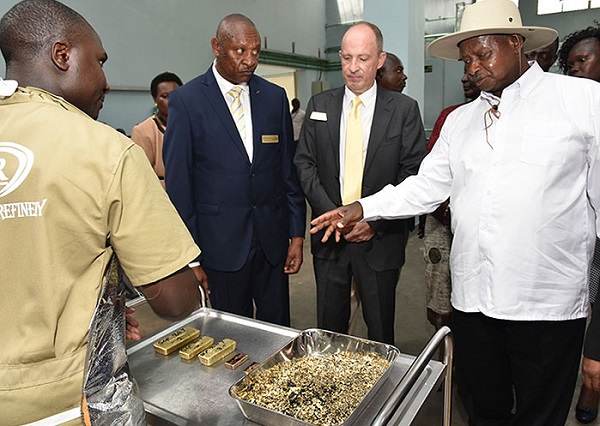
The assay report is a laboratory certificate confirming the gold’s exact purity (karat) and weight. It is issued by a DGSM-approved assay facility — primarily the African Gold Refinery (AGR) in Entebbe, the Wagagai Mining refinery, or another DGSM-accredited laboratory such as the Simba Assay Laboratory or the Uganda National Bureau of Standards (UNBS).
Under the Mining and Minerals Act, 2022, the export of unrefined gold from Uganda is banned. All gold destined for export must first be refined to a minimum fineness of 99.5% purity at an approved facility, and the assay report documenting that purity is a mandatory export document.
How to obtain it: Submit your gold to an approved refinery or assay centre. The gold is weighed, tested using fire assay or XRF methods, and sealed under government supervision.
The assay report includes the serial numbers of refined bars, purity percentage, gross weight, fine weight, and the supervising laboratory’s official certification. This report is then shared with the Bank of Uganda, URA, and DGSM as part of the export clearance chain.
At current market rates: A 1kg bar of 99.9% pure gold (24K) is valued at approximately $135,656 at June 2026 spot prices. The assay report is the document that establishes this value for customs duty calculation and commercial invoice purposes.
6. Customs Declaration Form (Single Administrative Document — SAD)
The Single Administrative Document (SAD) is filed with the Uganda Revenue Authority (URA) through the ASYCUDA customs management system at Entebbe International Airport. It captures the shipment’s quantity, declared value, destination country, HS code (7108 for gold), and tax clearance status.
How to obtain it: Complete the SAD electronically through the URA’s ASYCUDA portal, uploading the commercial invoice, assay report, Certificate of Origin, and proof of tax payment. A licensed clearing agent familiar with Uganda’s mineral export customs procedures can significantly reduce errors and processing time.
Why it matters: The SAD is the primary instrument through which the URA calculates and collects export duties. Errors in the SAD — particularly undervaluation of the gold — are treated as tax fraud and trigger immediate shipment detention and investigation.
7. Commercial Invoice
The commercial invoice is prepared by the seller and sets out the full transaction details: the gold’s weight, purity, price per gram or troy ounce, total declared value in USD, shipping terms (Incoterms), and the identities of both buyer and seller. It must match the assay report and SAD exactly — any discrepancy triggers a customs hold.
The commercial invoice also establishes the basis for the URA’s export duty calculation. As of 2026, Uganda applies a flat export levy of USD $200 per kilogram of refined gold (99.5%+ purity), paid to the URA at the time of customs declaration. This levy was established under the Mining and Minerals (Export of Refined Gold) Regulations and is separate from any mineral royalties applicable to the upstream mining operation.
Important pricing note: Given the current gold spot price of approximately $135,656/kg, the $200/kg flat levy represents roughly 0.15% of the shipment value at current prices — a significantly lower effective rate than percentage-based export taxes in other African markets.
8. Packing List
The packing list accompanies the commercial invoice and provides the physical shipment details: the number of gold bars or sealed packages, individual bar serial numbers (from the assay report), gross weight, net fine weight, and packaging specifications. It must align precisely with the commercial invoice, assay report, and SAD.
For gold shipments, the packing list also typically includes the vault seal numbers and logistics provider documentation. This document is submitted to both URA customs and the freight carrier (Brinks, G4S, Malca-Amit, or equivalent) for cargo tracking and chain-of-custody purposes.
9. Proof of URA Tax and Royalty Payments
Before customs clearance is granted, exporters must present URA payment receipts confirming that all applicable taxes, levies, and royalties have been settled. These include:
- Export levy on refined gold: USD $200 per kilogram, paid directly to the URA at export declaration
- Mineral royalties (3–5% depending on license class — artisanal, small-scale, or large-scale), applicable to the upstream mining operation
- Withholding taxes on dealer transactions, where applicable
- URA Tax Clearance Certificate, confirming no outstanding tax obligations
Any exporter with unresolved tax liabilities cannot obtain URA clearance, and the shipment is held until the tax position is resolved.
Supplementary: AML/KYC Compliance Documentation
While not a single document, Anti-Money Laundering (AML) and Know Your Customer (KYC) compliance records form a mandatory part of the export dossier under Uganda’s Financial Intelligence Authority Act and the DGSM’s licensing conditions. These include:
- Supplier licenses and mineral dealer registration certificates for every upstream source
- Detailed transaction histories linking the gold to specific licensed miners
- Beneficial ownership declarations for all entities in the transaction chain
- Bank compliance letters confirming the exporter’s AML status
Failure to maintain adequate AML/KYC records is increasingly prosecuted under Uganda’s financial crime framework, with penalties including criminal referral to the Financial Intelligence Authority.
Complete Documents Checklist for Exporting Gold from Uganda
| # | Document | Issuing Authority | When Required |
|---|---|---|---|
| 1 | Mineral Dealer’s License (MDL) | DGSM | Before any gold purchase or sale |
| 2 | Gold Export Permit | DGSM | Per shipment |
| 3 | Certificate of Origin | UEPB | Per shipment |
| 4 | ICGLR Regional Certification | DGSM / ICGLR | Per shipment (Great Lakes region gold) |
| 5 | Assay Report (Purity Certificate) | AGR / UNBS / DGSM-approved lab | Per shipment |
| 6 | Customs Declaration (SAD) | URA via ASYCUDA | Per shipment |
| 7 | Commercial Invoice | Exporter | Per shipment |
| 8 | Packing List | Exporter / Logistics | Per shipment |
| 9 | URA Tax Clearance + Payment Receipts | URA | Per shipment |
| 10 | AML/KYC Compliance Records | Financial institutions / DGSM | Per transaction |
Step-by-Step Process for Legally Exporting Gold from Uganda (2026)
Step 1: Register and License Your Business
Register your company with the Uganda Registration Services Bureau (URSB) and obtain a Tax Identification Number (TIN) from the URA. Apply for a Mineral Dealer’s License through the DGSM, providing proof of financial and technical capacity. Foreign investors should also register with the Uganda Investment Authority (UIA) for investment incentive eligibility.
Step 2: Source Gold from Licensed Miners or Aggregators
Purchase gold exclusively from DGSM-registered miners or licensed aggregators. Maintain detailed purchase records — supplier licenses, transaction invoices, and chain-of-custody documentation — for every gram acquired. Purchasing from unlicensed artisanal miners, even informally, creates AML liability and can invalidate your export permit application.
Step 3: Refine to Export-Grade Purity
Submit your gold to an approved refinery — African Gold Refinery (AGR) in Entebbe, Wagagai Mining, or another DGSM-accredited facility — for processing to a minimum of 99.5% fineness. The Mining and Minerals Act, 2022 prohibits the export of unrefined gold, so this step is non-negotiable. The refinery issues your assay report upon completion.
Step 4: Apply for the DGSM Export Permit
With your Mineral Dealer’s License, assay report, Certificate of Origin from UEPB, ICGLR certificate, and evidence of royalty payments in hand, submit your Gold Export Permit application to the DGSM. Allow 5–7 working days for processing. Notify the DGSM at least 2 days before your intended export date once the permit is issued.
Step 5: Pay URA Export Taxes and Obtain Tax Clearance
Calculate and pay the $200 per kilogram export levy to the URA along with any applicable mineral royalties. Obtain your URA Tax Clearance Certificate. File your Customs Declaration (SAD) through the ASYCUDA system, attaching the commercial invoice, assay report, packing list, and proof of payment.
Step 6: Arrange Secure Transport
Book your shipment with a licensed secure logistics provider — Brinks, G4S, or Malca-Amit are the principal operators for high-value precious metal shipments from Uganda. Air cargo via Entebbe International Airport is the standard export route due to security and transit time requirements. Arrange full cargo insurance covering the declared value of the shipment.
Step 7: Clear Customs at Entebbe
Present the complete documentation package to URA customs officers at Entebbe International Airport. Officers will physically inspect the consignment, verify GRA seals against the assay report, and confirm that all taxes have been paid. Upon clearance, you receive the export certification and the airway bill. Your cargo is loaded under customs supervision.
Step 8: Post-Export Compliance
Submit export statistics to the DGSM within 30 days. File the required Foreign Currency Retention Form with the Bank of Uganda. Update the ICGLR database with the shipment details. Include the transaction in your quarterly AML compliance report. Retain all documentation for a minimum of 7 years for audit purposes.
Current Gold Prices in Uganda — June 2026 Reference
Gold prices in Uganda are linked to the LBMA international spot rate, with premiums for locally refined, export-certified bars reflecting assay and logistics costs.
| Gold Type | Purity | Price per Gram (USD) | Price per Troy Oz (USD) | Price per kg (USD) |
|---|---|---|---|---|
| Refined Gold Bar (export grade) | 24K / 99.9% | ~$135.66 | ~$4,222 | ~$135,657 |
| Jewelry / Semi-refined | 22K / 91.7% | ~$124.42 | ~$3,872 | ~$124,420 |
| Artisanal / Dore (pre-refinery) | Variable | $115–$128 | $3,578–$3,982 | $115,000–$128,000 |
Prices as of mid-June 2026. The global spot price has traded between $4,042 and $5,400/oz in 2026. Always confirm the LBMA daily rate on the day of your assay submission, as URA export duty calculations and commercial invoice valuations use the rate on the date of customs declaration.
The $200/kg export levy in context: At current prices of approximately $135,657/kg, the URA’s flat $200/kg levy represents roughly 0.15% of shipment value — considerably more favorable than percentage-based export taxes in markets like Ghana (1.5% withholding levy) or Tanzania (6% royalty + 1% clearing fee).
This makes Uganda one of Africa’s more cost-efficient jurisdictions for gold export once the full regulatory process is followed correctly.
Key Regulations Governing Gold Export from Uganda in 2026
Mining and Minerals Act, 2022 — the primary legislation governing all mineral operations in Uganda. Section 140 prohibits buying or selling minerals without a valid MDL. The Act bans the export of unrefined gold and mandates minimum 99.5% purity for export-grade gold.
Mining (Export of Refined Gold) Regulations — established the $200/kg flat export levy on refined gold. First issued in March 2023 and subsequently replaced by a revised instrument in May 2024, this levy is the operative export tax rate in 2026.
Mining Regulations, 2008 (S.I. 42-1) — provides the operational framework for mineral dealing licenses, export procedures and documentation, and royalty and fee structures.
ICGLR Regional Certification Protocol — mandatory since Uganda’s accession in May 2024, requiring documented chain-of-custody traceability for all gold exports.
Financial Intelligence Authority Act — governs AML/KYC obligations for all parties in the gold supply chain, with criminal penalties for non-compliance.
Common Challenges When Exporting Gold from Uganda — and How to Avoid Them
Fraudulent sellers and counterfeit gold. The most significant risk in Uganda’s gold market is unlicensed dealers presenting themselves as legitimate. Always verify a dealer’s DGSM Mineral Dealer’s License number directly with the DGSM before transacting. Request a live, third-party assay from AGR or UNBS — never rely on an assay report provided exclusively by the seller.
DRC transit gold complications. A significant portion of gold traded in Uganda originates from the eastern DRC. This gold can be legally imported and re-exported, but it requires a separate DRC import permit, ICGLR certification tracing the DRC origin, and a Uganda Certificate of Origin. Buyers who skip these steps receive gold that cannot be accepted by LBMA-accredited refineries.
Tax regulation changes. Uganda’s gold export levy has been subject to legal challenges, parliamentary disputes, and multiple statutory instrument revisions since 2021. Always confirm the current operative levy rate with the URA or a licensed Ugandan mining law adviser before finalizing export cost calculations.
Shipping and insurance costs. Secure air freight for a 1kg gold bar typically costs $600–$1,200 USD in logistics and insurance charges when using Brinks, G4S, or Malca-Amit from Entebbe. Factor this into your cost-per-kilogram calculation alongside the $200/kg URA levy.
Tips for Safe, Compliant Gold Export from Uganda
Verify all licenses before purchasing. Cross-check every supplier’s DGSM Mineral Dealer’s License and export permit on the DGSM’s registry. An unlicensed seller cannot provide the documentation you need at customs.
Always use independent assay. Request purity testing from AGR, Simba Assay Laboratory, or UNBS — not a private lab recommended by the seller. Third-party assay protects you from underkarated or adulterated gold.
Use bank wire transfers or escrow. Reputable licensed exporters accept traceable payment methods. Cash transactions or informal payment channels in Uganda’s gold trade are the single largest vector for fraud against international buyers.
Stay current on regulatory updates. Uganda’s gold export regulations have changed multiple times in the past three years. Monitor DGSM and URA guidance, or retain a Kampala-based mining law firm to flag updates before they affect your shipments.
Work with licensed exporters who manage the full process. The documentation burden for a Uganda gold export is significant. Experienced licensed exporters like Buy Gold Bars Africa Ltd — registered with the DGSM and holding active export licenses across Uganda, Ghana, Tanzania, and South Africa — handle permit applications, assay coordination, customs clearance, and international shipping logistics end-to-end, reducing your exposure to compliance errors and the fraud risks that remain prevalent in Uganda’s informal gold market.

FAQs: Exporting Gold from Uganda
What is the export tax on gold in Uganda in 2026? A flat export levy of USD $200 per kilogram of refined gold (99.5%+ purity), paid to the URA at customs declaration. This is separate from mineral royalties (3–5% of mining revenue) applicable to upstream producers. Unrefined gold cannot be exported.
Can foreigners export gold from Uganda? Yes. Gold dealing and export is open to foreign nationals and foreign-incorporated companies under the Mining and Minerals Act, 2022, subject to full DGSM licensing, URSB business registration, URA tax compliance, and AML/KYC requirements.
Is unrefined gold legal to export from Uganda? No. The Mining and Minerals Act, 2022 banned the export of unrefined gold. All gold exported from Uganda must be refined to a minimum of 99.5% fineness at a DGSM-approved facility before export permits are granted.
What is the minimum quantity of gold I can export from Uganda? There is no statutory minimum quantity, but the documentation overhead and logistics costs make shipments below 100 grams impractical. Most commercial export shipments are at least 1 kilogram.
How long does the gold export process take in Uganda? From assay submission to Entebbe airport clearance, the process typically takes 7–14 working days when documentation is complete. Delays are almost always documentation-related — either missing documents or discrepancies between the assay report, commercial invoice, and SAD.
Where can I buy certified gold for export in Uganda? From DGSM-registered miners, licensed aggregators, and licensed exporters operating in Uganda’s key gold regions — Busia, Mubende, Karamoja, and Kasese. Always verify the seller’s MDL before purchasing. Buy Gold Bars Africa Ltd operates as a licensed dealer and exporter, providing fully documented, assay-certified 24K gold bars and nuggets with complete export support.
Conclusion: Get the Documents Right and Uganda’s Gold Market Is Open to You
Exporting gold from Uganda legally in 2026 is not complicated — but it demands precision. The nine documents required to export gold from Uganda work together as a system: each one references and validates the others, and a gap in any single document can unravel the entire export clearance at Entebbe.
The good news is that Uganda’s regulatory framework, anchored by the Mining and Minerals Act, 2022 and the ICGLR certification system, is more transparent and more enforceable than it has ever been. For international buyers, that means a more reliable supply chain, better documentation standards, and a clear legal pathway to sourcing some of the world’s highest-quality gold at competitive prices.
The competitive flat export levy of $200/kg, combined with Uganda’s vast untapped reserves, mine-direct pricing, and growing refining infrastructure through AGR and Wagagai, makes the country one of East Africa’s most compelling gold sourcing destinations in 2026.
To buy and export gold from Uganda with full documentation, assay certification, and end-to-end compliance support, contact Buy Gold Bars Africa Ltd at info@buygoldbarsafrica.com. Our team manages every step — from DGSM permit applications and AGR assay coordination through to Entebbe customs clearance and international secure delivery to Dubai, Europe, the USA, and Asia.
All prices in this guide reflect mid-June 2026 market rates (~$4,222/oz, ~$135,657/kg for 24K gold). Prices fluctuate daily — verify the current LBMA spot rate before finalising any transaction. Regulatory details are current as of June 2026 under the Mining and Minerals Act, 2022 and the Mining and Minerals (Export of Refined Gold) Regulations 2024; confirm current rates with the DGSM or a licensed Uganda mining law adviser before committing funds.