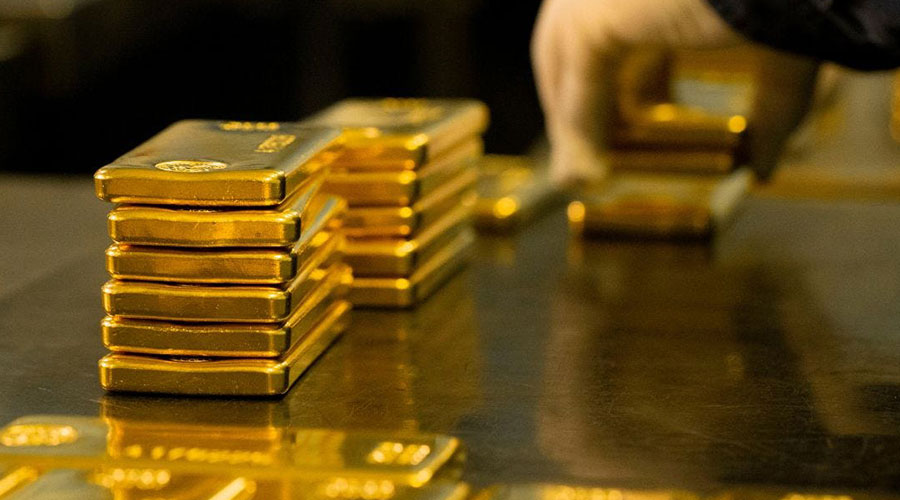
FAQs About Buying Gold in Belgium from Africa:2026 Top Guide
In 2026, with the gold price at approximately $143 per gram and the case for physical gold investment stronger than at any point in recent economic memory, the community of Belgian gold buyers sourcing from Africa is growing — driven by the same combination of competitive African pricing, strong EU regulatory clarity, and direct-source access that has attracted buyers from every other major European market.
This FAQ guide answers every significant question about buying gold in Belgium from Africa: the EU and Belgian regulatory framework, VAT rules, customs procedures, AML obligations, documentation requirements, and the most important compliance frameworks that every Belgian gold buyer must understand before making their first African gold purchase.
Below are the top 8 FAQs About Buying Gold in Belgium;
1. Is It Legal to Import Gold from Africa into Belgium?
Yes — importing gold from Africa into Belgium is entirely legal, and Belgium’s position as an EU member state means it operates within the EU’s harmonised precious metals import framework that is among the most transparent and most consistently administered in the world.
There are no general prohibitions on gold imports from African countries, with the exception of gold from countries subject to EU sanctions (which align with UN Security Council sanctions and include jurisdictions such as Russia, Iran, North Korea, and select conflict-specific restrictions).
Importers in Belgium typically require licences or permits to legally import gold from Africa. Documentation must include commercial invoices, certificates of origin, and compliance statements confirming ethical sourcing.
The legal import of gold from Africa into Belgium is governed by three overlapping frameworks: EU customs law (the Union Customs Code), Belgian VAT law, and the EU Conflict Minerals Regulation — each of which imposes specific documentary and compliance obligations on the importing entity.
The Belgian Federal Public Service Finance and Belgian Customs (now operating as the Federal Public Service Finance’s Customs and Excise Administration following the 2021 administrative consolidation) are the primary authorities for gold import procedures.
For commercial gold imports above specific value thresholds, formal customs entry through a licensed Belgian customs broker is required. For individual travellers bringing gold into Belgium, amounts exceeding €10,000 in value must be declared to Belgian customs authorities upon arrival.

2. What Are the VAT Rules for Importing Gold into Belgium from Africa?
Belgium’s VAT rules for gold imports are governed by EU Directive 1998/80/EC — the EU Investment Gold Directive — which was transposed into Belgian law and provides a specific VAT exemption for investment-grade gold that makes Belgium one of the most tax-efficient European destinations for gold investment.
Investment gold is exempt from Belgian VAT under the EU Investment Gold Directive. The exemption applies to gold meeting one of two specifications: gold bars or wafers of a purity equal to or greater than 995 thousandths (99.5% pure), in any weight; or gold coins of a purity equal to or greater than 900 thousandths that were minted after 1800 and are or have been legal tender in their country of origin.
This means that 24K investment gold bars (999.9 fineness) from African LBMA-accredited refineries — including South Africa’s Rand Refinery, Uganda’s African Gold Refinery, and Ghana’s LBMA-aligned producers — are fully VAT-exempt when imported into Belgium for investment purposes.
For gold that does not meet the investment gold specification — artisanal dust below 995 fineness, gold jewellery, doré, or raw gold material destined for further processing — Belgian import VAT of 21 percent applies.
This is Belgium’s standard VAT rate, applied to the customs value of the goods (which includes the purchase price, shipping costs, and insurance).
For VAT-registered Belgian businesses importing non-investment gold for manufacturing or trading purposes, the import VAT is generally recoverable as input tax — meaning the 21 percent is not a net cost but a cash flow consideration requiring proper VAT registration and return filing.
The practical implication for Belgian gold buyers purchasing from Africa is straightforward: structure your African gold purchases as investment-grade bars meeting the 995/1000 purity threshold, from LBMA-listed African refineries, and your Belgian import is VAT-free.
Purchase artisanal or semi-refined material for processing, and budget for the 21 percent import VAT as a recoverable input tax cost.
3. What Are Belgium’s Customs Procedures for Gold Imports from Africa?
Belgian customs procedures for African gold imports follow the EU Union Customs Code framework, with Belgian-specific administrative procedures managed through the Customs and Excise Administration.
Commercial gold imports arriving from Africa must be declared to Belgian customs through the PLDA (Paperless Douane en Accijnzen) electronic customs system at the port or airport of entry.
The two primary Belgian entry points for precious metals shipments are Brussels Airport (Zaventem) for air freight — which is the standard logistics route for insured precious metals shipments — and the Port of Antwerp, which handles sea freight and serves as Belgium’s primary entry point for bulk commodity shipments.
For commercial gold imports above the €150 customs duty threshold (which effectively covers all meaningful gold shipments), a formal customs entry must be filed by the importer or their authorised customs broker.
The customs entry requires: a commercial invoice with declared value, a customs value declaration, the Certificate of Origin from the African producing country, the assay certificate, the export permit from the African exporting country, and — for gold from DRC or conflict-affected regions — the OECD Due Diligence documentation required by the EU Conflict Minerals Regulation.
Customs duties on gold in Belgium follow the EU Common Customs Tariff. Investment gold (CN code 7108.20 — monetary gold) is duty-free under EU customs law.
Non-monetary gold (CN code 7108.12 — gold in semi-manufactured forms) carries a duty rate that varies by product specification and may attract duties under the EU’s Most Favoured Nation rates. For investment-grade African gold meeting the monetary gold classification, the combination of zero customs duty and VAT exemption makes the Belgian import the most tax-efficient entry point for African gold into the European market.
The Article 23 mechanism available to VAT-registered Belgian businesses allows postponed accounting for import VAT — meaning the 21 percent import VAT does not need to be paid at customs clearance but can be deferred and offset against output VAT through the regular VAT return process.
This significantly improves cash flow for commercial Belgian gold importers and is one of the features that makes Belgium an attractive EU entry point for African gold destined for further distribution across the European market.
4. What Is the EU Conflict Minerals Regulation and How Does It Apply to African Gold Imports into Belgium?
The EU Conflict Minerals Regulation (EU Regulation 2017/821) entered into full application on 1 January 2021 and is the most significant compliance framework for Belgian buyers importing gold from African conflict-affected regions. It applies to EU-registered importers of gold (and other specified minerals — tin, tungsten, tantalum) above defined annual import volume thresholds.
The Regulation requires EU importers above the threshold to implement the five-step OECD Due Diligence Guidance framework for responsible supply chains: establishing strong company management systems; identifying and assessing risks in the supply chain from mine of origin to export; designing and implementing a risk response strategy; conducting independent third-party audits of supply chain due diligence; and reporting annually on supply chain due diligence findings.
For Belgian gold buyers importing from the DRC, Rwanda, Uganda, Burundi, or other Great Lakes region countries — the primary conflict-affected source regions the Regulation targets — this means maintaining documented evidence that the gold did not pass through armed group control, finance armed conflict, or involve serious human rights abuses.
The ICGLR (International Conference on the Great Lakes Region) conflict-free certification, iTSCi programme audit reports, and IPIS mine site mapping confirmation are the documentary evidence that Belgian importers rely on to satisfy the Regulation’s due diligence requirements.
For Belgian gold buyers importing from Ghana, South Africa, Tanzania, Uganda, or Mali in straightforward, documented supply chains without conflict-affected intermediary steps, the Regulation’s requirements are less demanding — though a supply chain policy, risk assessment, and annual disclosure are still required above the volume threshold.
The Belgian federal government’s enforcement of the Regulation is coordinated through the Federal Public Service Economy, SMEs, Self-employed and Energy, which is the designated competent authority for Belgium.
Non-compliance with the EU Conflict Minerals Regulation — importing conflict-affected gold without the required due diligence documentation — can result in financial penalties, import prohibitions, and reputational consequences that extend across the entire European distribution network.
5. What AML and KYC Requirements Apply to Belgian Gold Buyers?
Anti-money laundering compliance for Belgian gold buyers is governed by the Belgian Anti-Money Laundering Law of 18 September 2017 (the AML Law), which transposed the EU’s Fourth Anti-Money Laundering Directive into Belgian national law and has since been updated to reflect the Fifth and Sixth AMLA Directives.
Gold dealers are explicitly listed as “obliged entities” under the Belgian AML Law, meaning they must implement comprehensive AML programmes, conduct customer due diligence, and report suspicious transactions to the Belgian Financial Intelligence Processing Unit (CTIF-CFI).
For individual Belgian buyers purchasing African gold, the key practical threshold is that cash transactions above €10,000 are prohibited for gold dealers under Belgian AML rules — all purchases above this amount must be settled through traceable payment channels (bank transfer, card payment). For purchases above €10,000, gold dealers must verify customer identity and record transaction details.
For commercial Belgian entities importing African gold, the AML obligations are more extensive: full beneficial ownership verification of the African supplier, source of funds verification for all payment flows, screening of all African counterparties against EU sanctions lists and Politically Exposed Persons (PEP) databases, and Suspicious Activity Report (SAR) filing for any transaction that raises AML concerns.
The Belgian AML Law’s penalties for non-compliance are significant — administrative fines of up to €1.25 million and criminal penalties for serious violations.
FATF (Financial Action Task Force) membership means Belgium applies international standards for precious metals AML that are closely aligned with Swiss, UK, and US frameworks. African gold suppliers selling to Belgian buyers should expect to provide complete KYC documentation — corporate registration, beneficial ownership declaration, mining licence verification, and source of funds confirmation — as a standard condition of every transaction.
6. Which African Countries Are Best for Belgian Gold Buyers?
Belgium’s existing trade relationships, refinery infrastructure, and compliance expertise make certain African sourcing countries more operationally accessible than others for Belgian buyers.
South Africa is Belgium’s largest African gold source, having supplied $254 million in gold to Belgium in 2024. South Africa’s Rand Refinery LBMA Good Delivery-listed bars are automatically VAT-exempt for Belgian investment purchases, carry the strongest institutional documentation of any African gold, and satisfy Belgian customs requirements without additional assay verification. For Belgian institutional buyers and serious individual investors, South African gold from SADPMR-licensed exporters is the most compliance-friction-free African source available.
The DRC has a historically deep commercial connection to Belgium — the Belgian colonial history in the Congo created institutional networks and expertise that continue to inform Belgian engagement with the DRC’s gold sector. Belgian refiners and traders are among the most active European buyers of CEEC-certified DRC artisanal gold, and Belgium’s proximity to the EU Conflict Minerals Regulation’s enforcement apparatus makes Belgian buyers among the most sophisticated practitioners of OECD Due Diligence for DRC-origin material.
For Belgian buyers who have built the compliance infrastructure, DRC gold at 5 to 20 percent below LBMA spot offers exceptional value.
Ghana provides Belgian buyers with the finest combination of production volume, GoldBod regulatory credibility, and competitive pricing in West Africa. Ghana gold at 1 to 3 percent above LBMA spot through established GoldBod-licensed channels is accessible, documented, and fully compatible with Belgium’s EU Conflict Minerals compliance framework (Ghana is not a conflict-affected source country under the Regulation’s current taxonomy).
Uganda and Tanzania represent the most attractive East African sourcing options for Belgian buyers who want emerging market pricing — Uganda’s African Gold Refinery (AGR) operating at 200 kg per day refining capacity, and Tanzania’s Geita and North Mara mine outputs — at moderate premiums and with growing documentation quality that satisfies Belgian customs requirements.
7. What Documentation Is Required to Import Gold from Africa into Belgium?
The complete documentation package for importing African gold into Belgium must satisfy both the African export requirements and the Belgian/EU import requirements simultaneously.
From the African side, the documentation must include: the exporter’s national mining licence (GoldBod in Ghana, SADPMR in South Africa, CEEC/CAMI in DRC, NMA in Sierra Leone, DGSM in Uganda, Mining Commission in Tanzania); the assay certificate confirming gold purity and weight from an accredited national or LBMA-recognised laboratory; the Certificate of Origin from the relevant national mining authority; the export permit specifically authorising the consignment’s departure; a commercial invoice with declared USD value consistent with the assay certificate; a packing list; and proof of royalty and export duty payment.
For the Belgian/EU import, additional documentation includes: EU customs entry (filed through the PLDA system); the customs value declaration; for investment gold, the LBMA Good Delivery hallmark confirmation on the bar itself; for conflict-region gold, the OECD Due Diligence documentation and ICGLR conflict-free certificate; and the AML/KYC documentation package confirming the buyer’s identity and the source of funds.
All payments for African gold destined for Belgium must be structured as SWIFT wire transfers to verified corporate bank accounts of the licensed African exporting entity.
Cash payments are subject to Belgium’s €10,000 cash transaction prohibition for gold dealers, and informal payment channels — cryptocurrency, Western Union, money transfer services — are inconsistent with the AML framework that both Belgian and African regulations require.
8. What Are the Current Gold Prices for Belgian Buyers Sourcing from Africa in 2026?
As of June 2026, the gold price for Belgian buyers sourcing from Africa is structured as follows. The LBMA gold spot price is approximately $143.30 per gram ($4,457 per troy ounce) for 24K investment gold. At the current EUR/USD exchange rate of approximately 0.921, this translates to approximately €132 per gram for LBMA-quality 24K gold.
African dealer premiums through established operators like Buy Gold Bars Africa Ltd run 1 to 3 percent above the LBMA spot for investment-grade bars — representing a saving of 3 to 5 percent compared to the 4 to 8 percent premiums that Belgian and European retail bullion dealers typically charge for equivalent product sourced through intermediary chains.
On a 1-kilogram purchase at current prices, this premium differential saves approximately €4,000 to €7,000 per kilogram — a material saving that grows proportionally with every additional kilogram purchased.
Artisanal African gold from Ghana, Uganda, or Tanzania at 90 to 95 percent purity trades at approximately 5 to 15 percent below the 24K LBMA spot. DRC artisanal gold at 88 to 94 percent purity trades at 5 to 20 percent below spot.
For Belgian refineries or commercial buyers with processing relationships, these discounts represent the processing margin available through direct African sourcing.
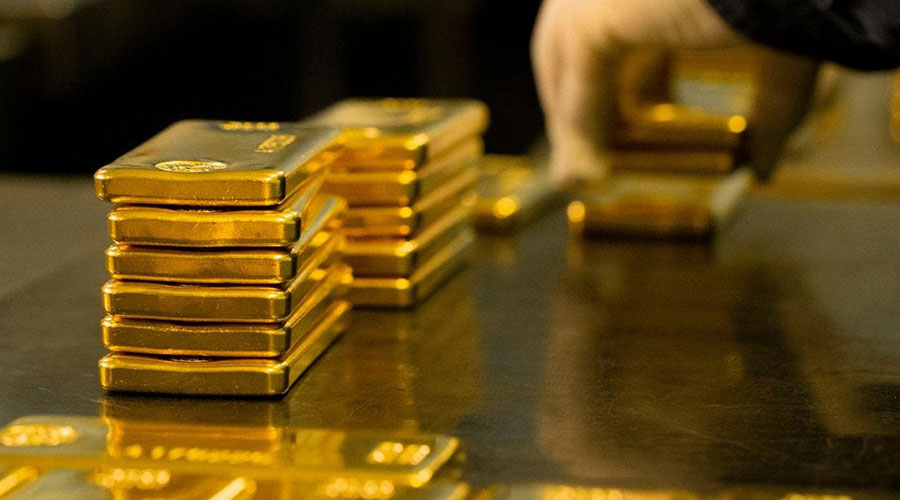
Buy African Gold for Belgium with Buy Gold Bars Africa Ltd
Every requirement in this guide — the VAT exemption that requires 995/1000 fineness and LBMA hallmarks, the EU Conflict Minerals Regulation due diligence, the Belgian AML documentation, the assay certificates and certificates of origin — is a requirement that Buy Gold Bars Africa Ltd satisfies as a standard component of every transaction we complete for Belgian buyers.
We supply certified 24K investment gold bars from Africa’s most credentialed producing nations — South Africa’s SADPMR-licensed exporters producing Rand Refinery-certified LBMA Good Delivery bars, Ghana’s GoldBod-certified channels, Uganda’s African Gold Refinery, and Tanzania’s documented supply networks — with the complete documentation package that Belgian customs, Belgian VAT authorities, and EU Conflict Minerals Regulation compliance all require. Every bar we supply carries an embossed fineness mark of 999.9 or 995, the hallmark of an LBMA-listed assayer-smelter, and a verified assay certificate with serial numbers cross-checkable through the issuing institution.
Our AML compliance infrastructure satisfies the Belgian Anti-Money Laundering Law requirements for both sides of the transaction: complete KYC documentation, beneficial ownership declarations, source of funds verification, and FATF-aligned counterparty screening for every deal we execute. For conflict-region gold from the DRC, we provide ICGLR conflict-free certificates and OECD Due Diligence documentation meeting the EU Conflict Minerals Regulation’s five-step framework — giving your Belgian importing entity the complete audit trail it needs for annual reporting.
We price against the live LBMA spot with African direct-source premiums of 1 to 3 percent, ship through insured specialist precious metals carriers — Brinks and Malca-Amit — directly to Brussels Airport or your designated Belgian vault, and manage customs clearance coordination through our established Belgian customs broker relationships. Delivery from African source to Belgian destination: typically 5 to 10 business days for documented consignments.
Whether you are a Belgian private investor building a gold position, a jewellery manufacturer sourcing 24K feedstock, a refinery buyer accessing African doré, or an institutional buyer adding physical gold to a diversified portfolio — Buy Gold Bars Africa Ltd delivers the gold, the documentation, and the compliance infrastructure that makes your African gold purchase in Belgium not merely possible but professionally complete.
Contact Buy Gold Bars Africa Ltd today. Tell us your quantity, your preferred gold format — LBMA-certified 24K investment bars, artisanal doré, or bulk kilogram orders — and your Belgian delivery address. A fully documented, fully compliant price proposal will be in your inbox within 24 hours. Africa’s finest gold, Belgium’s finest investment, delivered with the documentation that leaves nothing to chance.