FAQs About Buying Gold in Switzerland from Africa: The Complete 2026 Guide
For Swiss investors, institutions, jewellers, and refineries buying gold from Africa in 2026, the combination of competitive African sourcing prices, strong Swiss regulatory clarity, and the VAT exemption on investment-grade gold creates one of the most financially attractive gold-buying environments in the world.
This FAQ guide answers every significant question about how to buy gold in Switzerland from Africa — the Swiss import rules, VAT treatment, FINMA compliance, documentation requirements, and how to find a trusted African gold supplier who can deliver to Switzerland legally and efficiently.
Here are the top FAQs About Buying Gold in Switzerland from Africa
1. Is It Legal to Import African Gold into Switzerland?
Yes — importing gold from Africa into Switzerland is entirely legal, and Switzerland actively facilitates it through one of the world’s most open and most efficiently managed precious metals import frameworks.
Switzerland does not impose general import prohibitions on gold and does not restrict the origin countries from which gold may be imported, with the exception of gold from OFAC-sanctioned countries (which Swiss institutions also screen against under Switzerland’s own sanctions framework, broadly aligned with EU and UN sanctions lists).
Gold imports must be handled by dealers registered with the Swiss Financial Market Supervisory Authority (FINMA) and must comply with Switzerland’s Anti-Money Laundering Act (AMLA) and the Federal Act on the Implementation of FATF Recommendations.
For all African gold entering Switzerland, the standard requirements apply: proper declaration at customs if requested, assay certification confirming purity, certificate of origin establishing the gold’s source country, and export documentation from the producing country.
The Swiss Federal Customs Administration (BAZG) oversees border crossing procedures and can require declaration and documentation verification at any Swiss border point.
2. Is There VAT on Gold Imported from Africa into Switzerland?
Investment-grade gold imported into Switzerland is exempt from Swiss VAT — a significant financial advantage that applies specifically to gold meeting the following criteria:
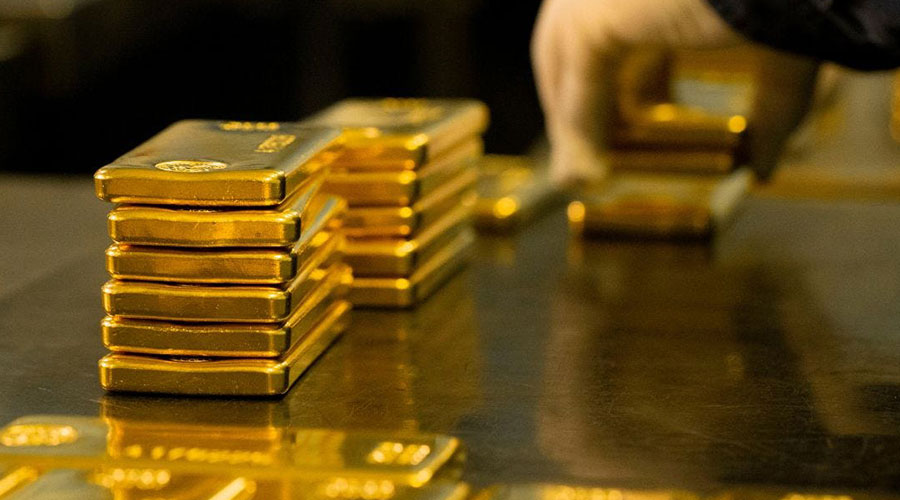
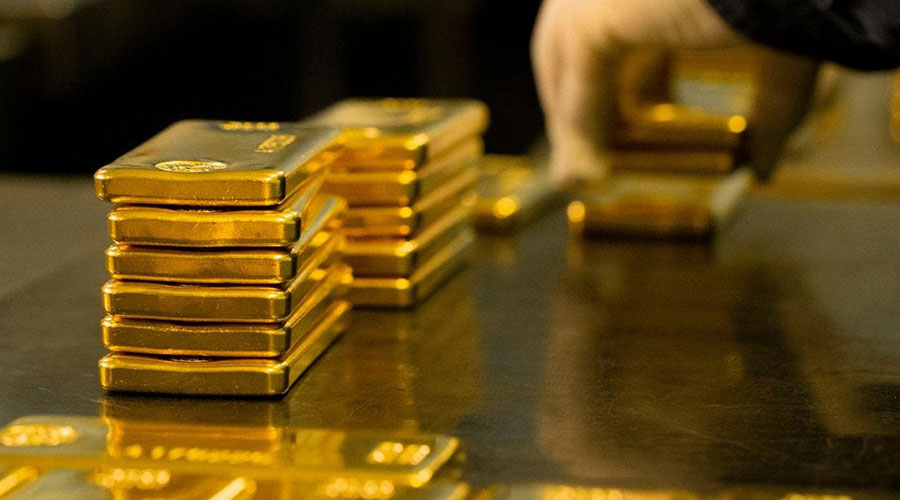
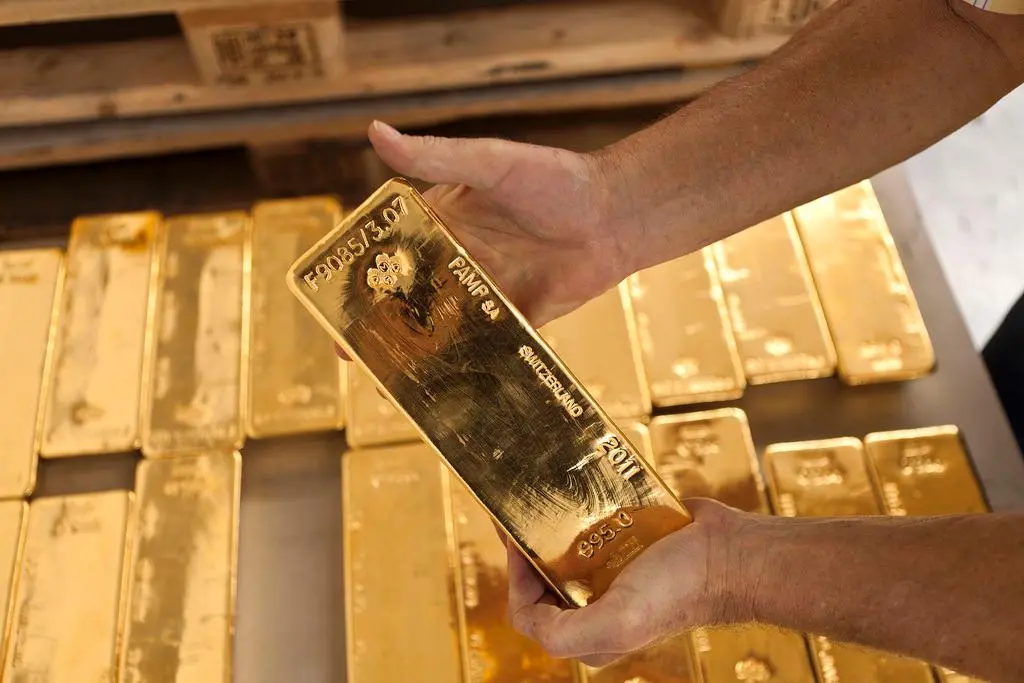
Investment gold bars must have a minimum purity of 995/1000 (99.5% pure), bear an embossed fineness mark on the bar itself, and display the hallmark of a recognised assayer-smelter whose name appears on the LBMA Good Delivery List. This combination — 995+ purity, embossed fineness mark, and LBMA-listed refinery hallmark — is the exact specification that LBMA Good Delivery bars from South Africa’s Rand Refinery, Ghana’s LBMA-accredited refinery operations, and Uganda’s African Gold Refinery meet.
Only gold bars listed on the LBMA “Good Delivery List” are exempt from import tax. The same information must also be evident to the customs authorities from the embossed stamp on each bar — without this stamp, the gold bar will remain liable for VAT even if the gold’s fineness falls within the regulations.
State-minted gold coins are also VAT-exempt under Article 23 of Switzerland’s VAT Act, classified under customs tariff numbers 7118.9010, 9705.3100, and 9705.3900.
This exemption covers the South African Krugerrand — the world’s most widely traded gold bullion coin — making Krugerrand imports from South Africa to Switzerland duty-free and VAT-free.
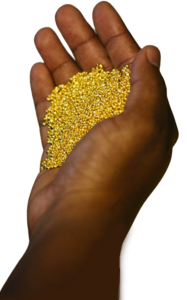
Granular gold (gold in granule form) is also exempt from Swiss VAT provided it reaches the 995/1000 minimum purity threshold.
Gold that does not meet these specifications — jewellery, doré below 995 fineness, artisanal dust not yet refined to investment grade — is subject to Swiss VAT at the standard rate.
For buyers importing African artisanal or partially refined gold for further processing at Swiss refineries, the VAT liability must be assessed in advance based on the material’s declared fineness and form.
As of 1 January 2025, Swiss investment gold continues to be exempt from VAT in accordance with Article 23, paragraphs 12 sections a-b of the VAT Act — a regulation adopted with virtually identical wording to the previous legislation, confirming the permanent policy commitment to investment gold VAT exemption.
3. What Are the Swiss Customs Requirements for African Gold Imports?
Swiss customs requirements for importing gold from Africa to Switzerland are clear, consistently enforced, and entirely manageable for buyers working through properly licensed African exporters.
Declaration: Gold must be declared at Swiss customs upon entry if requested by customs authorities. The BAZG’s QuickZoll app facilitates customs clearance before entry for individuals. For commercial shipments, a formal customs declaration is required through the Swiss e-customs system.
Certificate of Origin: A certificate of origin verifying the gold’s source country and confirming it is conflict-free is required for Swiss customs clearance. This document must be issued by the relevant national authority in the African producing country — GoldBod in Ghana, CEEC in the DRC, GGDO in Sierra Leone, SADPMR in South Africa, DGSM in Uganda, or the TMAA in Tanzania.
Assay Certificate: An assay report from a government-accredited laboratory or LBMA-recognised refinery confirming the gold’s purity and weight. For investment gold seeking VAT exemption, the assay must confirm 995/1000 or above fineness, and the bar must bear the hallmark of an LBMA Good Delivery-listed refinery.
Export Documentation: Valid export permit from the African producing country’s mining authority, commercial invoice, packing list, and all applicable royalty and tax payment confirmations.
FINMA-Registered Dealer: Gold imports must be handled by dealers registered with FINMA. For Swiss buyers purchasing from African suppliers, the Swiss entity receiving the gold must hold appropriate FINMA authorisation, and the African exporter must be a licensed entity under the relevant national mining framework.
Swiss customs clearance for properly documented gold shipments is typically completed in 1 to 2 business days when documentation is complete and consistent. Incomplete or inconsistent documentation — discrepancies between declared weight, assay certificate figures, and invoice values — is the most common cause of customs holds that extend this timeline.
4. What Are Switzerland’s AML and KYC Requirements for Gold Buyers?
Switzerland’s Anti-Money Laundering compliance framework for gold transactions is among the most stringent in the world — reflecting both the country’s status as the world’s pre-eminent gold refining hub and its commitment to the FATF standards that govern international precious metals compliance.
For purchases exceeding CHF 15,000, Swiss dealers are required to verify the buyer’s identity and record transaction details to combat money laundering. Anonymous cash transactions are limited to CHF 14,999 — above this threshold, full KYC documentation is mandatory regardless of payment method.
This threshold means that virtually all significant African gold purchases by Swiss buyers will trigger formal KYC procedures, given that the current gold price of approximately $143 per gram and the CHF/USD exchange rate make 100 grams the approximate CHF 15,000 threshold.
The KYC documentation required from Swiss gold buyers purchasing from African suppliers includes: verified identity documentation (passport, corporate registration), proof of business activity or investment purpose, source of funds declaration, and AML compliance programme documentation for commercial entities.
The African gold supplier must also be screened: verification of the African exporter’s national mining licence, beneficial ownership confirmation, and OFAC/SECO sanctions list screening are all required under Switzerland’s FATF-aligned AML framework.
Switzerland’s Federal Act on the Implementation of International Sanctions — administered by the State Secretariat for Economic Affairs (SECO) — aligns Swiss sanctions obligations with UN Security Council resolutions and selected EU sanctions designations. Gold from OFAC-sanctioned countries (Sudan, Iran, Cuba, Russia, North Korea) is subject to sanctions screening that Swiss FINMA-registered dealers apply as standard.
Buy Gold Bars Africa Ltd complies with FATF and AML regulations, providing comprehensive KYC documentation and proof of funds verification for Swiss authorities.
Transactions are audited to prevent illicit activities, fully aligning with FINMA regulations — making the documentation handoff between African exporter and Swiss receiving entity seamless and compliance-ready.
5. Which African Countries Supply the Best Gold for Swiss Buyers?
Switzerland’s relationships with African gold-producing nations span the full spectrum of the continent’s producing regions, and different buyer categories favour different source countries based on their specific quality, price, and compliance priorities.
South Africa is Switzerland’s single largest African gold source, with $2.78 billion in gold imports from South Africa in 2024 — the most recent data available. South Africa’s Rand Refinery is LBMA Good Delivery-listed, meaning its bars automatically satisfy Switzerland’s investment gold VAT exemption criteria without additional assay verification.
For Swiss buyers seeking the cleanest, most institutionally documented African gold, South Africa’s Rand Refinery-produced bars are the highest-quality, lowest-compliance-friction product available.
Ghana supplies Swiss refineries with both large-scale industrial doré from the Obuasi, Ahafo, and Tarkwa operations and GoldBod-certified artisanal gold. Ghana gold prices are competitive due to abundant supply and low dealer premiums, and the GoldBod regulatory framework provides the traceable, conflict-free documentation that Swiss FINMA compliance requires.
For Swiss refineries sourcing African gold for processing and re-export, Ghana’s volume and regulatory stability make it the preferred West African source.
Uganda has emerged as an important East African source for Swiss buyers, with the African Gold Refinery (AGR) near Entebbe operating at a refining capacity of over 200 kg per day and producing investment-grade bars that are increasingly accessible to international buyers.
Uganda offers discounts on bulk purchases, and AGR-certified material from Uganda provides the assay documentation that Swiss customs requires.
Tanzania provides Swiss jewellery manufacturers and small-scale bullion buyers with high-quality East African artisanal gold at competitive prices, with Tanzania’s Mineral Dealer Licence framework providing documented supply chains that Swiss buyers can verify. Tanzania’s Geita and North Mara mines produce LBMA-standard doré that enters Swiss refinery processing channels alongside Ghanaian and South African material.
The DRC provides Swiss refineries with the most cost-competitive African gold available — CEEC-certified artisanal material at 5 to 20 percent below the LBMA spot price — for buyers with the OECD Due Diligence infrastructure to navigate the DRC’s compliance requirements.
ICGLR conflict-free certificates and iTSCi audit programme documentation are the Swiss AML framework’s required evidence of conflict-free sourcing for DRC gold.
6. How Are Gold Prices Structured for Swiss Buyers Purchasing from Africa?
Gold prices for Swiss buyers purchasing from Africa are quoted either in USD (pegged to the LBMA spot) or in Swiss Francs (CHF) at the prevailing USD/CHF exchange rate.
As of June 2026, the LBMA gold spot price is approximately $143.30 per gram ($4,457 per troy ounce). At a USD/CHF exchange rate of approximately 0.895, this translates to approximately CHF 128.25 per gram for 24K investment-grade gold.
Swiss buyer premiums for African-sourced gold through Buy Gold Bars Africa Ltd and comparable established operators are 1 to 3 percent above the LBMA spot — significantly lower than the 5 to 8 percent premiums that Swiss retail bullion dealers typically charge for equivalent LBMA-quality product sourced through European intermediary channels.
On a 1-kilogram purchase at current prices, this premium difference represents a saving of approximately CHF 5,700 to CHF 12,000 per kilogram — a material financial advantage that compounds significantly over any serious investment position.
Artisanal African gold at various purity levels is priced at purity-adjusted discounts below 24K spot: 90 to 95 percent purity material from Ghana, Uganda, or Tanzania trades at approximately 5 to 15 percent below the 24K LBMA spot, and DRC artisanal dust at 88 to 94 percent purity trades at 5 to 20 percent below spot. For Swiss refineries sourcing material for processing, these discounts represent the refinery margin.
7. How Is Gold Physically Delivered from Africa to Switzerland?
Physical gold delivery from Africa to Switzerland uses the same specialist precious metals logistics infrastructure that all professional international gold shipments rely on. Insured air cargo through Brinks, Malca-Amit, or Loomis International is the standard delivery mechanism — with GPS tracking, tamper-evident packaging, full chain-of-custody documentation, and insurance at 100 to 110 percent of declared shipment value as standard.
Major African export hubs for Switzerland-bound shipments include Accra’s Kotoka International Airport (Ghana), Entebbe International Airport (Uganda), OR Tambo International Airport (Johannesburg), and Julius Nyerere International Airport (Dar es Salaam).
Transit through Dubai — the world’s most significant gold re-export hub — is also common for East and Central African material, adding DMCE documentation to the chain but reducing direct flight complexity.
Delivery time from African source country to Swiss destination — either Zurich Airport or Geneva Airport, which are Switzerland’s two primary precious metals import points — is 3 to 7 business days for properly documented shipments through specialist carriers. Swiss customs clearance adds 1 to 2 business days for complete documentation packages. Total delivery timeline from order confirmation to Swiss vault receipt: typically 5 to 10 business days.
8. What Are the Common Fraud Risks When Buying African Gold for Import to Switzerland?
The same fraud risks that affect all international African gold buyers apply equally to Swiss buyers purchasing African gold: advance-fee fraud, fake documentation, sample-and-switch substitution, and phantom gold fraud where payment is taken for non-existent material.
Switzerland’s distance from African gold markets makes remote fraud attempts particularly common — fraudulent operators specifically target Swiss buyers who cannot physically inspect material before payment.
Protection requires: verifying every African supplier’s national mining licence directly with the relevant national authority; requiring LBMA-listed refinery hallmarks and embossed fineness marks on all investment bars; demanding assay certificate serial numbers verifiable through the issuing laboratory; structuring all payments as SWIFT wire transfers to verified corporate bank accounts; and using independent financial escrow for all first transactions and any purchase above CHF 50,000.
No payment should be released before independent assay at a Swiss-authorised laboratory confirms the gold matches its documentation.
Buy African Gold for Switzerland with Buy Gold Bars Africa Ltd
The case for buying African gold for your Swiss portfolio, jewellery workshop, or refinery programme has never been stronger — the LBMA spot is approximately CHF 128 per gram, African premiums of 1 to 3 percent give you significant cost advantages over Swiss retail dealers, and the VAT exemption on investment-grade LBMA-listed bars makes the tax efficiency of the transaction complete.
What the case requires is the right African partner — one who understands both the African export requirements and the Swiss import framework with equal operational fluency.
Buy Gold Bars Africa Ltd is that partner. We supply certified 24K gold bars from Africa’s most credentialed producing nations — South Africa’s SADPMR-licensed exporters, Ghana’s GoldBod-certified channels, Uganda’s African Gold Refinery, and Tanzania’s documented artisanal networks — with the complete documentation package that Swiss FINMA compliance, BAZG customs clearance, and investment gold VAT exemption all require: LBMA Good Delivery-listed refinery hallmarks, embossed fineness marks at 995/1000 or above, assay certificates with verifiable serial numbers, certificates of origin from national mining authorities, and valid export permits from every producing country.
Every transaction we complete for Swiss buyers is AML-compliant under Switzerland’s AMLA and FINMA frameworks, FATF-aligned, OECD Due Diligence-documented where DRC or conflict-region supply chains are involved, and structured through SWIFT banking channels that provide the complete audit trail your Swiss financial institution requires.
We coordinate with Swiss customs brokers to expedite clearance — typically completed in 1 to 2 days for our properly documented shipments — and ship through insured specialist carriers with full tracking and 110 percent insurance coverage from African source to your Swiss vault.
Our pricing is benchmarked against the live LBMA spot with the direct-source premiums that African supply chain access enables — not the layered intermediary markups of European retail distribution.
Contact Buy Gold Bars Africa Ltd today. Tell us your quantity, your preferred format — investment bars, Krugerrands, or artisanal doré for refinery processing — and your Swiss delivery address. We will have a fully compliant, fully documented price proposal in your inbox within 24 hours. Africa’s finest gold, Switzerland’s finest investment, delivered correctly.