FAQs About Buying Gold in Cameroon: Complete 2026 Guide
Find answers to the most common FAQs about buying gold in Cameroon. Learn about gold prices, trusted suppliers, export procedures, licensing requirements, documentation, payment methods, and essential tips for safely purchasing gold from Cameroon in 2026.
Cameroon occupies a unique and increasingly important position in the Central African gold market. While its production volumes remain modest compared to continental giants like Ghana or South Africa, Cameroon’s gold sector is growing rapidly — driven by a combination of significant untapped geological reserves, expanding artisanal and small-scale mining operations across the eastern, southern, and Adamawa regions, and a regulatory framework administered by the Ministry of Mines, Industry and Technological Development (MINMIDT) that is becoming progressively more structured for international buyers.
For international investors, refiners, and jewellery manufacturers seeking to buy gold in Cameroon in 2026, understanding the regulatory requirements — from the Gold Mandatory Licence to CAPAM registration, from MINMIDT export permits to PRECASEM documentation — is as important as understanding the gold itself.
This FAQ guide answers every significant question about purchasing and exporting gold from Cameroon, providing the 2026 framework that serious buyers need before approaching any Cameroonian gold market participant.
Answers to 10 Common FAQs About Buying Gold in Cameroon;
-
Who Regulates Gold Buying and Selling in Cameroon?
The primary regulatory authority for all mining and mineral trading activity in Cameroon is the Ministry of Mines, Industry and Technological Development — universally referenced as MINMIDT. As the official government authority for Cameroon’s entire mineral sector, MINMIDT oversees the licensing of all gold dealers, exporters, and artisanal miners; enforces compliance with Cameroon’s Mining Code; coordinates with customs and the Ministry of Finance on export tax assessment; and manages the interministerial documentation system that governs all precious mineral exports.
MINMIDT works in close coordination with three additional agencies whose roles are distinct but essential to the legal gold transaction process.
CAPAM (Cadre d’Appui et de Promotion de l’Artisanat Minier) — the Cameroonian government body responsible for supporting and regulating artisanal mining — manages the registration and oversight of artisanal and small-scale gold miners across Cameroon’s mining zones. CAPAM registration for artisanal sources is part of the documentation chain that establishes the legal provenance of gold produced by the ASM sector.
PRECASEM (Programme de Renforcement des Capacités dans le Secteur Minier) — a capacity-building programme operating under MINMIDT — supports the traceability and documentation of mineral supply chains. PRECASEM documentation provides an additional layer of provenance verification for gold moving through formal export channels, confirming that the mineral has been tracked from legal mining sources through to the point of export.
APROCOM (Association des Promoteurs Commerciaux des Mines) — the association of licensed mineral traders — registers commercial mineral buyers and exporters operating in Cameroon. Together with CAPAM and PRECASEM, APROCOM registration forms part of the compliance ecosystem that MINMIDT requires all gold exporters to participate in.
The Customs Department and Ministry of Finance complete the regulatory picture, assessing and collecting applicable export taxes and duties and approving the waiver certificates — critical documents for tax and duty exemption during legal mineral exports — that MINMIDT coordinates. Using unauthorised permits or buying from unlicensed sellers can lead to seizures, fines, or criminal prosecution under Cameroonian mining law.

-
Can Foreigners Buy Gold in Cameroon?
Yes — foreigners can legally buy and export gold in Cameroon, but the regulatory requirements for international buyers are specifically structured and more demanding than for Cameroonian nationals and residents. All foreign and local investors must hold a valid Gold Licence to operate lawfully in the Cameroonian gold market.
This Gold Licence is issued by MINMIDT and authorises individuals or businesses to trade and export gold in compliance with Cameroon’s mining legislation.
The licensing structure creates a clear distinction between domestic and foreign participants. For Cameroonian citizens operating in the gold market, a standard Gold Licence from MINMIDT is the primary requirement. Foreign nationals require MINMIDT authorisation or a local partnership to operate.
This means that international buyers wishing to purchase gold directly in Cameroon must either obtain specific MINMIDT authorisation as a foreign buyer — through a process that includes full KYC verification, business registration documentation, and compliance confirmation — or structure their purchase through a Cameroonian-registered entity that holds the required licensing.
Foreign businesses must form a partnership with a local entity or obtain prior MINMIDT approval. This partnership requirement is both a regulatory necessity and a practical advantage: a well-chosen local partner brings established supplier relationships, knowledge of the local mining geography, existing CAPAM and PRECASEM documentation networks, and the institutional familiarity with MINMIDT’s export process that makes transaction completion significantly faster and more reliable.
For international buyers who wish to purchase gold from Cameroon without establishing a physical presence in the country, the most practical approach is working with a MINMIDT-licensed Cameroonian gold exporter who holds the full suite of required authorisations and can manage the purchase, documentation, and export process on the international buyer’s behalf.
This structure is the standard commercial model for international buyers of Cameroonian gold and is fully supported within the MINMIDT regulatory framework.
-
What Is the Gold Mandatory Licence and Why Is It Essential?
The Gold Mandatory Licence is the single most important document in any Cameroonian gold transaction, and understanding its function is essential for any international buyer approaching this market.
The Gold Mandatory Licence serves as a certificate of legality — confirming that the gold has been ethically sourced, that all state royalties have been settled, and that the gold transaction is conducted within the framework of Cameroon’s mining law.
The Gold Mandatory Licence process involves three sequential stages. First, application: prospective buyers or their legal representatives must apply through MINMIDT’s official licensing process — coordinated through the goldmandatorylicense.com platform — to initiate the vetting process.
This application requires full identification of the buyer entity, confirmation of business registration, and documentation of the intended gold purchase including quantity, form, and destination. Second, verification: MINMIDT-approved agents verify the purity and weight of the gold, confirming that the material described in the application matches the physical product.
Third, certification: once taxes and duties are paid, the licence is issued, allowing for the legal possession and subsequent export of the metal.
The Gold Mandatory Licence is required in addition to — not instead of — the standard export permit process. It represents Cameroon’s specific additional layer of buyer vetting for gold transactions and is designed to prevent illegal mining, fraud, and money laundering in the gold trade.
For international buyers seeking to verify that a Cameroonian gold supplier is legitimate, the supplier’s Gold Mandatory Licence number is one of the primary verification points to confirm with MINMIDT directly.
-
What Is the Current Gold Price in Cameroon in 2026?
Gold prices in Cameroon track the international LBMA spot price, converted into Central African CFA Francs (XAF) at the prevailing exchange rate. As of June 2026, the LBMA gold spot price is approximately $4,457 per troy ounce ($143.30 per gram for 24K refined gold).
At the current XAF exchange rate of approximately 600 XAF per USD, this translates to approximately 85,980 XAF per gram for 24K investment-grade gold.
Cameroon gold — being predominantly artisanal and in dust, nugget, or partially refined forms — trades at a discount to the 24K LBMA spot reflecting the refining cost required to bring the material to investment-grade specification.
Cameroon produces 22K to 24K gold depending on the source region and processing method, with alluvial gold from the eastern and southern provinces typically assaying at 91 to 96 percent purity and hard-rock material from the Adamawa and North regions showing variable characteristics based on ore geology.
Gold in Cameroon is often cheaper due to direct sourcing from mines — a characterisation that accurately reflects the pre-refining discount and the absence of the multiple intermediary premiums that inflate gold prices in European retail markets. For a buyer with refinery access or relationships, purchasing 22K to 23K Cameroonian gold at a 5 to 12 percent discount to 24K LBMA spot and processing it to investment-grade represents a documented and financially substantive opportunity.
In USD per gram terms, artisanal Cameroonian gold dust typically trades at approximately $120 to $136 per gram depending on assayed purity and documentation quality.
-
What Types of Gold Are Available for Purchase in Cameroon?
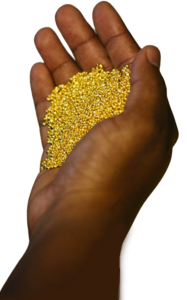
Gold dust — the most widely available form of Cameroonian gold for purchase through the licensed exporter network. Sourced from alluvial deposits across the eastern, southern, and Adamawa regions by artisanal and small-scale miners registered with CAPAM, gold dust assays at 91 to 96 percent purity and is the primary export product of Cameroon’s artisanal gold sector. It is available through MINMIDT-licensed exporters who aggregate from networks of individual CAPAM-registered artisanal miners.
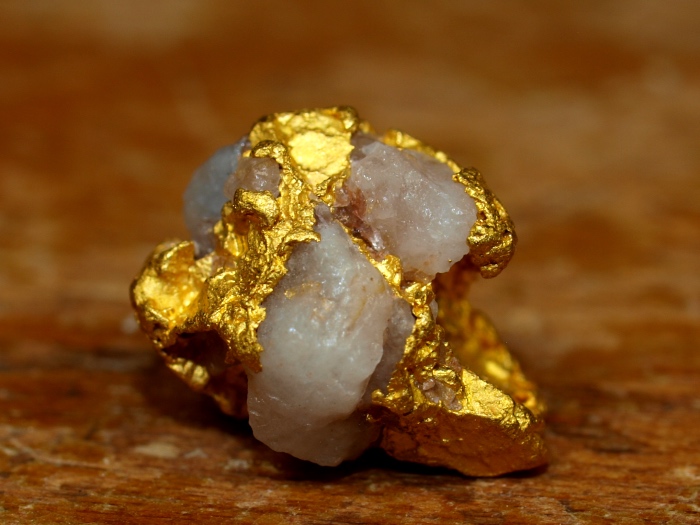
Gold nuggets — natural gold formations of varying size and irregular shape produced from Cameroon’s alluvial deposits. Nuggets from Cameroon’s eastern and Adamawa provinces carry purity levels of 88 to 97 percent depending on source geology.
They attract collector and jewellery market premiums in addition to their intrinsic gold melt value and are available through licensed dealers who can provide assay certification and MINMIDT export documentation.
Gold doré bars — semi-refined smelted gold produced by larger-scale operations or by licensed buyers who aggregate and process artisanal gold into a more homogeneous product format.
Doré from Cameroon assays at 70 to 90 percent gold content depending on the processing methodology applied and is the format preferred by international refineries who want a more processable feedstock than raw dust or nuggets.
24K refined gold bars — available from Cameroon through licensed exporters who have established relationships with regional refineries that process Cameroonian doré to investment-grade 999.9 fineness. These bars carry full assay documentation and can meet international LBMA-adjacent quality standards when processed through credentialed refinery facilities.
-
What Is the Step-by-Step Process for Buying and Exporting Gold from Cameroon?
The legal procedure for buying and exporting gold from Cameroon follows a defined sequence that every compliant transaction must traverse. Understanding this process in advance allows buyers to assess proposed transaction timelines, identify documentation gaps, and verify that their Cameroonian counterparty is operating within the legal framework.
Step 1 — Seller Verification. Confirm that the Cameroonian gold seller holds a valid Gold or Diamond Export Licence from MINMIDT, a Gold Mandatory Licence, and is registered with CAPAM, PRECASEM, and APROCOM. Verify these registrations directly with MINMIDT rather than relying solely on documentation presented by the seller. Also confirm business registration with the Cameroon Chamber of Commerce and tax compliance proof.
Step 2 — Commercial Agreement. Execute a written sales contract specifying the gold quantity and form, assay-confirmed purity, price per gram (referenced against LBMA spot), payment terms, delivery logistics (FOB or CIF), and dispute resolution mechanism.
Step 3 — Gold Mandatory Licence Application. Apply for the Gold Mandatory Licence through MINMIDT’s official process. Provide all buyer identification and business documentation required for the vetting process. Allow 7 to 21 working days for MINMIDT processing.
Step 4 — MINMIDT Export Permit. Apply for a Gold Export Permit from MINMIDT. The permit requires presentation of the Gold Mandatory Licence, the seller’s export licence, CAPAM registration documentation for the gold’s artisanal source, PRECASEM traceability documentation, and the commercial invoice detailing the specific consignment.
Step 5 — Assay and Certification. The gold is assayed by a MINMIDT-approved laboratory to confirm purity and weight. An Assay Report (indicating fineness) is issued alongside the Certificate of Origin and the Ownership Transfer Document.
Step 6 — Tax Payment and Waiver Certificate. Pay all applicable export taxes and duties. Obtain the tax clearance certificate from the Ministry of Finance. If applicable, apply for a Waiver Certificate through MINMIDT and the Ministry of Finance for tax and duty exemption on eligible export categories.
Step 7 — Customs Declaration and Export. Declare the export to Cameroonian customs with all supporting documents. Ship through certified export channels using licensed precious metals carriers.
-
What Documentation Is Required for a Gold Purchase from Cameroon?
The documentation package for a legal Cameroonian gold transaction is comprehensive and must be internally consistent across all documents. Every document must agree on weight, purity, buyer and seller identity, and declared value.
- MINMIDT Gold Export Permit — specific to the consignment being exported
- Gold Mandatory Licence — confirming ethically sourced gold with settled state royalties
- CAPAM artisanal miner registration documentation — confirming the gold’s legal ASM source
- PRECASEM traceability documentation — chain-of-custody records from mining source to export point
- APROCOM registration certificate — confirming the seller’s commercial mineral trader status
- Assay Report from a MINMIDT-approved laboratory — confirming purity and weight
- Certificate of Origin — establishing Cameroonian legal provenance
- Ownership Transfer Document — confirming legal transfer of title
- Commercial invoice — declared USD value, buyer and seller details, weight and purity
- Packing list — shipment contents verification for customs
- Tax clearance certificate — proof of applicable export tax and royalty payment
- Waiver Certificate (where applicable) — MINMIDT and Ministry of Finance confirmation of tax exemption
For buyers importing Cameroonian gold into the United States, EU, or UAE, additional destination-country documentation is required: CBP Form 6059B (US), FinCEN 105 for values above $10,000 (US), OECD Due Diligence documentation (EU Conflict Minerals Regulation compliance), and DMCE responsible sourcing documentation (UAE). Confirm current destination country requirements with a customs broker before initiating any shipment.
-
What Are the Taxes and Royalties on Gold Exported from Cameroon?
Gold exported from Cameroon is subject to export taxes and royalties collected by the Ministry of Finance through the Customs Department, and to MINMIDT administrative fees associated with the export permit and documentation process. The exact rates are governed by Cameroon’s Mining Code and the annual Finance Law, which may adjust specific rates — buyers should confirm current applicable rates with MINMIDT at the time of transaction.
The general fiscal framework applicable to gold exports from Cameroon in 2026 includes a royalty payable on the assessed value of the gold exported, export administration fees charged by MINMIDT for permit and certification services, and customs documentation fees levied by the Customs Department.
Waiver Certificates — issued through the interministerial coordination of MINMIDT, the Customs Department, and the Ministry of Finance — provide tax and duty exemption for qualifying exports, and applying for a Waiver Certificate is a standard step in the Cameroonian gold export process for established and verified exporters.
For buyers transacting in CFA Francs (XAF) — Cameroon’s currency as a member of the CEMAC zone — the CFA Franc’s fixed peg to the Euro (1 EUR = 655.957 XAF) provides exchange rate stability relative to USD-denominated gold prices that other African currencies cannot offer.
This stability reduces the currency conversion risk component of Cameroonian gold transactions for European buyers working in EUR.
-
Where Does Cameroon’s Gold Come From? The Main Producing Regions
Cameroon’s gold deposits are distributed across several distinct geological zones, each with its own production characteristics, purity profiles, and logistical access considerations for buyers.
Eastern Province (Est Region) — Cameroon’s most significant gold-producing zone, centred on Bertoua and extending across the alluvial goldfields of the Kadéï and Boumba basins.
The Est Region’s gold is primarily alluvial — produced by artisanal miners working river sediments and shallow pits — and typically assays at 92 to 96 percent purity.
This region supplies the majority of Cameroon’s licensed gold exports and is where the most developed CAPAM artisanal miner registration infrastructure is concentrated.
Southern Region (South Province) — the greenstone-belt-associated gold deposits of southern Cameroon produce gold of comparable quality to the eastern region, with artisanal workings along river systems in Dja et Lobo and Vallée du Ntem divisions. Access infrastructure is less developed than in the eastern region, but licensed exporters with established sourcing networks in the south can aggregate meaningful volumes.
Adamawa Region and Northern Regions — Cameroon’s northern gold zone, centred on the Vina Division and the Adamawa plateau, produces gold from alluvial and eluvial deposits associated with older Precambrian basement geology. Gold from this region assays at 88 to 94 percent purity and is accessed through a network of artisanal miners whose CAPAM registration is less uniformly established than in the east.
All of Cameroon’s major gold-producing zones are accessible through Yaoundé — the political capital and location of MINMIDT headquarters — and Douala — the commercial capital and primary logistics hub for international gold exports. The 7 to 21 working day MINMIDT permit processing timeline applies uniformly regardless of source region.
-
How Do I Verify a Cameroon Gold Supplier and Protect Myself from Fraud?
Cameroon’s gold market — like all West and Central African gold markets — carries documented fraud risk for international buyers who do not apply rigorous due diligence. The fraud patterns targeting Cameroon gold buyers are consistent with those documented across the continent: advance-fee fraud, fake MINMIDT documentation, phantom gold, and sample-and-switch schemes.
The protection is equally consistent: verify everything directly with MINMIDT, pay nothing until documentation is independently confirmed, and use escrow for all first transactions.
Verify MINMIDT licensing directly. Confirm the seller’s Gold Export Licence and Gold Mandatory Licence status through MINMIDT’s official channels — either by direct communication with the Ministry’s licensing division or through the MINMIDT.com official platform. No documentation presented by the seller should be accepted without independent verification.
Confirm CAPAM, PRECASEM, and APROCOM registration. These three registrations are individually verifiable and together provide multi-point confirmation that the seller is operating within the legal framework of Cameroon’s mining sector. A seller who cannot provide verifiable registration numbers for all three is not compliant.
Require Assay Report with serial numbers. Demand an Assay Report from a MINMIDT-approved laboratory with a serial number that can be independently verified. Any purity claim unsupported by an independently verifiable assay report is unverifiable.
Pay only through SWIFT to verified corporate accounts. All payment must be by bank wire transfer to a Cameroon-registered corporate account in the name of the licensed exporting entity — verified against their Chamber of Commerce registration and MINMIDT licence. No cash, no cryptocurrency, no informal payment channel.
Use escrow for first transactions. Structure first payments through independent escrow released only on Gold Mandatory Licence receipt, MINMIDT export permit confirmation, and post-receipt assay verification at your destination. This eliminates advance-fee fraud and phantom gold fraud entirely.
Cameroon’s gold market in 2026 — accessed through MINMIDT-licensed sellers, with Gold Mandatory Licence and export permit documentation, through CAPAM and PRECASEM-verified supply chains, and with escrow-structured payment — is a genuinely productive sourcing environment for international buyers who engage it correctly. The gold is real. The regulation is real. And the protection is in using the framework correctly every time.