The DRC Gold Market: A Complete Guide for Buyers, Investors, and Traders in 2026
DRC gold market: Explore the DRC gold market in 2026, including gold production, major mining regions, pricing trends, export opportunities, regulations, investment prospects, and key insights for buyers, traders, and investors in the Democratic Republic of the Congo.
The Democratic Republic of Congo is, by almost any geological measure, the most mineral-rich country on earth. Sitting atop an estimated $24 trillion in untapped natural resources — cobalt, copper, coltan, diamonds, and gold among them — the DRC occupies a position in global commodity markets that its economic development statistics do not yet reflect and whose potential is only beginning to be unlocked by the combination of record gold prices, government formalisation efforts, and the growing attention of international mining investment that is reshaping the country’s resource sector in 2026.
The DRC gold market specifically is experiencing a transformation unlike anything in its post-independence history. Record global gold prices reaching $4,730 per ounce in April 2026 — following the all-time high of $5,602.22 set on January 28, 2026 — have made every lost ounce of Congolese gold a national fiscal priority.
A government that once watched hundreds of tonnes of gold disappear into informal networks annually with limited institutional response is now moving with genuine urgency: establishing a state gold trading company, building the country’s first domestic refinery, signing a central bank reserve accumulation agreement, and dispatching a multi-agency task force to tighten traceability across the supply chain.
The DRC gold market in 2026 is a market in transformation — and for buyers, investors, and traders who understand its structure, its risks, and its extraordinary opportunity, it is one of the most compelling gold markets in the world.
DRC Gold Production: Scale, Structure, and the Formal-Informal Divide
Understanding the Congo gold production landscape begins with a fact that defines almost everything else about the market: the DRC officially produces far less gold than it actually extracts. In 2025, the country’s formal declared gold production was dominated almost entirely by a single mine — the Kibali Gold Mine in Haut-Uélé Province, which produced 673,000 troy ounces in 2025, accounting for 99 percent of the country’s industrial gold output and approximately 99.6 percent of formal DRC gold exports.
Gold exports were broadly flat in 2025, with 28.2 tons produced, while revenues reached $2.84 billion due to stronger prices — figures that likely reflect only a portion of actual extraction.
The gap between formal production statistics and actual extraction is vast: authorities estimate that 40 to 50 metric tons of gold — valued at over $3 billion at current prices — are smuggled out of the country annually.
Some estimates from Congo’s new mines minister place the smuggling figure even higher, at approximately 60 tonnes per year, transiting primarily through Uganda, Rwanda, and the UAE.
This production structure — a single dominant industrial operation surrounded by an enormous informal artisanal sector — defines the DRC gold market’s two fundamentally different supply chains, each with its own pricing dynamics, documentation requirements, risk profile, and international buyer universe.

The Kibali Gold Mine: Africa’s Largest Gold Operation
The Kibali Gold Mine is the cornerstone of the DRC’s formal gold economy and the reference point for every serious analysis of the Congo gold market. Located in Haut-Uélé Province in the northeastern DRC, approximately 220 kilometres west of the South Sudanese border, Kibali is operated as a joint venture between Barrick Gold Corporation (45 percent), AngloGold Ashanti (45 percent), and SOKIMO — the DRC state mining company (10 percent).
By July 2025, Kibali had generated more than $6.3 billion in in-country investment since launch, including $3.1 billion paid to local contractors and partners.
The mine operates as a fully integrated industrial complex — underground and open-pit mining, hydropower generation from the Nzoro and Ambarau rivers, an on-site smelter producing gold doré, and export infrastructure connecting to Entebbe Airport in Uganda for onward shipment to international refineries. The Kibali Gold Mine generated $2.31 billion in consolidated revenue in 2025 — up 40 percent year-on-year at record gold prices.
Kibali gold enters the international market as LBMA-compliant doré refined to investment-grade specification by accredited refineries outside the DRC.
It is ITSCI-tagged — meaning each production lot carries an iTSCi conflict mineral traceability tag from the point of mine production to export — and meets the OECD Due Diligence Guidance standard that institutional buyers, LBMA-member refineries, and European Union conflict minerals regulation compliance require.
Ongoing drilling along the ARK-KCD corridor continues to support reserve growth and mine-life extension, suggesting Kibali’s dominance of the formal DRC gold market will continue through the current decade.
For international buyers seeking certified conflict-free gold from the DRC, Kibali-channel gold is the cleanest, most documentable source on the continent. Buyers working through licensed export channels that source from the Kibali supply chain can obtain gold with complete chain-of-custody from mine to delivery point, meeting every standard that sophisticated institutional purchasing requires.
Artisanal and Small-Scale Gold Mining in the DRC: Scale, Geography, and Dynamics
The artisanal and small-scale gold mining sector in the DRC — known universally as ASM — is one of the largest and most complex in the world. An estimated 200,000 to 300,000 individual artisanal miners work across more than 1,000 active sites in the eastern provinces, producing gold through a combination of alluvial panning, rudimentary hard-rock extraction, and river dredging using methods that range from hand tools to basic processing equipment.
The total artisanal output — the majority of which moves through informal channels — is estimated at between 15 and 22 tonnes annually in officially cited figures, though many analysts believe the true production figure is considerably higher.
North Kivu Province hosts the most geologically significant artisanal gold deposits in the eastern DRC, but also the most complex responsible sourcing environment.
The Rubaya coltan-gold area, the goldfields around Walikale, and the mining communities in the Masisi and Rutshuru territories have been subject to intermittent armed group control, with the M23 rebel movement and affiliated networks documented as having benefited from gold revenues from this region.
International attention has intensified following sanctions against Rwanda’s Gasabo Gold Refinery for allegedly processing illicit Congolese gold. Buyers sourcing North Kivu artisanal gold face the most demanding OECD compliance burden of any DRC origin and must conduct third-party supply chain audits verified against IPIS mine site mapping data.
South Kivu Province is perhaps the DRC’s richest artisanal gold landscape by production quality. The Kamituga gold mining community, the Luhwindja and Namoya areas, and the goldfields surrounding Bukavu produce gold of consistently high natural purity — alluvial material from South Kivu regularly assays at 22K to 23K (91 to 95 percent pure) and is exported in volume to Indian refineries that have established direct buying relationships with South Kivu cooperatives. South Kivu also has a more developed cooperative structure than North Kivu, with a greater proportion of miners operating under registered cooperatives that provide the institutional framework for OECD-compliant traceability.
Ituri Province is the northeastern DRC’s most significant artisanal production zone outside of the Kibali industrial operations. The goldfields of Bunia, Mongbwalu, and the Bule mining area produce substantial volumes of alluvial gold dust and nuggets that trade through Bunia’s established gold market network.
A pilot phase of the DRC’s new formalization programme will begin in Haut-Uélé, with Ituri closely following as a secondary pilot province given its production scale and the relatively lower armed group presence compared to the Kivus.
Maniema Province represents one of the most promising lower-risk artisanal gold sourcing regions in the DRC. Located away from the primary conflict zones of the east, Maniema’s gold deposits around Namoya, Punia, and Kasongo attract buyers who prioritise responsible sourcing documentation without the highest-tier security risk profile.
For international buyers who want to access DRC artisanal gold below Kibali institutional pricing while maintaining documentable supply chains, Maniema is consistently identified by compliance-focused operators as the optimal artisanal sourcing region.
DRC Gold Prices in 2026: Current Market Rates
The gold price in the DRC in 2026 tracks closely to the international LBMA spot price, adjusted for local market dynamics including the USD-to-Congolese franc exchange rate, dealer premiums, and the purity discount applied to artisanal material relative to refined 24K specification.
As of May 2026, 24K gold in the DRC is approximately $148 to $155 USD per gram, equivalent to CDF 344,000 to 361,000. For buyers in Kinshasa, certified 24K bars from licensed dealers carry a retail premium of 3 to 8 percent above the LBMA spot, while raw artisanal gold — dust, nuggets, and unrefined doré — trades at a discount of 5 to 20 percent below spot depending on purity and source documentation quality.
The Kinshasa gold market is the DRC’s primary commercial hub for documented gold transactions, with licensed buying offices, Ministry of Mines-registered exporters, and direct access to Direction Générale des Mines et Géologie (DGMG) documentation services all concentrated in the capital.
Bukavu and Goma in the east serve as regional trading hubs for artisanal production from South Kivu and North Kivu respectively, with the gold aggregated, partially assayed, and transported to Kinshasa or across the border to Uganda for onward export.
The USD-to-CDF exchange rate dynamics create an additional dimension to the DRC gold market that purely USD-denominated analysis misses. The Congolese franc has experienced sustained depreciation against the dollar over multiple years, creating a situation where DRC gold producers whose costs are largely franc-denominated benefit from both the rising USD gold price and the falling CDF.
For Congolese franc holders, gold’s 40.7 percent year-on-year USD gain translates to an even more dramatic CDF gain, making gold ownership one of the most effective inflation and currency hedges available in the Congolese domestic economy.
DRC Gold Market Formalisation: The 2026 Transformation
The most significant development in the DRC gold market in 2026 is not a price movement or a new mine opening — it is the government’s most ambitious and most operationally serious attempt yet to bring informal gold production into regulated, documented, officially traded channels.
The government established DRC Gold Trading SA in 2022 — a state enterprise that became fully government-controlled in 2024 — mandated to purchase artisanal gold, certify its traceability, and channel exports through legal markets while contributing to national reserve accumulation.
The company, which until 2023 bought barely 25 kilograms of artisanal gold per year, is now expanding operations across eight provinces and targets channelling 15 tonnes of artisanal gold through official trade in 2026. More than 45 international buyers have already requested gold supply from DRC Gold Trading, though domestic reserve accumulation remains the priority under the February 2026 central bank agreement.
That February 2026 agreement — between DRC Gold Trading and the Central Bank of the Congo — gives the central bank priority access to all gold collected by DRC Gold Trading at international benchmark pricing.
This marks the country’s first systematic attempt to accumulate physical bullion reserves and ensure that mineral wealth generates tangible domestic economic benefits.
Central bank gold accumulation by a major African producer is a development that international bullion markets are watching closely, as it signals a structural shift in how DRC gold flows are governed.
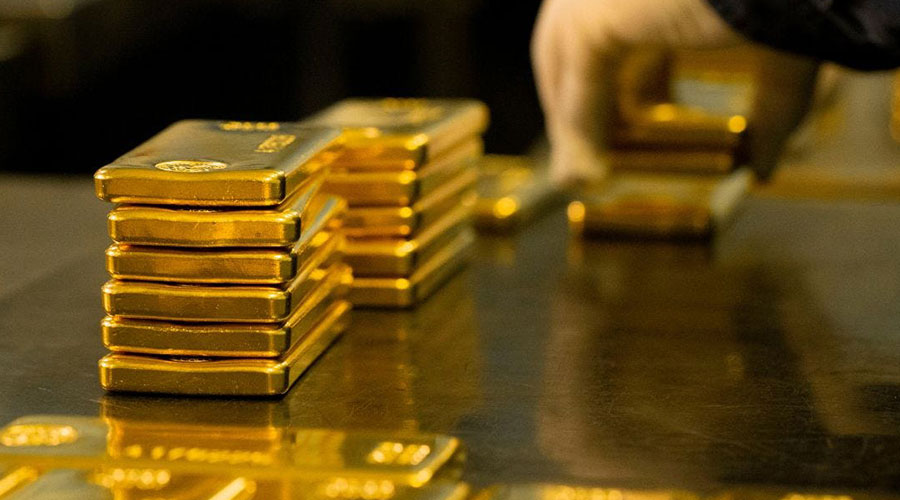
In March 2026, the DRC launched its first pilot gold refinery in Kalemie, Tanganyika Province, through a partnership between DRC Gold Trading and Lunga Mining. The facility has an initial capacity of 500 to 600 kilograms per month — equivalent to 6 to 7.2 tonnes annually — and covers the full chain from gold purchasing to refining and bullion production.
This refinery represents a landmark development in the DRC gold value chain: for the first time, Congolese artisanal gold can be refined to bullion specification within the country rather than exported as unrefined doré for processing abroad.
By retaining the refining margin domestically, the facility addresses one of the most persistent revenue leakages in the DRC’s mineral economy.
Prime Minister Judith Suminwa has additionally unveiled a multi-agency expert task force, a revised mine-to-export traceability manual, tighter oversight of the artisanal trading framework, and stronger technical controls at border posts.
The combination of DRC Gold Trading’s commercial expansion, the central bank agreement, the Kalemie refinery, and the Prime Minister’s traceability reforms constitutes the most coherent and most resourced DRC gold formalisation programme since independence.
The Smuggling Problem: Why 60 Tonnes of DRC Gold Disappears Every Year
No analysis of the DRC gold market is complete without confronting the smuggling problem directly. The DRC loses an estimated 60 tonnes of gold per year to smuggling through Uganda, Rwanda, and the UAE — valued at approximately $7 billion at current prices.
This represents one of the most significant resource revenue losses suffered by any country in the world, and it has structural causes that policy reforms alone cannot fully address in the short term.
The primary drivers of DRC gold smuggling are well-documented. The fiscal burden on formal gold export — royalties, taxes, multiple agency fees, and the time cost of multi-step bureaucratic clearance — creates a cost differential that makes informal export financially attractive for producers who can access informal channels.
Armed group control of artisanal mining sites in North and South Kivu creates supply chains where the documentation required for formal export is simply unavailable, because the chain of custody cannot be established from a site under armed group control.
The USD-to-CDF exchange dynamics historically rewarded informal dollar transactions over formal franc-denominated central bank purchases.
The primary transit routes for smuggled DRC gold are through Uganda’s Kasindi and Bunagana border crossings into North Kivu, through Rwanda’s Gisenyi crossing into Goma, and through South Sudan into Sudan.
Once in transit countries, the gold is often commingled with domestic production, relabelled with false certificates of origin, and exported to the UAE — historically the world’s most significant gold transit hub for African material of uncertain provenance.
International sanctions against specific UAE-connected gold processing networks have created some friction in this transit route, but the fundamental economics that drive it remain in place.
For international buyers, the DRC gold smuggling problem creates both a compliance imperative and a commercial opportunity. The compliance imperative is clear: gold that transited informally through Uganda or Rwanda and cannot demonstrate OECD-compliant chain-of-custody from DRC mine to export point carries sanctions exposure, Dodd-Frank disclosure liability, and LBMA rejection risk that no serious institutional buyer can accept.
The commercial opportunity is equally clear: gold that can be documented to the highest standard — through DRC Gold Trading’s traceability system, through ITSCI tagging from verified Kibali or certified artisanal sources, through the new Kalemie refinery’s production chain — commands a compliance premium in the international market and is in growing demand from buyers who have been burned by undocumented supply.

DRC Gold Market Investment Opportunities: New Mines and Exploration
The DRC gold investment landscape in 2026 extends beyond the established Kibali operation to a growing pipeline of exploration projects and development-stage mines that are attracted to the country by record gold prices, improving policy frameworks, and the geological evidence that the Kibali ore body is not unique within the DRC’s northeastern mineral system.
“There’s a lot of talks in the pipeline and a few deals might be announced in the near future,” DRC Mines Minister Louis Watum told Bloomberg. “We are talking with not only existing big mining houses like Barrick. We open again space for newcomers as well.” Watum — who was himself instrumental in developing the Kibali mine before entering government — brings direct operational knowledge of what industrial gold development in the DRC requires, and his engagement with both established and emerging mining houses signals genuine government commitment to new project development.
The Giro Gold Project, located 35 kilometres west of the Kibali Mine, has attracted investment interest precisely because of its geological proximity to Africa’s largest gold mine. DRC Gold has signed a non-binding term sheet to acquire a 55 percent indirect interest in the project, which carries a historic mineral resource estimate at the Kebigada and Douze Match deposits.
Avanti Gold Corporation is advancing a project in the DRC with parallels to Kibali — the company’s management team includes individuals who discovered both the Kibali deposit and several other major DRC mineral assets, giving them geological knowledge of the country’s ore systems that few other exploration teams possess.
Barrick itself continues to pursue new gold and copper opportunities in the DRC from its Kibali base. Mark Bristow, Barrick’s president and CEO, has stated: “Kibali has transformed what was previously the disadvantaged north-east region of the country into a new economic frontier and a flourishing commercial hub.” The company’s geological teams are actively exploring the broader Kibali district for additional ore bodies, and the ARK-KCD corridor drilling programme is aimed specifically at extending the mine’s life and potentially delineating a new deposit within trucking distance of the existing processing infrastructure.
Regulatory Framework: Buying and Exporting Gold from the DRC in 2026
The DRC gold export regulatory framework governing commercial gold transactions involves multiple agencies whose roles and requirements must all be satisfied for a legal, internationally tradable export to proceed.
The Cadastre Minier (CAMI) issues the trading licences that authorise commercial gold purchase and export activity. The Centre d’Expertise, d’Évaluation et de Certification (CEEC) provides mandatory assay certification for every export consignment, confirming weight and purity. ARECOMS — the regulatory authority for strategic minerals — enforces OECD Due Diligence compliance across all supply chains.
The Direction Générale des Douanes et Accises (DGDA) processes export customs declarations. And as of 2026, DRC Gold Trading SA adds a state commercial layer through which artisanal gold must increasingly flow to access formal export channels.
The export documentation package for DRC gold requires a CAMI trading licence, CEEC assay certification, ARECOMS responsible sourcing compliance documentation, a certificate of origin, a customs export declaration, a commercial invoice, and proof of royalty payment at the applicable rate of 3.5 percent of export value under the 2018 Mining Code amendment.
For artisanal-origin gold, additional iTSCi traceability tags or equivalent conflict minerals documentation is required by international refineries and buyers subject to Dodd-Frank, EU Conflict Minerals Regulation, or LBMA Responsible Sourcing obligations.
The DRC’s mining regulatory framework continues to evolve. The February 2026 central bank priority access agreement, the March 2026 Kalemie refinery launch, and the Prime Minister’s traceability reform package all represent active regulatory development that buyers and investors in the DRC gold market must track continuously to maintain compliance currency.
How to Buy Gold in the DRC: Practical Guidance for International Buyers
For international buyers seeking to purchase DRC gold in 2026, the practical entry points and due diligence requirements are well-established among experienced operators.
For Kibali-channel investment gold, work with licensed CAMI-registered export companies that source directly from Barrick’s documented production stream or from refineries processing Kibali doré. This channel produces the cleanest compliance documentation available from any African gold source and is the appropriate entry point for institutional buyers, European regulated entities, and US companies subject to Dodd-Frank disclosure requirements.
For certified artisanal gold from lower-risk provinces, Maniema and verified Haut-Uélé artisanal sources offer the best risk-adjusted entry into the DRC’s non-industrial production. CEEC assay certification, OECD-compliant chain-of-custody documentation, and ARECOMS registration are the minimum documentation requirements for any artisanal DRC gold purchase with legitimate international resale value.
For buyers engaging with DRC Gold Trading SA, the state company’s growing network of buying centres across eight provinces, its traceability certification programme, and its central bank mandate provide a formalised artisanal supply channel that is increasing in volume and improving in documentation quality with each operational quarter.
Pricing for verified DRC gold in 2026 ranges from $115 to $138 per gram for documented artisanal dust and doré — reflecting purity-adjusted discounts to the 24K LBMA spot of approximately $143 to $148 per gram — to spot-plus-premium pricing for Kibali-channel refined bar material.
All transactions should use bank wire transfer to verified corporate accounts, with escrow for first-time relationships and full insurance through Brinks, Malca-Amit, or equivalent armoured carriers for physical delivery.
The DRC Gold Market: A Paradox Resolving Into Opportunity
The DRC gold market in 2026 is defined by a paradox that is gradually resolving in favour of formalisation, documentation, and institutional participation. A country that loses $3 billion or more in gold revenues annually to smuggling — more than 40 percent of its formal export earnings from all minerals — is simultaneously home to Africa’s largest gold mine, the continent’s first government-owned domestic gold refinery, a central bank that is accumulating gold reserves for the first time, and a mining ministry actively pursuing new industrial development agreements.
The resolution of this paradox will not happen overnight. The armed group problem in North and South Kivu that drives the highest-risk smuggling routes will require security progress that outpaces the government’s current formalization efforts.
The institutional capacity of ARECOMS, CEEC, and DRC Gold Trading to scale their operations across eight provinces simultaneously will be tested.
And the economic incentives that make informal export attractive — the fiscal burden differential, the exchange rate dynamics — will require sustained policy attention.
But the direction of travel in the DRC gold market is unmistakable. Record gold prices have made formalisation a fiscal imperative. The state gold trading apparatus is operational and expanding. The country’s first domestic refinery has begun production.
The central bank is accumulating physical gold. And 45 international buyers are already queued to access DRC Gold Trading’s supply.
For buyers, investors, and traders who understand this market — its structures, its compliance requirements, its geographic risk gradients, and its transformation trajectory — the DRC gold market in 2026 offers the finest combination of geological abundance and evolving institutional quality of any gold market in Africa.