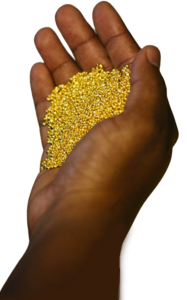
Gold Mines in Zambia — 5 Major Mines and Emerging Gold Belt
Gold mines in Zambia: Discover the top gold mines in Zambia, major mining regions, production trends, investment opportunities, and the country’s growing gold industry.
Zambia is best known globally as a copper producer, but it holds a rapidly growing gold mining sector concentrated in two main zones: the North-Western Province (Kasempa and Mwinilunga districts) and Southern and Eastern Province alluvial fields.
Key mines and projects: (1) Kansanshi Mine (First Quantum Minerals) — Africa’s largest copper mine, also a significant gold by-product producer; (2) Lumwana Mine (Barrick Gold) — major copper operation with gold credits; (3) Munali/Mumbwa gold projects (various explorers); (4) Kasenseli and Mwinilunga artisanal goldfields (North-Western Province); (5) Mwekera and Sasare/Eastern Province alluvial gold fields.
Most of Zambia’s gold is currently recovered as a by-product of copper mining, supplemented by growing artisanal and small-scale gold mining (ASGM) in the north-west. For certified African gold bars, Contact us.
Gold mining in Zambia operates very differently from neighbouring Tanzania, the DRC, or South Africa — Zambia is overwhelmingly known as one of the world’s great copper-producing nations, and for decades gold was treated as little more than a secondary by-product of the country’s vast Copperbelt mining industry. That picture is changing.
Rising gold prices, growing artisanal and small-scale mining activity in the North-Western Province, and renewed government interest in formalising and diversifying Zambia’s mineral sector beyond copper have together pushed Zambian gold production steadily higher over the past decade.
This guide covers every significant gold mine and gold-producing region in Zambia — from the giant copper-gold operations of First Quantum Minerals and Barrick Gold to the emerging artisanal goldfields of the north-west. For certified African gold bars sourced from licensed African mining operations, visit Buy Gold Bars Africa.
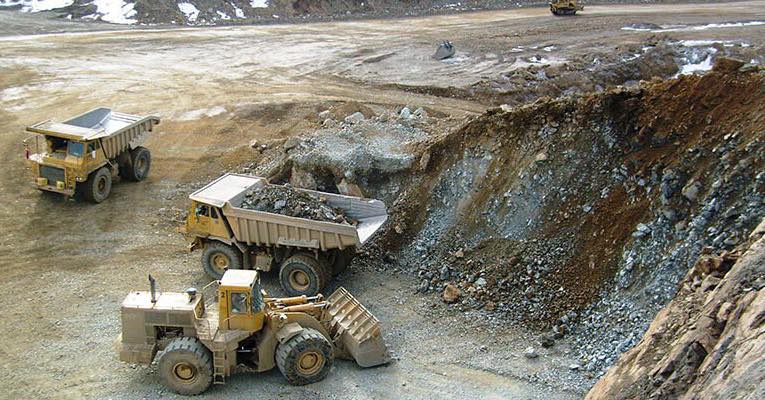
Below are the 5 Major Gold Mines in Zambia;
Kansanshi Mine — Africa’s Largest Copper Mine and a Major Gold By-Product Producer
The Kansanshi Mine, located near Solwezi in North-Western Province, is Africa’s largest copper mine and one of the continent’s most significant combined copper-gold operations. Owned and operated by First Quantum Minerals Ltd (a Canadian mining major) in partnership with Zambia’s state mining investment vehicle ZCCM-IH, Kansanshi has been in continuous large-scale production since 2005 and remains the cornerstone of Zambia’s mining economy.
Kansanshi Mine — Key Data
| Data Point | Detail |
| Operator | First Quantum Minerals Ltd (80%); ZCCM Investments Holdings (20%) |
| Location | Near Solwezi, North-Western Province, Zambia |
| Mine type | Large-scale open-pit copper-gold mine with on-site smelter and processing complex |
| Primary commodity | Copper (Zambia’s dominant export); gold recovered as a significant by-product |
| Gold production | Tens of thousands of ounces of gold recovered annually as a by-product of copper concentrate processing |
| Processing method | Gold is recovered from copper flotation concentrate and smelter by-product streams, refined separately to bullion |
| Strategic significance | Kansanshi’s gold by-product output is one of the largest single contributors to Zambia’s total national gold production |
Kansanshi exemplifies the structural reality of gold mining in Zambia: the country’s largest gold contributions by volume do not come from dedicated gold mines, but from copper operations where gold is recovered as a smelter by-product.
This is a common pattern across major copper-producing regions worldwide — copper ore bodies frequently contain meaningful gold credits, and the scale of copper processing at Kansanshi means even modest gold grades translate into substantial absolute gold output.
Lumwana Mine — Barrick Gold’s Major Zambian Copper-Gold Operation
The Lumwana Mine, also located in North-Western Province near Solwezi, is operated by Barrick Gold Corporation — the same major gold mining company with significant operations across Mali, Tanzania, and the DRC. Lumwana is primarily a large-scale copper mine, but like Kansanshi, its ore processing yields meaningful gold credits that contribute to Zambia’s overall precious metals output.
Lumwana Mine — Key Data
| Data Point | Detail |
| Operator | Barrick Gold Corporation |
| Location | North-Western Province, near Solwezi, Zambia |
| Mine type | Large-scale open-pit copper mine with gold and other precious metal by-products |
| Primary commodity | Copper; gold recovered as a secondary by-product credit |
| Strategic significance | One of Barrick’s significant African copper assets, supplementing the company’s primary gold portfolio in Mali and Tanzania |
| Expansion potential | Barrick has periodically evaluated underground expansion options that could further extend mine life and metal output |
Barrick’s presence at Lumwana, alongside its much larger gold operations elsewhere in Africa such as Mali’s Loulo-Gounkoto complex, reflects the company’s broader African portfolio strategy of pairing flagship gold assets with complementary copper operations that also generate meaningful precious metal by-product revenue.
Munali and Mumbwa Gold Projects — Central Zambia’s Exploration Targets
Beyond the major Copperbelt and North-Western Province copper-gold operations, central Zambia hosts a number of smaller dedicated gold exploration and development projects, including targets in the Munali and Mumbwa districts.
These projects are typically held by junior and mid-tier exploration companies seeking to define standalone gold resources distinct from the copper-dominant deposits of the Copperbelt and North-Western Province.
Zambia’s central and southern gold exploration targets are geologically associated with the Zambezi and Lufilian orogenic belts — structurally complex mineralised zones that host gold mineralisation in shear systems and quartz veins distinct from the porphyry and stratiform copper-gold systems of the main Copperbelt.
While none of these central Zambian gold projects yet rival Kansanshi or Lumwana in scale, they represent an important part of the country’s broader effort to diversify its gold resource base beyond copper by-product production
Kasenseli and Mwinilunga Artisanal Goldfields — North-Western Province’s Growing ASGM Sector
The Kasenseli area and the wider Mwinilunga district in North-Western Province have emerged as Zambia’s most significant artisanal and small-scale gold mining (ASGM) zone — distinct from the large industrial copper-gold operations at Kansanshi and Lumwana that dominate the same broader province.
This region has experienced a notable gold rush dynamic over the past decade, drawing thousands of artisanal miners to work alluvial and shallow hard-rock gold deposits using manual and semi-mechanised extraction methods.
Why Kasenseli and Mwinilunga Matter for Zambian Gold Production
- Growing formal recognition: The Zambian government, through the Ministry of Mines and Minerals Development, has increasingly moved to formalise artisanal mining in this region — issuing artisanal mining rights (AMRs) and gemstone/mineral trading licences to bring previously informal production into the official statistics and tax base
- Cross-border dynamics: North-Western Province borders both Angola and the DRC, and artisanal gold from this region has historically moved through informal cross-border trading networks alongside more formal channels — a pattern common across Central Africa’s gold-producing border regions
- Geological setting: Gold in the Kasenseli and Mwinilunga area is hosted in weathered saprolite and alluvial systems derived from the same broader Lufilian Arc geological province that hosts Zambia’s Copperbelt — meaning artisanal miners are often working gold associated with the same regional mineralisation that produces copper at industrial scale nearby
- Government formalisation push: Zambia’s government has expressed clear policy interest in growing the formal gold sector, both to capture additional export revenue and to reduce the environmental and safety risks associated with unregulated artisanal mining
Eastern Province Alluvial Gold Fields — Mwekera, Sasare and Surrounding Districts
Zambia’s Eastern Province, though far less prominent in national gold production statistics than North-Western Province, hosts a number of smaller alluvial gold workings in districts including the Mwekera and Sasare areas.
These deposits are worked primarily by artisanal miners extracting gold from river gravels and weathered surface deposits, typically at a smaller scale than the North-Western Province goldfields.
While Eastern Province’s alluvial gold production remains modest relative to Zambia’s copper-dominant mining economy, it forms part of the wider pattern of dispersed, small-scale gold occurrences found across much of southern-central Africa’s Precambrian basement geology — areas where systematic exploration has historically been limited by the overwhelming commercial focus on the country’s world-class copper deposits.
💡 Zambia gold for international buyers: Buy Gold Bars Africa sources certified gold from licensed mining operations across multiple African countries with full export documentation and independent assay certification. While our primary sourcing network is concentrated in Uganda, Ghana, South Africa, Tanzania, and the DRC, we monitor developments across all major African gold-producing regions including Zambia. See our gold bars for sale page for current certified stock.
Why Most of Zambia’s Gold Comes from Copper Mines — The By-Product Reality
Understanding gold mining in Zambia requires understanding a structural fact that distinguishes it from most other major African gold producers: the overwhelming majority of Zambia’s formally recorded gold output is recovered as a by-product of copper mining rather than from dedicated primary gold mines. This is fundamentally different from Ghana, Mali, or Tanzania, where large-scale dedicated gold mines (Ahafo, Loulo-Gounkoto, Geita) are the primary national gold production drivers.
- Copperbelt geology: Zambia’s vast Copperbelt — extending into the DRC’s neighbouring copper-cobalt belt — contains gold in association with copper sulphide minerals at many deposits, recoverable during copper smelting and refining as a secondary precious metal credit
- Scale effect: Because Zambia processes enormous volumes of copper ore (among the highest in Africa), even modest gold grades within that ore translate into meaningful absolute gold tonnage — Kansanshi alone processes tens of millions of tonnes of ore annually
- Growing ASGM contribution: The artisanal sector in North-Western Province is increasingly important as a distinct, non-copper-associated source of Zambian gold, and is the segment of the industry most likely to grow fastest as government formalisation efforts continue
- Limited dedicated gold exploration: Because Zambia’s mining investment has historically concentrated overwhelmingly on copper and cobalt, dedicated gold-only exploration has been comparatively under-funded relative to countries like Ghana or Mali — suggesting potential for further discovery as exploration interest expands
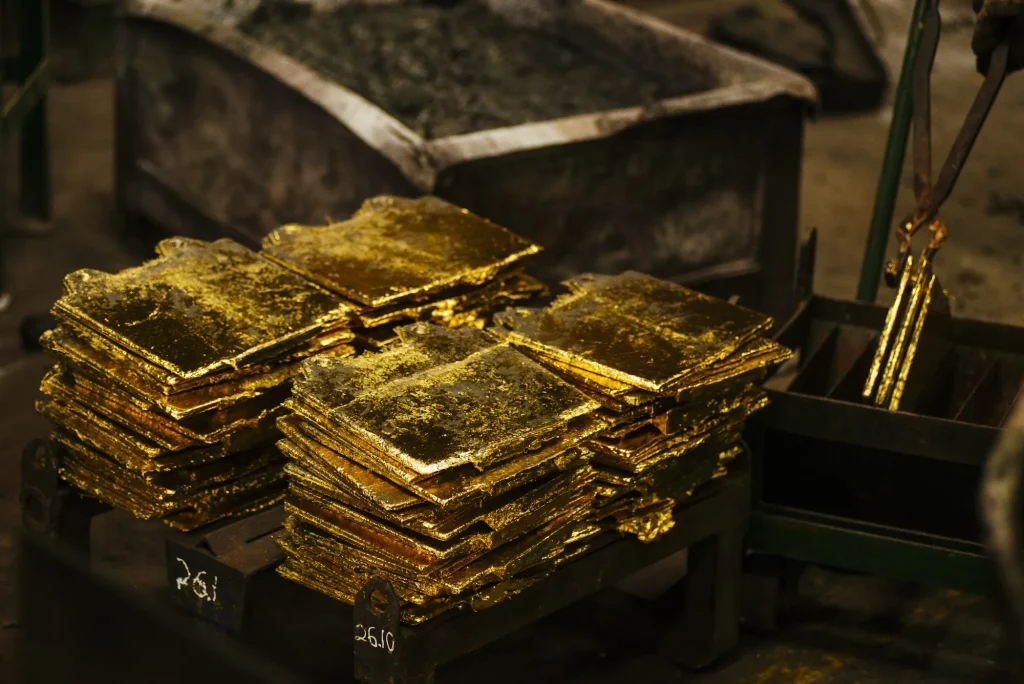
Buy Certified African Gold — Buy Gold Bars Africa
Buy Gold Bars Africa supplies certified gold bars, doré, nuggets, and raw gold dust sourced from licensed mining operations across Africa, with full independent assay certification, export documentation, and insured international delivery.
Browse our gold in Africa for sale · gold bars · gold ingots for sale · gold dust · Contact us at buygoldbarsafrica.com/contact/ for a live quote.
Related Pages — Buy Gold Bars Africa
- Buy Gold Bars Africa — Home Page
- Gold in Africa for Sale — Current Prices & Stock
- Buy Gold Bars — All Formats Available
- Gold Ingots for Sale from Africa
- Gold Dust — Raw Alluvial Gold for Sale
- Gold Stock — Current Availability & Live Pricing
- Buy Gold in the UK
- Dubai Gold Export Rules
- What Does It Cost to Ship Gold to the USA from Africa?
- Gold Mining in South Africa
- Uganda Gold Mines — Karamoja & Northern Region
- Uganda Gold Discovery in Northern Region
- Gold Mining in Guinea
- List of Gold Refineries in Ghana
- Gold Export Tax in Uganda
- Where Can I Buy Raw Gold?
- FAQs About Buying Gold in Ghana
- FAQs About Buying Gold in South Africa
- FAQs About Buying Gold in Sierra Leone
- Our Services — Export Documentation & Worldwide Delivery
- About Buy Gold Bars Africa
- Contact Us — Live Quote
- Full FAQs — Buying Gold from Africa