Gold Import Rules in Austria: Customs, Taxes and Legal Requirements
Is It Legal to Import Gold into Austria?
Yes — importing gold into Austria is fully legal, and the country maintains one of Europe’s more gold-friendly regulatory environments, reflecting its long-standing culture of private bullion ownership.
As with every EU member state, Austria applies EU-wide rules on gold as a category, layered with its own national customs administration and declaration procedures through the Austrian customs authority.
The €10,000 Declaration Threshold in Austria
This is the single most important rule to understand around gold import regulations in Austria. If you’re carrying more than €10,000 in cash or cash-equivalent instruments — a category that explicitly includes gold bars and gold coins, alongside traveler’s cheques and similar instruments — into or out of the European Union, you’re legally required to declare it to Austrian customs.
At Austrian entry points including Vienna International Airport, this declaration happens through the standard customs process: travelers carrying goods to declare use the designated “red channel” rather than passing through without stopping, and declaration forms are available directly at customs counters or the customs office itself.
Failing to declare gold above this threshold carries real consequences — customs authorities can seize the gold as a precautionary measure while they investigate, and that seizure can become permanent if any link to illegal activity is subsequently established.
It’s worth being precise about scope here: this €10,000 threshold applies specifically to movement across an external EU border — meaning gold arriving in Austria from outside the EU, such as directly from an African source.
Movement between EU member states is generally not subject to the same declaration requirement, though individual countries retain the right to carry out tax and police checks and may still request proof of a gold shipment’s origin even on intra-EU movement.
Customs Duties on Gold Imported into Austria
As an EU member state, Austria operates within the bloc’s common external customs tariff, and there are no internal customs duties on goods moving freely within the EU single market once properly imported.
For gold arriving from outside the EU — including certified bullion sourced from African mining operations — the same broadly liberal EU import framework applies, and gold specifically doesn’t carry the kind of punitive import duty structure seen on many other imported goods, particularly once its investment-grade status is properly documented.
VAT Treatment for Gold Imported into Austria
Investment-grade gold entering Austria benefits from the same EU-wide VAT exemption that applies across every member state, under the EU’s special VAT scheme for investment gold.
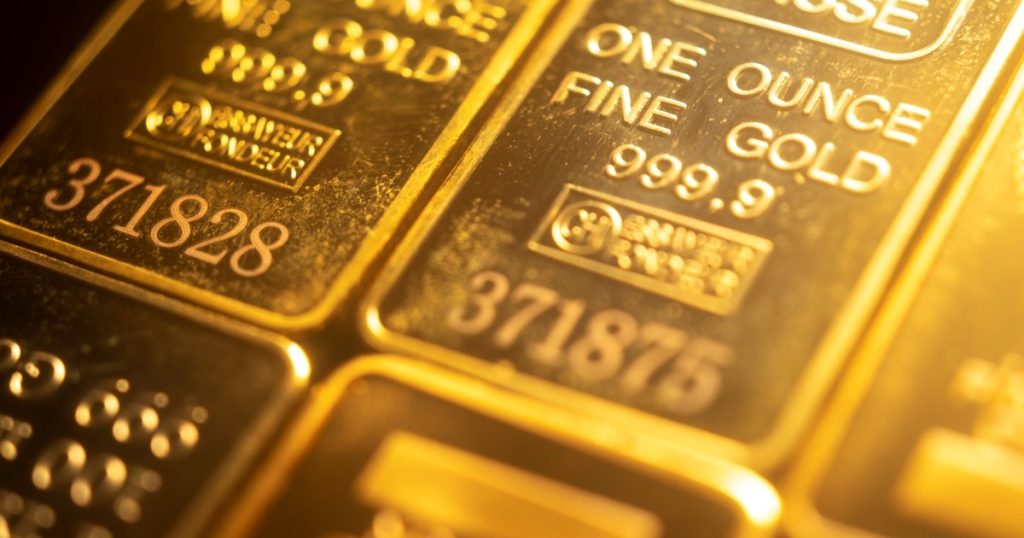
To qualify, gold bars or ingots need a purity of at least 99.5%, while qualifying coins must meet a 90% purity threshold alongside additional criteria around mint date and legal tender status.
Our own 24K gold bars, certified at 999.9 fine, clear this threshold comfortably. For a full breakdown of Austria’s specific VAT position and the Spekulationsfrist holding-period rule that applies when you later sell, see our dedicated Buy Gold in Austria guide, which covers pricing and tax treatment in complete depth.
Austria’s Customs Declaration Process: e-Zoll
Austria’s customs administration operates through its electronic e-Zoll system, which performs automated validation and risk profiling on declared shipments.
For commercial or larger-volume gold imports specifically, shipment data may also be assessed under the EU-wide Import Control System 2 (ICS2), a security framework requiring carriers to submit advance entry summary declarations before goods physically reach the EU border.
This system helps Austrian customs identify higher-risk consignments and determine whether additional physical inspection is warranted — one more reason why complete, accurate documentation genuinely speeds up clearance rather than merely satisfying a formality.
Documentation Required to Import Gold into Austria
Solid documentation makes the difference between a smooth import and a delayed, questioned one. At minimum, plan to have the following ready:
Purchase invoice — a clear, itemized record of what was paid, to whom, and when, establishing the transaction’s basic facts.
Assay certificate — independent verification of purity and weight from an accredited laboratory, confirming exactly what the gold actually is.
Certificate of origin — particularly important for gold sourced from Africa, confirming which country, and ideally which licensed mining operation, the gold traces back to.
Export permit from the country of origin — demonstrating the gold left its source country through properly licensed channels, which matters directly to how Austrian customs assesses the shipment’s legitimacy.
We provide every one of these documents as standard with each order specifically because we understand what Austrian and broader EU customs authorities expect to see when certified gold crosses the border.
How to Import Gold into Austria From Africa: Step by Step
1. Source from a licensed exporter. Confirm your supplier holds genuine export licensing in their country of origin, with full assay and certificate-of-origin documentation provided upfront.
2. Verify investment-grade purity. Confirm your gold meets the 99.5% purity threshold for bars to qualify for VAT-exempt treatment under EU rules.
3. Arrange insured, tracked shipping. Specialized precious-metals logistics providers handle secure international transport, with full insurance coverage for the transit period.
4. Declare if the €10,000 threshold applies. Use the red channel and complete the declaration at your point of entry if your total gold value exceeds this amount.
5. Retain your full documentation set. Keep the invoice, assay certificate, certificate of origin, and any customs paperwork together — this record matters well beyond the import itself, particularly if you resell later under Austria’s Spekulationsfrist holding-period rule.
Buy Certified Gold for Import Into Austria From a Licensed Africa Gold Exporter
We’re a licensed Africa gold exporter, sourcing certified 24K gold bars, nuggets, and dust directly from licensed mining operations across Uganda, Kenya, South Africa, Tanzania, Mali, Mozambique, and Zambia, with every shipment prepared to meet the documentation standards Austrian and broader EU customs actually require.
Browse our gold bar catalogue, 1kg 24K gold bar, and 1 oz gold bar, or explore gold nuggets, gold dust, and bulk order options for larger shipments. Our full Buy Gold in Austria guide covers current pricing, VAT treatment, and the Spekulationsfrist rule in complete detail, and our safety guide and legal requirements guide cover exactly what to verify before any international purchase.
Our gold buy-back prices guide is also worth reading if you’re planning ahead for a future sale rather than just a purchase, and our country-specific sourcing guides — Kampala, South Africa, and Mali — cover exactly where this gold actually comes from.
For comparison, see how buyers in neighboring EU markets navigate the same underlying framework: our guides to Germany, Switzerland, France, Italy, and Spain all cover comparable EU import rules from their own national angle. If silver is also part of your plans, see our silver bullion offering as well.
Contact us today for a live quote and a full documentation package prepared specifically for import into Austria, or learn more about who we are as a licensed Africa gold exporter.
Related Pages
- Buy Gold in Austria
- Gold Bars — Full Catalogue
- 1 kg 24K Gold Bar for Sale
- 1 oz Gold Bar
- Gold Nuggets for Sale
- Gold Dust
- Bulk Orders / Large Volume Gold Deals
- Gold Buy-Back Prices Explained
- How to Buy Gold Bars From Africa Safely
- Legal Requirements to Buy Gold From Africa
- Gold Bars for Sale in Kampala
- Where to Buy Gold in South Africa
- Buy Gold in Mali
- Where to Buy Gold in Africa
- How to Import Gold into France
- Buy Gold Online in Germany
- Buy Gold Online in Switzerland
- Buy Gold Online in France
- Buy Gold Online in Italy
- Buy Gold Online in Spain
- Silver Bullion
- About Us
- Contact Us