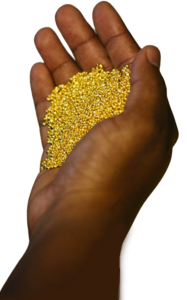
Gold Refineries in Africa: Leading Refineries, Services & Gold Processing
The Historical Backdrop: Why African Refining Lagged for So Long
South Africa has dominated African gold refining since the early 20th century. Rand Refinery, established in 1920 in Germiston near Johannesburg, was built by the country’s major mining houses to process its vast underground production, and for most of the last century it handled the bulk of Africa’s formal industrial gold output.
Outside South Africa, large-scale refining capacity remained genuinely limited until the 2010s — most industrial mines exported doré directly to international refiners, while artisanal and small-scale mining, which accounts for significant production across West and East Africa, often moved through informal channels toward Dubai and other markets with lighter due-diligence requirements.
Rising gold prices, resource nationalism, and pressure to formalize the sector have since driven a real wave of new refining investment across the continent.
Rand Refinery: Still the Continent’s Only LBMA-Accredited Facility
Rand Refinery remains genuinely in a class of its own among gold refineries in Africa. With an annual capacity of roughly 450–600 tonnes, it’s one of the largest single-site gold refineries anywhere in the world, owned by South Africa’s major gold mining companies — AngloGold Ashanti, Sibanye-Stillwater, DRDGOLD, Harmony Gold, and Gold Fields among them.
It produces LBMA Good Delivery bars at a minimum 99.5% purity, alongside smaller bars, granules, and feedstock for the Krugerrand program, and holds LBMA Good Delivery Referee status, helping maintain accreditation standards for refiners worldwide. Rand also processes material from other African countries, including Ghana and Tanzania.
It remains, as of today, the only refinery on the African continent holding LBMA Good Delivery accreditation for gold — every other refinery covered below produces high-purity gold suitable for regional trade and export, but without that specific global wholesale-market status.
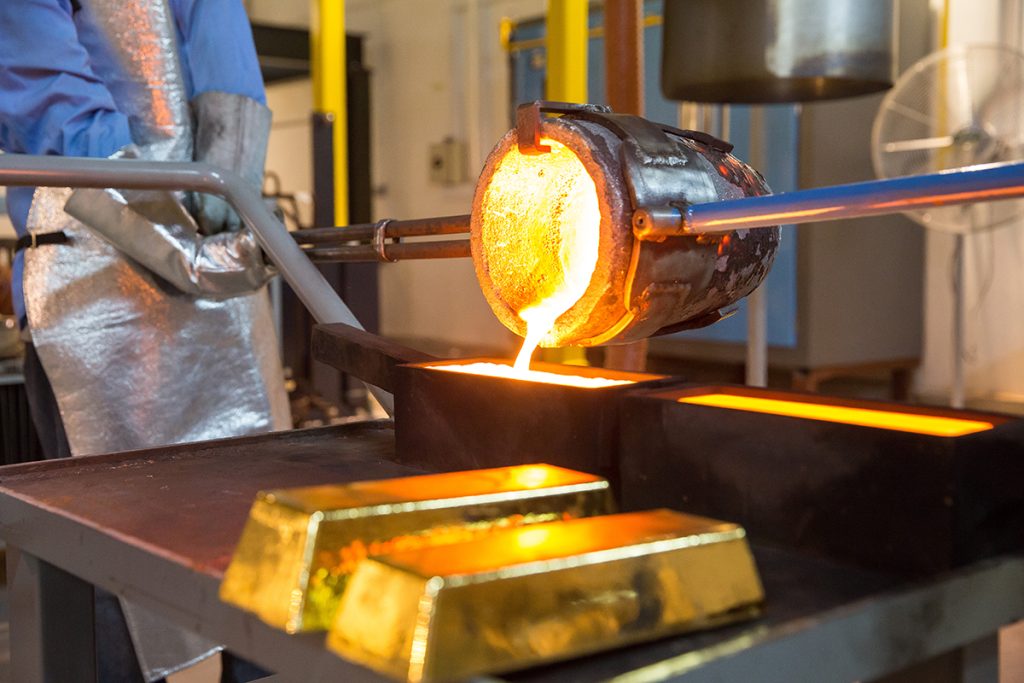
Fidelity Gold Refinery: Zimbabwe’s Official State Refiner
Zimbabwe requires most of its formal gold production to pass through Fidelity Gold Refinery, headquartered in Harare, before export.
Originally established in 1966 and restructured in 2024 under ownership by the Mutapa Investment Fund (Zimbabwe’s sovereign wealth fund), Fidelity buys from both large-scale and small-scale producers nationwide, with a second, privately backed refinery now licensed in Bulawayo to handle rising national output.
It’s worth being direct here rather than presenting an incomplete picture: Fidelity has also been named in serious, well-documented investigative reporting connecting the refinery to gold smuggling and money-laundering networks involving senior Zimbabwean government figures — genuinely relevant context for evaluating gold sourced through Zimbabwe’s formal channel.
African Gold Refinery (Uganda): Scale, and a Genuine Sanctions History
African Gold Refinery (AGR), located in Entebbe, opened in 2014 and was officially inaugurated in 2016. With a refining capacity of roughly 219 tonnes per year, it ranks among Africa’s largest facilities — only South Africa’s and Ghana’s refineries process more.
This is important context to state plainly: in March 2022, the US Treasury’s Office of Foreign Assets Control sanctioned AGR, its owner Alain Goetz, and a network of associated companies for their role in the illicit movement of gold worth hundreds of millions of dollars annually from conflict zones in the eastern Democratic Republic of Congo, gold that the Treasury said helped fund armed groups responsible for serious human rights abuses.
AGR has disputed the sanctions publicly. This history is exactly why independent verification matters more than a refinery’s scale or public profile — a large, long-operating facility can still carry real, documented supply-chain risk.
Gasabo Gold Refinery: Rwanda’s Refinery and Its Own Sanctions History
Gasabo Gold Refinery, based in Kigali, is currently Rwanda’s only operating gold refinery, having begun operations in June 2022 after the closure of its predecessor, Aldango Gold Refinery.
In March 2025, the European Union sanctioned Gasabo specifically for its role in the illicit export of gold illegally extracted in the DRC, citing the refinery’s contribution to funding conflict in the region’s east.
As with AGR in Uganda, this is a directly relevant fact for anyone evaluating Rwandan-refined gold, not a peripheral detail.
Gold Coast Refinery: Ghana’s Leading Facility
Gold Coast Refinery, part of the Euroget Group and based in the Accra area, describes itself as the first state-of-the-art gold refinery in West Africa and the second-largest on the continent, with capacity to refine up to 400 kg of gold per day.
In January 2026, Gold Coast Refinery signed a formal refining agreement with Ghana’s own Ghana Gold Board (GoldBod), the government body established in 2025 with exclusive national authority over Ghana’s gold trade — a genuinely significant, current partnership reflecting Ghana’s broader push to keep more gold refining value onshore.
Tanzania’s Two Distinct Refineries
Tanzania operates two genuinely separate refining facilities worth distinguishing clearly. Mwanza Precious Metals Refinery (MPMR), a joint venture between Tanzania’s State Mining Corporation (Stamico), Singapore’s ACME Consultant Engineers, and Dubai’s Rozella General Trading, began operations in April 2021 with capacity to refine 480 kg of gold per day to 999.9 purity — ranking among the largest processing capacities on the continent.
Separately, Geita Gold Refinery Ltd, a private facility established in 2019, operates at a smaller scale of roughly 100 tonnes annual capacity, focused specifically on serving artisanal and small-scale miners.
Mali’s SOROMA-SA: Under Construction, Not Yet Operational
Worth flagging clearly: Mali’s planned national refinery is not yet running. Construction broke ground in June 2025 at Senou, near Bamako, under SOROMA-SA, a joint venture 62% owned by the Malian state and 38% by Russia’s Yadran Group.
Once complete — estimates point to late 2026 or into 2027 — the facility is designed to process up to 200 tonnes of gold annually, roughly four times Mali’s current national output, positioned to draw in material from neighboring Burkina Faso and Niger as well.
Any claim describing this refinery as currently operational should be treated as inaccurate until construction is confirmed complete.
Why the LBMA Accreditation Gap Matters
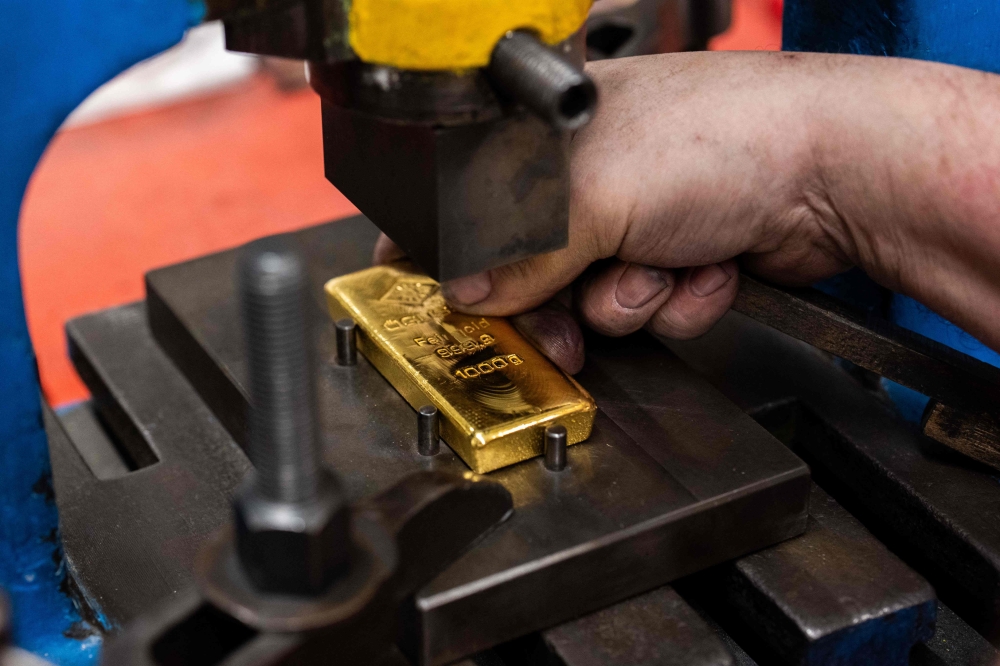
A critical distinction runs through this entire list: only Rand Refinery currently holds LBMA Good Delivery accreditation. This status lets its bars settle directly in the London wholesale market without additional assay.
The other refineries covered here produce genuinely high-purity gold — often 99.5% to 99.99% — suitable for regional trade, jewelry fabrication, and many export markets, but without Good Delivery status, that gold typically can’t enter the loco London system directly and may trade at a discount, or require re-refining by an accredited plant.
Achieving LBMA accreditation demands multi-year operating history, substantial volume, strong financial standing, and full compliance with LBMA’s Responsible Gold Guidance — a bar few African facilities outside Rand have yet cleared.
What This Means for Buying Gold From Africa
Understanding exactly which refineries carry genuine, checkable accreditation — and being honest about which ones carry real, documented sanctions or governance concerns — matters directly for anyone sourcing gold from the continent. A bar’s liquidity and resale value depend heavily on the credibility of what refined it and where its material actually originated.
Buy Certified Gold From a Verified African Source
Rather than relying on an unverified refinery list, working with an established, properly licensed exporter removes the guesswork. We source certified 24K gold bars, nuggets, and dust directly from licensed mining operations, with every shipment backed by independent assay certification, certificate of origin, and full export documentation — with sourcing and supply-chain transparency built in from the start, not added after the fact.
Browse our gold bar catalogue, 1kg 24K gold bar, and 1 oz gold bar, or explore our gold nuggets and gold dust options. Our safety guide and legal requirements guide cover exactly what to verify before any purchase, and our country-specific guides — Kampala, South Africa, and Mali — cover exactly where our own gold comes from.
Our 24K gold prices and gold price per gram pages give you today’s live benchmark before comparing any quote, and our gold buy-back prices guide is worth reading if you’re planning ahead for a future sale.
For a global comparison, our guides to buying gold in Germany, Switzerland, France, and Austria cover how our certified African gold compares against major European markets.
Contact us today for a live quote from a verified, properly licensed African gold exporter.
Related Pages
- Gold Refineries in Kampala
- Gold Bar Catalogue
- 1 kg 24K Gold Bar for Sale
- 1 oz Gold Bar
- Gold Nuggets for Sale
- Gold Dust
- 24K Gold Prices
- Gold Price Per Gram
- How to Buy Gold Bars From Africa Safely
- Legal Requirements to Buy Gold From Africa
- Gold Bars for Sale in Kampala
- Where to Buy Gold in South Africa
- Buy Gold in Mali
- Where to Buy Gold in Africa
- Gold Buy-Back Prices Explained
- Buy Gold in Austria
- Buy Gold Online in Germany
- Buy Gold Online in Switzerland
- Buy Gold Online in France
- About Us
- Contact Us