Investing in Ghana Gold Industry: Investment Options 2026
Investing in Ghana gold industry in 2026 means entering the world’s most dynamic large-scale gold market at a moment when every structural indicator — production, price, regulation, and institutional reform — is pointing strongly upward.
Ghana has just confirmed its position as Africa’s largest gold producer with total national gold production of approximately 186 tonnes in 2025 — a figure that surpasses every previous year in the country’s mining history.
At the same time, gold’s all-time record of $5,602.22 per troy ounce on January 28, 2026, has transformed the economics of Ghana’s mining sector from merely promising to genuinely extraordinary.
For investors asking whether Ghana is a good country for gold investment, the 2026 data speaks directly: Ghana’s total gold export revenues reached $20.9 billion in 2025 — a number that would have seemed implausible just three years ago.
Ghana has climbed to fifth position in Africa’s top 25 mining destinations in 2026 (up from tenth in 2024), driven by record gold prices and the transformative regulatory reforms introduced by the Ghana Gold Board (GoldBod) under the Gold Board Act 1140.
The country’s total gold production is projected to reach 6.3 million ounces by 2026 — cementing its role as the undisputed anchor of West Africa’s mining economy.
Whether you are a local Ghanaian investor looking to participate in the country’s most valuable industry, an international investor seeking mine-direct access to West Africa’s finest gold at competitive premiums, or a gold buyer working with Buy Gold Bars Africa Limited for certified GoldBod-sourced gold bars, this guide gives you everything you need: the investment landscape, regulatory framework, GoldBod’s transformative role, current gold prices, key risks, and a compelling case for acting now.
Ghana Investment Options 2026
Investing in Ghana’s gold industry can take multiple forms depending on your capital, risk appetite, and investment horizon. Here are the primary pathways available to both local and international investors:
1. Buying Physical Gold — Ghana-Sourced Bars and Nuggets
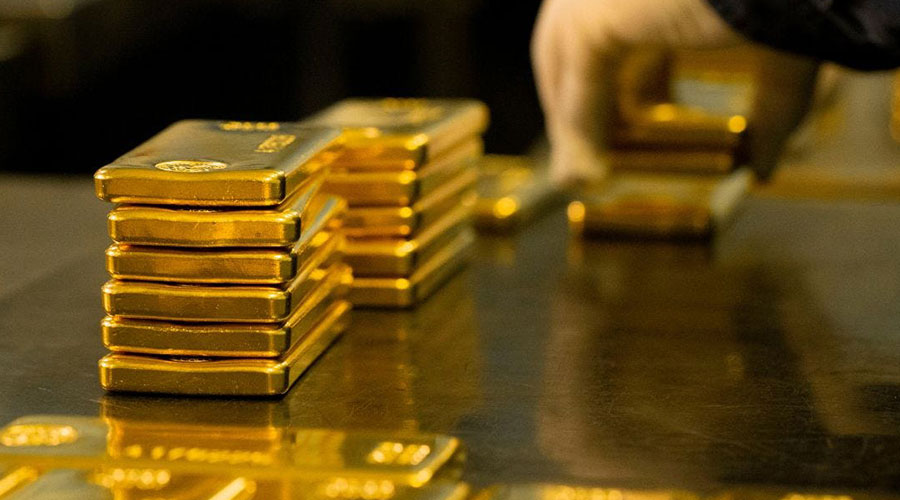
Buying physical gold from Ghana through GoldBod-certified Licensed Gold Exporters is the most direct investment pathway. At current May 2026 prices of GHS 1,707–1,806/gram (~$152–$160 USD for 24K), purchasing investment-grade gold bars sourced through the PMMC assay system provides direct commodity exposure with the strongest documentation available in any African gold market.
Buy Gold Bars Africa Limited facilitates physical gold purchases from Ghana for international buyers — sourcing GoldBod-certified 24K bars through verified Licensed Gold Exporter channels with complete PMMC assay certification, Certificate of Origin, and insured worldwide delivery. Current pricing is 1–3% above LBMA spot — competitive with any global wholesale channel.
2. Ghana Stock Exchange-Listed Mining Companies
Investing in Ghana gold mining stocks through the Ghana Stock Exchange (GSE) provides liquid exposure to the country’s gold production:
- AngloGold Ashanti (NYSE: AU / JSE: ANG) — operates the historic Obuasi mine
- Gold Fields (NYSE: GFI / JSE: GFI) — operates Tarkwa and Damang
- Newmont Corporation (NYSE: NEM) — operates Ahafo and Akyem
- Endeavour Mining (TSX: EDV) — growing West African gold producer
These companies offer liquidity, corporate governance, and dividend income alongside Ghana gold exposure. At current gold prices generating AISC margins above $3,200/oz, all major Ghana producers are generating record free cash flow.
3. Joint Ventures with Ghana Mining Operations
Joint venture opportunities in Ghana’s gold sector remain among the most financially attractive in African mining. International companies partner with Ghanaian entities (required under local content regulations) to share operational responsibilities, risk, and return. AngloGold, Newmont, and Gold Fields all operate through joint structures that provide templates for new entrants.
For smaller investors, joint ventures with GoldBod-registered artisanal cooperatives offer a structured pathway to ASM gold offtake at competitive prices, with GoldBod’s oversight providing the compliance framework that makes such arrangements internationally bankable.
4. Artisanal and Small-Scale Mining (ASM) Investment
Investing in Ghana’s artisanal and small-scale gold mining sector has been transformed by GoldBod’s formalization framework.
With ASM production reaching 96.4 tonnes in 2025 and GoldBod targeting 127 tonnes annually, the sector offers significant investment opportunities for:
- Equipment suppliers and financiers providing working capital to licensed cooperatives in exchange for gold offtake rights
- Processing technology companies providing mercury-free extraction systems under Ghana’s sustainability requirements
- Logistics and secure transport operators connecting ASM-producing regions to GoldBod aggregation centres
5. Technology and Innovation Investment
Technology investment in Ghana’s gold mining sector is expanding rapidly. GoldBod’s blockchain tracking initiative, the Ministry of Lands and Natural Resources’ target that 20% of mine energy comes from renewable sources by 2030, and the general modernization of processing and exploration technology all create B2B investment opportunities for technology companies:
- Advanced geophysical survey technology for new deposit discovery
- Renewable energy systems for mine operations
- Automated processing and sorting technology
- Supply chain traceability and blockchain infrastructure.
Investing in Ghana Gold: Key Regulations
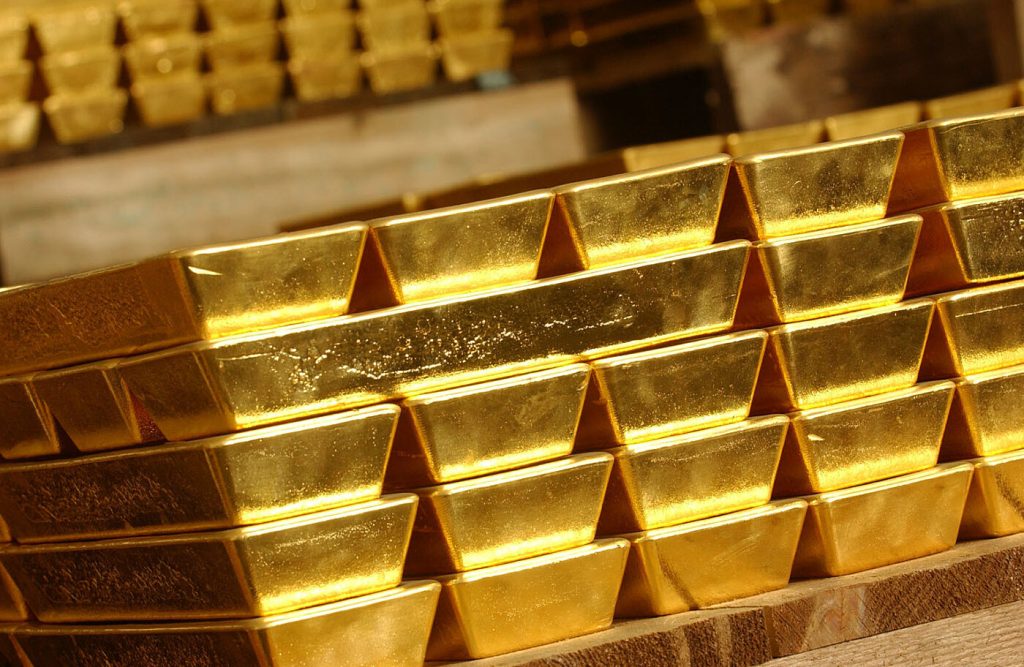
- GoldBod regulates the market: The Ghana Gold Board (GoldBod), established under the Ghana Gold Board Act, 2025 (Act 1140), has exclusive authority over buying, selling, weighing, grading, assaying, valuing and exporting gold and other precious minerals.
- Licensing is mandatory: Businesses involved in gold trading and related activities must hold the appropriate GoldBod licence. GoldBod maintains an official licence registry for verification.
- Foreign traders face restrictions: Foreigners were directed to exit Ghana’s local gold-trading market from April 30, 2025. Foreign investors may instead apply to GoldBod to off-take gold from GoldBod.
- Official pricing applies: Since July 1, 2026, GoldBod’s official purchase prices are based on LBMA Gold Price AM and PM benchmarks, converted using the Bank of Ghana Reference Rate.
- Gold receipts are required: Licensed buyers must issue GoldBod receipts for gold transactions, providing documentation and traceability for purchases.
- XRF purity testing: From September 1, 2026, XRF assay became the standard method for determining gold purity in purchases by GoldBod and licensed buyers.
- Local refining before export: From September 1, 2026, Self-Financing Aggregators must have gold doré refined in Ghana at an approved/designated refinery before export.
- Compliance is important: Breaches can result in licence suspension or revocation, seizure, prosecution and other sanctions under Act 1140 and GoldBod directives.
Why Ghana’s Gold Industry Is One of the World’s Best Investment Destinations in 2026
Every serious investor evaluating gold mining investment opportunities in Ghana should understand why the country occupies a genuinely unique position in the global gold market in 2026.
Ghana Is Africa’s Largest Gold Producer — And Growing
Ghana produces more gold than any other country in Africa. Total national gold production rose to approximately 186 tonnes in 2025, with ASM (artisanal and small-scale mining) production surging more than 60% to reach 96.4 tonnes (3.1 million ounces) — making artisanal output surpass industrial mine production for the first time in the country’s history.
Gold accounts for approximately 40% of Ghana’s total export earnings and close to 90% of total mineral export revenue. As of October 2024, gold exports alone accounted for $9.58 billion, representing more than half of Ghana’s total export earnings of $16.5 billion.
In 2025, total gold export revenues reached $20.9 billion — a figure that reflects both Ghana’s extraordinary production growth and gold’s historic price appreciation.
Ghana’s Gold Sector Performance Has Just Jumped 65%
Gold prices surged 65% in 2025, creating the most favorable margin environment in Ghana’s modern mining history. Large-scale mines like Newmont’s Ahafo, Gold Fields’ Tarkwa, and AngloGold Ashanti’s Obuasi are generating record free cash flow.
The artisanal sector, historically characterized by informality and low returns, has been transformed by GoldBod’s centralized purchasing system — which bought and exported 41.5 tonnes of artisanal gold worth approximately $4 billion in just the first four months of 2025.
The GoldBod Revolution: Africa’s Most Significant Gold Market Reform
The Ghana Gold Board (GoldBod) — established under the Gold Board Act 1140 in March 2025 — is the single most important structural development in Ghana’s gold market in decades. Understanding GoldBod is essential for every investor considering Ghana gold investment opportunities in 2026.
GoldBod has become the sole legal aggregator, assayer, and exporter of all gold produced by licensed artisanal and small-scale mining operators in Ghana.
It has mandated that all foreign companies exit the local gold trading market — reserving ASM gold aggregation exclusively for Ghanaian entities under GoldBod oversight. It has set a target of purchasing 127 tonnes of artisanal gold annually (approximately 2.45 tonnes per week).
And it has boosted the Bank of Ghana’s gold reserves from 8.77 tonnes in 2022 to 30.8 tonnes by February 2025, with foreign reserves reaching $9.4 billion.
At Mining Indaba 2026 in Cape Town, GoldBod’s Director for Responsible Mining Prof. Ishmael Quaicoe described Ghana’s deliberate shift from being solely a gold producer to becoming a value-retaining and value-optimising participant in the global gold market — a strategic repositioning with profound implications for every investor in the sector.
Blockchain Traceability by End of 2026 — A Game-Changer for Buyers
GoldBod CEO Sammy Gyamfi announced at the Dubai Precious Metals Conference that Ghana is deploying a blockchain-based gold supply chain tracking system covering every stage from production to sale, to be fully operational by end of 2026.
This system will deliver real-time data, create immutable supply chain records, and make Ghana the world’s most transparently documented artisanal gold market.
For international buyers and investors, this represents a step-change in documentation quality — and a significant competitive advantage for Ghana gold over competing African sources.
Current Gold Prices in Ghana: What Investors Need to Know
Gold prices in Ghana today are derived from the international LBMA spot price of approximately $4,720–$4,739 USD per troy ounce (~$151.55/gram for 24K), converted at the prevailing USD/GHS exchange rate of approximately 11.26 GHS per USD.
Ghana Gold Price Table — All Karats
| Karat | Purity | Per Gram (GHS) | Per Gram (USD) | Per kg (GHS) | Per kg (USD) |
|---|---|---|---|---|---|
| 24K | 99.9% | GHS 1,707–1,806 | ~$152–$160 | GHS 1.71M–1.81M | ~$151,700–$163,500 |
| 22K | 91.6% | GHS 1,564–1,655 | ~$139–$147 | GHS 1.56M–1.66M | ~$138,900–$149,800 |
| 18K | 75.0% | GHS 1,280–1,355 | ~$114–$120 | GHS 1.28M–1.36M | ~$113,800–$122,900 |
| 14K | 58.5% | GHS 998–1,056 | ~$89–$94 | GHS 998,000–1.06M | ~$88,700–$94,000 |
The 2026 Ghana gold all-time high was GH₵ 59,222/oz (GHS 1,905/gram) recorded on January 28, 2026 — corresponding to the global gold price record of $5,602/oz. Year-to-date 2026, Ghana’s gold price has risen +21.43% in GHS terms.
Key Benefits of Investing in Ghana’s Gold Industry in 2026
1. Ghana’s Economy Is Built Around Gold — Investor Stability
Ghana’s gold sector contribution to GDP remains one of the highest of any commodity sector in any African economy.
Gold accounts for approximately 40% of total export earnings and represents the largest source of domestic tax revenue — the mining sector contributed a record GH₵11.55 billion ($980 million USD) in taxes in 2023, with figures expected to exceed that substantially given 2025’s price environment.
This economic centrality means Ghana’s government cannot afford to make the sector unstable. Ghana’s pro-mining government policy — manifested in GoldBod’s establishment, tax incentives, and regulatory modernization — reflects a deliberate strategy to maximize value from the country’s most important natural resource.
2. The GoldBod Framework Provides the Strongest Buyer and Investor Protection in West Africa
For international investors asking how to invest in Ghana’s gold industry safely, the GoldBod framework is the answer. Every LGE (Licensed Gold Exporter) authorization, every PMMC assay certificate, and every blockchain-tracked supply chain record provides a layer of documentation and accountability that does not exist in comparable West African gold markets.
For buyers sourcing gold through GoldBod-certified channels, this means investment-grade documentation that satisfies EU Conflict Minerals Regulation, Dodd-Frank Section 1502, OECD Due Diligence standards, and institutional ESG requirements — all from a single, government-backed framework.
3. Strategic Location and World-Class Export Infrastructure
Ghana’s strategic location in West Africa positions it close to Europe, the Middle East, and major Asian markets. The country’s transport and logistics infrastructure — including Tema Port (one of West Africa’s most capable container ports), Kotoka International Airport (ACC) in Accra, and well-maintained road networks connecting mining regions in the Ashanti and Western regions — facilitates efficient gold export to international markets.
For investors in large-scale Ghana gold mining operations, this infrastructure means lower logistics costs and faster delivery times compared to landlocked competitors.
For buyers purchasing gold bars through Accra-based licensed exporters, JKIA-equivalent air freight connections to Dubai, London, and Zurich are standard.
4. Record Production Trajectory — 6.3 Million Ounces by 2026
Ghana’s total gold production is expected to increase from 5.1 million ounces in 2024 to roughly 6.3 million ounces by 2026, driven by small-scale sector expansion that is growing “more than fourfold from about 0.7 million ounces in 2022 to over 3.2 million ounces by 2026.” This production growth trajectory is the strongest in Ghana’s modern mining history and creates a supply abundance that benefits buyers at every scale.
New mines entering production in 2026 include Azumah Resources’ gold mine in northwestern Ghana (near the Burkina Faso border), Cardinal Resources’ Namdini mine (operated by Shandong Gold), and Newmont’s North Ahafo expansion — collectively representing one of the busiest new-mine commissioning pipelines in West Africa.
5. Tax Incentives for Gold Investment in Ghana
Ghana’s tax incentives for gold mining investment remain among the most favorable in Africa:
- Tax exemptions on mining equipment and heavy machinery imports
- Tax holidays for qualifying large-scale mining activities (typically 5–10 years for new greenfield operations)
- VAT exemptions on specified mining inputs and processes
- Reduced corporate tax rates under the Minerals and Mining Act
- Capital allowances of up to 80% in the first year for qualifying mining investments
The Ghanaian government’s fiscal policy intentionally positions mining as a priority investment sector — a philosophy that has not changed through multiple administrations.
Risks of Investing in Ghana’s Gold Industry — The Honest Assessment
Gold Price Volatility
Gold price risk in Ghana affects every investment form. The extraordinary +65% price increase of 2025 has been partially offset by a moderation from the January 2026 ATH of $5,602/oz to current ~$4,720–$4,739/oz levels. J.P.
Morgan forecasts gold reaching $6,300/oz by year-end 2026, but markets can and do move against forecasts. Any investment predicated on gold price appreciation carries inherent price risk.
Illegal Mining (Galamsey) — A Persistent Structural Challenge
Illegal small-scale mining (galamsey) in Ghana remains the most significant structural challenge facing responsible investors and operators. Galamsey operations contaminate water bodies, destroy agricultural land, and create security challenges in mining regions.
The Ghanaian government has deployed military interventions, but galamsey continues to operate. For investors, this means due diligence on land access, community relations, and environmental exposure is essential.
Regulatory Changes and Policy Risk
Regulatory risk in Ghana’s gold mining sector has increased with GoldBod’s rapid establishment and the exclusion of foreign companies from ASM gold trading.
While these changes generally strengthen the sector’s long-term credibility, they create short-term adjustment challenges. Monitoring the evolution of GoldBod’s policy framework is essential for investors with ASM exposure.
Currency Risk
GHS/USD exchange rate risk affects GHS-denominated returns for international investors. The cedi’s historical depreciation against the USD means GHS-denominated gold investments typically outperform USD-denominated equivalents in nominal GHS terms — but international investors should structure returns in USD terms for accurate performance measurement.
Joint Ventures and Partnerships in Ghana’s Gold Sector
The most financially successful international investments in Ghana’s gold mining sector have been structured around genuine local partnerships that provide community engagement, regulatory navigation, and supply chain access:
AngloGold Ashanti at Obuasi: The Obuasi redevelopment — arguably Africa’s most significant brownfield gold mine rehabilitation in recent memory — demonstrates how patient capital, community engagement, and regulatory compliance create durable value even in historically complex operating environments.
Gold Fields at Tarkwa: One of Africa’s largest open-pit gold mines, Tarkwa has operated continuously for over 20 years through multiple gold price cycles — demonstrating the durability that Ghana’s stable regulatory environment provides for long-term mining investments.
Newmont at Ahafo and Akyem: Ghana represents Newmont’s most significant African investment, with the North Ahafo expansion expected to add substantial production capacity through 2026 and beyond.
New entrant opportunity: GoldBod CEO Sammy Gyamfi has explicitly signalled openness to structured partnerships with international investors who can bring technology, capital, and processing expertise to the ASM formalization program — creating a potentially significant entry opportunity for investors who can operate within GoldBod’s compliance framework.
Buying Physical Gold from Ghana Through Buy Gold Bars Africa Limited
For investors and buyers who want the most direct participation in Ghana’s gold market boom, purchasing physical GoldBod-certified gold bars is the most tangible route.
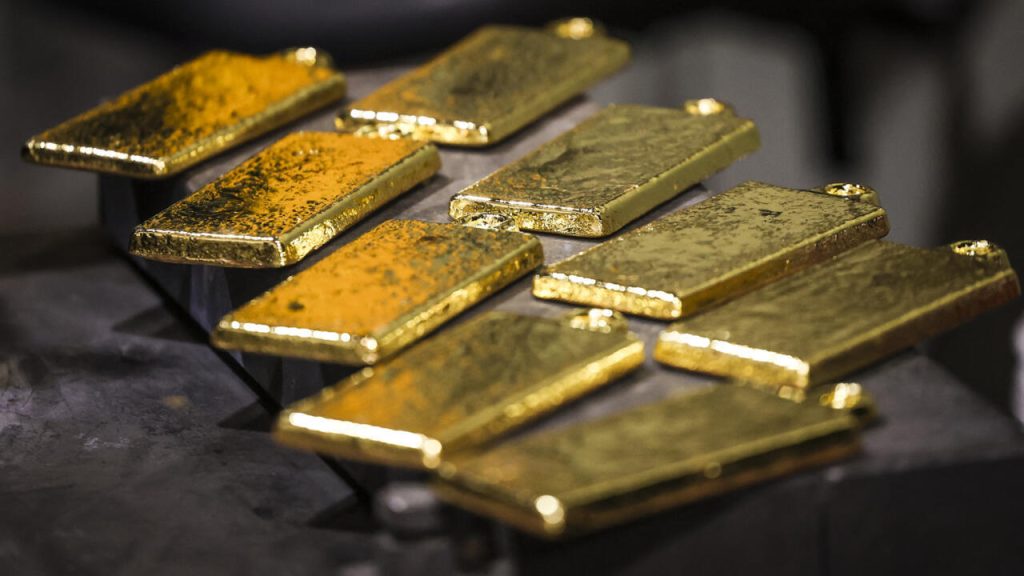
Buy Gold Bars Africa Limited sources certified 24K gold bars through Ghana’s GoldBod Licensed Gold Exporter framework — providing international buyers with:
- PMMC-certified assay reports confirming 99.9%+ purity from Ghana’s government assay authority
- GoldBod LGE authorization for every shipment — the strongest compliance credential in Ghana’s gold market
- Certificate of Origin confirming legal Ghanaian sourcing through the formal supply chain
- Current competitive pricing at 1–3% above LBMA spot (~GHS 1,707–1,806/gram, ~$152–$160 USD )
- Insured worldwide delivery via Brinks and DHL from Kotoka International Airport (ACC), Accra
- Complete export documentation satisfying EU Conflict Minerals Regulation, Dodd-Frank, and OECD Due Diligence requirements
For institutional investors, wealth managers, and private buyers, Ghana’s GoldBod framework now provides the most documented, most transparent, and most legally protected artisanal gold sourcing system in Africa. Buy Gold Bars Africa Limited is your direct access point to that system.
FAQs: Investing in Ghana’s Gold Industry (2026)
Q: What makes Ghana a good destination for gold investment in 2026? A: Ghana is Africa’s largest gold producer with total 2025 production of approximately 186 tonnes ($20.9 billion in export revenues).
The GoldBod regulatory framework (established 2025) provides the continent’s most transparent gold trading system. Gold prices surged 65% in 2025.
Production is projected to reach 6.3 million ounces in 2026. Ghana ranked fifth in Africa’s top 25 mining destinations in 2026, up from tenth in 2024.
Q: How do I invest in Ghana’s gold industry as a foreigner? A: Foreign investors can access Ghana’s gold industry through: listed company equity (AngloGold, Gold Fields, Newmont on NYSE/TSX); physical gold purchases through GoldBod-certified Licensed Gold Exporters; joint ventures with Ghanaian entities under local content regulations; or technology and service provision to mining operations.
Q: What is GoldBod and why does it matter for investors? A: GoldBod (Ghana Gold Board) was established under Gold Board Act 1140 in March 2025 as the sole legal aggregator, assayer, and exporter of ASM gold in Ghana. It boosted the Bank of Ghana’s gold reserves from 8.77 tonnes to 30.8 tonnes in under three years.
From March 2026, GoldBod takes full responsibility for all ASM gold off-take marketing. It is implementing blockchain supply chain tracking by end of 2026. For investors, GoldBod represents the most significant gold market reform in West Africa in decades.
Q: What are the current gold prices in Ghana? A: Today, the 24K gold price in Ghana is approximately GHS 1,707–1,806/gram (~$152–$160 USD), with the 2026 all-time high of GHS 1,905/gram recorded on January 28, 2026. The 1 kg 24K gold bar costs approximately GHS 1.71M–1.81M (~$151,700–$163,500 USD).
Q: What tax incentives exist for investing in Ghana’s gold mining sector? A: Key Ghana gold investment tax incentives include: VAT exemptions on mining machinery and specified inputs; tax holidays for qualifying new large-scale mining activities; capital allowances up to 80% in year one; and reduced corporate tax rates under the Minerals and Mining Act.
These incentives are administered by the Ghana Revenue Authority (GRA) and structured through the investment agreements signed with the Minerals Commission.
Q: Can I buy physical gold bars from Ghana? A: Yes. Through GoldBod-certified Licensed Gold Exporters like Buy Gold Bars Africa Limited, international buyers access PMMC-certified 24K gold bars at 1–3% above LBMA spot with complete documentation for EU, US, and OECD compliance. Contact: WhatsApp +256 707 585144.
Why Now Is the Right Time to Invest in Ghana’s Gold Industry
The case for investing in Ghana’s gold industry in 2026 rests on the convergence of four extraordinary factors that have never aligned simultaneously before in the country’s mining history.
Record gold prices. At $4,720–$4,739/oz currently — with J.P. Morgan forecasting $6,300/oz by year-end — the revenue mathematics of Ghana’s gold sector have never been more favorable. Every tonne of gold produced at current prices generates roughly $152 million in gross revenue. Ghana’s projected 186-tonne production generates approximately $28 billion at these prices.
Transformative regulatory reform. GoldBod’s establishment, blockchain tracking, 127-tonne ASM target, and Bank of Ghana reserve building are structural improvements to the market’s integrity that make 2026 Ghana gold more credible and bankable than any previous point.
Production growth trajectory. Growing from 5.1 million ounces (2024) to a projected 6.3 million ounces (2026) — driven by both large-scale mine expansion and ASM formalization — Ghana’s production outlook is the strongest in Africa.
Improving investment ranking. Moving from 10th to 5th in Africa’s top mining destinations in a single year reflects genuine improvements in governance, transparency, and investor protection that compound over time.
Ghana’s gold is not waiting. The mines are producing. The prices are rising. GoldBod is documenting every gram. Buy Gold Bars Africa Limited is your access point — whether you want a 1-gram investment bar or a kilogram of PMMC-certified Ghana gold delivered to your door, we source it at 1–3% above LBMA spot with the most thorough documentation in West Africa.
Begin your Ghana gold investment today: 📱 Contact Us 🌐 buygoldbarsafrica.com
Ghana gold prices: 24K GHS 1,707–1,806/gram (~$152–$160 USD); USD/GHS ~11.26. Ghana 2025 production: ~186 tonnes; export revenues: $20.9 billion. LBMA spot ~$4,720–$4,739/oz. Sources: GoldBod.gov.gh, CNBC Africa, High Street Journal, NewsGhana. Prices are reference rates — verify before transacting.