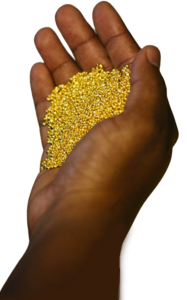
Buy Gold in Kenya from Certified Africa Gold Exporters
The current gold price in Kenya today is approximately KES 18,600 per gram for 24K (99.9% pure) gold, equivalent to about $143.70 USD at today’s exchange rate of 129.45 KES per USD.
The 22K gold price per gram in Kenya is around KES 17,050 (~$131.70 USD), 21K trades near KES 16,275 (~$125.72 USD), and 18K gold costs approximately KES 13,950 (~$107.77 USD).
To legally buy gold in Kenya, you must purchase from a dealer licensed by the Ministry of Mining, ensure gold is independently assayed, and — for exports — obtain a Kenya Revenue Authority (KRA) export permit, Certificate of Origin, and assay report.
Whether you are an international investor searching for where to buy gold in Nairobi, a wholesale trader sourcing Kenyan gold for resale in Dubai or Europe, or a first-time buyer trying to understand Kenya’s gold market prices and regulations, this guide covers everything — current KES and USD prices across all karats, where to find trusted gold dealers in Kenya, how to export gold from Kenya legally, and how to avoid the fraud that is widespread in the informal market.
Current Gold Prices in Kenya
Gold prices in Kenya are calculated by converting the international London Bullion Market Association (LBMA) spot price from USD to Kenyan Shillings (KES) at the prevailing Central Bank of Kenya exchange rate. With the global gold spot price at approximately $4,224 per troy ounce ($135.82 per gram for 24K) and the USD/KES exchange rate at 129.45 KES per USD, here are the current gold rates in Kenya across all common karats:
Gold Price Per Gram in Kenya Today — All Karats
| Purity / Karat | Gold Price per Gram (KES) | Equivalent (USD) |
|---|---|---|
| 24K — 999 (Pure Gold) | ~18,600 KES | ~$143.70 |
| 22K — 916 | ~17,050 KES | ~$131.75 |
| 21K — 875 | ~16,275 KES | ~$125.73 |
| 18K — 750 | ~13,950 KES | ~$107.77 |
| 14K — 585 | ~10,881 KES | ~$84.06 |
Gold Price Per Kilogram and Per Ounce in Kenya (24K)
| Weight | Price (KES) | Price (USD) |
|---|---|---|
| 1 gram | ~18,600 KES | ~$143.70 |
| 1 tola (~11.66g) | ~216,876 KES | ~$1,675 |
| 10 grams | ~186,000 KES | ~$1,437 |
| 1 troy ounce (~31.1g) | ~578,460 KES | ~$4,471 |
| 100 grams | ~1,860,000 KES | ~$14,370 |
| 1 kilogram | ~18,600,000 KES | ~$143,700 |
Multi-Karat Price Table per Gram in Kenya
| Karat | KES per Gram | USD per Gram |
|---|---|---|
| 24K (99.9%) | ~18,600 KES | ~$143.70 |
| 22K (91.6%) | ~17,050 KES | ~$131.75 |
| 21K (87.5%) | ~16,275 KES | ~$125.73 |
| 18K (75%) | ~13,950 KES | ~$107.77 |
| 14K (58.5%) | ~10,881 KES | ~$84.06 |
Why these prices are significantly higher than older guides: Kenya’s gold price per gram has risen approximately 33% year-on-year, driven by the global gold bull market that pushed the LBMA spot from around $2,000/oz in 2024 to over $4,200/oz by mid-2026.
Any article quoting 24K gold at KES 9,000–17,513 per gram is working from outdated data. The original figures on this page (~KES 16,325–17,513/gram) were accurate in early-to-mid 2025 but are no longer current.
30-Day Gold Price Trend in Kenya
| Date | 24K Price per Gram (KES) | Change |
|---|---|---|
| June 14, 2026 | ~18,600 KES | Reference rate |
| June 10, 2026 | ~17,227 KES | −0.65% |
| June 4, 2026 | ~18,618 KES | +0.82% (intraday) |
| May 31, 2026 | ~18,892 KES | +1.01% |
| May 19, 2026 | ~18,673 KES | −0.47% |
| June 2026 Weekly range | 18,394–18,903 KES | — |
| 1-year change | +32.82% year-on-year | — |
Gold in Kenya has risen over 32% in the past year and over 181% in the past five years in KES terms — one of the strongest performances of any asset class available to Kenyan investors. Tracking the live gold rate in Kenya before buying or selling is essential, as daily swings of 200–400 KES per gram are common during periods of USD volatility.
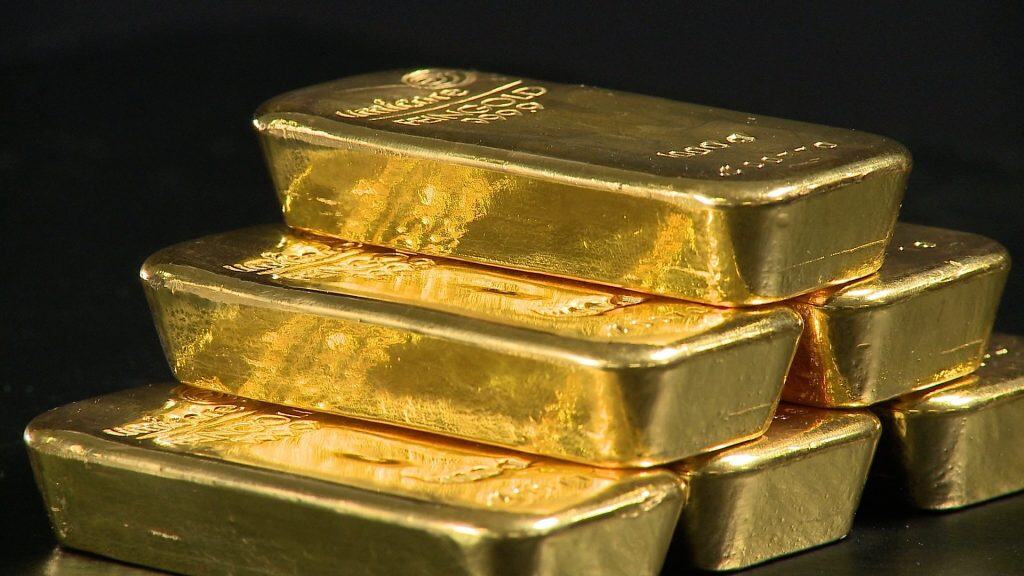
Why the Gold Price in Kenya Fluctuates Daily
LBMA International Spot Price
The primary driver of Kenya’s gold price is the LBMA daily gold spot rate, quoted in USD per troy ounce. Every movement in the global gold spot price — driven by US Federal Reserve policy, central bank buying, inflation data, and geopolitical risk — flows directly into the Kenyan gold price per gram via the USD/KES exchange rate.
USD to KES Exchange Rate
Because global gold trades exclusively in USD, the Kenyan Shilling’s exchange rate against the US Dollar is the second critical driver. The USD/KES rate has been remarkably stable in 2026, trading in a tight band of 128.57–130.29 KES per USD — a significant improvement from the currency crisis of 2023–2024, when the rate hit an all-time high of 163.00 KES per USD. This KES stability has made the Kenya gold market more predictable for both local and international buyers in 2026.
Kenya’s Domestic Gold Supply
Gold production in Kenya comes primarily from artisanal and small-scale mining (ASM) operations in Western Kenya, the Rift Valley, and Nyanza.
Key producing regions include Kakamega, Migori, Bungoma, Narok, and Bomet counties. While Kenya is not a top-tier African gold producer in terms of industrial output, its artisanal sector is active and feeds both local trade and cross-border flows.
When domestic supply tightens — due to seasonal mining slowdowns or Ministry of Mining enforcement actions — local dealer premiums above spot can widen modestly.
Government Policies and Mining Regulations
Kenya’s gold market is regulated by the Mining Act, 2016, administered by the Ministry of Mining and the Kenya Revenue Authority (KRA).
Export royalties, licensing fees, and KRA compliance costs all factor into the price buyers pay above the raw international spot rate. Policy changes — including the reforms that have increased formal gold trade in recent years — also shift the domestic supply dynamic and affect premiums.
Local Jewelry and Investment Demand
Demand from Kenya’s jewelry manufacturing sector, individual investors hedging against inflation, and institutional buyers creates a local demand layer on top of the global spot price.
Seasonal demand peaks — particularly around December, Easter, and major cultural celebrations — can lift Nairobi dealer premiums above their typical levels.
Where to Buy Gold in Kenya — Trusted Locations and Dealers
Licensed Gold Dealers in Nairobi
Nairobi is Kenya’s gold trading hub, with licensed dealers concentrated in the Central Business District (CBD), Westlands, and Karen areas. The best places to buy gold in Nairobi are through dealers authorized by the Ministry of Mining and registered with the KRA — not informal street markets or open-air vendors, where fraud risk is extreme.
When evaluating a gold dealer in Nairobi, check for: a valid Ministry of Mining trading license, physical business premises with verifiable contact details, willingness to arrange independent third-party assay testing, and documented transaction history with international buyers.
Reputable dealers in Nairobi’s CBD offer 24K and 22K gold bars, bullion coins, nuggets, and dust with proper assay certificates and export documentation support.
Gold Dealers in Mombasa and Kisumu
Licensed gold dealers operate in Mombasa and Kisumu, though both cities have smaller markets than Nairobi. Mombasa’s status as Kenya’s main port city gives it advantages for buyers planning to ship gold by sea freight, while Kisumu’s proximity to the Western Kenya gold-producing regions — Kakamega, Migori, and Bungoma — means some dealers there work directly with artisanal mining cooperatives.
Buy Gold Directly from Miners in Kenya
For wholesale buyers seeking the lowest possible premiums, buying gold directly from licensed miners in Kenya is an option — but one that requires significantly more due diligence than purchasing from an established Nairobi dealer. Kenya’s main gold-producing mines include:
- Kilimapesa Gold Mine (Migori region) — one of Kenya’s few formally operating industrial gold mines
- Mutea Gold Mine — operating in the Mt Kenya region
- Macalder Gold Mine (Migori) — historically one of Kenya’s most productive gold sites
Direct sourcing from these operations or from licensed mining cooperatives in Kakamega and Bungoma can reduce per-gram premiums by 0.5–1.5% versus Nairobi dealer prices.
However, buyers must verify miner credentials, arrange independent assay at a licensed laboratory, and compile full export documentation independently — tasks that experienced dealers handle on your behalf.
Buy Gold Online from Kenya
For international buyers who cannot travel to Kenya, licensed online gold dealers in Kenya offer secure purchase, independent assay certification, and insured international shipping to Dubai, Europe, the USA, and Asia. The critical due diligence step for online purchases is verifying the dealer’s Ministry of Mining license number and KRA registration before transferring any funds.
Buy Gold Bars Africa Ltd operates as a KRA-registered, Ministry of Mining-licensed dealer with offices in both Kampala (Uganda) and Nairobi, specializing in connecting international buyers with ethically sourced Kenyan gold.
The company provides 24K and 22K gold bars, nuggets, and bullion with full assay certification, signed Sales and Purchase Agreements, and insured shipping via Brinks or Malca-Amit. Contact details: available via WhatsApp at +256 707 585144 or email info@buygoldbarsafrica.com.
Gold Price in Kenya vs Uganda and Other East African Markets
A common question from regional buyers is how the gold price in Kenya compares to Uganda, Tanzania, and South Africa. Because all three markets price against the same LBMA USD spot rate, the differences in KES, UGX, or TZS terms are almost entirely driven by local currency exchange rates rather than fundamentally different gold valuations.
Kenya vs Uganda:
- Kenya 24K: ~$143.70 USD per gram (KES 18,600 at 129.45 KES/USD)
- Uganda 24K: ~$139.20 USD per gram (UGX 522,000 at ~3,750 UGX/USD)
The ~$4.50/gram difference reflects Uganda’s slightly weaker exchange rate against the USD in mid-June 2026 rather than any difference in gold quality. For international buyers purchasing in USD, both markets are closely aligned with global spot.
The choice between buying gold in Kenya vs Uganda comes down to logistics, licensing, and relationships rather than meaningful price arbitrage.
How to Buy Gold in Kenya Legally — Step-by-Step Process
Step 1: Choose a Licensed and Verified Gold Dealer
Only purchase from dealers holding a valid gold trading license from the Ministry of Mining and registered with the Kenya Revenue Authority. Verify the dealer’s license number directly with the Ministry — do not rely solely on a copy the dealer provides. Check for a physical office address and verifiable business registration with the Registrar of Companies.
For buyers researching how to safely buy gold in Kenya, working with an established licensed dealer who provides a signed Sales and Purchase Agreement (SPA), independent assay, and bank-facilitated payment is the foundation of fraud prevention.
Step 2: Get an Independent Gold Price Quote
Request a current gold price quote based on the live LBMA spot rate and the published Central Bank of Kenya USD/KES rate on the day of transaction. Choose your preferred purity — 24K gold for investment and export, 22K gold for jewelry and ornamental use — and confirm the quantity. Never accept a price significantly below LBMA spot: it signals underkarated or counterfeit gold.
Step 3: Sign a Sales and Purchase Agreement
Before paying, both parties must sign a legally binding Sales and Purchase Agreement (SPA) that specifies: the exact weight and purity of gold being purchased, the agreed price per gram in KES and USD, delivery timeline, payment terms, and documentation responsibilities. An SPA protects both parties and is a standard requirement for any legitimate Kenyan gold export transaction.
Step 4: Make Payment Through Secure Channels
Pay via bank wire transfer to a verified company account or through an escrow arrangement. Kenya’s Anti-Money Laundering (AML) laws under the Proceeds of Crime and Anti-Money Laundering Act require all gold transactions to be traceable. Avoid any dealer who requests cash payment, informal M-Pesa transfers for large amounts, or payment to a personal account that doesn’t match the licensed trading entity.
Step 5: Conduct Independent Assay Testing
After payment confirmation, arrange independent assay testing at a licensed Kenyan assay laboratory — not the seller’s own facility. The assay report confirms the gold’s exact purity (karat), weight, and value. This report is mandatory for export documentation and is the primary tool for verifying you have received the gold you paid for. Authorized assay facilities include Kenya-based KEBS-accredited labs and international firms like SGS or Bureau Veritas operating in Nairobi.
Step 6: Pay Export Taxes and Fees
Gold exports from Kenya are subject to:
- Mineral royalty: 5% of the declared export value, paid to the KRA
- Export duty: assessed by KRA based on gold type and destination
- VAT on exports: typically zero-rated (0%) for exported gold under Kenya’s VAT Act
- KRA administrative and processing fees
Pay all taxes through official KRA channels and obtain receipts for every payment — these form part of your mandatory export documentation.
Step 7: Prepare Export Documentation
Legal gold export from Kenya requires this complete document set:
- Gold Export Permit — issued by the Ministry of Mining
- Assay Certificate — from a KRA-recognized, licensed assay laboratory
- Certificate of Origin — confirming gold is legally sourced in Kenya
- Commercial Invoice — detailing weight, purity, and declared USD value
- Packing List — bar or package serial numbers, gross and net weight
- KRA Customs Declaration Form — filed for clearance at the port of exit
- Proof of Mineral Royalty Payment — KRA receipt confirming 5% royalty paid
- AML/KYC Documentation — supplier licenses, transaction records, beneficial ownership declarations
Step 8: Secure Transport and Customs Clearance
Use a licensed and insured gold transport company — Brinks, Malca-Amit, or G4S are the principal secure logistics operators for high-value precious metal shipments from Kenya. Gold is exported primarily through Jomo Kenyatta International Airport (JKIA) in Nairobi, with customs clearance handled by the KRA. The carrier provides the Air Waybill (AWB) that completes your documentation set.
Legal Framework for Buying and Selling Gold in Kenya
Kenya’s gold trade is governed by the Mining Act, 2016, which replaced the earlier Mining Act, Cap 306. Key legal requirements every buyer and seller must understand:
Licensing requirement: Any individual or company that buys or sells gold commercially in Kenya must hold a valid mineral trading license from the Director of Mines. Unlicensed gold trading is a criminal offense under the Act.
KRA registration: All gold traders must be registered with the Kenya Revenue Authority for tax compliance. Gold export transactions must be declared to KRA, with export royalties and applicable duties paid before clearance.
AML/KYC compliance: Kenya’s gold trading regulations require dealers to conduct Know Your Customer (KYC) checks on buyers and maintain transaction records under the Proceeds of Crime and Anti-Money Laundering Act. International buyers purchasing gold for export must provide identification, proof of funds, and destination country import compliance documentation.
Central Bank of Kenya oversight: Large-scale gold exports must comply with Central Bank of Kenya (CBK) foreign exchange regulations. Export payments must be received in foreign currency (USD or EUR) through licensed Kenyan commercial banks.
Anti-smuggling provisions: Kenya criminalizes the export of illegally mined or unregistered gold. The government works with customs authorities and international partners to monitor gold trade flows and prevent conflict gold from entering legitimate supply chains.

How to Identify Trusted Gold Dealers in Kenya and Avoid Scams
Kenya’s informal gold market has a well-documented history of fraud, including fake gold bars, tungsten-core bars plated with real gold, forged assay certificates, and unlicensed brokers who disappear after payment. These scams typically target international buyers who have not previously transacted in Kenya’s gold market.
Verification steps for any Kenyan gold dealer:
1. Confirm the Ministry of Mining license. Request the dealer’s mineral trading license number and verify it directly with the Ministry of Mining. An unlicensed dealer cannot provide the legal export documentation your gold will need at JKIA customs.
2. Demand independent assay — not one arranged by the seller. A legitimate dealer welcomes third-party purity verification. Any resistance to independent assay is a clear fraud signal. Use a KEBS-accredited or internationally recognized assay facility.
3. Verify business registration. Check the dealer’s certificate of incorporation from the Registrar of Companies. Legitimate dealers in Kenya have verifiable registered company status with matching bank account details.
4. Use escrow or bank-to-bank transfer. Never pay cash for significant gold purchases. Never transfer to a personal mobile money account. Legitimate dealers accept bank wire transfers to registered company accounts and support escrow arrangements for new buyer relationships.
5. Get a signed Sales and Purchase Agreement before paying. A dealer who will not provide a documented SPA is not operating legitimately.
6. Check for a physical office. Reputable gold dealers in Nairobi have verifiable physical addresses in established business areas — CBD, Westlands, Karen. Dealers operating exclusively through WhatsApp or social media with no verifiable physical presence are a major red flag.
7. Research independently. Search the company name alongside “Kenya gold scam” and “Kenya gold fraud” in addition to positive reviews. Ask for verifiable references from previous international buyers.
How to Verify Gold Purity When Buying in Kenya
Protecting your investment starts with independent purity verification. Use these methods before finalizing any gold purchase in Kenya:
Check the hallmark. Genuine gold bars and coins are stamped with karat (24K, 22K, 18K) or fineness markings (999, 916, 750). These should be clear, permanent, and machine-stamped — not hand-engraved.
Request an official assay certificate. A licensed Kenyan gold dealer provides an assay certificate from a recognized testing facility confirming purity, weight, and serial number. This is not optional — it is the foundational document for any export transaction.
Arrange XRF or fire assay testing. For purchases above 10 grams, arrange X-ray fluorescence (XRF) spectroscopy or fire assay testing at an independent facility. XRF gives a result within minutes and is the standard method used by licensed dealers and Kenya Revenue Authority customs officers.
Weigh the gold in your presence. A 1-gram gold bar has precise physical dimensions. Discrepancy between declared weight and actual weight on a calibrated scale is an immediate red flag.
Where to Sell Gold in Kenya
If you are looking to sell gold in Kenya, these are your main legitimate options:
Licensed gold dealers in Nairobi, Mombasa, and Kisumu — authorized by the Ministry of Mining to purchase and trade gold. They offer prices based on live LBMA spot rates and the day’s KES/USD exchange rate.
Gold refining companies — Kenya Gold Refinery in Nairobi accepts both refined bars and artisanal gold for processing, offering payment based on refined purity and weight.
Licensed gold exporters — companies holding KRA export licenses can purchase your gold and handle the full export process if you are selling to an international buyer.
Gold markets in Nairobi — the Eastleigh area and Gikambura host informal gold buying activity, but prices in these markets are less transparent and due diligence requirements on the seller are less consistent. For significant quantities, use licensed dealers rather than informal market buyers.
Important: Always request an independent assay before agreeing a price with any buyer. The assay result — not the buyer’s verbal estimate — should determine the price your gold commands.
Can Foreigners Buy Gold in Kenya?
Yes. Kenya’s gold market is open to both Kenyan citizens and foreign nationals. International investors can legally buy gold in Kenya through licensed dealers without needing a personal Kenya mineral trading license — the dealer’s license covers the transaction. For export, foreign buyers must comply with Kenya’s export permit process and their own country’s import regulations.
Foreign companies wishing to establish gold trading or exporting operations in Kenya must register with the Registrar of Companies, obtain a mineral trading license from the Ministry of Mining, and comply with the Kenya Investment Authority’s foreign investment frameworks.
For international buyers who prefer a simpler route, working through an established licensed exporter like Buy Gold Bars Africa Ltd — which manages all Kenyan licensing, assay, export documentation, and international shipping — eliminates the need to navigate Kenya’s regulatory environment independently.
Gold Investment Options in Kenya Beyond Physical Bars
For investors who want exposure to gold prices in Kenya without the storage and logistics demands of physical gold bars, several alternatives exist:
Gold ETFs (Exchange-Traded Funds): While Kenya does not currently have a domestically listed gold ETF on the Nairobi Securities Exchange (NSE), Kenyan investors can access international gold ETFs through licensed stockbrokers with cross-border trading capability. This allos gold market participation without physical ownership.
Gold Mining Shares: Some gold mining companies with Kenyan operations are listed on international exchanges. Investing in companies like Goldplat (which has Kenyan operations focused on gold recovery) provides indirect gold market exposure.
Trade Partnerships and Off-Take Agreements: Experienced investors can enter off-take agreements with licensed Kenyan mining cooperatives, purchasing future gold production at agreed prices. This requires significant capital, operational expertise, and strong legal documentation.
For most individual investors and international buyers, physical certified 24K gold bars purchased from licensed Kenyan dealers remain the most straightforward, transparent, and internationally liquid form of gold investment from Kenya.
FAQs: Buying Gold in Kenya in 2026
What is the current gold price per gram in Kenya? As of mid-June 2026, the 24K gold price per gram in Kenya is approximately KES 18,600 (~$143.70 USD). The 22K rate is around KES 17,050 (~$131.75 USD) and 18K is approximately KES 13,950 (~$107.77 USD). Prices update daily with the LBMA spot rate and CBK USD/KES rate.
How much is 1kg of gold in Kenya in 2026? A 1kg bar of 24K gold in Kenya costs approximately KES 18,600,000 (~$143,700 USD). This is significantly higher than the KES 17,513,000 figure quoted in older guides, which reflected mid-2025 market conditions.
Is it legal to buy and sell gold in Kenya? Yes. Gold trading is legal under Kenya’s Mining Act, 2016, but requires a mineral trading license from the Ministry of Mining and KRA tax registration for commercial dealers. Unlicensed buying and selling of gold is a criminal offense.
Can I export gold from Kenya legally? Yes. Gold can be legally exported from Kenya with a KRA export permit, assay certificate, Certificate of Origin, customs declaration, and proof of 5% mineral royalty payment. Exports clear through JKIA in Nairobi.
What is the gold export tax in Kenya? Kenya imposes a 5% mineral royalty on the declared export value of gold. Exported gold is generally zero-rated for VAT purposes. KRA administrative and processing fees also apply.
Where is gold mined in Kenya? The main gold-producing regions are Western Kenya (Kakamega, Migori, Bungoma, Trans Nzoia), Rift Valley (Bomet, Narok), and Nyanza (Nyatike, Rongo). Industrial-scale mines include Kilimapesa Gold Mine in Migori and Macalder Gold Mine.
How do I avoid gold scams in Kenya? Buy only from Ministry of Mining-licensed dealers, always arrange independent assay at a KEBS-accredited laboratory, pay via bank wire transfer to registered company accounts, and insist on a signed Sales and Purchase Agreement before any payment.
Is gold cheaper in Kenya or Uganda? At current exchange rates, the gold price in Kenya is approximately $4.50/gram higher than in Uganda in USD terms — a difference driven entirely by the stronger KES/USD rate compared to UGX/USD. For buyers transacting in USD, the difference is negligible and both markets reflect the same LBMA spot price.
Conclusion: Kenya’s Gold Market in 2026 Offers Real Opportunity — With the Right Partner
Kenya’s gold market in 2026 combines genuine artisanal production in some of East Africa’s most prolific gold regions, a regulatory framework that has become steadily more transparent under the Mining Act, 2016, and a stable KES/USD exchange rate that makes pricing predictable for international buyers.
The current 24K gold price in Kenya of approximately KES 18,600/gram (~$143.70 USD) reflects a global gold market at historically elevated levels — making early and compliant positioning in Kenyan gold a compelling proposition for investors who move through legitimate channels.
The risks are real but manageable: fraud in the informal market is significant, documentation requirements for export are demanding, and the consequences of working with unlicensed dealers — seizure, loss of funds, criminal liability — are severe. The solution is straightforward: work exclusively with Ministry of Mining-licensed, KRA-registered dealers who provide independent assay, full export documentation, and insured international shipping.
Buy Gold Bars Africa Ltd is a licensed dealer operating in both Nairobi, Kenya and Kampala, Uganda, specializing in connecting international buyers with certified, ethically sourced Kenyan gold — 24K and 22K bars, nuggets, bullion, and raw gold — with full documentation and insured delivery to Dubai, Europe, the USA, and Asia. Contact us via WhatsApp at +256 707 585144 or at info@buygoldbarsafrica.com for live pricing and a personalized export quote.