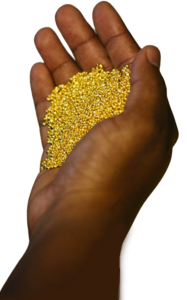
South Africa Gold Market: Investor & Buyer’s Guide 2026
SOUTH AFRICA GOLD MARKET: Few countries on earth have a relationship with gold as deep, as complex, and as defining as South Africa. For more than a century, South African gold was not merely a commodity — it was the engine of a nation’s economy, the subject of wars, the architect of cities, and the foundation of entire social systems.
Even today, as production levels have shifted dramatically from their 1970 peak of nearly 1,000 tonnes per year, South Africa remains one of the world’s most significant players in the global gold market, home to the world’s deepest gold mines, the Rand Refinery — Africa’s only LBMA-accredited refinery — and the globally iconic Krugerrand gold coin.
For investors, traders, and buyers asking where to buy gold in South Africa, how to invest in South African gold, or what the current gold price in ZAR is today, this guide — produced by Buy Gold Bars Africa Ltd, Africa’s premier online gold dealer — covers everything you need to make informed, confident decisions in this market.
Whether you are searching for certified gold bars for sale in South Africa, looking to buy Krugerrand coins online, or evaluating South Africa’s gold sector as an investment destination, you will find your answers here.
A History of South African Gold: From Witwatersrand to the World
The Discovery That Changed Everything
The modern story of South African gold begins in 1886 with the discovery of gold-bearing reefs on the Witwatersrand (Afrikaans for ‘ridge of white waters’), near what would become Johannesburg.
This single geological event triggered the greatest gold rush in history, drawing fortune-seekers from Europe, Australia, and the Americas and transforming a sparsely populated highveld into the economic capital of sub-Saharan Africa within a decade.
The Witwatersrand Basin, stretching across the modern Gauteng province and into Free State and North West, contains what geologists believe to be the remnants of a 3-billion-year-old meteorite impact that concentrated gold-bearing conglomerates across a vast underground arc.
The basin’s total reserves — estimated at 68 million troy ounces — are sufficient to sustain mining for another 27 years at current production rates, though increasingly at greater depth and at higher cost.
The Peak and the Long Decline
South Africa’s gold production reached its all-time peak of approximately 995 tonnes in 1970 — at that time representing nearly two-thirds of the entire world’s gold output.
The country was so dominant that global gold pricing, monetary policy, and central bank reserve strategies were shaped in significant part by South African supply decisions.
The gold standard era and the Bretton Woods system both bore the imprint of South Africa’s extraordinary gold abundance.
Since 1970, production has undergone a long structural decline driven by falling ore grades, increasing extraction depth, rising operational costs, and political and labour disruptions.
By 2024, output had fallen to approximately 100 metric tonnes (3.2 million ounces), ranking South Africa 11th globally. In 2025, the Minerals Council of South Africa reported production of approximately 88.5 tonnes — a roughly 91% decline from the historic peak — placing the country behind Ghana in total African output for the first time.
However, as analysts at Discovery Alert have correctly noted: a sector can be in structural decline from its historical peak while simultaneously achieving operational stability at a new, lower equilibrium.
South Africa’s gold output decline represents geological reality, not institutional failure. The mines that remain are among the most technically sophisticated, deepest, and best-regulated in the world.
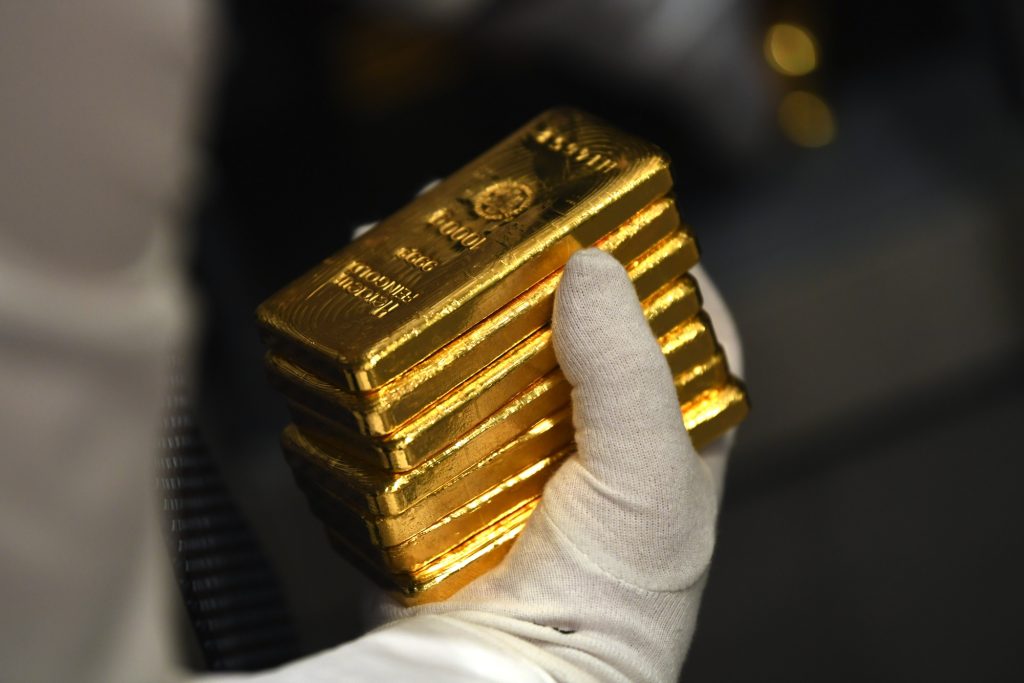
South Africa Gold Prices Today: Live ZAR Rates Per Gram, Ounce & Kilogram
Gold prices in South Africa are quoted in South African Rand (ZAR) and track the international LBMA spot price adjusted for the daily USD/ZAR exchange rate.
As of May 2026, the ZAR has been trading at approximately R18.00–R18.50 per US dollar, meaning that the elevated global gold price translates directly into historically high rand-denominated returns for South African gold holders and sellers.
Table 1: South Africa Gold Prices by Karat (May 20, 2026 — Reference Rates)
| Karat / Purity | Fineness | Price per Gram (ZAR) | Price per Ounce (ZAR) | Price per Kg (ZAR) |
| 24 Karat (999.9 fine gold) | 99.99% | ZAR 2,697 | ZAR 83,880 | ZAR 2,697,000 |
| 22 Karat (Krugerrand alloy) | 91.67% | ZAR 2,472 | ZAR 76,880 | ZAR 2,472,000 |
| 21 Karat | 87.50% | ZAR 2,360 | ZAR 73,395 | ZAR 2,360,000 |
| 18 Karat | 75.00% | ZAR 2,023 | ZAR 62,910 | ZAR 2,023,000 |
| 14 Karat (585 Hallmark) | 58.50% | ZAR 1,578 | ZAR 49,070 | ZAR 1,578,000 |
| 9 Karat (375 Hallmark) | 37.50% | ZAR 1,011 | ZAR 31,455 | ZAR 1,011,000 |
Table 2: Gold Bar Prices in South Africa — Investment-Grade Bullion (24K, 999.9 fine)
| Gold Bar Weight | Weight (grams) | Price (ZAR) | Price (USD approx.) |
| 1 gram gold bar | 1 g | ZAR 2,697 | ~USD 146 |
| 5 gram gold bar | 5 g | ZAR 13,485 | ~USD 730 |
| 10 gram gold bar | 10 g | ZAR 26,970 | ~USD 1,460 |
| 1 troy ounce gold bar | 31.1 g | ZAR 83,880 | ~USD 4,535 |
| 50 gram gold bar | 50 g | ZAR 134,850 | ~USD 7,290 |
| 100 gram gold bar | 100 g | ZAR 269,700 | ~USD 14,580 |
| 1 kilogram gold bar | 1,000 g | ZAR 2,697,000 | ~USD 145,800 |
Table 3: South Africa Gold Price History — Annual Average (USD per troy ounce)
| Year | Avg. Gold Price (USD/oz) | SA Production (tonnes) | SA Export Revenue (est.) |
| 2021 | USD 1,798 | ~118 t | USD ~11.5B |
| 2022 | USD 1,800 | ~110 t | USD ~10.2B |
| 2023 | USD 1,941 | ~110 t | USD ~11.0B |
| 2024 | USD 2,386 | ~100 t | USD ~12.3B |
| 2025 | USD ~3,000+ | ~88.5 t | USD ~13.7B (est.) |
| 2026 YTD | USD 3,260+ | Target: ~90 t | Projected record in ZAR terms |
Note: Prices are indicative as of May 20, 2026. Gold prices fluctuate daily. Always request a live quotation from Buy Gold Bars Africa Ltd before transacting.
Despite declining production volumes, the record-high gold price in ZAR terms means South African producers and sellers are generating the highest rand revenues in the history of the industry.
The Witwatersrand Basin: Heart of South Africa’s Gold Country
To understand the South Africa gold market, you must understand the Witwatersrand Basin — the geological formation that makes the country unique.
Stretching in an arc from Johannesburg westward through Carletonville and Klerksdorp, and south through Welkom in the Free State, the Witwatersrand contains the world’s largest known gold deposit.
What makes it extraordinary is not just the volume of gold but the depth at which it is found — the deepest mines plunge more than 4 kilometres below the surface, making South African deep-level gold mining one of the most technically demanding industrial operations on earth.
Key Mining Regions
- Witwatersrand / Gauteng — The original discovery zone. Johannesburg and its surrounding municipalities sit atop the richest section of the basin. Mines here include Mponeng (the deepest gold mine in the world at 4 km+) and South Deep (one of the largest undeveloped gold deposits).
- Carletonville (West Wits Line) — Home to Gold Fields’ South Deep mine, holding one of the largest gold reserves still underground in the world, with decades of extraction potential.
- Klerksdorp / North West Province — Sibanye-Stillwater operations in this region contribute meaningfully to national output amid challenging grade and depth conditions.
- Welkom / Free State (Orange Free State Goldfields) — Once a major producer, the Free State goldfields have seen output decline sharply but still contribute to overall national tonnage through Harmony Gold’s operations.
- Barberton (Mpumalanga) — One of the oldest gold mining districts in South Africa. Pan African Resources operates the Barberton Mines, producing high-grade ore.
Major Gold Mining Companies in South Africa
The South African gold mining sector is anchored by a small group of globally listed mining majors and mid-tier producers. For any investor seeking gold mining stocks in South Africa or buyer wanting to understand the supply chain behind their gold bars, knowing these companies is essential:
AngloGold Ashanti (AU / ANG)
Once purely a South African company, AngloGold Ashanti has transformed into a globally diversified gold producer with operations across Africa, Australia, and the Americas.
Its South African assets — including the iconic Mponeng mine — remain core to its portfolio. In 2025, AngloGold Ashanti produced approximately 1.5 million ounces globally.
The company is listed on the New York Stock Exchange (NYSE), the Johannesburg Stock Exchange (JSE), and the Ghana Stock Exchange.
Gold Fields Ltd (GFI)
Gold Fields operates the South Deep mine in the West Wits region — one of the largest gold deposits remaining on the Witwatersrand.
South Deep has faced years of production challenges but has progressively mechanised operations, reducing its dependence on labour-intensive deep-level drilling. Gold Fields is listed on the JSE and NYSE.
Harmony Gold Mining (HAR)
Harmony Gold is the largest South African-focused gold mining company by production volume within the country. It operates multiple underground mines in the Free State and North West provinces and has expanded internationally into Papua New Guinea.
Harmony is often the choice of investors looking for pure-play South African gold mining exposure through JSE-listed equities.
Sibanye-Stillwater (SSW / SBSW)
Originally a spin-off of Gold Fields, Sibanye-Stillwater has grown into a diversified precious metals mining company with gold, platinum group metals (PGMs), and battery metals assets.
Its South African gold operations include several mines in the Witwatersrand and Free State. Sibanye is listed on the JSE and NYSE.
Pan African Resources (PAF)
A mid-tier producer operating the Barberton Mines in Mpumalanga and the Evander Gold Mine in Mpumalanga. Pan African Resources is notable for its retreatment operations — profitably re-processing historical tailings dumps and surface residue deposits at much lower cost than underground mining.
DRDGOLD (DRD)
DRDGOLD is a specialist in surface gold retreatment — extracting residual gold from the vast tailings dumps left by more than a century of Witwatersrand mining.
As these surface operations are shallower, safer, and more energy-efficient than deep underground mining, DRDGOLD represents a growing and lower-cost segment of South Africa’s gold production landscape.
Table 4: Key South African Gold Mining Companies (2025 Overview)
| Company | JSE / NYSE Ticker | 2025 SA Output (est.) | Key Operations | Notable Feature |
| AngloGold Ashanti | ANG / AU | ~800K oz SA share | Mponeng, TauTona | World’s deepest mine (4km+) |
| Gold Fields | GFI | ~300K oz | South Deep | Largest mech. mine in SA |
| Harmony Gold | HAR | ~1.4M oz | Free State, NW Province | Largest SA-based producer |
| Sibanye-Stillwater | SSW / SBSW | ~500K oz | Witwatersrand, Free State | Also PGMs, battery metals |
| Pan African Resources | PAF | ~200K oz | Barberton, Evander | High-grade underground |
| DRDGOLD | DRD | ~150K oz | Witwatersrand tailings | Surface retreatment specialist |
The Rand Refinery: Africa’s Gold Standard
No discussion of the South Africa gold market is complete without examining the Rand Refinery — arguably the most important gold refining institution on the African continent.
Founded in 1920 in Germiston, east of Johannesburg, the Rand Refinery has processed more than 50,000 tonnes of gold since 1921 — nearly one-third of all the gold ever mined in human history. It remains the largest single-site gold refining and smelting facility in the world.
Owned by South Africa’s major mining companies (AngloGold Ashanti, Gold Fields, Harmony Gold, DRDGOLD, and Sibanye-Stillwater), the Rand Refinery is the only gold refinery on the African continent accredited by the London Bullion Market Association (LBMA).
This LBMA accreditation means that Rand Refinery gold bars and Krugerrand coins are accepted as Good Delivery standard by central banks, institutional investors, and professional trading houses worldwide — the highest possible endorsement in the global precious metals market.
With a gold refining capacity of 600 tonnes per year, the Rand Refinery has increasingly diversified its feed material beyond South African mines, now sourcing gold from across Africa, the United States, and Asia.
For buyers seeking certified, LBMA-standard gold bars from Africa, Rand Refinery is the benchmark institution that underpins the integrity of South African gold products.
| THE RAND REFINERY — FAST FACTS
📍 Location: Germiston, Gauteng Province, South Africa 📅 Founded: 1920 ⚖️ Total gold refined since 1921: 50,000+ tonnes (~30% of all gold ever mined) 🏅 LBMA accreditation: YES — only African refinery on the Good Delivery list 💰 Refining capacity: 600 tonnes per year 🪙 Famous product: The Krugerrand gold bullion coin (60M+ minted since 1967) 🌍 Owners: AngloGold Ashanti, Gold Fields, Harmony Gold, DRDGOLD, Sibanye-Stillwater |
The Krugerrand: South Africa’s Gift to Global Gold Investment
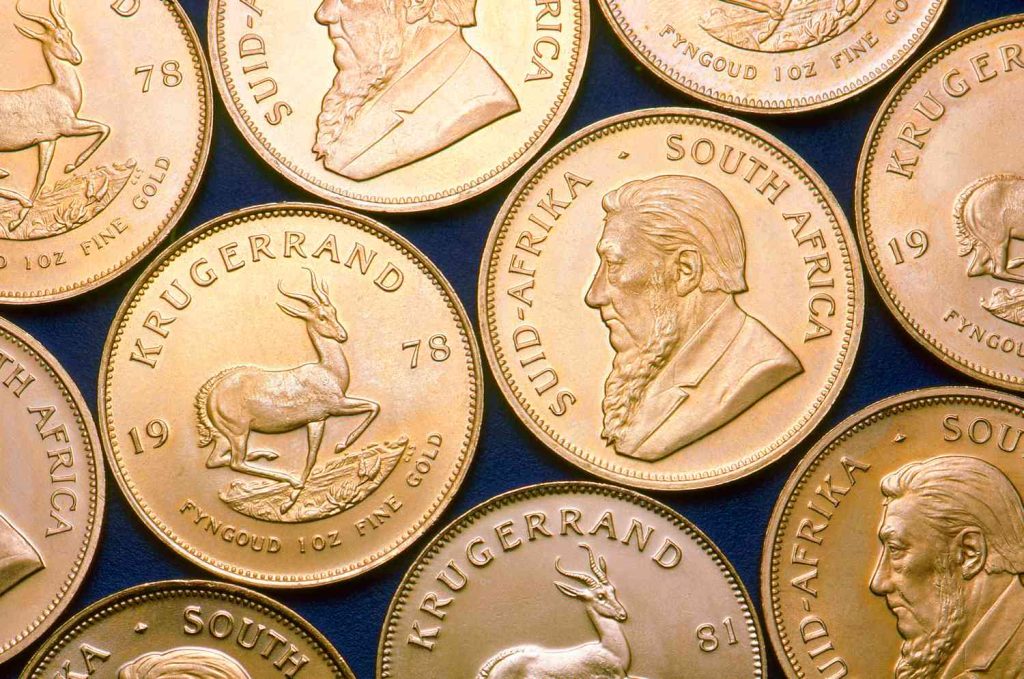
Of all South Africa’s contributions to global gold culture, none is more iconic than the Krugerrand. First minted in 1967 in a collaboration between the Rand Refinery and the South African Mint, the Krugerrand was the world’s first modern bullion coin — designed from the outset not as a commemorative collectible but as a practical, accessible vehicle for private gold ownership.
Before the Krugerrand, investors who wanted to hold physical gold faced a frustrating choice: jewellery (expensive, low purity, illiquid), numismatic coins (premium-priced rarities), or 400-ounce Good Delivery bars (affordable only for central banks and institutional traders).
The Krugerrand changed everything by offering a 1 troy ounce (31.1g) coin in 22-karat (91.67% fine) gold with no stated face value — its worth determined entirely by its gold content at the prevailing spot price. By 1980, the Krugerrand accounted for 90% of the entire global gold coin market.
Krugerrand Design and Specifications
The Krugerrand’s design has remained essentially unchanged since 1967, contributing to its instant global recognisability.
The obverse bears the portrait of Paul Kruger, the last president of the old South African Republic (the Transvaal), whose surname fused with ‘rand’ (the South African currency and also the name of the Witwatersrand) to give the coin its name. The reverse displays South Africa’s national symbol, the Springbok antelope, in full stride across the veld.
Table 5: Krugerrand Gold Coin Sizes and Approximate Prices (May 2026)
| Coin Size | Gold Content | Fineness | Approx. Price (ZAR) | Approx. Price (USD) |
| 1 oz Krugerrand | 31.103 g gold | 91.67% (22K) | ZAR 76,880 | ~USD 4,155 |
| 1/2 oz Krugerrand | 15.552 g gold | 91.67% (22K) | ZAR 38,440 | ~USD 2,078 |
| 1/4 oz Krugerrand | 7.776 g gold | 91.67% (22K) | ZAR 19,220 | ~USD 1,039 |
| 1/10 oz Krugerrand | 3.110 g gold | 91.67% (22K) | ZAR 7,688 | ~USD 416 |
| 2 oz Silver Krugerrand | 62.2 g silver | 99.9% (24K) | ZAR 980 | ~USD 53 |
The Krugerrand enjoys legal tender status in South Africa, though it carries no printed face value. South African residents may export up to R30,000 worth of Krugerrands to non-residents, and visitors may export up to 15 coins after declaring them to the South African Revenue Service (SARS).
For international buyers, Krugerrands purchased through Buy Gold Bars Africa Ltd come with full export documentation and insured international shipping.
Buying Gold in South Africa: A Complete Guide for Investors
Types of Gold Available in South Africa
1. Investment-Grade Gold Bars (LBMA Bullion)
The most straightforward and purest form of gold investment in South Africa. These are 99.9% or 99.99% pure gold bars produced at the Rand Refinery and certified to LBMA Good Delivery standards.
Available in 1g, 5g, 10g, 1oz, 50g, 100g, 250g, 500g, and 1kg sizes. For anyone searching for certified gold bars for sale in South Africa or wanting to buy 1kg gold bars in Johannesburg, these are the benchmark product.
2. Krugerrand Gold Coins
As detailed above, Krugerrands are the iconic South African bullion coin, available in 1oz, 1/2oz, 1/4oz, and 1/10oz sizes. Their global recognition and LBMA-backing make them one of the most liquid forms of physical gold in the world. Numismatic proof Krugerrands carry a premium over spot due to limited mintage and collectible status.
3. Gold Jewellery
South Africa has a thriving gold jewellery manufacturing sector, primarily in Johannesburg’s jewellery district around Newtown and Hatfield. Jewellery is typically priced at the daily spot rate plus a craftsmanship and retail premium. For pure investment purposes, bullion bars and coins offer more transparent pricing than jewellery.
4. Gold ETFs and JSE-Listed Mining Equities
Investors who prefer not to hold physical gold can access South African gold through the JSE (Johannesburg Stock Exchange). The NewGold ETF (JSE: GLD) tracks the gold price and holds physical gold in custody. Alternatively, shares in AngloGold Ashanti, Harmony Gold, Gold Fields, and Sibanye-Stillwater provide leveraged exposure to the gold price with the added benefit of dividends.
5. Gold Tailings and Dore
For industrial buyers and refiners, South Africa also offers access to gold in dore (semi-refined) form and gold reclaimed from historical tailings operations. These require buyers to arrange their own refining and are primarily of interest to commercial rather than private investors.
The Gold Buying Process in South Africa
- Step 1 — Define your investment goal: physical bullion for storage, Krugerrands for portability, JSE equities for liquidity, or larger dore/bar purchases for institutional portfolios.
- Step 2 — Verify your dealer: Check that your supplier is registered with the South African Diamond and Precious Metals Regulator (SADPMR) and complies with the Financial Intelligence Centre Act (FICA).
- Step 3 — Compare prices against LBMA spot: A legitimate dealer will price gold at the current London spot price plus a transparent dealer premium. Beware of any price significantly below spot.
- Step 4 — Request assay certification: All gold bars must be accompanied by a valid assay certificate from a recognised laboratory (SGS, Bureau Veritas, Rand Refinery internal assay).
- Step 5 — Complete KYC/AML documentation: South African law requires all gold transactions above threshold values to comply with FICA (Financial Intelligence Centre Act) Know Your Customer rules. Provide valid identification and source of funds documentation.
- Step 6 — Arrange storage or export: Physical gold can be stored in South African vaults (Rand Refinery, Malca-Amit, G4S) or exported with SARS/SADPMR documentation. Buy Gold Bars Africa Ltd manages the full export and international delivery chain.
South Africa Gold Regulations and Legal Framework
Navigating South Africa’s gold trading laws is essential for any buyer or investor. The regulatory framework is well-established but requires careful compliance:
- Minerals and Petroleum Resources Development Act (MPRDA), 2002 — Governs all mining rights, prospecting rights, and mineral resource ownership in South Africa. All gold mined in South Africa falls under state custodianship until sold through licensed channels.
- South African Diamond and Precious Metals Regulator (SADPMR) — The key body for licensing gold dealers, processors, and exporters. Any legitimate gold dealer in South Africa must hold a SADPMR licence.
- Financial Intelligence Centre Act (FICA), 2001 and amendments — South Africa’s primary anti-money laundering legislation. Gold dealers are ‘accountable institutions’ under FICA and must perform full KYC/AML due diligence on all clients.
- South African Revenue Service (SARS) — Administers VAT on domestic gold transactions (gold bullion sold for investment purposes is zero-rated for VAT), and customs duties on gold exports.
- Exchange Control Regulations — The South African Reserve Bank (SARB) administers exchange controls relevant to cross-border gold transactions. Krugerrand exports above R30,000 by residents require SARB approval.
- Responsible Gold Mining Principles (RGMP) — South Africa’s mining companies operate under World Gold Council Responsible Gold Mining Principles, addressing environmental, social, and governance standards.
| SOUTH AFRICA GOLD REGULATORY BODIES AT A GLANCE
• SADPMR — Licences dealers, processors, and exporters of gold and precious metals • SARS — Customs, VAT (zero-rated for investment gold), and export documentation • South African Reserve Bank (SARB) — Exchange control, Krugerrand export limits • Financial Intelligence Centre (FIC) — AML/KYC compliance oversight • Minerals Council South Africa — Industry body representing mining companies • Minerals and Petroleum Resources Development Act (MPRDA) — Foundation mining law |
Challenges Facing South Africa’s Gold Mining Industry
Understanding the headwinds facing South Africa’s gold sector is critical for anyone making a long-term investment decision. These challenges explain the production decline while simultaneously highlighting why the gold that is produced commands premium pricing and remains highly sought after internationally.
1. Deep-Level Mining Costs
With mines extending beyond 4 kilometres underground, South Africa operates the most technically demanding gold mines on earth.
All-in sustaining costs (AISC) at South African underground mines reached approximately USD 1,500 per ounce in 2025 — well above the global average — though at current gold prices exceeding USD 3,200 per ounce, margins remain robust.
The extraordinary depth brings extreme heat (requiring massive refrigeration systems), seismic risk, and complex logistics that are simply unavoidable.
2. Eskom and the Energy Crisis
South Africa’s chronic electricity shortages — caused by the near-collapse of state power utility Eskom — have inflicted significant costs on the gold mining sector.
Energy now accounts for over 30% of mining operational expenses, and load shedding (scheduled blackouts) forces mines to run costly diesel generators or curtail production.
Mining companies including Harmony, Gold Fields, and Sibanye-Stillwater are investing heavily in solar and renewable energy capacity to reduce dependence on the national grid.
3. Labour Relations
South Africa’s gold mining workforce is represented by powerful unions, primarily the Association of Mineworkers and Construction Union (AMCU) and the National Union of Mineworkers (NUM).
Strike action has historically been a significant production risk — the 2012–2014 period saw devastating stoppages across platinum and gold mines. Labour relations have stabilised since then but remain a structural vulnerability.
4. Declining Ore Grades
As mines go deeper and the higher-grade portions of the Witwatersrand Basin are exhausted, average gold grades are falling. What was once 10–15 grams per tonne (g/t) in the highest-grade zones now averages 4–7 g/t across most active operations.
Lower grades mean more rock must be mined and processed to produce each ounce of gold, raising costs and reducing efficiency.
5. Regulatory and Transformation Pressures
The Mining Charter, administered under the MPRDA, requires gold mining companies to achieve specific Black Economic Empowerment (BEE) ownership, procurement, and employment targets.
While these objectives have valid social foundations, compliance adds regulatory complexity and cost, particularly for smaller operators and foreign investors unfamiliar with South Africa’s transformation policy environment.
South Africa vs. Ghana: Comparing Africa’s Two Gold Giants
A question that frequently arises among serious gold investors is: should I buy gold from South Africa or Ghana? Both countries are world-class gold producers with strong regulatory frameworks and LBMA-connected refining infrastructure. The choice depends significantly on your specific investment purpose.
Table 6: South Africa vs. Ghana Gold Market Comparison (2025–2026)
| Factor | South Africa | Ghana |
| 2025 Production | ~88.5 tonnes (declining) | ~170 tonnes (record high) |
| Global Ranking | 11th globally | 6th globally (1st in Africa) |
| Africa Ranking | 2nd in Africa | 1st in Africa |
| LBMA Refinery | Rand Refinery (LBMA accredited) | Gold Coast Refinery (growing) |
| Iconic Gold Product | Krugerrand coin (since 1967) | Investment bars & dore |
| Mining Depth | Up to 4km+ (deep underground) | Surface/shallow underground |
| Production Cost (AISC) | ~USD 1,500/oz (high) | ~USD 900–1,100/oz (moderate) |
| Regulatory Body | SADPMR, SARS, SARB | Minerals Commission, GoldBod |
| Currency | South African Rand (ZAR) | Ghanaian Cedi (GHS) |
| Best For | Krugerrands, LBMA bars, JSE equities | Bulk dore, artisanal gold, bars |
At Buy Gold Bars Africa Ltd, we source and supply gold from both South Africa and Ghana — giving our clients the flexibility to choose based on product type, pricing, delivery requirements, and regulatory preference. Whether you are looking for the globally recognised Krugerrand from South Africa or certified investment bars from Ghana’s Rand Refinery-connected supply chain, we deliver.
Gold Storage and Vaulting Options in South Africa
Rand Refinery Vault
The Rand Refinery in Germiston operates one of Africa’s most secure gold vault and logistics facilities, with an air-side vault at O.R. Tambo International Airport enabling rapid, secure cross-border movement of gold.
Institutional buyers and central banks around the world trust Rand Refinery custody services for their South African gold holdings.
Private Vaulting in Johannesburg
Several international vault operators — including Malca-Amit, Brink’s, and G4S — maintain secure precious metals storage in Johannesburg and Cape Town.
These facilities offer allocated and unallocated storage options for investors who prefer to hold gold in South Africa rather than export it immediately.
Home Vault and Personal Custody
A number of South African investors, particularly those with experience in the platinum and gold markets, prefer to hold physical gold coins (particularly Krugerrands) in personal safes or home vaults.
While this offers maximum direct control, it introduces security and insurance considerations that professional vaulting avoids.
JSE-Deposited Physical Gold (NewGold ETF)
For investors who want gold price exposure without physical custody, the NewGold Bullion Debenture (JSE: GLD) is the dominant gold ETF in South Africa. Each unit represents 1/100th of a troy ounce of gold held in physical custody on behalf of unitholders.
NewGold is a cost-effective, highly liquid option for South African retail investors building a gold allocation into their portfolios.
South Africa Gold Market Outlook: 2026 and Beyond
The South Africa gold market outlook for 2026 is defined by a fascinating paradox: declining physical output but rising rand-denominated revenue.
With gold trading above USD 3,260 per ounce and the ZAR continuing to weaken against the dollar, South African gold producers and sellers are generating the highest revenues in the history of the industry — even as total tonnage mined falls.
Key Trends Shaping the Market to 2030
- Gold prices forecast at USD 4,000+ per ounce by 2026 (JPMorgan forecast), meaning ZAR gold prices could approach R75,000–R80,000 per ounce even without further rand depreciation.
- Mechanisation and automation of deep-level mines (South Deep, Mponeng) is reducing costs and improving safety, potentially reversing some production declines.
- Surface retreatment expansion: DRDGOLD and Pan African Resources are extracting more gold from South Africa’s 6 billion tonnes of historical mine tailings, adding low-cost supply without new deep-level extraction.
- Energy transition: Mining companies investing in on-site solar capacity are reducing Eskom dependence and cutting the energy cost per ounce of gold significantly.
- Rand Refinery expansion: With increasing African gold flows through the Germiston facility, South Africa is cementing its position as the continent’s gold refining capital, not just its production hub.
Table 7: South Africa Gold Market — Indicators and Outlook
| Indicator | 2024 | 2025 | 2026 Projection |
| Total Gold Output | ~100 tonnes | ~88.5 tonnes | ~90 tonnes (stabilising) |
| Gold Price (USD/oz) | USD 2,386 | USD ~3,000+ | USD 3,260+ (YTD) |
| Gold Price (ZAR/oz) | ZAR ~43,000 | ZAR ~55,000+ | ZAR 83,000+ (record) |
| Rand Refinery Throughput | ~250 tonnes | ~300 tonnes (est.) | ~350 tonnes (target) |
| Krugerrands Minted (total cumulative) | ~60M coins | ~60M+ coins | ~61M+ coins |
| Mining Sector GDP Share | ~4% | ~5% | ~5–6% |
| Estimated Gold Export Revenue | ~USD 12.3B | ~USD 13.7B | ~USD 14B+ (ZAR record) |
Conclusion: South Africa Gold — A Legacy Market with a Lucrative Present
The South Africa gold market carries the weight of a century of history and the opportunity of a bull-market present. Whether you are drawn by the legendary Rand Refinery’s LBMA-accredited gold bars, the global cachet of the Krugerrand coin, the investment potential of deep-underground gold mines accessible through JSE-listed equities, or simply the desire to hold certified, physical gold from one of the world’s most storied gold-producing nations, South Africa delivers like nowhere else on the continent.
Production has declined from its historic peak, yes — but what remains is extraordinarily high quality, intensely regulated, and backed by world-class institutional infrastructure.
At current gold prices, South Africa’s gold industry is generating record revenues in rand terms. The time to engage with this market is now.
Why Choose Buy Gold Bars Africa Ltd for Your South African Gold?
- We supply LBMA-standard, Rand Refinery-sourced gold bars and Krugerrand coins with full provenance and assay certification.
- We are a fully SADPMR-compliant, AML/KYC-compliant online gold dealer operating across Africa and internationally.
- We offer live, transparent pricing tied to the LBMA spot price — no hidden fees, no inflated premiums.
- We manage the complete export process from South Africa: SADPMR permits, SARS documentation, international shipping insurance, and customs clearance to Uganda, Kenya, Ghana, Nigeria, UAE, Europe, and beyond.
- We serve private investors, family offices, institutional buyers, and central bank procurement teams with equal professionalism and discretion.
- We are Africa’s trusted online gold dealer — searchable under ‘buy gold bars South Africa’, ‘Krugerrand coins for sale Africa’, ‘certified South Africa gold bars online’, ‘buy LBMA gold bars Johannesburg’, and ‘gold investment South Africa’.
| GET YOUR FREE QUOTE FROM BUY GOLD BARS AFRICA LTD TODAY
🌐 Website: www.buygoldbarsafrica.com 📧 Email: info@buygoldbarsafrica.com 📍 Offices: Accra, Ghana | Kampala, Uganda 🌍 Serving investors across Africa, the Middle East, Europe, and beyond
We source, certify, and deliver South African gold bars and Krugerrand coins worldwide. Request your FREE confidential gold price quote — no obligation.
FIND US: ‘buy Krugerrand coins online Africa’ | ‘certified gold bars South Africa’ | ‘LBMA gold bars Johannesburg’ | ‘South Africa gold price today ZAR’ | ‘buy gold investment bars online’ | ‘best gold dealer in South Africa’ |
Wherever your gold journey begins — whether you are a first-time buyer wanting a single 1oz Krugerrand or an institutional investor looking to acquire metric tonnes of 24K gold bars from Africa — Buy Gold Bars Africa Ltd is your gateway. We connect the world to Africa’s gold. We bring Africa’s gold to the world.
Disclaimer: Gold prices are indicative only and subject to daily market fluctuation. This guide is for informational purposes and does not constitute financial advice.