Where Is Gold Found in Ghana 2026: Top 5 Gold Deposits in Ghana
Explore the richest Gold Deposits in Ghana, major mining regions, leading gold mines, production trends, and investment opportunities in Africa’s top gold producer.
Ghana gold deposits represent one of the world’s most extraordinary concentrations of a single mineral resource — and in 2026, they are generating wealth at a pace that has genuinely transformed the country’s economic trajectory. Ghana, historically dubbed the “Gold Coast,” is Africa’s largest gold producer and the world’s sixth-largest, with production of approximately 150,000 kilograms per month (1.8 million kg annually) and gold export earnings that surged to a record US$20 billion in 2025 — nearly doubling from US$10.3 billion in 2024 in a single year.
The global gold price hit its all-time record of $5,602.22 per troy ounce on January 28, 2026, and in Ghanaian cedi terms the all-time high gold price in Ghana was GH₵ 59,222 per ounce on January 28, 2026.
The average gold price in Ghana through 2026 has been GH₵ 53,364/oz — up +21.43% year-to-date. At current prices, every tonne of Ghana gold is worth approximately $4.8–5.0 million USD — which is why understanding where gold is found in Ghana, which mines are producing, how GoldBod has transformed the trading landscape, and how Buy Gold Bars Africa Ltd connects international buyers to Ghana’s finest certified gold has never been more financially relevant.
This comprehensive 2026 guide covers everything: Ghana’s gold geology and history, the top five mining regions and their deposits, major mines and production data, the GoldBod revolution, current GHS and USD gold prices, investment opportunities, challenges, and why Buy Gold Bars Africa Ltd is your direct access point to Ghana’s extraordinary gold wealth.
Top 5 Gold Deposits in Ghana: Geological Guide for 2026
Ghana’s gold deposits are concentrated in two primary geological formations: the Birimian Supergroup and the Tarkwaian System — both part of the ancient West African Craton, formed over 2 billion years ago. Understanding these formations explains not just where gold is found in Ghana today, but why Ghana’s gold-bearing geology is among the most structurally productive on earth.
1. The Ashanti Gold Belt — Ghana’s Crown Jewel Deposit
The Ashanti Gold Belt stretching across central Ghana is the richest gold deposit in Ghana and one of the world’s most significant gold-bearing geological structures.
Hosted in Birimian volcanic rocks, this belt contains orogenic (shear-zone hosted) gold deposits with high-grade quartz veins typically assaying at 2–6 g/t gold.
Its geological complexity — multiple fault systems, sulfide-rich ores, and extensive shear zones — makes the Ashanti Gold Belt a benchmark for global gold exploration.
The belt is home to Ghana’s two most famous mines: Obuasi (AngloGold Ashanti) and Ahafo (Newmont). Every serious student of where gold is found in Ghana must understand that the Ashanti Belt is the geological reason Ghana has been the continent’s leading producer for over a century.
Buying gold from the Ashanti Belt corridor through Buy Gold Bars Africa Ltd gives international buyers access to the most historically documented and geologicaly verified gold-bearing formations on earth.
Our GoldBod-certified 24K bars sourced through licensed exporters in Ghana’s Ashanti region carry PMMC assay certificates that directly reference this geological provenance.
2. The Tarkwa Goldfield — Africa’s Largest Open-Pit Region
Located in the Western Region of Ghana, the Tarkwa Goldfield occupies the Tarkwaian System — younger conglomerates containing paleoplacer gold deposits (ancient river gravels rich in gold particles) overlying Birimian basement rocks.
The Tarkwa goldfield, one of Africa’s largest open-pit mining regions, produces lower-grade ore (1.5–2 g/t) but in extraordinarily high volumes — processing 14+ million tonnes annually across its operations.
The region also hosts the Prestea and Bogoso mines, which combine underground and open-pit mining with orogenic deposits yielding higher grades.
Understanding the Tarkwaian System paleoplacer deposits helps explain why Tarkwa-region gold has characteristics distinct from Ashanti Belt gold — it is the product of ancient alluvial concentration rather than hydrothermal vein formation, resulting in broadly distributed, lower-grade but highly accessible deposits that reward large-scale industrial extraction.
3. The Eastern Region — Akyem and Emerging Birimian Deposits
Ghana’s Eastern Region hosts Birimian belt gold deposits that have proven among the country’s highest-grade industrial operations. The Akyem mine (Newmont) targets orogenic deposits at 2.5 g/t in well-defined structural traps, producing certified LBMA-quality gold bars with exceptional purity documentation.
Exploration in Ghana’s Eastern Region continues to reveal untapped Birimian belt potential, with several junior mining companies announcing new deposit discoveries in 2025–2026 along the strike extensions of Akyem’s geological corridor.
4. The Bole-Bolgatanga Belt — Northern Ghana’s Emerging Goldfield
The Northern Region’s Bole-Bolgatanga belt hosts both alluvial and orogenic gold deposits that are gaining increasing attention from explorers. Cardinal Resources’ Namdini mine is the most advanced project in this belt, targeting production of 358,000 ounces annually from its Shandong Gold-backed development program.
The northern goldfield represents Ghana’s most significant development-stage gold geography in 2026 — where the exploration news flow is the most active and the production trajectory most upward-sloping.
For buyers interested in investing in Ghana gold mining at the exploration and development stage, the Bole-Bolgatanga belt is the most compelling 2026 entry point.
5. The Artisanal Gold Zones — Prestea, Wassa, and the Ankobra River Basin
Ghana’s artisanal and small-scale mining (ASM) zones — concentrated in Prestea, Wassa, and the Ankobra River Basin — produced an extraordinary 103.0 tonnes of gold in 2025 under GoldBod’s formalization framework, up from 63.6 tonnes in 2024. This 62% single-year surge in documented artisanal production represents the most dramatic formalization success in any African gold market.
The alluvial gold found in these zones — concentrated in riverbeds and floodplains — has natural purities of up to 92%, making it ideal raw material for the GoldBod assay and refinery pipeline that produces PMMC-certified 24K export bars.
Current Gold Price in Ghana Today — Live GHS and USD Rates
Gold prices in Ghana are derived from the international LBMA spot price of approximately $4,720–$4,739 USD per troy ounce converted at the current USD/GHS rate of approximately 11.26 GHS per USD.
Ghana Gold Price Table — All Karats
| Karat | Purity | Per Gram (GHS) | Per Gram (USD) | Per Ounce (GHS) | Per kg (GHS) |
|---|---|---|---|---|---|
| 24K | 99.9% | GHS 1,707–1,806 | ~$152–$160 | GHS 53,100–56,200 | GHS 1.71M–1.81M |
| 22K | 91.6% | GHS 1,564–1,655 | ~$139–$147 | GHS 48,668–51,482 | GHS 1.56M–1.66M |
| 21K | 87.5% | GHS 1,494–1,581 | ~$133–$140 | GHS 46,463–49,175 | GHS 1.49M–1.58M |
| 18K | 75.0% | GHS 1,280–1,355 | ~$114–$120 | GHS 39,825–42,150 | GHS 1.28M–1.36M |
| 14K | 58.5% | GHS 998–1,056 | ~$89–$94 | GHS 31,043–32,841 | GHS 998,000–1.06M |
Ghana Gold Price 2026 Milestones
| Milestone | GHS/oz | Date |
|---|---|---|
| 2026 All-Time High | GH₵ 59,222 | January 28, 2026 |
| 2026 Low | GH₵ 45,369 | January 2, 2026 |
| 2026 Average | GH₵ 53,364 | Year-to-date |
| Year-to-date 2026 gain | +21.43% | — |
History of Gold Mining in Ghana: A Millennium of Wealth
Gold mining in Ghana stretches back over a thousand years before European contact. Long before the Portuguese arrived on Ghana’s shores in 1471, the Akan people — particularly the Ashanti Kingdom — had established sophisticated gold mining and trading networks that connected West Africa to North Africa and the Middle East.
Gold dust and nuggets from Ghana’s rivers and ore bodies were exchanged along ancient trans-Saharan trade routes for salt, textiles, and other goods.
The Ashanti’s iconic Golden Stool symbolized the divine and political authority of a kingdom whose prosperity was rooted in gold deposits in Ghana’s greenstone belts. Gold was not merely a commodity — it was the material manifestation of Ashanti sovereignty.
The colonial era began in earnest with Portuguese, Dutch, and British traders drawn to the “Gold Coast” by the extraordinary density of gold the Akan people were producing.
By the late 19th century, British companies had established mechanized mining in Obuasi and Tarkwa, laying the industrial foundation for what would become one of the world’s most productive gold mining jurisdictions.
Post-independence Ghana (1957) nationalized some mines before economic challenges in the 1970s prompted liberalization. The landmark 1986 Minerals and Mining Law attracted foreign giants including Newmont and AngloGold Ashanti, transforming Ghana into the modern mining powerhouse it is today.
The 2025–2026 GoldBod revolution represents the latest — and perhaps most significant — structural change in Ghana’s gold mining history. The Ghana Gold Board, established under Gold Board Act 1140 in 2025, became the sole authority for all ASM gold purchasing and export in Ghana, generating US$20 billion in gold export earnings in 2025 from a single country — one of the largest single-year commodity export surges Africa has ever recorded.
The GoldBod Revolution: Ghana’s Most Significant Gold Market Transformation
No honest guide to Ghana gold deposits and mining in 2026 can omit the GoldBod story — it is the defining structural development in Ghana’s gold market and has direct implications for every buyer sourcing from Ghana.
The Ghana Gold Board (GoldBod), established under Gold Board Act 1140 in March 2025, is the sole authority with exclusive rights to buy, sell, weigh, grade, assay, value, and export gold and other precious minerals in Ghana.
Backed by a seed capital of $279 million USD advanced by the Ghanaian government, GoldBod commits to purchasing a minimum of 3 tonnes of gold per week from licensed artisanal exporters — guaranteeing a domestic buyer for small-scale production at transparent, market-referenced prices.
What GoldBod Has Achieved by 2026
The evidence for GoldBod’s impact is extraordinary:
Ghana’s gold export earnings surged to about US$20 billion in 2025, nearly doubling from US$10.3 billion in 2024. GoldBod-enabled ASM gold exports reached US$10.8 billion in 2025; recorded ASM gold exports increased from 63.6 tonnes in 2024 to 103.0 tonnes in 2025 — an additional 39.4 tonnes attributed largely to gold previously lost to smuggling.
Ghana’s international reserves rose to an estimated US$11–12 billion — a reserve buffer that strengthens the Ghanaian cedi and provides monetary policy flexibility that benefits both domestic gold traders and international buyers converting GHS prices to USD.
What GoldBod Means for International Gold Buyers
For any international buyer sourcing certified gold from Ghana in 2026, GoldBod represents the strongest compliance framework available from any West African gold market:
- Every GoldBod-processed gold export carries PMMC (Precious Minerals Marketing Company) assay certification
- All GoldBod-authorized exporters hold Licensed Gold Exporter (LGE) authorization
- GoldBod is implementing a blockchain-based gold supply chain tracking system by end of 2026 — the most transparent artisanal gold documentation system in Africa
- GoldBod compliance satisfies EU Conflict Minerals Regulation, Dodd-Frank Section 1502, and OECD Due Diligence requirements
Buy Gold Bars Africa Ltd sources exclusively through GoldBod LGE-authorized exporters — giving international buyers access to the most comprehensively documented Ghanaian gold available anywhere.
Top Gold Mines in Ghana
1. Obuasi Gold Mine (AngloGold Ashanti) — Ghana’s Most Historic Mine
The Obuasi Gold Mine in the heart of the Ashanti Gold Belt is Ghana’s oldest and most storied operation — continuously mined since 1897 and recently transformed by a $1 billion redevelopment program (2016–2019) that modernized all underground operations and significantly reduced unit costs.
Operated by AngloGold Ashanti (90% stake, Ghana government 10%), Obuasi holds 10.6 million ounces in reserves at 4–6 g/t — among the highest ore grades of any major African gold mine.
It produced 497,000 oz in 2024, up 20% from 2023, with all-in sustaining costs of approximately $1,200 per ounce. At current gold prices of $4,720+/oz, Obuasi’s AISC margin exceeds $3,500 per ounce — among the highest operating margins in global gold mining.
Obuasi’s mine life extends to 2050, with satellite deposits including Obuasi Deeps providing further life extension potential. The mine employs 3,000 workers directly and contributes approximately $200 million annually to Ghana’s economy through taxes, royalties, and community investment programs.
For buyers interested in Ashanti Gold Belt provenance: Gold from Obuasi-area licensed exporters carries some of the most historically documented geological provenance of any gold in the world — a heritage stretching from the Ashanti Kingdom to Barrick’s modern operating protocols.
2. Tarkwa Mine (Gold Fields) — Africa’s Largest Open-Pit Operation
The Tarkwa Mine in Ghana’s Western Region is operated by Gold Fields (90% stake) and represents one of Africa’s most significant bulk gold mining operations. Its paleoplacer deposits in the Tarkwaian System hold 5.8 million ounces in reserves at 1.5–2 g/t.
Tarkwa produced 551,000 oz in 2024 by processing 14.1 million tonnes of ore through heap leaching and carbon-in-leach (CIL) methods — making it Africa’s highest-volume gold processing operation. Operating costs of approximately $1,100/oz leave extraordinary margins at current gold prices. The mine employs 3,500 workers and has invested $100 million in community projects since 2010.
A proposed merger with nearby Iduapriem Mine (AngloGold Ashanti) could boost combined output to 600,000+ ounces by 2026, creating the highest-output single mining complex in West Africa.
3. Ahafo Mine (Newmont) — Ghana’s Current Highest Producer
Newmont’s Ahafo Mine in the Ashanti Belt produced 643,000 oz in 2024 — making it Ghana’s top-producing individual mine. With 17 million ounces in reserves, Ahafo runs hybrid open-pit and underground operations that maintain long-term flexibility as surface ore grades decline.
The mine supports approximately 20,000 jobs directly and indirectly and contributes significantly to Ghana’s national gold output through Newmont’s Ahafo Community Development Foundation — a model cited internationally for its structured benefit-sharing approach.
4. Akyem Mine (Newmont) — Eastern Region’s High-Grade Producer
Newmont’s Akyem Mine in Ghana’s Eastern Region started production in 2013, targeting Birimian orogenic deposits at 2.5 g/t — the highest grade among Ghana’s open-pit operations.
Akyem produced 422,000 oz in 2024 from 4.2 million ounces in reserves, at all-in sustaining costs of approximately $950/oz — the lowest of any major Ghana mine and among the lowest globally.
At $4,720/oz gold, Akyem’s AISC margin exceeds $3,770/oz — an extraordinary profitability profile. The Akyem Underground extension, planned for 2030, would add approximately 300,000 oz annually and extend mine life to 2032.
5. Iduapriem Mine (AngloGold Ashanti) — Western Region’s Tarkwaian Producer
The Iduapriem Mine near Tarkwa uses hybrid open-pit and underground methods from 2.5 million ounces in reserves, producing approximately 250,000 oz in 2024. Iduapriem’s potential merger with Tarkwa would create a combined operation with extraordinary scale advantages.
Artisanal Gold Production — Ghana’s Hidden Giant
Ghana’s artisanal and small-scale mining sector produced the equivalent of Ghana’s entire previous formal sector output in a single year through GoldBod’s formalization.
The 103.0 tonnes of documented ASM production in 2025 — from alluvial zones in Prestea, Wassa, and the Ankobra River Basin — represents not just Ghana’s most significant production growth story but the most important ASM formalization achievement in African mining history.
Types of Gold Found in Ghana (2026 Buyer’s Guide)
Understanding the types of gold in Ghana helps buyers match their purchase to their specific investment, manufacturing, or collection goals:
Alluvial Gold is found in riverbeds and floodplains across Prestea, the Ankobra River Basin, and Northern Ghana’s emerging Bole-Bolgatanga zone. Artisanal miners extract fine particles and occasional nuggets using panning and sluicing methods.
Natural purity up to 92% — among West Africa’s highest for alluvial material. In 2025, alluvial gold accounted for a substantial share of Ghana’s record 103.0 tonne ASM output.
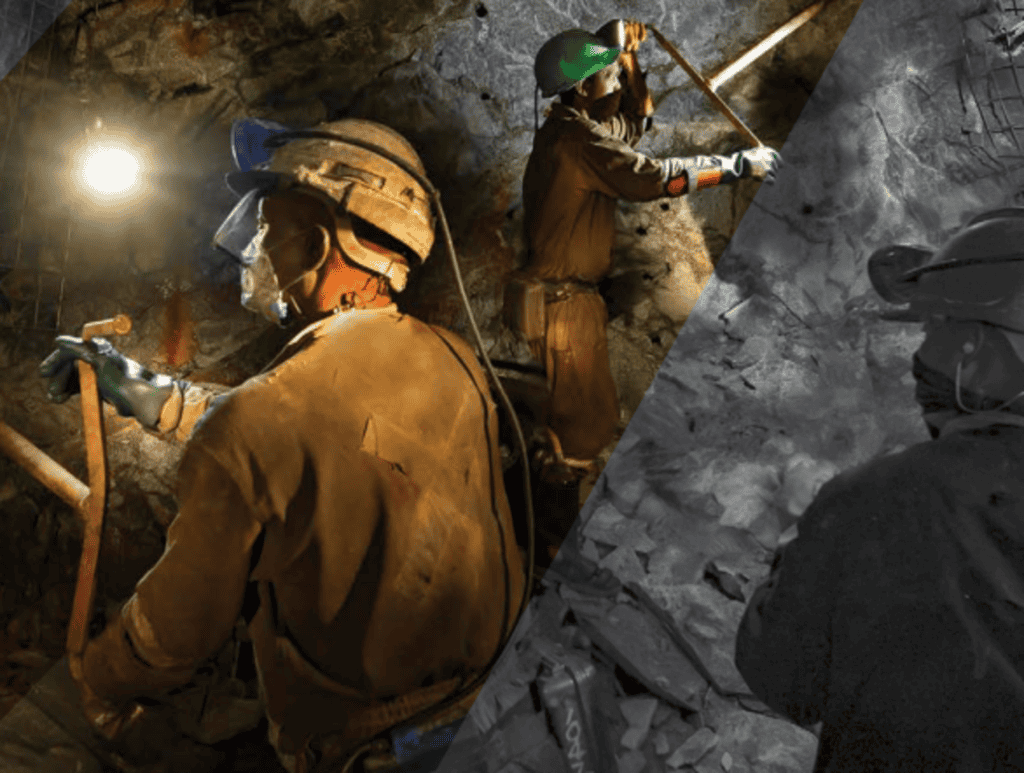
Hard Rock Gold (Lode Deposits) dominates large-scale mines like Obuasi and Akyem, embedded in quartz veins and sulfide formations in Birimian greenstone belt rocks.
Extracted via drilling, blasting, and cyanidation processes, these orogenic deposits yield high-grade ore. In 2024, hard-rock lode deposits accounted for 60% of Ghana’s total gold output.
Gold Nuggets are rare in Ghana’s geological setting (most of the country’s gold is fine-particle rather than nugget-grade), but do occur in the alluvial zones of Prestea and certain Northern Region streams. Prized by collectors for their natural form and Ghana-origin provenance.
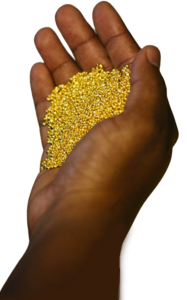
Gold Dust — fine alluvial gold particles — is the primary product of Ghana’s artisanal sector, typically refined to 22K–24K purity through GoldBod’s network of licensed assay facilities before export.
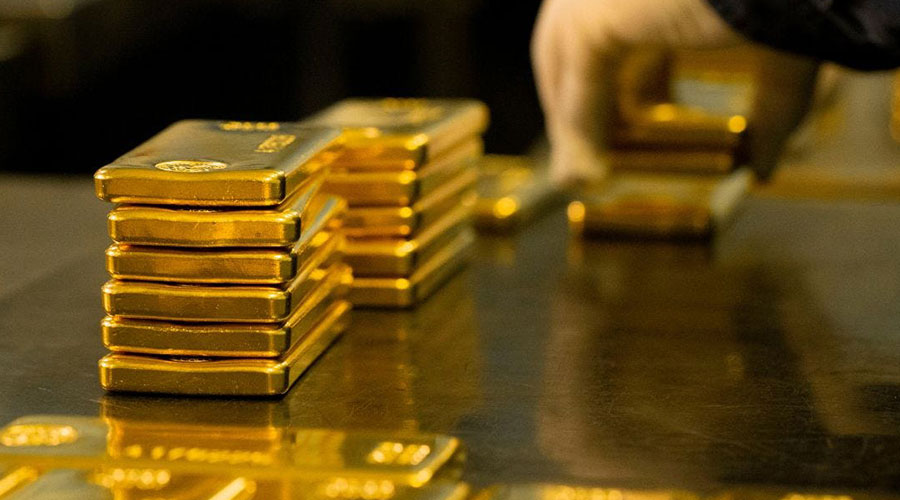
Refined 24K Gold Bars (99.9% Pure) are produced by Ghana’s major industrial mines and the GoldBod-licensed refinery network, meeting PMMC certification standards for international investment markets.
These are the products Buy Gold Bars Africa Ltd supplies to international buyers — PMMC-assayed, GoldBod LGE-authorized, with complete supply chain documentation.
Why Ghana Is the Best Place in Africa to Buy Gold in 2026
Buying gold from Ghana offers structural advantages that no other African gold market can fully match in 2026:
The GoldBod documentation framework is Africa’s strongest. Every gram of gold that passes through Ghana’s official channels now carries PMMC assay certification, GoldBod LGE authorization, and — by end of 2026 — blockchain supply chain records.
For buyers subject to EU Conflict Minerals Regulation, Dodd-Frank Section 1502, or institutional ESG frameworks, Ghana’s GoldBod-backed supply chain is the definitive African compliance solution.
Ghana produces more gold than any other country in Africa. With approximately 150,000 kg of monthly production and total exports of US$20 billion in 2025, Ghana’s supply depth means no buyer is ever constrained by shortage. Mine-direct pricing at 1–3% above LBMA spot is available precisely because supply is abundant and dealer competition is genuine.
The price environment has never been more favourable. The average gold price in Ghana through 2026 has been GH₵ 53,364/oz, with the 2026 all-time high of GH₵ 59,222 reached in January 2026. J.P. Morgan forecasts gold at $6,300/oz by year-end — translating to approximately GH₵ 70,978/oz at current USD/GHS rates — a further 33% gain from current average 2026 prices.
Ghana’s stable democracy is Africa’s strongest mining governance. The country’s multiparty democracy, functioning judicial system, transparent Minerals Commission licensing framework, and respected property rights make it the most investor-friendly mining jurisdiction in sub-Saharan Africa. FDI in Ghana’s mining sector reached $2 billion in 2024, led by Newmont and Gold Fields reinforcing their existing positions.
Economic Importance of Gold Mining in Ghana
Gold’s contribution to Ghana’s GDP and economic stability in 2026 is larger than at any previous point in the country’s history:
US$20 billion in gold export earnings in 2025 — compared to cocoa’s approximately $2 billion — makes gold not just Ghana’s largest export but its dominant economic anchor. Gold now accounts for over 60% of Ghana’s total export receipts.
International reserves of US$11–12 billion — built substantially through GoldBod’s foreign exchange generation — provide the monetary policy foundation that has stabilized the Ghanaian cedi and reduced inflation pressures in 2025–2026.
1 million+ livelihoods supported directly and indirectly by Ghana’s gold sector, including over 20,000 jobs in large-scale mining and hundreds of thousands in the formalized ASM sector.
The GoldBod debt-avoidance impact is quantified by the University of Ghana study: Ghana has saved approximately US$1 billion annually in borrowing costs by using GoldBod gold exports to build foreign reserves rather than resorting to expensive international loans. This fiscal dividend directly strengthens Ghana’s economic stability and the cedis’ purchasing power.
Challenges Facing Gold Mining in Ghana in 2026
Despite its extraordinary performance, Ghana’s gold mining sector faces persistent challenges that every investor and buyer should understand:
Illegal Mining (Galamsey) — The Persistent Challenge
Galamsey — Ghana’s term for illegal artisanal gold mining — remains the sector’s most significant structural challenge despite GoldBod’s formalization success.
An estimated 40% of Ghana’s ASM sector still operates outside formal channels, with mercury use in illegal processing polluting rivers including the Pra — affecting approximately 2 million people’s water supply.
The 2025 foreign trader ban aimed at formalizing ASM has had measurable impact (the 39.4 tonne increase in documented ASM exports) but has not eliminated illegal operations.
Environmental Impact of Gold Mining in Ghana
Open-pit mining at Tarkwa and elsewhere has degraded significant land area — an estimated 28 protected areas affected and 10,000 hectares of agricultural and forest land degraded.
Cyanide processing and tailings management at large-scale mines require ongoing environmental management. Obuasi’s $30 million legacy cleanup program is the largest environmental remediation in Ghana’s mining history.
Newmont and AngloGold Ashanti are piloting cyanide-free leaching and solar-powered processing at their Ghana operations, with Tarkwa’s reforestation program having restored 500 hectares by 2024.
Community and Land Conflicts
Land disputes between large mines and local communities — particularly at Akyem where water use has sparked concerns — and ongoing tensions between formal operators and galamsey communities represent the human dimension of Ghana’s mining challenges.
Mines fund community trusts ($100 million at Tarkwa, $50 million at Ahafo) and community boards ensure benefit sharing, but displacement and land access disputes remain active issues.
Investment Opportunities in Ghana Gold in 2026
Investing in Ghana’s gold sector offers multiple entry points for investors of every scale and risk profile:
Buying certified physical gold from GoldBod-authorized exporters is the most direct and accessible investment. At current 24K prices of GHS 1,707–1,806/gram (~$152–$160 USD), with GoldBod documentation and PMMC assay certification, Ghana-sourced gold from Buy Gold Bars Africa Ltd provides mine-direct pricing at 1–3% above LBMA spot.
Ghana Stock Exchange-listed mining equities — AngloGold Ashanti (NYSE: AU), Gold Fields (NYSE: GFI), Newmont (NYSE: NEM) — provide liquid equity exposure to Ghana’s extraordinary operating margin environment. At $4,720+/oz gold with AISC costs of $950–$1,200, these companies are generating record free cash flow from their Ghana operations.
Investing in GoldBod-registered ASM cooperatives through structured off-take financing offers higher return potential alongside social impact. GoldBod’s formalization framework creates increasingly bankable ASM gold streams for financing partners.
Gold ETFs with Ghana exposure (GDX, GDXJ) provide indirect Ghana production exposure with daily stock exchange liquidity.

FAQs: Gold Deposits and Mining in Ghana
Q: Where is gold found in Ghana? A: Gold in Ghana is found primarily in five geological zones: the Ashanti Gold Belt (central Ghana, orogenic deposits, 2–6 g/t), the Tarkwa Goldfield (Western Region, paleoplacer deposits, 1.5–2 g/t), the Akyem corridor (Eastern Region, Birimian orogenic, 2.5 g/t), the Bole-Bolgatanga Belt (Northern Region, alluvial and orogenic), and the Prestea-Wassa-Ankobra artisanal zones (Western Region, alluvial up to 92% natural purity).
Q: What is the current gold price in Ghana per gram? A: As of May 2026, the gold price in Ghana per gram is approximately GHS 1,707–1,806 for 24K (~$152–$160 USD). The 2026 average has been GH₵ 53,364/oz, with the all-time high of GH₵ 59,222/oz set on January 28, 2026. Year-to-date 2026 gain: +21.43%.
Q: How much gold does Ghana produce? A: Ghana produced approximately 150,000 kg per month (1.8 million kg annually) as of December 2025, with gold export earnings reaching US$20 billion in 2025 — nearly double 2024’s US$10.3 billion. Ghana is Africa’s largest gold producer and the world’s sixth-largest.
Q: What is GoldBod and how does it affect buyers? A: The Ghana Gold Board (GoldBod), established under Gold Board Act 1140 in 2025, is the sole authority with exclusive rights to buy, sell, assay, and export gold in Ghana. Every GoldBod-certified export carries PMMC assay certification, LGE authorization, and full chain-of-custody documentation — providing buyers with the most comprehensively documented African gold available anywhere.
Q: Can foreigners buy gold from Ghana? A: Yes. Foreigners can legally buy gold from Ghana through GoldBod-authorized Licensed Gold Exporters like Buy Gold Bars Africa Ltd. We provide GoldBod-compliant 24K bars with PMMC assay certification, Certificate of Origin, export permit from the Minerals Commission, and insured worldwide delivery from Kotoka International Airport (ACC), Accra.
Q: What are the top gold mines in Ghana? A: Ghana’s top gold mines in 2026 are: Ahafo (Newmont, 643,000 oz in 2024), Tarkwa (Gold Fields, 551,000 oz), Obuasi (AngloGold Ashanti, 497,000 oz), Akyem (Newmont, 422,000 oz), and Iduapriem (AngloGold Ashanti, ~250,000 oz). Together they account for over 70% of Ghana’s industrial production.
Buy Certified Ghana Gold
You now have the most comprehensive picture of where gold is found in Ghana in 2026 — the Ashanti Gold Belt’s ancient orogenic deposits, Tarkwa’s paleoplacer wealth, Akyem’s high-grade Birimian formations, the emerging Northern Region discoveries, and the extraordinary ASM zones that produced 103 tonnes of documented gold in 2025 alone.
You understand GoldBod’s transformation of the compliance landscape. You know the production numbers, the mine-by-mine output, the challenges, and the investment opportunities.
And you know that at current GHS 1,707–1,806/gram for 24K gold in Ghana, the stakes of every sourcing decision have never been financially more significant.
Buy Gold Bars Africa Ltd provides international buyers with direct, verified access to Ghana’s finest gold — sourced exclusively through GoldBod Licensed Gold Exporter-authorized channels with complete PMMC assay certification, Certificate of Origin specifying the Ashanti or Western Region source, Minerals Commission export authorization, and full EU Conflict Minerals Regulation / OECD Due Diligence documentation.
Our Ghana gold pricing is transparent: 1–3% above live LBMA spot, quoted with the exact spot price and premium stated separately. No hidden fees. No fixed-price quotes that hide stale data. You see the same LBMA rate we do.
At $152–$160/gram (GHS 1,707–1,806), Ghana mine-direct gold through Buy Gold Bars Africa Ltd beats every tier of the Western distribution chain. European retail dealers charge 5–10% above spot. American dealers charge 4–8%. We charge 1–3%. On a 100-gram purchase, that premium difference puts $4,000–$10,000 back in your investment instead of a dealer’s margin.
The Gold Coast is producing. The GoldBod framework is verifying. Buy Gold Bars Africa Ltd is your access point.
Contact us to Buy Gold in Ghana Today!
Prices updated May 2026. 24K gold Ghana: GHS 1,707–1,806/gram (~$152–$160 USD); 2026 average GH₵ 53,364/oz; all-time high GH₵ 59,222/oz (January 28, 2026); +21.43% year-to-date. Ghana 2025 gold exports: US$20 billion. GoldBod 2025 ASM exports: 103.0 tonnes. USD/GHS: ~11.26. Sources: GoldBod.gov.gh, Ghana Gold Board January 2026, goldpricez.com, CEIC Data. All prices are reference rates — verify before transacting.