Largest Gold Mine in Africa 2026: Complete Rankings, Facts & Investment Guide
Largest Gold Mine in Africa: Discover the largest gold mines in Africa in 2026 — from Kibali in DRC and Ahafo in Ghana to Obuasi, Tarkwa, Loulo-Gounkoto, and Mponeng. Full rankings by production, ownership, reserves, and economic impact. Updated with 2025–2026 data.
Africa’s Gold Mining Industry: The Big Picture (2026)
Africa is the world’s second-largest gold-producing continent, after Asia, and home to some of the most strategically significant gold deposits on earth. From the ancient goldfields of West Africa that powered the Mali and Songhai empires to the deepest mines in the world beneath South Africa’s Witwatersrand Basin, the continent’s geological wealth continues to shape global gold supply, national economies, and investment flows.
In 2026, Africa produces an estimated 800+ tonnes of gold annually — approximately one-quarter of global mine output. Gold export revenues across Africa collectively exceed $45 billion per year, making it the continent’s single most valuable mineral export category.
Yet the question of which mine holds the title of “largest gold mine in Africa” has become genuinely contested. The answer shifted in 2024 — and shifted again in 2025. This article provides a definitive, fully updated ranking of Africa’s largest gold mines by annual output, by proven reserves, and by economic footprint.
Which Is the Largest Gold Mine in Africa?
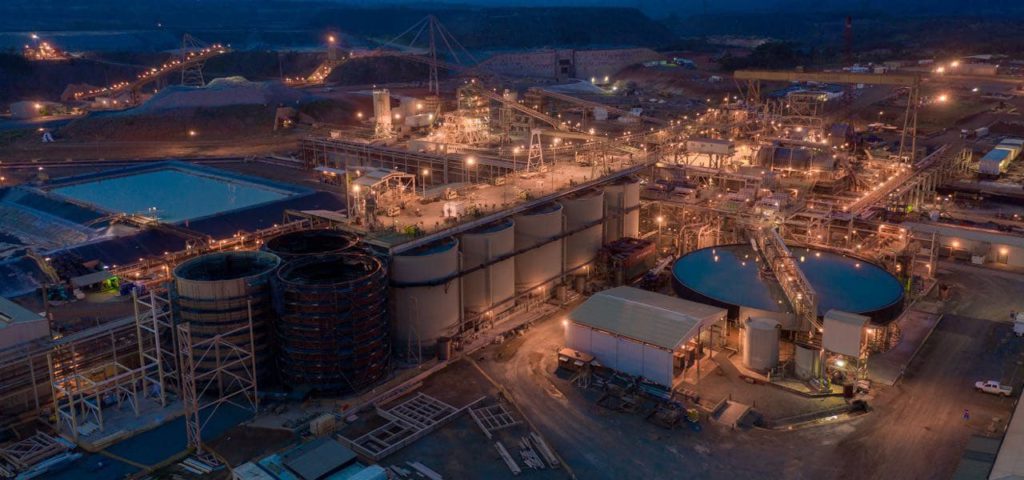
The title of Africa’s largest gold mine is currently shared between two world-class operations in a closely fought competition:
By 2025 Annual Output:
- #1: Kibali Gold Mine (DRC) — 673,000 ounces (2025 consolidated total)
- #2: Ahafo Mine (Ghana) — 664,000 ounces (2025)
By Proven Reserve Base:
- #1: South Deep Mine (South Africa) — 32.8 million ounces of proven and probable reserves — the largest gold reserve of any single mine in the world
- #2: Obuasi Mine (Ghana) — 30+ million ounces total resource
The 2024–2025 rivalry context: Kibali held the title of Africa’s largest gold mine by output until 2024, when Ghana’s Ahafo mine surpassed it — but Kibali reclaimed the top position in 2025 with 673,000 oz vs Ahafo’s 664,000 oz.
Both mines rank in the top 10 gold mines globally, and the gap between them is narrow enough that either could lead in any given year depending on operational performance.
Top 10 Largest Gold Mines in Africa (2026 Rankings by Annual Output)
| Rank | Mine | Country | Operator | 2025 Output (est.) | Reserve Base |
|---|---|---|---|---|---|
| 1 | Kibali | DRC | Barrick / AngloGold / SOKIMO | ~673,000 oz | 8M+ oz |
| 2 | Ahafo | Ghana | Newmont | ~664,000 oz | 17M oz |
| 3 | Loulo-Gounkoto | Mali | Barrick | ~600,000 oz | 9M+ oz |
| 4 | Tarkwa | Ghana | Gold Fields | ~550,000 oz | 7M oz |
| 5 | Geita | Tanzania | AngloGold Ashanti | ~500,000 oz | 5M oz |
| 6 | Obuasi | Ghana | AngloGold Ashanti | ~350,000 oz | 30M+ oz |
| 7 | Akyem | Ghana | Newmont | ~422,000 oz | 8M oz |
| 8 | Mponeng | South Africa | Harmony Gold | ~250,000 oz | 4M oz (remaining) |
| 9 | South Deep | South Africa | Gold Fields | ~270,000 oz | 32.8M oz |
| 10 | Siguiri | Guinea | AngloGold Ashanti | ~280,000 oz | 6M oz |
Production figures are annual estimates. Rankings may shift based on quarterly results. All mines are operating in 2026.
#1: Kibali Gold Mine — Africa’s Largest Gold Mine by Output (DRC)
Overview
Kibali Gold Mine in the Haut-Uélé Province of northeastern Democratic Republic of Congo is Africa’s most productive gold mine — a world-class operation that produces roughly 600,000–700,000 ounces of gold annually and represents a $1.7 billion investment in one of the most challenging operating environments on the continent.
Kibali has operated since its commissioning in September 2013 and is currently planned to operate until at least 2037, with exploration along the ARK-KCD corridor potentially extending its life further.
Kibali held Africa’s top production ranking until losing it briefly to Ghana’s Ahafo in 2024, then reclaiming the lead in 2025 with 673,000 oz produced.
Location
- Province: Haut-Uélé, northeastern DRC
- Nearest town: Kalimva / Durba
- Distance from Uganda border: ~150 km
- Distance from Kinshasa: ~1,800 km northeast
Ownership
| Partner | Stake | Role |
|---|---|---|
| Barrick Mining Corporation (Toronto) | 45% | Operating partner & mine manager |
| AngloGold Ashanti (Johannesburg) | 45% | Equity partner |
| SOKIMO (DRC state entity) | 10% | State representative |
Production Facts (Updated 2025)
- 2025 production: ~673,000 oz (100% consolidated basis)
- Record year: 814,000 oz (2019) — all-time Africa record at the time
- 2026 guidance: 600,000–688,900 oz (Barrick’s official guidance)
- Mine life: Active through at least 2037
- Reserve base: 8+ million ounces remaining
What Makes Kibali Africa’s #1
Renewable Energy Pioneer: Kibali sources 85%+ of its energy from renewable sources — three run-of-river hydroelectric stations (44MW combined) plus a new 16MW solar farm with battery storage. It is one of the most sustainable large-scale gold mines in the world.
World-Class Processing: The 7.5 Mtpa processing plant includes both sulphide and oxide circuits, handling complex ore types that many mines cannot process efficiently.
Hybrid Mining: The combination of open-pit surface mining (multiple satellite pits including Kalimva, Ikamva, and Ndala) and underground extraction of the high-grade KCD ore body is rare in Central Africa and gives Kibali exceptional operational flexibility.
Economic Impact: Kibali has invested over $6.3 billion in the Congolese economy since commissioning, with $3.1 billion going to local suppliers and contractors. It employs over 5,000 people and supports more than 700 Congolese businesses.
#2: Ahafo Mine — Ghana’s Champion (and Kibali’s Closest Rival)
Overview
The Ahafo Mine in the Brong-Ahafo Region of Ghana, operated by Newmont Corporation, is the most credible challenger to Kibali’s title. In 2024, Ahafo briefly held Africa’s #1 production ranking before Kibali reclaimed the lead in 2025.
The Ahafo Mine has 17 million ounces in estimated reserves, annual production of approximately 643,000–670,000 ounces, and has been operational since 2006, with mine life extending through 2038.
Location & Ownership
- Location: Brong-Ahafo Region, central Ghana
- Owner/Operator: Newmont Corporation (90%), Ghana Government (10%)
- Commissioned: 2006
- Mine life: Through 2038
Production Facts (2025)
- 2025 production: ~664,000 oz
- Reserve base: 17 million ounces
- Mine life: Extended to 2038 via the Ahafo South expansion
- Processing capacity: Multiple open-pit operations
Ahafo South Expansion
Newmont’s Ahafo South expansion project is one of the most significant new mine builds in Africa, targeting additional annual production of approximately 325,000 ounces per year from 2025.
This expansion, combined with the existing Ahafo North operations, positions Ahafo as a serious long-term contender for Africa’s top production ranking.
#3: Loulo-Gounkoto Mine Complex — Mali’s Giant
The Loulo-Gounkoto mine complex in Mali’s Kayes Region is operated by Barrick Mining (80% stake, with Mali government 20%) and consistently ranks among Africa’s three largest gold producers.
- Annual production: ~600,000 oz (combined Loulo + Gounkoto operations)
- Reserve base: 9+ million ounces
- Type: Underground and open pit
- 2025 status: Operating, despite Mali’s broader security challenges in the north (mines are in the western region, away from conflict zones)
- Economic significance: Gold accounts for approximately 70% of Mali’s export earnings; Loulo-Gounkoto is its single largest contributor
Context: Mali’s Mining Regulatory Changes
Mali’s military government has engaged in contentious renegotiations with mining companies in 2023–2026, seeking higher royalties and state participation.
Barrick reached a negotiated settlement with the Malian government in 2024 after prolonged standoffs. The situation remains worth monitoring for investors.
#4: Tarkwa Mine — Africa’s Largest Open-Pit Gold Mine
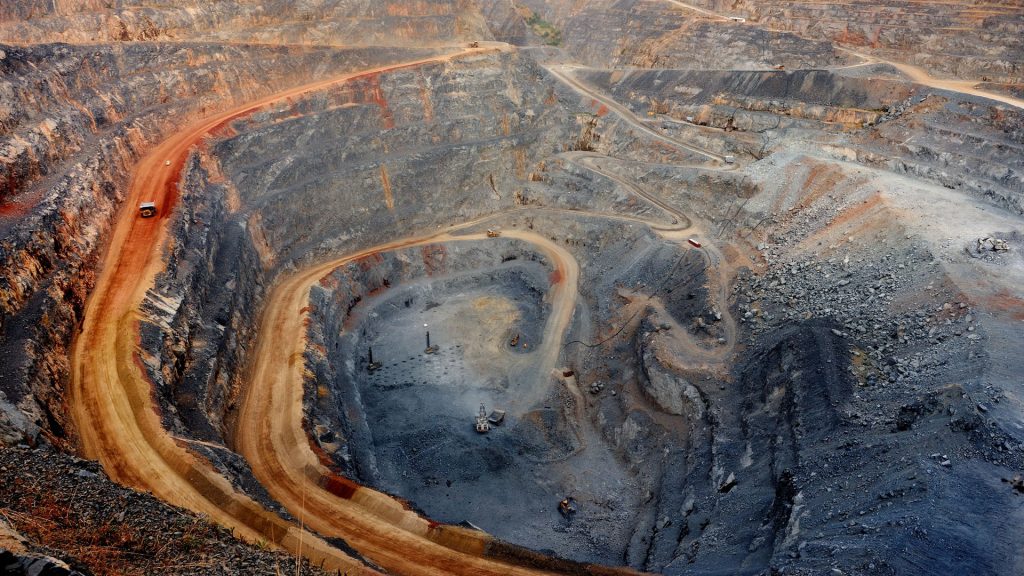
The Tarkwa Mine in Ghana’s Western Region, operated by Gold Fields (90%, Ghana government 10%), holds the specific title of Africa’s largest open-pit gold mine.
The Tarkwa Mine produces approximately 551,000 ounces annually and processes 14.1 million tons of ore per year.
- Location: Western Region, Ghana (90km northwest of Takoradi)
- Owner/Operator: Gold Fields (90%), Ghana Government (10%)
- Type: Massive open-pit heap leach operation
- Annual production: ~500,000–551,000 oz
- Reserve base: 7+ million ounces
- Distinguishing feature: Largest single open-pit gold operation on the African continent by ore throughput
Tarkwa processes low-grade ore at extremely high volumes through heap leaching — a cost-effective method that makes it one of Africa’s lowest-cost gold producers per ounce.
#5: Geita Mine — Tanzania’s Flagship
The Geita Mine in Tanzania’s Geita Region, operated by AngloGold Ashanti, is East Africa’s most productive gold mine and one of AngloGold’s highest-margin global assets.
- Location: Geita Region, Lake Victoria Basin, Tanzania
- Owner/Operator: AngloGold Ashanti (100%)
- Annual production: ~500,000 oz
- Type: Open pit and underground
- Reserve base: 5+ million ounces
- Economic impact: Single largest taxpayer in Tanzania’s mining sector; provides direct employment to thousands of Tanzanians
Geita benefits from the rich gold deposits of the Lake Victoria Goldfields — the same geological system that hosts Uganda’s and Kenya’s gold regions. The mine has consistently delivered strong production volumes since Ashanti Goldfields developed it in the 1990s.
#6: Obuasi Mine — Africa’s Oldest Major Operating Mine
The Obuasi Mine in Ghana’s Ashanti Region, operated by AngloGold Ashanti, is Africa’s most historically significant gold mine — and potentially its most valuable long-term asset by remaining reserves.
- Location: Obuasi, Ashanti Region, Ghana
- Owner/Operator: AngloGold Ashanti (94.8%), Ghana Government (5.2%)
- In production since: 1897 (over 125 years of continuous history)
- Total historic production: Over 30 million ounces — one of the greatest individual gold mines in history
- Current annual production: ~350,000 oz (following modernization)
- Reserve base: 30+ million ounce total resource — one of the largest in the world
- Type: Underground (high-grade ore, averaging 6+ g/t)
Obuasi’s Revival Story
Obuasi was temporarily placed on care-and-maintenance between 2014–2019 due to low gold prices, but AngloGold Ashanti’s Obuasi Redevelopment Project — a $545 million investment — has transformed the mine into a modern, mechanized underground operation.
In 2026, Obuasi is steadily increasing output as new mining zones are developed. Its extraordinary reserve base gives it one of the longest potential mine lives of any gold mine in Africa.
#7: South Deep Mine — The World’s Largest Gold Reserve
The South Deep Mine near Johannesburg in South Africa’s Witwatersrand Basin, operated by Gold Fields, holds a distinction more important than annual output: it contains the largest gold reserve of any single mine in the world.
South Deep’s managed mineral reserve stands at 32.8 million ounces — the largest gold deposit held by any single mine globally, located 45km southwest of Johannesburg and reaching depths of up to 2,998 metres.
- Location: 45km southwest of Johannesburg, Gauteng Province, South Africa
- Owner/Operator: Gold Fields (100%)
- Depth: Up to 2,998 metres — the 7th deepest mine in the world
- Reserve base: 32.8 million ounces — world’s largest single mine reserve
- Annual production: ~270,000 oz
- Mine life: Potential 70+ years at current production rates
South Deep’s relatively modest annual output compared to its enormous reserve base reflects the extreme difficulty and cost of ultra-deep underground mining.
Gold Fields has been progressively optimizing the operation since acquiring it in 2006, and production has been steadily increasing as the mine reaches its designed operational depth.
#8: Mponeng Mine — The World’s Deepest Gold Mine
Mponeng Mine near Carletonville in South Africa’s Gauteng Province, operated by Harmony Gold, holds the extraordinary title of the deepest gold mine in the world.
- Location: Carletonville, Gauteng Province, South Africa
- Owner/Operator: Harmony Gold Mining Company
- Depth: Over 3.8 kilometres below the surface — with potential to reach 4.2km
- In operation since: 1986
- Annual production: ~250,000 oz
- Ore grade: Extremely high-grade ore (gold literally seams visible in the rock)
- Mine life: Planned through approximately 2029 before reserves deplete
What Makes Mponeng Extraordinary
Mining at 3.8km depth requires engineering solutions found nowhere else on earth. Rock temperatures reach 66°C (151°F) at depth — requiring the mine to pump slurry ice underground to cool tunnels to below 30°C for worker safety. The mine extracts over 5,400 metric tonnes of rock daily, hoisting it kilometers to the surface.
Mponeng is both a monument to human engineering and a cautionary tale about the economics of ultra-deep mining: its all-in production costs hover near $1,771/oz, making it marginally profitable even at $4,720/oz gold prices — and deeply vulnerable to any price correction.
Africa’s Largest Gold-Producing Countries
Beyond individual mines, understanding which countries lead Africa’s gold production provides important context:
| Rank | Country | Estimated 2025 Output | Key Mines |
|---|---|---|---|
| 1 | Ghana | ~130–159 tonnes | Ahafo, Tarkwa, Obuasi, Akyem |
| 2 | South Africa | ~100 tonnes | South Deep, Mponeng, Driefontein |
| 3 | Mali | ~60–70 tonnes | Loulo-Gounkoto, Syama, Sadiola |
| 4 | DRC | ~90 tonnes (est.) | Kibali (formal); extensive artisanal (informal) |
| 5 | Sudan | ~70 tonnes | Mostly artisanal; SAF-controlled northeast |
| 6 | Tanzania | ~50 tonnes | Geita, Buzwagi, North Mara, Bulyanhulu |
| 7 | Burkina Faso | ~45 tonnes | Houndé, Essakane, Mana |
| 8 | Zimbabwe | ~30 tonnes | Blanket Mine, various |
| 9 | Guinea | ~63 tonnes | Siguiri, Léro |
| 10 | Ethiopia | ~15 tonnes | Lega Dembi, artisanal |
Ghana remains Africa’s largest gold-producing country, with production of approximately 130 tonnes in 2024 and projections to reach 159 tonnes in 2025, driven by expansions at Obuasi, Tarkwa, and Ahafo South.
Africa’s Gold Mine Rankings: By Reserve Size vs. By Output
These two metrics tell very different stories about Africa’s gold wealth:
Largest by ANNUAL OUTPUT (Production Champions)
- Kibali (DRC) — 673,000 oz/year
- Ahafo (Ghana) — 664,000 oz/year
- Loulo-Gounkoto (Mali) — ~600,000 oz/year
- Tarkwa (Ghana) — ~550,000 oz/year
Largest by RESERVE BASE (Wealth in the Ground)
- South Deep (South Africa) — 32.8 million oz — world’s largest
- Obuasi (Ghana) — 30+ million oz total resource
- Ahafo (Ghana) — 17 million oz
- Kibali (DRC) — 8+ million oz remaining
This contrast highlights a fundamental truth about African gold mining: some of the continent’s richest deposits (South Deep, Obuasi) are geological treasure chests that produce modestly due to technical difficulty or depth, while the production champions (Kibali, Ahafo, Loulo-Gounkoto) access somewhat smaller but more easily mined ore bodies.
Africa’s Largest Gold Mines: Technology and Innovation (2026)
Africa’s top gold mines are leading the global industry in several technological domains:
Renewable Energy at Scale
Kibali generates 85%+ of its electricity from renewable hydropower and solar — a model being studied by mines worldwide. As energy costs represent 15–25% of total gold mining costs, renewable energy directly improves mine economics and sustainability ratings.
Autonomous and Digital Mining
Multiple African mines including Kibali and Loulo-Gounkoto are deploying autonomous haulage systems, AI-powered fleet management, and real-time ore grade sensing that improve extraction efficiency and reduce human risk in dangerous underground environments.
Deep Mining Innovation (Mponeng and South Deep)
South Africa’s ultra-deep mines have pioneered technologies including hydraulic stoping, rock-burst management systems, and slurry ice cooling that are unique in the world. These innovations enable mining at depths and temperatures impossible with conventional methods.
Environmental Management
Major African mines invest heavily in closed-loop water systems, progressive land rehabilitation, and biodiversity conservation. Kibali’s funding of white rhino reintroduction into Garamba National Park and Geita’s community reforestation programs are among the most visible examples.
Economic Impact of Africa’s Largest Gold Mines
The economic footprint of Africa’s largest gold mines extends far beyond the mines themselves:
Ghana’s Gold Economy
Ghana’s gold sector accounts for approximately 40–60% of total export earnings and contributes roughly 6% to GDP. The Ahafo, Tarkwa, and Obuasi mines collectively employ tens of thousands of Ghanaians directly and support hundreds of thousands more in related industries.
DRC’s Kibali Economic Contribution
Kibali has invested over $6.3 billion in the DRC economy since 2013, with $3.1 billion in local procurement. The mine generates $231 million annually for the DRC state through SOKIMO’s equity stake and contributes $1.4 billion+ in cumulative taxes and royalties.
Mali’s Gold Dependency
Mali’s gold mines — particularly Loulo-Gounkoto — generate approximately 70% of the country’s export revenue, making gold not just economically important but existentially critical to national fiscal stability. Gold is Mali’s primary means of earning foreign exchange.
South Africa’s Historical Legacy
The Witwatersrand Basin, home to Mponeng and South Deep, has produced approximately 40% of all gold ever mined in human history — an extraordinary geological bounty that fuelled the growth of Johannesburg (eGoli — City of Gold) and the broader South African industrial economy.
Investing in Africa’s Gold Mines: What Buyers Need to Know
For investors seeking exposure to Africa’s largest gold mines, options include:
Listed Mining Company Stocks
All of Africa’s major gold mines are held by publicly traded companies:
- Barrick Mining (NYSE: GOLD / TSX: ABX) — Kibali, Loulo-Gounkoto
- Newmont Corporation (NYSE: NEM) — Ahafo, Akyem
- Gold Fields (NYSE: GFI / JSE: GFI) — Tarkwa, South Deep
- AngloGold Ashanti (NYSE: AU / JSE: ANG) — Obuasi, Geita, Kibali (45%)
- Harmony Gold (NYSE: HMY / JSE: HAR) — Mponeng
Gold ETFs with African Exposure
Several gold-focused ETFs and emerging market mining funds include exposure to African gold producers as part of broader precious metals or mining allocations.
Physical Gold Sourced from African Mines
For buyers seeking physical gold — gold bars, dore, or raw gold — from Africa’s major producing regions, certified exporters in Ghana (GoldBod-licensed), Uganda, and DRC (SMRC-licensed, SAF-controlled areas only) offer mine-direct pricing typically 7–15% below European retail rates. Contact Buy Gold Bars Africa Ltd for current pricing and documentation requirements.
Key Facts: Africa’s Largest Gold Mine at a Glance
| Category | Answer |
|---|---|
| Largest by 2025 output | Kibali Mine, DRC (673,000 oz) |
| Second largest by output | Ahafo Mine, Ghana (664,000 oz) |
| Largest open-pit mine | Tarkwa Mine, Ghana |
| Deepest gold mine in Africa (and world) | Mponeng Mine, South Africa (3.8km+) |
| Largest gold reserve (single mine, world) | South Deep Mine, South Africa (32.8M oz) |
| Oldest major operating mine | Obuasi Mine, Ghana (since 1897) |
| Most renewable energy | Kibali Mine (85%+ renewable) |
| Largest gold-producing country | Ghana (~130–159 tonnes/year) |
| Africa’s share of global gold output | ~25% of world total |
| Africa’s gold export revenue (2025 est.) | $45+ billion |
FAQa: Largest Gold Mine in Africa
Q: What is the largest gold mine in Africa? A: As of 2026, the title is closely contested. By annual production output, Kibali Mine in the DRC produced approximately 673,000 ounces in 2025, marginally ahead of Ghana’s Ahafo Mine at 664,000 ounces. By proven gold reserves, South Deep Mine in South Africa holds the largest reserve of any single gold mine in the entire world at 32.8 million ounces.
Q: Where is the Kibali gold mine located? A: Kibali is located in the Haut-Uélé Province of northeastern Democratic Republic of Congo, approximately 220 km east of Isiro and 150 km west of the Ugandan border.
Q: Who owns the Kibali gold mine? A: Kibali is owned by Barrick Mining Corporation (45%), AngloGold Ashanti (45%), and the DRC state entity SOKIMO (10%). Barrick serves as the mine operator.
Q: Which is the deepest gold mine in Africa? A: Mponeng Mine in South Africa, operated by Harmony Gold, is the deepest gold mine in Africa — and in the world — reaching approximately 3.8 kilometres below the surface.
Q: Which African country produces the most gold? A: Ghana is Africa’s largest gold-producing country, with estimated output of 130–159 tonnes in 2025 — ahead of South Africa (~100 tonnes), Mali (~60–70 tonnes), and DRC (~90 tonnes).
Q: What is the oldest gold mine in Africa? A: Obuasi Mine in Ghana has been in continuous or near-continuous production since 1897 — over 125 years — making it Africa’s oldest major operating gold mine. It has produced over 30 million ounces in its history.
Q: Which African mine has the most gold reserves? A: South Deep Mine in South Africa holds 32.8 million ounces of proven and probable gold reserves — not just the largest in Africa, but the largest of any single gold mine in the world.
Q: Is Kibali or Ahafo the largest gold mine in Africa? A: The answer changed in 2024 and changed again in 2025. Kibali held the top spot until losing it briefly to Ahafo in 2024, then reclaimed the lead in 2025 with 673,000 oz vs Ahafo’s 664,000 oz. Both compete for the title annually — and Ahafo’s expansion projects may push it ahead again in coming years.
Q: How much gold does Africa produce per year? A: Africa produces approximately 800+ tonnes of gold annually — representing roughly 25% of global mine production. Gold exports from Africa are projected to exceed $45 billion in 2025 at current price levels.
Q: What is the Witwatersrand Basin? A: The Witwatersrand Basin in South Africa is the single most prolific gold-producing geological formation in human history, having produced approximately 40% of all gold ever mined since discovery in 1886. It hosts South Deep, Mponeng, and dozens of other historic and active gold mines.
Conclusion: Africa’s Gold Mining Sector in 2026
Africa’s gold mining industry in 2026 is dynamic, competitive, and operating at historically favourable economics. With gold trading at approximately $4,720 per troy ounce — down from the January 2026 record of $5,602 but still 41% above year-earlier levels — virtually every mine on the continent is generating strong cash flows.
The competition between Kibali and Ahafo for the title of Africa’s largest gold mine reflects the broader renaissance of African gold mining as a world-class investment destination.
Both operations are managed by globally experienced operators, backed by billion-dollar reserve bases, and committed to long-term production timelines extending beyond 2037 and 2038 respectively.
For investors and gold buyers alike, Africa’s largest mines represent the continent’s most powerful combination of geological wealth, operational expertise, and economic development potential.
Whether you are tracking these assets through listed equities or sourcing physical gold directly from African exporters, understanding which mines drive the continent’s production — and why — is essential knowledge for any serious participant in the global gold market.
For mine-direct African gold purchasing, export documentation, and investment guidance: 📱 WhatsApp: +256 707 585144
Data sourced from Barrick Mining Corporation 2025 financial reports, Newmont 2025 Annual Report, Mining.com World Top 20 Gold Mine Rankings (March 2026), World Gold Council production data, and industry reports from Chatham House and SWISSAID. Prices as of May 8, 2026: gold spot ~$4,720/oz.
You also like to;