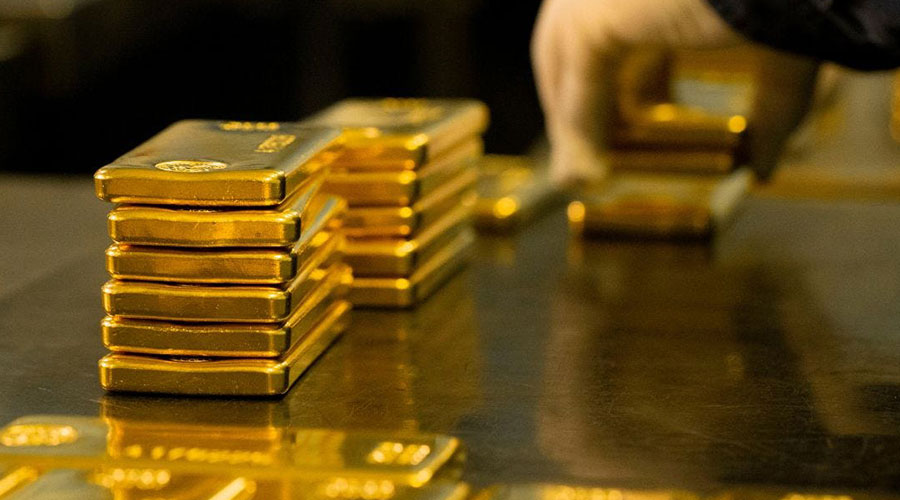
Travelling with Gold — Everything You Need to Know
Travelling with Gold: You can legally travel internationally with gold, but you must: (1) declare gold at customs if its value exceeds the destination country’s threshold (typically USD $10,000 or equivalent); (2) carry an independent assay certificate and proof of purchase; (3) carry gold in carry-on luggage, not checked baggage; (4) understand the import duties and declaration rules of your destination country before departure; (5) use a specialist gold shipping service (Brinks or Malca-Amit) for large quantities — travelling personally with high-value gold is rarely the most secure or cost-effective method. For certified African gold with full export documentation, visit buygoldbarsafrica.com.
Whether you are carrying gold jewellery on a flight to Dubai, transporting gold bars from Africa to Europe, or bringing gold coins back from a trip abroad — travelling with gold is entirely legal in most countries, but it is also one of the most heavily regulated and most commonly mishandled areas of international travel.
Get it wrong and you face confiscation, criminal charges, or at minimum a significant fine and a very stressful customs conversation. Get it right — with the correct documentation, the right declaration, and proper packaging — and carrying gold internationally is straightforward.
This complete guide covers everything you need to know about taking gold on a plane, customs declaration rules for gold in major destination countries, how much gold you can legally carry across borders, what documents you need, airport security procedures for gold, import duties, and why — for amounts above a few hundred grams — specialist gold shipping via Brinks or Malca-Amit is almost always safer, cheaper, and less stressful than personal transport. For buying certified gold from Africa with full export documentation already in place, visit Buy Gold Bars Africa.

Is It Legal to Travel with Gold? The Short Answer
Yes — travelling with gold is legal in virtually every country. Gold is a commodity and a store of value, not a controlled substance. However, crossing an international border with gold triggers currency and precious metals declaration requirements in most jurisdictions — because gold above a certain value is treated equivalently to cash under anti-money laundering regulations.
The two most common mistakes travellers make are: (1) assuming gold does not need to be declared because it is “not cash,” and (2) putting gold in checked luggage. Both are errors with potentially serious consequences.
The critical principle: gold is treated as a monetary instrument under most countries’ customs and anti-money laundering laws. When you carry gold across a border, customs authorities want to know: where did it come from, did you pay for it legally, is it documented, and are you bringing more than the allowed undeclared threshold?
Having the answers to all four questions — supported by documentation — is what separates a smooth customs experience from a lengthy interrogation and potential confiscation.
⚠️ Most important rule: Never carry gold bars, gold coins, or significant gold jewellery across an international border without an independent assay certificate and proof of purchase. Without these documents, customs officers have no way to verify the gold’s origin or value — and in many jurisdictions, undocumented gold at customs can be treated as proceeds of crime until proven otherwise.
How Much Gold Can You Carry on a Plane? Declaration Thresholds by Country
There is no universal global limit on how much gold you can carry on a plane — but there is a declaration threshold in virtually every country above which you must formally declare the gold to customs.
This threshold is expressed in local currency or USD equivalent and applies to gold’s market value on the day of crossing. The table below shows the gold declaration limits for international travel in the most important destination countries:
| Country / Border | Declaration Threshold | Rules & Notes |
| USA (entry) | USD $10,000 total monetary instruments | Gold bars and coins count as monetary instruments. Must file FinCEN 105 (CMIR) at the border. Failure to declare = civil forfeiture and up to $250,000 fine. |
| UK (entry) | No specific gold threshold | Gold is not classified as “cash” under HMRC rules but may be examined. Investment gold meeting 999+ fine is VAT-exempt on import. |
| UAE / Dubai (entry) | AED 60,000 (≈ USD $16,350) | Gold above this value must be declared at Dubai customs. DMCC import requirements apply for commercial quantities. |
| India (entry) | Gold jewellery: INR 50,000 (men) / INR 100,000 (women) duty-free | Gold bars must be declared regardless of value. Import duty of 10–12% applies on bars. Returning Indian residents have specific exemptions. |
| EU (entry from non-EU) | EUR 10,000 total cash and monetary instruments | Gold bars likely count; customs discretion applies to gold jewellery below personal use threshold. |
| Switzerland | CHF 10,000 total monetary instruments | Precise declaration required. Swiss customs are particularly thorough on gold declarations. |
| South Africa (entry/exit) | ZAR 25,000 (≈ USD $1,370) | Any gold above this value requires export permit from SARS. Undeclared gold at airports is frequently confiscated. |
| Uganda (export) | All commercial gold quantities | DGSM export licence required for any commercial gold export. Full guide on our services page. |
| Kenya (export) | All commercial quantities | Ministry of Mining export permit + KRA clearance required for all gold exports. |
Declaration thresholds change periodically. Always verify with the customs authority of your specific departure and arrival country before travelling.
💡 Key principle: When in doubt, declare. Declaring gold that turns out to be below the threshold costs you a few minutes of paperwork. Not declaring gold that turns out to be above the threshold can cost you the gold itself plus criminal charges. There is no upside to guessing wrong.
What Documents Do You Need When Travelling with Gold?
The documentation you need when crossing borders with gold depends on the quantity, value, and purpose (personal jewellery vs investment gold vs commercial export). The following documents cover all scenarios:
For Personal Gold Jewellery (Under Declaration Threshold)
- Proof of purchase: Sales receipt from the jeweller showing the purchase price, metal purity (karat), and the seller’s details. If you bought the jewellery years ago and no longer have the receipt, a professional appraisal document from a certified gemologist serves the same purpose.
- Photographs: Take clear photographs of each piece before travel — useful if the jewellery is confiscated, lost, or there is a dispute about items when returning to your home country.
- Insurance certificate: For gold jewellery above $2,000 in value, a travel insurance certificate specifically covering precious metals is strongly recommended. Standard travel insurance often excludes high-value items above a per-item limit.
For Investment Gold Bars and Coins (Any Value)
- Independent assay certificate: From SGS, Intertek, UNBS, or an equivalent accredited laboratory — confirming purity (fineness), weight, serial number, and elemental composition. This is the most important single document for travelling internationally with gold bars. Without it, customs cannot verify the gold’s value or origin.
- Proof of purchase / commercial invoice: Shows where you bought the gold, from whom, at what price, and when. Must name the seller as a licensed dealer. All gold bars purchased from Buy Gold Bars Africacome with a KRA-compliant or DGSM-compliant commercial invoice as standard.
- Export permit from country of origin: Required if you are physically carrying gold out of a country that issues export permits — including Uganda, Kenya, South Africa, and most African countries. Our services pagedetails the exact export documentation Buy Gold Bars Africa provides for all African gold purchases.
- Certificate of origin: Documents where the gold was mined. Particularly important for travelling with African goldto UAE DMCC-regulated destinations or EU markets subject to the EU Conflict Minerals Regulation.
- OECD conflict-free declaration: Required for commercial quantities of gold imported to the UAE, EU, and US by companies subject to responsible sourcing regulations.
For Commercial Quantities (Above Personal Use)
If you are travelling with more than 1kg of gold — or any quantity clearly above personal use — most customs authorities will treat the shipment as commercial rather than personal, regardless of whether you are on a commercial flight with a personal ticket.
Commercial gold imports require the full documentation package including import licence (in countries that require one), duty payment or duty exemption certificate, and a detailed manifest. At this quantity, we strongly advise using a specialist gold carrier
Can You Carry Gold on a Plane? Airport Security Rules Explained
Yes — you can carry gold on a plane, including gold bars, gold coins, and gold jewellery. Gold is not a prohibited or restricted item under aviation security regulations in any major country — it is simply a dense, valuable metal that passes through security like any other metal object. However, there are important practical rules:
Carry-On vs Checked Baggage — The Most Important Rule
Always carry gold in your carry-on baggage, never in checked luggage. This is the single most important practical rule for travelling with gold bars or coins on a plane.
Checked baggage is: (1) accessible to baggage handlers at multiple points during transit; (2) frequently lost, delayed, or misrouted; (3) typically excluded from travel insurance coverage for items above a per-bag limit; and (4) not under your direct physical control at any point between check-in and baggage claim.
Gold in checked baggage that goes missing is statistically very difficult to recover and almost never covered by airline liability. Keep gold in your carry-on and keep your carry-on in your sight or directly overhead.
Airport X-Ray and Security Screening
Gold bars and coins will appear clearly on airport X-ray screens as dense, uniform metallic objects. Security officers may ask you to remove gold from your bag and place it in a tray separately. This is routine and not a cause for concern. Simply tell the security officer proactively that you are carrying gold bars or coins — this saves time and avoids the appearance of concealment, which can trigger additional screening.
Gold jewellery will also trigger metal detectors at standard intensity. For travel, wearing gold jewellery through security is entirely normal and raises no flags with aviation security (as opposed to customs, which is a separate function). The security officer is not looking for gold — they are looking for weapons and prohibited items. Gold of any form is neither.
Declaring Gold to Customs vs Security — Two Separate Processes
It is important to understand that airport security and customs declaration are entirely separate processes operated by different government agencies. Security screening (conducted by aviation security or TSA) is concerned with threats to flight safety — weapons, liquids, and prohibited items.
Customs declaration is concerned with what you are importing or exporting in terms of value, origin, and legality. You may pass security with undeclared gold without any security issue — and then face very serious customs consequences at arrival. The declaration requirement is at the customs checkpoint, not the security checkpoint.
🛡️ Security tip: If carrying gold bars in a carry-on, pack them flat in a small pouch that can be easily removed from the bag for tray screening. Disorganised or concealed dense metal objects create more secondary screening than clearly presented gold bars that the officer can identify immediately.
Import Duties on Gold When Travelling — What You Will Actually Pay
Import duties on gold carried across borders vary enormously by country, by gold form (bars vs jewellery vs coins), and by whether you qualify for personal traveller exemptions. The following covers the most important duty scenarios for international travellers with gold:
UAE / Dubai — Most Favourable for Gold Travellers
The UAE applies 0% import duty on investment gold bars and coins and a flat 5% VAT on gold jewellery. There is no personal exemption threshold for gold jewellery (unlike some countries that allow a duty-free quantity).
For buyers importing gold from Africa to Dubai, the DMCC import compliance process applies for commercial quantities — our Dubai gold export rules guide covers exactly what you need to comply with UAE customs for gold imported from African countries including Uganda, Ghana, and South Africa.
India — Highest Duty Burden for Gold Travellers
India has the most complex gold import rules for returning travellers. Indian residents returning from abroad may bring gold jewellery duty-free up to INR 50,000 for men and INR 100,000 for women — but only if they have been abroad for more than six months.
Gold bars and coins do not qualify for any personal exemption and attract import duty of 10–12% plus 3% GST on declared value, making India one of the most expensive markets for importing gold physically. For large quantities, shipping via a licensed import channel is significantly more cost-effective than personal carriage.
USA — Strict Declaration, But No Import Duty on Gold
The United States charges no import duty on gold bars, gold coins, or gold bullion — but the declaration requirements are strict. All gold with a combined value above USD $10,000 must be declared on FinCEN Form 105 (Report of International Transportation of Currency or Monetary Instruments) at the US border.
Failure to declare gold above this threshold can result in civil forfeiture — the gold is seized without requiring criminal conviction — and fines of up to $250,000. The FinCEN 105 is free to file and takes minutes; the cost of not filing is the gold itself.
UK — Investment Gold VAT-Exempt, But Customs Rules Tightened Post-Brexit
The United Kingdom charges no VAT on investment gold imported into the UK (defined as gold of at least 995 fineness — 999.9 fine bars comfortably qualify). Post-Brexit, however, the UK now has distinct customs procedures from the EU — goods previously moving freely between EU and UK now require declarations.
For buyers bringing gold into the UK from Africa, see our dedicated buy gold in the UK guide which covers UK import compliance for African gold.
South Africa — Strict Controls on Gold Export by Residents
South Africa applies strict controls on gold exports by residents and travellers. Any person leaving South Africa with gold above ZAR 25,000 in value must hold an export permit from the South African Revenue Service (SARS) and the South African Reserve Bank (SARB).
Undeclared gold at South African airports and border posts is frequently confiscated. For full country-specific guidance, see our FAQs about buying gold in South Africa.
Should You Travel Personally with Gold or Use a Specialist Shipper?
For gold quantities above approximately 100 grams, the answer in almost every case is: use a specialist gold carrier, not personal travel. Here is why:
| Factor | Travelling Personally with Gold | Using Brinks / Malca-Amit Specialist Shipping |
| Security risk | You are personally responsible for the gold 100% of the time | Professional armed custody from point of handover |
| Insurance | Travel insurance rarely covers bullion above $2,000 | Full declared-value insurance standard on all shipments |
| Customs stress | You handle all customs declarations in person | Carrier’s customs broker handles all declarations |
| Documentation | You must carry and present all documents at every checkpoint | All documents pre-submitted electronically to customs |
| Theft risk | Known to other travellers if gold is visible at security | Discreet sealed professional packaging — no visible indication |
| Practical limit | Security screening becomes impractical above 1–2kg | No practical weight limit for specialist carriers |
| Cost on large orders | Airline ticket + potential duty + personal risk | Fixed freight and insurance rate — often cheaper on large quantities |
| Speed | Depends on your travel schedule | 2–4 business days to major hubs worldwide |
Buy Gold Bars Africa ships all international gold orders via Brinks or Malca-Amit — the world’s two most trusted specialist precious metals logistics carriers — with full declared-value insurance, real-time GPS tracking, and pre-submitted customs documentation.
For buyers purchasing gold bars from Africa for export, this means you never need to consider the risks and stress of personal travel with gold at all — the gold arrives at your destination safely and legally documented without you carrying anything more than your passport. See our gold in Africa for sale page for current stock and shipping rates to your destination.
Travelling with Gold Jewellery — Specific Rules and Tips
The rules for travelling with gold jewellery are somewhat more relaxed than for gold bars and coins — most customs authorities apply personal use exemptions that recognise people routinely travel with their own jewellery.
However, large quantities of gold jewellery — or jewellery that is clearly not for personal wear — will be treated as commercial stock by customs officers and subjected to the same duty regime as gold bars.
- Keep quantities clearly personal: Customs officers use judgement on gold jewellery. Wearing your gold rings, necklace, and bracelet through customs is normal and rarely questioned. Carrying 25 separate pieces of gold jewellery packaged for sale will be treated as commercial importation.
- Always have proof of ownership: If you own high-value gold jewellery, photograph each piece and carry receipts or appraisal documents. This is critical for returning to your home country — without proof of prior ownership, customs may assess duty on jewellery you have owned for years.
- Register valuable jewellery with your home country’s customs before departure: The USA (CBP Form 4457), UK, and many other countries offer a Certificate of Registrationfor valuable personal items leaving the country — this proves you owned the item before travel and prevents re-entry duty assessment on return.
- Consider specialist jewellery insurance for high-value pieces: Standard travel insurance commonly caps per-item jewellery coverage at $500–$1,500. A single gold ring or bracelet can be worth far more. Specialist jewellery travel insurance is available from insurers like Jewelers Mutual.
- Gold jewellery in Dubai: 5% VAT applies on jewellery purchases in Dubai but not on investment gold bars. If buying gold jewellery in Dubai to take home, factor in the 5% and your home country’s import duty on re-entry.
Travelling with Gold from Africa — Specific Export and Airport Rules
If you have purchased gold in Africa and want to carry it home personally — whether from Uganda, Ghana, South Africa, Kenya, or elsewhere — the documentation and export process is specific and non-negotiable. In every African country with a formal gold market, attempting to carry gold out without export documentation constitutes gold smuggling, regardless of whether you personally paid for it legitimately.
For gold purchased from Buy Gold Bars Africa in Uganda or across our African supply network, our standard service includes: DGSM (Uganda) or Ministry of Mining (Kenya/Ghana) export permit, URA/KRA tax clearance, independent UNBS/SGS assay certificate, OECD conflict-free declaration, and commercial invoice — all of which are required for smooth exit from African customs at Entebbe, JKIA, or Kotoka International Airports. For country-specific export guidance see:
- Gold export tax in Uganda— full rate schedule and documentation requirements
- Dubai gold export rules— DMCC import compliance for UAE-bound gold from Africa
- Shipping gold to the USA from Africa— costs, documentation, and FinCEN 105 compliance for US-bound gold
- Buy gold in the UK— UK import compliance for African gold
✈️ For African gold buyers: The safest, lowest-stress, and most legally defensible way to move gold purchased from an African country to an international destination is via our Brinks or Malca-Amit specialist carrier service — not personal carriage. The carrier’s documentation team handles all customs pre-clearance at both the African departure country and your destination country. You receive the gold at your door with all paperwork complete.
Buy Certified African Gold — Shipped Securely Worldwide Without the Stress of Personal Travel
Buy Gold Bars Africa supplies certified 24K gold bars, gold dust, and gold ingots from licensed mines in Uganda, Ghana, South Africa, and across the African continent — with full export documentation, independent assay certification from SGS or UNBS, and insured international shipping via Brinks or Malca-Amit to 50+ countries.
You never need to consider travelling with gold bars on a plane — we handle every step of the legal, documented movement of your gold from Africa to your door.
Browse our current gold in Africa for sale · See all available gold bars and bullion formats · Read our full FAQs about buying gold from Africa · Or contact us directly on +256 707 585144 for a live quote with shipping rates to your specific destination.
Related Pages
- Buy Gold Bars from Africa — Home
- Gold in Africa for Sale — Current Prices & Stock
- Buy Gold Bars — All Formats: Bars, Ingots, Coins
- Gold Ingots for Sale from Africa
- Gold Dust — Raw Alluvial Gold from African Mines
- Dubai Gold Export Rules — Importing African Gold to UAE
- What Does It Cost to Ship Gold to the USA from Africa?
- Buy Gold in the UK — Importing from Africa
- Gold Export Tax in Uganda — Full Rate Schedule
- Uganda Gold Mines — Karamoja & Northern Region
- Gold Mining in South Africa
- List of Gold Refineries in Ghana
- FAQs About Buying Gold in Ghana
- FAQs About Buying Gold in South Africa
- FAQs About Buying Gold in Sierra Leone
- Where Can I Buy Raw Gold?
- Our Services — Export Documentation & Worldwide Delivery
- Full FAQs — Buying Gold from Africa
- Contact Us — Live Quote & Shipping