Gold Mining in Kenya: 2026 Top Guide to Deposits, Mines
Gold mining in Kenya is one of East Africa’s most compelling emerging stories. A country long celebrated for its wildlife, Rift Valley landscapes, and Maasai culture is quietly building a reputation as a frontier gold destination — one whose western regions sit atop deposits that geologists are increasingly comparing to world-class goldfields in Canada and Australia.
From the artisanal miners of Migori and Kakamega to Shanta Gold’s $510 million West Kenya project and Imara Gold’s expanding Kilimapesa mine, Kenya’s gold sector is undergoing its most significant transformation in a generation.
This comprehensive guide covers everything you need to know about gold mining in Kenya in 2026: the geological setting, producing regions, major gold mines, artisanal mining, regulations, environmental challenges, investment opportunities, and where to buy gold in Kenya safely and legally.
Historical Context of Gold Mining in Kenya
Kenya gold mining history stretches back further than most people realise. The first gold was discovered in Kenya in 1882 in Lolgorian, near the border of what was then the Rift Valley and Nyanza provinces — making Kenya’s gold story more than 140 years old.
The industry gained its first significant commercial momentum in 1935 with the establishment of Rosterman Gold Mines in Kakamega, which produced approximately 259,000 ounces of gold before closing in 1952.
For the following decades, gold mining in Kakamega and the surrounding western counties remained modest — primarily artisanal operations using rudimentary tools, with limited commercial investment or regulatory infrastructure.
Kenya yielded only 565 kilograms of gold in 2022, a figure that puts its formal production in stark contrast to regional neighbours: Tanzania produced 62.5 tonnes and South Africa 110 tonnes in the same year.
This gap is not a reflection of resource scarcity — it reflects decades of underinvestment, inadequate exploration, and the dominance of informal artisanal activity over documented, licensed output.
The turning point began in 1992 with fresh discoveries in Nyanza province that attracted renewed interest from international companies. This led to the commissioning of the Kilimapesa Gold Mine in 2009 — Kenya’s first commercial gold mine since independence in 1963.
Today, Kenya’s gold mining sector is a dynamic mix of artisanal operations employing over 250,000 miners supporting one million livelihoods, and formal projects backed by major players including Shanta Gold and Imara Gold (formerly Caracal Gold).
Kenya’s Gold Geology: The Migori Greenstone Belt and Beyond
The foundation of gold deposits in Kenya lies in the country’s geology. Kenya’s gold-bearing regions are concentrated in the western part of the country, particularly within the Migori Greenstone Belt (MGB) — an extension of the gold-rich Tanzanian Craton and Lake Victoria Goldfields that has produced gold across the border for generations.
The Migori Greenstone Belt
The Migori Greenstone Belt spans Migori and Narok counties, covers 245 km², and lies 290 km west of Nairobi near Lake Victoria and the Kenya-Tanzania border. Its geology — characterised by shear zones, quartz-carbonate veining, and banded iron formations — mirrors the structural setting of world-class gold regions including Canada’s Red Lake and Australia’s Yilgarn Craton.
This geological similarity is not incidental: the same Archaean-era rock formations that host major gold deposits in Tanzania’s Lake Victoria Goldfields continue northward into Kenya’s western counties, creating a continuous Busia-Kakamega gold belt that geologists believe remains substantially underexplored.
Gold Regions of Kenya: Key Counties
Where is gold found in Kenya? The answer centres on a cluster of western counties:
- Migori County — home to the Macalder artisanal mining area, the Kilimapesa deposit, and the Migori Greenstone Belt’s most active production zones. Gold mining in Migori is Kenya’s most established and productive artisanal region.
- Kakamega County — Kenya’s most significant emerging large-scale gold destination, with Shanta Gold’s West Kenya Project centred on the Isulu-Bushiangala underground deposit.
- Narok County — location of the Kilimapesa Gold Mine, operated by Imara Gold (formerly Caracal Gold), Kenya’s longest-running modern commercial operation.
- Vihiga, Siaya, and Trans Nzoia Counties — additional gold-bearing zones within the western belt, with exploration licences held by several companies.
- Nandi County — home to the Karebe Gold Mine.
- Turkana and Marsabit Counties — remote northern regions with recent alluvial and hard-rock gold discoveries, including the emerging Illo mining town in Marsabit.
Major Gold Mines and Projects in Kenya
Shanta Gold’s West Kenya Project — Kenya’s Biggest Gold Opportunity
The most significant development in Kenya gold mining in 2026 is the advancing West Kenya Project operated by Shanta Gold Kenya Limited (SGKL), a wholly owned subsidiary of London-listed Shanta Gold. Acquired from Barrick Gold in 2020, this project has rapidly become one of East Africa’s most watched gold development assets.
The numbers are substantial. Shanta Gold has reported Kenya’s largest known gold deposit — an estimated Sh683 billion worth of gold in Kakamega County — specifically at the Isulu-Bushiangala deposit, which contains 1,270,380 ounces grading an average of 11.43 grams per tonne.
The broader West Kenya Project resource stands at 1.76 million ounces grading 5.55 g/t, with potential to produce over 100,000 ounces annually at full production.
Shanta Gold has committed $510 million in planned investment in Kenya, part of more than $1 billion in mining sector inflows that the country has attracted since 2024 following the Ruto administration’s sweeping mining reforms. In 2025, the project’s feasibility study was completed, key regulatory approvals were progressed through NEMA, and project financing was formally commenced.
In 2026, the focus is on concluding project financing, advancing the Resettlement Action Plan, and implementing early construction works.
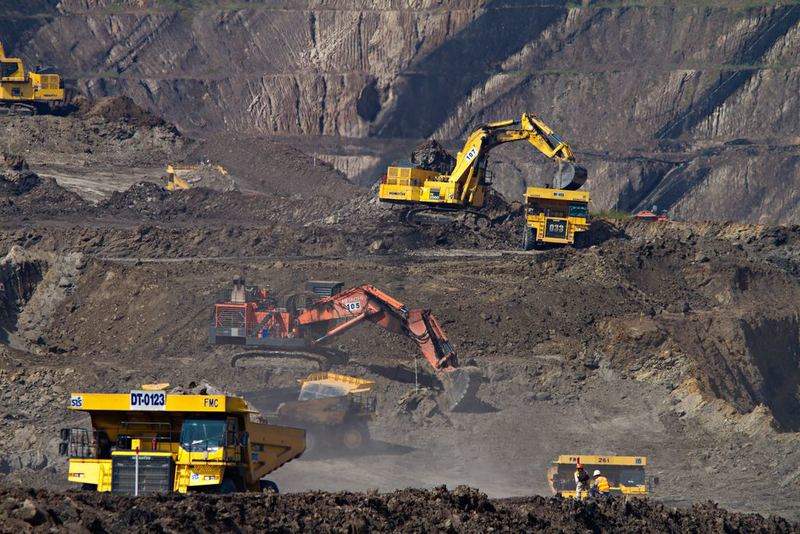
The planned mine will use Long Hole Open Stoping (LHOS) — a mechanised underground method that allows selective ore extraction with minimal surface disturbance — alongside a 1,500-tonne-per-day processing plant and a 12-megawatt power plant.
Under Kenya’s Mining (Community Development Agreement) Regulations, Shanta Gold will share 1% of gold production value directly with host communities.
When operational, Shanta Gold’s Kakamega project will fundamentally reposition Kenya in East Africa’s gold production rankings.
Kilimapesa Gold Mine — Kenya’s Pioneer Commercial Operation
The Kilimapesa Gold Mine in Narok County, operated by Imara Gold (formerly Caracal Gold, formerly under Goldplat), is Kenya’s longest-running modern commercial gold mine — the first to be commissioned since independence.
Established in 2009 in the historically productive Migori Archaean Greenstone Belt, Kilimapesa operates as a shallow underground mine with a carbon-in-leach processing circuit and a pilot heap-leach plant for lower-grade material.
Kilimapesa holds a JORC-compliant resource of 14.05 million tonnes at 1.56 g/t, equating to approximately 705,000 ounces of gold. Ongoing expansion work includes underground development to increase strike exposure of the auriferous quartz veins and exploration drilling at satellite targets including Vim/Rutha and RedRay, both identified as highly prospective extensions of the main deposit. The mine also holds an extensive prospecting permit over surrounding ground.
Kilimapesa has historically been the reference point for commercial gold mining in Kenya and continues to operate while the next generation of Kenyan gold projects advances toward production.
Karebe Gold Mine — Nandi County
The Karebe Gold Mine in Nandi County is one of Kenya’s smaller licensed commercial operations, contributing to the modest but growing portfolio of formal gold production in Kenya outside the dominant western belt.
Goldplat — Processing Gold Residues
Goldplat operates a gold recovery business in Kenya, processing gold-bearing residues from artisanal mining and other sources. While not a primary mine operator, Goldplat plays an important role in Kenya’s formal gold sector by recovering value from material that would otherwise be lost or traded informally.
Artisanal and Small-Scale Gold Mining (ASGM) in Kenya
Artisanal gold mining in Kenya is the backbone of the sector’s current production, employing an estimated 250,000 miners and supporting one million livelihoods across western Kenya.
Despite contributing a large share of actual gold output, artisanal mining in Kenya remains overwhelmingly informal — operating largely outside the licensed, documented framework that would allow its production to be captured in official statistics.
Where ASGM Operates in Kenya
Artisanal gold mining in Migori — particularly in the Macalder area — is Kenya’s most concentrated artisanal zone. Migori’s rivers, abandoned colonial-era workings, and shallow alluvial deposits support thousands of small-scale miners.
The Kakamega and Vihiga counties also host significant ASGM activity, with miners recovering gold from stream sediments and shallow workings adjacent to known hard-rock deposits.
Economic and Social Role of Artisanal Mining
In rural western Kenya, where formal employment opportunities are scarce and agricultural income is seasonal, artisanal gold mining provides the most accessible cash income available to many households.
The World Bank has estimated that for each direct artisanal miner, four to five additional household members depend on that income — making the sector a genuine pillar of the rural economy in Kenya’s gold counties.
Economically, however, Kenya’s artisanal gold sector contributes little to national revenue because most production is traded informally through unlicensed channels, bypassing the royalty and tax frameworks that would direct funds to the national treasury and county governments.
Challenges Facing Artisanal Gold Miners in Kenya
Artisanal mining in Kenya faces well-documented challenges:
- Unsafe working conditions: miners often work in unshored pits and tunnels without protective equipment, leading to frequent accidents
- Mercury contamination: mercury is widely used in artisanal gold processing to amalgamate gold particles, contaminating rivers, soil, and groundwater in Migori, Kakamega, and Vihiga
- Child labour: children work in some artisanal sites, particularly in ore processing and carrying roles
- Lack of legal recognition: most artisanal miners operate without the Artisanal Mining Permits required under the Mining Act 2016, leaving them legally vulnerable and unable to access formal credit or markets
- Exploitation by traders: informal gold buyers often pay far below market rates to unlicensed artisanal producers, capturing most of the value chain benefit
Transitioning Kenya’s artisanal gold miners into formalised, safer, and more productive operations is central to the government’s ambition to grow the sector’s contribution to GDP.
Gold Production and Export Statistics in Kenya
Kenya’s annual gold production is currently estimated at 1–2 tonnes per year through formal channels, a figure that dramatically understates actual extraction when artisanal informal output is included. The gap between formal and actual production in Kenya mirrors a pattern seen across much of artisanal-dominated sub-Saharan Africa.
Kenya gold exports flow primarily to Dubai, India, and Europe — the three largest markets for East African artisanal gold. Gold earns vital foreign exchange but contributes only a small percentage of Kenya’s GDP compared to its potential. The country’s mineral revenue is currently dominated by non-metallic minerals including soda ash from Lake Magadi and fluorspar from Kerio Valley.
This picture is set to change significantly. When Shanta Gold’s West Kenya Project reaches commercial production — potentially by the late 2020s if financing and construction timelines are met — Kenya could see annual formal gold production rise to over 100,000 ounces, transforming gold into one of the country’s top mineral export earners alongside soda ash and rare earths.
Regulation and Legal Framework for Gold Mining in Kenya
Gold mining in Kenya is regulated under the Mining Act 2016, the most significant modernisation of Kenya’s mining legal framework in decades. The Act introduced a transparent, competitive licensing system and strengthened environmental and community benefit requirements.
Key Regulatory Bodies
- Ministry of Mining, Blue Economy and Maritime Affairs: issues exploration and mining licences, manages the Mining Cadastre
- National Environment Management Authority (NEMA): oversees Environmental Impact Assessment (EIA) requirements for all mining projects, including the review of Shanta Gold’s West Kenya EIA in 2025
- Council of Governors: ensures county-level governments receive their legislated share of mining royalties
Licensing Requirements
Any person or company wishing to mine gold legally in Kenya must hold either a Reconnaissance Licence, Prospecting Licence, Retention Licence, or Mining Licence, depending on the stage of activity.
Artisanal Mining Permits are available to Kenyan citizens mining in designated Artisanal Mining Zones. All licence applications are processed through the Mining Cadastre Portal managed by the Ministry.
Licences require:
- Community consultation and a Community Development Agreement (sharing 1% of production value with host communities)
- A completed Environmental Impact Assessment approved by NEMA
- Payment of royalties at the applicable rate to both national and county governments
- Disclosure of beneficial ownership
Current Regulatory Climate in 2026
President Ruto’s administration has made mining sector reform a stated priority, implementing sweeping changes since 2024 that have attracted over $1 billion in new mining investment commitments — including Shanta Gold’s $510 million West Kenya pledge.
The reforms have focused on simplifying licensing, improving transparency, reducing bureaucratic delays, and strengthening local content requirements.
Despite improved legislation, enforcement of illegal mining remains inconsistent, and unlicensed artisanal activity continues at significant scale.
Strengthening the on-the-ground regulatory presence in western Kenya’s gold counties is a priority identified in the Mining Ministry’s current sector strategy.
Environmental and Social Issues in Kenya’s Gold Mining Sector
Environmental impacts of gold mining in Kenya are concentrated in the artisanal sector and in older, legacy mining zones from the colonial era. Key issues include:
Mercury pollution: mercury used in artisanal gold processing in Migori, Kakamega, and Vihiga has contaminated local rivers and groundwater, posing long-term health risks to communities downstream of active mining areas. Mercury enters the food chain through fish in contaminated water bodies, particularly near Lake Victoria tributaries.
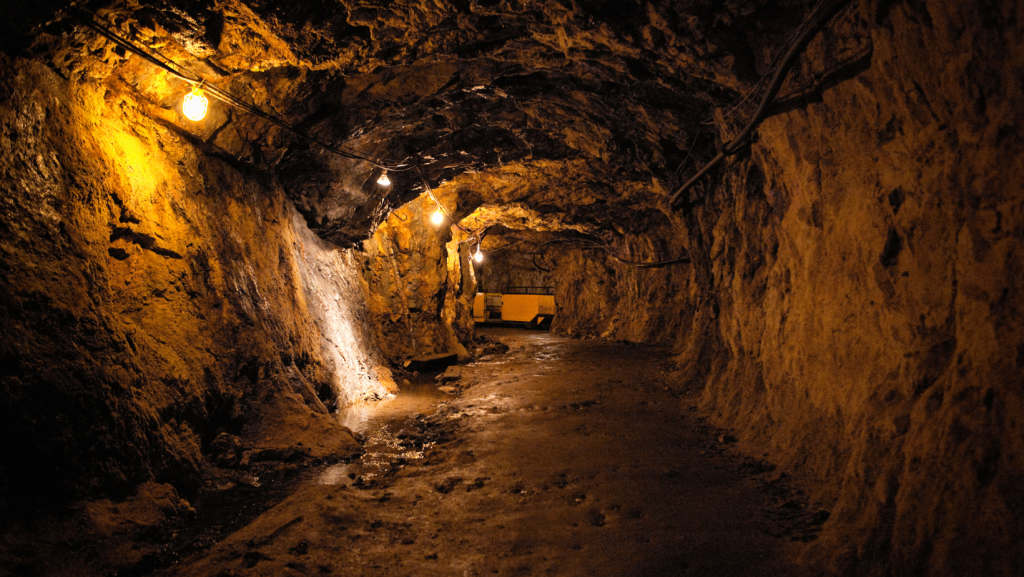
Land degradation: open-pit artisanal workings, collapsed tunnels, and unrehabilitated tailings dumps are visible across western Kenya’s gold counties. The loss of agricultural land to unregulated mining activity is a source of community conflict in Migori and Kakamega.
Deforestation: vegetation clearance for artisanal mining operations and pit digging has degraded forest cover in parts of western Kenya, including areas adjacent to sensitive ecosystems.
Community displacement: large-scale projects including Shanta Gold’s West Kenya development have required Resettlement Action Plans for communities in Musoli and Isulu locations — a process that, when managed well, provides compensation and improved infrastructure, but that has historically been a source of tension in Kenya’s mining regions.
Child labour and working conditions: persistent reports of child involvement in artisanal sites in Migori and Kakamega remain a concern for international buyers and investors seeking to source responsibly mined gold from Kenya.
Addressing these issues through stricter environmental enforcement, mandatory mine rehabilitation, mercury-free processing alternatives, and community benefit-sharing is essential to sustainable gold mining in Kenya going forward.
Investment Opportunities in Kenya’s Gold Mining Sector
Kenya’s gold mining investment opportunities in 2026 are among the most attractive in East Africa, for several reasons:
Underexplored geology with world-class potential. Kenya’s western gold belt is geologically equivalent to producing goldfields in Tanzania, but has received a fraction of the exploration investment.
The Migori Greenstone Belt alone has resources estimated in the millions of ounces, with large portions of the belt never subjected to modern geophysical surveys or systematic drilling.
A genuinely transformative project at development stage. Shanta Gold’s $510 million West Kenya Project has completed its feasibility study, obtained key approvals, and commenced financing in 2026.
This is the kind of anchor project that historically draws secondary investment — exploration by junior miners, infrastructure development, local services — to a region.
Improving regulatory environment. The Ruto administration’s mining reforms, combined with the Mining Act 2016’s framework, have materially reduced the risk of arbitrary policy changes that deterred investment in earlier periods.
Government incentives. Kenya offers tax incentives for mining investors including capital deductions, reduced import duties on mining equipment, and ring-fenced deductions for exploration expenditure.
The Mining (Community Development Agreement) Regulations provide a clear framework for community benefit-sharing, reducing the risk of community-driven project disruptions.
Growing infrastructure. Road, power, and logistics infrastructure in western Kenya — already more developed than many peer frontier mining regions — is continuing to improve, reducing the capex requirements for new mining projects.
The Future of Gold Mining in Kenya
Kenya’s gold mining future in 2026 and beyond is the most promising it has been since independence. Several converging factors support a step-change in production:
The Shanta Gold West Kenya Project — with 1.76 million ounces of resource at exceptional grade and $510 million committed — represents a potential anchor mine that could produce over 100,000 ounces per year. Its financing and construction timeline will determine when Kenya enters the ranks of significant East African gold producers.
Imara Gold’s Kilimapesa expansion is targeting resource growth toward 500,000 ounces through ongoing drilling at Vim/Rutha and RedRay satellite deposits, extending the mine life of Kenya’s longest-operating commercial gold operation.
Advanced exploration techniques — including airborne geophysics, satellite imagery, and systematic geochemical sampling — are being applied across the western gold belt for the first time, with the expectation of adding substantially to Kenya’s known gold resource base.
Formalisation of the ASGM sector through the Mining Act 2016’s Artisanal Mining Permit system has the potential to dramatically increase documented production from the 250,000-strong artisanal workforce, directing royalty and tax revenues to government and improving traceability for export markets.
Complementary Minerals to Gold in Kenya
While gold mining in Kenya commands the most attention, Kenya’s mineral economy is broader than its gold story. The country also produces and hosts significant reserves of:
- Titanium and zircon — coastal production from Kwale, operated by Base Titanium, is Kenya’s largest mineral export by value
- Rare earth elements — deposits near Kwale and in the Rift Valley are attracting growing global interest given demand from EV battery and technology supply chains
- Fluorspar — mined in Kerio Valley, historically one of Kenya’s most important mineral exports
- Limestone and niobite — widely distributed industrial minerals
- Gemstones — including rubies, sapphires, and tsavorite garnets
Diversifying Kenya’s mining sector beyond gold reduces exposure to commodity price volatility and creates a more resilient export revenue base.
Where and How to Buy Gold in Kenya
If you are looking to buy gold in Kenya, the right approach is working with a licensed, certified gold dealer — not an informal street trader or unlicensed market vendor.
Counterfeit and misrepresented gold is common in Kenya’s informal markets, and buyers without proper documentation face legal risks at both purchase and export.
Buy Gold Bars Africa Limited is the trusted Africa gold exporter for buyers seeking to purchase gold in Kenya safely and profitably. We operate in Nairobi, Kakamega, Migori, and Narok — Kenya’s key gold hubs — and supply pure, certified gold directly sourced from licensed Kenyan and East African mines.
Why Avoid Informal Gold Markets in Kenya
Informal gold dealers in Nairobi’s markets and in artisanal mining towns in Migori and Kakamega may offer gold below market price — but the risks are significant.
Gold sold without assay certification may be adulterated, under-weight, or misrepresented in karat. Buyers may unknowingly purchase material that does not meet export standards, leading to confiscation at customs. Always work with a reputable, licensed gold dealer in Kenya.
How to Buy Gold in Kenya With Buy Gold Bars Africa Limited
Step 1: Contact us through our website, WhatsApp, or visit our Nairobi office to discuss your needs and required quantity.
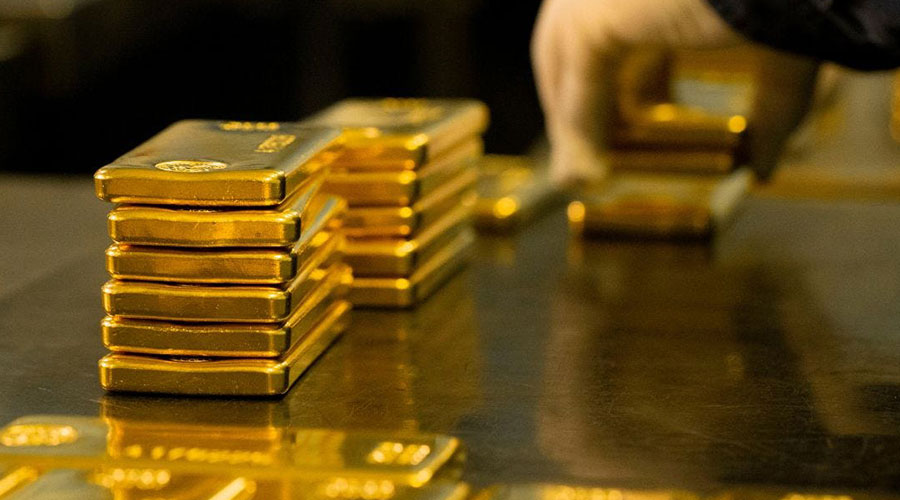
Step 2: Choose the quantity and purity — we offer 24K and 22K gold bars and gold nuggets from Kenya in various weights, from 1 gram to kilogram quantities.
Step 3: Verify our certifications and assay reports — we guarantee authenticity with proper documentation including certified assay reports, certificates of origin, and export permits.
Step 4: Make payment through secure methods (bank transfer, escrow options).
Step 5: Pick up your gold in person at our Nairobi office or arrange insured delivery to your location — including international shipment to the USA, UAE, Europe, India, and beyond.
Why Choose Buy Gold Bars Africa Limited for Buying Gold in Kenya
- We source directly from Kenyan and East African mines — no middlemen, no inflated retail premiums
- Our gold is independently tested, certified, and documented with full assay reports and origin certification
- We offer competitive prices referenced to the live international gold spot rate
- We provide honest advice and reliable international gold shipping from Kenya
- We help international buyers navigate Kenya’s gold export procedures legally and smoothly, handling all documentation from the Mining Ministry and Kenya Revenue Authority
FAQs About Gold Mining in Kenya
Where is gold found in Kenya? Gold is primarily found in Kenya’s western counties — Migori, Kakamega, Narok, Nandi, Vihiga, and Siaya — within the Migori Greenstone Belt and the broader Busia-Kakamega gold belt. Recent discoveries have also been made in Turkana and Marsabit in the north.
Which is the largest gold mine in Kenya? The Kilimapesa Gold Mine in Narok County (operated by Imara Gold) is Kenya’s longest-running commercial mine.
By resource size, Shanta Gold’s West Kenya Project in Kakamega — with 1.76 million ounces — is the country’s largest known gold resource currently under development.
How much gold does Kenya produce per year? Official formal production is estimated at 1–2 tonnes annually, though actual extraction including unreported artisanal output is significantly higher.
Kenya’s formal production is expected to increase substantially when Shanta Gold’s West Kenya Project reaches production.
Is gold mining legal in Kenya? Yes. Gold mining is legal in Kenya under the Mining Act 2016. Artisanal miners require an Artisanal Mining Permit; commercial operators require a Mining Licence from the Ministry of Mining, Blue Economy and Maritime Affairs.
Where can I buy genuine gold in Kenya? Buy from a licensed, certified dealer. Buy Gold Bars Africa Limited is a licensed Africa gold exporter operating in Nairobi, Kakamega, Migori, and Narok, supplying certified 24K and 22K gold with full documentation. Avoid informal markets and unlicensed street traders.
Conclusion: Kenya’s Gold Sector Is at an Inflection Point
Gold mining in Kenya in 2026 stands at the most exciting juncture in the sector’s post-independence history. Shanta Gold’s transformative West Kenya investment, Imara Gold’s ongoing Kilimapesa expansion, a supportive regulatory environment under the Ruto administration, and growing international investor interest are converging to move Kenya from a frontier gold curiosity to a genuine East African gold producer.
For investors, the western Kenya gold belt offers exposure to world-class geology with an improving risk profile. For artisanal miners, a formalisation pathway is increasingly available through the Mining Act’s Artisanal Permit system.
For gold buyers, Kenya’s market — when accessed through a licensed, reputable dealer — offers authentic, high-purity gold at competitive prices.
Buy Gold Bars Africa Limited is your certified Africa gold exporter ready to be your partner at every step of that journey — from sourcing certified Kenyan gold to navigating export procedures and delivering securely to your door anywhere in the world. Contact us today.