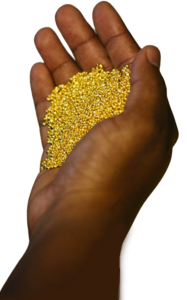
Buy 22K Gold Bars From Africa Gold Refineries
If you are looking to buy 22K gold bars, you are making a purchasing decision that sits at the intersection of serious investment gold and the world’s most culturally significant jewellery standard.
Twenty-two karat gold — hallmarked 916 to indicate 91.67% pure gold content — is the gold standard across South Asia, the Middle East, West Africa, and increasingly in East Asian jewellery markets, while simultaneously serving as a legitimate investment-grade bullion product for investors who want near-maximum gold content with the practical hardness advantage that 24K gold cannot provide.
The global 22K gold price per gram as of June 2026 stands at approximately USD 123.17 — reflecting a gold spot price of around USD 4,169 per troy ounce adjusted for the 91.67% gold content that defines the 22 karat standard.
At these price levels, a 1-kilogram 22K gold bar is worth approximately USD 123,170 in pure gold content value, making it one of the most significant physical investment assets available to private buyers at any point in the current gold bull market.
This complete guide to buying 22K gold bars covers everything an investor or jewellery buyer needs to know in 2026: what 22K gold actually is and how it compares to 24K, the current 22K gold bar prices in Africa and globally by weight, where to buy 22K gold bars from certified African dealers at competitive prices, what the 916 hallmark means and how to verify it, how to ship and insure 22K gold internationally, and why African-sourced 22K gold offers a compelling price advantage over Western retail alternatives.
What Is 22K Gold? Understanding the 916 Standard
22K gold — also written as 22 karat gold or identified by its international hallmark 916 — contains exactly 22 parts gold out of 24, giving it a gold purity of 91.67%. The remaining 8.33% is composed of alloying metals, most commonly a combination of copper and silver, though zinc and palladium are also used in some refinery formulations.
These alloy additions are not impurities in any negative sense — they are precision engineering decisions that transform gold’s physical properties in ways that pure 24K gold cannot match.
Pure 24K gold, at 99.99% purity, is extremely soft. It can be marked by a fingernail, bent under modest pressure, and scratched by materials far less hard than gold itself.
This softness makes 24K gold ideal for investment bars that will be held in vaults or stored without physical stress — but problematic for jewellery that must withstand daily wear, for coins that circulate through handling, and for bars that will be frequently transported or inspected.
22K gold’s 8.33% alloy content changes this. The resulting alloy is measurably harder than pure gold — more resistant to scratching, better at holding fine design detail in jewellery settings, and more capable of withstanding the physical handling that coins and frequently traded bars experience.
This is precisely why the South African Krugerrand — one of the world’s most traded gold investment coins — is produced at 22K (916) purity. And why South Asian bridal jewellery, widely regarded as the world’s most sophisticated gold jewellery tradition, is predominantly made at 22K.
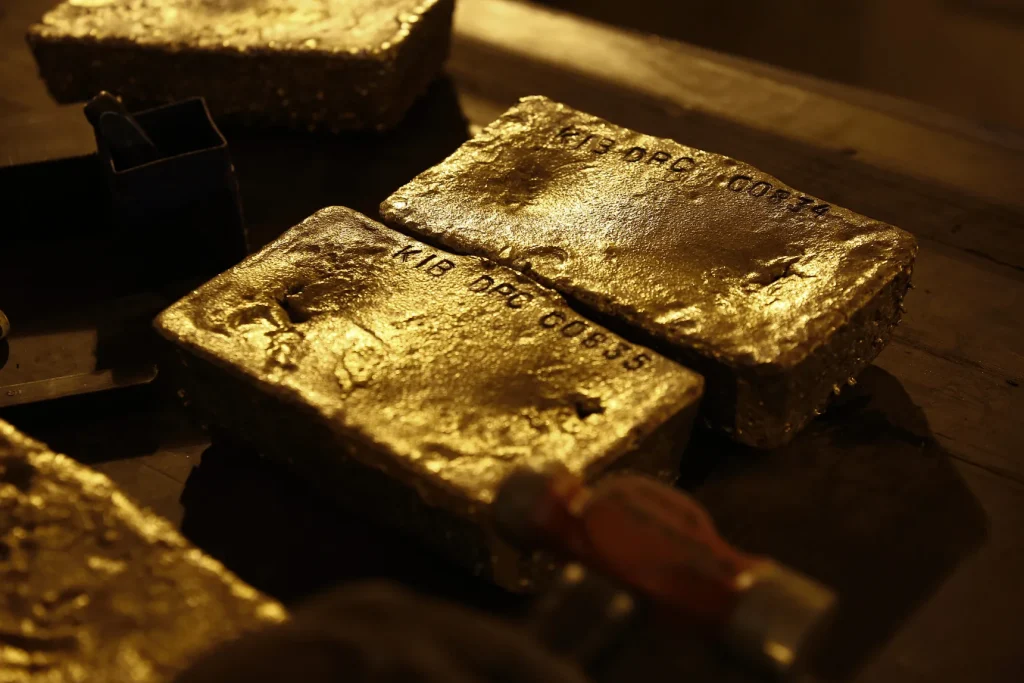
Understanding the distinction between cast 22K gold bars and minted 22K gold bars matters for buyers choosing between formats. Cast bars are produced by pouring molten gold alloy into moulds — producing a denser, sometimes slightly rustic finish that is common in African artisanal gold markets in Ghana, Uganda, and the DRC.
Minted bars are struck using precision pressing equipment to produce a polished, uniform finish with precisely stamped weight and purity markings — the format more common in South African refineries and internationally accredited facilities.
Both are genuine 22K gold; the choice between them is largely aesthetic unless you require the highest-standard documentation for international resale.
22K Gold Bar Price Today in 2026: Live Pricing by Weight
The 22K gold price per gram today (June 2026) is approximately USD 123.17, based on a 24K gold spot price of approximately USD 4,169 per troy ounce adjusted by the 91.67% gold content factor.
This represents a significant increase from the 2025 pricing shown in the original article and reflects the sustained gold bull market that has pushed gold to multi-year highs across 2025 and 2026.
The formula for calculating the gold content value of any 22K gold bar is straightforward:
22K gold price per gram = (24K spot price per gram) × 0.9167
At a 24K spot price of USD 134.04 per gram (June 20, 2026): 22K gold content value = USD 134.04 × 0.9167 = USD 122.88 per gram
Adding a typical dealer premium of 2–5%, the retail price for certified 22K gold bars from licensed African dealers falls in the following ranges:
| Weight | Gold Content Value (USD) | Retail Price Range (USD) | Premium Above Content |
|---|---|---|---|
| 1 gram | $122.88 | $126–$135 | 3–10% |
| 5 grams | $614.40 | $630–$660 | 3–8% |
| 10 grams | $1,228.80 | $1,255–$1,300 | 2–6% |
| 50 grams | $6,144 | $6,270–$6,450 | 2–5% |
| 100 grams | $12,288 | $12,510–$12,900 | 2–5% |
| 500 grams | $61,440 | $62,430–$64,512 | 2–5% |
| 1 kilogram | $122,880 | $124,900–$128,800 | 2–5% |
Prices are indicative based on June 2026 spot price. Contact Buy Gold Bars Africa for live, dealer-specific pricing on your preferred bar weight and quantity.
22K Gold Bar Prices Across Africa by Country
African gold markets price 22K gold bars slightly differently from one another, reflecting local currency dynamics, dealer premiums, and mining cost structures.
Uganda consistently offers the most competitive entry prices for certified 22K gold bars among African sourcing countries, while South Africa commands a slight premium reflecting the institutional credibility of Rand Refinery certification.
| Country | 22K Price Per Gram (USD) | Per 100g (USD) | Per 1kg (USD) |
|---|---|---|---|
| Uganda | $120–$124 | $12,000–$12,400 | $120,000–$124,000 |
| Ghana | $122–$126 | $12,200–$12,600 | $122,000–$126,000 |
| DRC | $119–$123 | $11,900–$12,300 | $119,000–$123,000 |
| South Africa | $123–$127 | $12,300–$12,700 | $123,000–$127,000 |
| Mali | $118–$122 | $11,800–$12,200 | $118,000–$122,000 |
22K Gold Bars vs 24K Gold Bars: Which Is Better for Your Specific Goal?
The question of whether to buy 22K gold bars or 24K gold bars is one of the most common comparisons in the African gold investment market, and the answer depends entirely on what you intend to do with the gold after purchase.
When 22K Gold Bars Are the Better Choice
For jewellery production and design. 22K gold is the preferred raw material for jewellery manufacturers globally, particularly across South Asia, the Gulf, and West Africa, where 916 gold is the market standard.
The hardness of the 22K alloy allows jewellers to create intricate filigree work, thin bezels, and complex stone settings that 24K gold cannot hold under daily wear conditions. If you are buying gold as raw material for jewellery production, 22K gold bars are unambiguously the correct product.
For culturally driven investment markets. In India, the UAE, Ghana, Mali, and much of Southeast Asia, 22K gold is the reference investment standard — the product that most buyers recognise, trust, and prefer when converting savings into physical gold. In these markets, 22K gold bars and coins are more liquid than 24K bars because the buyer base is larger.
For budget-conscious investment buyers. Because 22K gold bars carry an 8.33% alloy fraction, the per-gram gold content value is approximately 8.33% lower than an equivalent weight of 24K gold. This means that at any given spot price, a 22K gold bar costs less per gram of total weight than a 24K bar — a genuine entry-point advantage for buyers with limited capital who want maximum gold exposure per dollar invested.
For coin investment and South African Krugerrand buyers. The Krugerrand — one of the world’s most traded and most liquid gold investment coins — is 22K gold. Investors who want coins that are globally recognised and easily liquidated in any bullion market are effectively choosing 22K gold as their preferred investment vehicle, whether they think of it in those terms or not.
When 24K Gold Bars Are the Better Choice
For LBMA-standard institutional investment. The London Bullion Market Association (LBMA) sets the global benchmark for investment gold at a minimum 99.5% purity — a standard that 22K gold at 91.67% purity does not meet.
For investors who want gold that is accepted by institutional bullion banks, gold ETF custodians, and central bank reserve programmes, 24K gold at 999.9 purity is the required standard.
For maximum gold content per gram. A 100-gram 24K bar contains 99.99 grams of pure gold. A 100-gram 22K bar contains only 91.67 grams of pure gold. The 24K bar delivers more investment value per gram of total weight — straightforwardly the better choice for pure investment efficiency.
For resale through Western bullion dealers. Western European and North American bullion dealers price 22K gold at a discount to 24K spot because the gold content is lower.
A 100-gram 22K bar will be offered a lower resale price per gram of total weight than a 100-gram 24K bar because the buyer’s calculation is based on gold content, not total weight. This resale dynamic makes 22K bars slightly less efficient as pure investment vehicles in Western markets.
The full comparison between these two gold standards is explored in detail in our article on 24K vs 22K gold: which is better — covering purity, hardness, price per gram, ideal applications, and the specific contexts where each karat standard excels.
For investors who want maximum investment efficiency and LBMA-grade international liquidity, buy gold bars at 24K (999.9 purity) from certified African refineries. For jewellery buyers, culturally driven investment markets, or buyers who specifically want the durability advantages of the 22K alloy, the 22K gold bar range discussed in this guide is the right product.
Where to Buy 22K Gold Bars From Africa: Certified Dealers and Sourcing Options
Buy Gold Bars Africa — The Most Complete Sourcing Platform for African 22K Gold
Buy Gold Bars Africa provides certified 22K gold bars sourced from licensed mines and refineries across Uganda, Ghana, South Africa, and the DRC, with independent purity verification, full export documentation, and international armoured logistics.
The platform sources directly from MDL-licensed dealers and LBMA-aligned refineries — eliminating the intermediary markups that inflate 22K gold bar prices in Western retail markets and making African-sourced 22K gold available to international buyers at prices that consistently undercut comparable products in European and North American bullion stores.
Every 22K gold bar sold through Buy Gold Bars Africa includes an assay certificate confirming 91.67% purity (916 fineness), a unique serial number for traceability, a Certificate of Origin, and full export permit documentation.
The gold in Africa for sale page provides current availability across both 22K and 24K bar formats from Uganda, Ghana, and South Africa.
Uganda — Best Price for Certified 22K Gold Bars in East Africa
Uganda’s licensed gold trading sector — concentrated in Kampala’s certified dealer network and the Busia district mining corridor — is the most price-competitive source for certified 22K gold bars in East Africa.
Uganda gold mines produce gold that is refined and certified to 22K (916) standards at prices that reflect Uganda’s competitive mining cost structure, typically landing international buyers at 3–7% below equivalent bars from South African or Ghanaian retail sources.
The Uganda gold discovery in northern region has expanded Uganda’s certified gold supply base significantly, supporting both price competitiveness and consistent availability of 22K bars through 2026 and beyond.
The gold export tax in Uganda covers the complete cost structure for international 22K gold bar exports from Uganda, including the applicable royalty rate, withholding tax, and export permit fees that buyers need to incorporate into their total landed cost calculations.
Ghana — PMMC-Certified 22K Gold Bars With Regulatory Certainty
Ghana is Africa’s largest gold producer and its most regulated gold export market. PMMC-certified 22K gold bars from Ghanaian refineries carry documentation that is recognised by international bullion markets and customs authorities worldwide.
The FAQs about buying gold in Ghana explain the PMMC certification process for 22K bars, the export permit requirements, and how to identify licensed Ghanaian dealers authorised to export 916 gold to international buyers.
The list of gold refineries in Ghana identifies the specific PMMC-accredited facilities that produce certified 22K gold bars from Ghanaian mine output — an important verification resource for buyers who want to confirm that their Ghanaian 22K gold originates from a registered, legally operating refinery.
South Africa — Rand Refinery 22K Gold and Krugerrand Coins
South Africa’s gold sector through Rand Refinery produces the world’s most internationally recognised 22K gold product — the South African Krugerrand.
While Krugerrands are coins rather than bars, they represent the clearest example of 22K gold as an investment instrument that is globally accepted in every bullion market.
Gold mining in South Africa provides the geological and operational context behind South Africa’s 22K gold production infrastructure — the Witwatersrand Basin, Rand Refinery’s LBMA accreditation, and the certification standards that underpin South African 22K gold products’ international credibility.
Key Considerations When Buying 22K Gold Bars in Africa
Verifying 22K Purity and Authenticity
The 916 hallmark is the universally recognised stamp for 22K gold bars and coins, indicating 91.6% (technically 91.67%) gold content. Every legitimate 22K gold bar from a certified African refinery or licensed dealer carries this hallmark alongside the refinery logo, bar weight in grams or troy ounces, and a unique serial number.
Purity verification methods for 22K gold bars, in order of reliability:
Fire assay with core sampling — the definitive method for any 22K bar purchase above 100 grams. A small core sample is drilled from the bar and subjected to cupellation, isolating and weighing the pure gold content with laboratory precision. Fire assay is the only method capable of detecting sophisticated counterfeits such as copper-core bars with gold cladding.
X-ray fluorescence (XRF) spectrometry — a fast, non-destructive surface test that identifies elemental composition by X-ray bombardment. Effective for detecting gross impurity issues but cannot penetrate deeply into the bar — use in conjunction with fire assay for high-value purchases.
Acid testing — applying a small amount of nitric acid to the bar surface and observing the reaction. A 22K gold bar will show a very slow, slight reaction; gold-plated base metal will react vigorously. A quick preliminary screen but not precise enough to distinguish between 22K and 18K gold reliably.
Electronic gold testers — consumer-grade devices that measure electrical conductivity to estimate purity. Convenient for a quick check but not sufficiently precise for investment-grade verification. Use as a complementary tool, not a primary purity confirmation.
Always request the original assay certificate for your specific bar’s serial number — not a generic product certificate — before finalising any 22K gold bar purchase above USD 5,000.
Legal and Regulatory Compliance for 22K Gold Exports from Africa
Exporting 22K gold bars from any African country requires the same documentation framework as exporting 24K bars: a licensed dealer with a verified Mineral Dealer Licence, an export permit from the relevant minerals authority, tax clearance from the national revenue authority, a TMAA or PMMC assay verification certificate, a Certificate of Origin, and a commercial invoice.
The FAQs about buying gold from Africa cover the full documentation requirements and common compliance questions for international buyers purchasing 22K gold bars from Uganda, Ghana, South Africa, and other African producing countries.
For UK buyers importing 22K gold bars, HMRC‘s investment gold exemption from VAT applies only to gold bars with a purity of 99.5% or above — meaning 22K gold bars at 91.67% purity do NOT qualify for VAT exemption and are subject to standard import VAT
. This is an important cost consideration for British buyers comparing 22K and 24K sourcing options. Full guidance on the UK regulatory framework appears on the buy gold in the UK page.
Shipping and Insuring 22K Gold Bars Internationally From Africa
International shipping of 22K gold bars from Africa follows the same logistics framework as any high-value gold export. Armoured specialist couriers — Brinks Global Services and G4S Secure Solutions — handle the full logistics chain from collection at the seller’s facility through air freight and final delivery at your international destination, with full transit insurance underwritten through Lloyd’s of London.
What it costs to ship gold to the USA from Africa covers the complete cost structure for armoured shipping, insurance, and US customs declaration for African gold bar imports — essential reading for American buyers building 22K gold positions through African certified dealers. Transit times from Uganda, Ghana, or South Africa to the US, UK, EU, and Gulf typically run 3–7 working days for air freight.
For buyers routing 22K gold through Dubai — a common intermediary point for African gold exports destined for Gulf and Asian markets — the Dubai gold export rules page explains the UAE regulatory framework for gold transit and re-export in detail.
Investing in 22K Gold Bars: The Strategic Case
Why 22K Gold Bars Are a Legitimate Investment Vehicle
The investment case for 22K gold bars rests on three foundations: high gold content, global cultural demand, and structural price appreciation driven by the same macro forces that are pushing 24K gold to multi-year highs in 2026.
At 91.67% pure gold content, a 1-kilogram 22K gold bar contains 916.7 grams of pure gold — valued at approximately USD 122,880 in pure gold terms at current spot prices.
While that represents an 8.33% discount to the gold content value of an equivalent-weight 24K bar, it also represents an 8.33% lower entry cost — meaning 22K gold offers leveraged gold exposure at a slightly reduced initial outlay compared to 24K gold, which can be a meaningful advantage for buyers working with a defined capital budget.
The cultural demand driver for 22K gold is particularly powerful and often underestimated by Western investors. India alone consumes more gold jewellery than any other country in the world, and the vast majority of that consumption is at 22K (916) purity.
The UAE, Saudi Arabia, and other Gulf states have massive jewellery retail sectors that operate almost exclusively in 22K gold. West African markets including Ghana and Mali have deep cultural traditions of 22K gold as both jewellery and portable wealth.
This cultural demand creates a structural floor under 22K gold prices that is independent of investment flows — and it is a demand base that grows as the middle classes in South Asia, Southeast Asia, and Africa continue to expand.
22K Gold as Portfolio Diversification and Inflation Hedge
22K gold provides the same portfolio diversification and inflation hedging benefits as any other form of physical gold — it responds to the same macroeconomic drivers (dollar weakness, real yield decline, central bank accumulation, geopolitical risk) that have driven the 24K gold price to its current multi-year highs.
For investors who want physical gold as an inflation hedge but are buying in markets where 22K is the recognised cultural standard — or who are building positions in both investment gold and jewellery-grade raw material simultaneously — 22K gold bars provide a single product that addresses both investment and practical jewellery market needs.
Gold stock and current inventory levels from certified African 22K gold dealers are available through Buy Gold Bars Africa, giving buyers visibility into available bar weights and pricing before committing to a specific order size.
How Many 22K Gold Bars Should You Buy?
The right quantity of 22K gold bars depends on your investment budget, storage capacity, holding period, and downstream use — whether you are building a personal investment portfolio, sourcing raw material for jewellery production, or accumulating physical gold as a long-term wealth store.
For investors building a gold position primarily for wealth preservation, the general principle is to start with bar sizes that minimise premium above gold content value — meaning 100-gram and 1-kilogram bars rather than 1-gram or 5-gram bars, where fabrication premiums relative to gold content are highest.
For jewellery manufacturers seeking raw material, bulk orders of 22K bars above 500 grams in total weight typically qualify for bulk pricing that reduces the per-gram premium meaningfully.
Gold ingots for sale in standardised sizes from 50 grams upward are available from certified African sources through Buy Gold Bars Africa — the optimal entry point for buyers making their first African 22K gold purchase.
For buyers interested in raw gold material at the pre-refinery stage — gold dust or nuggets that can be refined to 22K specification — the gold dust and where to buy raw gold pages cover the artisanal and small-scale gold sourcing options available across Africa’s producing countries.
How to Buy 22K Gold Bars Safely: Step-by-Step Process
Step 1: Define Your Purpose and Bar Size
Establish whether you are buying 22K gold bars for investment, jewellery production, cultural gifting, or wealth preservation — and let that purpose determine the bar size, format (cast vs. minted), and certification standard you require.
Investment buyers should focus on minted bars with serial numbers and assay certificates. Jewellery manufacturers may prefer cast bars at slightly lower premiums.
Step 2: Select a Verified Licensed Dealer
Contact Buy Gold Bars Africa to discuss your specific 22K gold bar requirements — weight, quantity, preferred certification standard, and delivery destination. Request the dealer’s government-issued Mineral Dealer Licence number and verify it independently with the relevant minerals authority before any commercial engagement.
Step 3: Request Documentation and Assay Reports
Before any payment is made, request: the assay certificate for your specific bar’s serial number, the Certificate of Origin, the export permit confirmation, and the tax clearance document from the national revenue authority.
Legitimate dealers provide all of these as a matter of standard process — any dealer who cannot or will not provide them should be declined.
Step 4: Use Secure Payment Channels
Pay via bank wire transfer (TT) to the dealer’s verified business account, or use an escrow service for first-time purchases above USD 10,000. Never pay via cryptocurrency, Western Union, or mobile money transfer to an individual account. Confirm the receiving account name matches the dealer’s registered business name exactly before any transfer proceeds.
Step 5: Confirm Shipping and Insurance
Confirm that your dealer uses a licensed international armoured courier with full transit insurance that specifically names your bar’s serial number, weight, and declared value in the insurance documentation. Receive the airway bill number for tracking before your payment is released from escrow, and track your shipment through to delivery confirmation.
Faqs About Buying 22K Gold Bars
What is the 22K gold price per gram today? The 22K gold price per gram as of June 20, 2026 is approximately USD 123.17, based on a 24K gold spot price of approximately USD 4,169 per troy ounce adjusted for 22K’s 91.67% gold content. Prices update continuously during global trading hours. Contact Buy Gold Bars Africa for live dealer pricing.
What does 916 hallmark mean on a gold bar? The 916 hallmark on a gold bar indicates that the bar contains 91.6% (rounded from 91.67%) pure gold content — the international standard stamp for 22 karat gold. 916 gold is the same as 22K gold, simply expressed as a decimal rather than a karat fraction.
Are 22K gold bars accepted internationally? Yes, with qualifications. 22K gold bars are widely accepted in South Asian, Middle Eastern, West African, and Southeast Asian gold markets where 916 is the standard.
In Western European and North American institutional markets, 24K gold at 99.5%+ purity is the standard for LBMA-grade investment gold.
22K gold bars are valued at their gold content in any market, but may attract a purity-based discount relative to 24K bars in Western retail contexts.
Can I buy 22K gold bars online from Africa? Yes. Buy Gold Bars Africa provides certified 22K gold bars from Uganda, Ghana, and South Africa with full online purchase support — documentation provided digitally before payment, secure wire transfer payment, and insured armoured international delivery. The FAQs about buying gold from Africa cover the complete online purchase process for international buyers.
What is the difference between cast and minted 22K gold bars? Cast bars are produced by pouring molten gold alloy into moulds — producing a denser, slightly rustic bar common in African artisanal markets.
Minted bars are stamped using precision pressing equipment, producing a polished, uniform finish with precisely engraved weight and purity markings. Both contain the same 91.67% gold content; minted bars typically carry slightly higher premiums but come with more standardised documentation.
Is 22K gold a good investment in 2026? Yes, for the right investor profile. 22K gold provides genuine physical gold exposure at a slightly lower per-gram entry cost than 24K gold, with strong structural demand from cultural jewellery markets across South Asia, the Middle East, and Africa.
It is a legitimate long-term wealth preservation vehicle that benefits from the same macroeconomic drivers pushing 24K gold to multi-year highs. For investors whose downstream use includes jewellery or culturally driven gold markets, 22K gold bars are an excellent investment vehicle.
How do I verify if a 22K gold bar is genuine? Request an independent fire assay certificate with a core sample from an accredited laboratory. Inspect the 916 hallmark, refinery logo, serial number, and bar weight against the assay certificate. Verify the assay certificate number directly with the issuing laboratory.
For purchases through Buy Gold Bars Africa, independent purity verification is arranged as part of the standard transaction process.
Why Source 22K Gold Bars From Africa Rather Than Western Dealers?
The economic case for sourcing 22K gold bars from certified African dealers rather than Western retail bullion stores is straightforward and compelling. Africa produces approximately 30% of the world’s gold annually — from mines in Ghana, South Africa, Uganda, Tanzania, Mali, and Guinea — and the sourcing advantage of buying closer to the mine is a real and measurable price difference at the buyer’s end.
Western retail bullion dealers purchase African gold from wholesale distributors, apply their own margin, and sell to retail customers at prices that typically sit 5–15% above the equivalent gold content value sourced directly from African certified dealers.
For a 1-kilogram 22K gold bar worth approximately USD 122,880 in gold content value, that markup difference is USD 6,100–18,400 per bar — enough to purchase an additional 50–150 grams of certified 22K gold if the sourcing decision is made correctly.
How gold is mined and processed in Africa explains the full production chain from mine ore to certified 22K gold bar, making the sourcing advantage visible at every stage — from the lower mining cost base in African producing countries to the direct relationship between African dealers and the refineries that produce the certified bars.
Gold mining in Guinea represents one of the most compelling emerging West African 22K gold sourcing markets — with rapidly expanding production in the Siguiri Basin and progressively improving refinery infrastructure that is bringing more certified Guinea-origin gold into the international market at competitive prices.
Conclusion: Buy 22K Gold Bars From Africa at the Best Price
22K gold bars are one of the most versatile precious metal products available to international buyers in 2026 — serving as investment gold for culturally aligned markets, raw material for jewellery production, portable wealth in the African and Asian traditions, and a legitimate wealth preservation vehicle that participates fully in the structural gold bull market driven by central bank accumulation, de-dollarisation, and constrained mine supply.
Buying 22K gold bars from certified African sources through Buy Gold Bars Africa gives international buyers access to 916-hallmarked, assay-certified, serial-numbered gold at prices that consistently undercut Western retail alternatives — with the full documentation package, export permit clearance, and international armoured logistics that make every transaction legally defensible and securely delivered.
Contact the team at Buy Gold Bars Africa to discuss your 22K gold bar requirements, receive live pricing tied to the current gold spot price, and access current gold stock and gold ingots for sale across all standard bar weights from 50 grams to 1 kilogram.
Related Topics Worth Exploring
- Buy gold bars from Africa — Certified gold bars in both 22K and 24K from licensed African refineries with full assay documentation and international delivery
- Gold ingots for sale — Standardised 22K and 24K gold ingots from 50g upward at competitive African source pricing
- Gold in Africa for sale — Current 22K and 24K gold bar availability from Uganda, Ghana, South Africa, and Tanzania at live spot-tied pricing
- Gold dust — Raw African gold dust for buyers and refiners sourcing pre-refinery material for 22K alloy production
- Where can I buy raw gold? — Licensed raw gold sourcing options across Africa for buyers purchasing material before the 22K refining stage
- How gold is mined and processed — The complete value chain from African mine ore to certified 22K gold bar — essential context for every African gold buyer
- Uganda gold mines — East Africa’s most price-competitive source for certified 22K gold bars at 916 purity
- Uganda gold discovery in northern region — How Uganda’s expanding reserves support long-term 22K gold supply availability for international buyers
- Gold mining in South Africa — Rand Refinery’s 22K gold production including the South African Krugerrand and investment bar output
- Gold mining in Guinea — West Africa’s growing 22K gold production sector and its emerging role in international 916 gold supply
- List of gold refineries in Ghana — PMMC-accredited facilities producing certified 22K gold bars from Ghana’s Tarkwa and Obuasi regions
- Gold export tax in Uganda — Complete export royalty and duty structure for 22K gold bar purchases from Uganda
- Dubai gold export rules — Routing African 22K gold bar shipments through Dubai to Gulf and Asian buyers
- What does it cost to ship gold to the USA from Africa — Armoured shipping, insurance, and US customs costs for 22K gold bar imports from Africa
- Buy gold in the UK — Important VAT note for UK buyers: 22K gold bars do not qualify for HMRC’s investment gold VAT exemption — guidance on UK tax treatment and certified dealer access
- FAQs about buying gold from Africa — Comprehensive answers on buying 22K gold bars from Africa including purity verification, documentation, payment, and scam avoidance
- FAQs about buying gold in Ghana — PMMC certification process for 22K gold, export permits, and licensed dealer selection in Africa’s top gold producer
- FAQs about buying gold in Sierra Leone — 22K gold availability, regulatory framework, and buyer guidance for Sierra Leone gold sourcing
- FAQs about buying gold in South Africa — Rand Refinery 22K bars, Krugerrand investment coins, South African legal framework, and international buyer requirements
- Gold stock — Current inventory of 22K and 24K gold bars from African certified refineries with available weights and live pricing
- About Buy Gold Bars Africa — Ethical sourcing standards, African mine partnerships, and the full service team behind Africa’s most trusted 22K gold bar sourcing platform